
Before the Bundesliga, German football was a messy patchwork of regional Oberligen, with champions decided through end-of-season playoffs. That changed in July 1962, when the German FA (DFB) finally approved a single national league at its convention in the Westfalenhalle in Dortmund, with the new Bundesliga kicking off the 1963-64 season.
Since then, the league has evolved into one of Europe’s most distinctive competitions: fan-supported clubs, large crowds, attacking football, and a record champion in Bayern Munich. Written below are 10 interesting facts that show why the Bundesliga isn’t just another “big five” league, but a world of its own. To be part of German club football at its top flight, book your Bundesliga football tickets via 1BoxOffice for the best deals at reasonable prices.
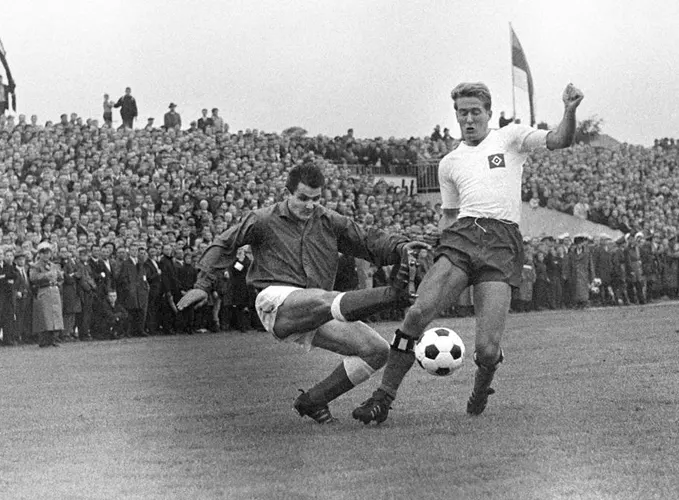
1. Germany Got Its National League Surprisingly Late
While England’s Football League dates back to the 1880s, the Bundesliga only started in 1963. Before that, West German football was split into five top regional leagues, with the national champion decided in playoffs, which was a system many felt was outdated, as other countries professionalised.
Germany’s poor performance at the 1962 World Cup helped push reforms through. As stated on the official Bundesliga website, at the DFB convention in Dortmund on 28 July 1962, delegates finally voted to create a unified national league. The first Bundesliga season kicked off in August 1963 with 16 clubs and 1. FC Koln became the inaugural champions, setting the template for the modern German game.
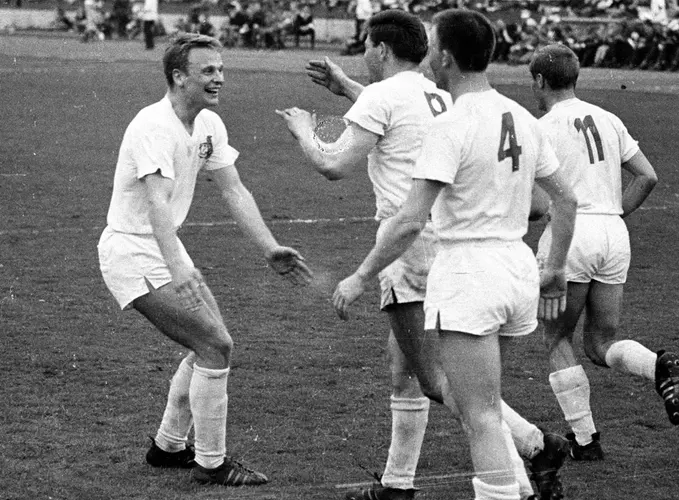
2. The First Bundesliga Goal Was Scored Before the Cameras Were Ready
The very first goal in Bundesliga history came before anyone saw it. According to the Bundesliga website on 24 August 1963, Borussia Dortmund forward Friedhelm “Timo” Konietzka scored after under a minute against Werder Bremen, officially credited at around 58 seconds.
There’s a plot twist to this record goal: there are no film or photo records of the moment itself. All the photographers were positioned behind the other goal post, expecting early pressure from Bremen, so Konietzka’s historic strike went essentially undocumented. German reports note that even a reward he later offered failed to yield visual proof, leaving the first Bundesliga goal as a half-mythical moment told mostly through anecdotes and eyewitness accounts.
3. Reunification Created a One-Season, 20-Team Bundesliga
For most of its history, the Bundesliga has had 18 teams, but the 1991-92 season was a one-off with 20 clubs. After German reunification, the champions, Hansa Rostock, and the runners-up, Dynamo Dresden, from the East German Oberliga were added to the league.
To accommodate everyone, the Bundesliga temporarily expanded to a 38-game season, which was brutal by the early-90s standards. Four clubs were relegated and only two promoted at the end, bringing the total back to 18. That single campaign marked the moment when East and West German club football were fully merged, with Dresden surviving Rostock, which was immediately relegated, symbolising how challenging the new, unified landscape would be.
4. The Famous “50+1” Rule Keeps Clubs in Fan Hands
One of the Bundesliga’s most distinctive features is the 50+1 rule. To be licensed, a club’s members, effectively the fans, must remain at least 50 per cent plus one vote of decision-making control, preventing external investors from taking majority ownership.
The rule was formalised in 1998, when German clubs were permitted to spin off their professional teams into companies, but only under the condition of majority membership. According to Bavarian Football Works, a few clubs with long-standing corporate backing (like Leverkusen and Wolfsburg) operate under legacy exemptions, and there’s ongoing legal and political debate about tightening or preserving the rule. Still, figures like Bayern’s Uli Hoeneß and DFL leaders continue to defend 50+1 as central to German football culture.
5. Bayern Munich: The Relentless Record Champions
There are two contestants in Germany: number one, the country’s excellence, and Bayern Munich, the Bundesliga serial champions. The team has won 33 titles, including 12 of the last 13 campaigns.
What’s easy to forget is that Bayern were not part of the inaugural season of the Bundesliga; they were promoted in 1965-66 and only began their title run in 1968-69. Their dominance is now baked into the league’s identity. However, the honours list still shows other eras, from Borussia Mönchengladbach’s 1970 golden age to Hamburg, Bremen, Stuttgart, Kaiserslautern, and, more recently, Borussia Dortmund and Bayer Leverkusen breaking the monopoly.
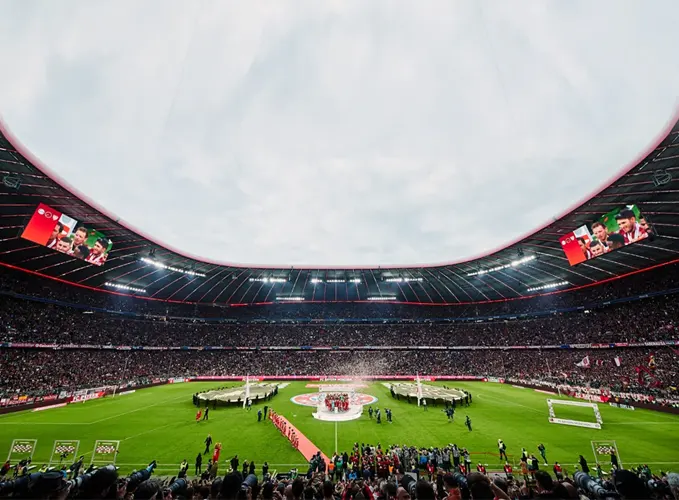
6. Europe’s Kings of Matchday Attendance
If you want full stadiums, the Bundesliga is hard to beat. In the 2022-23 season, the league averaged around 43,000 spectators per game, the highest attendance of any football league in the world, with the Premier League second. Borussia Dortmund regularly tops the individual club charts, packing over 81,000 fans into Signal Iduna Park.
Even outside the giants, many clubs play in near-full grounds every week. According to Inside World Football, despite declines during the COVID-19 pandemic, long-term data from the 1960s to the present indicate consistently strong attendance in the Bundesliga, making it one of the best-attended sports leagues globally.
7. Cheap Tickets, Free Trains and Safe Standing
Part of the Bundesliga's appeal is the fan-friendliness of matchday. Many stadiums retain large standing terraces, with rail seats used in European games, and tickets are notably more affordable than those in England, according to The Guardian. Clubs often bundle free or discounted public transport into the match ticket, turning it into a local rail pass for the day to encourage safe, communal travel.
The philosophy was summed up neatly by Uli Hoeneß, who said the club doesn’t see fans as “cows to be milked” and that football must remain accessible. That mindset, combined with the 50+1, explains why German fan culture still feels more grassroots and less hyper-corporate than in many of their rival leagues.
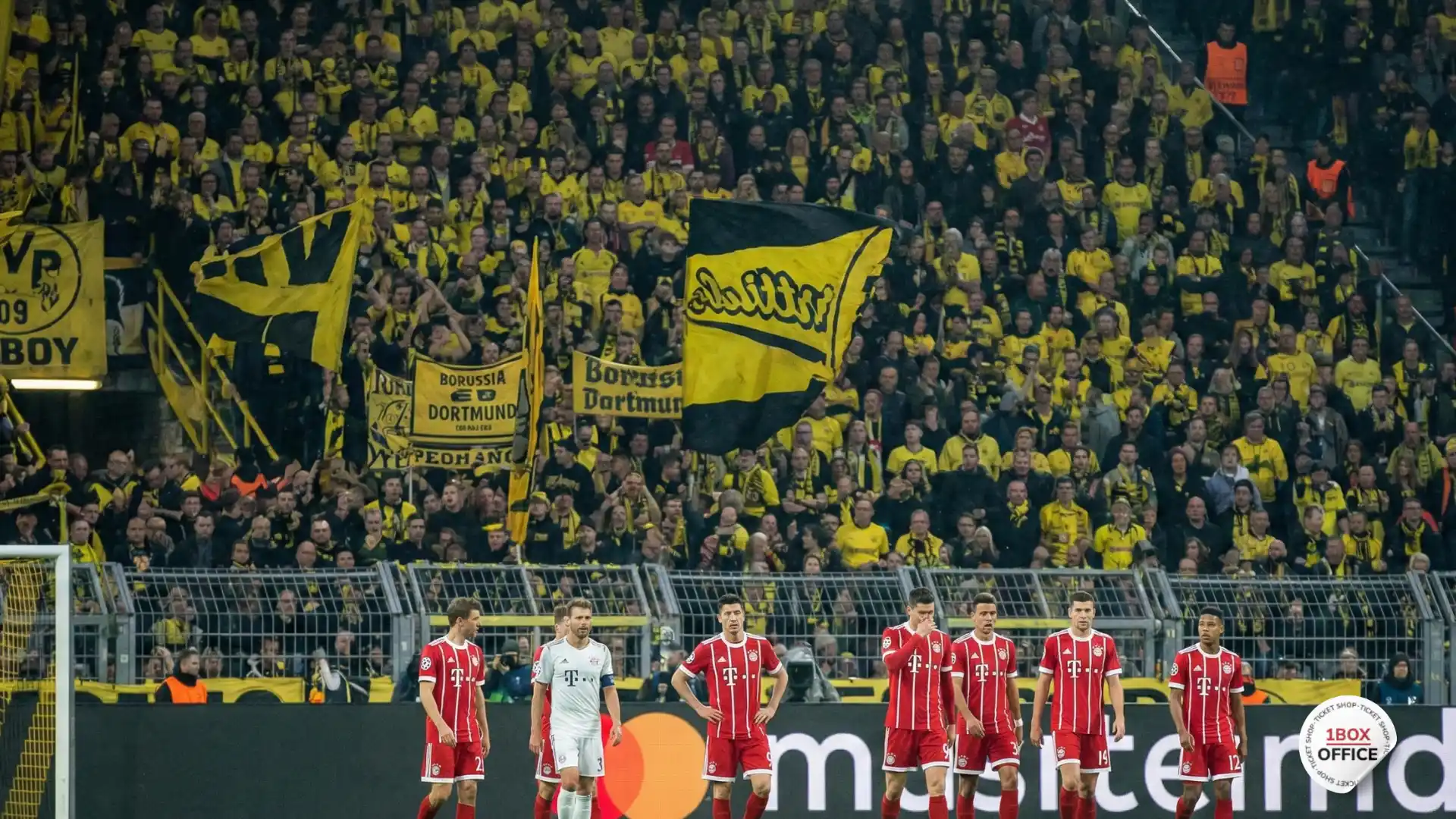
8. The Yellow Wall: The World’s Most Famous Stand
Borussia Dortmund’s Südtribüne, often nicknamed the Yellow Wall, is arguably the most iconic single stand in football, maybe making it more famous than the club itself. The stand is Europe’s largest standing terrace, with a capacity of almost 25,000 supporters. Its 37-degree angle positions the upper tiers so that spectators feel almost on top of the match, creating a wall of yellow-and-black supporters; hence the name Yellow Wall.
On big nights, the entire tier becomes a living tifo: flags, coordinated choreography, and a roar that goalkeepers describe as physically overwhelming. Former Dortmund keeper Weidenfeller once said that for opponents it “crushes you,” but for a Dortmund player it feels like a giant hand at your back. The Yellow Wall, according to GiveMeSport, has become a marketing symbol for the league itself, a shorthand for the Bundesliga’s mix of passion, scale, and safe-standing culture.
9. Goals, Records and a Love of Attacking Football
Despite its reputation for tactical discipline, the Bundesliga is a high-scoring league. Over its 60+ seasons, it has regularly averaged more goals per game than most other top European competitions.
The record books are full of wild numbers: legendary striker Gerd Müller once scored 40 goals in a single league season, a mark later broken by Robert Lewandowski’s 41 in 2020-21. Modern campaigns, according to Bavarian Football Works, still produce attacking runs from teams scoring two or more in over 20 consecutive games to forwards racking up hat-tricks at historic rates. If you like 4-3 scorelines and last-minute chaos, then the Bundesliga will never be a boring league for you.
10. No “Ever-Present” Club - But a Core of Long-Term Residents
Unlike some leagues, the Bundesliga has no club that has played every single season since 1963-64. The closest are Bayern Munich and Werder Bremen, each with 61 seasons of participation, followed by 59 for Dortmund and Stuttgart.
In total, 58 clubs have appeared in the Bundesliga, from giants like Bayern, Dortmund, and Gladbach to one-season curiosities such as Tasmania Berlin and Holstein Kiel. That churn keeps the league fresh; traditional powers have dropped down and fought their way back, while regional clubs periodically pop up to bring new fanbases, stadiums and derby stories into the top flight. It is a reminder that, beneath the headline dominance at the top, the Bundesliga is a genuinely national league.
A Legacy Still Growing
These ten facts were but a snapshot of what is a sea of reasons that make the Bundesliga unique: a late-born national league that turned its supposed weakness into fan power with cheap tickets, safe stands and other such global selling points, all while serving up big crowds, high-scoring football every weekend. Scratch beneath the covers and be part of the inside club, be part of the journey by booking your tickets for these matches via 1BoxOffice for genuine tickets with a 150% money-back guarantee.
Why book with us?
- 150% Money Back Guarantee!
- Trusted by Football Fans Since 2006
- Verified Tickets From Trusted Sellers
- 24/7 Customer service all the way to your seat
Social Sites