In this guide
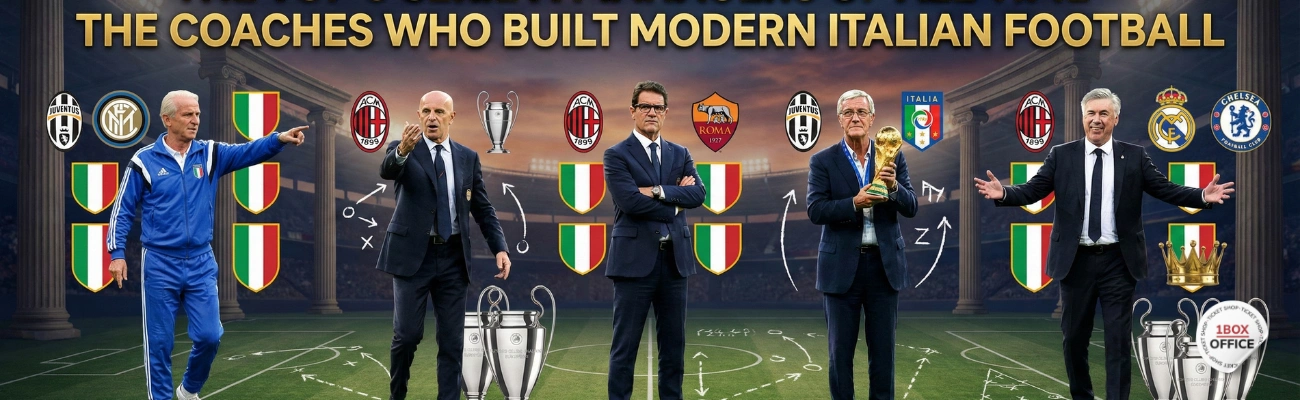
1. Giovanni Trapattoni - The Serial Winner Who Made Juventus a Superclub2. Arrigo Sacchi - The Revolutionary Who Made Milan Run3. Fabio Capello - The Pragmatist Who Made Winning Look Inevitable4. Marcello Lippi - The Gold-and-Black Age of Juventus5. Carlo Ancelotti - The Elegant Evolver and King of EuropeAt Milan, he won:From Sacchi’s student to global grandmasterWhy These Five, and Not Others?Serie A is often called the “university of tactics.” Italy has been the battleground where managers sharpen their unique ideas and tactics, be it in defending, pressing, shape or even something simple like game management. In this battlefield of generals, five names stand out on top: they are Giovanni Trapattoni, Arrigo Sacchi, Fabio Capello, Marcello Lippi and last but not least Carlo Ancelotti.
It almost seems like Serie A is the story of their victory, what with their tremendous record in Serie A with more titles in Scudetti among them than any others, numerous European Cups/Champions Leagues, UEFA Super Cups and Cup Winners’ Cups, plus FIFA World Cups and Club World Cups. Heck, Giovanni alone stands with a record seven Serie A titles, while Ancelotti is now widely regarded as the most successful manager in European competition history, with a record of five Champions League titles as a coach.
But their greatness goes beyond the trophy room. Each one changed the way Italian football is played, heck, even the way Italy thought about the game. From Sacchi’s high press to Capello’s ruthless pragmatism, from Lippi’s blend of grit to Ancelotti’s flexible control and Trapattoni’s cold-eyed winning culture. In this article, we’ll move through each manager, discuss their wins, their silverware counts and see how their tactics and coaching styles changed the route for Italian football.
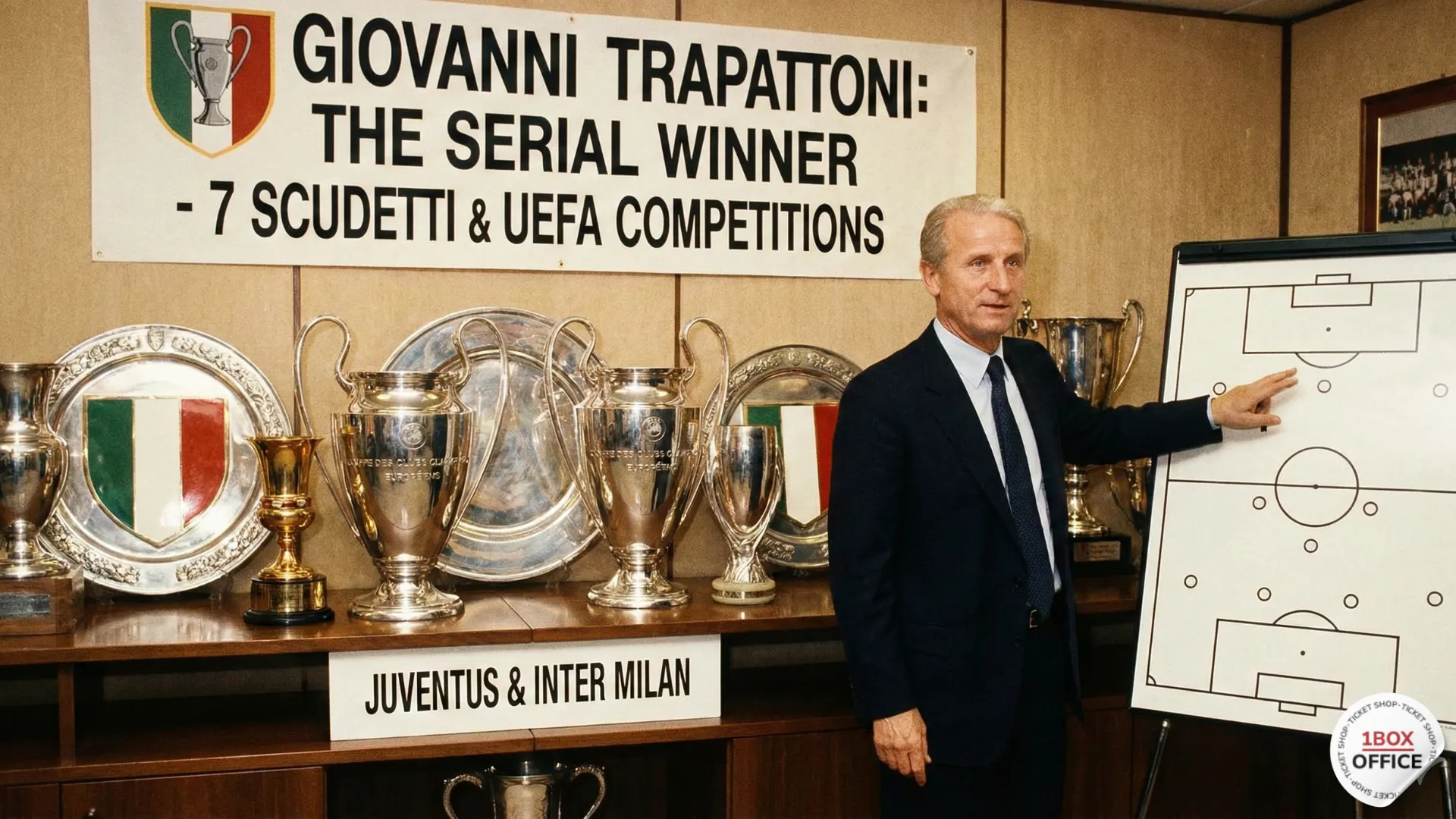
1. Giovanni Trapattoni - The Serial Winner Who Made Juventus a Superclub
There are great managers, then there is Trapattoni; his silverware collection alone would put him in the list for best football managers. According to Reuters, with seven Scudetti to his name, he holds more than any other coach in Italian history. Juventus really had been spoiled under him from 1974-77 and 1988-89.
Building the modern Juventus
From 1976 to 1986, Juventus under Trapattoni were on an almost shopping spree, collecting trophies left and right, including six league titles and five international trophies. Juve was the first club to win all three major UEFA competitions, that is, the UEFA Cup, the Cup Winners’ Cup and the European Cup. After all this, Trapatonni went on to win another Scudetto and a UEFA Cup with Inter Milan, bringing his total silverware count to seven league titles and a European cabinet that has most managers beat.
Trapattoni is also:
- In a club of two others, Lattek and Mourinho, to have won all major European club competitions, and even in this group, he shows his greatness by being the only one to have done this with the same club, Juventus
- One of the few managers to have won league titles in Italy, Germany, Portugal and Austria, a real Midas touch on Trapattoni.
Tactical identity: pragmatic Italian perfection
Trapatonni ran juve like a barrack, they were cold, balanced, and brutal, a true Roman legion. Analysts on the Juventus website describe his mini shapes as a disciplined 4-4-2 or a 3-5-2; they built their lines like a brick house, compact in shape and ruthless during counters. The midfield was a minefield that could destroy the opponents while creatively launching counters into enemy territory.
He was a genius at adapting to the situation, and when he had stars like Platini, Boniek, and Baggio with him, his structures let these technical stars shine. He was a coach who was ready to throw the kitchen sink at a problem, and by Jove did the sink look more fabulous in the net. With this work ethic and a great team behind him, he went on to be undefeated for over 34 league games.
Legacy
Trapattoni essentially defined what a big Italian club looks like:
- Year-on-year domestic contention
- Constant presence in Europe in the late rounds
- A tactical baseline of discipline where the system outlives any individual star
When people talk about Juve’s “DNA of winning,” they’re really talking about the culture he built in the 1970s and 1980s.
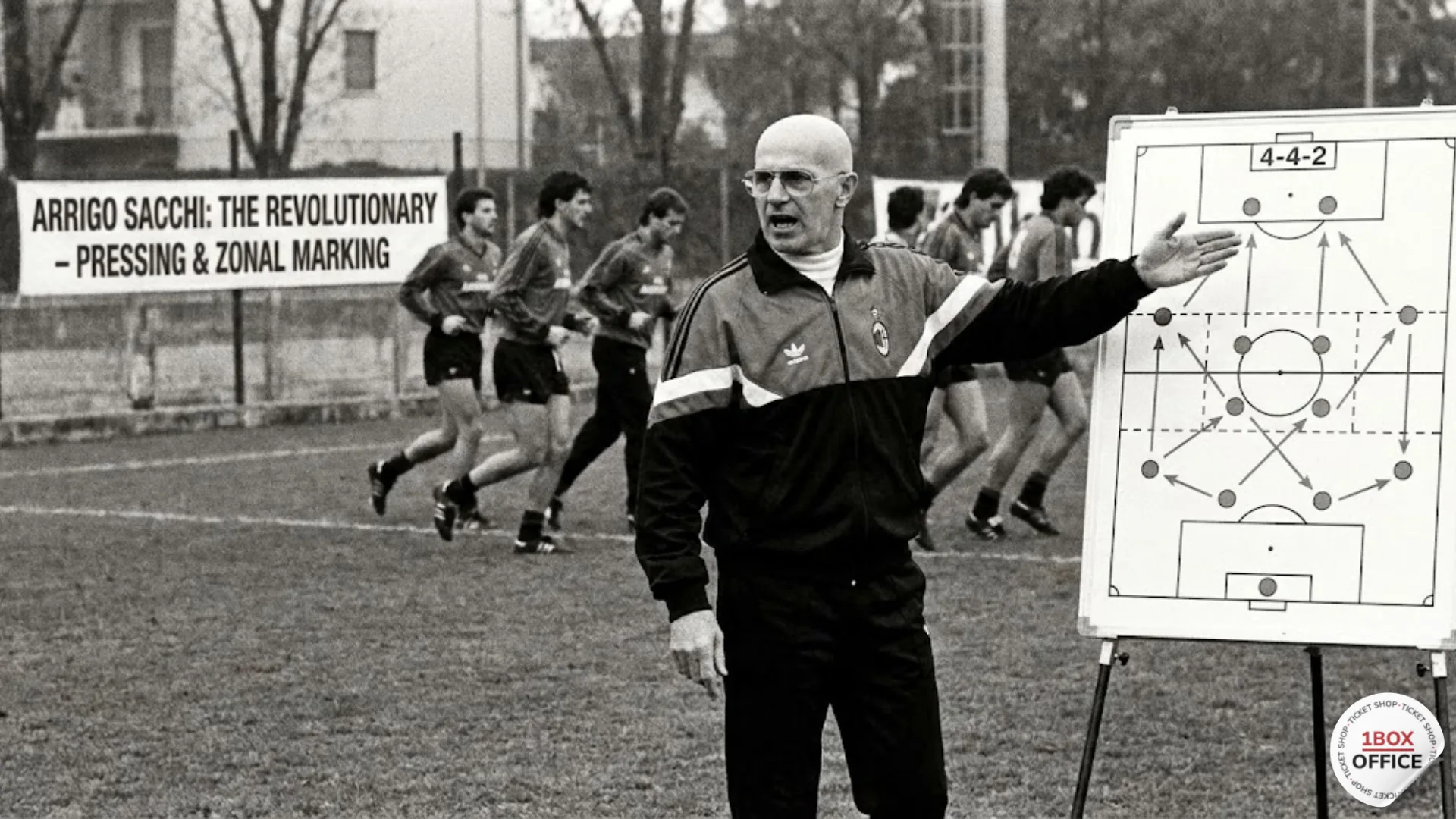
2. Arrigo Sacchi - The Revolutionary Who Made Milan Run
If Trapattoni was a Roman general, Ariggo Sacchi was an Italian Romantic; he is the man who ripped the script apart and led AC Milan to newer heights. He was brought in by AC Milan in 1987 after seeing his coaching with Parma, and a golden ray for the Red and Blacks as he won the team the Serie A title in that year itself, 1987-88, along with back-to-back European Cups in 1998 and 1990. His style was one Europe was not ready for, and that kept their win ratio a lot higher.
Zonal marking, pressing and the 4-4-2 revolution
Sacchi’s Milan played a 4-4-2 that had almost nothing in common with the English long-ball version of the shape:
- Zonal marking rather than man-to-man
- A high defensive line with an aggressive offside trap
- Constant pressing and collective movement - “11 active players in every movement”
- Extremely compressed vertical spacing between lines
According to the UEFA website, he had players run training sessions without a football, calling out random passes to players and making them move as a unit, an almost simulation and imagery training.
Sacchi had talented players who made it easy for the manager; he had Baresi holding the back line, Rijkaard, Ancelotti and Donadoni holding fort in midfield, with Van Basten and Gullit spearheading the attack up front. With these many geniuses on the field, Milan suffocated their opponents, then, in a one-two punch setup, hit them with fast, coordinated attacks.
More than a club team
Sacchi was more than just the AC Milan manager; he was the coach who led Italy right to the final in the 1994 World Cup against Brazil, with the loss being due to penalties. Even there, his emphasis on collective pressing and zonal defending was visible in a national team packed with stars who were used to more conservative football ar club level.
Legacy
Sacchi once said, “I never realised that to become a jockey you had to have been a horse first”, a dig at the idea that only ex-players can coach. He wasn’t a big player, but he became one of the most influential coaches ever.
His ideas directly shaped later generations:
- The pressing and zonal concepts you see in Guardiola, Klopp and modern Italian coaches all have Sacchi’s fingerprints.
- He shattered the notion that Italian football had to be reactive and man-marking-based.
In terms of pure tactical impact, no Italian manager has changed world football more.
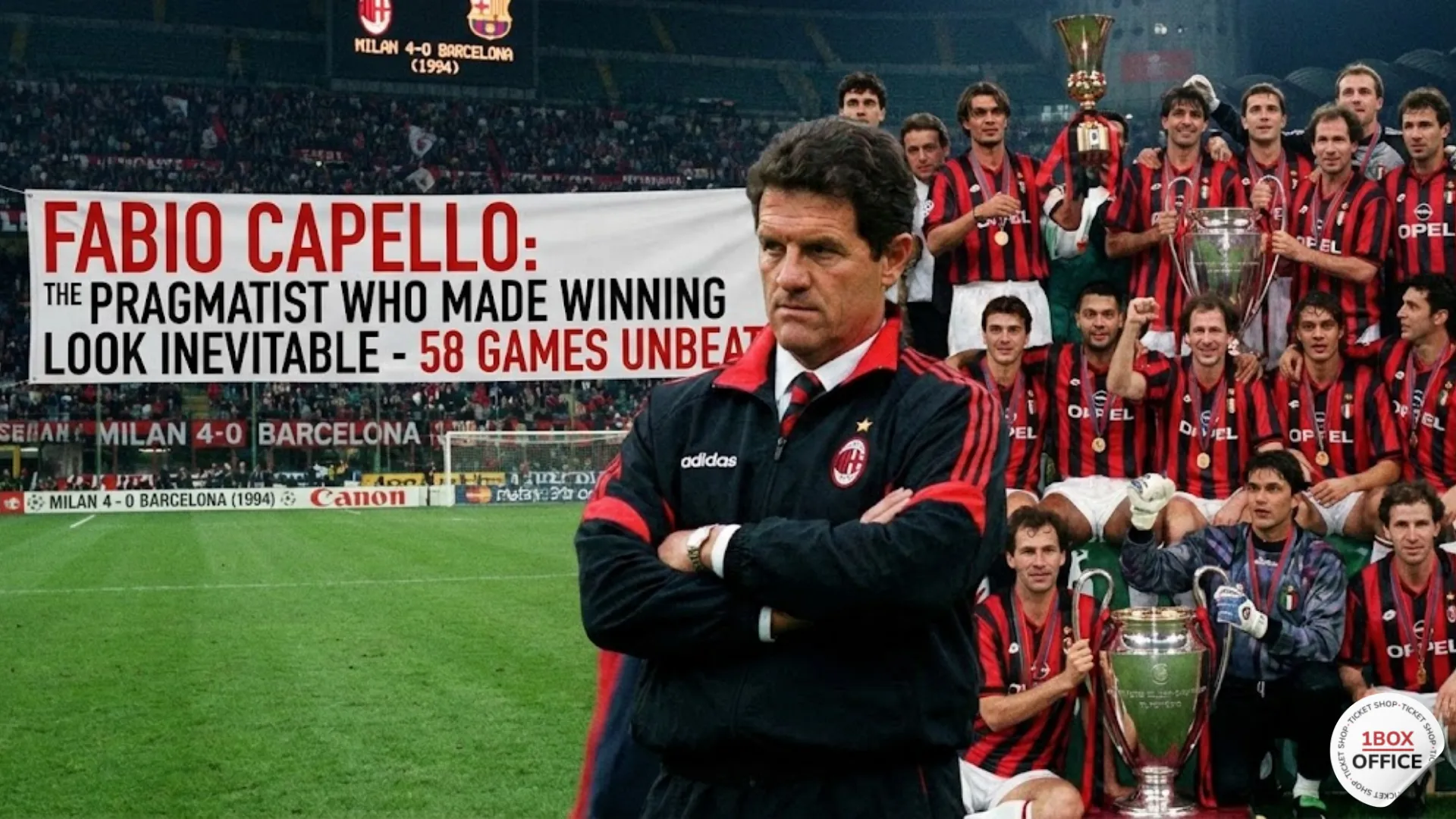
3. Fabio Capello - The Pragmatist Who Made Winning Look Inevitable
Where Sacchi was a revolutionary, Fabio Capello was a refiner and enforcer. According to AC Milan’s official website, Capello won four Serie A titles for the team in his first five seasons, and a Champions League trophy as a cherry on top in the 1993-94 season, having defeated Cruyff’s Barcelona 4-0 in the final.
Later, he led Roma to their first league title in 18 years in the 2000-01 season, bringing a total of 5 Scudetti to his name (5 instead of 7 because of the scandal with Juventus leading to them being revoked).
Capello’s Milan: control with a 4-4-2
Capello kept Sacchi’s 4-4-2 framework but dialled down the kamikaze pressing, building a side that was ultra-solid and brutally efficient:
- A back four filled with maestros (Tassotti-Baresi-Costacurta-Maldini)
- Ball-playing double pivot, but with hard and positional discipline
- Simple but devastating wide and central combinations in attack
According to TheseFootballTimes, in his first league campaign, Milan scored 74 goals, but gradually became more conservative as injuries and squad turnover pushed him toward lower-risk football. Between 1991 and 1993, AC Milan went 58 league games unbeaten, eclipsing Sacchi's run and setting a record that stood in Italy until Conte’s Juventus era.
The definition of “result football”
Capello later described himself as a “pragmatist, not a romantic.” Analysis pieces on his career consistently highlight three traits:
- Non-negotiable defensive structure
- Ruthless game management, kill the match once you’re ahead
- He was willing to take risks; he would bench big stars if the situation called for it.
He built Roma from the ground up, with a strong lineup made os Cafu, Samuel, Totti and Batistuta delivering one of the most competitive Serie A seasons for the fans and the opponents. His success at Milan and Roma, plus league titles with Real Madrid abroad, cemented his reputation as the ultimate “win now” Italian manager.
WhatsApp channel
Sports news straight to your phone
Match updates, on-sale dates and ticket news from 1BoxOffice.
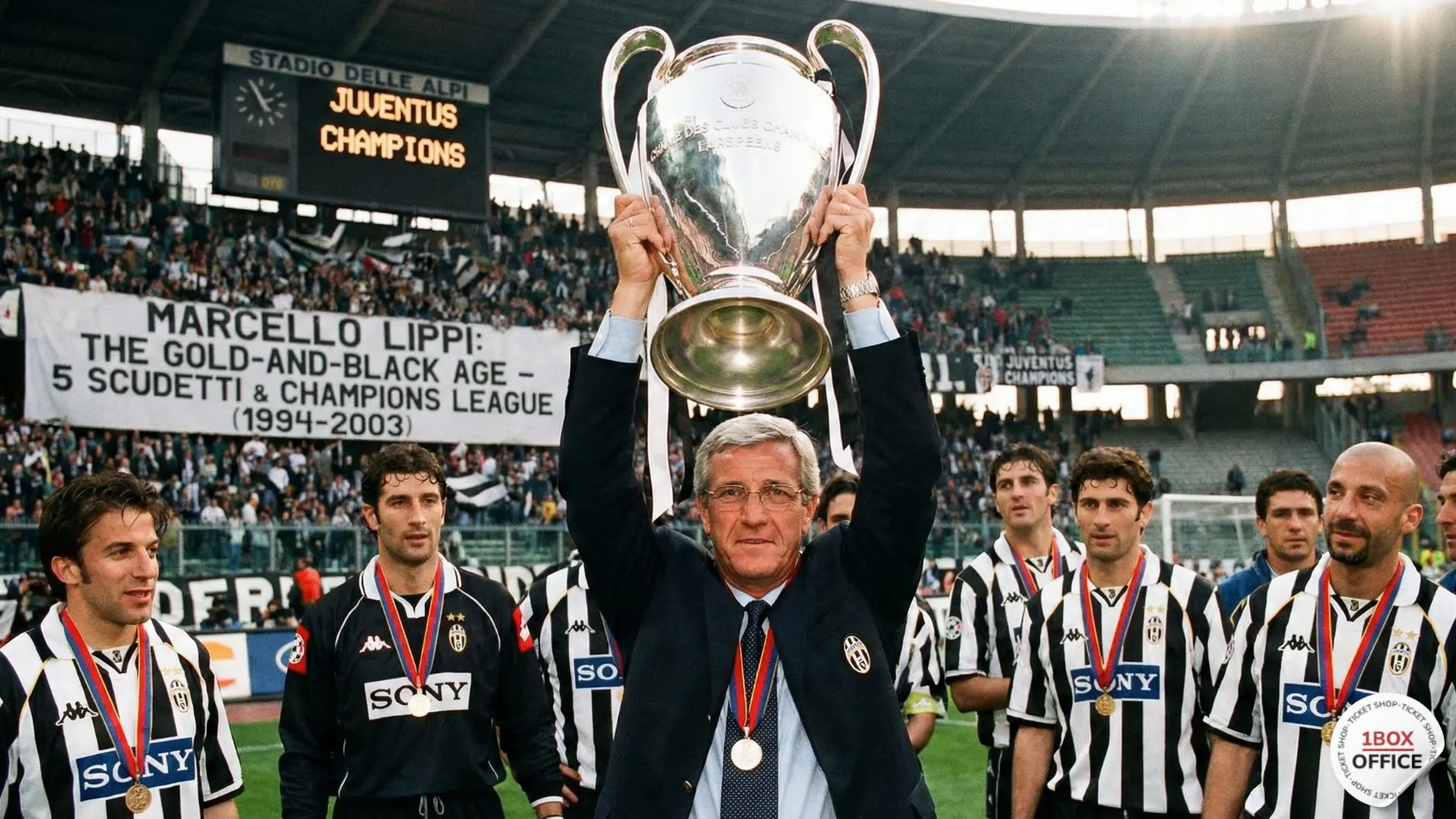
4. Marcello Lippi - The Gold-and-Black Age of Juventus
If Capello and AC Milan ruled the early 1990s, then Juventus under Marcello Lippi had the mid-to-late 1990s under their boot. Lippi had quickly built a team that knocked Capello’s Milan to the curb, and then went on to win five Serie A titles (1994-95, 1996-97, 1997-98, 2001-02, 2002-03) and the 1995-96 Champions League.
A complete, two-way team
Lippi’s first Juve was a 3-5-2/4-3-3 chameleon:
- Heavy pressing for the era, led by a ferocious midfield (Conte, Deschamps, Paulo Sousa)
- Clever hybrid forwards like Del Piero and Vialli, who could play wide, drop deep or attack the box
- A defence that mixed aggression and elegance (Ferrara, Vierchowod, later Montero and Iuliano)
According to The Guardian, they were strong enough to dominate Serie A and flexible enough to reach three consecutive Champions League finals (1996-98), winning one and losing two by narrow margins.
From Juve to world champions
According to the official FIFA website, Lippi took the same toolbox to the national team and led Italy to the 2006 World Cup, beating France on penalties in Berlin. That win made him one of the very few managers to have:
- Multiple Scudetti
- A Champions League
- A World Cup
Legacy
Lippi’s Juve were the bridge between old and new:
- More dynamic and pressing than classic catenaccio sides
- More balanced and “Italian” than Sacchi’s quasi-total football, Milan
Tactically, he showed that an Italian team and press dominate and still embody the traditional values of defensive organisation and flexibility. His work at Juventus also helped cement the club’s status as the most decorated in Italy, with Juventus eventually recognised as the only club to have won all five historical UEFA and world confederation trophies, a journey that began under Trapattoni and was completed and renewed under Lippi.
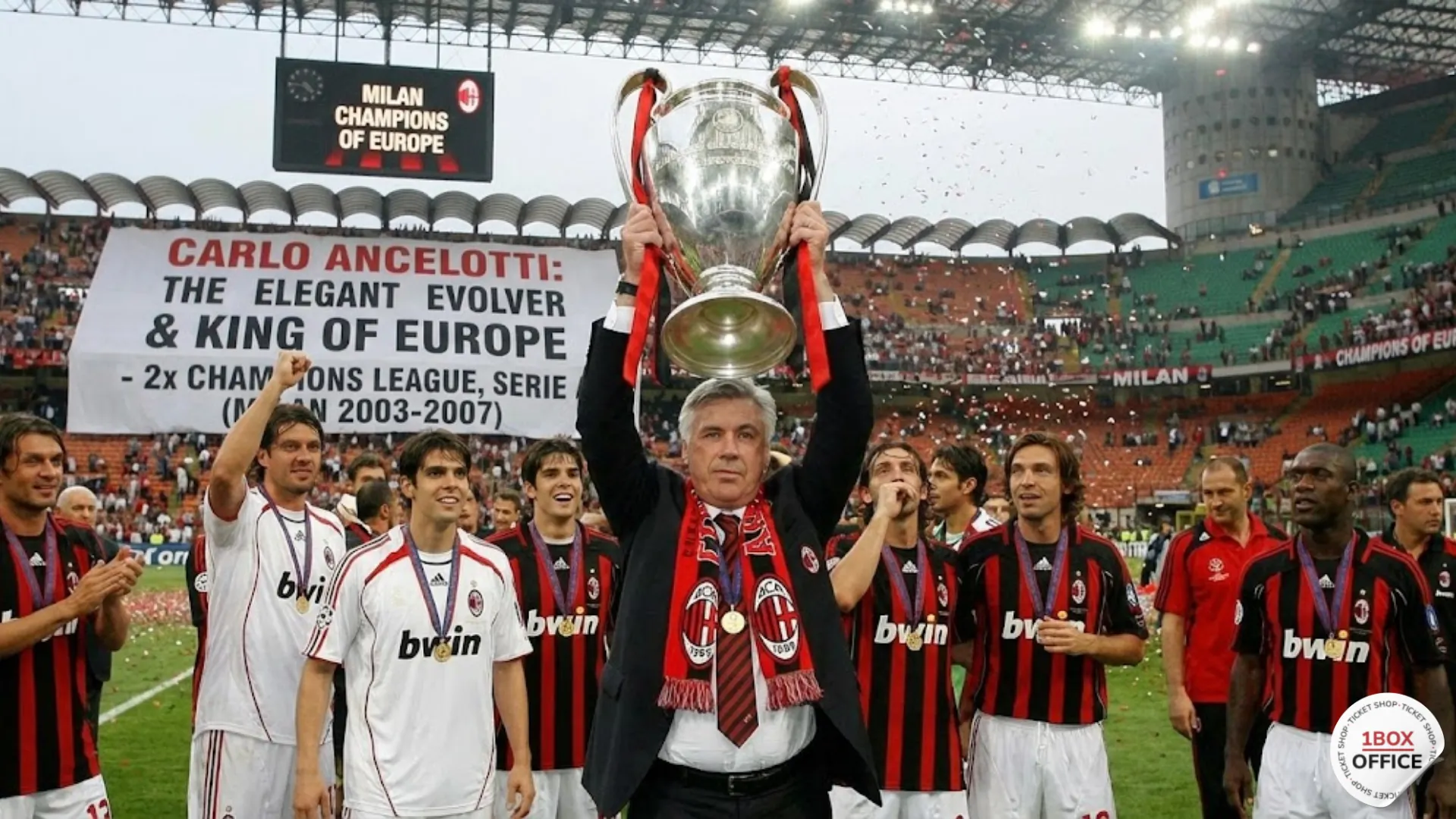
5. Carlo Ancelotti - The Elegant Evolver and King of Europe
Finally, we come to Carlo Ancellotti, whose Serie A trophy count (one Scudetto with Milan in 2003-04) doesn’t look spectacular on paper, but whose overall impact and international record are unmatched.
At Milan, he won:
- Serie A (2003-04) with a then-record 82 points in a 34-game season
- Two Champions Leagues (2002-03, 2006-07) as a manager, adding to the two European Cups he had lifted as a Milan player
- Coppa Italia, Supercoppa Italiana, UEFA Super Cups and a Club World Cup
From Sacchi’s student to global grandmaster
As a player, Ancelotti was Sacchi’s midfield general in that revolutionary Milan. As a coach, he blended Sacchi’s ideas about spacing and pressing with a more flexible, player-centric approach:
- The famous Milan “Christmas tree” (4-3-2-1) with Pirlo, Seedorf, Kakà and Shevchenko
- Intelligent rotation of ageing stars to keep them sharp for big European nights
- A willingness to adjust structures - diamond midfields, Christmas tree, 4-3-2-1, around his best creators rather than forcing them into rigid roles
His success in Italy was the jumping-off point for an absurd international career:
-
First manager to win the Champions League five times (two with Milan, three with Real Madrid)
- First to win league titles in all five major European leagues (Italy, England, France, Germany, and Spain)
Many outlets like The Times now describe him as the most decorated manager in football history in terms of major trophies, and he leaves Real Madrid as their most successful coach in terms of titles.
Legacy
Ancelotti’s impact on Serie A is two-fold:
- At Milan, he prolonged the Sacchi-Capello dynasty into the 2000s, giving Italy another era of European dominance.
- Globally, he became the archetype of the modern “superclub whisperer”: tactically sophisticated, amn-management first, able to blend egos and adapt systems, access cultures and leagues.
If Trapattoni is the greatest Italian club coach and Sacchi the greatest theorist, Ancelotti is the greatest export, the Italian manager who conquered Europe again and again.
Why These Five, and Not Others?
Italian football is spoiled for legendary tacticians, Nereo Rocco, Helenio Herrera, Carlo Carcano, Antonio Conte, Massimiliano Allegri and others all have strong cases. In the pure Scudetto table, Trapattoni leads with seven, followed by Allegri on six and a three-way tie at five between Capello, Lippi and Conte. But this particular group of five keeps showing up in rankings of Serie A’s greatest because they combine:
- Domestic dominance (multiple Scudetti, often with different squads or clubs)
- European and global success (Champions Leagues, European Cups, Intercontinental/Club World Cups, World Cup titles)
- Tactical innovation or refinement that changed not just their club, but the league and sometimes the wider game
Put simply:
- Trapattoni gave Italy its definitive model of a serial-winning superclub
- Sacchi reinvented the tactics and intensity of Italian football
- Capello proved you can make pragmatism beautiful if you execute it perfectly
- Lippi blended Italian steel and European ambition into a complete 1990s powerhouse
- Ancelotti extended that legacy around Europe, becoming the gold standard for big-club management in the Champions League era.
Together they map the evolution of Serie A from the late 1970s to the present day: from catenaccio and counters to pressing, zonal systems, tactical flexibility and European supremacy. Ask who the greatest Italian manager is, and the answer will always start a fight. Ask which five managers built modern Italian football, and you usually end up with exactly these names. Want to attend future Serie A fixtures? Book your tickets via 1BoxOffice for genuine tickets with a 150% money-back guarantee.