
Who is really the biggest club in England? Ask ten fans, and you shall receive 11 answers, and it will be in loud volumes and even a bar brawl at the end of this discussion as a consequence. So to cut through the noise, you have to go back to where organised football started in England and follow the silverware trail forward like you are Dorthy and this writer is Toto leading you.
From the FA Cup in 1871 through the birth of the Football League in 1888, the creation of the First Division in 1892, and the Premier League in 1992, the question of “England’s greatest club” has shifted with each era. Today, with global TV money, European competitions and FIFA’s reworked Club World Cup, the only fair way to compare is to simply count major trophies and see who comes out on top. This article will find the best club by looking at:
-
The dominant clubs in three broad eras
- Pre-1892 cup era and early league years
- 1892-1992 First Division era
- 1992-present Premier League era
- Then go trophy by trophy (League titles, FA Cup, League Cup, Community Shield, and European titles)
- Finally, add everything together to identify, right now, the most decorated club in English football.
Measuring The Greatest
To keep this grounded and consistent, we’ll use the official competitive honours tracked by FIFA, UEFA, the FA, the EFL and the Premier League. The best single reference here is the up-to-date historical list of English league champions with title counts for each club that Reuters provides. We’ll count as major honours:
- Domestic (top-qualifying)
- Top-flight league titles (First Division + Premier League)
- FA Cup
- League Cup/EFL Cup
- FA Community Shield & its historic predecessor (Sheriff of London Charity Shield)
- European & world
- European Cup/UEFA Champions League
- UEFA Cup/Europa and its Fairs Cup ancestor
- UEFA Cup Winners’ Cup (defunct, merged into the UEFA Cup/Europa League - not the Conference League)
- UEFA Super Cup, UEFA Europa Conference League
- Intercontinental Cup + FIFA Club World Cup, which FIFA now recognises together as world club titles.
On that combined metric, updated summary totals show:
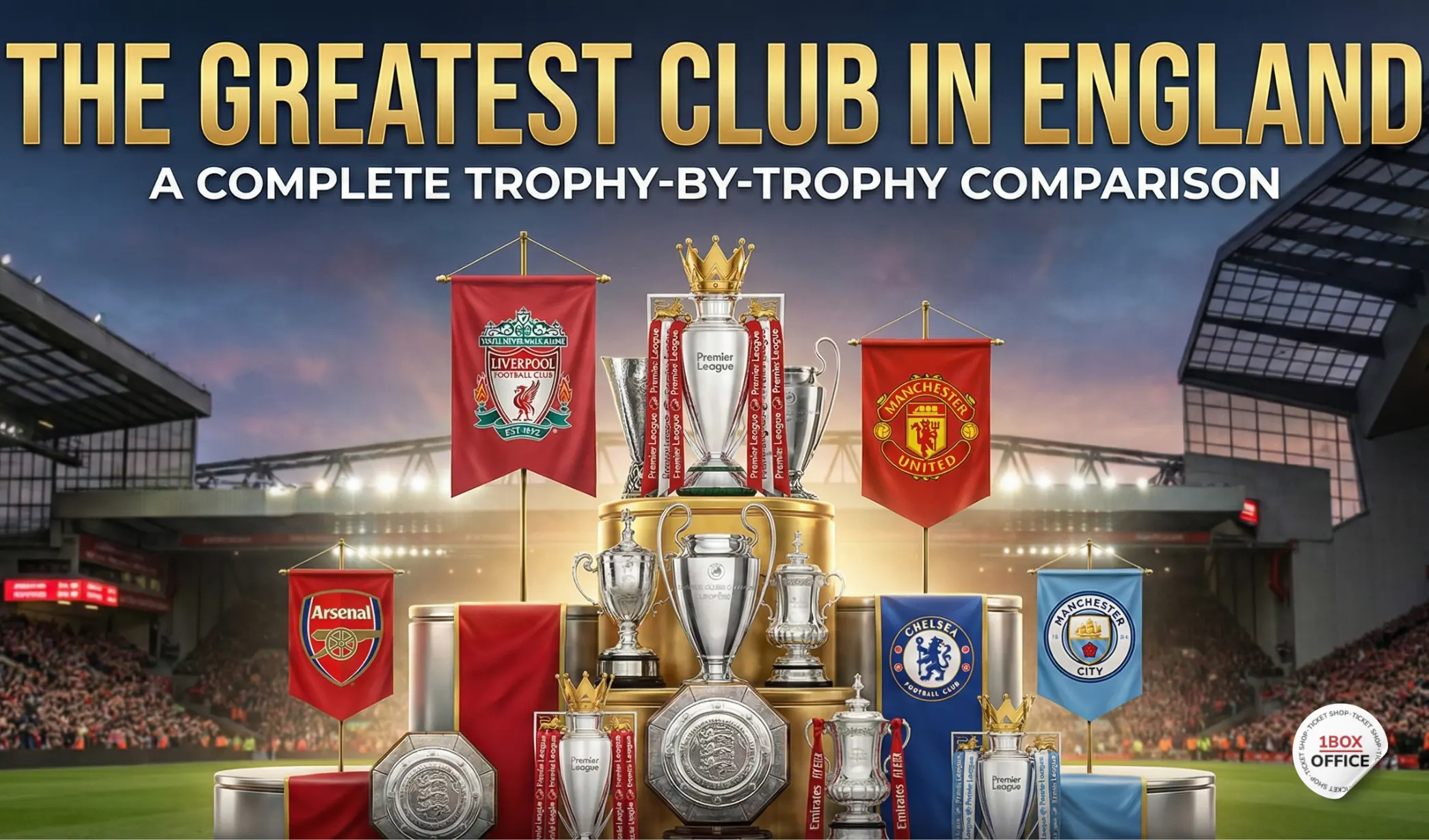
- Liverpool - 70 major competitive honours
- Manchester United - 68
- Arsenal - 49
- Chelsea - 36; Manchester City - 36

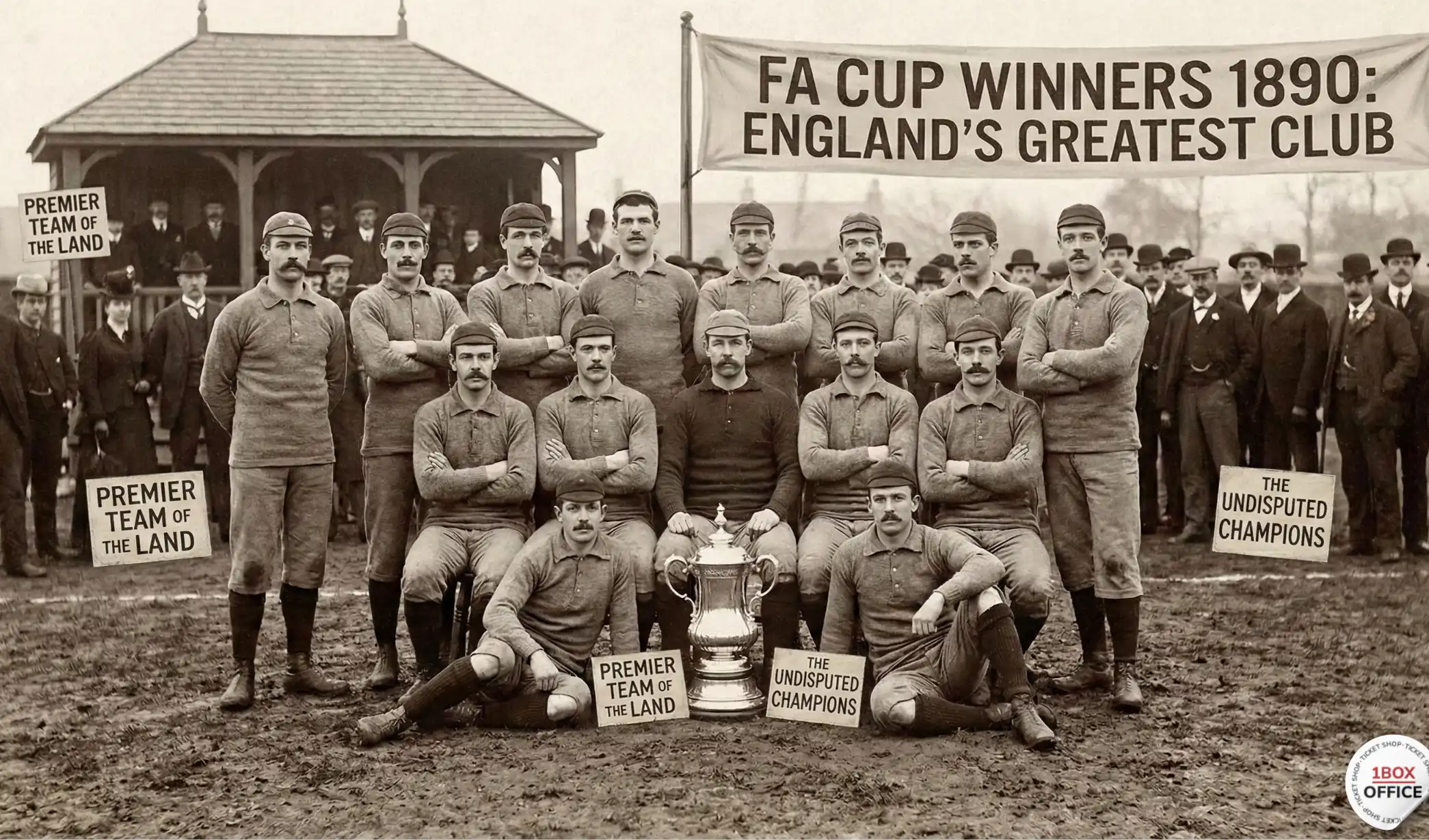
Era 1 - Pre-1892: Cup Kings and Founding Giants
In the late 19th century, there was no Premier League, no Champions League and not even a formal national league at first. The FA Cup (from 1871) was the big prize, and early giants were very different names to today’s “big six”.
- Wanderers, Royal Engineers Old Etonians, Blackburn Olympic and others were early FA Cup powerhouses. Wanderers alone won the Cup five times, still a total competitive honours tally that lists them in modern records on the official FA Cup.
- With the launch of the Football League in 1888, clubs like Preston North End (“The Invincibles” of 1888-89) and Aston Villa began to dominate both league and cup.
If you froze history around 1890, “England’s greatest club” would probably be argued between Wanderers, Preston, and early-era Villa based on FA Cups and the first league titles. But the professional era had just started; the modern debate really crystallised after 1892, when the First Division structure beds in and titles begin to stack up for clubs that are still at the top today.
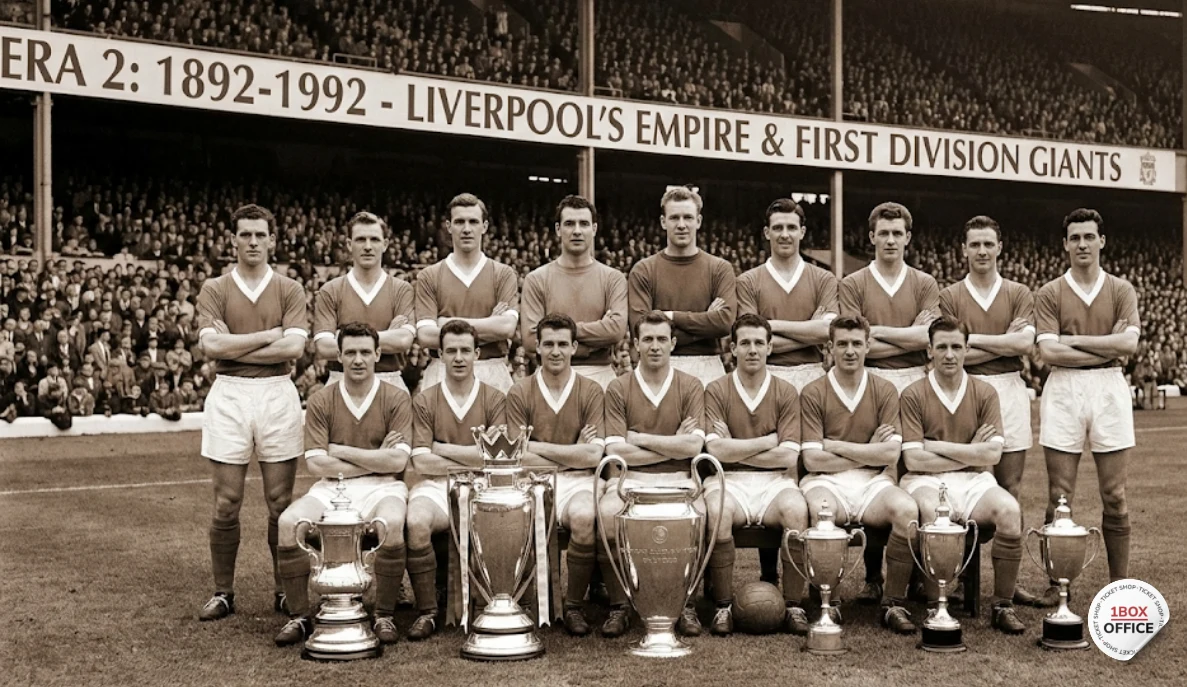
Era 2 - 1892-1992: First Division Age and Liverpool’s Empire
From the formalisation of the First Division in the 1890s to the Premier League breakaway in 1992, English football settled into a recognisable, professional shape. According to this Reuters report, this is where the modern “big clubs” truly emerged.
Over this century-long window, the key metric is the number of top-flight league titles before the Premier League era. Subtracting Premier League wins from total league titles gives us the pre-1992 picture:
- Liverpool - 18 First Division titles before 1992(20 total)
- Arsenal - 10 pre-PL titles
- Everton - 9 top-flight titles
- Manchester United - 7 First Division titles
And when you look at the wins over in the European competitions, Liverpool is even further ahead. By the early 90s ,they had won:
- 4 European Cups (1977, 1978, 1981 and 1984)
- Multiple UEFA Cups and UEFA Super Cups
Nottingham Forest briefly punched far above their weight, winning two European Cups in 1979 and 1980, plus a few domestic trophies.
Verdict for 1892-1992
On league dominance and European success, Liverpool are the clear giants of the First Division era, with Arsenal and Everton the domestic heavyweights and Manchester United just starting its ascent under Busby and later Ferguson.
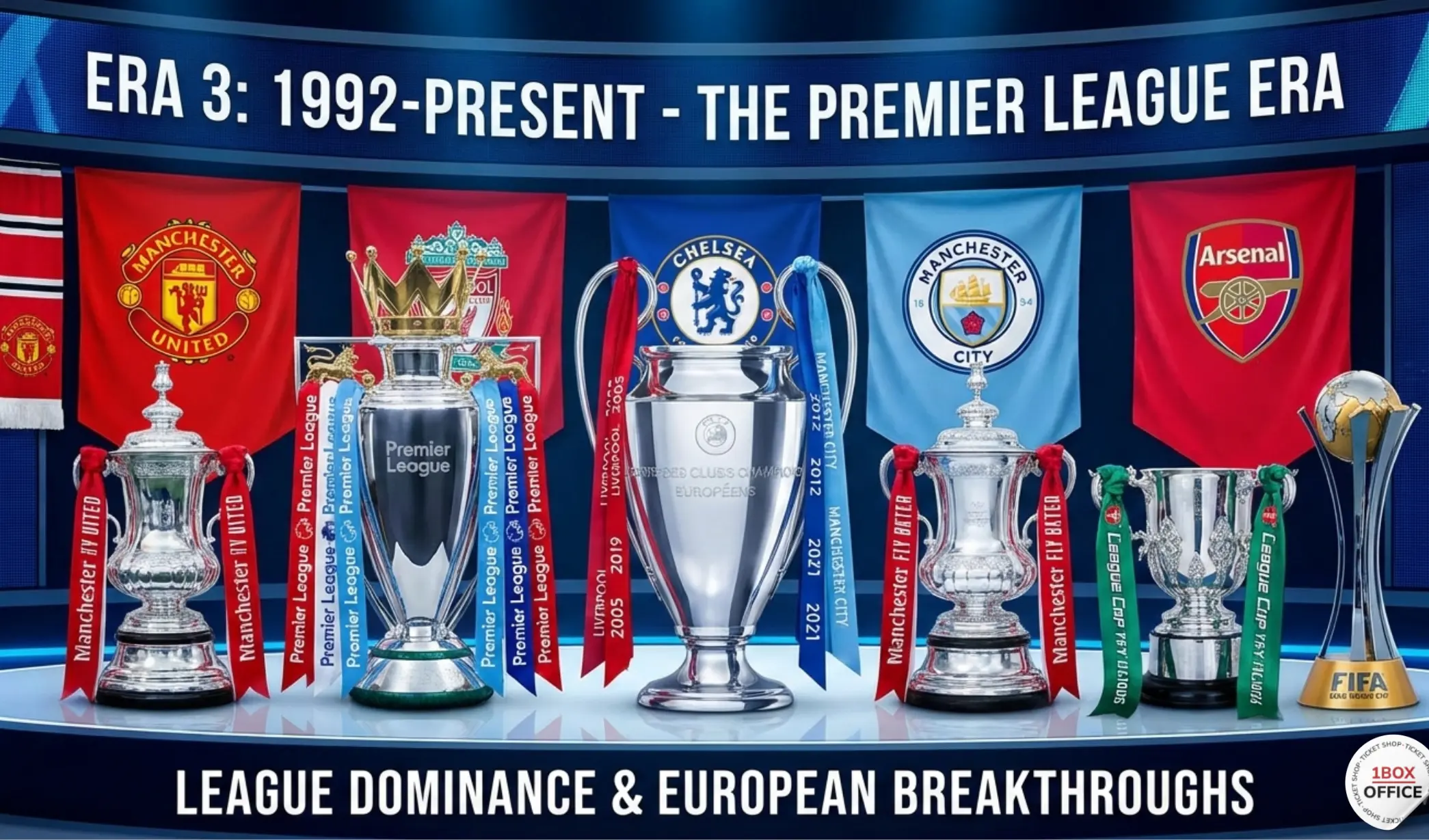
Era 3 - 1992-Present: The Premier League Era
When the Premier League launched in 1992, it reset the narrative but not the honours table. Titles still count the same, but the balance of power has definitely shifted.
League Dominance
As of this recent 2024-25 season:
- Manchester United- 13 Premier League titles
- Manchester City 8(with most under Guardiola)
- Chelsea - 6
- Arsenal - 3
- Liverpool - 2
United’s 13 EPL titles in just over two decades make them comfortably the most successful EPL-era club by league alone. The city’s recent decade of dominance has made it the second significant EPL power, according to Reuters.
Cups and European Competitions since 1992
When it comes to European and othercompetition, however:
- Liverpool have added multiple FA Cups, a record League Cups and crucially, Champions League titles in 2005 and 2019, plus the 2019 Club World Cup.
- Chelsea exploded as a European force under ‘The Special One’ and successors with 2 Champions League, 2 Europa Leagues, 2 Cup Winners’ Cups, 2 Super Cups, 1 Conference League and 2 Club World Cups, becoming the first club ever to win all four main UEFA competitions.
- Manchester City added their first Champions League (2023) and 1 Club World Cup (2023) on top of their domestic haul.
Verdict for the Premier League era
- By league titles alone: Manchester United are #1.
- By overall modern-era trophy haul (domestic + Europe + world), it’s a three-way fight between United, Liverpool and Chelsea, with City rapidly closing the gap due to recent dominance and European breakthroughs.
Trophy-by-Trophy: Who Actually Leads?
Now to the part that ends most pub debates: category leaders.
1. Most English League Titles
Using the combined list of top-flight champions up to Liverpool’s 2024-25 title:
- Liverpool - 20
- Manchester United - 20
- Arsenal - 13
- Manchester City - 10
According to Reuters, Liverpool’s 2024-25 Premier League win brought them level with United on 20 top-flight titles overall, ending United’s era as sole record-holders. United still have more Premier League-branded titles (13 vs Liverpool’s 2), but the historical record book now shows joint-record champions at the top.
2. Most FA Cup Wins
Here, the answer is simple:
- Arsenal - 14 FA Cups (record)
- Manchester United - 13
- Chelsea, Liverpool, Tottenham - 8 each
Arsenal built an FA Cup legacy across multiple eras, from Herbert Chapman in the 1930s to manager Wenger, whose seven wins pushed them clear at the top, as per official reports on ESPN.
3. Most League Cup/EFL Cup Wins
The League Cup might be the “third” domestic trophy, but its record books matter for depth of honours and as of the 2025 final:
- Liverpool - 10 League Cups (record)
- Manchester City - 8
- Manchester United - 6
- Chelsea & Aston Villa - 5
Liverpool’s four-in-a-row run from 1981-84, plus recent wins in 2022 and 2024, have made this their personal playground.
4. Most Community Shield Wins
The English Super Cup record belongs to Manchester United with:
- Manchester United - 21 FA Community Shields
- Arsenal - 17
- Liverpool - 16
These are officially counted as competitive super cups in modern honours lists, so they matter when you’re adding everything up.
5. Most European/UEFA Champions League Wins (English Clubs)
On Europe’s biggest stage, Liverpool are England’s undisputed kings:
- Liverpool - 6 European Cups/ Champions Leagues (English record)
- Manchester United - 3
- Chelsea - 2
- Nottingham Forest - 2
- Aston Villa, Manchester City - 1 each
Those six titles, from the 1970s to 2019, also make Liverpool the most successful British club in UEFA’s premier competition.
6. Most UEFA Cup/Europa League Wins
Here we have a tie between:
- Liverpool - 3 UEFA Cup/Europa League titles
- Tottenham Hotspur - 3 UEFA Cup/Europa League titles
Liverpool’s wins came in 1973, 1976 and 2001. While Spurs won in 1972, 1984 and 2025 (the latter under the Europa League branding).
7. Most European Cup Winners’ Cup Wins
The Cup Winners’ Cup ran from 1960 to 1999 and was merged into the UEFA Cups; it’s not the same competition as the Europa Conference League.
- Chelsea - 2 Cup Winners’ Cups (1971, 1998) - English record
- Manchester United, City, Arsenal, Everton, West Ham, Tottenham - 1 each.
- 1999 Intercontinental Cup (retrospectively recognised)
- 2008 FIFA Club World Cup
- Chelsea - 2 FIFA Club World Cups (2021, 2025)
- Liverpool, Manchester City - 1 Club World Cup each
So when you lump the Cup Winners’ Cup and today’s Conference League as ”old cup winners; competitions”, Chelsea are miles ahead among English clubs.
Most World Club Championships (Intercontinental + FIFA Club World Cup)
If you include both the old Intercontinental Cup (UEFA vs CONMEBOL champions) and the FIFA Club World Cup, which FIFA now recognises jointly as club world titles, they are:
- Manchester United - 2 world titles
- 1999 Intercontinental Cup (retrospectively recognised)
- 2008 FIFA Club World Cup
- Chelsea - 2 FIFA Club World Cup (2021, 2025)
- Liverpool, Manchester City - 1 Club World Cup each
Recent reforms and branding changes have sparked debate over what counts as a “world champion”, but in the historically recognised titles, United and Chelsea share the English lead, according to ESPN.
Adding It All Up: Who Is England’s Greatest Club Right Now?
When you combine all the competitive honours, domestic, European and club world cups, leagues, and super cups, the most up-to-date comprehensive list (as of August 2025) is brutally clear:
- Liverpool - 70 Major Competitive Honours
- 20 league titles
- 8 FA Cups
- 10 League Cups (all-out record)
- 16 Community Shields + 1 Sheriff of London Shield, 1 Football League Super Cup
- 6 European Cups, 3 UEFA Cups/Europa Leagues, 4 UEFA Super Cups, 1 Club World Cup
- Manchester United - 68 Major Competitive Honours
- 20 league titles
- 13 FA Cups
- 6 League Cups
- Record 21 Community Shields
- 3 European Cups, 1 Europa League, 1 Cup Winners’ Cup, 1 Intercontinental Cup, 1 Club World Cup
- Arsenal - 49, Chelsea - 36, Manchester City - 36, with others further back.
Keeping all these numbers in mind, whether you call that “the greatest” depends on your tribal loyalties, but if you go purely by the numbers, the silverware table: Liverpool are, for now, England’s number one club. Want to attend Liverpool fixtures to see if they are really as great as the numbers make them out to be? Book your tickets via 1BoxOffice for genuine tickets with a 150% money-back guarantee.
Why book with us?
- 150% Money Back Guarantee!
- Trusted by Football Fans Since 2006
- Verified Tickets From Trusted Sellers
- 24/7 Customer service all the way to your seat
Social Sites