
Serie A was not the beginning of Italian football; the first official championship was in 1898, organised by the newly formed FIGC, and the first champions were Genoa, winners of a one-day mini tournament held in Turin. For decades, the title was decided via regional groups and playoffs until the 1929-30 season, when the format was transformed into a single, national round-robin league called Serie A.
Since then, Italy’s top flight has evolved through tactical revolutions, tragic stories, political hijinks and global superstars, all under the banner of the famous Scudetto. Here are 10 interesting facts that capture the uniqueness of Serie A and its history. To attend fixtures like this, book your Serie A football tickets via 1BoxOffice for the best deals at reasonable prices.
Serie A Was a Radical Reboot in 1929
Before 1929, the Italian championship was a patchwork of regional leagues, with the winners meeting in playoffs to decide the national title. In 1929-30, the FIGC scrapped that system and created Serie A: a single, nationwide, double-round-robin in which every team played each other home and away. It launched with 18 clubs and ran alongside the newly formed.
Serie B, establishing promotion and relegation between national divisions. It was a massive shift in logistics and travel for clubs, but it also made the title feel more “fair” and modern. That structure, 20 teams today, 38 games each, still defines Serie A and underpins its reputation as one of Europe’s classic leagues, but don’t take my words for it; this is what the FIGC states on their official website.
The Scudetto: Italy Invented the “Champions’ Badge”
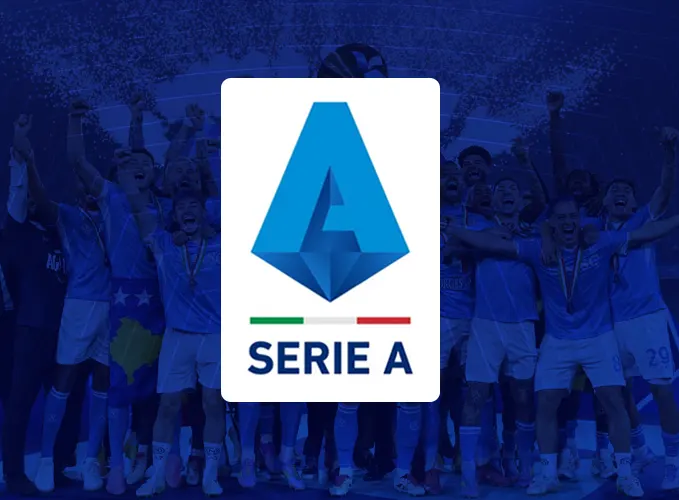
In Italy, league champions don’t just get a trophy; they wear the Scudetto, a small shield in the colours of the Italian flag on the shirts the following season. The idea dates back to the 1920s and is widely credited to the poet and nationalist Gabriele D’Annunzio; it was officially adopted by the Italian federation in 1924, with Genoa being the first club to wear it.
Over time, “winning the Scudetto” became shorthand for winning Serie A itself. The concept proved so iconic that other countries copied it, and the Scudetto is now one of football’s most recognisable visual traditions and a subtle, but powerful flex that says: we’re the reigning champions.
Stars Above the Badge Started in Italy
Those little gold stars you see above some club crests? According to the Juventus official website, which started in Italy. In 1958, Juventus added a star after winning their 10th league title, with FIGC approval and for the first time, any team used a star to mark a trophy milestone. Read more about it on t.
In Italian football, one star represents 10 Serie A titles, so Juve eventually earned three stars (36 official titles), while Inter recently added a second for their 20th Scudetto. The system is now widely adopted worldwide by clubs and national teams. What started as a tiny symbol on a Turin shirt quietly became a global language of football greatness.
Il Grande Torino: A Superteam Lost at Superga
In the 1940s, Torino built a side so dominant that they were nicknamed Il Grande Torinino, the Great Torino. They won five consecutive Italian titles between 1943 and 1949 (excluding the special wartime championship). As mentioned on the Grande Torino website, they often supplied almost the entire Italian national team, once fielding ten Torino players in a single Azzurri XI.
Their reign ended tragically on 4 May 1949, when the team’s plane crashed into the hill of Superga near Turin, killing all 31 people on board. The disaster devastated Italian football and remains one of the sport’s most important and emotional stories, a reminder that Serie A’s history is written in tragedy as well as trophies.
The Only 21-Team Season (Where One Club Rested Each Weekend)
Serie A hasn’t always been a neat 18 or 20-team league. The 1947-48 season featured an odd 21-team format, a one-off quirk born out of post-war adjustments and political tensions. With an odd number of clubs, the FIGC decided that every matchday, one team would have a bye; they simply didn’t play that weekend. It created an unbalanced rhythm and scheduling headaches, so the experiment was never repeated.
Four clubs were relegated, and only one was promoted to reset the numbers. For fixture nerds, Lazio Stories state that this forgotten season is a perfect example of how even the most traditional leagues sometimes bend their own rules to survive chaotic times.
The “Seven Sisters” and the Golden 1990s
In the mid-1990s and early 2000s, Serie A was so stacked with talent that people called its elite clubs “Le Sette Sorelle” - the Seven Sisters. The group usually included Juventus, AC Milan, Inter Milan, Roma, Lazio, Parma and Fiorentina, who regularly fought for Scudetti and European trophies.
Stadiums were packed, TV audiences were huge, and world-class stars, from Baggio and Batistuta to Zidane and Ronaldo, were flocking to Italy. Wages and transfer fees were sky-high, and almost every big European night seemed to feature an Italian side. That era, ending around the Calciopoli scandal in 2006, is still remembered as a golden age when Serie A was arguably the strongest league on the planet.
Three Points for a Win Arrived With a Twist
Like most leagues, Serie A originally awarded two points for a win. That changed in 1994-95, when Italy adopted the now-standard three points for a victory to encourage more attacking football. The first championships under this new system were won by Marcello Lippi’s Juventus, who played a notably offensive 4-3-3, lost a record seven games for a title winner, but drew only four, maximising the value of wins under the new rules.
As mentioned on the Serie A website, it subtly shifted how teams approached risk and reward: conservative draws suddenly became less attractive, and coaches had to balance Italy’s defensive tradition with the need to chase victories.
Calciopoli: The Scandal That Shook the League
In 2006, Italian football was rocked by Calciopoli, a match-fixing and referee-influence scandal involving several major clubs. Wiretaps revealed club directors discussing preferred referees, prompting accusations of manipulating appointments during the 2004-05 and 2005-06 seasons. The fallout was severe: Juventus were stripped of their 2004-05 title, the 2005-06 title was reassigned to Inter, and they were relegated to Serie B.
Fiorentina, Lazio, Milan and others received points deductions and other sanctions. The scandal damaged Serie A’s reputation but also forced reforms in governance and officiating. When Juventus later climbed back to dominate the 2010s with nine straight titles, it added another layer of drama to an already turbulent history.

Catenaccio and Zona Mista: Italy’s Tactical Laboratory
Serie A is famous as a tactical classroom for coaches. The league popularised catenaccio, literally “door-bolt”, a highly organised, defence-first system that focuses on closing space, tight marking and rapid counterattacks.
Later, many Italian coaches evolved it into zona mista, a hybrid style that mixes zonal marking, flexible positioning, and attacking movement inspired partly by the Total Football tactic, while retaining Italian man-marking discipline. Those ideas influenced clubs across Europe and helped shape the reputations of managers such as Helenio Herrera, Arrigo Sacchi, Giovanni Trapattoni, and others. Even today, Serie A is where tactical obsessives go to study new shapes, in-game tweaks and beautifully organised defensive lines.
No Other League Does Derbies Like Italy
Italy is packed with intense stracittadine, intra-city derbies, and regional grudge matches. There’s the Derby della Madonnina (Inter vs Milan), the Derby della Capitale (Roma vs Lazio), plus Juventus-Inter’s Derby d’Italia: Genoa-Sampdoria’s Derby della Lanterna, and many more. These fixtures mix football with politics, class identity, and many more.
Choreographed tifos, flares and songs turn stadiums into open-air theatres. Even in recent seasons, matches like the Rome derby have carried huge emotional weight, with legendary coaches such as Claudio Ranieri treating them almost as a career-defining exam. For many fans, Serie A isn’t just about who wins the title; As The Guardian stated, it is about never losing the derby, no matter where you finish in the table.
Beyond the Standings
These ten snapshots barely scratch the surface of Serie A’s story, but they show why Italy’s top flight is more than just another league table; it is a century-long saga of symbols, scandals, geniuses and unforgettable nights. Serie A has an interesting story with hidden corners and obscure facts. Scratch beneath the covers and be part of the inside club, be part of the journey by booking your tickets for these matches via 1BoxOffice for genuine tickets with a 150% money-back guarantee.
Why book with us?
- 150% Money Back Guarantee!
- Trusted by Football Fans Since 2006
- Verified Tickets From Trusted Sellers
- 24/7 Customer service all the way to your seat
Social Sites