In this guide
Origins: From Campo de Coia to BalaídosEarly Years and Historic MatchesArchitecture and a 12-Year RebuildBalaídos in 2026/27: European Nights ReturnThe World Cup 2030 QuestionConcerts and EventsMatchday Atmosphere and Cultural SignificanceStadium Tours and Visitor ExperienceWhy Balaídos MattersFAQsAfter more than a decade of cranes, hoardings and half-built stands, the Balaídos stadium is finally approaching the end of its longest chapter. Work on the last remaining stand, the Gol, began in January 2025, and Vigo City Council expects the fully rebuilt ground to be complete by February 2027, lifting capacity to around 31,000. Known for sponsorship purposes as Abanca Balaídos, the ground has been home to Celta de Vigo since 1928.
The stadium was designed by local architect Jenaro de la Fuente and built between 1925 and 1928. It opened on 30 December 1928 with a grand ceremony: the venue was blessed by archpriest Faustino Ande and inaugurated by the daughter of Vigo's then mayor, Carmen Gregorio-Espino. In that first match, Celta beat Real Unión 7-0, with midfielder Graciliano scoring the first goal.
Originally called Estadio de Balaídos (1928-1946), the ground became a beloved municipal stadium for Vigo. Nearly a century on, it hosts Celta's home games, which in 2026/27 include Europa League nights, as well as major cultural events in the city.
Origins: From Campo de Coia to Balaídos
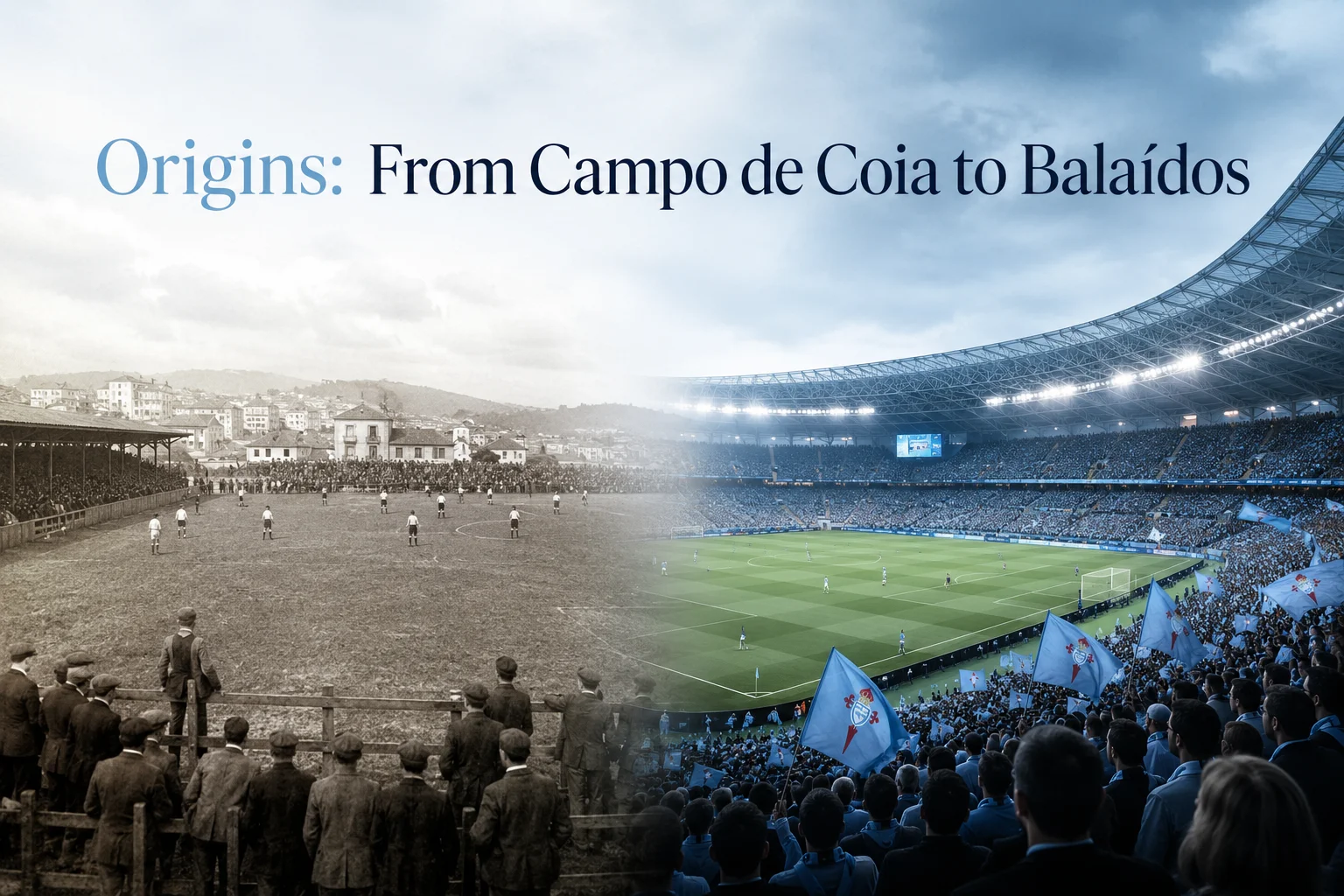
Celta Vigo was founded in 1923 by merging two local clubs, Vigo Sporting and Fortuna, that had played at the historic Campo de Coia in the Coia district of Vigo. Campo de Coia dated to 1908 and was notable for hosting the 1922 Copa del Rey final, in which Barcelona beat Real Unión 5-1.
However, as Celta's popularity grew, Coia became inadequate in size and facilities. In the mid-1920s, the city and club agreed to build a new stadium in the Balaídos neighbourhood, named after a local stream, to accommodate the rising number of supporters.
The Balaídos project began in 1925, with de la Fuente, who designed many Vigo landmarks, drawing up the plans. By late 1928, the new stadium was completed, replacing Coia as Celta's home.
Coia's legacy lives on in Celta history. It was at Coia on 9 December 1928 that Celta played its last match there, a cup tie against Real Sociedad, before moving to Balaídos.
Early Years and Historic Matches

From the outset, Balaídos was used for more than Celta's league games. In its early decades, it hosted football friendlies and regional tournaments, as well as athletics and other sporting events typical of multi-use stadiums of the era. The ground roared Celta through the home legs of the club's run to the 1948 Copa del Generalísimo final, including a famous quarter-final elimination of Atlético Madrid, before Sevilla beat Celta 4-1 in the final at Chamartín in Madrid. Celta's cup runs of the 1940s and 1950s brought some of the old ground's most memorable nights.
Balaídos was renovated and its stands extended to add capacity over the years. A covered roof was added between 1968 and 1971 to modernise the venue. By the time of the 1982 World Cup, Balaídos had become one of the larger stadiums in La Liga.
In fact, Spain 1982 left a lasting mark on Balaídos: it hosted three World Cup group matches, all featuring Italy. These were Italy vs Poland, Italy vs Peru and Italy vs Cameroon.
The Italian team that played there ultimately won the tournament. For the World Cup, Balaídos acquired its distinctive Río stand, so named because the Lagares River flows immediately behind that goal, a rare situation giving fans a view of running water just past the sideline.
Architecture and a 12-Year Rebuild
The design of Balaídos combines its 1920s concrete grandstands with a rolling programme of modern updates. The outfield stands were first covered in the 1960s, and the 1982 World Cup work added the Río stand and other upgrades. In the 1990s and early 2000s, further seating expansions and a video screen brought Balaídos up to UEFA standards.
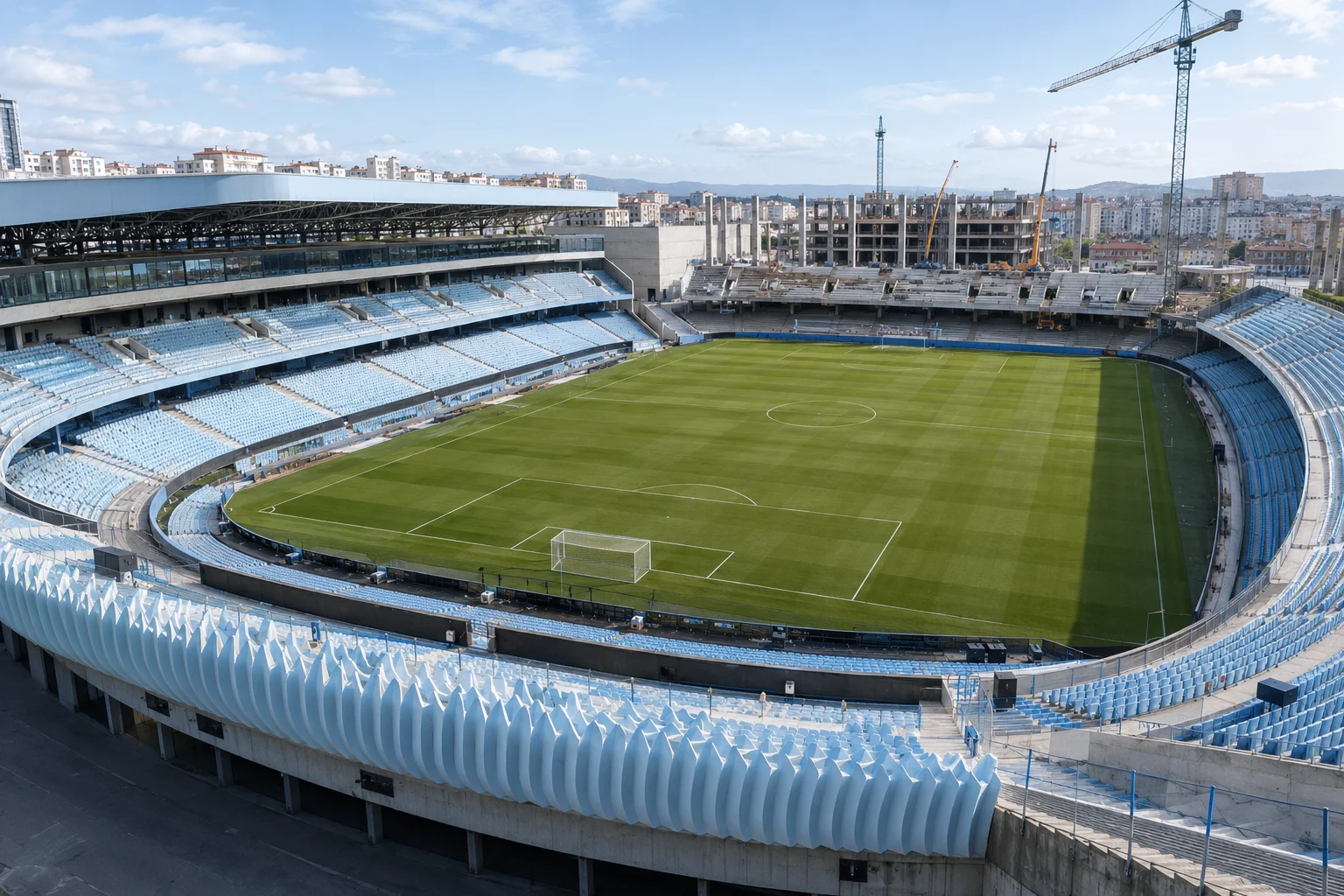
Since January 2015, Balaídos has been undergoing a complete redevelopment to create a uniform, modern bowl. The north Río stand was rebuilt between 2015 and 2017, the main Tribuna grandstand between 2017 and 2018, and the Marcador end behind one goal between 2021 and 2023. The final phase, the reconstruction of the Gol stand at the opposite end, began with demolition in January 2025.
That last stand is now rising fast. The structure sits on 84 concrete pillars and reached an advanced stage by summer 2026, with the roof supports due after the summer. Vigo City Council expects the stand to be materially finished by the end of 2026 and fully operational by mid-February 2027, closing a rebuild that will have taken more than 12 years. The finished Gol will hold around 7,000 spectators, taking the total capacity of Balaídos to roughly 31,000.
These modern touches blend with the classic concrete structure. The new roof extends uniformly over every section, and a wave pattern adorns the facade in light blue aluminium panels, a nod to Celta's sky-blue colours and the Atlantic that flows past Vigo.
In parallel with the upgrades, the naming rights to Balaídos were sold in 2018 to Abanca, a Galician bank, which is why the ground now carries the name Estadio Abanca Balaídos. The deal helped fund the renovations and underlines the stadium's commercial as well as cultural role in Galicia.
WhatsApp channel
Sports news straight to your phone
Match updates, on-sale dates and ticket news from 1BoxOffice.
Balaídos in 2026/27: European Nights Return
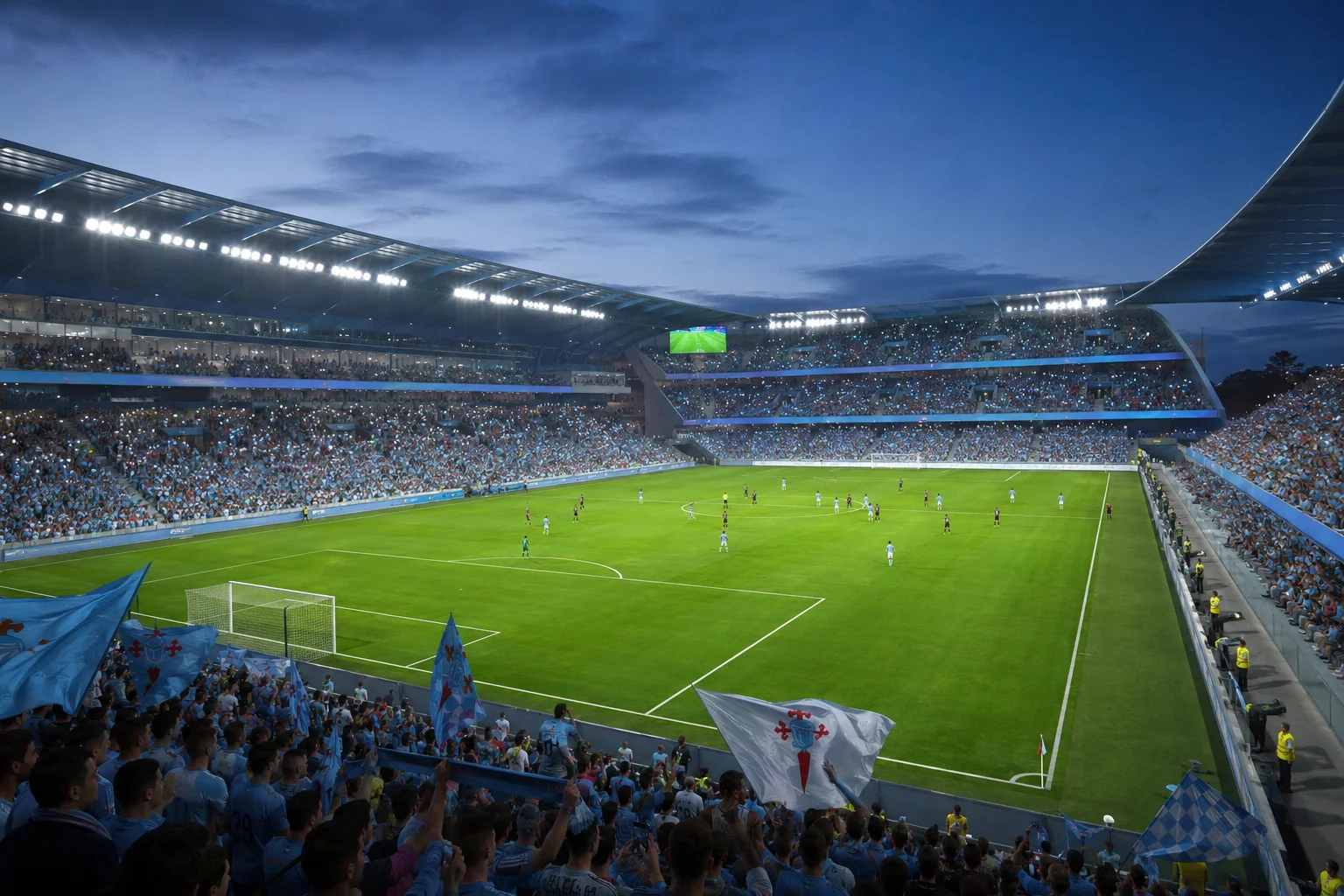
The rebuilt stadium has a team worthy of it. Celta finished sixth in La Liga in 2025/26 under head coach Claudio Giráldez, securing Europa League football for a second consecutive season. The 2025/26 European campaign ended at the quarter-final stage, the club's deepest continental run since the semi-final of 2016/17, and striker Borja Iglesias led the scoring with 18 goals in all competitions.
Celta are due to open their 2026/27 home league campaign against Osasuna on 16 August, and that night should also mark a small milestone in the rebuild: 792 new seats in the five front rows of Gol Bajo are being installed from mid-June 2026, replacing the temporary stand used last season and putting supporters back on the touchline at that end.
Once the full Gol stand opens, currently pencilled in for February 2027, Balaídos will host its first complete season as a finished bowl in 2027/28. For now, expect a ground operating at close to 25,000 while the works conclude, with demand strongest for the visits of the big two and for Thursday nights in Europe. Check the latest fixtures on the Estadio de Balaídos tickets page, and use the Balaídos seating plan to compare views from each stand before choosing your section.
The World Cup 2030 Question
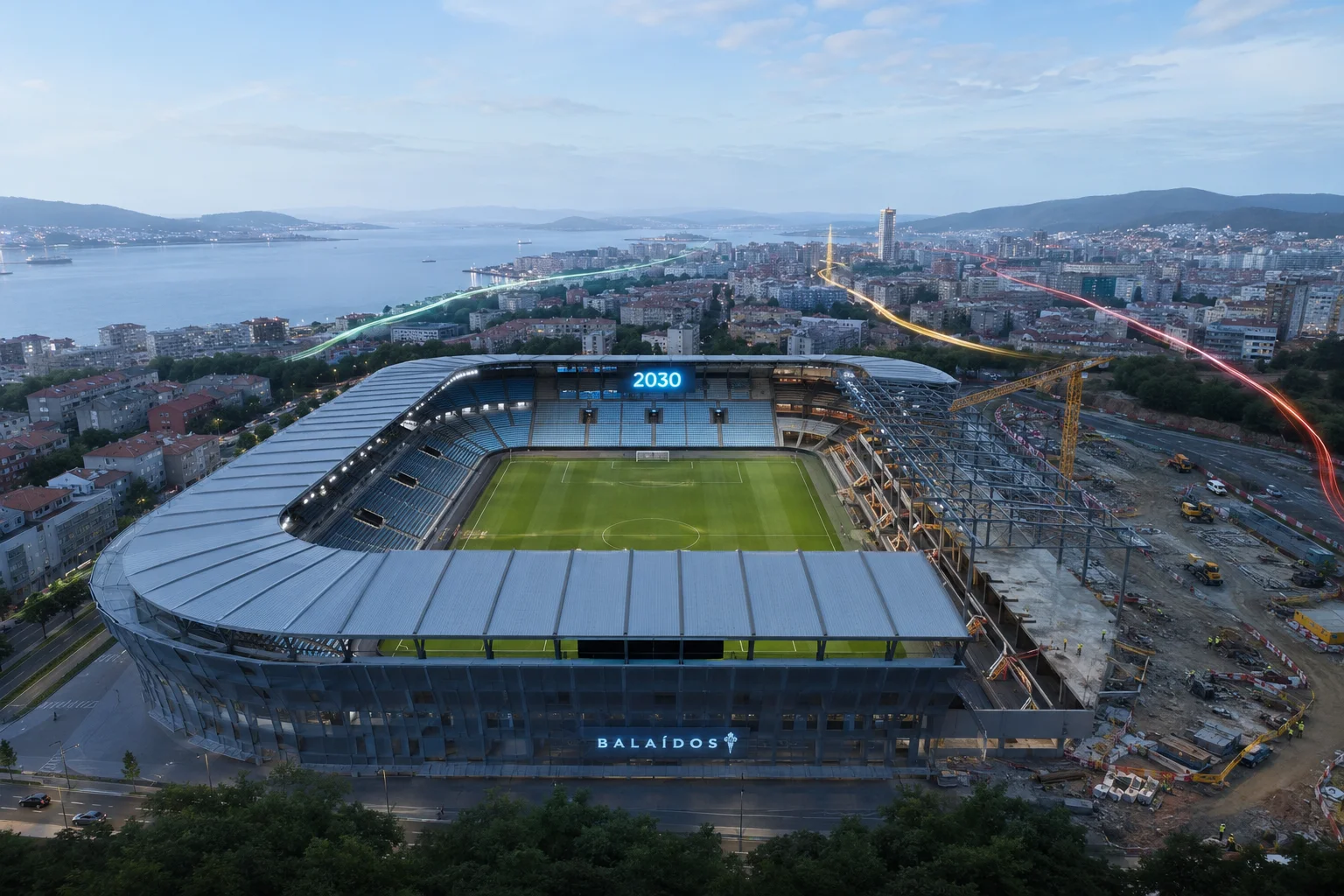
Vigo hosted the World Cup in 1982 and wants to do so again in 2030, when Spain stages the tournament alongside Portugal and Morocco. Balaídos was left off the initial list of Spanish venues, a decision that caused uproar in Galicia, and Mayor Abel Caballero has campaigned relentlessly to overturn it. For the grounds that did make the cut, see our World Cup 2030 venues and stadiums guide.
The city is not waiting for permission. Preparatory works are already under way to relocate two large drainage collectors beneath the stadium's surroundings, the step required before the Tribuna stand can be expanded. That expansion would push Balaídos beyond the 40,000-seat threshold demanded of World Cup venues, and the council joined a June 2026 meeting of aspirant host cities convened by Spain's national sports council. Whether the campaign succeeds or not, it has locked in a second wave of investment for the ground.
Concerts and Events
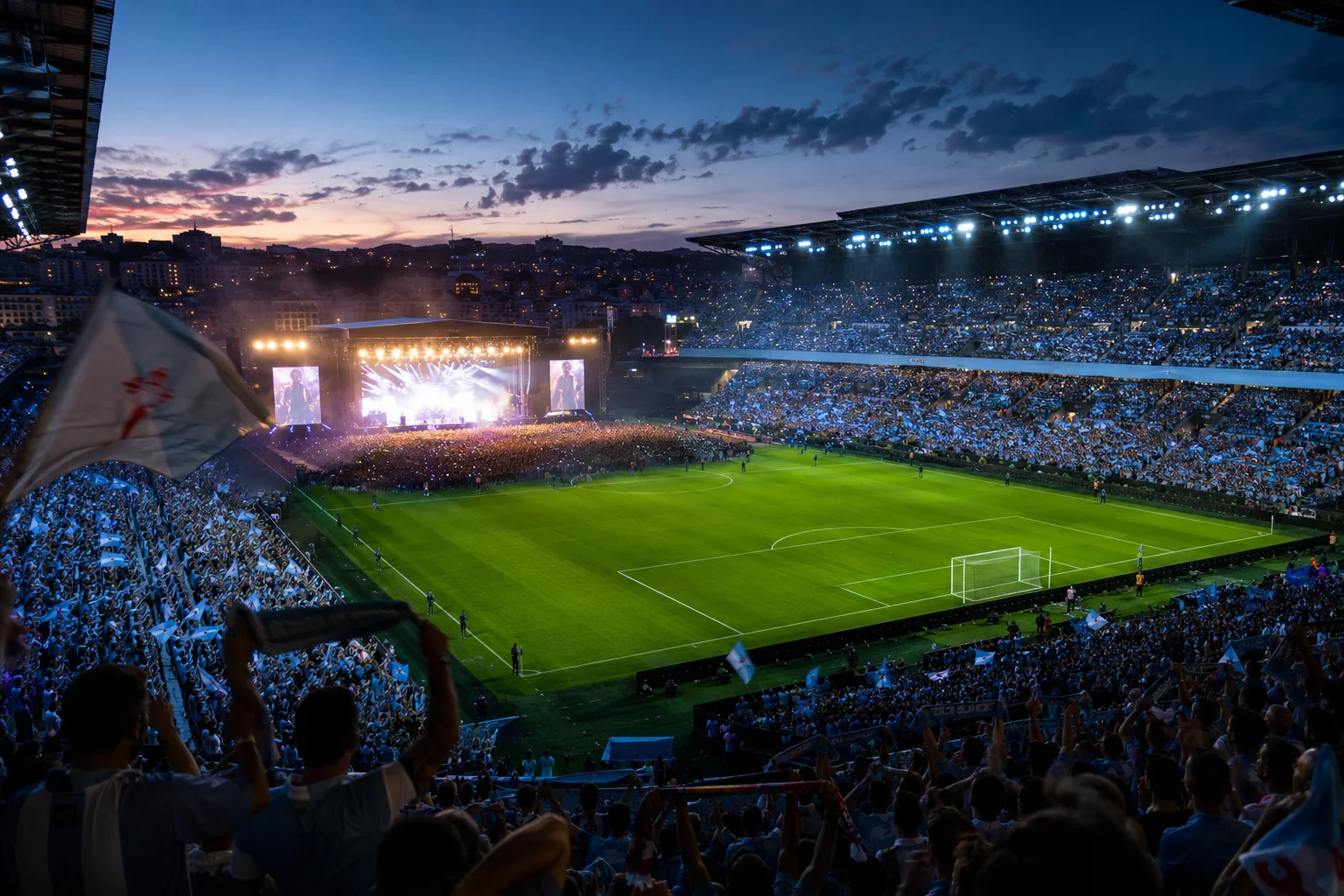
Beyond football, Balaídos has long served as Vigo's premier concert venue. International stars have filled the stands on summer nights. Madonna played a stadium show in July 1990 to about 20,000 fans, and Dire Straits drew roughly 40,000 in August 1992.
The Rolling Stones famously rocked Balaídos in July 1998 before some 35,000 spectators. These big-name concerts, along with local festivals and athletics meets, have made Balaídos a year-round cultural hub in Vigo.
Football-wise, Balaídos has witnessed many historic nights. Celta's glory era in the early 2000s, when the club reached the Champions League, played out on this pitch. So did the most feverish European night of the modern era: the 2016/17 Europa League semi-final first leg against Manchester United, when 26,202 supporters squeezed into a ground mid-renovation on 4 May 2017, the highest home attendance of that season. Iago Aspas, the Moaña-born forward who became the face of the club for more than a decade, scored 26 goals across that campaign and remains the yardstick against which every Celta hero is measured.
Intense derbies against city rivals Deportivo La Coruña also define the stadium's lore. Celta-Deportivo fixtures at Balaídos are among the most heated in Galicia. Fans decked in sky blue pack the stadium to scream "¡A por ellos!" with Galician passion and afouteza, the regional word for courage. During big wins, the Galician anthem "A Rianxeira", a song honouring the women of Galicia, is often sung by fans in a raucous tribute. This blend of local heritage and football fervour gives Balaídos a unique atmosphere on matchday.
Matchday Atmosphere and Cultural Significance
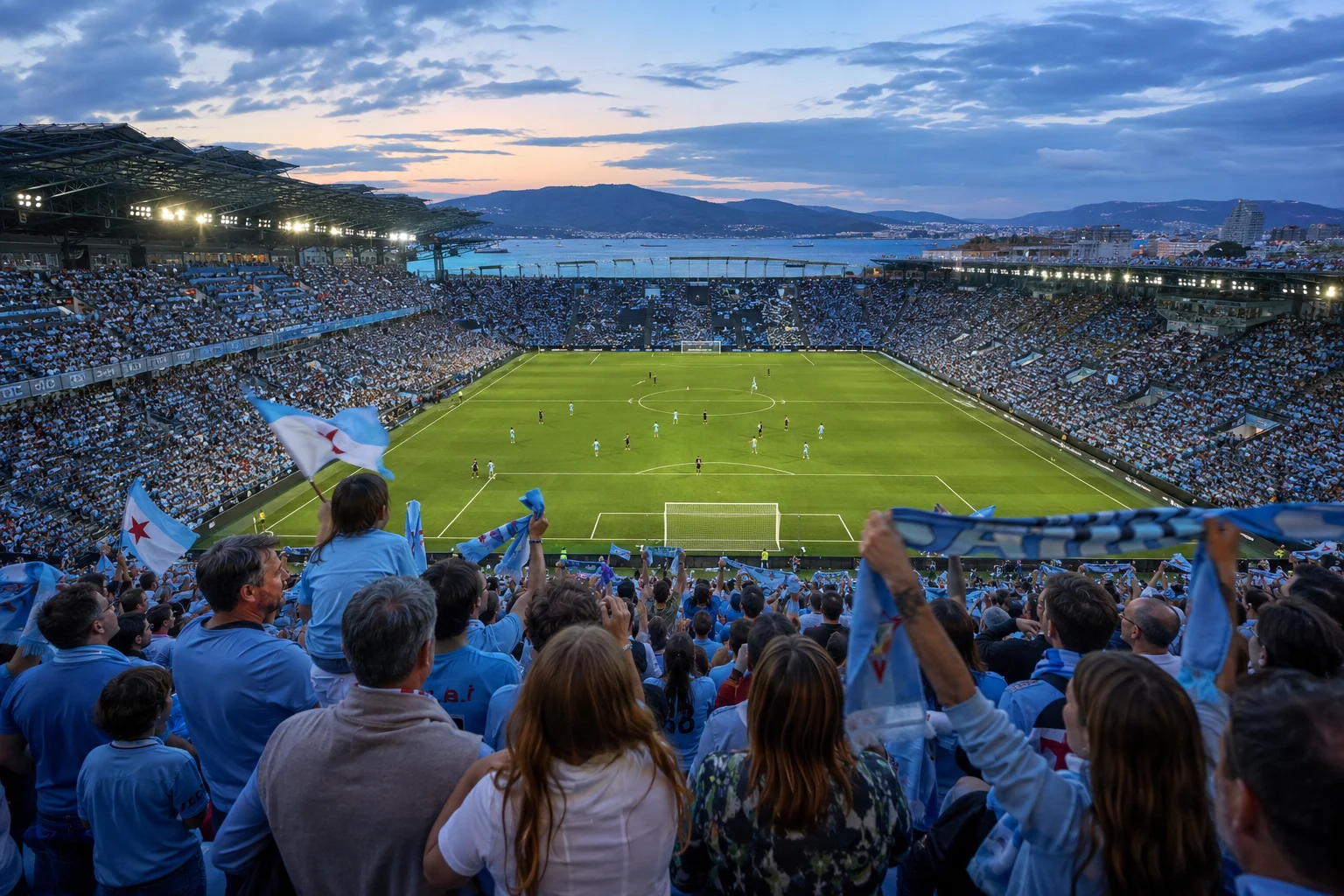
On home game nights, Balaídos is filled with devoted local fans. Supporters sing club anthems and Galician folk songs, creating a boisterous yet warm atmosphere. The Galician coast setting adds to the experience: the stadium is only about two kilometres from the Atlantic Ocean, and the Lagares River runs between one goal and the Río stand, giving a literal waterfront feel to the terraces. These surroundings inspired Celta's colours, the light blue of sea and sky, and the club's community identity.
Locals often gather in the bars and restaurants of the Balaídos neighbourhood before matches, queueing for choripáns and discussing club lore. The presence of the nearby Stellantis car factory, still known to most locals by its old Citroën name, means many fans are factory workers or families of workers, further embedding the stadium in Vigo's social fabric.
Matches here turn into communal festivals: chants echo through the stands, and the whole stadium can erupt at a goal. Balaídos embodies the coastal spirit of Vigo, and its supporters exemplify Galician courage and local pride.
Even neutral visitors remark on the warm but fervent vibe: friendly ultras exchange scarves, children scamper in the aisles at half time, and every corner of the stadium shows off club banners and local symbols. This vibrant atmosphere, equal parts historic tradition and everyday Galician culture, makes visiting Balaídos feel like joining a local family event.
Stadium Tours and Visitor Experience
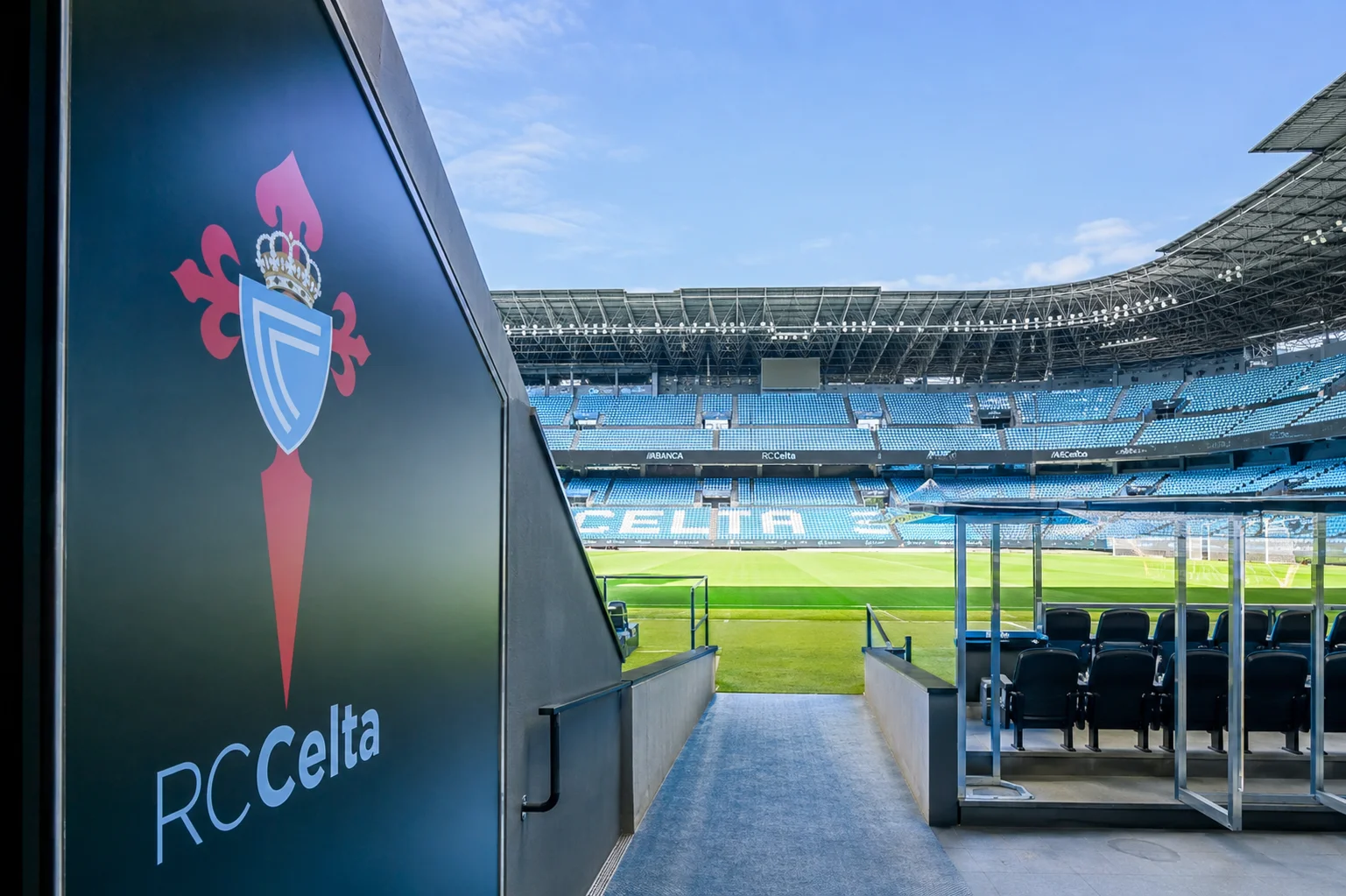
For tourists and fans alike, Balaídos offers a behind-the-scenes tour that has become genuinely innovative in recent years: guides use virtual reality (VR) and augmented reality (AR) to bring the history to life.
Visitors can walk through normally restricted areas, including the players' tunnel, the dressing rooms, the press centre and the technical area at pitchside. VR headsets let visitors feel like a player stepping onto the pitch at kick-off, complete with crowd roar and stadium sights.
Since the club's 2023 centenary, the visit has also taken in the Centenary Museum, which tells 100 years of Celta history across four themed areas: Tradition, Afouteza, Pride and Heart, with trophies, shirts, video and memorabilia. The guided tour runs in Spanish or English and typically lasts 60 to 90 minutes. Key highlights include:
- Tunnel and pitch access: Walk the same tunnel the Celta squad uses and stand on the edge of the pitch.
- VIP areas: See the press box, mixed zone and changing rooms from the inside.
- Interactive tech: Relive highlights of past matches via VR and AR simulations.
- The Centenary Museum: Trophies, shirts and multimedia displays covering a century of club history.
- Cultural storytelling: Anecdotes about Celta's history, the meaning of the club crest and local legends.
Reviews of the tour commonly praise the knowledgeable guides who share a passion for Celta and Vigo. For many visitors, especially families and younger fans, the technology makes the stadium come alive in a novel way. Prices vary by booking platform, from around €13 to €25 per person as of July 2026, and generally include the museum and all equipment.
Even locals visit Balaídos on tours to connect with their own heritage. For Galician fans, this behind-the-scenes glimpse offers pride in the region's premier stadium and its century-old story. Through multimedia exhibits, fans relive moments like the 1928 opening and the great Celta-Deportivo derbies.
Practical tips for a visit: the tour departs from the Celtista Area between gates 14 and 15. It operates in both languages, though specific times vary. Visitors should note that the Gol end remains a building site until early 2027, so views can be obstructed in places and some sections may be fenced off.
Still, even with the final works ongoing, the tour highlights of the tunnel, the VR experience and the press room remain impressive, and photo opportunities abound on the pitch edge and in the stands. It is highly recommended for football lovers seeking an authentic local experience, and it demonstrates why Balaídos is as much a cultural landmark as a sports venue.
Why Balaídos Matters
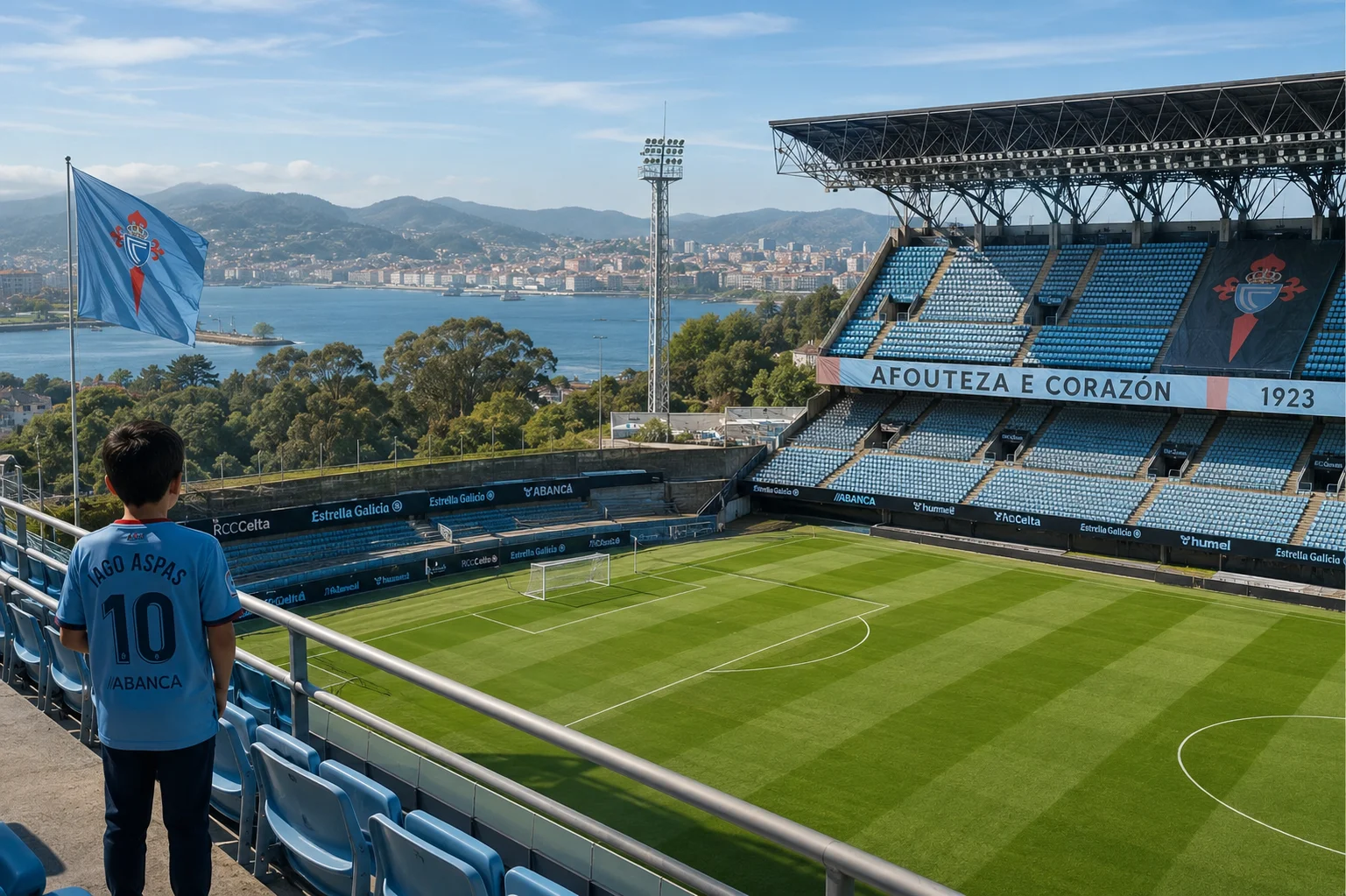
In sum, Balaídos is far more than a football arena: it is a century-old symbol of Vigo's community. Through the decades, it has witnessed Celta's ups and downs, hosted international tournaments and rock concerts, and stood as a gathering place for Galicians.
From its 1928 inauguration, attended by civic and church dignitaries and blessed on its opening day, to the near-complete rebuild of 2026, Balaídos encapsulates the local spirit. Its proximity to the sea and the flowing waters behind the Río stand remind visitors that this is Galicia, a region defined by maritime culture and resilient, singing fans.
For visitors to Vigo, a tour or match at Balaídos offers an authentic slice of Galician life. You will leave appreciating not just the football history, chronicled in every stand and plaque, but the passion of local supporters who make it special.
Whether cheering on Os Celestes or simply soaking in the setting, a trip to Balaídos connects you to decades of local heritage and a uniquely coastal football atmosphere, one that gains a European soundtrack again in 2026/27.
FAQs
1. How do you get to Balaídos from Vigo city centre?
-
The stadium sits about three kilometres south-west of the centre, roughly 10 minutes by taxi or a short ride on the city buses that serve Avenida de Balaídos.
2. Who owns Balaídos?
-
Balaídos is a municipal stadium owned by Vigo City Council, with Celta de Vigo as its tenant, which is why the council leads and part-funds the redevelopment.
3. Do Celta play at Balaídos during the building work?
-
Yes, the rebuild has been carried out one stand at a time precisely so that Celta could keep playing every home fixture at Balaídos throughout the works.
4. Can away fans get tickets for matches at Balaídos?
-
Visiting clubs receive a small allocation for their travelling supporters, while neutral and international fans typically use the resale market for seats in home areas.
You can book 100% genuine and 150% guaranteed tickets to watch Celta Vigo's league and European matches at Balaídos via 1BoxOffice.
Sources: RC Celta de Vigo, Concello de Vigo, El Español, Atlántico Diario, StadiumDB, Wikipedia.