In this guide
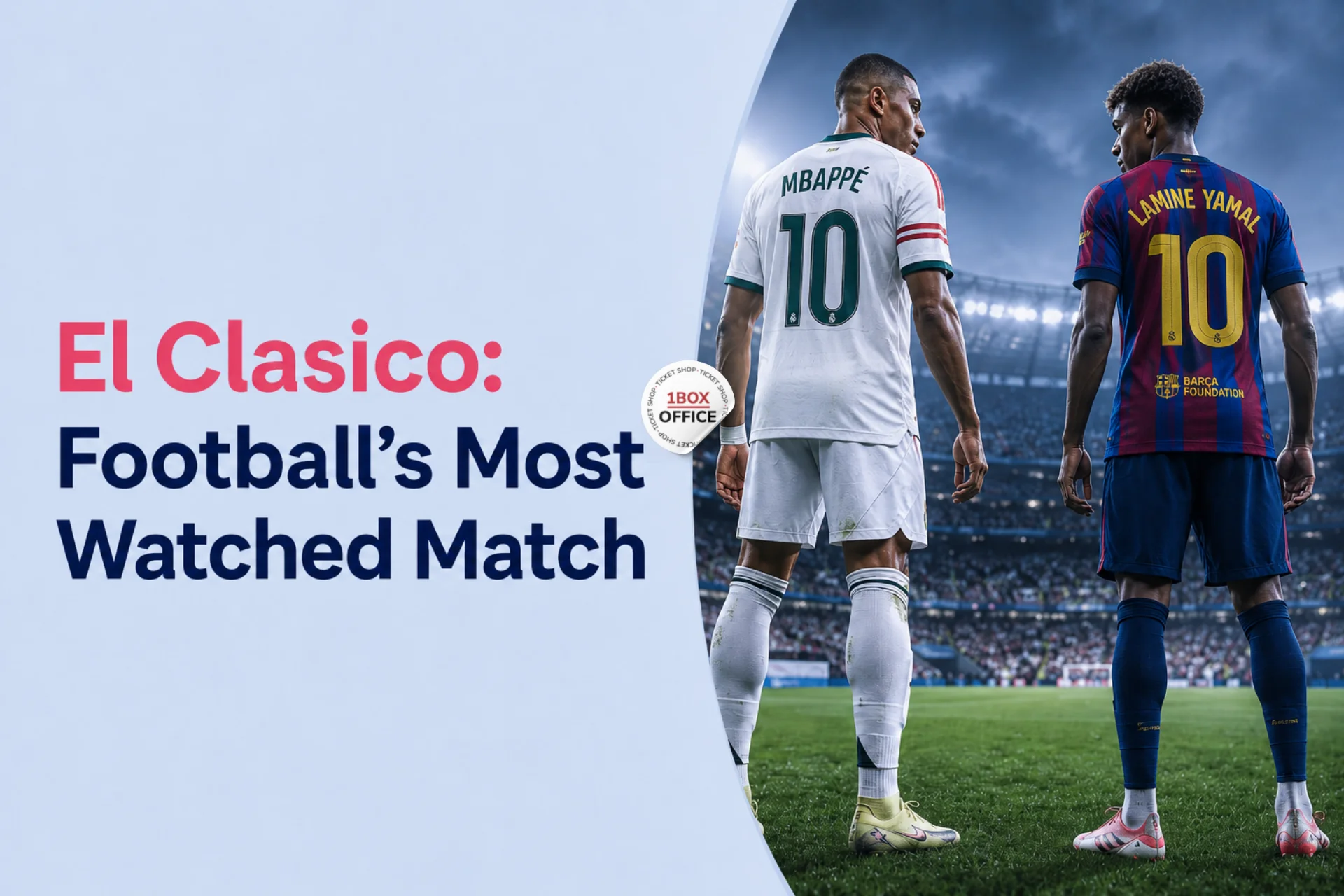
Key TakeawaysWhat Is El Clasico?Confirmed El Clasicos This Season 2026/27How Many People Actually Watch El Clasico?1. More Than a Game: Rivalry, Politics and PassionA Rivalry Dead Level After 124 Years2. Star Power in the Flick vs Mourinho EraThe World Cup Hangover, and the Rodri Tug of War3. Scheduling for Peak ViewershipWhere the Audience Lives4. El Clasico as a Global Brand and SpectacleFour Pillars, One FixtureFAQsEl Clasico, the meeting of FC Barcelona and Real Madrid, is the most watched football match on the planet, and the October 2025 edition proved it again with a reported global audience of more than 600 million across over 180 territories. The 2026/27 season brings two more: Barcelona vs Real Madrid at the Spotify Camp Nou on 25 October 2026, then the return at the Santiago Bernabeu on 9 May 2027. The stakes could hardly be higher. The all-time head-to-head record sits dead level, Jose Mourinho is back in the Madrid dugout, and the last league meeting between the pair decided the destination of the title itself. This global pull rests on four pillars: a rivalry entangled with history and politics, an unbroken supply of superstar players, scheduling engineered for maximum audience and marketing that has turned the fixture into a standalone brand.
Key Takeaways
- The October 2025 edition is the most watched El Clasico ever, with a reported audience above 600 million across 180-plus territories and average live viewership estimated at 85 to 100 million, the highest figures of any club fixture.
- Two Clasicos are confirmed for 2026/27: Barcelona host Real Madrid at the Spotify Camp Nou on 25 October 2026, and the return is at the Santiago Bernabeu on 9 May 2027.
- The all-time head-to-head stands level at 106 wins each after 264 competitive meetings, so October's winner takes the outright historical lead.
- Barcelona have won six of the seven meetings since Hansi Flick arrived, and Jose Mourinho faces his first league Clasico since returning to Madrid.
- Spain's World Cup win in July 2026 and the unresolved Rodri transfer saga give the October meeting its biggest build-up in years.
What Is El Clasico?
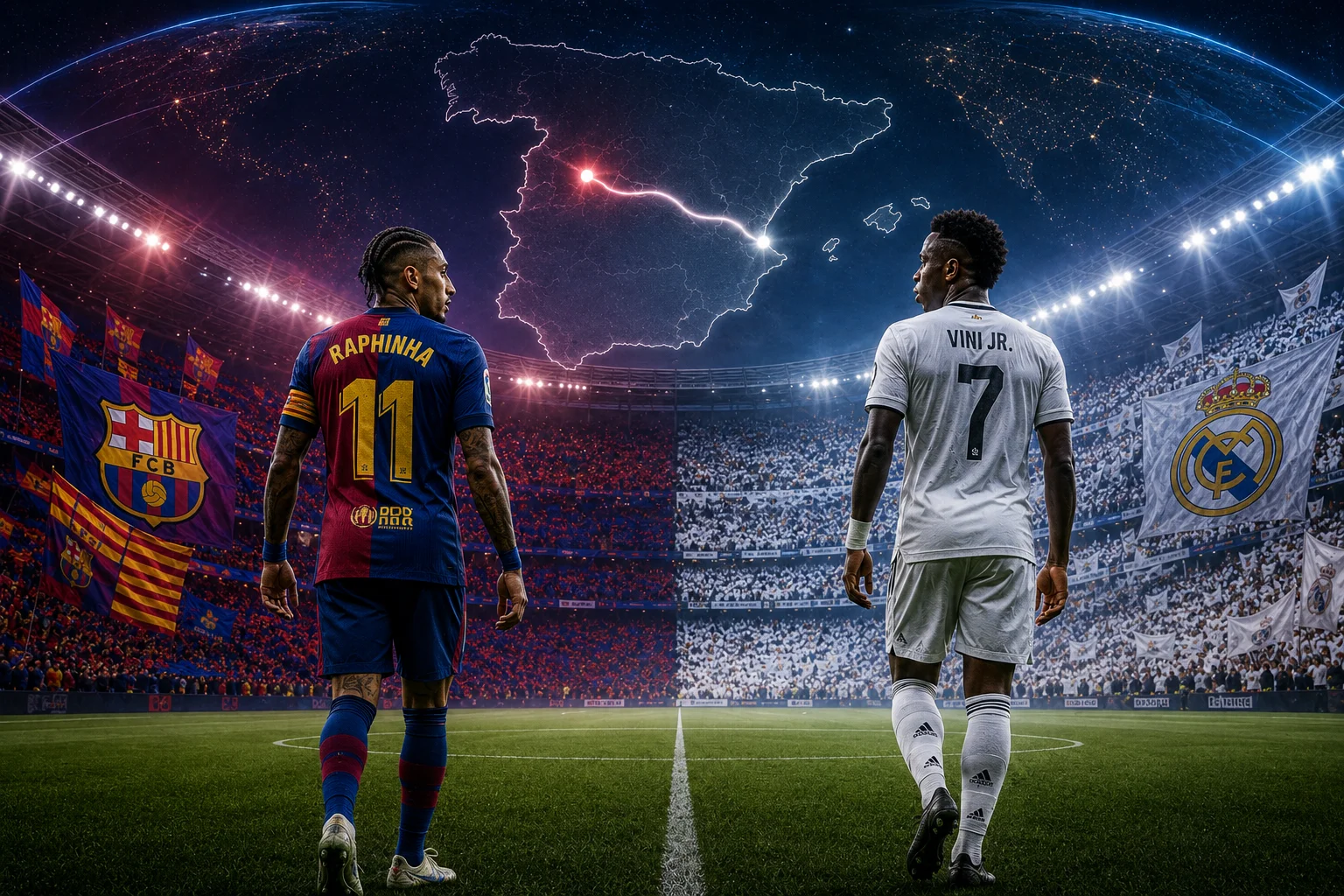
El Clasico, Spanish for "The Classic", is the name given to any match between FC Barcelona and Real Madrid, the two most successful clubs in Spanish football. The term spread from Latin America around the turn of the century and describes something distinct from a derby: a derby is a local rivalry, while a Clasico is the meeting of a league's two giants regardless of geography, which is why the 600 kilometres between the two cities does nothing to dilute it. Between them the pair have dominated the Spanish title for decades, and their meetings decide championships often enough that the fixture doubles as the league's shop window.
Is it the biggest game in the world? Supporters of Boca Juniors against River Plate, Celtic against Rangers or Al Ahly against Zamalek will make their own case on intensity, and no one who has stood in those grounds would dismiss them. Where the Spanish fixture stands alone is global distribution and star density: no other rivalry pairs two squads of this quality in front of broadcasters in 180-plus territories twice a season. English football has no true equivalent either, which is why searches for a "Premier League Clasico" have no clean answer; Liverpool against Manchester United comes closest on trophies, but no two English clubs monopolise the title the way these two have.
Confirmed El Clasicos This Season 2026/27
Two Clasicos are locked into the league calendar released on 30 June 2026, one in each half of the season. Exact kick-off times are confirmed by La Liga closer to each matchday.
| No. | Match | Competition | Stadium | Seating Plan |
|---|---|---|---|---|
| 1 | Barcelona vs Real Madrid (25 Oct 2026) | La Liga, Matchday 10 | Spotify Camp Nou | Camp Nou seating plan |
| 2 | Real Madrid vs Barcelona (9 May 2027) | La Liga, Matchday 35 | Santiago Bernabeu | Bernabeu seating plan |
The list may yet grow. The Spanish Super Cup has produced four consecutive Clasico finals in Saudi Arabia, a Copa del Rey draw can pair the clubs at any stage from the last 16 onwards, and a Champions League meeting is always possible from the knockout rounds. Every season since 2023/24 has ultimately delivered at least three Clasicos, so the two confirmed league dates are best treated as the floor, not the ceiling.
WhatsApp channel
Sports news straight to your phone
Match updates, on-sale dates and ticket news from 1BoxOffice.
How Many People Actually Watch El Clasico?
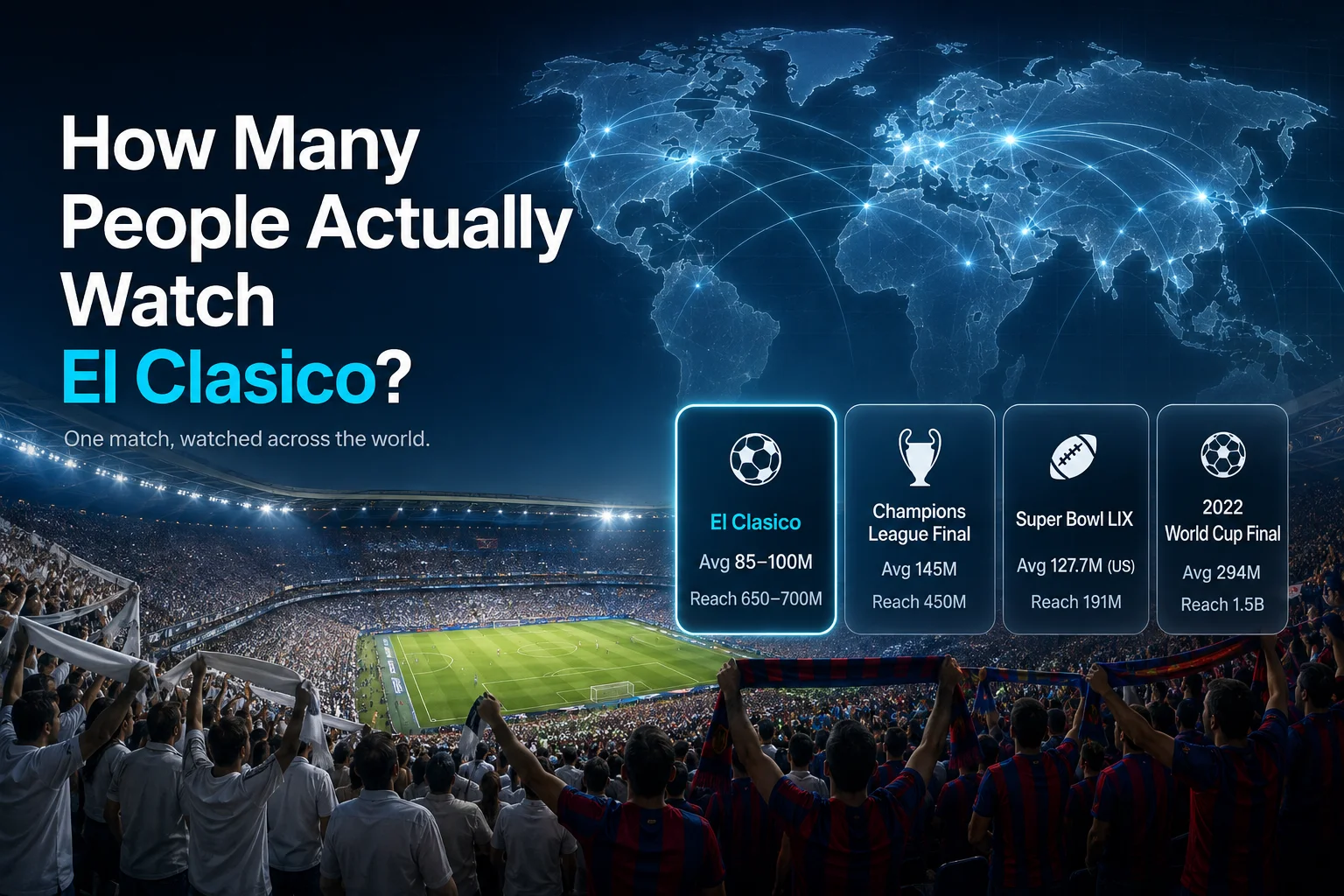
The short answer: reported global audience figures for recent editions exceed 600 million, average live viewership estimates sit between 85 and 100 million per match, and both numbers make it the most watched club football match in the world. The longer answer is worth your time, because the viewership numbers are debated every time the fixture trends, and most of what circulates on social media mixes up two different measurements.
The Most Watched El Clasico Ever
By reported figures, the October 2025 meeting at the Bernabeu, which Real Madrid won 2-1, is the most watched El Clasico ever: a global audience in excess of 600 million across more than 180 territories, confirmed to industry outlet Sportcal by broadcast sources. In Spain alone, DAZN recorded 2.95 million unique viewers and a 22.2% national audience share, while a sub-licensing deal put the match on free-to-air Italia 1 for a further 1.23 million Italian viewers. The trajectory is steep: broadcasters were quoting 400 to 500 million for the Messi and Ronaldo era editions a decade ago, and the fixture's distribution has widened every year since.
Are the Viewing Figures Inflated?
Ask a football forum and someone will insist the numbers are nonsense, and the sceptics have half a point. Claims that a billion people watch, floated by excitable broadcasters over the years, have been comprehensively debunked, and analysts at Forbes and FiveThirtyEight have both published takedowns of the loosest figures. The confusion comes from mixing reach with viewership. The 600 to 700 million figure describes potential reach, the audience able to access a live broadcast through the fixture's global distribution. Average live viewership, the number of people actually watching at once, is estimated at 85 to 100 million for a single Clasico. Both figures are real, they simply answer different questions, and even the conservative one dwarfs any regular league fixture anywhere in the world. The comparison with other marquee events makes the point.
| Event | Estimated average viewership | Reported reach |
|---|---|---|
| El Clasico (single edition) | 85 to 100 million | 650 to 700 million |
| Champions League final | Around 145 million | Around 450 million |
| Super Bowl LIX (2025) | 127.7 million (US average) | 191 million |
| 2022 World Cup final | Around 294 million | 1.5 billion (governing body estimate) |
El Clasico vs the Super Bowl
Only tournament finals played once a year, or once every four years, beat a fixture that happens at least twice every season, and the club-versus-international distinction matters here: a World Cup final remains the most watched match of any kind, while El Clasico holds the club record. The Super Bowl comparison is particularly telling: America's biggest television event concentrates its audience in one country, while the Clasico's reported reach for a single edition has exceeded the combined audiences of several Super Bowls put together. No other domestic club game gets close on either measure, and the commercial machinery behind those numbers keeps growing. Broadcasters in dozens of countries build dedicated pre-match programming around the fixture, and La Liga has struck territory-specific promotional partnerships, including a tie-up with a major US grocery chain, to push the rivalry deeper into new markets.
TV Audience vs Stadium Attendance
Attendance is the other number people search for after every edition, and it tells its own story about the fixture's pull. Barcelona's club media put the all-time Clasico attendance record at around 120,000, set at the old Camp Nou in the 1980s, with the modern-era record of 99,264 coming in April 2016 at the first Clasico after Johan Cruyff's death. Today's figures are lower only because of construction: the title-clinching May 2026 meeting drew 62,213 to a Camp Nou operating under a phased licence, a full house, and capacity will climb season by season as the rebuild progresses towards its six-figure target. On the road, the January 2026 Super Cup final filled Jeddah with 60,326. Wherever this fixture is staged, it sells out.
1. More Than a Game: Rivalry, Politics and Passion
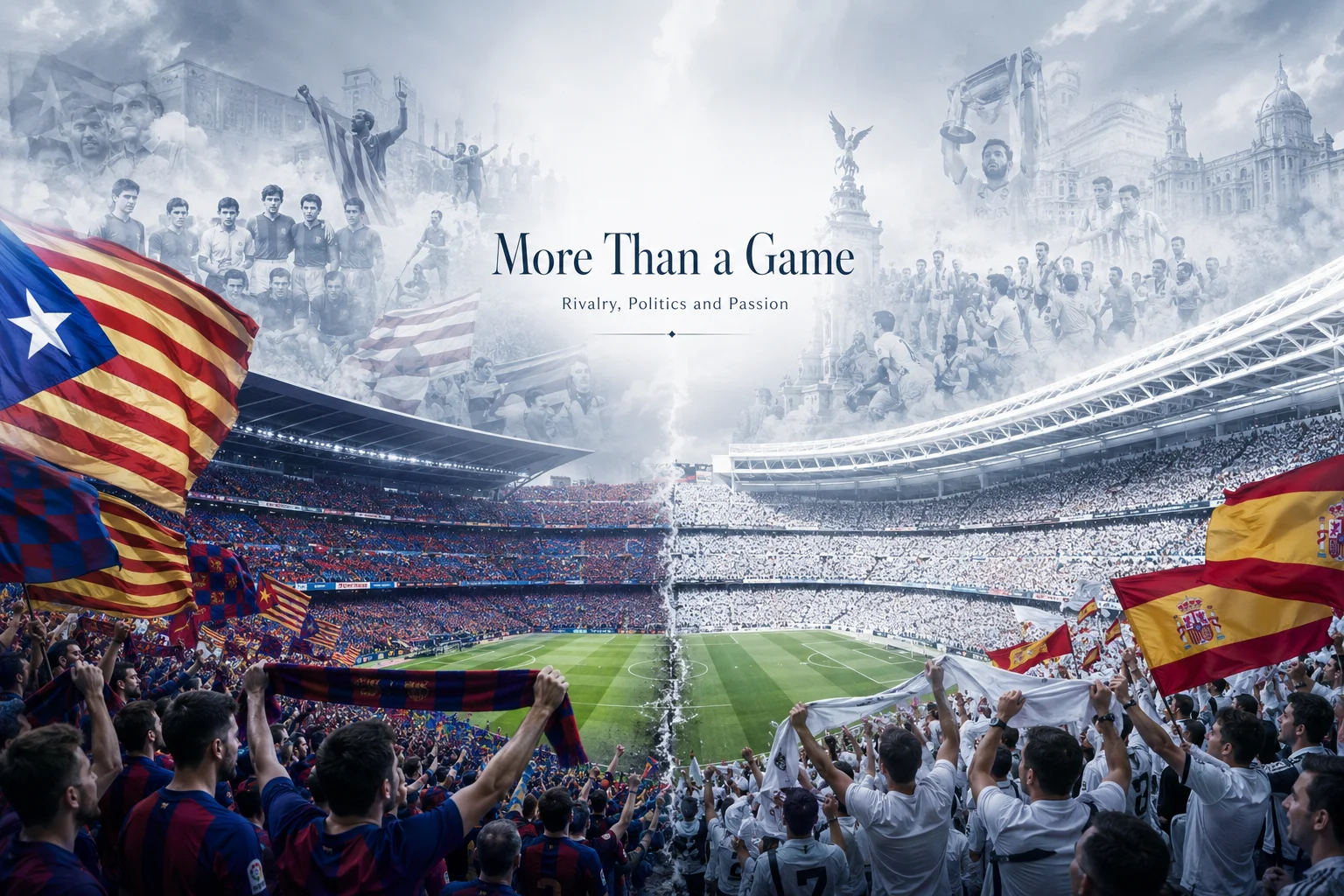
El Clásico is so important because it is far more than a football match. It carries a rivalry stretching back to the clubs' first meeting on 13 May 1902, one that reflects Spain's regional and political tensions, often described as the pride of Catalonia against the might of the capital, with cultural undercurrents that give every meeting a weight no other league fixture can match.
The political charge is not a marketing invention. Under the Franco dictatorship, Barcelona's ground became one of the few public spaces where Catalan identity could be expressed at all, and the fixture accumulated grievances that still colour it today, from the disputed 11-1 Copa scoreline of 1943 to the tug-of-war over Alfredo Di Stefano in 1953, when both clubs believed they had signed the Argentine forward and Madrid ultimately kept him. Half a century later, the wound reopened in modern form when Luis Figo, Barcelona's captain-in-waiting, crossed directly to Madrid in a world-record transfer in 2000. On his return to Catalonia, the hostility peaked with a pig's head thrown from the stands, an image that travelled around the world and told every neutral viewer exactly how much this fixture matters.
Real Madrid traditionally draws a more conservative and nationalist fan base, whereas Barcelona lives its motto "Més que un Club" ("more than a club") through an identity rooted in Catalan pride. The contrast is vivid inside the grounds. At the Spotify Camp Nou, Catalan flags including the pro-independence Estelada wave through the stands and supporters chant for independence on 17 minutes and 14 seconds, a nod to the fall of Catalonia in 1714. Across the country, the Santiago Bernabeu answers with Spanish national flags and cries of "¡Viva España!".
Yet the Clasico unites as much as it divides. The prospect of Catalan independence, which in theory could remove Barca from La Liga, has seen fans on both sides voice the same fear: no one wants El Clasico to disappear. Even during the 2017 Catalan crisis, senior figures at both clubs insisted Barcelona must stay in La Liga, and Barca president Joan Laporta, himself a pro-independence politician, has repeatedly said the club will keep playing in the Spanish league regardless of politics. The rivalry matters too much to lose.
A Rivalry Dead Level After 124 Years
Here is the statistic that should sell the 2026/27 meetings on its own: after 264 competitive matches spread across 124 years, the all-time competitive record stands level, with 106 wins each and the remainder drawn. Barcelona's 2-0 victory in May 2026 brought the ledger back to parity, which means whoever wins at the Camp Nou on 25 October 2026 takes the outright historical lead into the rest of the season.
Neither club has ever been able to bury the other for long. Real Madrid's longest winning run in the fixture stretched to seven matches in the mid-1960s, the Galacticos era and the Mourinho years each produced periods of Madrid control, and Barcelona answered with the Guardiola side that once won 5-0 and the current Flick team. The 2010/11 season remains the rivalry's most saturated stretch, when scheduling quirks produced four Clasicos in 18 days across the league, the Copa del Rey final and a Champions League semi-final, a sequence so intense it reshaped both clubs' identities under Pep Guardiola and Jose Mourinho. That very balance is part of the audience appeal. A supporter tuning in from Jakarta or Lagos has no idea which club will win, because across more than a century neither one has proven superior.
2. Star Power in the Flick vs Mourinho Era
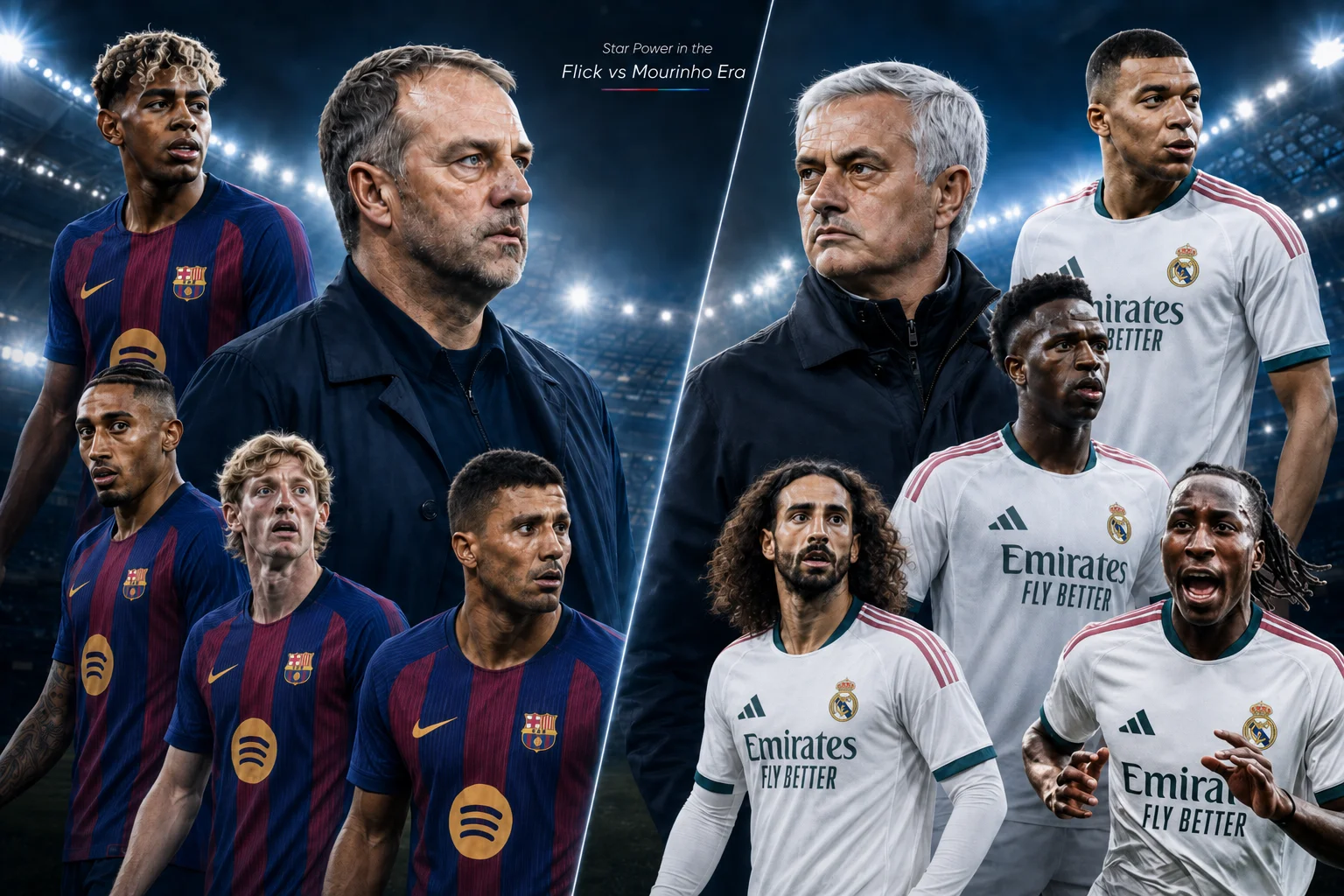
The second pillar of the fixture's audience is the sheer concentration of talent. For decades Real Madrid and Barcelona have employed most of the world's best footballers, and the modern peak of that arms race, Cristiano Ronaldo against Lionel Messi, two five-time Ballon d'Or winners meeting twice a season for nearly a decade, set global viewing habits that persist today. The current generation has taken over the billing rather than diminished it.
Barcelona arrive in 2026/27 as back-to-back La Liga champions chasing a third consecutive title under Hansi Flick, built around Lamine Yamal, Pedri, Raphinha and Ferran Torres. The forward line has lost serious output, though: Robert Lewandowski departed when his contract expired in June 2026, closing a four-year spell that brought 119 goals in 191 appearances and three league titles, and loanee Marcus Rashford, whose curling free kick opened the title-clinching win in May, is not part of the 2026/27 squad either, so the season doubles as a test of the club's succession plan in attack. Real Madrid counter with Kylian Mbappe, Vinicius Junior, Jude Bellingham and Arda Guler, reinforced by a club-record move for RB Leipzig forward Yan Diomande and the arrival of Marc Cucurella, a former Barca academy player crossing the divide.
Then there is the dugout, because the managerial contest may be the biggest broadcast draw of all. Mourinho is back at the Bernabeu for a second stint, 13 years after his first spell ended, and prepares for his first league Clasico since returning. He inherits a fixture Madrid have collapsed in. Since Flick took charge in 2024, Barcelona have won six of the seven meetings across all competitions, and the run reads brutally from a Madrid perspective.
| Date | Competition | Venue | Result |
|---|---|---|---|
| 26 Oct 2024 | La Liga | Santiago Bernabeu | Real Madrid 0-4 Barcelona |
| 12 Jan 2025 | Spanish Super Cup final | Jeddah | Barcelona 5-2 Real Madrid |
| 26 Apr 2025 | Copa del Rey final | Seville | Barcelona 3-2 Real Madrid (aet) |
| 11 May 2025 | La Liga | Montjuic | Barcelona 4-3 Real Madrid |
| 26 Oct 2025 | La Liga | Santiago Bernabeu | Real Madrid 2-1 Barcelona |
| 11 Jan 2026 | Spanish Super Cup final | Jeddah | Barcelona 3-2 Real Madrid |
| 10 May 2026 | La Liga | Spotify Camp Nou | Barcelona 2-0 Real Madrid |
That May 2026 result carried unusual historical weight. Barcelona's win sealed the league title in the Clasico itself, only the second time in La Liga history the fixture has directly decided the championship, the first being Madrid's inaugural 1932 crown. Over the past two seasons Flick's side collected five domestic trophies while Madrid finished 2025/26 without silverware despite Mbappe's arrival on a free transfer from Paris. Mourinho was hired to end precisely that drought, and his record in this fixture, combative press conferences included, guarantees that neutrals who drifted away during Madrid's slump will be back in front of their screens in October.
The World Cup Hangover, and the Rodri Tug of War
The 2026/27 Clasicos arrive in the shadow of the World Cup, and the tournament's fingerprints are all over both clubs. Spain beat Argentina in the final in New Jersey on 19 July 2026, with Barcelona's Spanish core central to the triumph, which means the October meeting is the first Clasico since several of its protagonists became world champions. Yamal and Pedri now carry the kind of global recognition that adds casual viewers in markets that follow players before clubs, and the fixture's broadcasters will lean on that story hard.
The calendar cost is real too. Less than four weeks separated the final from the opening league weekend of 14 August, so the internationals who went deepest into the tournament started 2026/27 with truncated pre-seasons. How Flick and Mourinho manage minutes through the autumn will shape what condition their World Cup finalists are in by matchday 10, and squad depth may matter more in this October Clasico than in any recent edition.
Then there is the transfer saga the tournament ignited. Rodri, Spain's captain and winner of the World Cup Golden Ball, has spent the summer at the centre of a tug of war that runs straight through this rivalry. Real Madrid, criticised for fielding so few Spanish internationals at the tournament, made the Manchester City midfielder their headline target, with Mourinho reported to have requested exactly that profile and a bid of around €60 million on the table against City's higher valuation. Early August reports then added the twist: Rodri is said to have indicated that his preference, should he leave England, would be Barcelona. Nothing is resolved as of early August 2026, and the saga may run to the deadline, but whichever way it breaks, one of the world's best midfielders choosing a side of this rivalry is a subplot the October meeting will inherit.
3. Scheduling for Peak Viewership
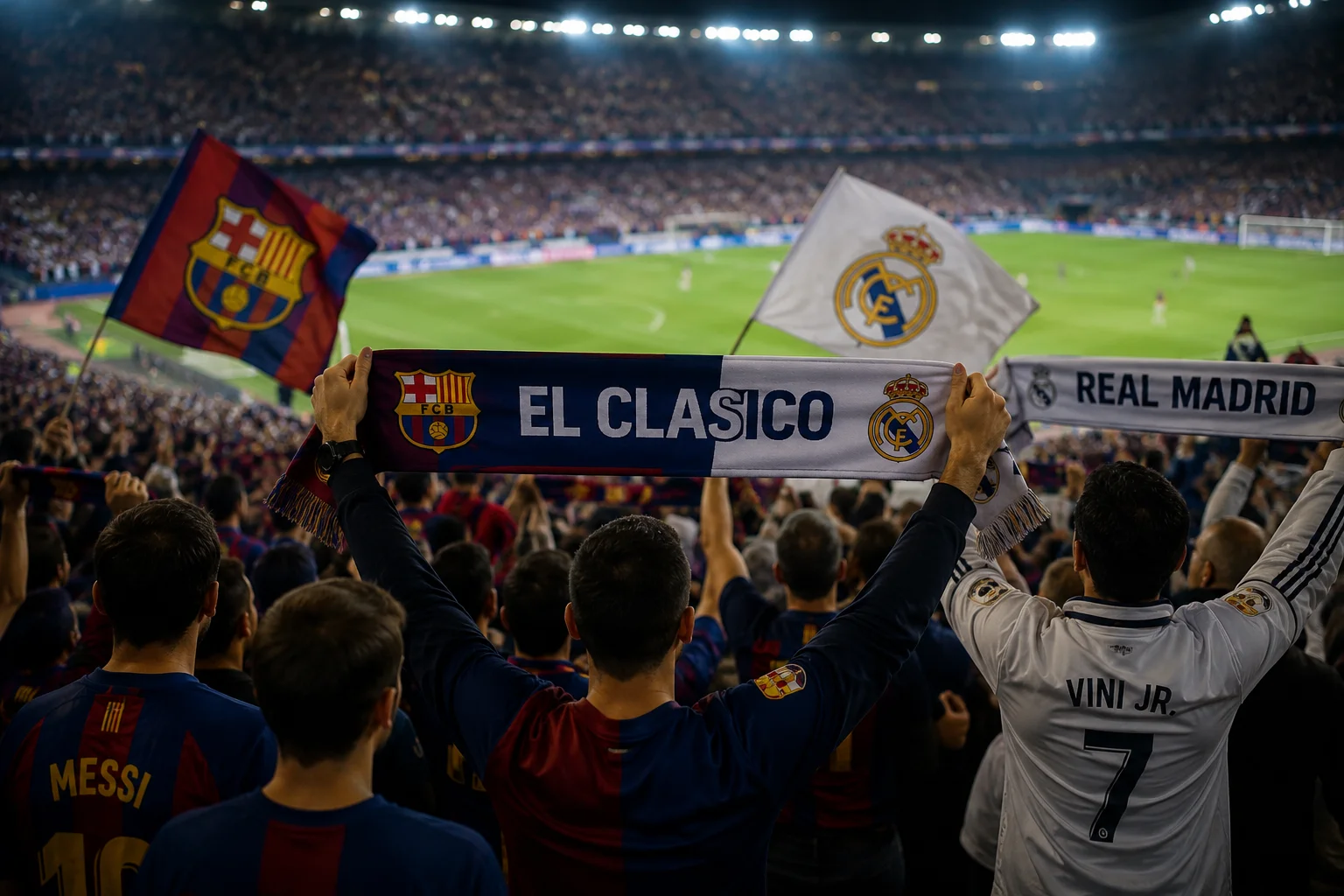
La Liga does not leave the timing of El Clasico to chance. The league's asymmetric calendar, in which the order of opponents differs between the two halves of the season, exists partly to let organisers place this fixture where it delivers the largest possible audience.
The first meeting is never scheduled in August or early September, when much of Europe is on holiday and the season has no shape. Instead it lands in late October, once domestic and European competition is fully underway and both squads are at strength. The pattern is remarkably consistent: 24 October in 2020 and 2021, 28 October in 2023, 26 October in both 2024 and 2025, and now 25 October 2026, matchday 10 of the new season. Late October has effectively become Clasico season, a fixed point fans across every timezone anticipate, and the league keeps the surrounding midweek clear of Champions League rounds so nothing competes for attention.
The return leg follows a different logic. The league wants it late enough that the title race is at full temperature, but not so late that the match becomes an outright decider, which Spain's organisers generally prefer to avoid. Recent second meetings have fallen between matchday 26 and matchday 35, and the 2026/27 edition sits at the far end of that range: Real Madrid vs Barcelona on matchday 35, 9 May 2027, with three rounds still to play afterwards. The risk and the reward of that placement were both on display in May 2026, when the title really was settled inside the Clasico for the first time in 94 years, in front of a capacity Camp Nou crowd and a global audience handed a genuine championship final. If 2026/27 stays tight, 9 May 2027 could deliver the same again.
Kick-off times complete the design. Weekend slots in the Spanish late afternoon or evening let the match hit European prime time while remaining watchable live across Asia, Africa and the Americas. When Barca and Madrid meet, the entire football world can tune in without staying up through the night, and that is deliberate.
Where the Audience Lives
The Clasico's viewership is not simply large, it is unusually well distributed, and that geography explains several decisions the Spanish game has taken over the past decade. Domestic viewing is strong but represents a small fraction of the total: the 2.95 million unique Spanish viewers for the October 2025 edition amount to well under one per cent of the fixture's reported global reach. The real growth markets are elsewhere.
The Middle East and North Africa have become central to that strategy. The Spanish Super Cup moved to Saudi Arabia in 2020, and the format has since produced four consecutive Clasico finals, staged in Riyadh and Jeddah in front of crowds exceeding 60,000. The January 2026 final at King Abdullah Sports City drew 60,326 spectators to watch Raphinha's double sink Madrid, effectively exporting a live Clasico to a region where both clubs command enormous followings. Asia gets the fixture in evening prime time thanks to those afternoon Spanish kick-offs, the Americas get it over weekend lunchtime, and free-to-air sub-licensing deals, like the one that put the October 2025 match on Italia 1, capture casual viewers who would never pay for a league subscription.
Both clubs feed the machine with their own global infrastructure: pre-season tours, academy franchises, supporters' clubs on every continent and social media followings measured in the hundreds of millions. A fixture is only as big as the number of people who feel they have a stake in it, and no two clubs on earth have manufactured stakes as widely as these.
4. El Clasico as a Global Brand and Spectacle
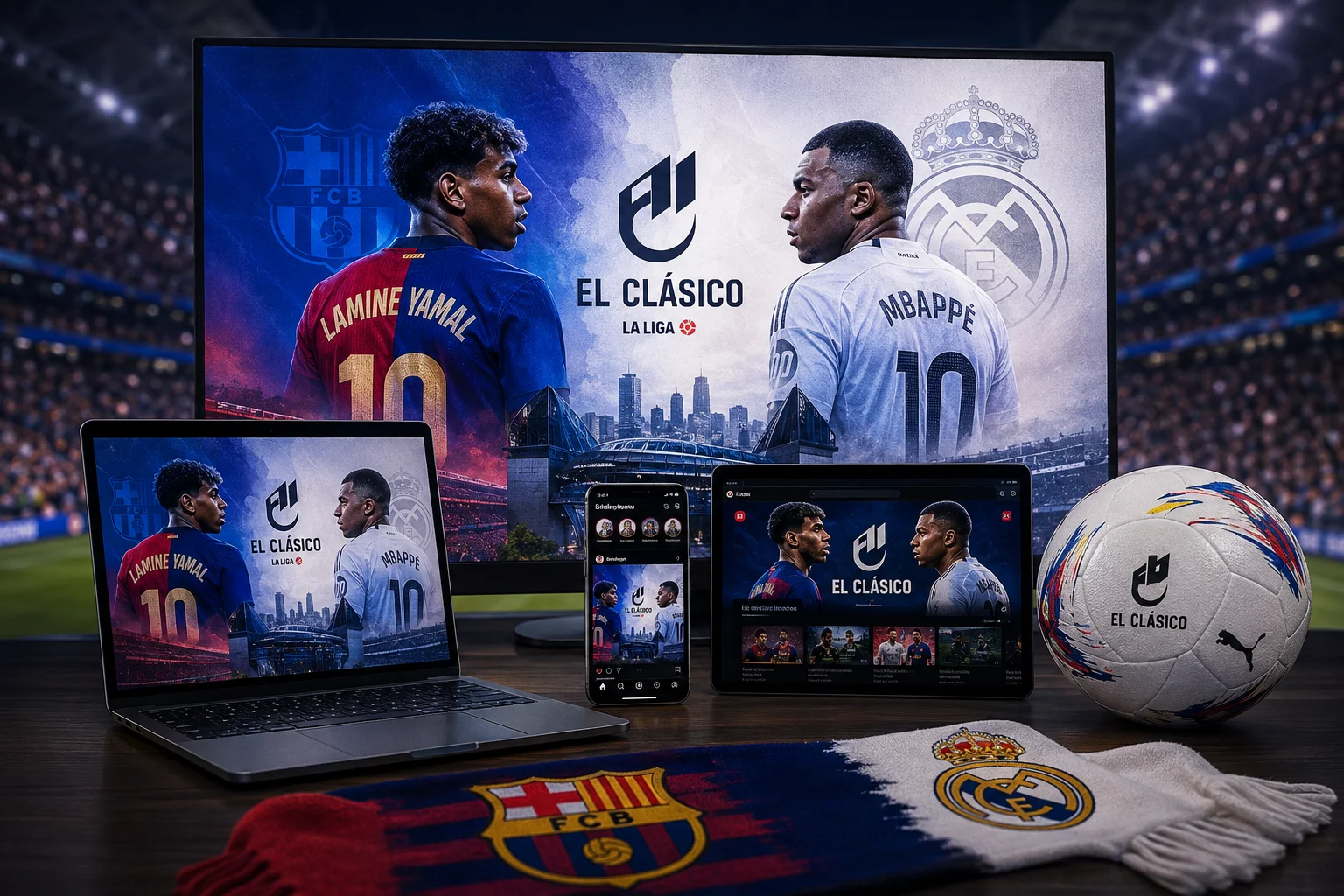
Recognising the fixture's commercial weight, La Liga turned El Clasico into a standalone brand. In 2021 the league introduced a dedicated Clasico logo and visual identity, separate from either club's imagery, the first branding of its kind for a single club match. Custom typography, a bespoke emblem and a universal marketing campaign now roll out weeks before each edition, with promotional spots running from late September for an October game.
League executives describe the brand as expressing rivalry, strength, passion and spectacle, and the intent is plain: package El Clasico as a marquee entertainment product in its own right, closer to a Super Bowl or a Champions League final than to a round of league fixtures. Themed graphics, global activations and, in some editions, exclusive match ball designs all reinforce that status, and the buzz draws in casual viewers who watch little other league football.
The strategy has worked well enough to spawn imitations. Similar treatment is being applied to Spain's other great derbies, from El Gran Derbi between Sevilla and Real Betis, a fixture with its own page at Sevilla vs Real Betis, to the Madrid derby against Atletico Madrid. None yet approaches the Clasico's international reach, which is exactly why the league keeps investing in the flagship.
The 2026/27 season hands the brand its best raw material in years. Barcelona's first October home Clasico at the redeveloped Camp Nou, which the club returned to in November 2025 after two seasons at Montjuic, arrives with the stadium operating at 62,000-plus on its way to a planned capacity of around 105,000 that would make it Europe's largest club ground. Add Mourinho's return, a level all-time record and a champion defending a two-year unbeaten grip on the trophy, and the marketing largely writes itself.
Four Pillars, One Fixture
El Clasico's position as football's biggest television event is no accident. A rivalry steeped in a century of culture and politics gives the games meaning beyond sport; a permanent supply of elite players, currently headlined by Mbappe, Bellingham, Yamal and Vinicius Junior, guarantees quality; calculated scheduling places both meetings where the world can watch; and deliberate branding turns each edition into an occasion in its own right. On 25 October 2026 the cycle begins again at a rebuilt Camp Nou, with Mourinho against Flick as the newest chapter and outright leadership of a 124-year rivalry on the line, and hundreds of millions of people will stop to watch.
FAQs
1. What time does El Clasico usually kick off?
-
Recent editions have kicked off in the Spanish late afternoon, around 16:15 local time, though evening slots such as the 21:00 start used in May 2026 also appear.
2. Who has scored the most El Clasico goals?
-
Lionel Messi leads the all-time competitive list with 26 goals, while Sergio Busquets holds the appearance record with 48.
3. What capacity will Camp Nou hold for the October 2026 Clasico?
-
Around 62,652 seats under the Phase 1C occupancy licence granted in March 2026, unless Barcelona secure a further capacity increase before matchday 10.
4. What is the biggest win in El Clasico history?
-
Real Madrid's 11-1 Copa victory in June 1943, a result played under the Franco regime that remains disputed by Barcelona supporters to this day.
5. When did the 2026/27 La Liga fixture list come out?
-
La Liga released the full 380-match calendar on 30 June 2026, confirming a season running from the weekend of 14 August 2026 to 30 May 2027.
Both 2026/27 Clasicos are expected to be among the most in-demand club fixtures in world football, and 1BoxOffice, a verified secondary marketplace operating since 2006, backs every order with a 150% money-back guarantee.
Sources: La Liga, FC Barcelona, Real Madrid, ESPN, Forbes, FiveThirtyEight, Al Jazeera, Sportcal, Inside World Football, Diario AS.