In this guide
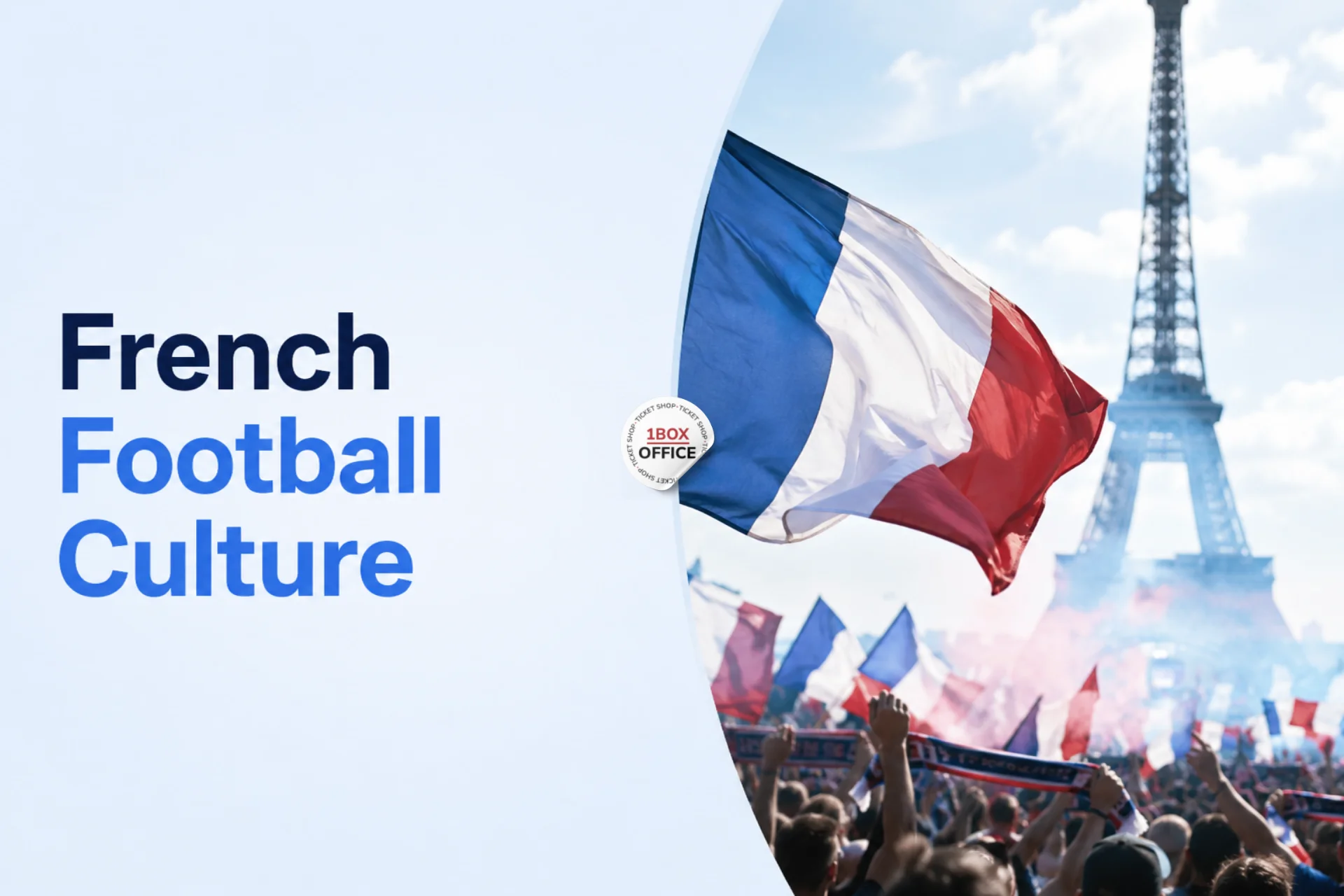
Paris vs Marseille: Le ClassiqueLyon vs Saint-Étienne: The Derby of the RhôneThe North: Lille, Lens and the Mining HeartlandBordeaux, Nantes and the Atlantic Coast TraditionCultural and Political Shades in the StandsMajor Rivalries at a GlanceFAQsFootball is France’s most popular sport, and French football culture is built on clubs that inspire passionate followings rooted in local identity. For perspective, Paris Saint-Germain alone claims about 35 million supporters, roughly 22% of the country’s fan base. Ultras, organised fan groups known for their choreographed chants, flags and flares, are especially visible in France, creating elaborate tifos and nonstop singing to lift their teams.
These ultras can wield real influence, for example, Marseille’s five recognised ultras groups “play a major role in the running of the club,” and were long integral to its identity.Yet, fan culture in Ligue 1 is far from monolithic: it varies by region, history and class, yielding distinct traditions in cities like Marseille, Paris, Lyon, Lille, Saint-Étienne, Bordeaux and Nantes.
In the 20th century, French football developed in fits and starts. Ligue 1 (then Division 1) was founded in 1932, but early post-war champions were often from provincial cities. No one club long dominated until AS Saint-Étienne’s “Glory Years” (1957 to 1981), when it won a then-record ten championships.
Even that era was built on humble roots: St-Étienne is a relatively small, industrial city (its miners’ heritage is legendary). As one writer notes, Saint-Étienne supporters “are proud of the city’s industrial heritage, believing themselves to be harder-working” than other fans.
Over the decades other regional powers emerged, Olympique de Marseille in the 1970s-80s (even winning the 1993 Champions League), Bordeaux in the 1990s-2000s, Nantes known for its fluid “jeu à la nantaise” (Nantes, nicknamed Les Canaris, being rooted in its riverside port and former Breton ties) but no single club had the national heft of PSG and OM.
PSG only formed in 1970 and spent many years in the footballing shadows. Today, though, Paris’ fans are massive in number. PSG is the most popular club in France, with a huge fanbase centred in and around Paris, and the club now sits at the top of the European game after winning back-to-back Champions League titles in 2025 and 2026.
Before PSG’s recent wealth, their supporters carved out the Parc des Princes atmosphere through two famous stands, the Kop of Boulogne and Virage Auteuil, home to rival ultra factions.
In the 1990s, the Auteuil stand became known for its multiethnic, left-wing identity, while Boulogne had elements of far-right supporters.
In Marseille, France’s great southern port city, football is nothing short of a way of life. Here, supporters see themselves first as Marseillais, and the Stade Vélodrome backs that up with numbers: the ground drew 66,279 for a league match against Brest in November 2025, the biggest Ligue 1 crowd of the season.
Paris vs Marseille: Le Classique
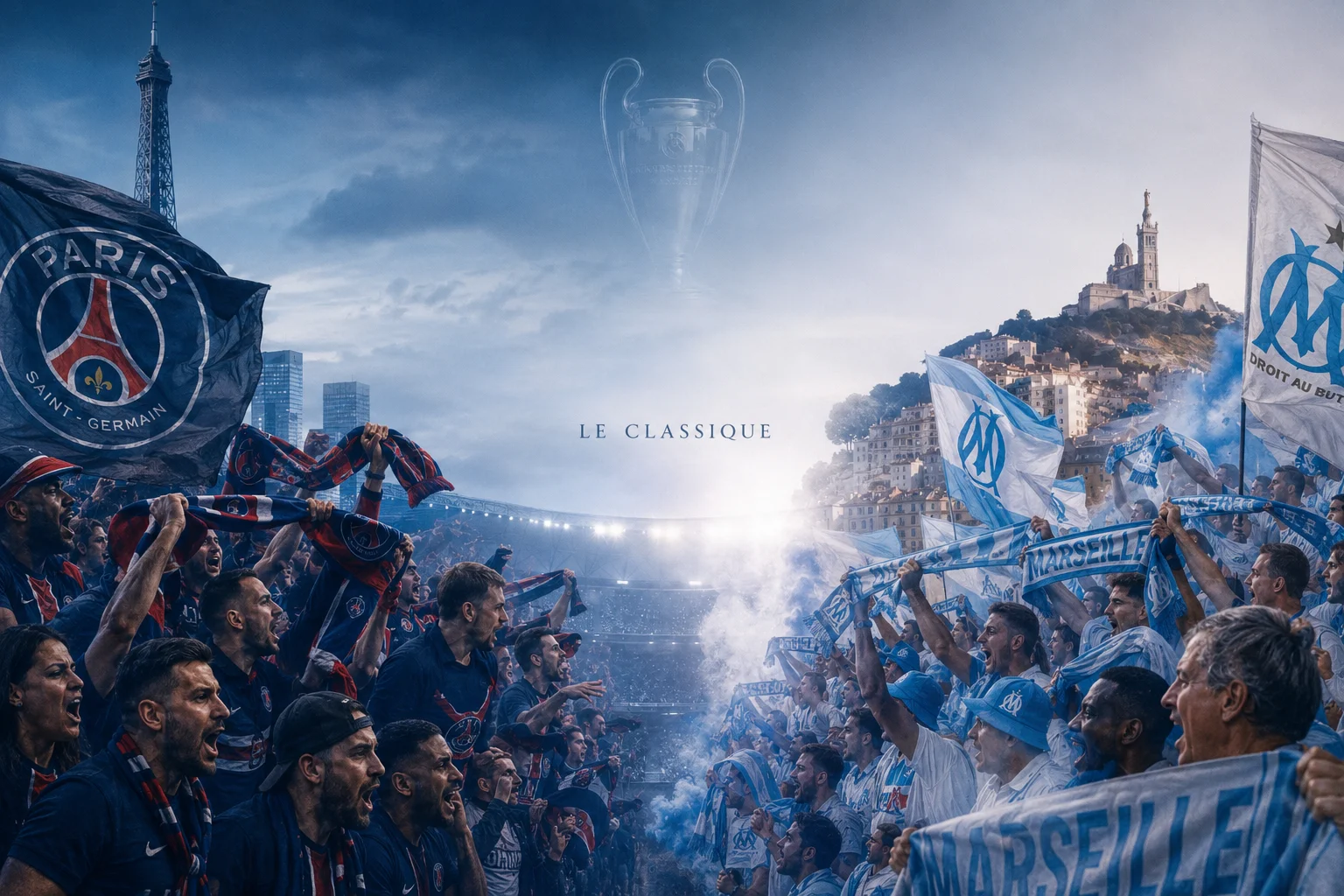
The rivalry between Paris and Marseille (known as Le Classique) is Ligue 1’s highest-profile clash. It pits Paris, the wealthy national capital, against Marseille, France’s largest port city.
Paris and Marseille account for the two biggest populations and economies, which gives the game resonance beyond football.
Paris is often resented in France for its political and cultural dominance, and that animosity bleeds into football: many French fans claim to dislike PSG precisely because it represents the Paris establishment.
Marseille, on the other hand, carries an image as the “people’s club” of the South. In many ways, Le Classique is a north-vs-south, capital-vs-province derby.
Both sides also carry proud trophies. Together, PSG and OM have won over 40 domestic titles, and they remain the only French clubs to lift major European cups. OM won the Champions League in 1993, PSG lifted the Cup Winners’ Cup in 1996, and PSG have since gone further than any French side in history, winning the Champions League in 2025 as part of a treble and retaining it in 2026 with victory over Arsenal in the final.
Marseille itself predates Paris Saint-Germain by 70 years; OM was founded in 1899, PSG only in 1970, so the rivalry is inherently asymmetrical in history. Still, whenever Paris and Marseille meet, tensions are high on and off the pitch. Chants and passions run hot; decades of televised drama and a notorious 1990s bribery scandal at Marseille have cemented Le Classique as France’s fiercest fixture. The gap on the pitch is another matter: PSG won the February 2026 meeting 5-0 on their way to a fifth consecutive title, their 14th overall, while Roberto De Zerbi’s Marseille finished fifth and head into the Europa League.
Lyon vs Saint-Étienne: The Derby of the Rhône
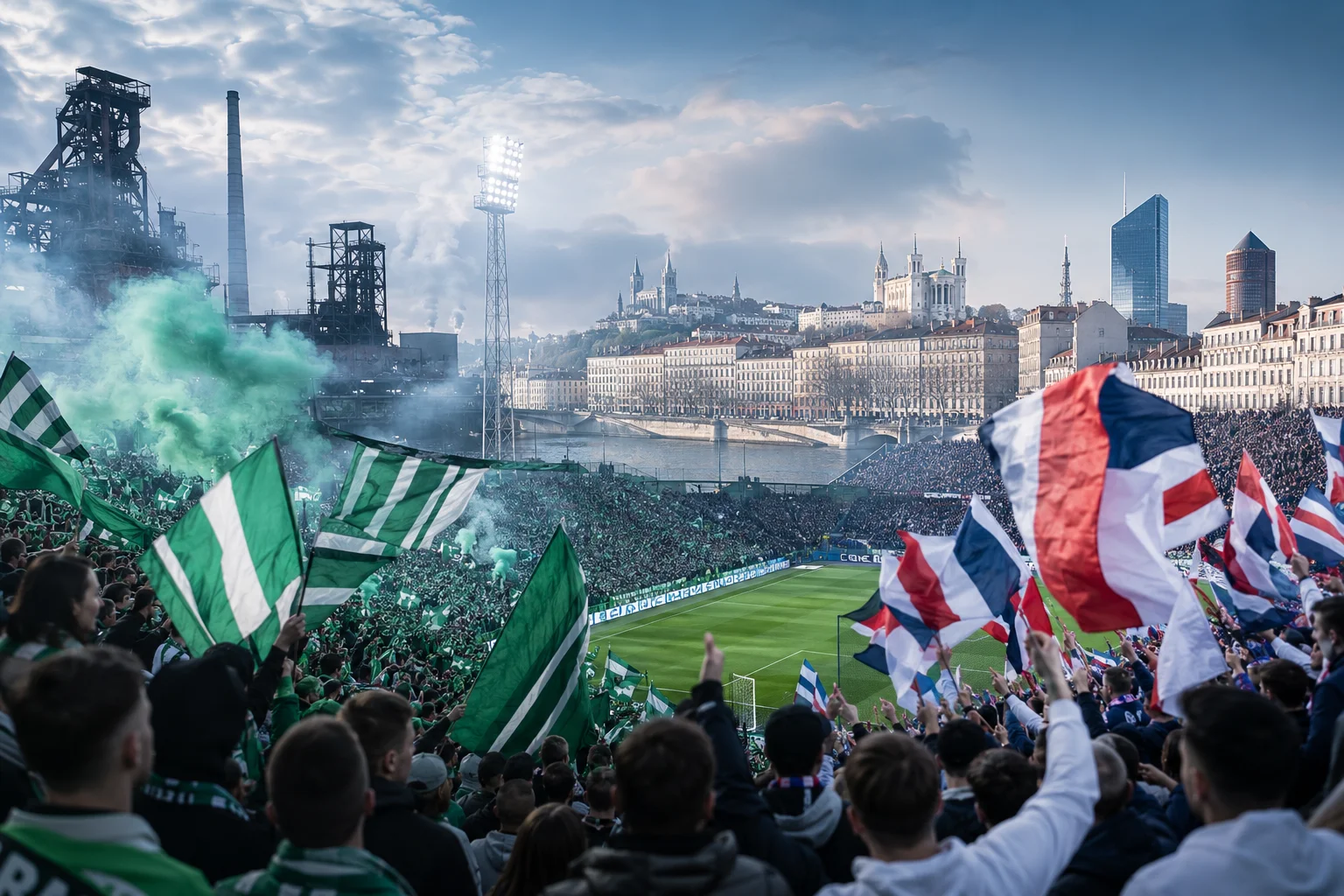
Long before PSG and Marseille became elite, the true original “derby” of France was Lyon vs Saint-Étienne. These two neighbouring cities (just 50 km apart) embody a classic working-class vs bourgeois divide.
In the 1960s-70s, Les Verts were dominant, winning 10 league titles despite coming from a relatively small mining town. Lyon, by contrast, was the richer, historic city famed for its cuisine and silk trade.
Fans of ASSE tend to emphasise their grit, one derby tifo famously boasts “Vos pâtes, nous nos mines” (“You got pasta, we got mines”). Lyon supporters retort by invoking Lyon’s aristocratic culture (even mocking ASSE fans’ blue-collar roots).
The Ligue 1 site notes “locally, Lyon vs Saint-Étienne is symbolic of a working-class town vs a more bourgeois, cosmopolitan city”. On game day, the atmosphere reflects that history: both sets of fans pour into Geoffroy-Guichard or the Groupama Stadium with enormous fervour.
The two clubs are currently a division apart, which only sharpens the longing on the green side. Saint-Étienne finished third in Ligue 2 in 2025/26, won their promotion playoff against Rodez on penalties, then lost the final barrage to Nice in May 2026, so the Chaudron faces at least one more season outside the top flight. Lyon, meanwhile, finished fourth in Ligue 1 and returned to the Champions League.
In short, the Derby du Rhône is played with extra meaning, and even today, Lyon’s recent dominance is viewed through the lens of these old identities.
The North: Lille, Lens and the Mining Heartland
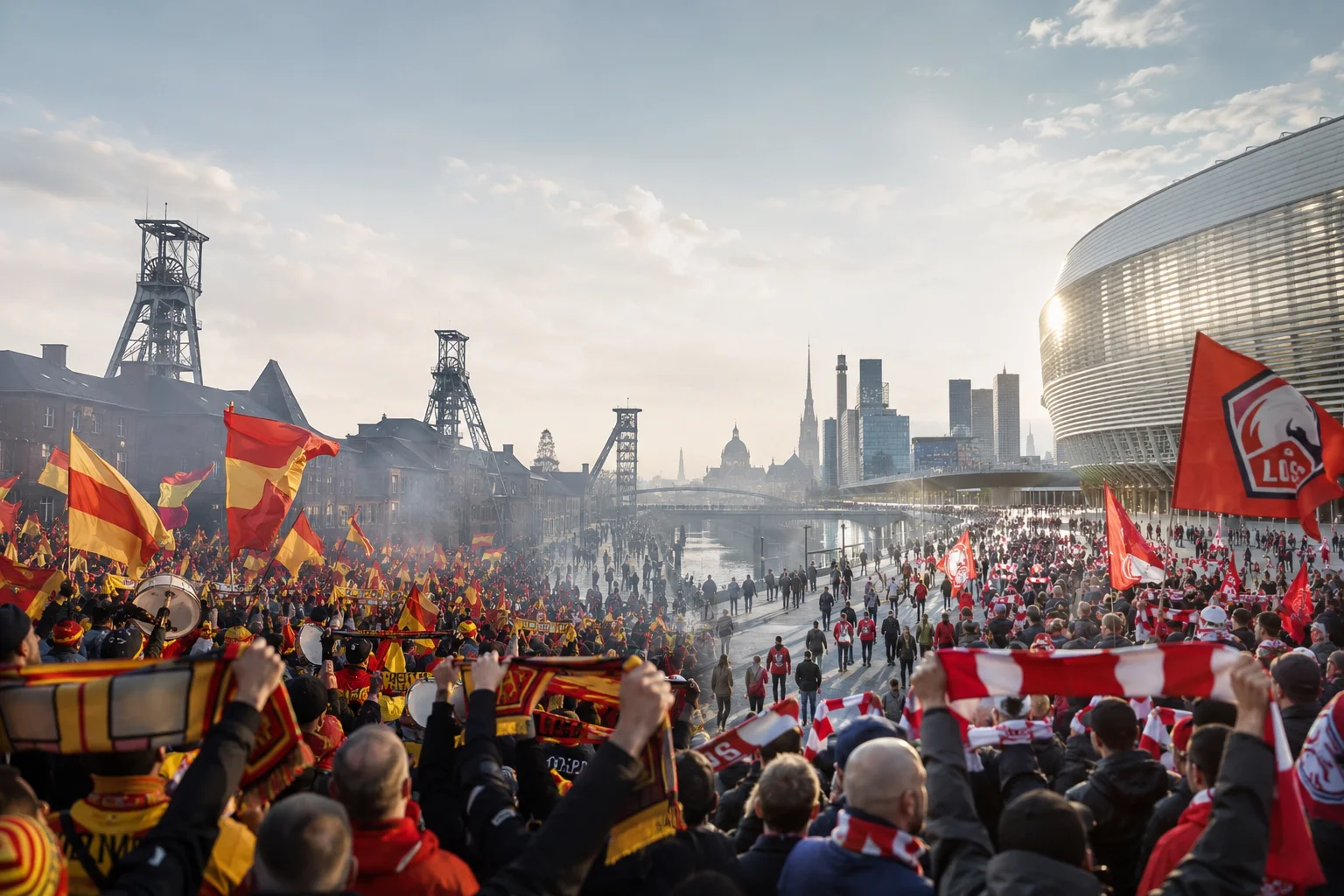
Lille and Lens (and their neighbours in Nord-Pas-de-Calais) also carry historic class divisions. Lille is a large, modern city (and an industrial port), while Lens grew from the coal mining valleys. These two have a heated Derby du Nord.
Both teams wear red/gold, and in recent years their fortunes have alternated: Lille won the title in 2011 and again in 2021 under Christophe Galtier, while Lens resurrected itself from lower leagues and rejoined Ligue 1 with a huge working-class fan base.
The 2025/26 season was the region’s strongest in years. Lens finished second, PSG’s closest challengers, on the back of an eight-match winning run, while Lille went 13 games unbeaten to take third. Both northern clubs will play Champions League football in 2026/27, a first for the derby in the modern era.
The derby was historically “underpinned by social and economic differences”. Today, it’s less about coal vs commerce, but Lens supporters (proud of Les Sang et Or) still see themselves as the people’s team.
With a stadium capacity of over 38,000 (bigger than Lens’s city), the Bollaert-Delelis often reverberates with the famous Lens percussion and chants.
By comparison, Lille’s Curva Nord ultras and the Dogues Virage Est occupy sections of the Grand Stade. The Lens-Lille games, often called the Nord derby, are among Ligue 1’s most intense.
RC Lens’ fan base remained enormous despite the club’s relegation years. Lens supporters famously invaded the pitch after a decisive win, as one image shows.
Up the coast, clubs like Lens and Lille often draw in working families who once laboured in the mines or factories. In the same region, cities like Brest (Brittany) and Reims (Champagne) have their own local scenes, but the Lens-Lille rivalry is the marquee one.
WhatsApp channel
Sports news straight to your phone
Match updates, on-sale dates and ticket news from 1BoxOffice.
Bordeaux, Nantes and the Atlantic Coast Tradition
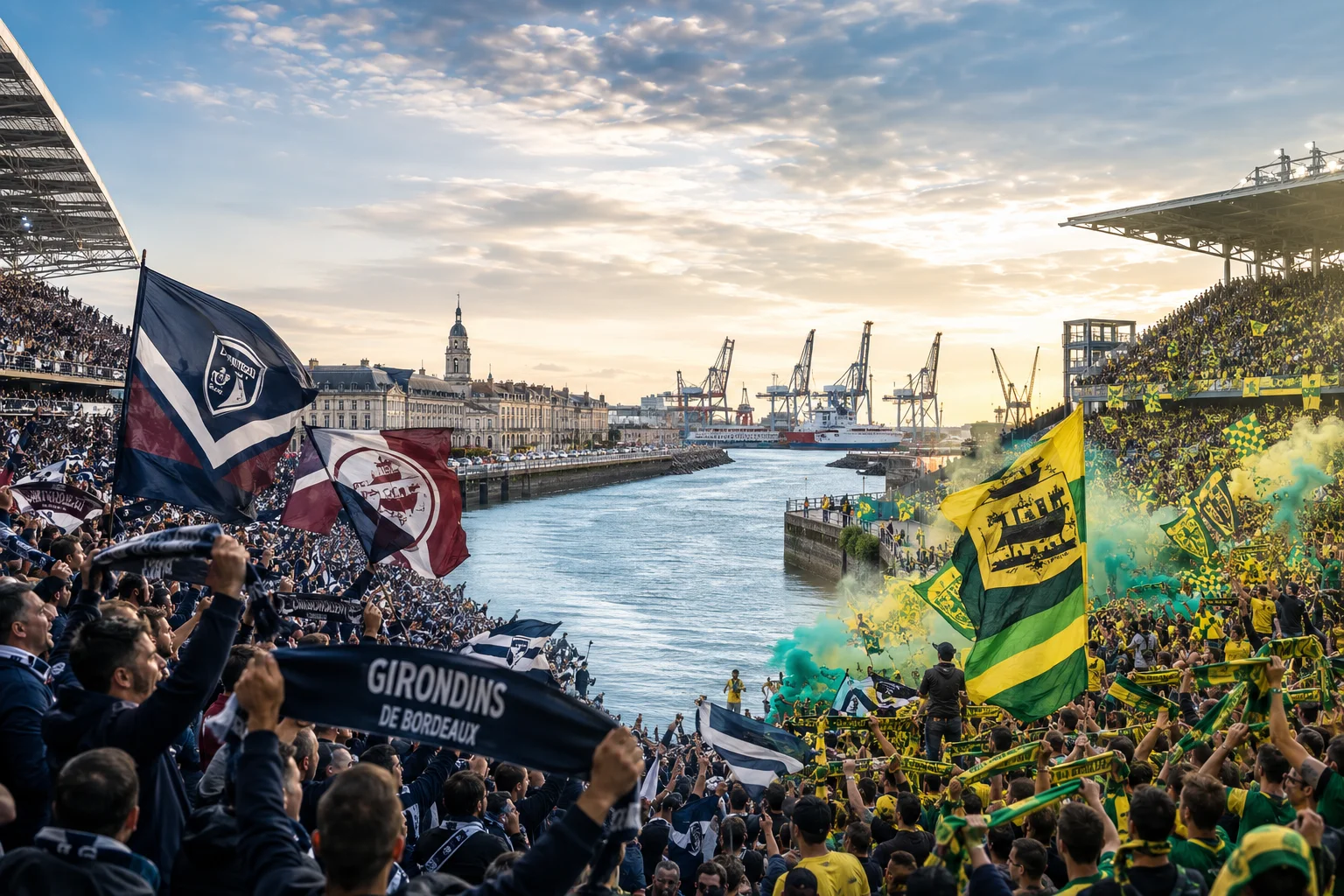
On the Atlantic side, Girondins de Bordeaux and FC Nantes have their own traditions. Both are cities of industry and ports, and historically had loyal followings.
Bordeaux rose to prominence in the 1980s-90s, winning five of their six league titles, and played in a classic Stade Chaban-Delmas (now Matmut Atlantique) with vocal fans in the South Stand. Nantes, meanwhile, was one of France’s early powers.
Nantes fans are nicknamed Les Canaris, for their yellow jerseys, and their main ultras group is called Brigade Loire. Interestingly, despite the distance, Nantes and Bordeaux fans have a friendly rivalry; their matches are dubbed the “Derby de l’Atlantique”.
The Nantes crowd includes many supporters in yellow and green, and a frequent chant is “Qui ne saute pas Nantais est” (“He who doesn’t jump is not a Nantes person”). These clubs’ fan cultures are solid, if not quite as globally known as PSG-OM.
Both clubs are now living through the hardest chapters in their histories. Nantes were relegated from Ligue 1 in May 2026, ending decades of near-unbroken top-flight membership, and will play in Ligue 2 in 2026/27. Bordeaux’s fall is steeper still: after two seasons in the fourth tier following their 2024 financial collapse, the DNCG confirmed in July 2026 that the six-time champions are excluded from national competitions altogether, dropping them to Régional 1, the sixth tier.
That makes the loyalty on the Atlantic coast all the more striking. Bordeaux still drew five-figure crowds in the fourth division, among the biggest attendances at that level anywhere in Europe, and the Beaujoire kept singing through a relegation season. Support here has never depended on silverware.
Cultural and Political Shades in the Stands
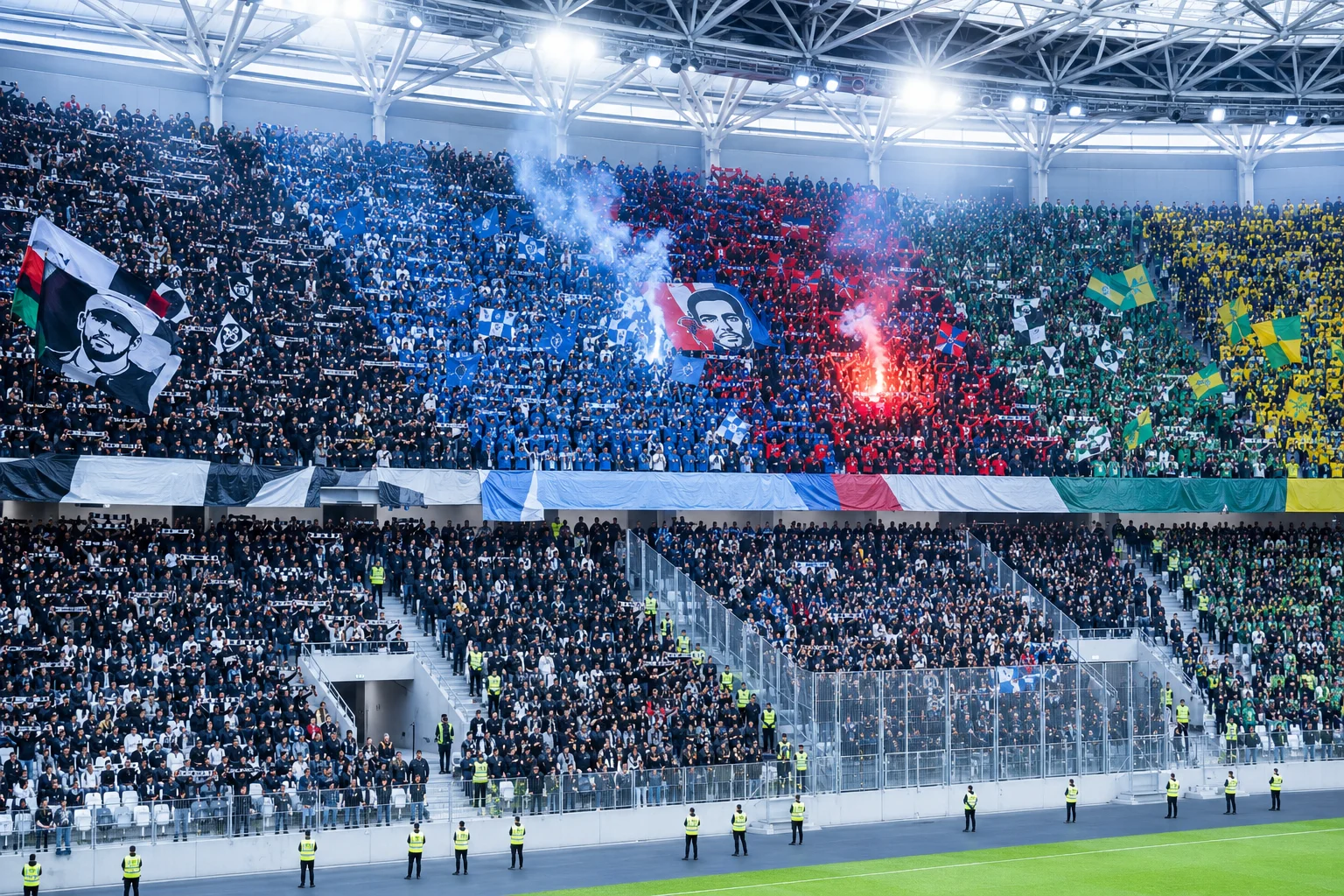
Throughout France, regional identity and politics colour the terraces. Some fans lean left or right, reflecting local histories. In Paris, for instance, after the 2000s’ Auteuil-Boulogne conflicts, the unified Collectif Ultras Paris adopted anti-racist, anti-fascist stances, a change reflecting Paris’s diverse suburbs.
At Marseille, most ultras are broadly apolitical, focused on club loyalty, though extreme right-leaning factions once had a presence (later expelled).
In Lyon, the Bad Gones ultras have had nationalist currents (some banned); in St-Étienne, ultras like the Green Angels have allied with leftist labour movements and even formed a charitable association in past decades.
Nantes’ ultras have made political banners as well. However, it’s safe to say that French supporter groups more often pride themselves on being multiethnic and working-class, in contrast to some European ultras scenes.
France has also had its share of darker moments: hooligan incidents in the 1970s-80s, flare-related scares and tragic fan deaths.
After multiple stadium tragedies across Europe, France imposed strict controls. The 1990 death of a PSG fan prompted years of strict segregation, and for long stretches the authorities banned travelling supporters from Le Classique entirely; away allocations for the fixture remain subject to prefectural orders to this day.
Overall, top-flight matches today are much safer than in the mid-20th century, but flare use, spirited brawling at domestic derbies and occasional arrests still mark French matchdays.
Major Rivalries at a Glance
- Le Classique (PSG vs Olympique de Marseille): The national derby, capital vs south, pitting Paris against Marseille. Both clubs have tens of titles between them, and cultural animosity (many French see PSG as a Parisian team, Marseille as representing the provinces) drives the hatred.
- Derby du Rhône (Lyon vs Saint-Étienne): The fierce regional derby of Auvergne-Rhône-Alpes, symbolising an industrial town vs a cosmopolitan city. Saint-Étienne’s 1970s titles and mining heritage clash with Lyon’s modern wealth and culture.
- Derby du Nord (Lille vs RC Lens): The northern derby between two red teams, traditionally reflecting Lens’s blue-collar, coal-mining city against Lille’s middle-class, international port. Both sets of fans travel in force across the 40-km gap and create one of Ligue 1’s liveliest atmospheres.
- Derby de l’Atlantique (Nantes vs Bordeaux): A west-coast rivalry between two Atlantic-leaning clubs. Nantes (Les Canaris) and Bordeaux have a friendly, historic rivalry, once symbolised by competing successes in the 1960s. (Nantes also has a smaller derby with Angers, their nearby Loire Valley neighbour.)
In addition, many cities have local derbies. For example, the Derby Breton (Nantes vs Rennes) is an emergent rivalry (Breton clubs often vie for western pride). Paris Saint-Germain vs Paris FC and Paris vs Red Star were bigger rivalries before PSG’s rise, and the capital derby is live again: Paris FC returned to Ligue 1 in 2025 after 46 years away, putting two Parisian clubs in the top flight for the first time in a generation.
In Normandy, Le Havre vs Caen was a traditional duel. Across France, every club has a “big game” that fans circle on the calendar, even if it’s only a geographically close opponent or a match against a wealthy team.
Each club’s fans bring their city’s history, be it industrial, maritime, cultural or political, into the stadium. Over the decades, rivalries crystallised into fierce friendships or enmities.
Today’s fans are the heir to all that history, chanting old songs passed down through generations, lighting flares in a display that their grandparents started, and carrying flags that say “home.”
FAQs
1. Which French stadium has the largest capacity?
-
Marseille’s Stade Vélodrome is the largest club ground in France, holding just over 67,000 spectators.
2. What song do Marseille fans sing before kick-off?
-
The Vélodrome belts out “Aux Armes”, a supporters’ anthem adapted from a traditional melody that has opened OM home matches for decades.
3. Why is Geoffroy-Guichard nicknamed Le Chaudron?
-
Saint-Étienne’s home earned the nickname “the Cauldron” because its steep, enclosed English-style stands trap the noise and make the atmosphere boil.
4. What is the Lens tradition of singing Les Corons?
-
At half-time the whole Bollaert-Delelis sings Pierre Bachelet’s “Les Corons”, a ballad about mining villages that honours the region’s coal heritage.
5. Who are the oldest ultras group in France?
-
Marseille’s Commando Ultra 84, founded in 1984, is widely regarded as the first ultras group in French football.
The result is a Ligue 1 fan scene that is as varied as France itself: at times boisterous and chaotic, at others creative and proud, but always deeply rooted in local identity. You can book 100% genuine and 150% guaranteed tickets to watch Ligue 1’s derby matches via the 1BoxOffice website.
Sources: Ligue de Football Professionnel, UEFA, franceinfo, France Bleu.