In this guide
1. From a Cycling Track to France’s Most Modern Stadium2. Stadium Milestones and QSI (Qatar Sports Investments)3. Home of PSG and Fan Culture4. The PSG Experience5. Future and LegacyWhen you buy a ticket to a Paris Saint-Germain (PSG) game at Parc des Princes, be it for a magical UCL night or a competitive Ligue 1 fixture or a normal Coupe de France/Trophée des Champions tie, you are not just in for the football but also a whole new level of 21st-century modern football tourism.
1. From a Cycling Track to France’s Most Modern Stadium
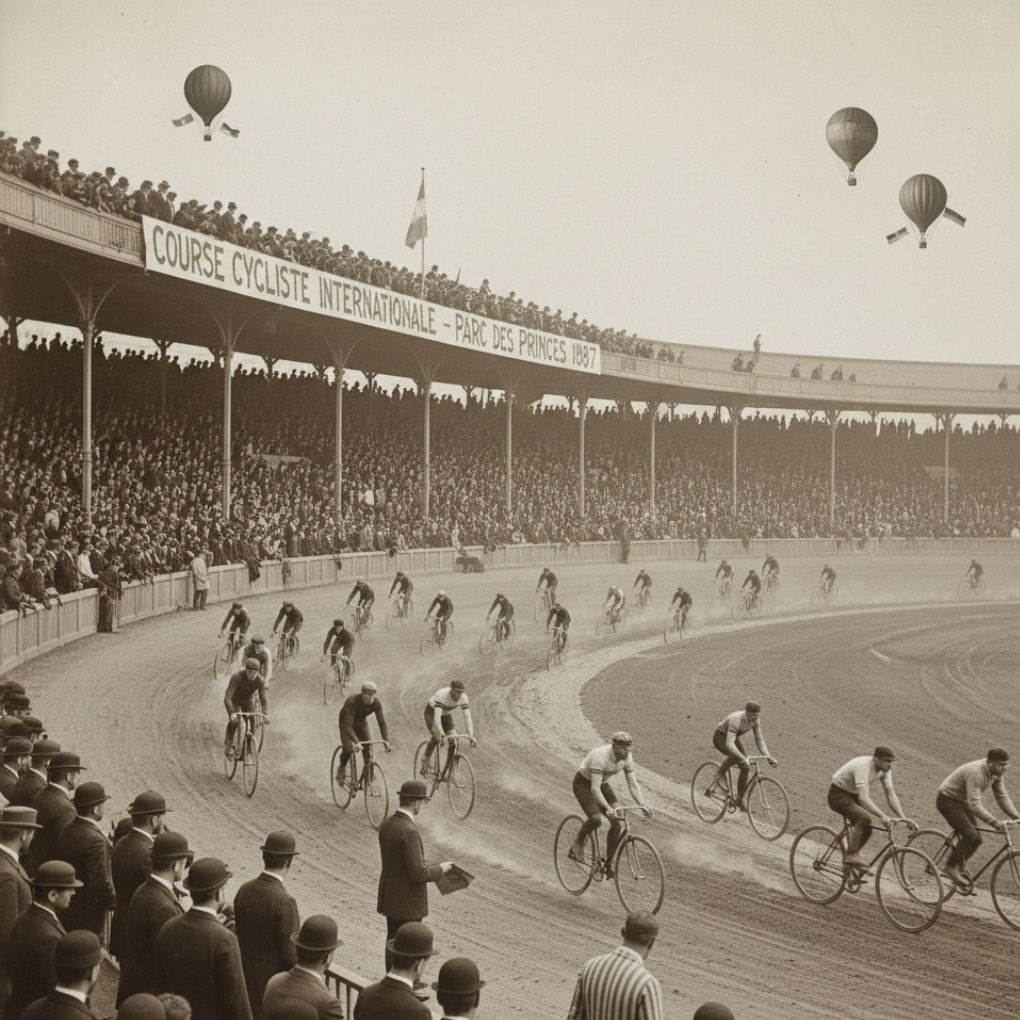
The Parc des Princes started as a cycling track in 1897 and evolved into today’s 48,000-seat football arena. It was redesigned in 1972 by architect Roger Taillibert. PSG took up residency in 1974 and has since written much of the club’s history here. The stadium has hosted major international matches such as the Euros and the World Cups. It now offers guided tours and matchday experiences for visitors. Balancing its rich heritage with modernisation (a €2013–16 renovation), the Parc des Princes continues to be a living museum of French football, even as PSG plans for an even larger future venue.
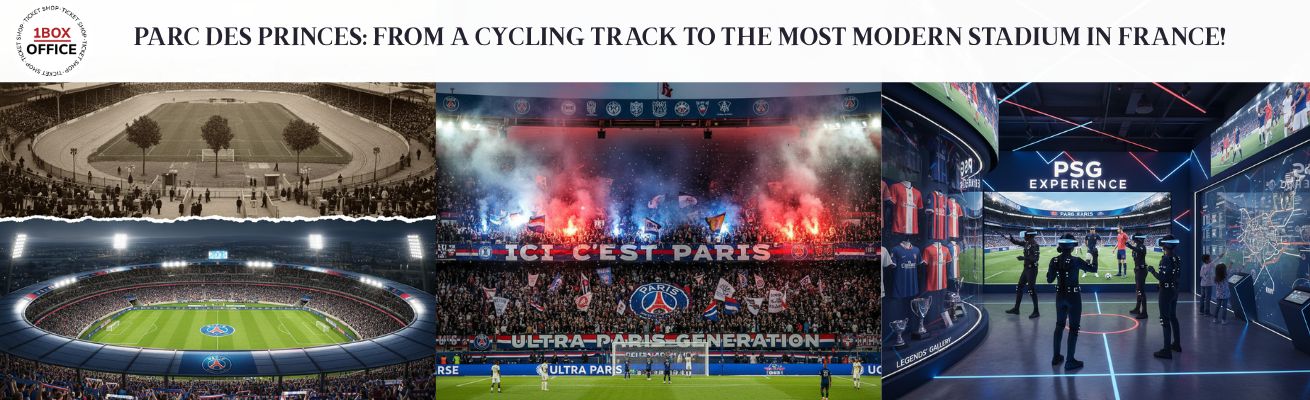
Nestled in the 16th arrondissement by the Bois de Boulogne, the Parc des Princes is an iconic Parisian stadium and a must-visit for football fans and history buffs alike. The site was originally royal hunting and leisure grounds in the 18th century, and the first “Parc des Princes” opened in 1897 as a 3,000-seat velodrome, hosting Tour de France finishes. It was rebuilt in 1932 into a 45,000-capacity multi-sport arena. The current stadium, with its sweeping concrete bowl and futuristic roof, was inaugurated on 4 June 1972 under President Pompidou’s initiative. Architect Roger Taillibert’s design featured a distinctive ring of 50+ concrete pillars and an overhanging corrugated roof. Today it seats about 48,000 spectators, making it Paris’s largest stadium after the Stade de France, and it remains one of Europe’s most celebrated venues.
2. Stadium Milestones and QSI (Qatar Sports Investments)

The Parc des Princes opened in 1897 as a cycling velodrome with a capacity of 3,000 and hosted Tour de France finishes. After a major rebuild in 1932, its capacity increased to about 45,000 for football and rugby. The current Taillibert stadium was completed in 1972 with 48,000 seats, and Paris Saint-Germain (PSG) moved in permanently in 1974. The stadium has since hosted significant events, including the Euro 1984 final, matches during the 1998 World Cup, and Euro 2016 games, along with various cup finals and concerts. From 2013 to 2016, it was modernised under QSI ownership for Euro 2016, enhancing facilities while preserving its original architecture.
3. Home of PSG and Fan Culture

Since PSG’s rise to France’s top flight in 1974, the Parc des Princes has been the club’s fortress. Legends like Mustapha Dahleb, Safet Sušić, George Weah, Ronaldinho, Zlatan Ibrahimović, Neymar, Leo Messi, Angel Di Maria, and Kylian Mbappé have thrilled crowds here. The stadium’s steep stands and low bowl create an electric atmosphere on match nights. They are most evident when they take on teams such as Real Madrid, FC Barcelona, FC Bayern Munich, etc, on a UCL night. The stadium will predominantly be occupied by the PSG ultras.
As Stadium Journey notes, the overhanging concrete roof “amplifies the crowd,” making the Parc a notorious “true hell” of noise. Dedicated supporter groups, such as ultras in the Boulogne and Auteuil stands, paint the stands in red and blue, unfurl massive banners and often set off smoke flares to rally the team. Every home game night at the Parc is a full sensory spectacle, from the fans’ chants (“Ici c’est Paris!”) to the thundering acoustics under Taillibert’s roof. They are most evident during their derby clashes against Olympique de Marseille.
Tourists can join the fun, too. PSG offers behind-the-scenes stadium tours (on weekends and holidays) that wind through the players’ locker rooms, trophy hall, press areas and out onto the pitch. The visit is highly multimedia and family-friendly, and even includes a souvenir shop outside. On non-matchdays, the arena is alive with history on display; even the old VIP wing (now “Borelli entrance”) has become a mini-museum.
Children and students especially enjoy the club’s outreach programs. For example, PSG has created a real vegetable garden on the grounds for nearby schoolkids to learn gardening (a unique nod to community and the club’s off-pitch engagement). In short, a stadium tour at the Parc des Princes is definitely recommended for fans and visitors.
WhatsApp channel
Sports news straight to your phone
Match updates, on-sale dates and ticket news from 1BoxOffice.
4. The PSG Experience

The PSG Experience is Paris Saint-Germain’s immersive fan attraction at Parc des Princes, offering year-round access to the world of the club through a stadium tour, museum, and interactive digital zones. Visitors explore exclusive areas such as the locker rooms, player tunnel, VIP boxes, press room, pitch-side benches, and the trophy wall, with a special Matchday Tour available before kick-off. The PSG History Room showcases over 50 years of legacy through jerseys, trophies, photos, videos, and interactive screens, while the digital zone features VR and AR experiences and 360° projections that recreate iconic moments. Fans can conclude their visit at the PSG Megastore, purchasing official merchandise and personalised kits. Tickets, priced between €24 and €50, are available. More than an attraction, the PSG Experience embodies the club’s ambition to strengthen its bond with fans, draw international visitors, and blend football, technology, and Parisian culture into a modern luxury brand identity.
5. Future and Legacy

As Paris’s legendary football temple, the Parc des Princes embodies “Parisian elegance and vibrant history”. It celebrated its 50th anniversary in 2022 as a symbol of collective memory for Parisians. However, the stadium’s future is now a subject of debate. PSG’s Qatari owners argue that modern European giants need 80 to 90,000 seats to match revenues. In 2025, PSG President Nasser Al-Khelaïfi publicly stated that without expansion, the club would have to relocate outside the city. Plans for a new super-stadium with a capacity of 90,000 seats, costing more than €1bn, are already in development, with sites in Massy or Poissy under consideration. Yet the City of Paris insists the Parc remain a public heritage site, and PSG fans have vocally demanded to stay in this historic ground. In any case, for now, the Parc des Princes remains firmly at the heart of PSG and of Parisian football culture.
You can now get guaranteed tickets for the PSG Vs Strasbourg Ligue 1 clash at Parc Des Princes to enjoy the PSG Experience. You can also book tickets to watch Paris Saint-Germain’s games via the 1BoxOffice website.