In this guide
1. A club of, by, and for the Fans2. Historical Growth of the Fanbase3. Global Reach and Statistics4. Benfica’s Unique Fan Identity and Connection5. The Mourinho FactorSport Lisboa e Benfica is not just a decorated club in Portugal, it is a social phenomenon. The Eagles (Benfica) boast an estimated 14 million fans worldwide, and for years have held the world record for club membership. UEFA research finds Benfica is the best-supported team in Portugal, with roughly 47% of all Portuguese football fans calling themselves Benfiquistas. This immense following reflects a fan-focused culture built on proud community values, historic success, and a global Lusophone (Portuguese-speaking) reach.
1. A club of, by, and for the Fans
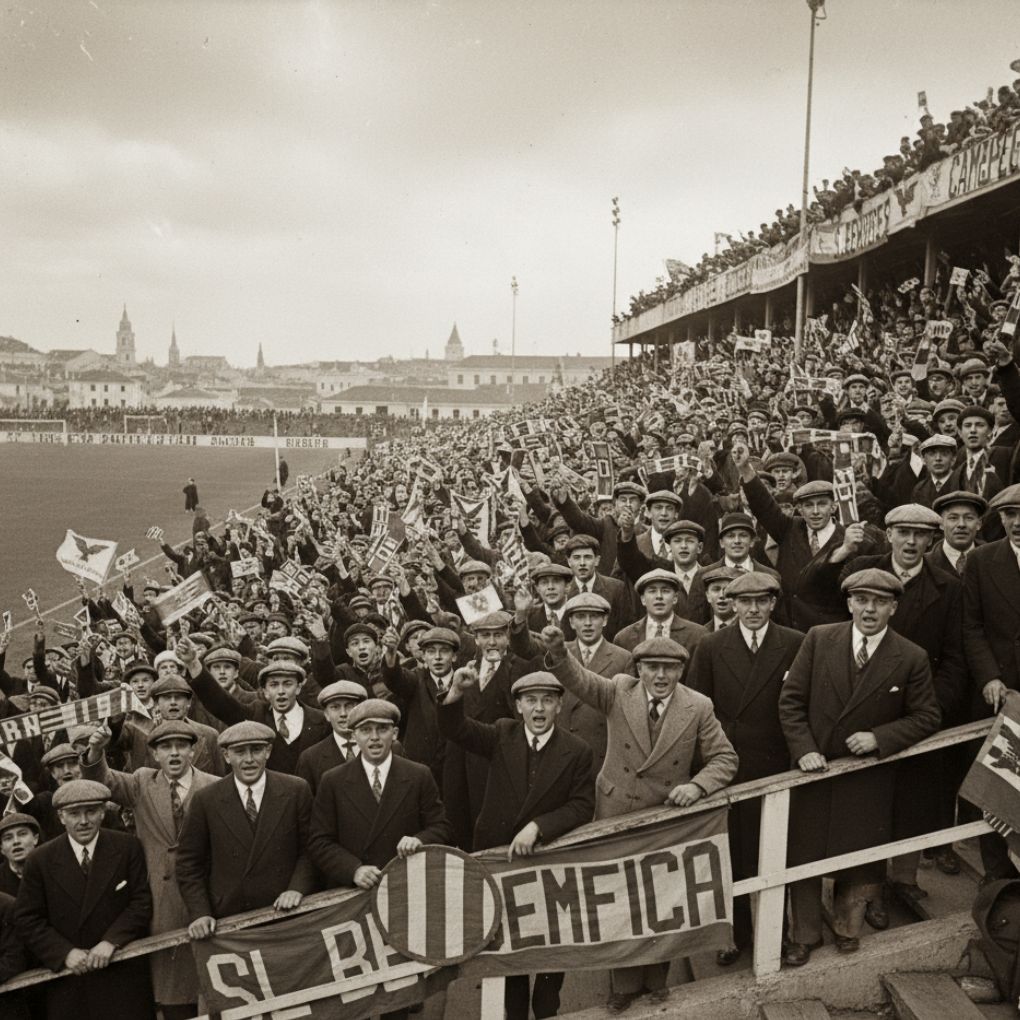
From the terraces of the Estádio da Luz to homes around the world, Benfica supporters, known as benfiquistas, live and breathe their club. Liga Portugal Matchdays are rituals in themselves: before kickoff, a live eagle mascot (Águia Vitória) soars over the stadium and often lands atop the club crest, a unique spectacle that thrills fans and symbolises the team’s fighting spirit. Another constant is the club’s rousing anthem “Ser Benfiquista” (“Being a Benfiquista”), sung by tens of thousands of fans before every home game. The anthem lyrics emphasise Benfica’s humble working-class origins, underscoring that supporting the club is more than cheering for a team, it’s a way of life.
Benfica’s fan culture also features passionate supporter groups and community clubs. Ultras like the Diabos Vermelhos (Red Devils) and No Name Boys lead chants and tifos in their stands, while Casas do Benfica (official fan houses) serve as social hubs worldwide. By 2015, there were over 220 Casas do Benfica across the globe, including affiliates in former Portuguese territories (for example, S.L. Benfica de Macau). These Casas do Benfica allow emigrant communities to meet, watch games together, buy club merch, and maintain a sense of home. One longtime fan even called Benfica “a club for the people,” noting that wherever the Portuguese have migrated, from Angola and Cape Verde to Brazil and the USA, “there are Benfica members”.
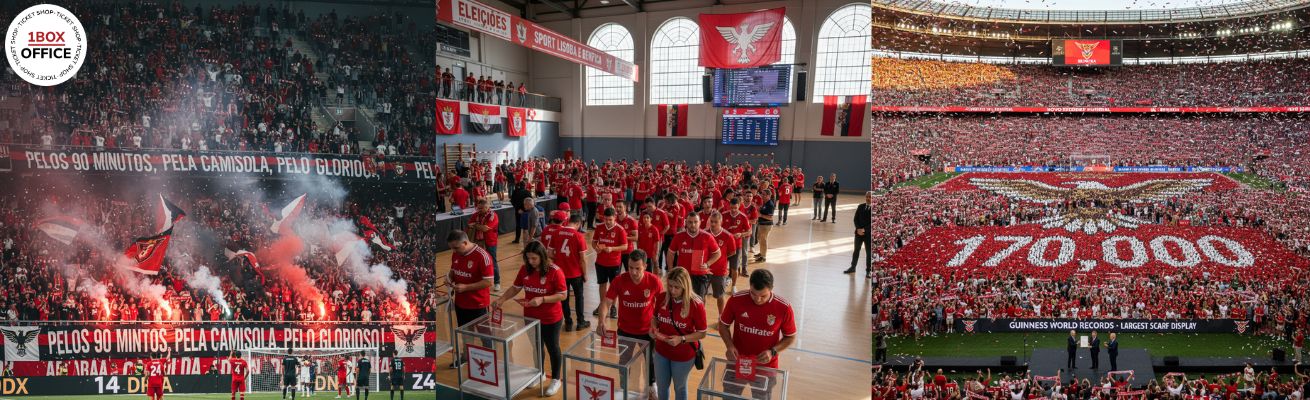
Fans have also directly shaped the club’s history. During the 1950s, for example, club president Joaquim Bogalho famously appealed to supporters to donate concrete to build the original Estádio da Luz. The response was overwhelming, fans contributed 900,000 tons of free concrete to the stadium project. This story has become legendary, illustrating the deep community bond: the stadium itself was literally built by Benfica’s followers. More recently, in 2005, a massive membership drive was launched, and within a year, paid memberships soared from about 95,000 to 160,000, setting a Guinness World Record at the time. Supporters who pay membership fees enjoy special privileges (lower ticket prices, voting rights, etc.), which reinforces their personal stake in the club’s fortunes.
Key fan rituals and traditions include:
- Águia Vitória fly-by: Every home match kicks off with a live eagle performing a pre-game flight around the stadium, carrying the team’s red-and-white ribbons.
- Sing-along anthem: “Ser Benfiquista” is sung before matches as a declaration of pride and identity.
- Scarves and colour: The crowd often raises scarves aloft and forms a “Red Sea” (Mar Vermelho) of claret around their Estádio da Luz stadium at key moments, a visual display of unity.
- Benfica Houses: Over 220 official fan clubs (Casas do Benfica) worldwide let expat and local fans gather, watch games, and socialise.
- Supporters’ groups: Long-established groups like Diabos Vermelhos and No Name Boys bring choreographed chants and tifos to matches, embodying the passionate ultras culture unique to Benfica.
These fan-driven customs create an electric, participatory matchday atmosphere. As one observer put it, being “benfiquista is more than being a football fan”, it’s embracing a proud community with its own songs, symbols (the eagle and the red scarf), and democratic ethos.
2. Historical Growth of the Fanbase
Benfica’s vast support was earned over more than a century of history. The club was founded in 1904 in Lisbon as “Sport Lisboa” by a group of enthusiasts, explicitly “rooted in the neighbourhoods of Lisbon where blue-collar workers worked hard for their families,” reflecting a working-class ethos. This identity distinguished Benfica from other clubs early on. The merged club (taking the Benfica name in 1908) quickly rose in prominence: its first national championship came in 1936, cementing a growing local fanbase. Throughout the mid-20th century, Benfica dominated Portuguese football, winning dozens of league and cup titles, which only swelled its popularity. UEFA notes that the club “grew exponentially as it accumulated titles since the 1930s”, and by the end of that era, the supporters’ share of fans in Portugal was already overwhelming.
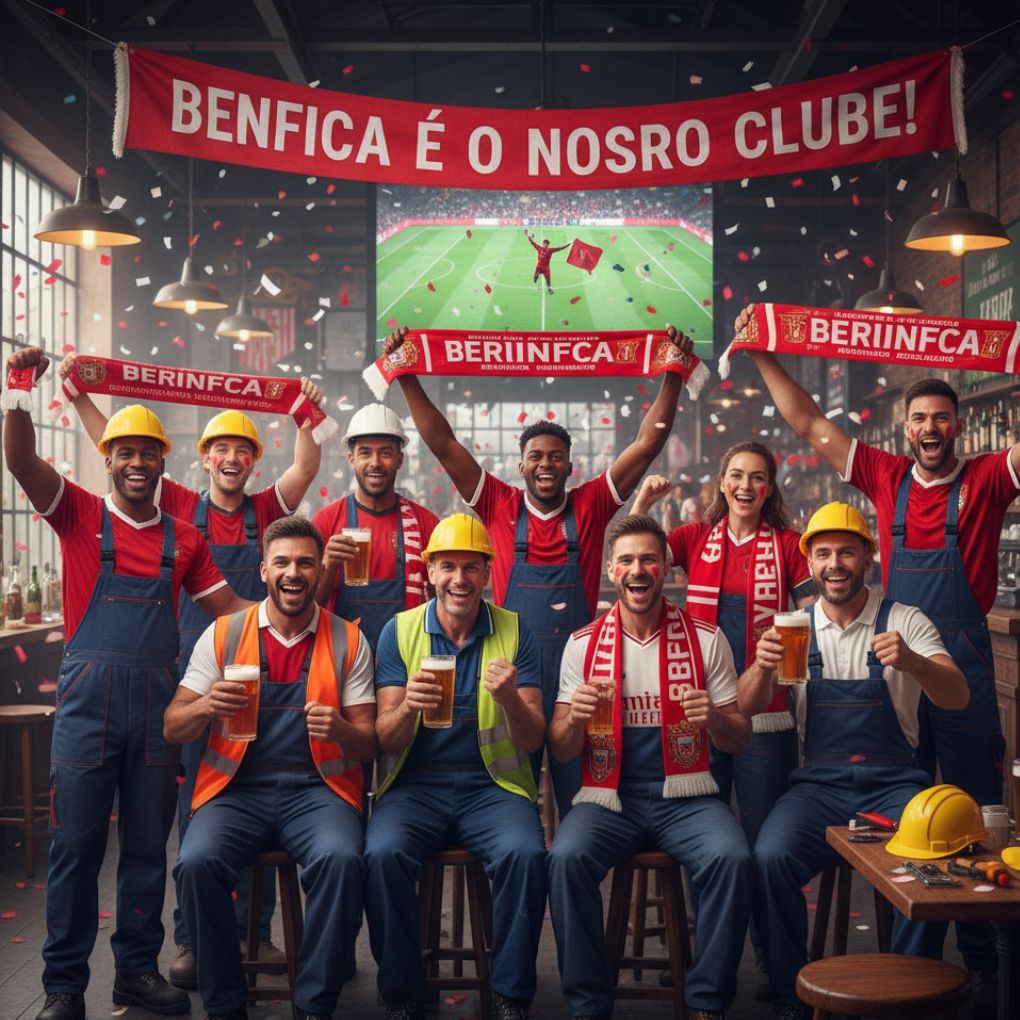
Benfica’s golden era of European success in the early 1960s was another major growth spur. Under coach Béla Guttmann, Benfica won back-to-back European Cups in 1961 and 1962, the first Portuguese club to do so. These triumphs broadcast the club’s name worldwide and attracted an international following, lifting the club’s status and inspiring pride among Portuguese people globally. The team’s flair and dominance, captured in red jerseys and an eagle crest, became powerful symbols of national success. Historian accounts of the period note that Benfica fans began referring to the club as a “religion” among supporters, reflecting the almost spiritual fervour the team inspired. For example, the phrase “Benfica é uma religião which means Benfica is a religion, is commonly cited by fans and media.
Several decades later, savvy club management continued to cultivate the fanbase. President Luís Filipe Vieira aggressively marketed memberships, media presence, and European campaigns. By 2006, Benfica’s paid-member list set the world record at over 160,000. Although later organisation reforms briefly reduced membership counts, the effort signalled how Benfica consistently engaged supporters as stakeholders in the club’s success.
In sum, Benfica’s history is one of continual growth. From a local Lisbon club of labourers, it became a national powerhouse and then a club of international renown. Each trophy, each historic match (like the epic “Taça de Portugal” finals or derby comebacks) has reinforced fan loyalty. The club’s slogan “E pluribus unum” (Out of many, one) also speaks to this process, diverse supporters unified by a common identity and was literally inscribed on the club crest since its early days.
3. Global Reach and Statistics
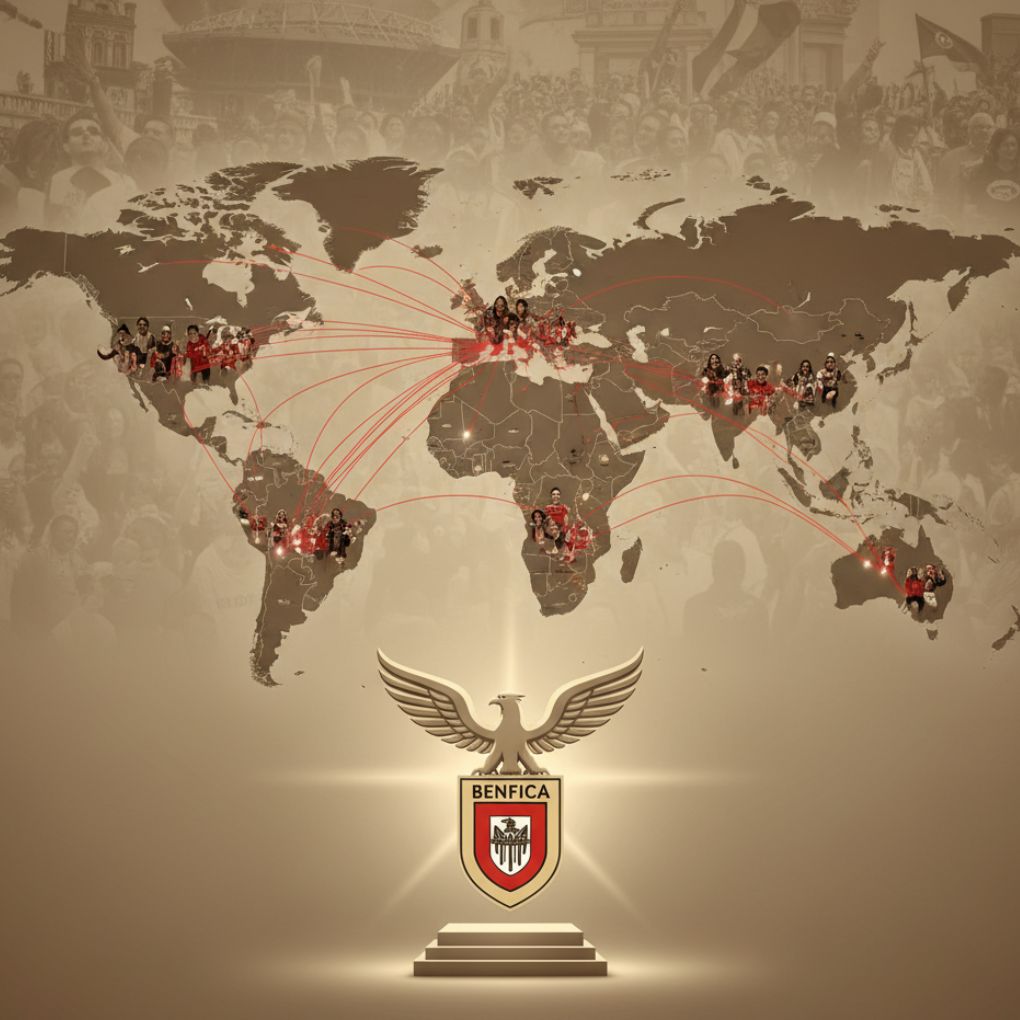
Benfica’s fanbase today is truly global. The club holds numerous records and impressive statistics that quantify its reach:
- Official Membership: As of February 2025, Benfica issued its 400,000th club membership. This makes Benfica the largest sports club in the world by membership, a record no other football team can claim.
- World Record Holders: Benfica has twice held Guinness World Records related to support: one for most paid members (160,398 members recorded in 2006) and earlier for “most widely supported club” with roughly 14 million fans worldwide.
- Worldwide Fans: External estimates put Benfica’s global fanbase at about 14 million people. This includes roughly 5.8 million fans in Portugal and the rest scattered globally.
- Share of Portuguese Fans: According to a UEFA study, 47% of all football supporters in Portugal back Benfica. In fact, nearly one in two Portuguese sports fans is a Benfiquista, more than the combined support for all other clubs.
- Attendance: Benfica leads Portuguese league attendance. In multiple seasons, Benfica recorded the Primeira Liga’s highest average crowds (for example, a record 57,108 average in 2022,23). This sustained fan turnout reinforces that the “14 million worldwide” figure is built on active, local support.
- International Clubs (Casas do Benfica): Over 220 official Casas do Benfica (fan clubs/delegations) exist on every continent. There are Casas as far-flung as Newark and New Bedford in the U.S., Paris and Geneva in Europe, and Luanda and Lisbon’s former colonies in Africa and Asia. These formal fan clubs testify to Benfica’s organised presence abroad, they hold events, youth programs, and social gatherings that spread Benfica culture locally.
- Lusophone Reach: Benfica enjoys enormous popularity in Portuguese-speaking countries. Club officials note that in Angola and Mozambique, key Portuguese-speaking African markets, Benfica is “one of the most followed clubs”. The club has even launched dedicated programs for these regions, acknowledging a “substantial fan base in Portuguese-speaking countries in Africa”. Similarly, in Brazil, home to the largest Portuguese-speaking population, Benfica historically ranks among the top European clubs, buoyed by cultural ties. In former colonies like Cape Verde and Guinea-Bissau, Benfica traditions were carried by emigrants and local affiliates. In short, wherever Portuguese communities settled, Benfica found new fans.
These numbers and facts show why Benfica is counted as having one of the biggest fanbases in world football. Not only do they vastly outnumber other Portuguese clubs’ supporters, but they also rival even the largest European giants. A 2023 financial report noted Benfica surpassed Bayern Munich to claim the top spot globally in total club membership. Guinness has documented Benfica’s fan dominance multiple times. Such metrics, millions of supporters, record-breaking membership, staggering attendance, all confirm that Benfica’s fans form a mass movement, not just a local following.
WhatsApp channel
Sports news straight to your phone
Match updates, on-sale dates and ticket news from 1BoxOffice.
4. Benfica’s Unique Fan Identity and Connection
What sets Benfica supporters apart from fans of other Portuguese clubs? A few key distinctions stand out:
- Working-Class Roots: Unlike Sporting (traditionally associated with Lisbon’s upper classes) or FC Porto (regional identity), Benfica has historically been the people’s club of the capital. It prides itself on a humble, working-class heritage. Many fan families trace generations of support; being Benfiquista often means identifying with club values of hard work, resilience, and solidarity. One historian notes that during Portugal’s dictatorship era, Benfica’s democratic elections and working-class fan politics gave it a reputation as a “club of the people”, a legacy still proudly claimed by its supporters.
- Democratic Membership: Benfica’s democratic governance, where paid sócios (members) vote for presidents every four years, strengthens fans’ emotional investment. The club constitutionally treats supporters as stakeholders, and the regular large-scale elections make fans feel empowered. This participatory model is unlike many clubs, giving benfiquistas a sense of ownership. For example, even under dictatorship, Benfica members could vote on club matters, which fans still recall with pride.
- Emotional Connection: The imagery and rituals at Benfica games foster an intense emotional bond. The eagle and the red scarves serve as rallying symbols of pride. Home matches at the Luz are often likened to religious experiences, tens of thousands of fans singing “Ser Benfiquista” in unison can give visitors goosebumps. Slogans like “Avante Benfica” (Onward Benfica) and “O Benfica é O Único” (Benfica is the only one) further cement a shared identity. By contrast, rival clubs have their own cultures (e.g., Sporting’s “green idealism” or Porto’s “dragons”), but Benfica supporters emphasise unity and inclusivity. Their motto, “E pluribus unum” (“Out of many, one”), has been on the club badge since the early 1900s, embodying the idea that a diverse fanbase is united under the Benfica banner.
- Global Ambition: Benfica markets itself as a global institution. Its partnerships (like media and fan engagement deals) and outreach in Africa and the Americas reinforce a sense that being a Benfica fan means belonging to an international community. In this way, a supporter from Lisbon feels connected to one in Luanda or Newark: they share the same chants, jerseys, and pride. This worldwide club identity, built over decades of membership drives and academies abroad, differs from smaller clubs whose fan culture might remain local or national.
In style and emotion, Benfica’s supporters are known for vocal passion mixed with tight organisation. The ultras groups (Diabos Vermelhos, No Name Boys) coordinate displays, but there are also synchronised elements (scarves, banners) that even regular fans follow. The result is a highly choreographed and intense atmosphere that feels distinct from, say, Sporting’s or Porto’s arenas. Moreover, because Benfica consistently competes for titles and European glory, its fans expect excellence and celebrate (or agonise) on a higher stage. This shared pursuit of success creates a brotherhood among benfiquistas: whether in the stadium or on social media, one hears the refrain “nós somos todos benfiquistas” (“we are all Benfica supporters”), signalling that the club’s identity transcends individual differences.
5. The Mourinho Factor

Mourinho’s arrival at Benfica has quickly improved the team’s performance. The players are now better organised, manage matches more effectively, and have had a positive start. For lasting success, the team needs a deep bench, good rotation, and strong performance in European competitions. For fans, his presence brings excitement and goodwill, but they will feel pressure for results if the team doesn't win trophies or big matches.
Mourinho’s name also boosts ticket sales, merchandise, media coverage, and sponsorship deals in the short term. However, lasting business success depends on consistently winning domestically and making deep runs in European competitions to turn that excitement into steady revenue.
SL Benfica’s enormous fanbase is the product of a century of cultural building, sporting success, and smart outreach. The club turned its working-class roots into mass appeal, created enduring rituals (the eagle, the anthem, the Casas) to deepen emotional bonds, and won trophies that drew global eyes. Today, hard data back up the stories: 400,000 members, 14 million supporters, the highest domestic support in Europe. Yet beyond numbers, it is the community “Benfiquista” spirit, a sense of belonging and pride, that truly makes Benfica’s fanbase one of the world’s largest. Whether chanting in Lisbon or Lusophone Africa, Benfica supporters remain united by a shared identity of resilience, tradition, and unwavering passion for O Glorioso (The Glorious One).
You can book tickets 100% genuine and guaranteed ticketsto the Champions League clash between Newcastle United vs SL Benfica at St. James Park and the Liga Portugal clash between SL Benfica Vs FC Arouca via the 1BoxOffice website.