
In this guide
1. Start at the Top: Head and Ears2. The Scarf Is Not Just for Show3. Upper Body: The Three-Layer Rule4. Hands: Gloves Before Anything Else5. Lower Body: Do Not Neglect Your Legs6. Feet: Thick Socks Beat Fancy Boots7. Football Match Outfit Ideas for Women8. Outfit Ideas for Men9. Dress for the Fixture, Not Just the Season10. What Not to Wear11. The Complete Winter Matchday ChecklistFAQsThe 2026/27 Premier League season runs from 21 August 2026 to 30 May 2027, which means the heart of the campaign sits squarely in the coldest months of the British year. Boxing Day falls on a Saturday this season, so a full festive fixture list is coming, and anyone wondering what to wear to a football match in December or January should plan for near-freezing temperatures, wind that cuts through open stands and the occasional sideways shower.
You will be sitting still for two hours in an exposed stand after walking from the station or car park, whether that is a Friday night at the Emirates watching champions Arsenal or a lower-league away day. This guide works head to toe, with options for men and women, across every level of the game.
1. Start at the Top: Head and Ears
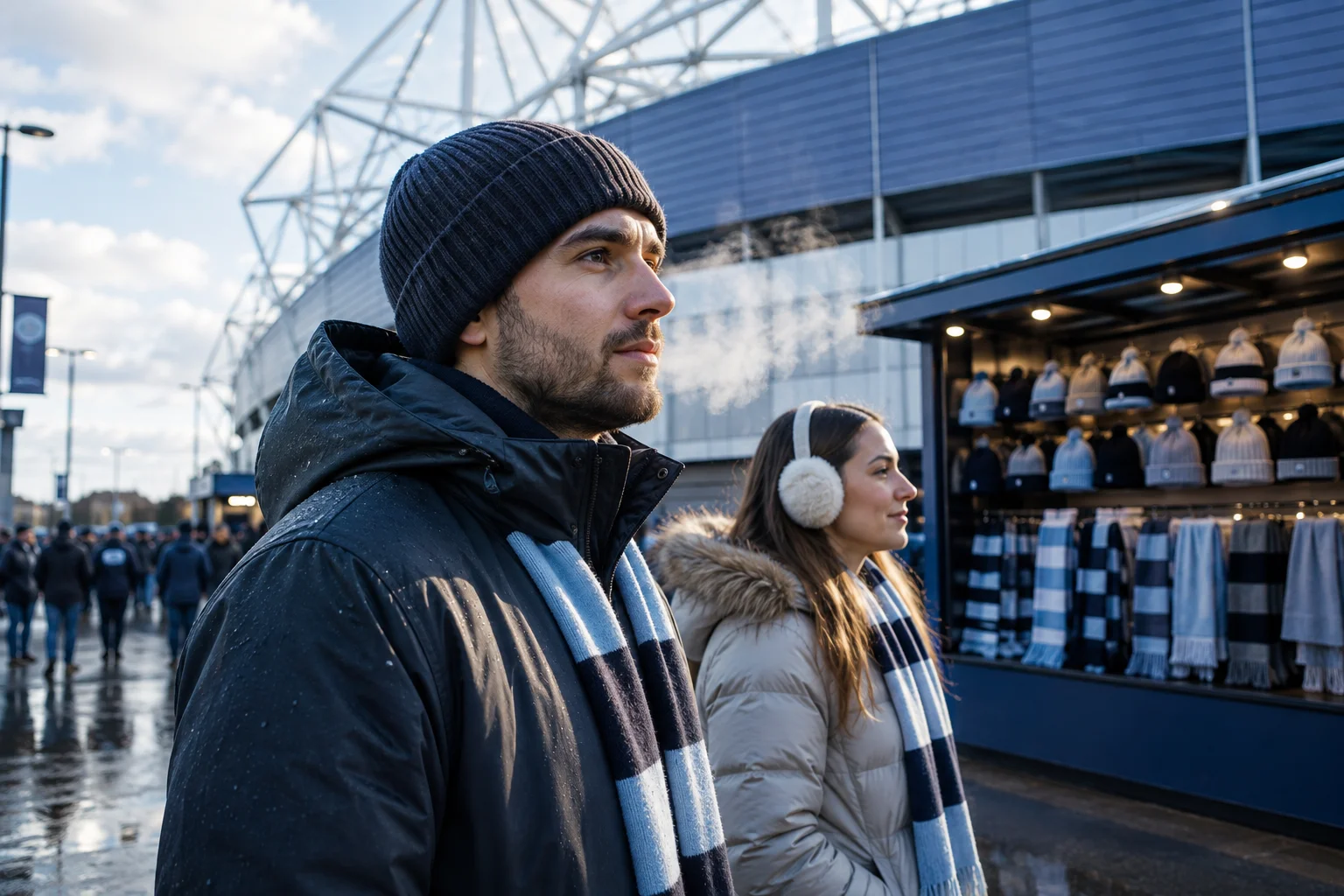
Heat escapes fastest from an uncovered head, and ears go numb before anything else. A knitted beanie or wool cap solves both problems at once and fits under a hood if the rain arrives.
For women and children, ear muffs are a solid alternative that will not flatten your hair. Club shops and stalls outside most grounds sell branded winter hats if you forget yours.
2. The Scarf Is Not Just for Show

Cold air slips down through the collar of even a good coat, and a scarf or neck warmer seals that gap while doubling as matchday colours.
A snood is worth considering too, especially for women. It sits closer to the skin than a wrapped scarf, many versions include a hood and it will not unravel when you jump up for a goal.
3. Upper Body: The Three-Layer Rule
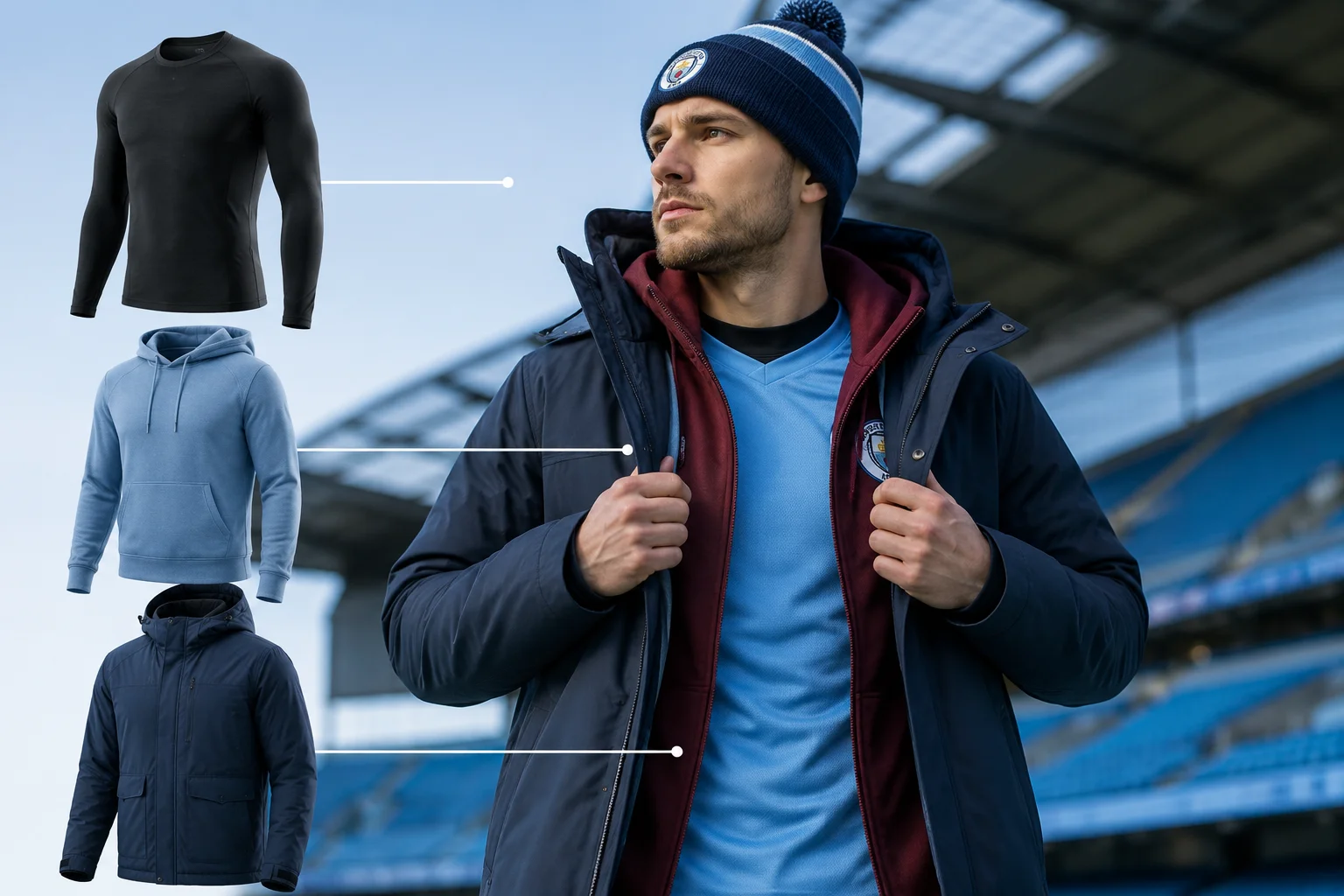
One thick coat over a t-shirt loses to three thinner layers every time, because trapped air between layers is what actually insulates you.
- Base layer: a thermal top of the kind players wear under their shirts, or a long-sleeved t-shirt if you do not own one. For women, a long-sleeved gym top or quarter-zip does the same job.
- Mid layer: a jumper, sweatshirt or hoodie. This is your main heat trap and the layer you can shed if the concourse gets stuffy at half time.
- Outer layer: a waterproof jacket or thick coat for men, a puffer jacket for women. Wind resistance matters as much as warmth in an exposed upper tier.
Your replica shirt goes over the base layer or the jumper, not instead of either. Modern kits are thin polyester, so treat the shirt as decoration rather than insulation. Wind resistance is the priority at open, modern bowls like the Etihad, where Manchester City fans in the upper tiers feel every gust coming across east Manchester.
WhatsApp channel
Sports news straight to your phone
Match updates, on-sale dates and ticket news from 1BoxOffice.
4. Hands: Gloves Before Anything Else

Cold hands stiffen quickly and make everything from checking your ticket to holding a pie miserable. Gloves are non-negotiable from November onwards, and crested versions are sold outside almost every ground.
Wool mittens run warmer because your fingers share heat, though touchscreen-compatible gloves are the smarter pick if your ticket lives in a wallet app.
5. Lower Body: Do Not Neglect Your Legs
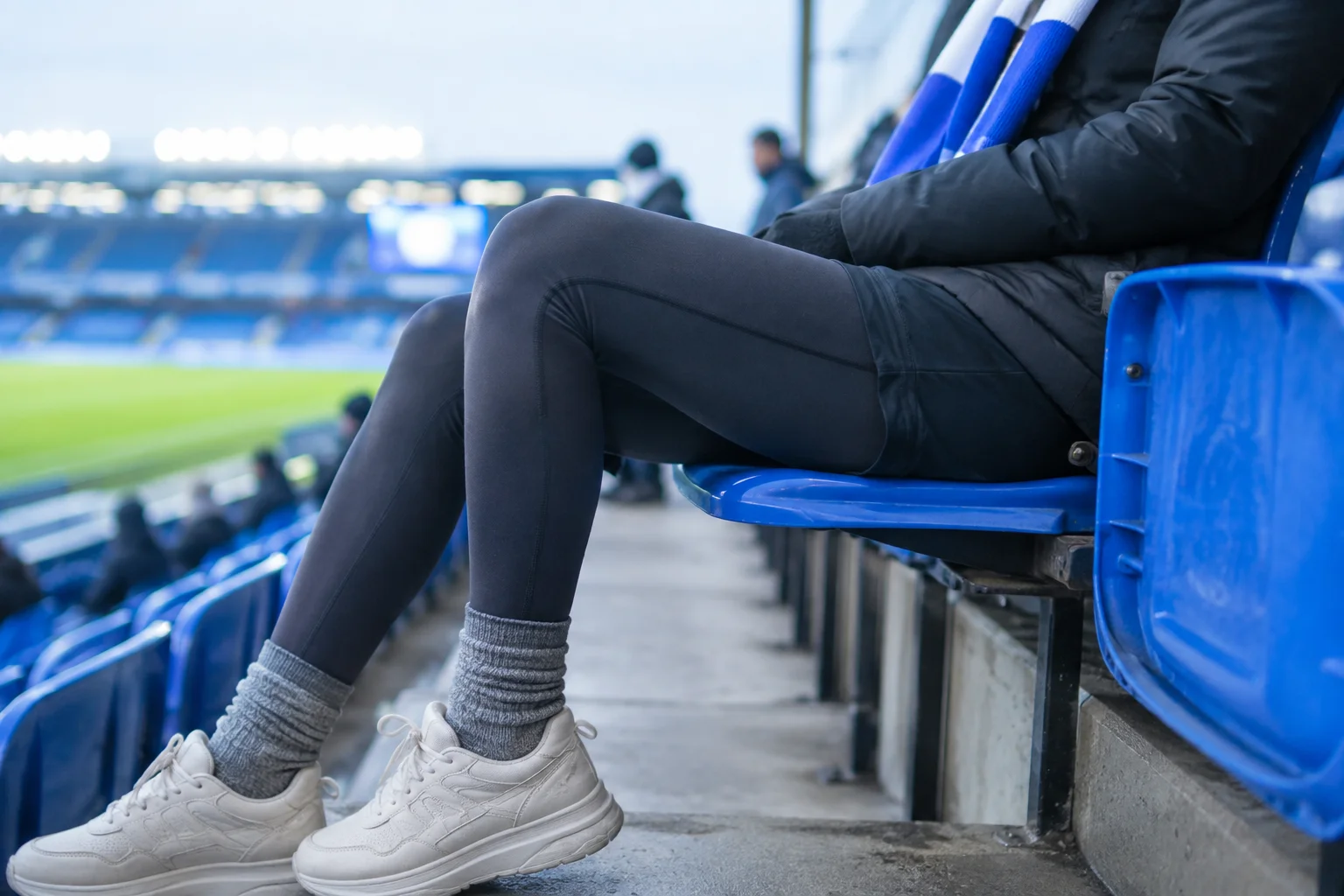
A plastic seat that has sat in two degrees all afternoon drains heat straight through thin jeans, and midweek cup ties are the worst for it, since temperatures drop sharply once the sun goes.
Thermal leggings under jeans or trousers are the best answer for men and women alike. Failing that, tracksuit bottoms hold warmth better than denim, and insulated running leggings work well on their own for female supporters.
6. Feet: Thick Socks Beat Fancy Boots
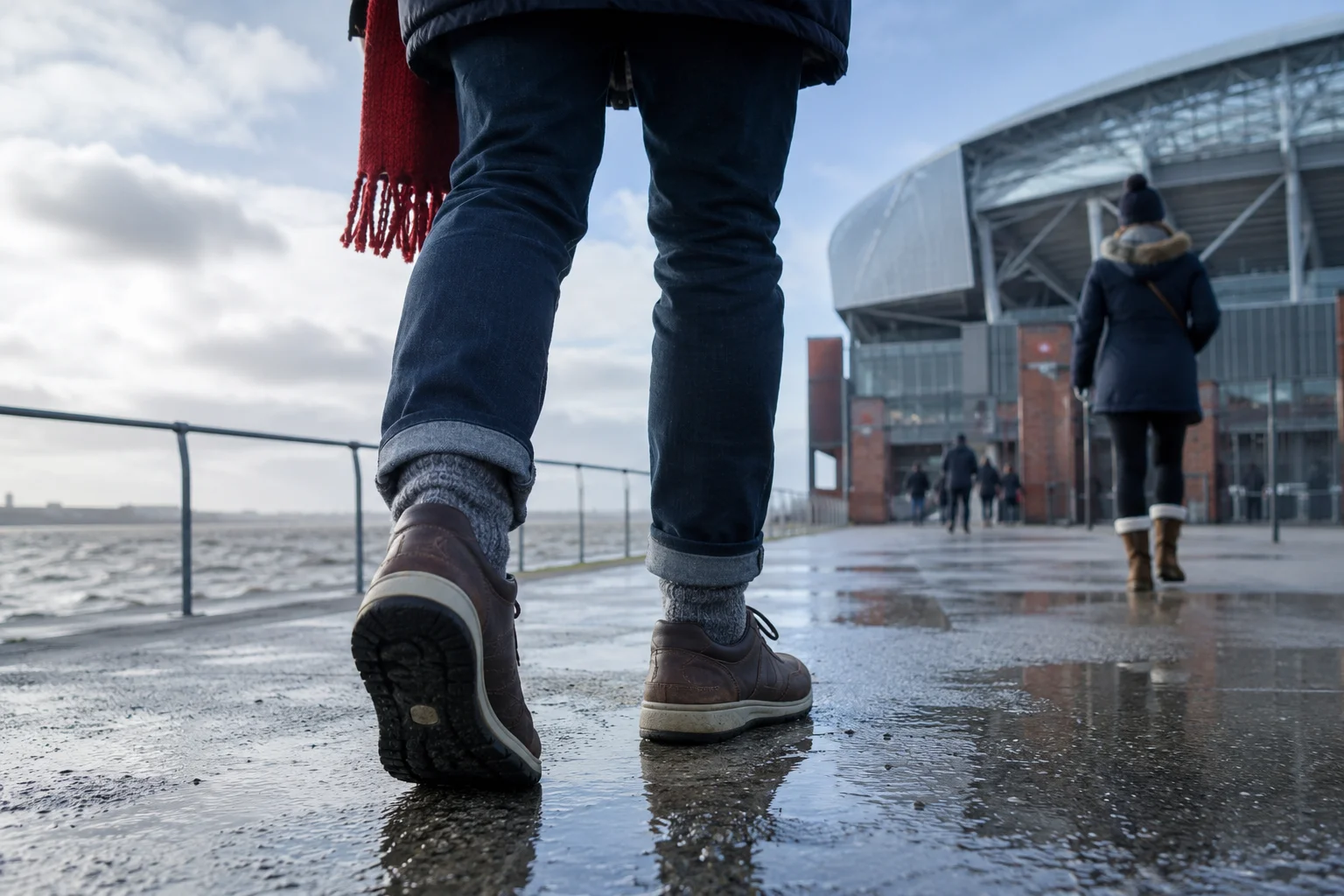
Two pairs of ordinary socks outperform one thin pair in any footwear, and leather trainers or boots block wind and light rain far better than mesh running shoes. Fleece-lined boots such as Uggs are a popular choice for women because the lining acts as an extra layer in itself.
Whatever you wear, remember the walk: stations and car parks are rarely next to the turnstiles, and wet feet at 2pm means cold feet until full time. Everton's new home on the Mersey waterfront is the clearest example in the league, with wind straight off the river and a walk in from Sandhills that punishes bad footwear.
7. Football Match Outfit Ideas for Women
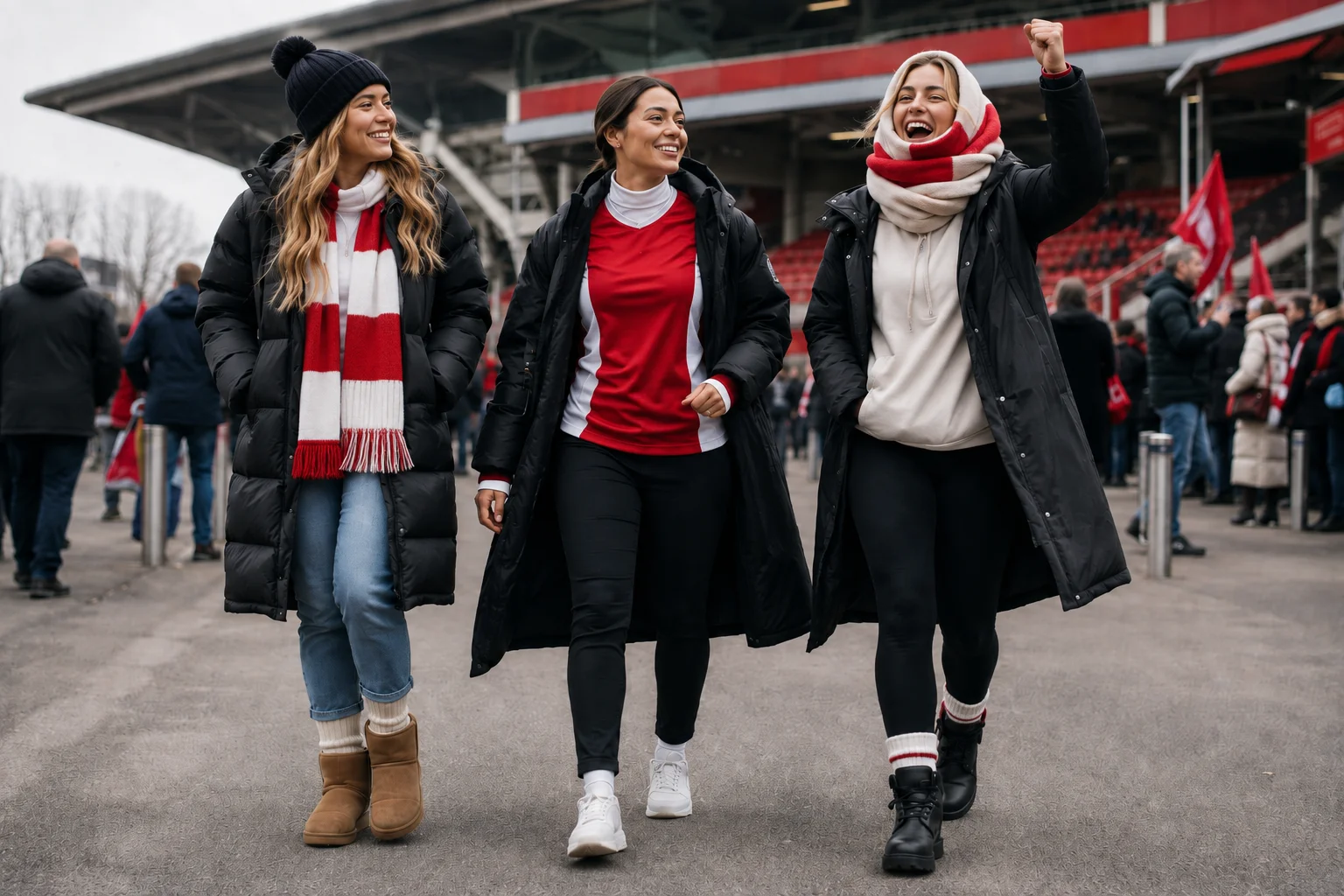
Warmth and style are not in conflict, and female supporters searching for outfit ideas deserve better than "wear a coat". A reliable formula: insulated leggings or straight-leg jeans over thermals, a quarter-zip or fitted hoodie as the mid layer, then a longline puffer that covers the hips, because a cropped jacket leaves a cold band exactly where the seat meets your back.
- The classic: longline puffer, club scarf, beanie, fleece-lined boots and thick socks. Practical, warm and photographs well.
- The shirt-forward look: replica shirt over a fitted thermal base, oversized coat left open on the concourse and zipped in the stand.
- The snood option: a hooded snood replaces both scarf and hat, keeps your hair intact and stays put when you jump up.
Skip anything with a large rigid bag. Most Premier League grounds cap bags at roughly A4 size, and clothing choices that avoid needing a bag at all get you through security faster.
8. Outfit Ideas for Men

The men's version is simpler but the same logic applies: build from the base layer out and let the shirt sit on top as colours rather than warmth. Tracksuit bottoms with thermals underneath beat jeans for an evening game, and a beanie plus gloves turns a miserable second half into a comfortable one.
If you insist on jeans, wear the thermals. If you insist on trainers, double the socks. The fans who look coldest on television are always the ones who dressed for the pub rather than the stand.
9. Dress for the Fixture, Not Just the Season

A 3pm Saturday kick-off in November and an 8pm cup tie in January are different propositions. Daytime games give you sun on at least one side of the ground, while evening matches start cold and finish colder, so add a layer for anything under floodlights. Ground design matters too: West Ham's London Stadium is a former athletics bowl where wind swirls across the wide gap between the stands and the pitch, while a midweek night at Anfield watching Liverpool rewards anyone who packed the extra mid layer.
Cup runs bring their own quirks. A trip to Wembley for a semi-final or final means long stretches outside the ground before kick-off, and European nights in the Champions League league phase run deep into December and January with late finishes. If you would rather skip the cold entirely, hospitality packages put a heated lounge, food and a padded seat between you and the weather.
10. What Not to Wear
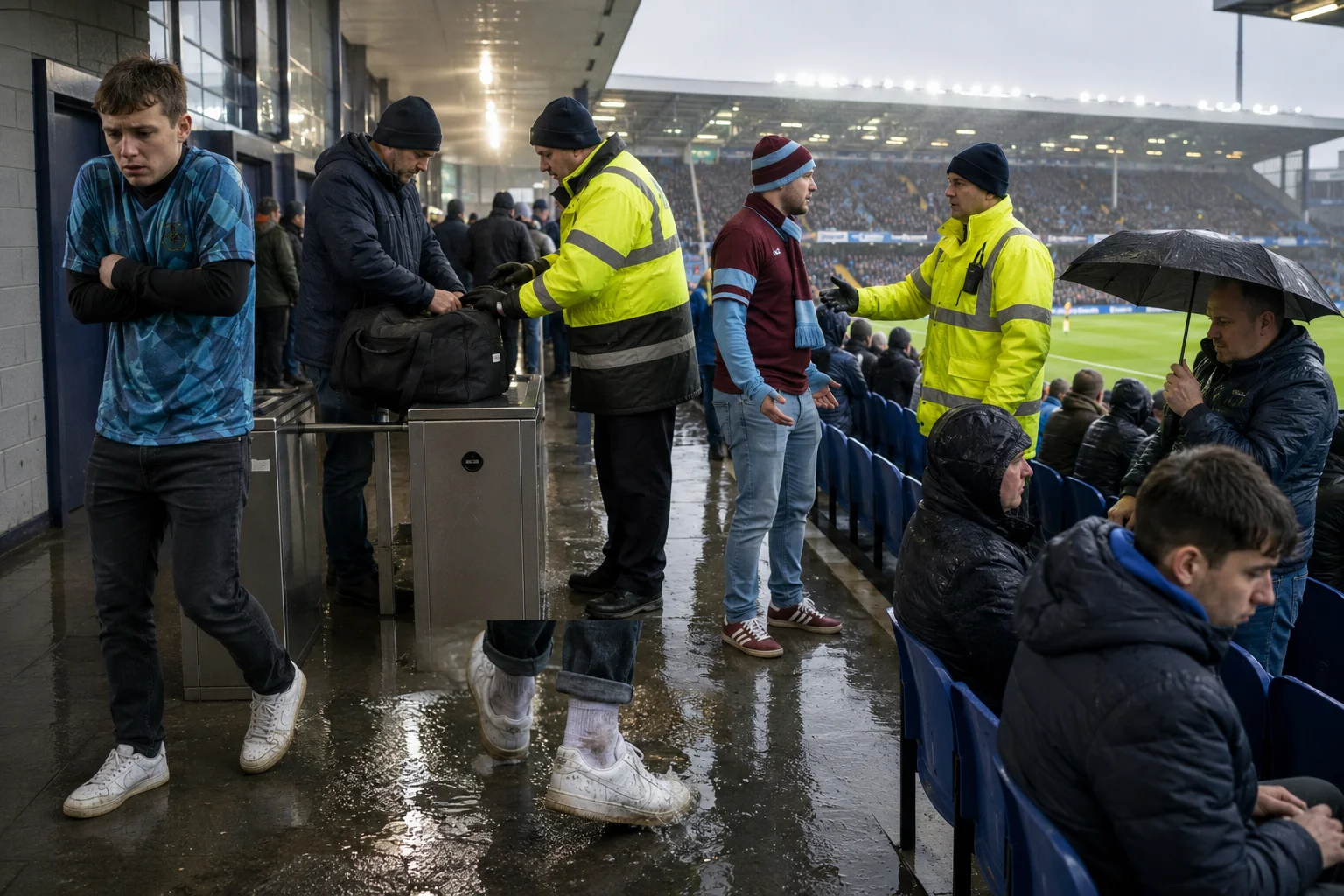
- A shirt as your outer layer: polyester kits offer near-zero insulation on their own.
- Away colours in home ends: stewards can and do refuse entry or relocate you, and it marks you out in the concourse.
- Mesh trainers: one puddle on the walk in and your feet are wet until full time.
- Bulky bags: anything bigger than A4 risks refusal at the turnstile or a detour to a bag drop.
- Umbrellas in the stand: most grounds ban them from seated areas, so a hood is your rain plan.
11. The Complete Winter Matchday Checklist
| Body area | Men | Women |
|---|---|---|
| Head | Beanie or wool cap | Beanie or ear muffs |
| Neck | Scarf or neck warmer | Snood or scarf |
| Upper body | Base layer, jumper, waterproof coat | Gym top or quarter-zip, hoodie, puffer jacket |
| Hands | Gloves | Gloves or mittens |
| Lower body | Thermals under trousers or tracksuit bottoms | Insulated leggings or thermals under jeans |
| Feet | Thick socks, leather trainers or boots | Thick socks, fleece-lined boots |
One final tip for the 2026/27 calendar: the festive rush and the FA Cup third round in early January produce some of the coldest fixtures of the season. If you are travelling from abroad, pack for conditions colder than the forecast suggests, because wind chill inside a stadium bowl is real.
FAQs
1. Can I bring a blanket into a UK stadium?
-
Most clubs allow small blankets, but check the individual stadium's bag and prohibited items policy before travelling because rules vary by ground.
2. Are hand warmers allowed at football matches?
-
Disposable air-activated hand warmers are generally permitted, while reusable versions that require boiling or charging may be refused at security checks.
3. Do stadiums sell hot drinks during winter matches?
-
Yes, every league ground sells tea, coffee and hot chocolate on the concourse, though queues peak in the ten minutes before half time.
4. What happens if a match is postponed for weather?
-
Tickets remain valid for the rearranged date, and holders who cannot attend the new fixture should contact their point of purchase about their options.
5. Is it colder in the upper or lower tier?
-
Upper tiers are usually windier and feel colder, while front rows of the lower tier are the most exposed to rain blowing under the roofline.
Wrap up properly and a freezing night under the floodlights becomes one of the best experiences in football. When your team plays this winter, 1BoxOffice lists seats across the Premier League, both domestic cups and European competition, with every order backed by a 150% money-back guarantee.
Sources: Premier League 2026/27 season dates announcement, Sky Sports 2026/27 schedule overview.