In this guide
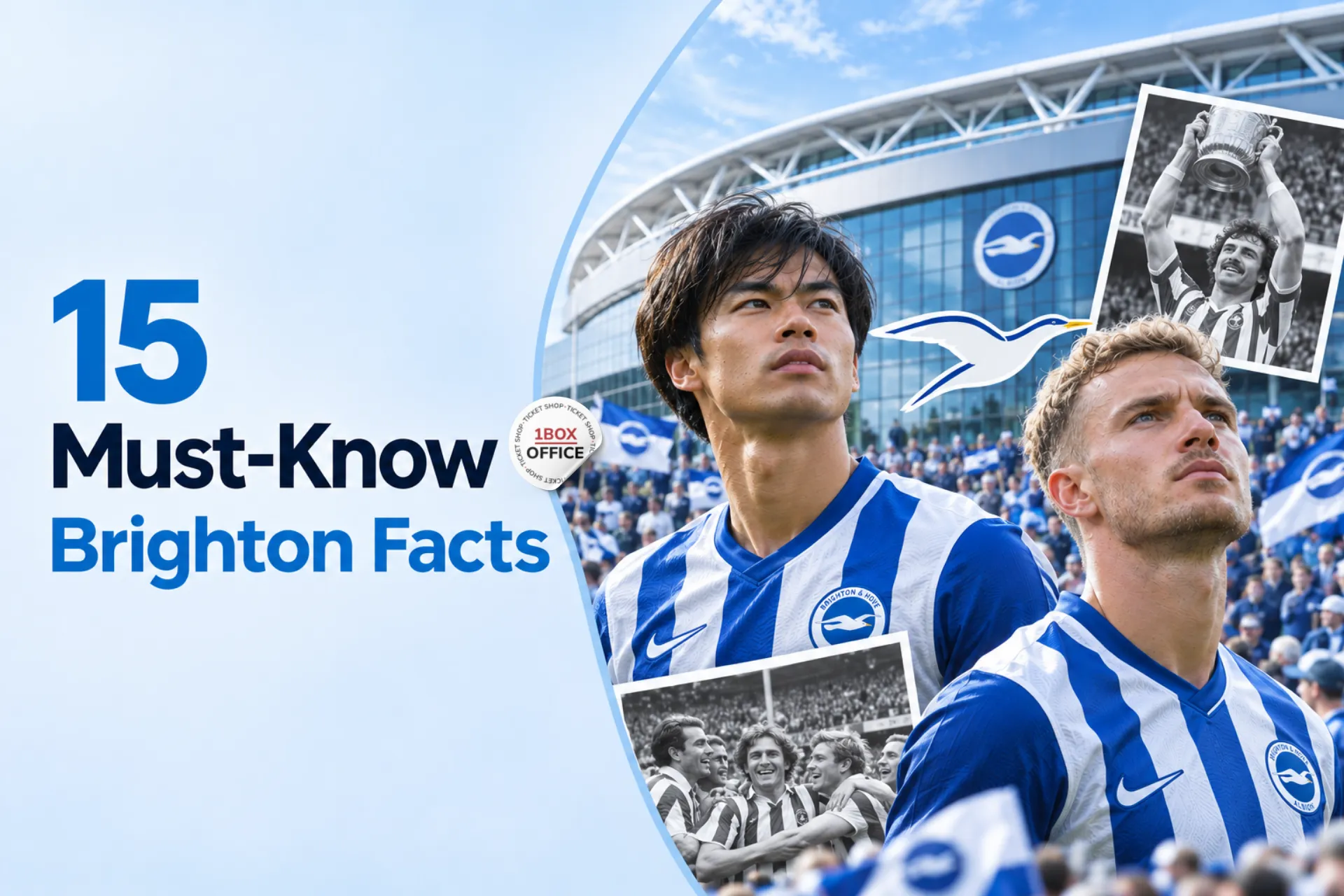
All 15 Facts at a Glance1. From the Football League Trapdoor to Second in the Premier League2. Albion Was a Compromise Name3. Seagulls Began as a Reply to the Eagles4. The Crystal Palace Rivalry Was Born in the 1970s5. Five Home Grounds in 125 Years6. The Goldstone Was Sold With Nowhere to Go7. Withdean Stood on Former Zoo Land8. The Amex Keeps Getting Bigger9. One Kick From Winning the 1983 FA Cup10. No Major Trophy, but the 1910 Charity Shield11. A Professional Gambler Owns the Club12. Up to £115m for Moisés Caicedo13. A New Record Signing in 202614. Europe Twice in Four Seasons15. Wilson's Games, Cook's Goals and a Wembley FinalFrequently Asked QuestionsOn 3 May 1997, Brighton were 90 minutes from dropping out of the Football League, with their ground already sold and debts mounting. Twenty-nine years later they sit second in the Premier League and are playing in Europe for the second time. These Brighton & Hove Albion facts follow the club from a compromise name in 1901 to a data-driven model that sold one player for up to £115m, with every figure checked as of November 2026.
Article Summary: Brighton & Hove Albion were founded on 24 June 1901, stayed in the Football League in 1997 by scoring three more goals than Hereford United and now play at the Amex Stadium in Falmer, which holds around 32,000. Owned by Tony Bloom since 2009, the club is known as the Seagulls and is coached by Fabian Hürzeler.
- Brighton were second in the Premier League on 22 points after 10 matches as of 10 November 2026, five points behind leaders Arsenal.
- Moisés Caicedo cost Brighton £4.5m in February 2021 and joined Chelsea in August 2023 for £100m, potentially rising to £115m, the club's record sale.
- Luka Vušković became Brighton's record signing on 14 July 2026 in a £46m deal from Tottenham, rising to £50m with add-ons.
- Tug Wilson holds Brighton's appearance record with 566 games and Tommy Cook holds the scoring record with 123 goals.
- Brighton's only men's FA Cup final came in 1983, a 2-2 draw with Manchester United followed by a 4-0 replay defeat.
Each fact below has been checked against club records, match reports and published accounts. If the story makes you want to see the Seagulls in person, our Brighton tickets cover home and away matches throughout the 2026-27 season.
All 15 Facts at a Glance
| # | Fact | Key figure |
|---|---|---|
| 1 | From the Football League trapdoor to second in the Premier League | 1-1 at Hereford, 3 May 1997 |
| 2 | Albion was a compromise name | Founded 24 June 1901 |
| 3 | Seagulls began as a reply to the Eagles | Seagull crest from 1977 |
| 4 | The Crystal Palace rivalry was born in the 1970s | 5-0 at the Amex, 18 October 2026 |
| 5 | Five home grounds in 125 years | Two seasons at Gillingham |
| 6 | The Goldstone was sold with nowhere to go | Record crowd of 36,747 |
| 7 | Withdean stood on former zoo land | Record gate of 8,729 |
| 8 | The Amex keeps getting bigger | Record crowd of 31,944 |
| 9 | One kick from winning the 1983 FA Cup | 2-2, then a 4-0 replay defeat |
| 10 | No major trophy, but the 1910 Charity Shield | Highest finish: 6th in 2022-23 |
| 11 | A professional gambler owns the club | Chairman since 2009 |
| 12 | Up to £115m for Moisés Caicedo | Bought for £4.5m |
| 13 | A new record signing in 2026 | £46m Luka Vušković |
| 14 | Europe twice in four seasons | 2023-24 and 2026-27 |
| 15 | Wilson's games, Cook's goals and a Wembley final | 566 games, 123 goals |
1. From the Football League Trapdoor to Second in the Premier League
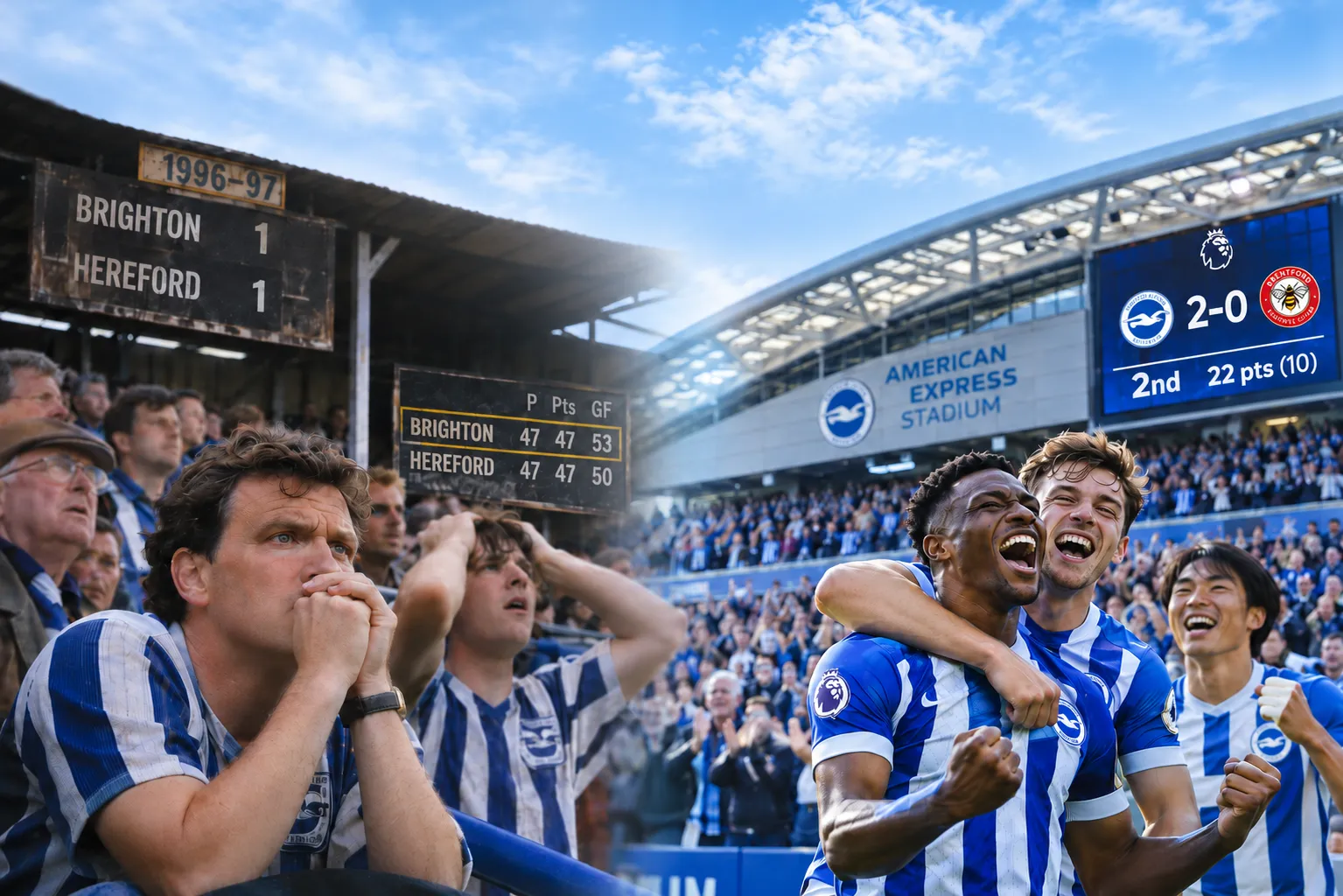
Brighton went into the final day of the 1996-97 season at Hereford United needing at least a draw to stay in the Football League. They fell behind to a Kerry Mayo own goal, Robbie Reinelt equalised and the 1-1 result left both clubs on 47 points. Brighton stayed up because they had scored 53 goals to Hereford's 50, even though their goal difference was worse, and Hereford dropped into the Conference. The club had already been docked two points that season after a supporters' pitch invasion, which shows how close the margin was.
As of 10 November 2026, the same club is second in the Premier League with seven wins, one draw and two defeats from 10 matches. A 2-0 win over Brentford at the Amex on 8 November, with goals from Diego Gómez and Pascal Groß, left Brighton on 22 points, five behind leaders Arsenal. Head coach Fabian Hürzeler was 31 when he was appointed in June 2024, making him the youngest permanent head coach in Premier League history, and his contract now runs to 2029. Follow the top-four race through our Premier League tickets.
2. Albion Was a Compromise Name
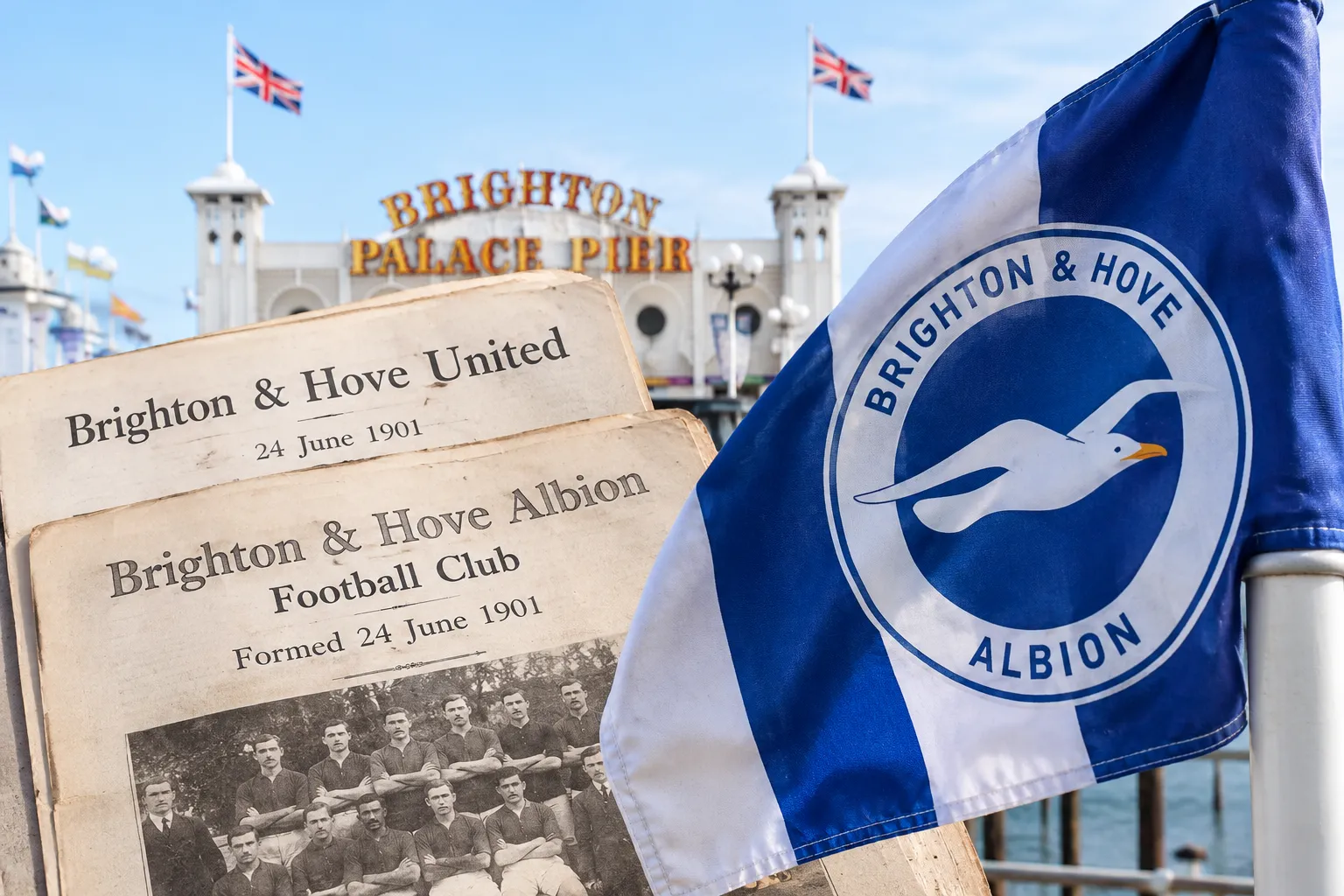
The club was formed on 24 June 1901 as Brighton & Hove United. Hove FC, an amateur side in the neighbouring town, objected that the name suggested a merger, so within weeks the new club became Brighton & Hove Albion.
Why "Albion" was chosen has never been settled. Albion is an ancient name for Britain, and several local businesses used it at the time. A popular story says the founders borrowed it from West Bromwich Albion, but no record proves that link. Supporters still call the club "the Albion", while BHAFC is the common shorthand online.
WhatsApp channel
Sports news straight to your phone
Match updates, on-sale dates and ticket news from 1BoxOffice.
3. Seagulls Began as a Reply to the Eagles
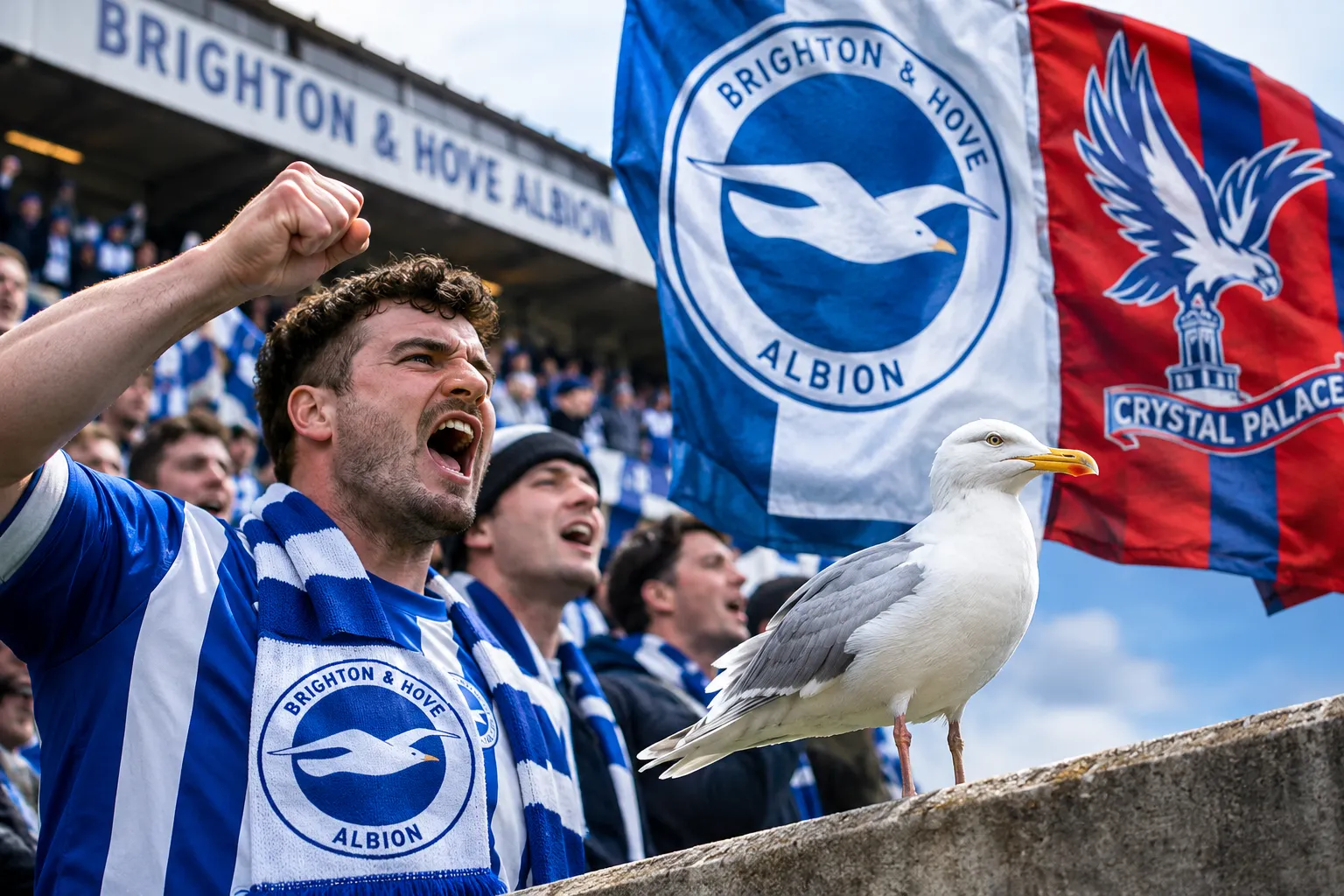
In the early 1970s a newspaper competition gave Brighton the nickname the Dolphins, and it never caught on. Earlier generations had called the team the Shrimps. The seagull arrived in the mid-1970s, when Crystal Palace fans chanted "Eagles" and Brighton supporters answered with "Seagulls".
The exact date is disputed. The club links it to a midweek match against Palace at the Goldstone in February 1976, after which it had to clear out its stock of dolphin souvenirs, while other accounts point to 1974 or to a pub chant before kick-off. What is certain is that the seagull replaced the dolphin on the crest in 1977 and has remained the club's emblem, apart from a temporary centenary design in 2001-02.
4. The Crystal Palace Rivalry Was Born in the 1970s
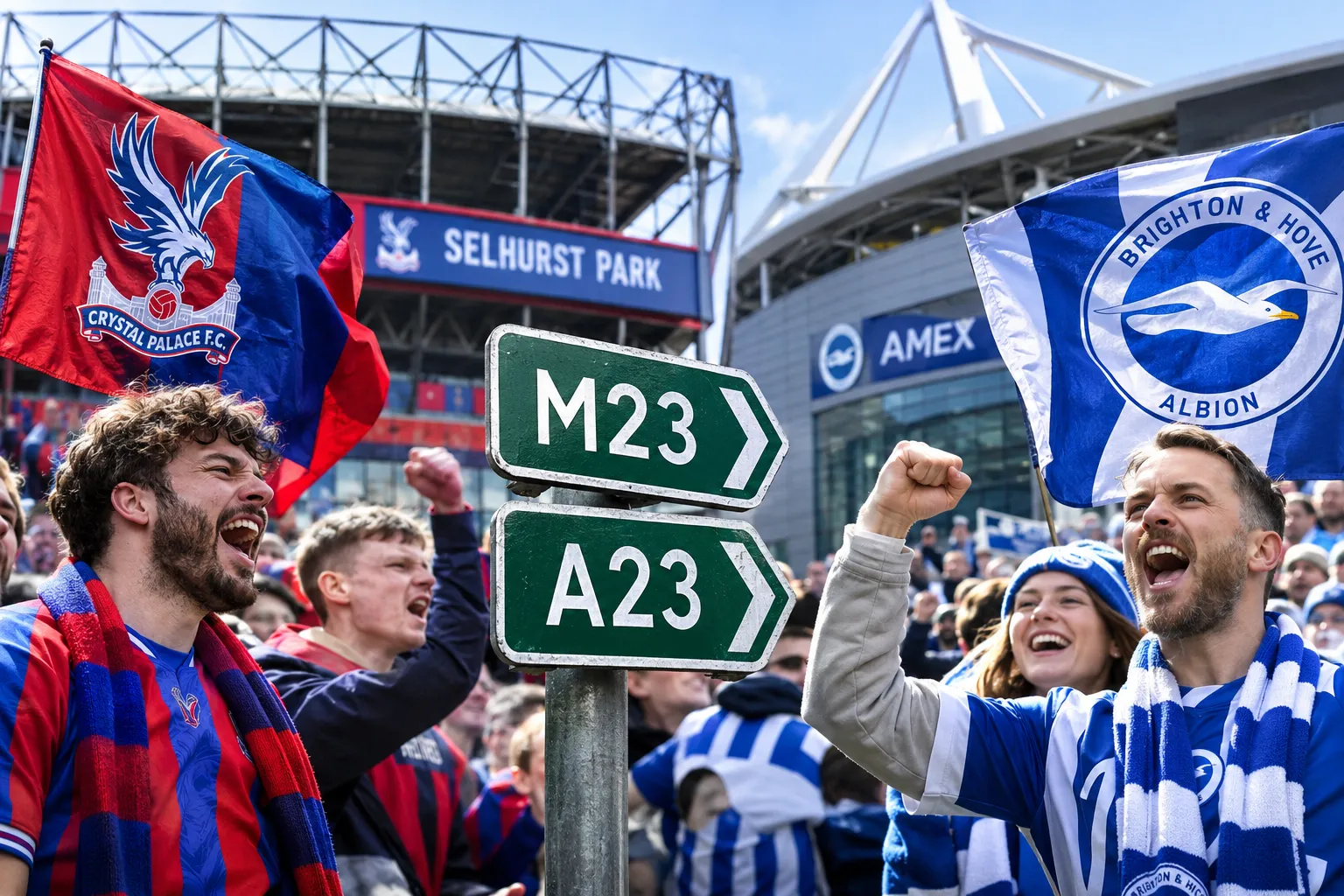
Brighton and Crystal Palace are about 45 miles apart, yet the rivalry did not take off until 1976-77. Palace were managed by Terry Venables and Brighton by Alan Mullery, the two clubs met five times that season including FA Cup replays, and both went up from the Third Division. The match is now called the M23 derby or the A23 derby, after the roads that connect Sussex and south London.
The latest chapter was one-sided. Brighton beat Palace 5-0 at the Amex on 18 October 2026, a result that lifted them into second place. The return meeting at Selhurst Park is on sale through our Crystal Palace vs Brighton tickets, and you can follow the other side of the rivalry through our Crystal Palace tickets. For travel and allocation details, read our guide to Brighton away tickets.
5. Five Home Grounds in 125 Years
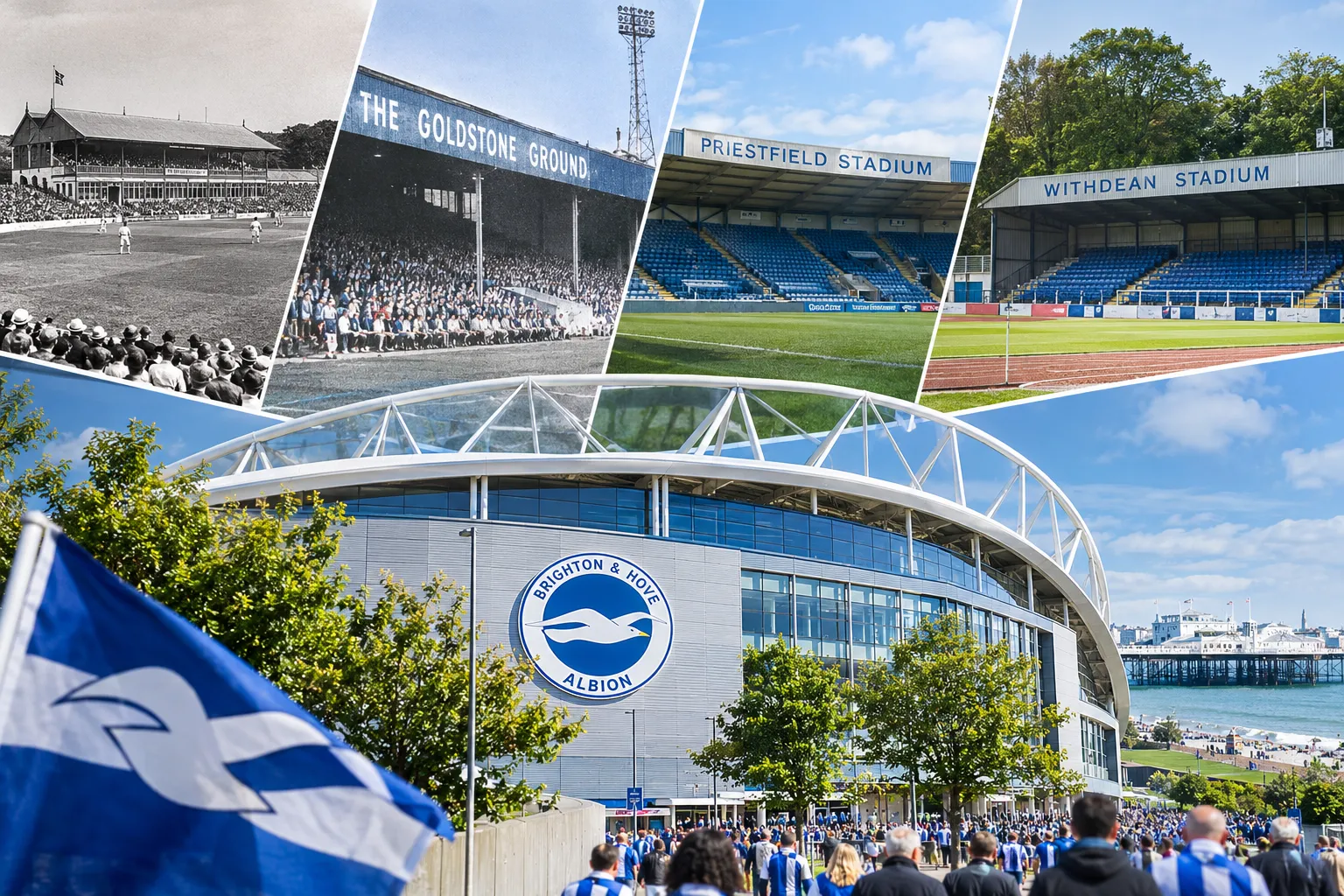
Brighton have played their home matches at five grounds since 1901:
- The County Ground in Hove, the Sussex cricket ground, from 1901 to 1902
- The Goldstone Ground in Hove, from 1902 to 1997
- Priestfield Stadium in Gillingham, Kent, from 1997 to 1999
- Withdean Stadium in Brighton, from 1999 to 2011
- The Amex Stadium in Falmer, from 2011 to the present day
The Gillingham years are the part most fact lists leave out. For two seasons, Brighton's "home" matches were about 70 miles away in Kent, which turned every home game into a long round trip for supporters. Crowds fell sharply, and the fight to bring the club back to Sussex became a campaign in its own right.
6. The Goldstone Was Sold With Nowhere to Go
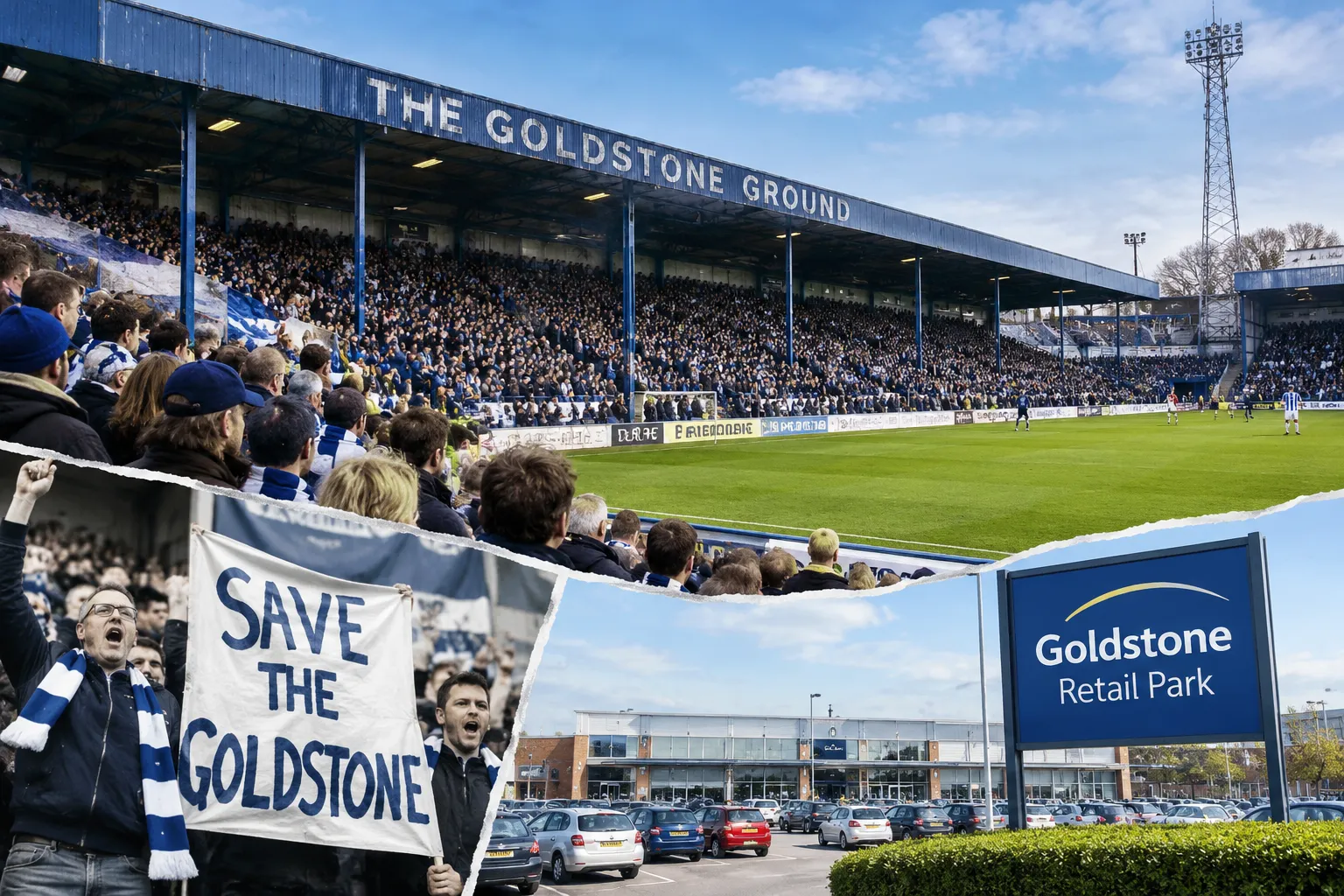
The Goldstone Ground hosted Brighton for 95 years, and its record crowd was 36,747 against Fulham on 27 December 1958. In the mid-1990s the club's board sold the site to property developers without securing a new stadium, a decision that sparked years of protests, boycotts and pitch invasions.
The last match at the Goldstone was a 1-0 win over Doncaster Rovers on 26 April 1997, a week before the trip to Hereford. The site is now a retail park, and Brighton would not have a permanent home of their own again for 14 years.
7. Withdean Stood on Former Zoo Land
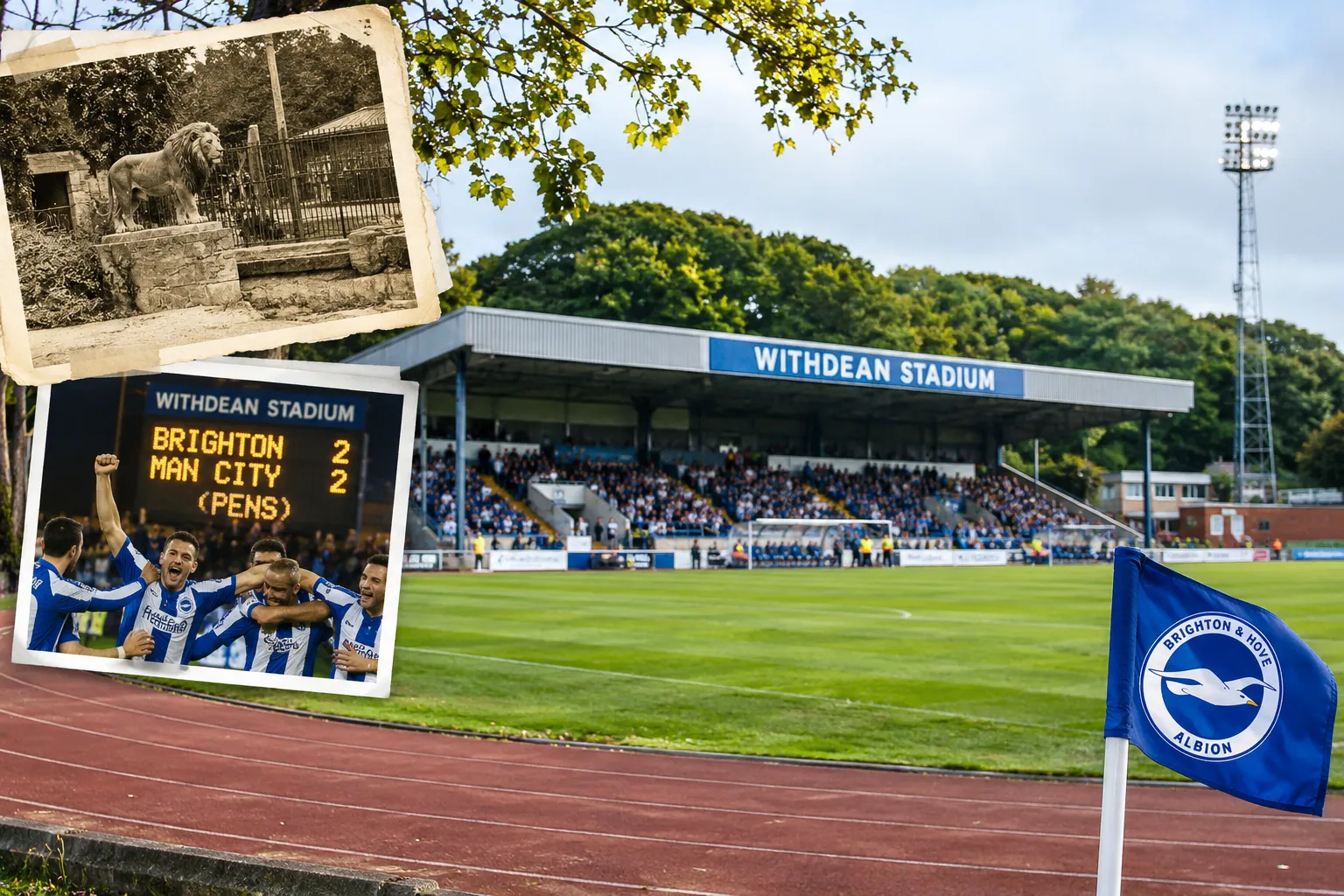
When Brighton returned to the city in 1999, they moved into Withdean Stadium, an athletics venue built on land that had once housed a small zoo in the 1930s. The running track separated the pitch from the stands, and the ground opened with room for around 6,000 spectators.
Its biggest gate was 8,729, when Brighton beat Manchester City on penalties in the League Cup in September 2008. That night still gets mentioned whenever the club draws a big name in the competition, and you can follow this season's ties through our EFL Cup tickets.
8. The Amex Keeps Getting Bigger
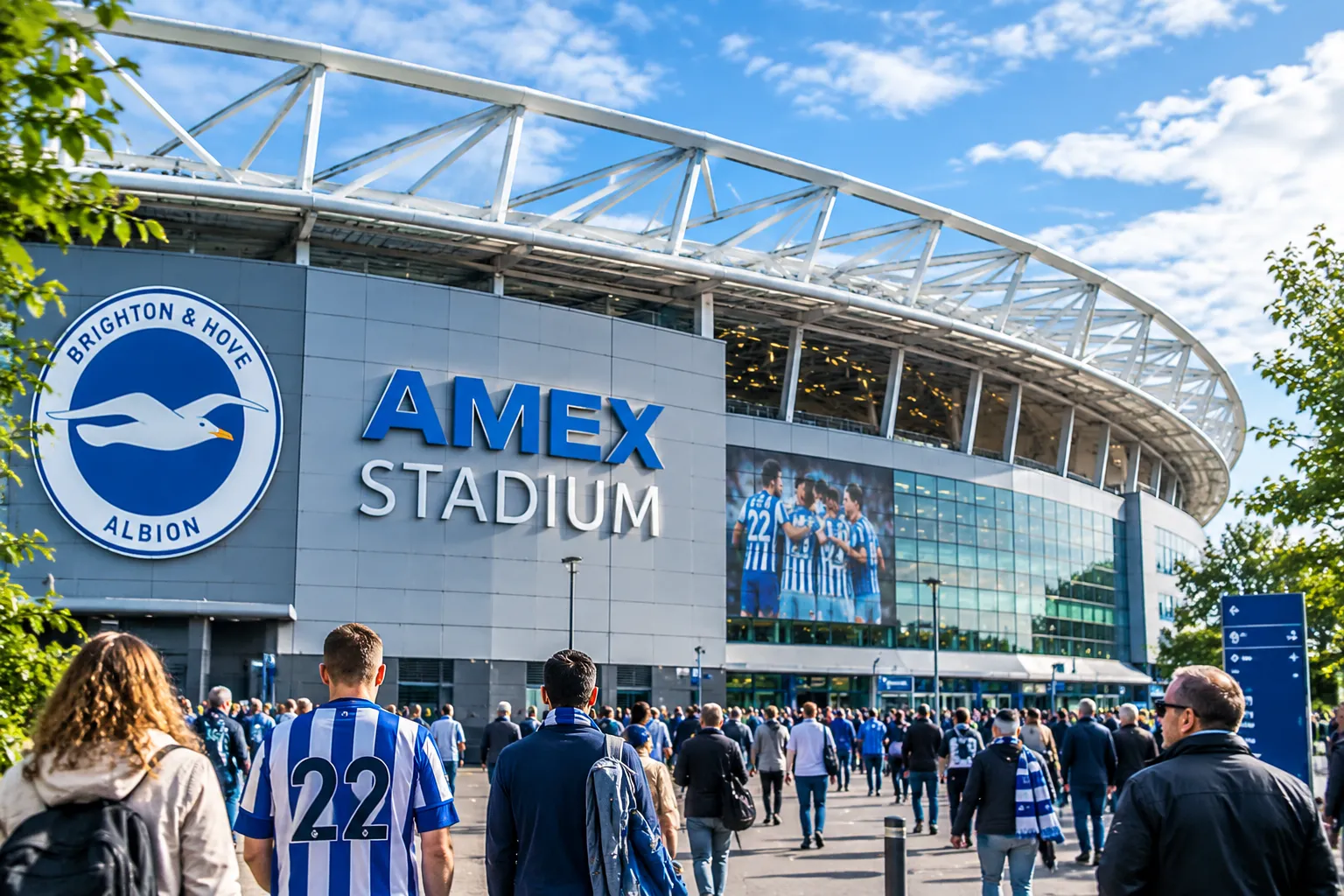
The Amex opened in 2011 in Falmer, on the north-eastern edge of the city, beside Falmer railway station. It takes its name from American Express, which has its European headquarters in Brighton, and the stadium was certified at 31,876 for the 2025-26 season.
The North Stand redevelopment added a new second tier for 2026-27, including the 1901 Pub lounge, and increased capacity to around 32,000. The stadium's attendance record then rose to 31,944 during Brighton's 3-0 win over Arsenal on 19 September 2026. Use our Amex Stadium seating plan to compare the stands before you choose seats, and see our guide to Brighton hospitality packages for premium options. Demand is high for most home matches, which is why many supporters look at how to buy Brighton tickets without a membership or browse our Amex Stadium tickets.
9. One Kick From Winning the 1983 FA Cup
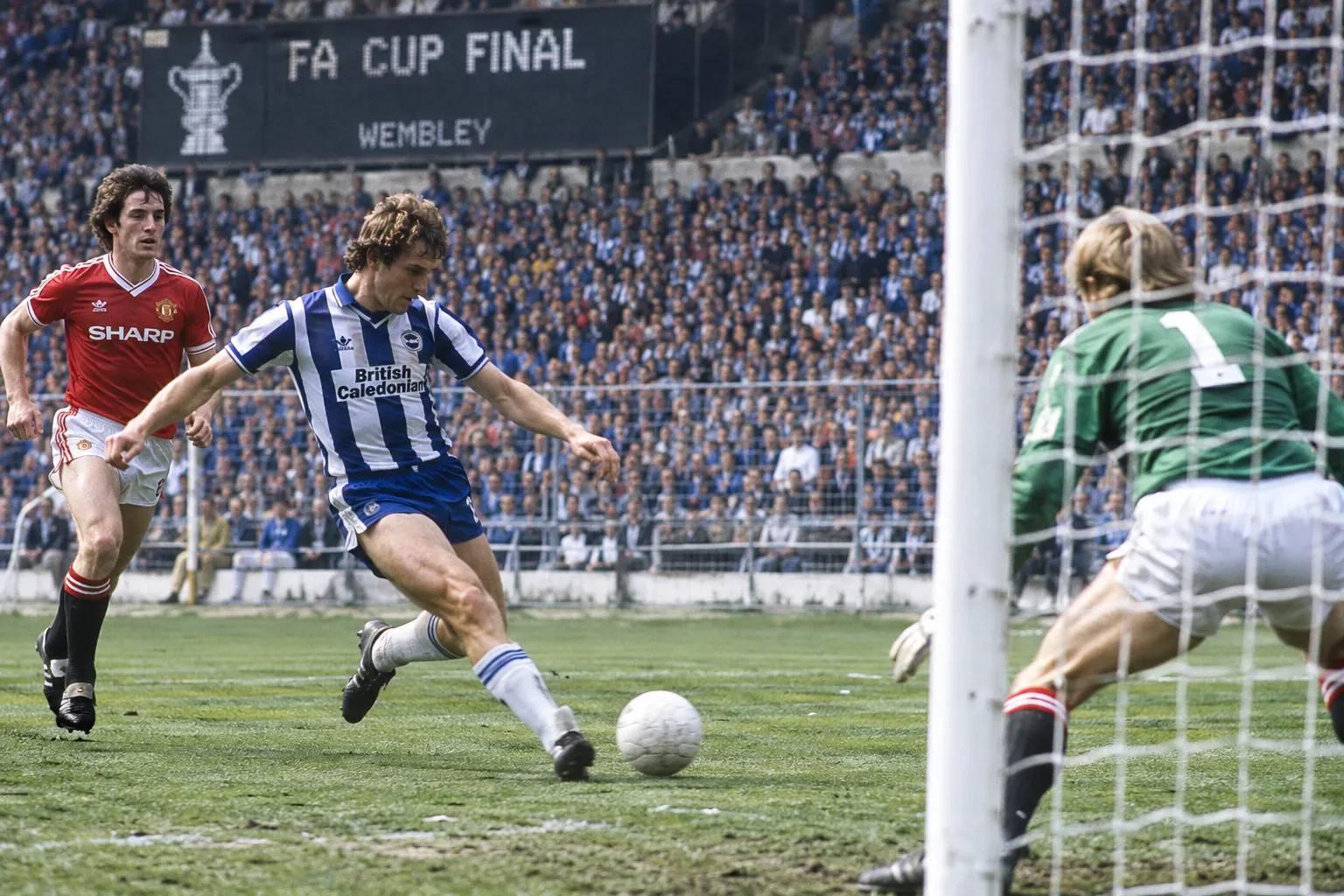
Brighton were relegated from the First Division in 1982-83, yet they still reached the FA Cup final against Manchester United. Gordon Smith gave them the lead at Wembley, Gary Stevens made it 2-2 late on and the match went to extra time.
In the final minute, Smith was clean through but Gary Bailey saved his shot, while BBC radio commentator Peter Jones cried "and Smith must score". The phrase later became the name of a Brighton fanzine. United won the replay 4-0, and 1983 remains Brighton's only men's FA Cup final, a run supporters hope to beat through our FA Cup tickets.
10. No Major Trophy, but the 1910 Charity Shield
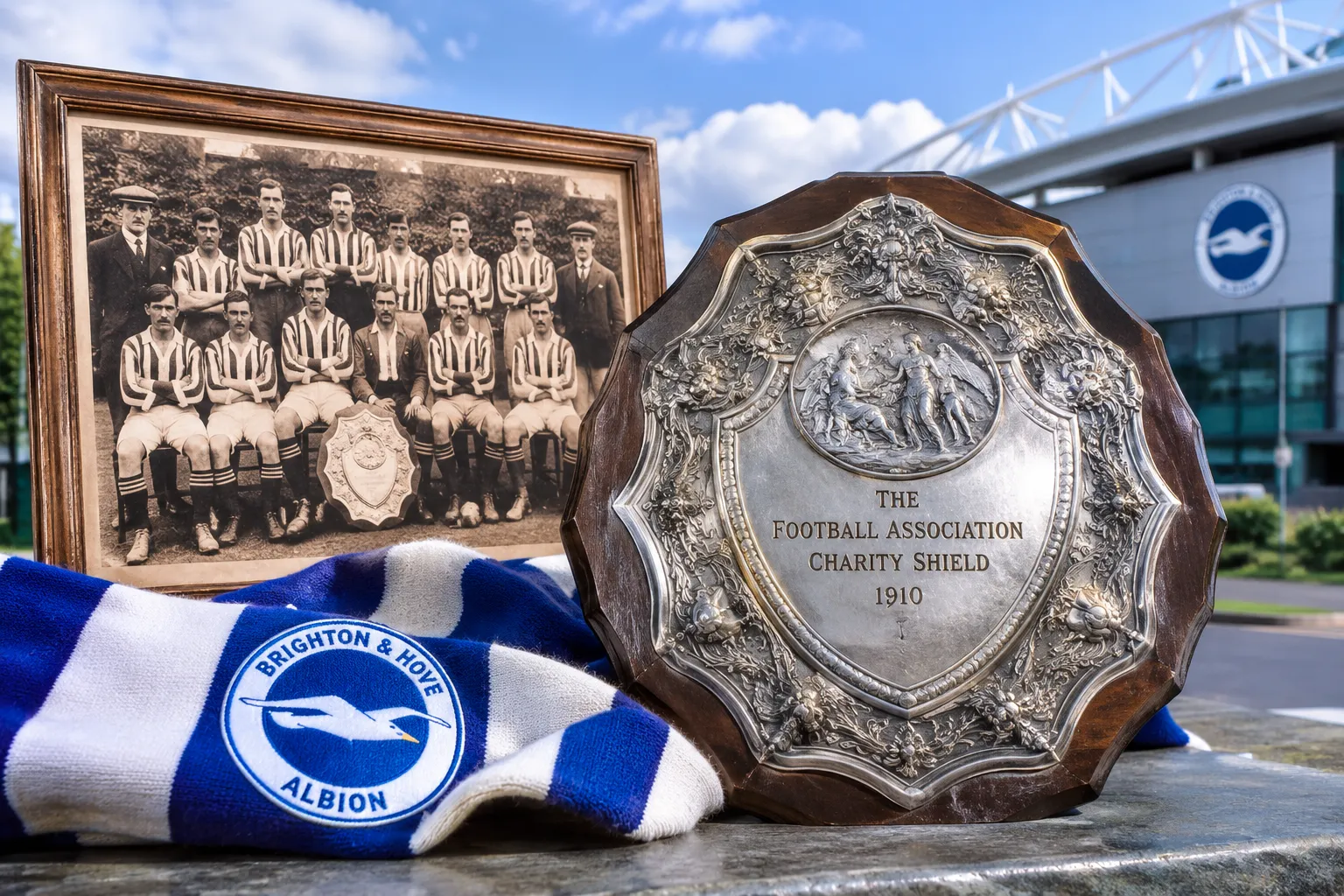
Brighton have never won a major trophy, meaning a top-flight title, the FA Cup, the League Cup or a European competition. Their only national cup honour is the 1910 FA Charity Shield, won 1-0 against Aston Villa after Brighton became Southern League champions in 1909-10. The club has also won lower-division league titles, most recently League One in 2010-11.
The club's highest league finish came much later: sixth in the Premier League in 2022-23 under Roberto De Zerbi, which earned their first European campaign. De Zerbi had replaced Graham Potter, who left for Chelsea in September 2022, and De Zerbi himself is now head coach in north London, as our Tottenham facts explain.
11. A Professional Gambler Owns the Club
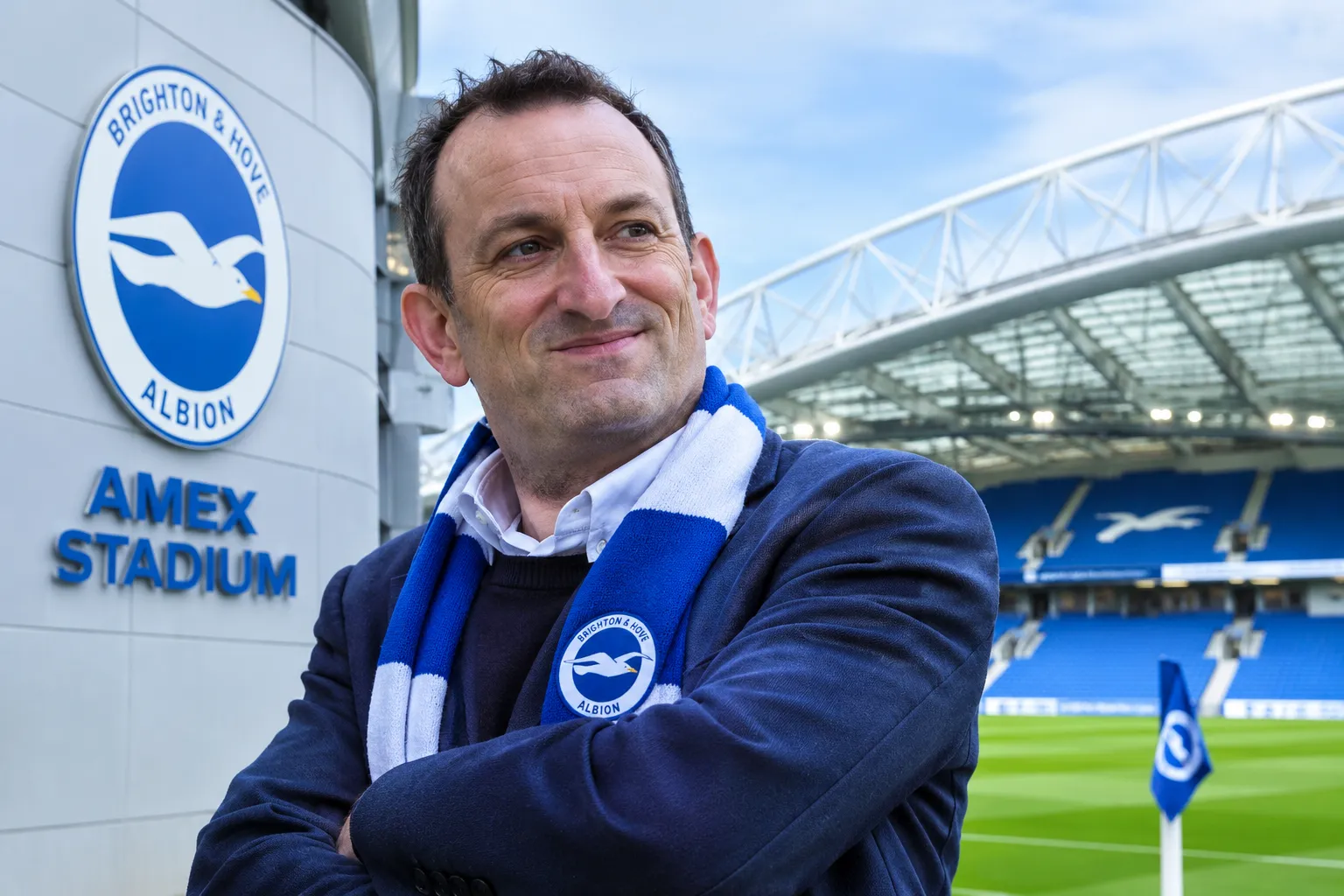
Tony Bloom was born in Brighton, made his fortune as a professional gambler and poker player nicknamed "The Lizard", and founded the betting analytics company Starlizard in 2006. He became chairman on 18 May 2009 and financed much of the Amex's construction.
His money still underpins the club. According to analysis of the 2024-25 accounts by WeAreBrighton, Brighton owed Bloom £406.5m in interest-free loans. His data-led approach to recruitment, built around finding undervalued players and selling them at their peak, is the reason the next two facts exist.
12. Up to £115m for Moisés Caicedo
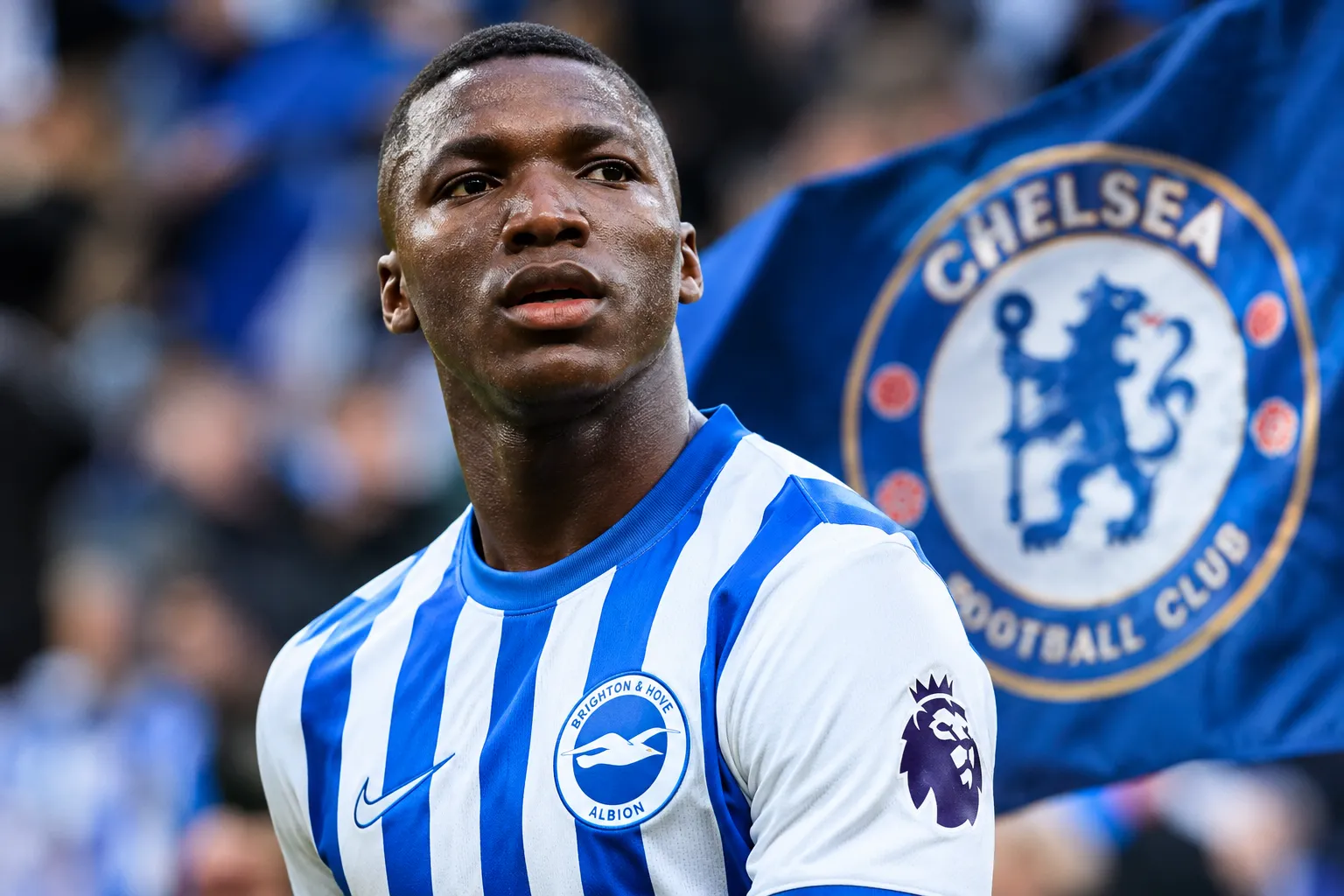
Brighton signed Moisés Caicedo from Independiente del Valle in Ecuador for £4.5m on 1 February 2021. In August 2023, Chelsea agreed to pay £100m, potentially rising to £115m with add-ons, a then-British record and still Brighton's biggest sale.
The model did not stop there. In 2026 alone, Carlos Baleba joined Manchester United for £65m plus £5m in add-ons and Jan Paul van Hecke moved to Tottenham for £52m. Selling at the right moment has become as central to Brighton's identity as the blue and white stripes.
13. A New Record Signing in 2026
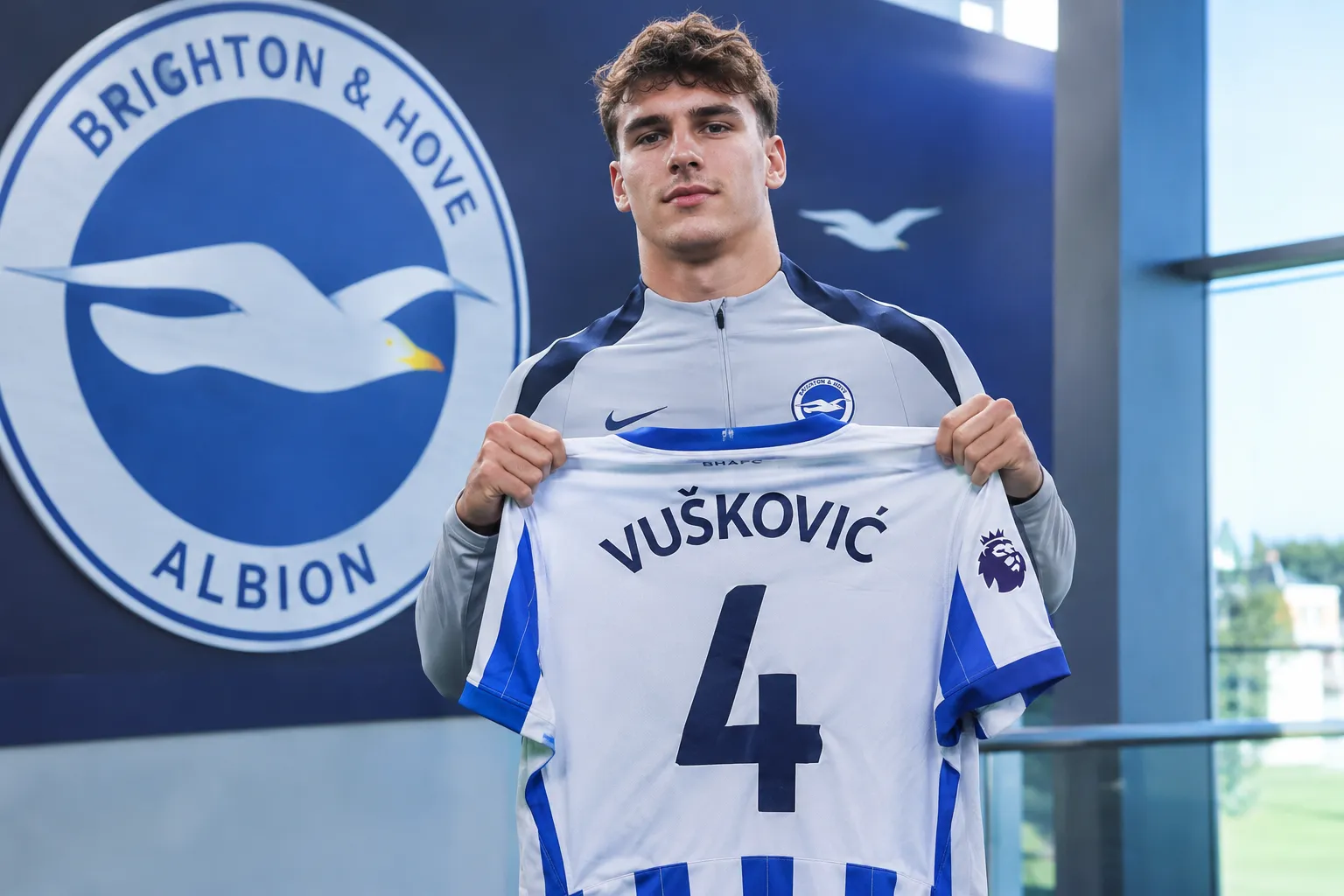
Luka Vušković joined from Tottenham on 14 July 2026 for an initial £46m, rising to £50m with performance add-ons, on a five-year contract. The Croatian centre-back replaced Georginio Rutter, a £40m signing from Leeds United in 2024, as the club's record arrival, so any list still naming Rutter is out of date.
The trading model pays the bills, but not every year. Brighton made a club-record profit after tax of £122.8m in 2022-23, before reporting an operating loss of £54.4m before interest and taxation in 2024-25, according to the club, after spending about £210m on new players while sales fell to £64.3m.
14. Europe Twice in Four Seasons
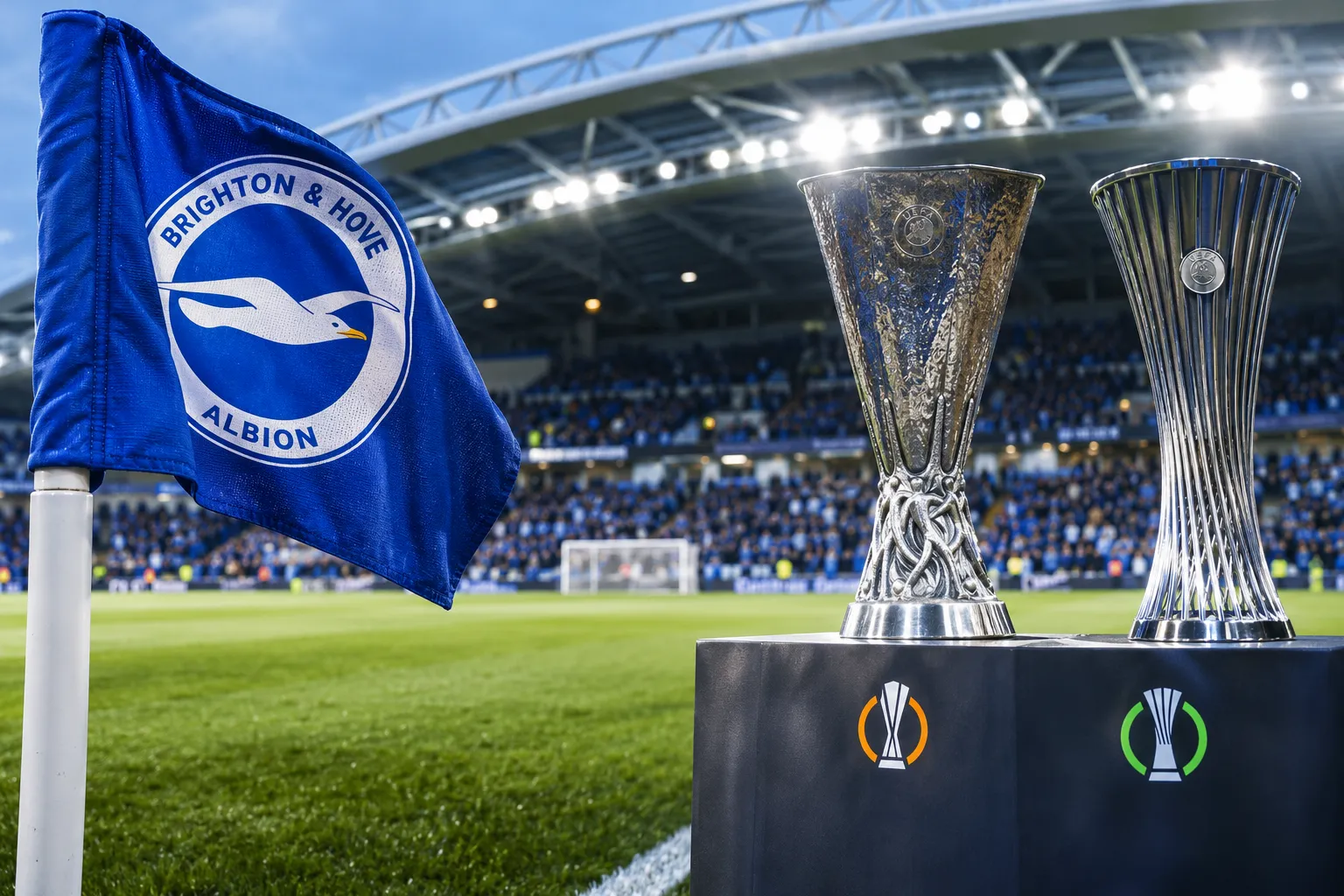
Brighton's first European match came on 21 September 2023, a 3-2 home defeat to AEK Athens in the Europa League. They recovered to beat Ajax 2-0 at the Amex, topped Group B ahead of Marseille and went out to Roma in the last 16.
An eighth-place finish with 53 points in 2025-26 brought them back to Europe for the 2026-27 league phase of the Conference League. A 1-0 win at Getafe on 5 November 2026 kept their campaign on track, and the next home tie is covered by our Brighton vs Universitatea Craiova tickets. For every other round, see our Conference League tickets.
15. Wilson's Games, Cook's Goals and a Wembley Final
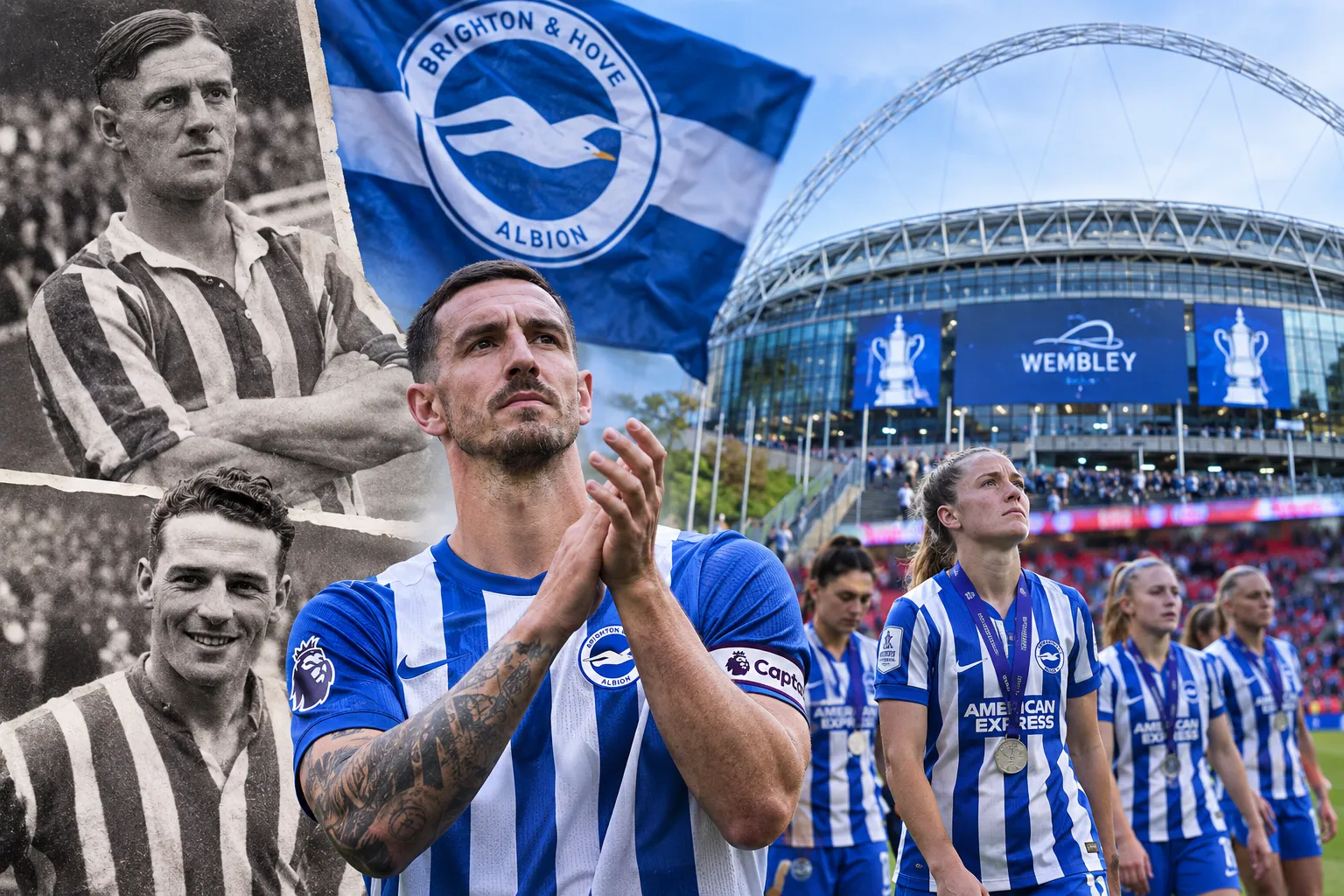
Tug Wilson holds Brighton's appearance record with 566 games between 1922 and 1936. Lewis Dunk is second on the all-time list after passing 500 appearances against Aston Villa in December 2025, so a common claim that Dunk has already played more Brighton games than anyone is wrong. Tommy Cook remains the record scorer with 123 goals between 1922 and 1929.
The women's team has its own story. Founded in 1967 as Brighton GPO, a Post Office works side, Brighton reached the Women's FA Cup final at Wembley on 31 May 2026, where they lost 4-0 to Manchester City.
Frequently Asked Questions
1. What is Brighton & Hove Albion's nickname?
-
Brighton & Hove Albion are nicknamed the Seagulls, and supporters also call the club the Albion.
2. Where do Brighton & Hove Albion play their home matches?
-
Brighton play at the Amex Stadium in Falmer, on the north-eastern edge of the city next to Falmer railway station.
3. Who owns Brighton & Hove Albion?
-
Tony Bloom, a Brighton-born businessman and founder of the analytics company Starlizard, has owned and chaired the club since 2009.
4. Have Brighton ever won a major trophy?
-
Brighton have never won a major trophy, and the closest they came was the 1983 FA Cup final against Manchester United.
5. Who are Brighton's biggest rivals?
-
Crystal Palace are Brighton's biggest rivals, and matches between the two clubs are known as the M23 or A23 derby.
From the Goldstone protests to a 31,944 crowd at the Amex, few clubs have changed as much in one generation. 1BoxOffice has sold football tickets since 2006, and every Brighton order is backed by our 150% money-back guarantee.
Sources: Brighton & Hove Albion FC, Premier League, UEFA, BBC Sport, ESPN, The Guardian, WeAreBrighton, Brighton & Hove Albion annual accounts.