In this guide
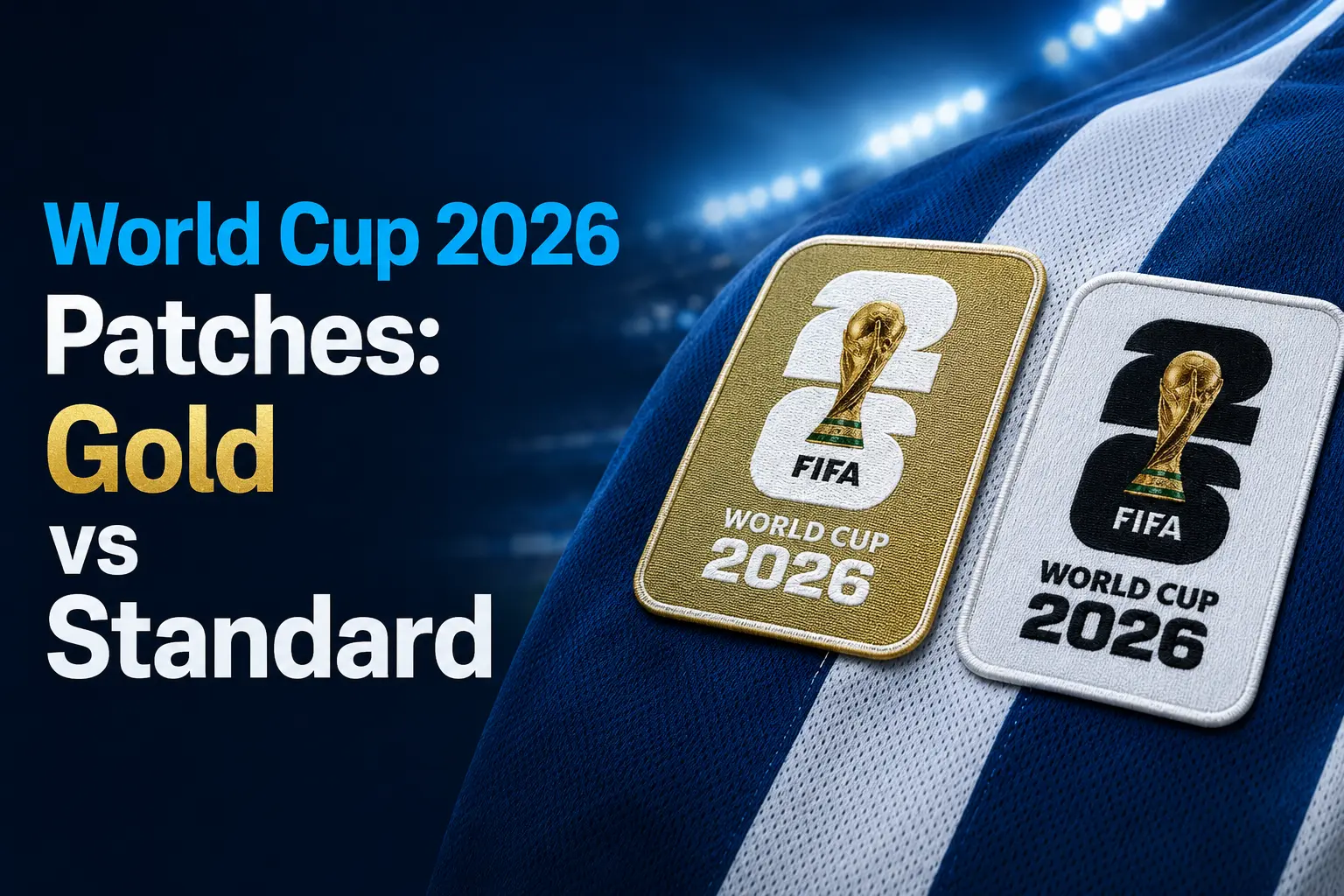
Why seven teams are wearing goldThe missing champion: where is Italy?Light or dark: the badge contrast ruleArgentina carry a second badgeThe gold patches people keep mixing upThe patches made for individual playersSeven teams at the 2026 World Cup wear a gold badge on the right sleeve. Every other nation wears the same badge in plain black and white. That one difference is behind most of the confusion around the World Cup 2026 jersey patches, and the explanation is simpler than the theories doing the rounds.
The badges have been on show since the opening match on 11 June, worn by all 48 nations across the 16 host venues. You can see who plays where and browse World Cup 2026 tickets on the fixtures hub. Here is what each patch means and why the colours change from one shirt to the next.
Why seven teams are wearing gold
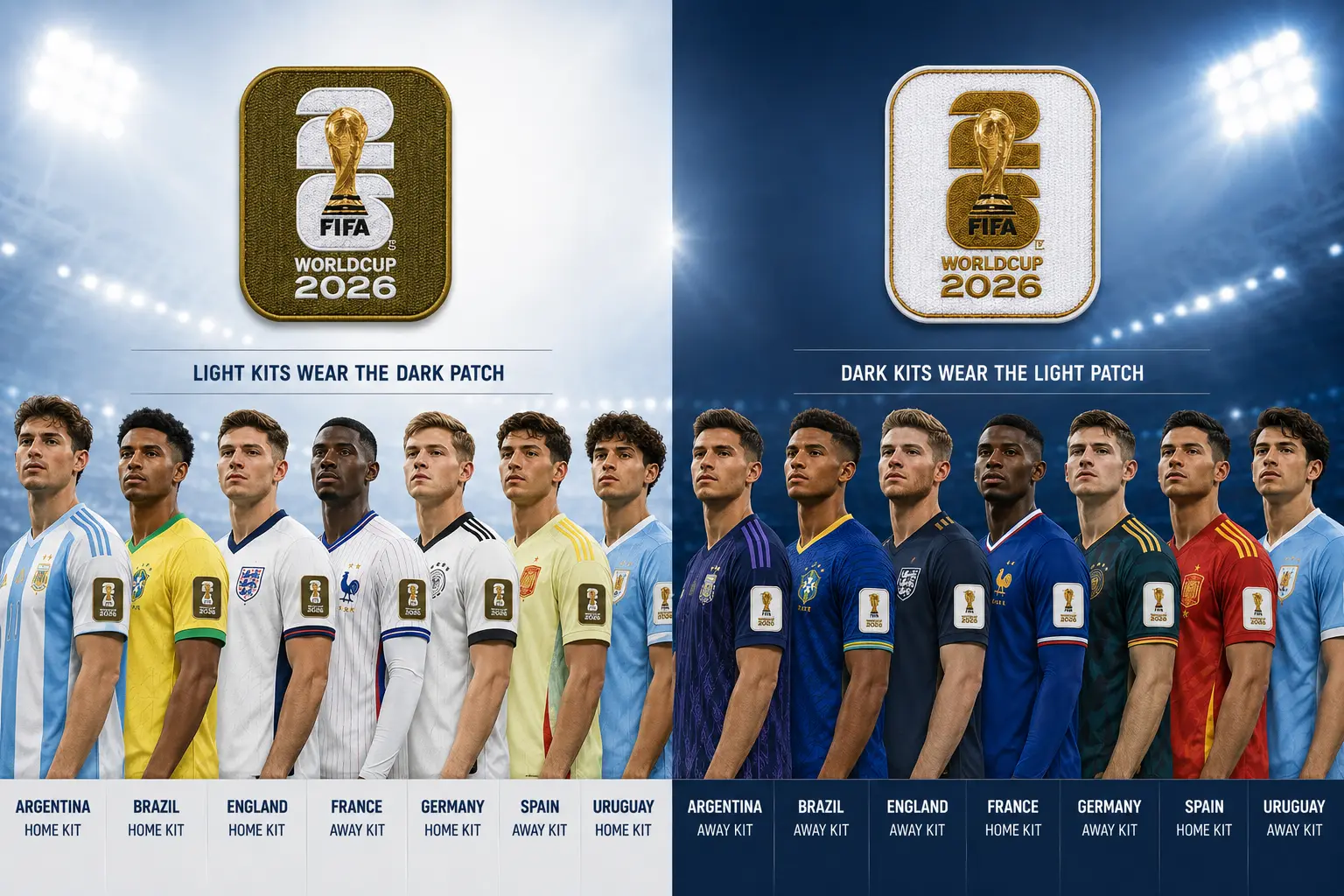
The gold version of the tournament badge is reserved for countries that have lifted the trophy before. Seven of them qualified for 2026:
- Argentina
- Brazil
- England
- France
- Germany
- Spain
- Uruguay
Each of these teams wears a gold-and-white sleeve badge in place of the standard black-and-white design. This is a first. At Qatar 2022 and earlier, every nation wore the same competition badge no matter its record. The organisers introduced the gold tier for 2026 as a nod to past winners, which is why a handful of squads stand out the moment the camera finds their sleeve. Brazil, with five titles, and Germany, with four, are the most decorated names on that list, and Argentina arrive as the reigning holders. Uruguay belong on it too, as winners of the very first World Cup back in 1930.
The missing champion: where is Italy?
Eight nations have won the World Cup, not seven. The eighth is Italy, a four-time winner, and the gap on the gold list has a blunt explanation: Italy did not qualify. They lost a March playoff to Bosnia and Herzegovina on penalties, beaten despite Moise Kean's early goal in Zenica, and missed a third straight World Cup.
Only the seven champions who actually reached the tournament wear the gold badge. Italy's absence is the single biggest reason the list looks short to anyone counting past winners.
Light or dark: the badge contrast rule
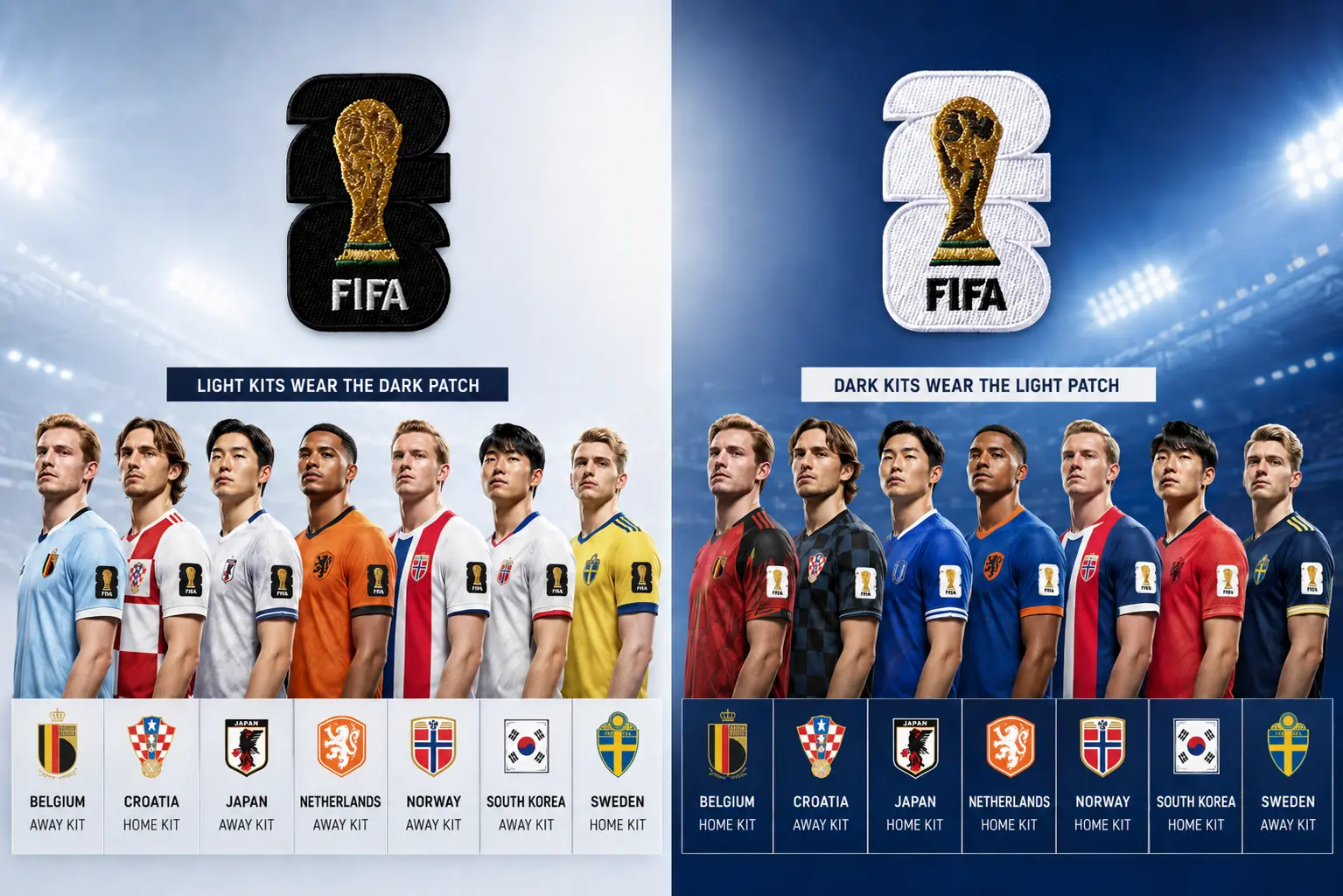 Each badge comes in two colourways, light and dark, and the reason is visibility. A white badge disappears on a white shirt, so teams in pale kits wear the darker version and teams in dark kits wear the lighter one. The same logic applies to the gold badge, which exists in a light and a dark finish. The organisers aim for a light-and-dark contrast in every fixture, partly so supporters with colour blindness can follow the play.
This is also why a team's badge can change between its home and away matches: the colourway follows the shirt, not the team. One point is worth being clear about, because it has been misread widely. The home and away labels floating around in those patch charts do not leak any kit designs. The shirts were already public. The charts only show which badge colour pairs with which kit for contrast.
WhatsApp channel
Sports news straight to your phone
Match updates, on-sale dates and ticket news from 1BoxOffice.
Argentina carry a second badge
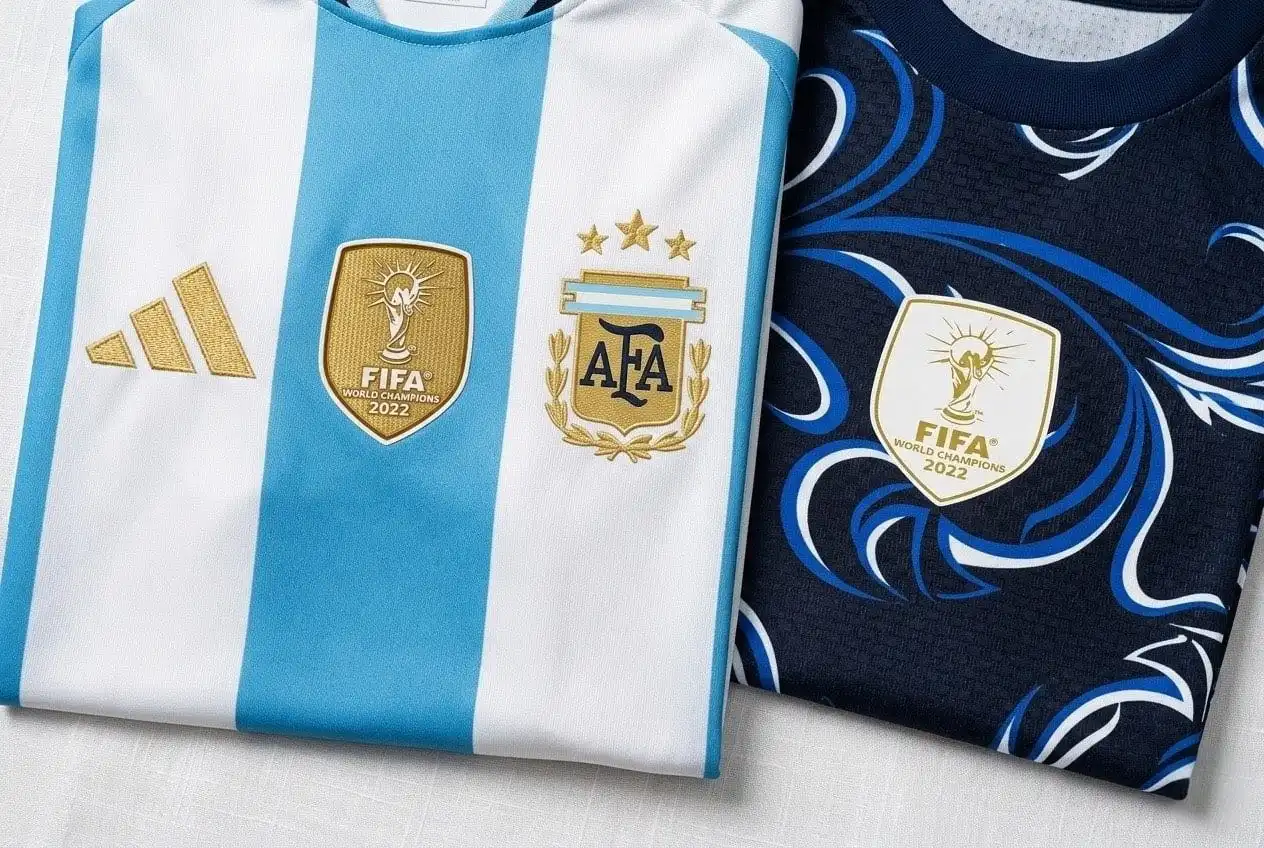
Argentina wear something none of the other gold teams do: a separate shield on the chest reading "World Champions". This is the mark given to the reigning winners, earned by beating France in the 2022 final, and Argentina keep it until the moment the 2026 trophy changes hands.
So Lionel Messi's side carry two marks of status at once: the gold sleeve badge shared by all seven former winners, and the chest shield worn only by the current holders. France, the team Argentina beat in Lusail, wear the gold sleeve badge but not the chest shield. They are back chasing the title that slipped away on penalties.
The gold patches people keep mixing up
Not every gold patch at this tournament points to a former champion. Several of the loudest arguments online come from fans confusing three separate things.
The first is the team badge already covered: gold for the seven past winners. The second is a set of patches given to individual players rather than teams, also in gold, which the next section covers in full. England's squad, for instance, carries a mix of these depending on each player's record. The third is the badge on the left sleeve, which is not gold at all. That one changes from round to round and carries a social campaign message rather than a ranking. Three separate systems, one tournament and a lot of crossed wires.
The patches made for individual players
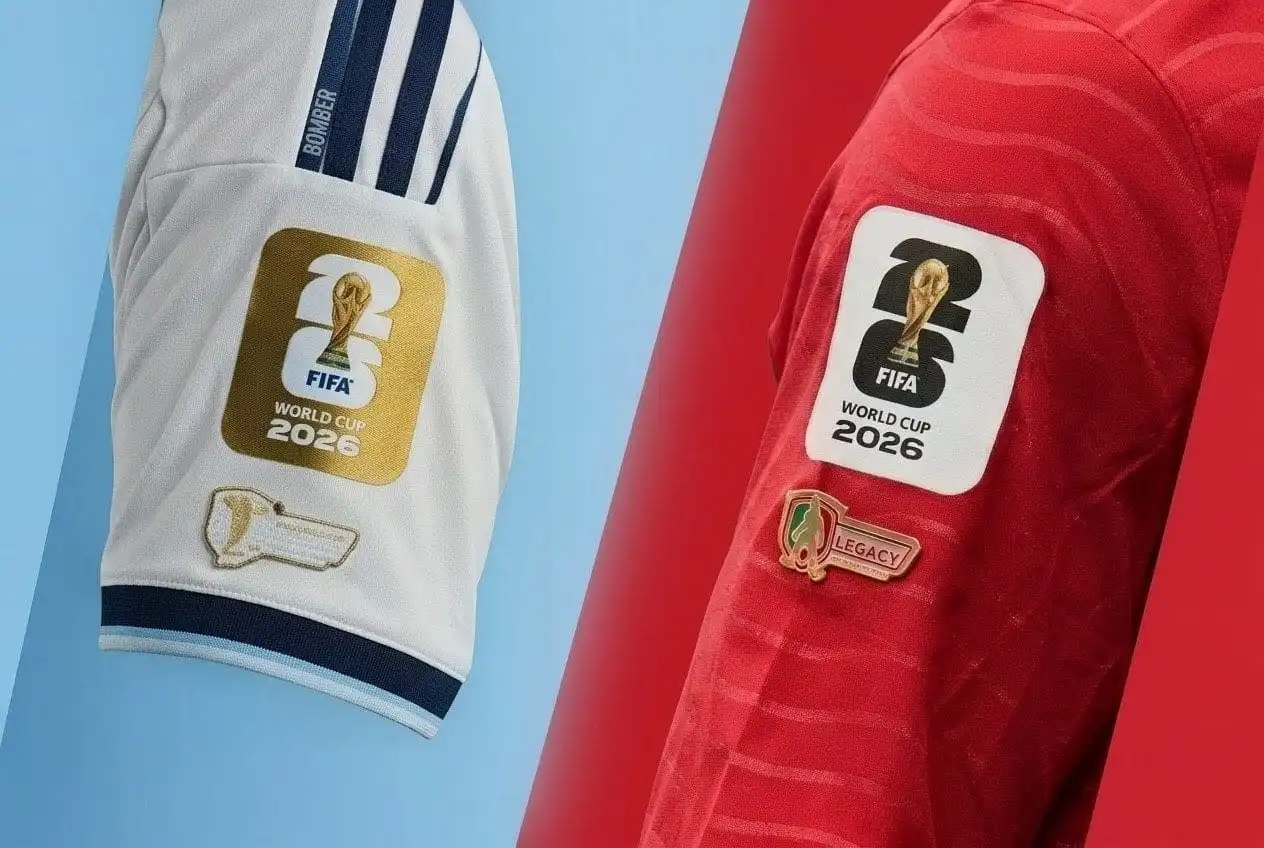
Alongside the team badges, the organisers created a set of gold patches for individual players, each marking a personal milestone. The one fans see most is the Debut patch, worn by every player making a first World Cup appearance. That is a long list this summer, from Norway's Erling Haaland and Lamine Yamal to Florian Wirtz and older first-timers like Scotland's Andy Robertson. Not everyone wears it the same way: Mexico's Luis Romo stuck his to his boots rather than his sleeve. The rollout has not been tidy either, with the badge landing in the wrong place on a couple of kits, riding onto the sleeve cuff for Germany and sitting over the main badge for Brazil.
Legacy is the rarest of the set, given only to players appearing in a fifth World Cup or more. It is a short list led by Lionel Messi, Cristiano Ronaldo and Croatia's Luka Modric.
The other three revive past honours. A Golden Boot marks a previous tournament top scorer, worn by Harry Kane and Kylian Mbappé. A Golden Glove goes to a former best goalkeeper, on the sleeves of Emiliano Martínez and Belgium's Thibaut Courtois. A Golden Ball recognises a past best player, and Messi and Modric carry two badges at once by pairing it with their Legacy patch.
There is a catch that has irritated shirt collectors. Under a deal with the trading-card company Topps, the individual patches are taken off the match-worn shirts straight after the final whistle and built into collectible cards. The shirt a player actually wore is then kept or sold without the detail that made it rare, which is why the match-worn market has been grumbling since the opening week.
1. Who makes the World Cup 2026 sleeve badges?
-
The badges are produced by Avery Dennison, the company that has supplied player names, numbers and sleeve badges across top-level football for years.
2. Can fans buy the gold patches?
-
No, the gold and standard badges are restricted to the national teams and a short list of approved retailers, so they are not sold to the public on their own.
3. Do the host nations wear a special badge?
-
No, the host nations wear the standard black-and-white badge, because none of the three hosts has won the World Cup and the gold version is only for past winners.
4. Are the patches on replica shirts the same as the match versions?
-
Not always, as some replica shirts sold in shops leave certain patches off or print them differently from the versions worn on the pitch.
5. Why do the player patches keep falling off?
-
Because they are applied like loose stickers so they can be peeled off for trading cards after the match, and several have proved too loose, coming away mid-game.
If the patches have you planning which match to watch in person, 1BoxOffice lists resale tickets across the tournament, backed by a 150% money-back guarantee on every order.
Sources: FIFA, Footy Headlines, BBC Sport. 1BoxOffice is not the official ticket agent of any club, league or federation. Prices may differ from face value.