In this guide
How demand sets the price this summerThe group games hardly anyone is fighting overWhere debutants meet the long shotsWhat actually pulls a price downGetting a seat without overpayingHow to buy World Cup 2026 tickets from 1BoxOfficeFAQsEveryone wants Brazil. Almost nobody wants Austria against Jordan, and that is exactly where the value sits. Because the organisers price every match to demand, the gap between the most and least wanted games is huge: group-stage seats opened at $60 (about £47) while the top final seats reached $6,730 (about £5,300) at face value in 2025. That gap is the whole point for anyone after the easiest World Cup 2026 matches to get tickets for: the quiet fixtures are where seats still exist, and prices sit closest to face value.
If your goal is to be inside a World Cup ground more than watching two specific giants, these games are the value play. Compare what is listed across all 104 World Cup 2026 fixtures, then focus on the quieter games below.
How demand sets the price this summer
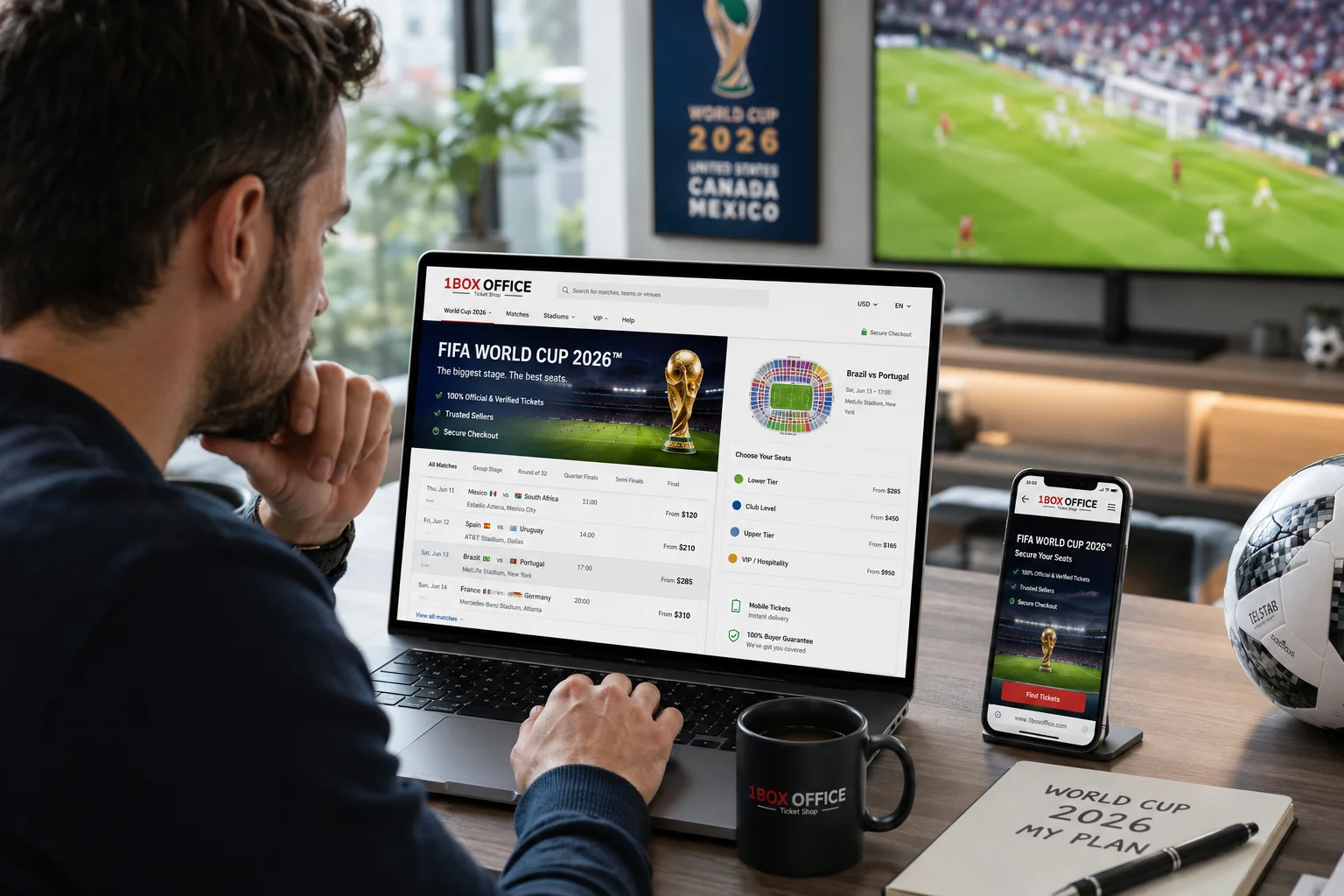
For the first time at a World Cup, prices are not fixed. The organisers use variable pricing that moves with demand and remaining stock. Press coverage and an inquiry by the New York and New Jersey attorneys general call it dynamic pricing; the organisers say adjustments are managed, not automatic. Either way, the effect is the same: a wanted seat climbs, a slow seller can drift down.
Sales have run in phases since September 2025, ending in a first-come, last-minute window open since 1 April 2026 that runs to the final. No per-match demand figures are published, so demand has to be read from signals: the teams, the stage, the host city, the kick-off slot and what seats already trade for on resale. Apply those, and a clear set of low-demand games appears.
The group games hardly anyone is fighting over
Two fixtures stand out on the resale data. As of early June 2026, neutral ties such as South Africa versus Czechia in Group A and Austria versus Jordan in Group J show resale entry prices starting near $200 to $250 (about £160 to £200), against an average of roughly $650 to $1,100 for a standard group stage seat. Austria are at their first World Cup since 1998, and Jordan are debutants, and neither South Africa nor Czechia travels in numbers that push a price up.
Where debutants meet the long shots
Beyond those two, the pattern repeats wherever two lower-profile sides meet with no host nation and no heavyweight on the teamsheet. The likeliest soft sellers at the group stage include:
- Uzbekistan against DR Congo in Group K: a debutant against a side back since 1974, while Portugal and Colombia take the group's attention. Browse Uzbekistan vs DR Congo tickets.
- Cape Verde against Saudi Arabia in Group H: another debutant in a group fronted by Spain and Uruguay. Browse Cape Verde vs Saudi Arabia tickets.
- Curaçao against Côte d'Ivoire in Group E: a tiny Caribbean debutant in Germany's group. Browse Curaçao vs Côte d'Ivoire tickets.
- Qatar against Bosnia and Herzegovina in Group B: two sides with limited North American followings, in co-host Canada's group. Browse Qatar vs Bosnia tickets.
- New Zealand against Iran in Group G: modest travelling support on both sides, with Belgium the draw. Browse New Zealand vs Iran tickets.
None of these is a certainty. Form or a live result can change the reading fast.
WhatsApp channel
Sports news straight to your phone
Match updates, on-sale dates and ticket news from 1BoxOffice.
What actually pulls a price down
If you would rather judge a fixture yourself, weigh these factors. Each one tends to lower demand and, with variable pricing, the price:
- Stage: group games sit below the knockouts, and a dead third group match between settled sides is softest of all.
- No host nation: ties without the United States, Canada, or Mexico avoid the biggest home crowds.
- Small travelling support: sides whose fans rarely cross the Atlantic leave more seats unsold.
- Large venues: an American football-sized ground hosting a modest tie has more supply than it can fill.
- Awkward kick-offs: a weekday afternoon start draws fewer buyers than a weekend evening.
At the other end of the scale, the World Cup Final at MetLife Stadium has seen resale prices in the tens of thousands. That is the full width of the demand curve.
Getting a seat without overpaying
Primary seats still surface for the quieter games during the last-minute window. On resale, sellers of low-demand stock often trim prices as kick-off nears rather than eat a loss, so a price alert and some patience pay off here in a way they never do for a Brazil or England match.
Compare primary and resale before you commit, check the seat details on any listing and remember a reading made now can shift by late June. Buy the experience you want, not the badge on the shirt.
1BoxOffice has connected fans with live football since 2006 and backs every order with a 150% money-back guarantee, which takes some of the worry out of buying a lesser-known fixture from a third party.
How to buy World Cup 2026 tickets from 1BoxOffice
The process takes a few minutes. Here is the order from picking a match to getting into the ground:
Step1
Open the fixture page
Open the fixture page for the match you want and check the live listings.
Step2
Use the filters
Use the filters to sort by seating category, price and quantity, so you only see seats that fit your budget and group size.
Step3
Select a listing
Select a listing and read the seat details and any seller notes, including the section, the block and whether the seats are together.
Step4
Review the full price
Add the tickets to your basket and review the full price, including delivery, before you commit, so nothing changes at checkout.
Step5
Create an account or sign in
Create an account or sign in, then enter your delivery and contact details.
Step6
Complete payment
Pay through the secure checkout using a card or another supported method.
Step7
Receive your tickets
Receive your order confirmation by email, then your tickets arrive by the method shown on the listing, usually mobile or electronic delivery, in time for kick-off.
Step8
Use the guarantee if needed
If anything goes wrong with a valid order, the 150% money-back guarantee means you are covered, which matters most on lower-profile games bought close to the date.
FAQs
1. Do I need to support one of the teams to buy a ticket?
-
No, World Cup tickets are open to neutral buyers, so you can attend any fixture regardless of who is playing.
2. Is there a risk in waiting for the price to drop?
-
Yes, if a lower-profile side starts winning, demand and prices can rise instead of fall.
3. Are seats for low-demand games in the worst parts of the stadium?
-
No, the venues are identical to the marquee ties, and a quiet fixture often means a better seat for less money.
4. Can prices fall as well as rise under variable pricing?
-
Yes, soft demand can pull prices down, as at the 2025 Club World Cup, where some knockout seats sold for around $13 (about £10).
5. If my team reaches the knockouts, can I reuse my group ticket?
-
No, tickets are sold per match, and knockout seats are priced separately, usually far higher than group games.
Sources: FIFA ticketing information, Reuters, The Independent, Goal.com ticket price tracking, ESPN and Olympics for the confirmed draw.