In this guide
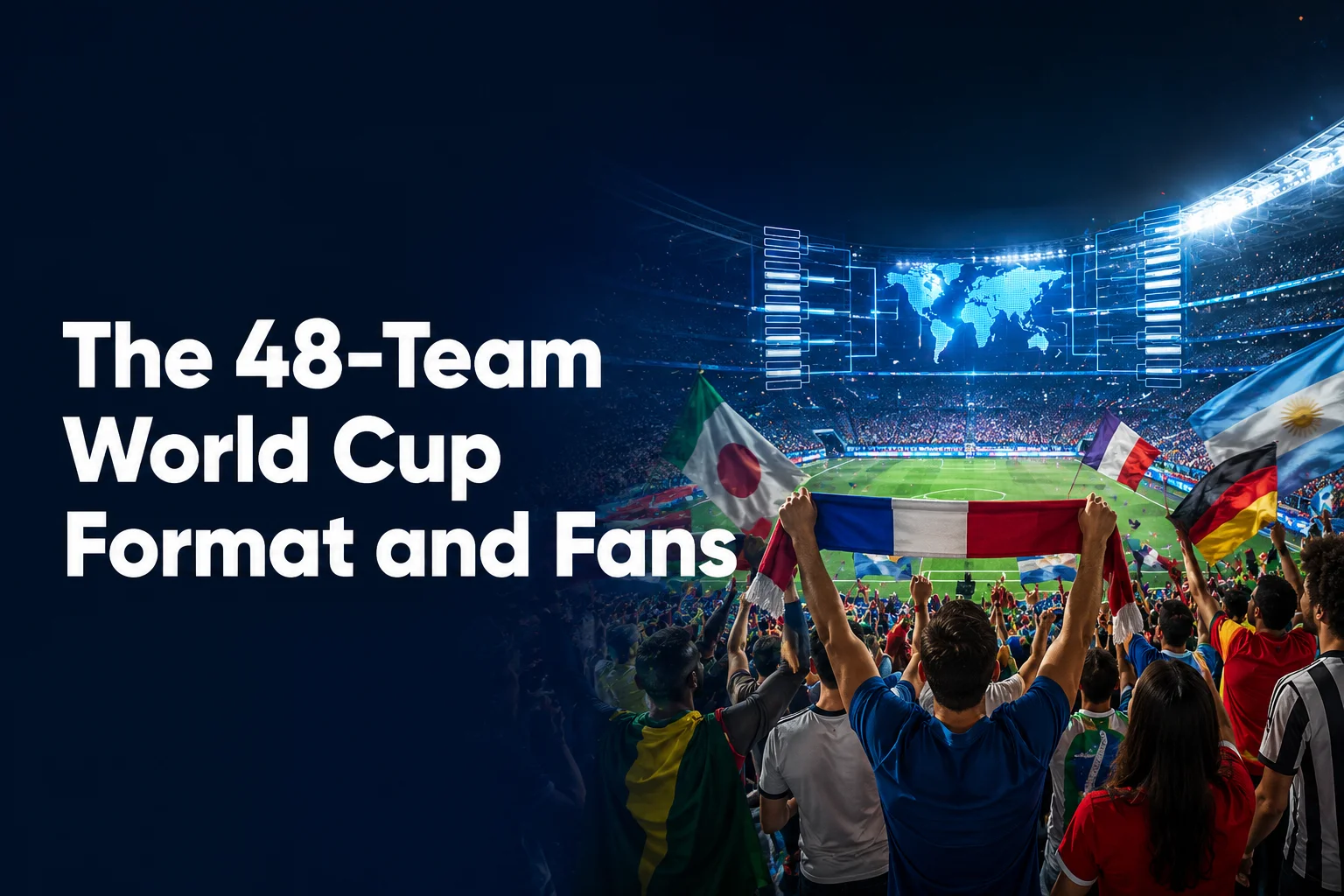
Sixteen more nations in the drawHow the group stage works nowFinishing third no longer automatically means going homeA tournament that stretches across a continentWhere the biggest nights will be playedWhat does the bigger tournament mean when you buyFrequently Asked QuestionsThe 2026 World Cup is the first to feature 48 teams, and the 48-team World Cup format reshapes almost everything: 104 matches instead of 64, 16 host cities across three countries and 39 days of football from 11 June to 19 July 2026. It is the biggest structural change since the field grew to 32 in 1998, and for supporters, it goes deeper than a longer fixture list.
If you are choosing matches to attend, the shape of the tournament matters as much as the draw. The live World Cup 2026 ticket pages cover every fixture across the United States, Canada and Mexico, so it pays to understand what has changed before you commit.
Sixteen more nations in the draw
The field jumped from 32 nations to 48, adding 16 places and widening qualification across every confederation. More slots went to Africa, Asia and the rest of the world than to Europe, meaning more debutants and new travelling support. Cape Verde, Curaçao, Jordan and Uzbekistan reached the finals for the first time, and the wider Arab and African presence gives fans more teams to follow.
How the group stage works now
The 48 teams are split into 12 groups of four, and each side still plays three group games. The maths is new: the top two from every group advance, joined by the eight best third-placed teams, so 32 sides reach the knockouts rather than 16. The tournament regulations confirm the rise from 64 matches to 104. The knockout path runs in sequence:
Teams' level on points is now split on head-to-head results first, then overall goal difference and goals scored, with fair play points and world ranking as the final steps; the drawing of lots is gone.
Finishing third no longer automatically means going home
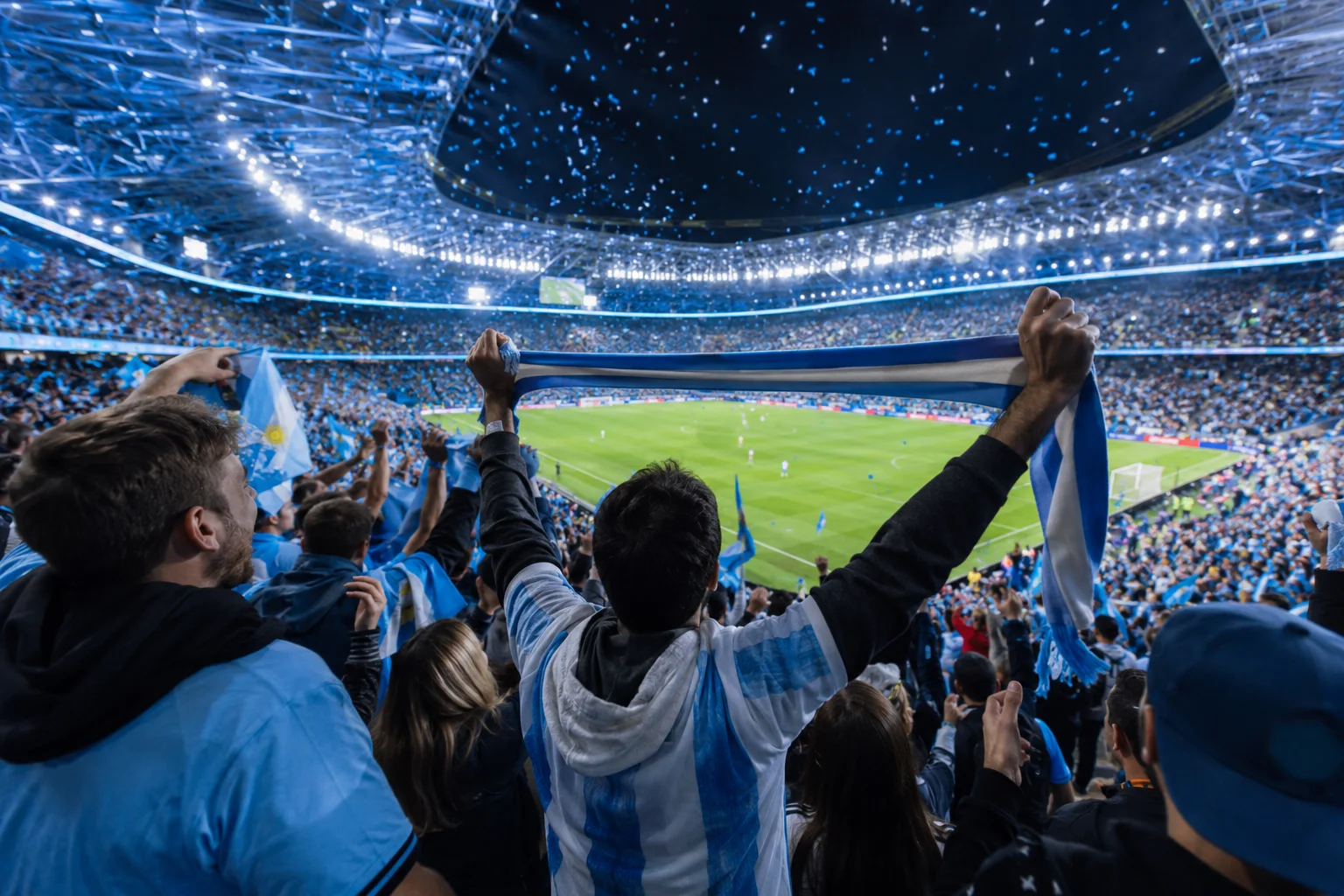
Under the old eight-group format, finishing third sent you home; now eight of the 12 third-placed teams survive. More teams stay alive into the final round of fixtures, and a side can draw all three games and still progress with the right points total and goal record. Results in other groups can decide your team's fate, so the closing matchday becomes a scoreboard-watching exercise. For fans, that means more jeopardy and the chance of an extra knockout match to plan around.
WhatsApp channel
Sports news straight to your phone
Match updates, on-sale dates and ticket news from 1BoxOffice.
A tournament that stretches across a continent
Qatar 2022 packed the tournament into one compact host country; 2026 spreads 104 matches across 16 cities in three countries, the first time the World Cup has had three hosts. The United States carries 11 host cities, with Mexico (Mexico City, Guadalajara and Monterrey) and Canada (Toronto and Vancouver) staging the rest. Distances are continental, so following one team through the group stage can mean internal flights and multiple time zones.
Check where your group plays before booking, and budget for travel between venues. Entry rules also differ by country, a new wrinkle compared with a single-host tournament. Our complete host-city guide breaks down each location and how to move between them.
Where the biggest nights will be played
From the quarter-finals onwards, every match is staged in the United States, with the final at MetLife Stadium in New Jersey on 19 July 2026. The Round of 16 starts on US Independence Day, 4 July, and still reaches Estadio Azteca in Mexico City and BC Place in Vancouver before the field narrows. The quarter-finals are shared between Los Angeles, Kansas City, Miami and Boston, the semi-finals go to Dallas and Atlanta, while Miami hosts the third-place play-off. Plan around a deep run for your side: the latter rounds pull everything towards a handful of US cities.
What does the bigger tournament mean when you buy
A 48-team, 104-match tournament means more inventory than ever, but also heavy demand spread across more cities. Because attending means committing to flights and hotels first, knowing your ticket is genuine matters. 1BoxOffice has worked in the secondary market since 2006 and backs every order with a 150% money-back guarantee, worth factoring in when you are spending on travel as well as seats. Before you buy, confirm what you need to enter your host country, including Fan ID, passport and visa rules.
Seat choice matters more at a final than anywhere else, so study the MetLife Stadium seating plan before you commit to a category.
Frequently Asked Questions
1. Will every World Cup 2026 match be shown on free-to-air television in the UK?
-
UK viewers are expected to be able to watch every match live on free-to-air television, with coverage shared between the two main broadcasters.
2. How many matches will the World Cup 2026 winners play?
-
The two finalists will each play eight matches, one more than under the old 32-team format.
3. Why did organisers choose 12 groups of four rather than 16 groups of three?
-
Organisers kept 12 groups of four so that every nation is still guaranteed three group matches rather than risking a dead final group game.
4. When do the knockout rounds start?
-
Knockout football begins with the Round of 32 in late June 2026, once all 12 groups have completed their three matchdays.
5. Are extra time and penalties still used in the knockouts?
-
Knockout ties level after 90 minutes go to extra time and, if still drawn, a penalty shootout, exactly as in past tournaments.
The 48-team format gives more fans a team to follow and more matches to attend, but it asks for sharper planning across three host nations. 1BoxOffice lists every 2026 fixture, with the 150% money-back guarantee behind each order.
Sources: FIFA, Sky Sports, ESPN, BBC Sport, Al Jazeera.