
In this guide
Five brands, one colour, no agreementEvery pink boot on show at the 2026 World CupThe players who turned pink downDo pink boots actually help you play?Why pink, and why right nowThe case for pink, and the case againstTurn on any group game, and the grass is covered in pink. The reason so many players are wearing pink boots at the World Cup 2026 is not a coincidence on the pitch, even if it looks like one: every major boot brand decided, separately, to release a pink range for the same tournament. In the opening fixture, boot-spotters counted all but three of the 22 starters in some shade of pink, fuchsia or magenta.
This is the biggest shop window in football, and the boots tell you who is selling what. If you want to see the colour live across the group stage and beyond, the full schedule sits on the World Cup 2026 tickets hub. First, the question everyone is asking: did the brands plan this together?
Five brands, one colour, no agreement
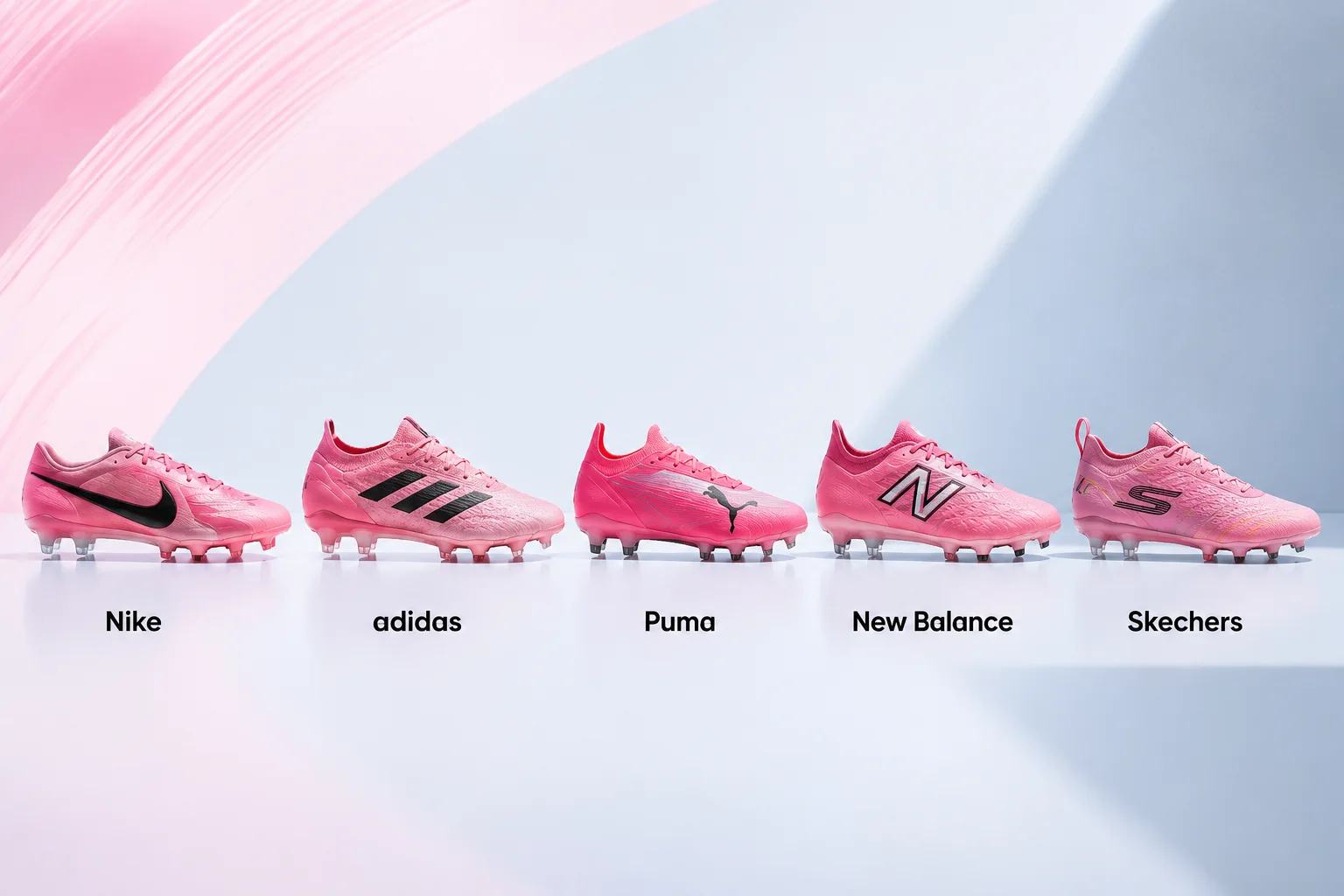
The simplest explanation is the right one. Nike, adidas, Puma, New Balance and Skechers all picked pink for the same tournament, at the same time, with no formal agreement between them. The reason they landed on the same hue is shared trend forecasting, not a meeting.
Boot collections are signed off two to three years ahead. Around the middle of 2024, the trend agency WGSN named "Electric Fuchsia" one of its key colours for spring and summer 2026, describing it as a vivid neon sitting between pink and purple. That is exactly when the brands were finalising their World Cup lines. They use the same forecasters, often the same factories and the same focus groups, and staff move between them, so independent brands arriving at one colour is predictable rather than suspicious.
The numbers back up how far pink has taken over. According to WGSN data reported by CNN, bright pink now accounts for 48.2% of all pink football boots, and pink has gained 1.1% of the entire boot colour mix. Ben Warren, who runs the boot retailer BW Boots, put the pattern bluntly to The Athletic: people call it a coincidence, but it has happened far too often, with different brands releasing boots in more or less the same colours season after season.
There is a neat irony in all this. Brands chase a bold colour to stand out from each other, but when all of them choose the same one, nobody stands out at all. The players who now catch the eye are the few not wearing pink.
Every pink boot on show at the 2026 World Cup
Each brand gave its pink range a name and a hero silhouette, then seeded it across its sponsored players. Here is what is on the pitch.
| Brand | Pack | Lead boots | Worn by | Released |
|---|---|---|---|---|
| Nike | Breakout | Mercurial Superfly 11, Vapor 17, Phantom 6 | Cristiano Ronaldo, Kylian Mbappé, Folarin Balogun, Virgil van Dijk | 1 June 2026 |
| adidas | Road to Glory | F50, Predator, Copa Pure 4 | Wide adidas roster (Solar Red shade) | 2 June 2026 |
| Puma | Showtime | Future 9, Ultra 6, King 20 | Neymar, Kai Havertz, Memphis Depay, Cody Gakpo | 21 May 2026 |
| New Balance | Pure Ambition | Furon v8, Tekela v5, 442 v3 | New Balance roster | May 2026 |
| Skechers | Sunset | Skechers football range (pink-orange) | Harry Kane | 2026 |
| Mizuno | Prism White (the outlier) | Morelia, Alpha | Mizuno roster | 2026 |
Nike's Phantom 6 leads the range on price at $305 (around £225 at June 2026 exchange rates) for the high-cut model. The colour reaches across nations: Mbappé carries it for France's World Cup fixtures, while Neymar wears Puma's mismatched pink-and-orange Showtime boots for Brazil at the World Cup. The Netherlands front line of Depay and Gakpo runs out in the same Puma range, so anyone heading to a Netherlands match will see plenty of it. Harry Kane is the exception in brand terms, wearing Skechers rather than the big three, though his Sunset boots still lean pink for England.
The players who turned pink down
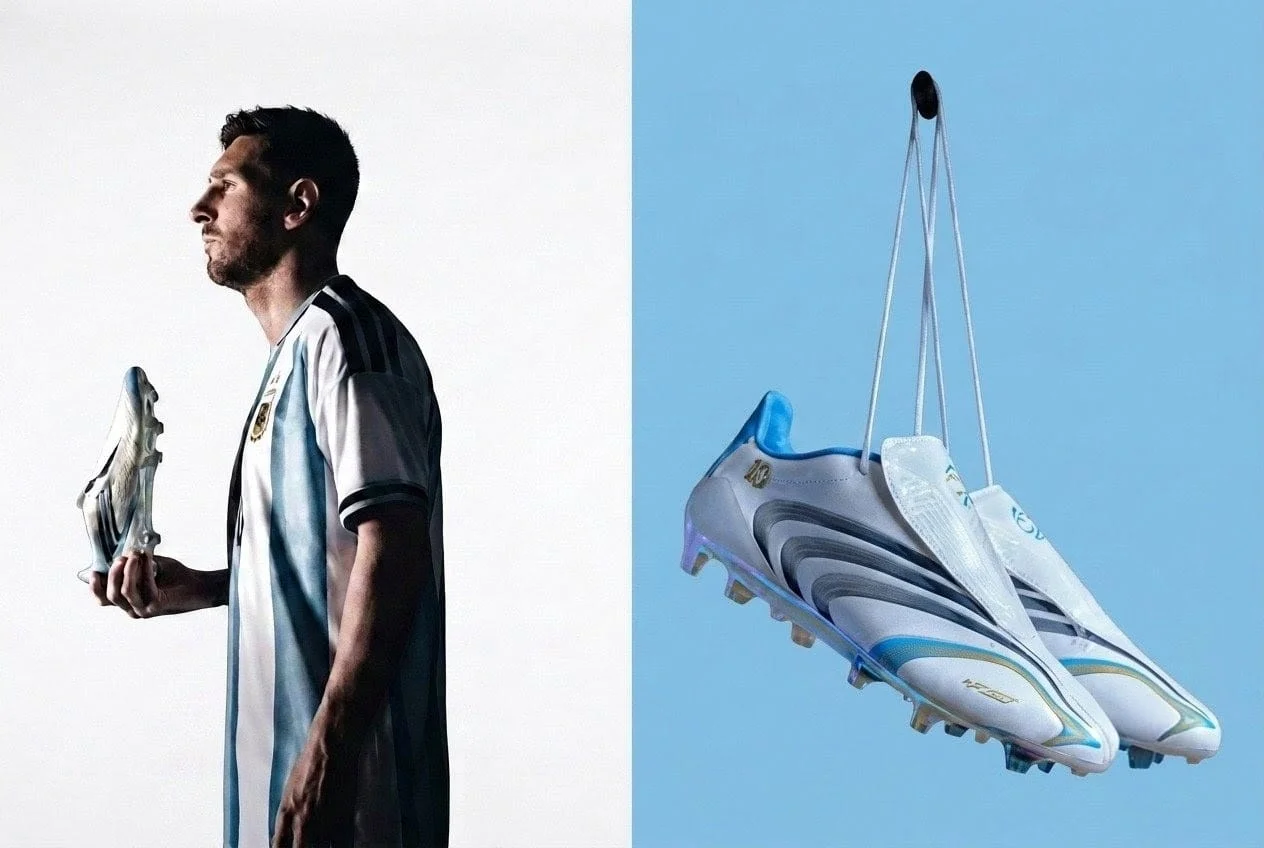
A small group went the other way, and they are easier to spot for it. The most notable refusals are the two players who have defined the modern game.
Lionel Messi runs out in white and blue adidas boots matched to his country rather than the Solar Red pack, so a seat at an Argentina match means watching the one pair of boots everyone recognises. Cristiano Ronaldo started the tournament in Nike's pink Breakout range, then switched to commemorative gold Mercurials to mark his sixth World Cup, which makes Portugal's games a study in standing apart from the crowd.
Others kept it plain. Croatia's Mateo Kovačić wore all-black boots and, as more than one writer pointed out, became one of the most noticeable players on the pitch precisely because of it, a good reason to watch Croatia closely. Christian Pulisic chose white Puma boots with blue stars, and France's Michael Olise, who has no boot deal, wore plain black by choice. The referees were told to stick with traditional black, which is its own quiet statement in a sea of fuchsia.
WhatsApp channel
Sports news straight to your phone
Match updates, on-sale dates and ticket news from 1BoxOffice.
Do pink boots actually help you play?
No. There is no peer-reviewed evidence that boot colour makes a player faster, sharper or more accurate. Comfort and fit are the only boot factors reliably linked to performance, and the main effect of a bad boot is to make you play worse, not a bright one to make you play better.
The brands make a softer, partly fair claim about visibility. Nike's global football footwear lead Odinga Nimako told The Athletic that pink stands out against the green grass, whether you are in the stands or watching on television, and that bright colours give players confidence in big moments. The first half of that is real: pink and magenta are saturated colours that do not appear in the pitch background, so they read well on 4K broadcast. Magenta is also a non-spectral colour, one that the brain constructs by mixing red and blue, which is part of why it looks so loud. The confidence half is a marketing assertion based on the brand's own consumer research, not independent science.
People often reach for the old "red advantage" idea here, but it does not transfer to pink boots. The original study by Hill and Barton in Nature in 2005 found that combat athletes wearing red won about 55% of evenly matched bouts. It was challenged almost immediately, and a large meta-analysis in Scientific Reports in 2024, covering more than 6,500 bouts, found the red edge had faded to a statistically insignificant 50.5%. Even at its strongest, the effect was about red kit, not pink boots, and it concerned the colour an opponent sees on your body, not on your feet.
New Balance's product chief, Rob Sheldon, gave the honest version of the whole debate: no player is stepping onto a World Cup pitch because of a paint colour.
Why pink, and why right now
Pink is everywhere because the taboo around it has gone, and the money behind it has grown. For most of the 20th century, pink was coded feminine, a mid-century marketing invention rather than anything fixed: before that, it was often seen as a boy's colour, a junior shade of red. Football, long tied to "macho" norms, is now one of the places where pink is being de-gendered in public.
The commercial signal is hard to argue with. Lionel Messi's pink Inter Miami shirt became the fastest-selling jersey in MLS store history within three days of its 2023 launch. The global football boot market was worth roughly $9.4bn in 2025 and is forecast to grow at about 6.7% a year, with women's football footwear the fastest-rising segment of all. A bold, broad-appeal colour sells to more people, including the younger and female buyers brands want most. Social media does the rest, turning a screenshot of a boot into free advertising, a dynamic we covered in our look at the impact of social media on football fandom.
It is working in real time. The Brazilian retailer Netshoes reported pink boot sales up 15% in the tournament's first four days. As for how long it lasts, the trade expects the colour to cool once the club season restarts at the end of July, when brands move their rosters onto the next palette. Pink is a tournament moment, not a permanent shift.
The case for pink, and the case against
Both sides of the argument are worth stating plainly, because fans are split down the middle.
The case for:
- Pink reads strongly against grass and on high-definition broadcast, which is a genuine, if not unique, visibility benefit.
- Boots are the one piece of kit a player personalises, so colour is self-expression in a sport with little room for it.
- A single hero colourway drives replica sales and free social exposure, which is exactly what a tournament window is for.
- It breaks an outdated taboo and speaks to the fast-growing women's game and younger buyers.
The case against:
- There is no performance benefit, so the "confidence" and "speed" framing is marketing dressed as science.
- When every brand picks the same shade, players become harder to tell apart, and the brands cancel each other out.
- Traditionalists see a manufactured trend driven by sponsorship contracts rather than genuine player choice.
- Some fans simply prefer the classic black boot and find the uniform pink an eyesore.
For anyone planning to travel to a game and see it for themselves, our guide to fan ID rules for the 2026 World Cup covers what you need before kick-off.
The honest one-line answer to the whole phenomenon: every brand chased the brightest, most television-friendly, most sellable colour, and the same forecasters pointed all of them at pink. Whichever side you take, the easiest way to judge it is to watch a knockout match and decide for yourself, and 1BoxOffice lists tickets across every round backed by its 150% money-back guarantee if a listing ever falls through.
1. When did pink boots first appear in professional football?
-
Nike's pink Mercurial Vapor IV, worn by Nicklas Bendtner in November 2008, was the first high-profile pink boot in the men's game.
2. Do the laws of the game restrict boot colour?
-
No colour rule exists in the Laws of the Game, so the black footwear worn by referees is a competition instruction rather than a requirement.
3. Are pink boots part of the women's game too?
-
Yes, brands now produce women's-specific pink models such as adidas's F50 Sparkfusion, in what is the fastest-growing part of the boot market.
4. Are the pink tournament boots more expensive than standard colourways?
-
No, the tournament colourways carry the same recommended retail price as the rest of each boot's range.
5. What colour are brands expected to push next?
-
Trend forecasters and boot retailers expect a shift back towards muted tones and metallics once the 2025/26 club season resumes at the end of July.
Sources: WGSN, CNN, Nike News, The Athletic, Nature, Scientific Reports, BBC Sport, GiveMeSport. 1BoxOffice is not the official ticket agent of any club, league or federation. Prices may differ from face value.