In this guide
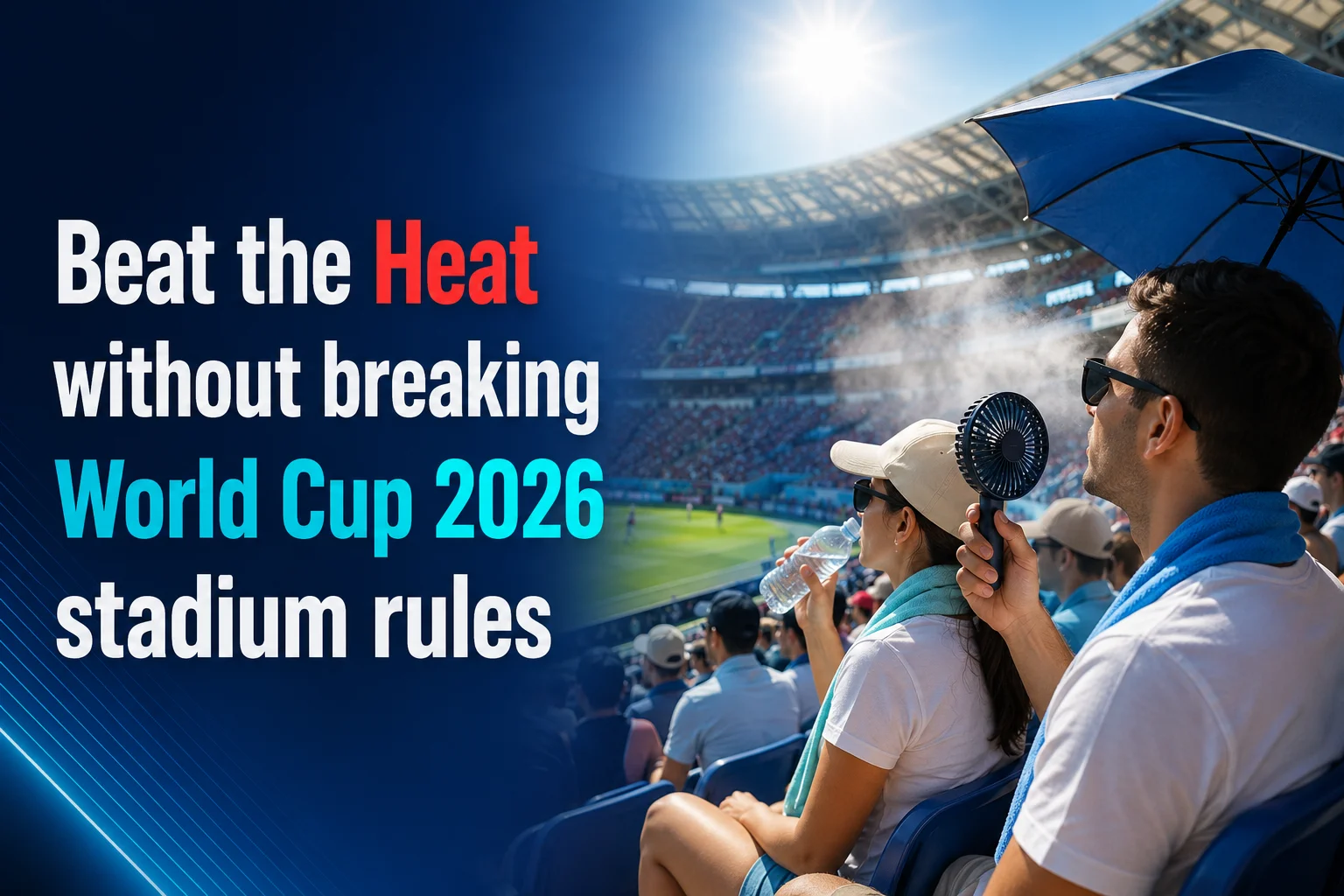
What You Can and Cannot Bring Through SecurityHow a Late Rule Change Became a U-TurnHow Hot Will It Actually Get?A Matchday Hydration Plan That Works Within the RulesFAQsFour days before kick-off, FIFA reversed a bottle ban it had only just imposed. The World Cup 2026 water bottle policy now allows every fan to carry one soft plastic, factory-sealed, disposable 590ml (20oz) bottle into any match in the USA and Canada. Reusable bottles, including empty ones you planned to refill inside, remain banned.
That single sealed bottle matters more than it sounds. Temperatures above 32 °C are forecast across many of the 16 host cities during the tournament, and most stadiums are open-air. Tickets remain available across all 104 matches, but whichever game you attend, your hydration plan starts before you reach the turnstile.
What You Can and Cannot Bring Through Security
The current rules, confirmed in FIFA's clarification on 7 June, are narrow. One bottle per person. It must be soft plastic, factory-sealed and disposable, with a maximum capacity of 590ml. Hard-sided and reusable bottles of any kind are prohibited, which FIFA attributes to safety and security concerns.
Note the geography. The clarification covered stadiums in the USA and Canada and said nothing about Mexico. If you are heading to Mexico City, Guadalajara or Monterrey, treat the stricter no-bottle position as the default and check your stadium's entry guidance on the day.
How a Late Rule Change Became a U-Turn
FIFA's original Stadium Code of Conduct let fans bring an empty, transparent reusable plastic bottle of up to one litre to refill inside. At the start of June, days before the opening match, an updated version of the 35-page document removed that allowance and barred all bottles. The Free Lions, the England supporters group, called it a money grab and pointed out that fans often queue for hours in direct sun before gates open.
The backlash worked. Within days, FIFA restored a limited allowance in the form of the sealed-bottle rule. It also confirmed that bottled water inside stadiums would be priced in line with other events at each venue, rather than at a tournament premium. After fans at the 2025 Club World Cup complained about searing conditions with no bottles permitted, this was a row FIFA could not afford to repeat at ten times the scale.
How Hot Will It Actually Get?
Hotter than any World Cup most travelling fans have experienced. Research from Queen's University Belfast found 14 of the 16 host stadiums could exceed a wet bulb globe temperature of 28 °C, the threshold at which some football bodies recommend postponing matches. Monterrey is rated the hottest host city, while Dallas averages highs around 36 °C in June and July.
The mitigation is real but partial. Atlanta, Dallas and Houston have fully climate-controlled stadiums, and FIFA has pushed many daytime fixtures into those venues or into evening slots elsewhere. Eleven stadiums remain open-air. The final at MetLife Stadium kicks off at 3 pm local time, with roughly a 30% chance of extreme heat in a typical summer. Every match also includes a three-minute drinks break in each half, and host cities are deploying misting stations, hydration points and cooling tents around stadium perimeters.
WhatsApp channel
Sports news straight to your phone
Match updates, on-sale dates and ticket news from 1BoxOffice.
A Matchday Hydration Plan That Works Within the Rules
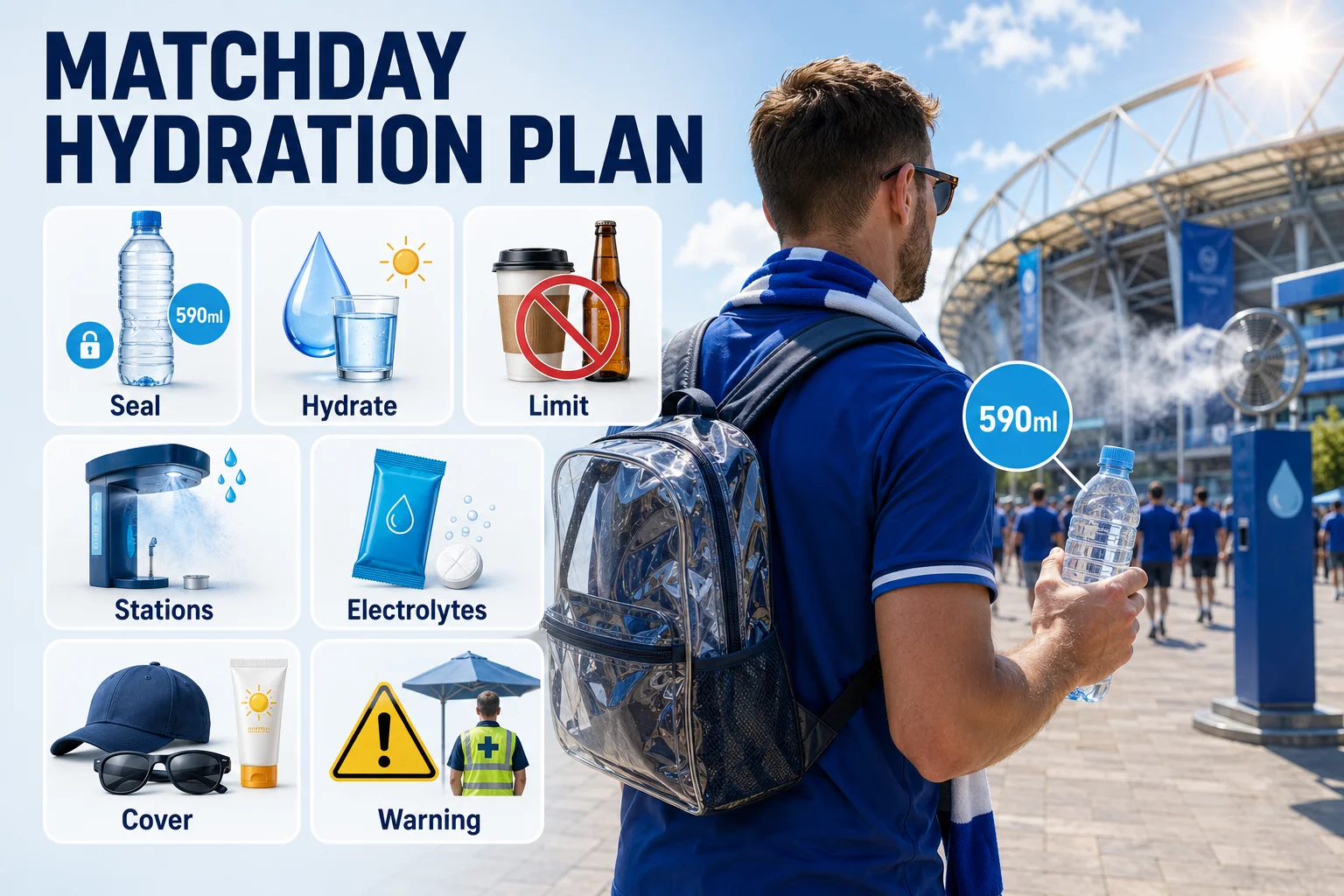
The 590ml allowance is enough for the queue, not the whole day. Players get structured breaks and air-conditioned benches; fans get whatever they planned for. Build your day around these points:
- Buy your sealed bottle on the way to the ground and keep the seal intact. A broken seal risks confiscation at search lanes.
- Hydrate properly the night before and through the morning. Arriving already thirsty in 32 °C heat is a losing position.
- Go easy on alcohol and caffeine before the match. Both accelerate fluid loss exactly when you need to retain it.
- Locate the hydration stations and misting points as soon as you arrive, before the concourse queues build at halftime.
- Pack electrolyte sachets or tablets. Powder in a sealed sachet passes security, where a filled sports bottle does not.
- Cover up. A hat, sunglasses and sun cream do as much for you in an open-air bowl as any amount of water.
- Know the warning signs: dizziness, headache, cramps and confusion mean find shade and stewards immediately, not at full time.
Sort your paperwork alongside your water. Entry requirements are their own subject, and our guide to the Fan ID question for World Cup 2026 covers what you need before you travel.
If your route runs through South Florida, plan hardest of all. Miami pairs heat with humidity, and several of its fixtures sit in afternoon slots when the sun is still high.
FAQs
1. How many water bottles can each fan bring into a World Cup 2026 stadium?
-
One per person, and it must not exceed 590ml (20oz).
2. Were bottles also banned at previous tournaments?
-
Yes, reusable bottles were barred at Qatar 2022, and fans could not bring bottles into the 2025 Club World Cup in the United States.
3. When do the in-match drinks breaks happen?
-
Referees stop play around the 22nd and 67th minutes at every match, regardless of the weather.
4. Why are hard-sided and reusable bottles still prohibited?
-
FIFA attributes the restriction to safety and security reasons.
5. Will water inside the stadiums cost more than usual?
-
FIFA says bottled water will be priced in line with other events held at each stadium.
However, the rules shift between now and 19 July, the heat will not negotiate, so plan your water as carefully as your travel. 1BoxOffice has supplied fans with tickets to major tournaments since 2006, and every purchase is covered by a 150% money-back guarantee.
Sources: Al Jazeera, ESPN, NBC News, Climate Central, The Conversation and Queen's University Belfast.