In this guide
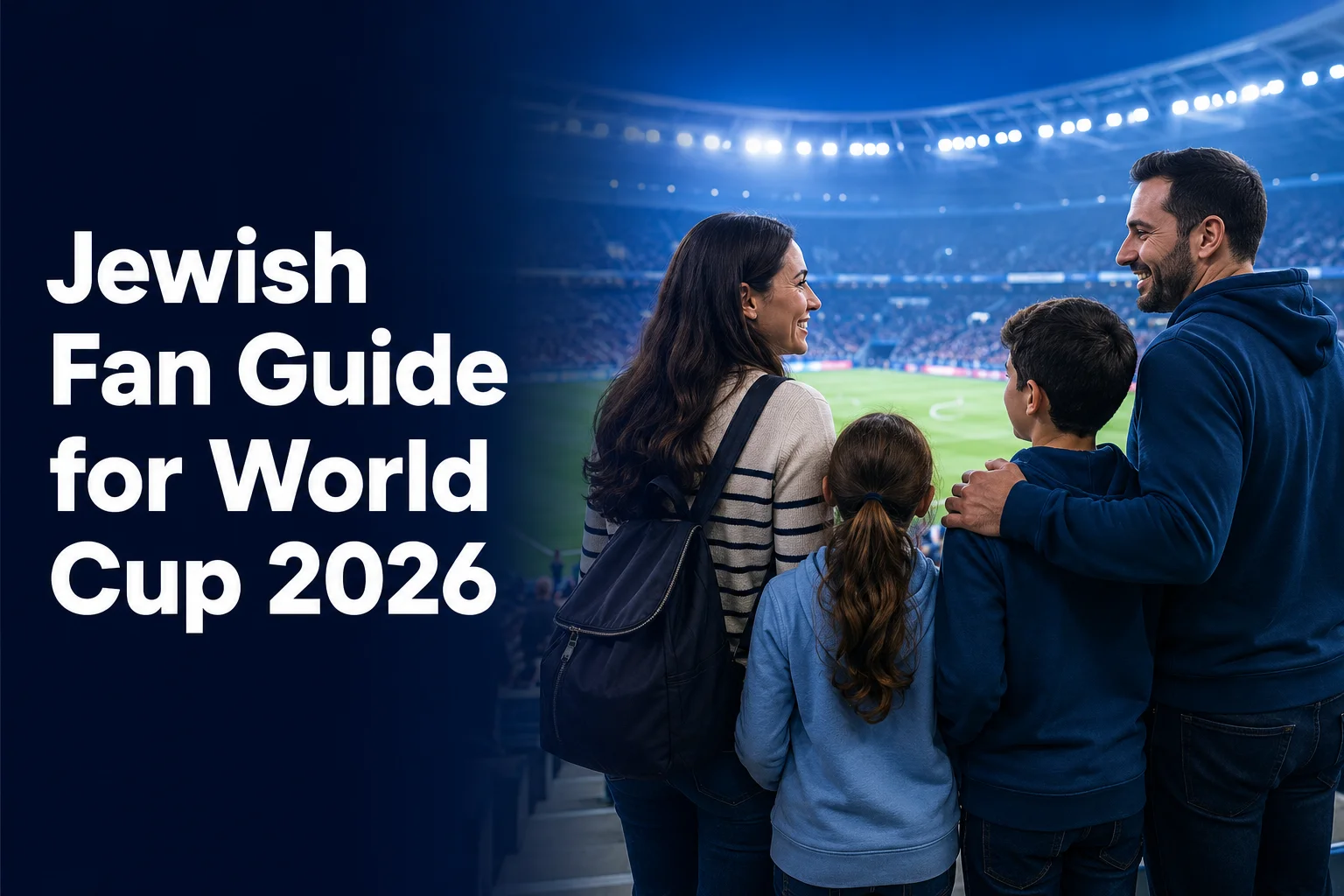
How Shabbat Falls Across the TournamentEating Kosher on MatchdayFamily Sections and Taking Children1. New York and New Jersey2. Boston and Foxborough3. Philadelphia4. Atlanta5. Miami6. Houston7. Dallas and Arlington8. Kansas City9. Seattle10. San Francisco Bay Area11. Los Angeles12. Toronto13. Vancouver14. Mexico City15. Guadalajara16. MonterreyPractical Notes for Observant TravellersFrequently Asked QuestionsThe World Cup kicks off at Estadio Azteca on 11 June 2026, and for the first time in the tournament's history, every one of the 16 host stadiums sits within reach of an established Jewish community. This kosher World Cup 2026 guide covers all 16 host cities across the United States, Canada and Mexico: where to find certified kosher food, which synagogues welcome visitors, where the eruv boundaries run, how Shabbat falls across the match schedule and what families with children should know before walking through the turnstiles.
The scale matters for planning. With 104 matches spread across 16 host cities in the United States, Canada and Mexico over 39 days, most travelling fans will pass through three or four of them, and the depth of Jewish infrastructure varies enormously from one to the next. Teaneck and Polanco offer dozens of kosher options within a few streets; Monterrey and Guadalajara offer a Chabad house and little else. Check fixtures and availability for every venue before locking in a route.
Demand patterns shape which cities matter most for each supporter base. Fans following England, holders Argentina, France or record five-time winners Brazil across the group stage will criss-cross several regions, so it pays to know the kosher map of each before booking flights. One note on national interest: Israel will not feature on the pitch. The team finished third in European qualifying Group I behind Norway, who took the automatic spot with a perfect record, and Italy, as the Jerusalem Post reported in November 2025. Jewish fans heading to North America this summer are travelling as neutrals or behind adopted nations, and sizeable Jewish contingents are also expected within the travelling support of Morocco, France and Argentina, all nations with deep Jewish diaspora ties.
How Shabbat Falls Across the Tournament
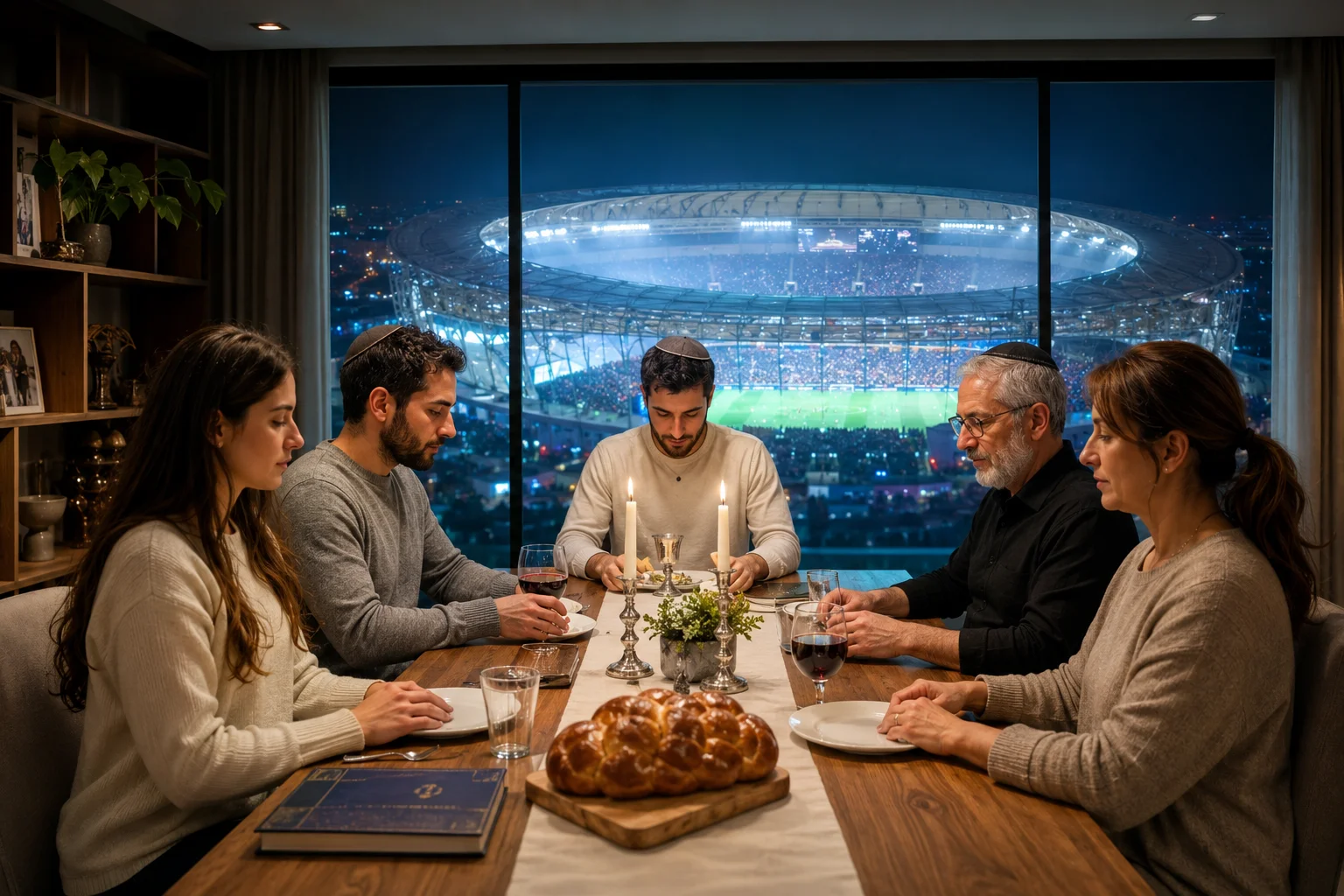
Six Shabbatot, the Friday sunset to Saturday nightfall Sabbath periods, fall within the tournament window of 11 June to 19 July 2026, and the final itself lands safely on a Sunday. Candle lighting in the northern US host cities comes late in midsummer, generally between 8.00 pm and 8.30 pm in late June, which means Friday evening kick-offs overlap Shabbat almost everywhere and many Saturday fixtures conflict with observance, so check local candle lighting and havdalah times for each city before booking. Shabbat-observant fans should build itineraries around Sunday to Thursday fixtures.
| Shabbat dates (2026) | Tournament context | Planning note |
|---|---|---|
| 12 to 13 June | Opening weekend group matches | Host nation openers fall on Thursday and Friday; check kick-off times against local candle lighting |
| 19 to 20 June | Second round of group fixtures | Midsummer candle lighting after 8pm in most US and Canadian host cities |
| 26 to 27 June | Final group matchday window | Simultaneous Saturday kick-offs conflict with Shabbat for observant fans |
| 3 to 4 July | Round of 32 and round of 16 | US Independence Day weekend; book Shabbat-walkable hotels months out |
| 10 to 11 July | Quarter-finals window | Fewer matches, easier to plan around |
| 17 to 18 July | Day before the final | The final is Sunday 19 July at MetLife Stadium, clear of Shabbat |
Two practical consequences follow. First, choose hotels within walking distance of a synagogue, ideally inside an eruv, for any Shabbat spent in a host city; each city section below names the relevant neighbourhood. Second, the organisers' ticket delivery guidance makes this a mobile-only entry tournament, with nothing emailed or printable, which makes stadium entry on Shabbat itself a problem regardless of travel logistics. The cleanest plan is to treat Friday night and Saturday as community time and attend matches the rest of the week.
Eating Kosher on Matchday
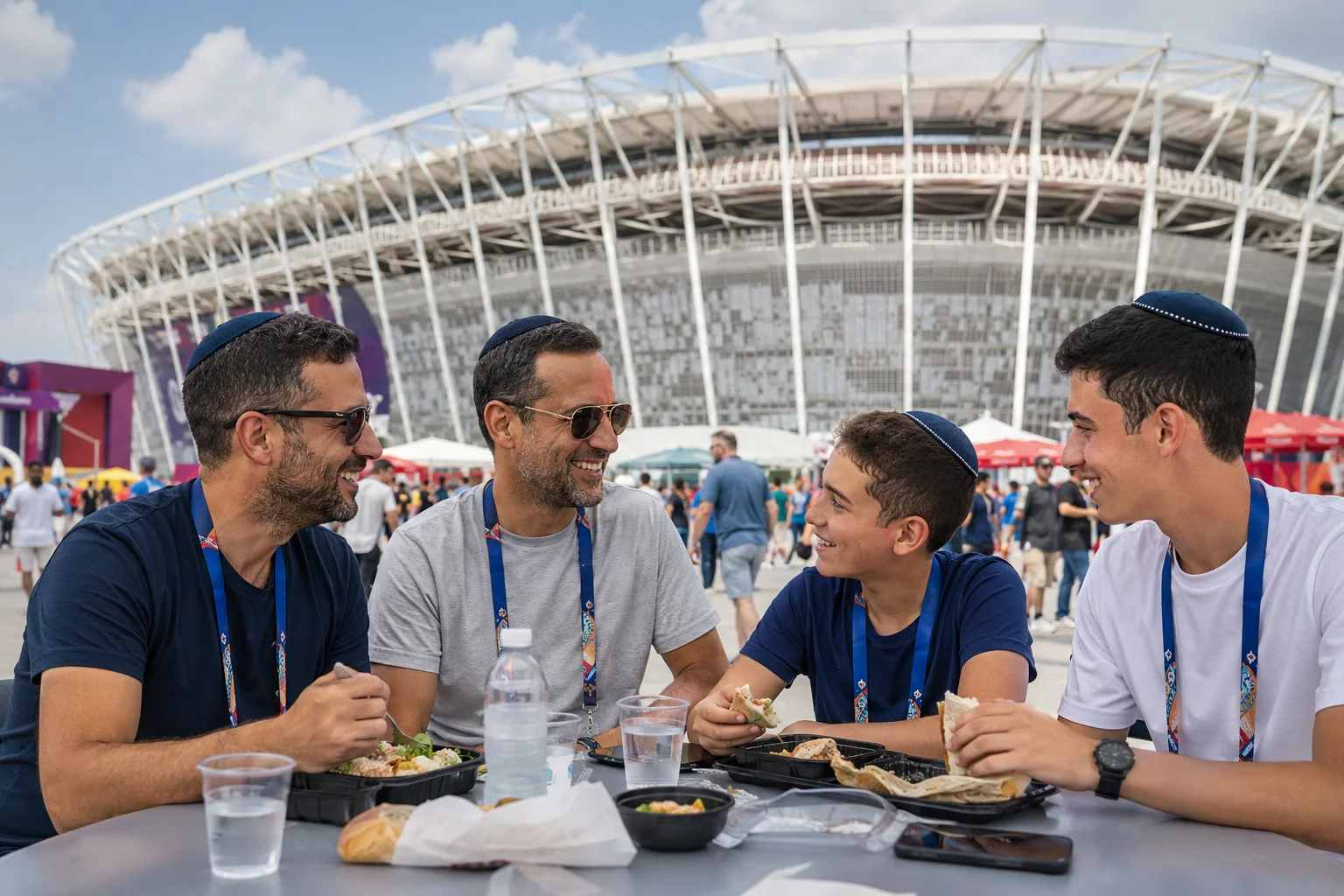
As of early June 2026, no tournament-wide list of certified kosher concessions has been published for any venue, and regular-season kosher stands cannot automatically be counted on for World Cup matchdays. The tournament's Stadium Code of Conduct prohibits outside food and drink and sets a strict clear bag rule, one clear plastic, vinyl or PVC bag no larger than 12in x 6in x 12in plus one small clutch no larger than 4.5in x 6.5in, with no backpacks of any size, as the Football Ground Guide and the Seattle Police Department have both detailed. Prohibited bags may be directed to deposits where they exist or refused outright, so do not rely on storage being available. Several venues do run kosher carts during their NFL seasons, and Jeff's Gourmet of Los Angeles famously operates a glatt kosher stand at Dodger Stadium, but tournament catering is contracted separately from regular-season operations, so treat any stand as unconfirmed until the venue says otherwise.
The workable approach is to eat properly in the community before heading out, since gates open hours before kick-off and screening queues reward early arrival; check each venue's published gate-opening time rather than assuming a standard window, and treat the in-stadium offer as drinks and sealed snacks at best. Fans with medical dietary needs can apply for documented exemptions under the stadium rules, but religious dietary requirements are not listed among them. The fan festivals operating in all 16 host cities sit outside stadium catering contracts, and food trucks vary city by city, so it is worth asking the local kosher agencies listed below whether any certified vendor has confirmed a presence.
Family Sections and Taking Children
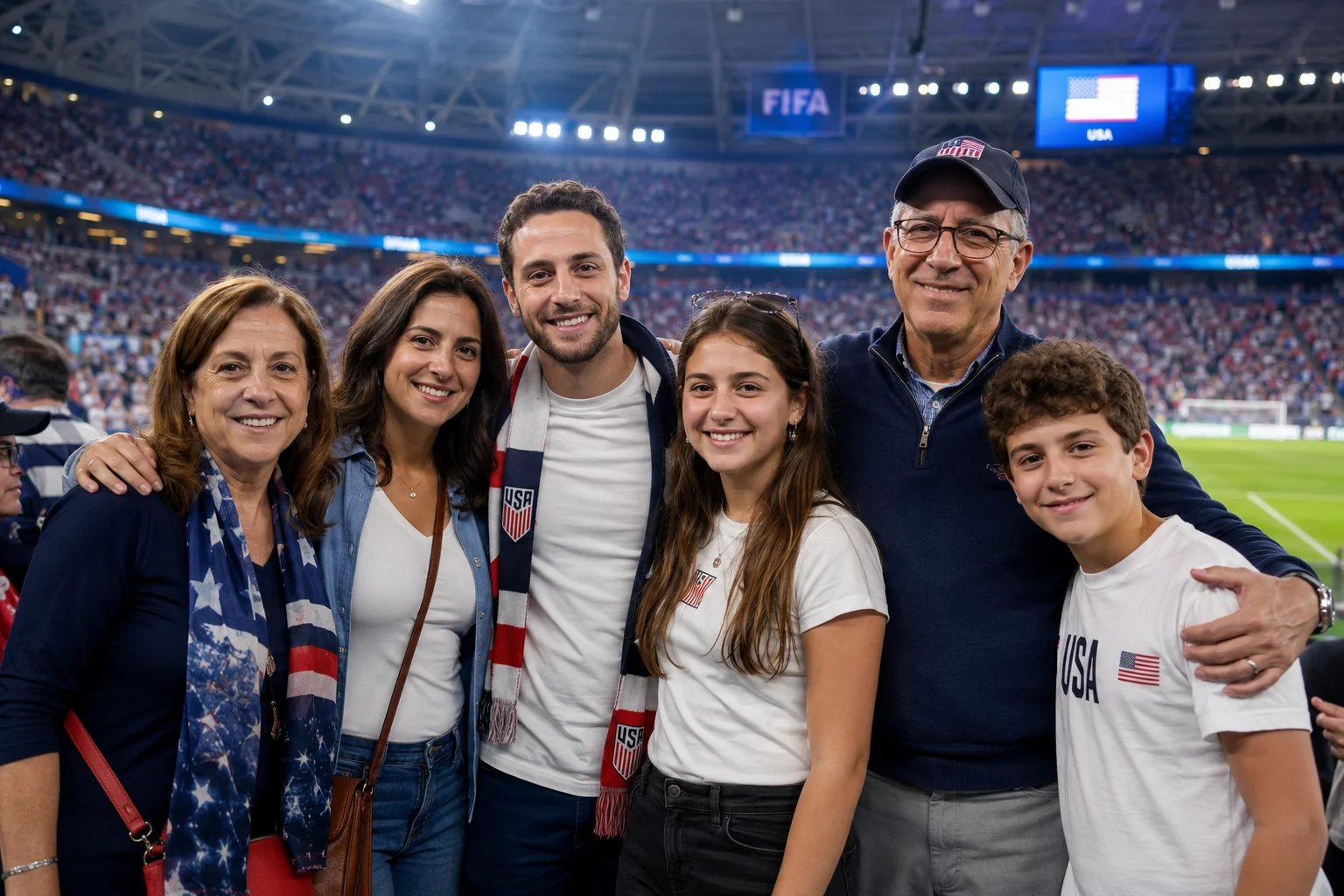
Designated alcohol-free seated areas have been confirmed for the tournament at venues including Vancouver's BC Place, and every host city runs fan festival programming with family activity areas, much of it free or free with registration, though some events charge entry, offering a calmer alternative to the stadium for younger children. The clear bag rules apply to children's kits too, so nappies, formula and snacks for infants need to fit the transparent bag format; check each stadium's published exemptions for baby supplies before travelling. Group stage matches between mid-ranking nations are the sensible first World Cup for a child: lower prices, smaller crowds and less drinking than a marquee fixture, and ear protection for under-10s is worthwhile insurance in 70,000-seat bowls.
WhatsApp channel
Sports news straight to your phone
Match updates, on-sale dates and ticket news from 1BoxOffice.
1. New York and New Jersey
MetLife Stadium in East Rutherford hosts the final on 19 July, plus a heavy fixture load, and it sits 15 to 25 minutes by road from the densest kosher infrastructure of any host city. Bergen County is the base: Teaneck's West Englewood Avenue strip holds Chickie's, Chopstix, Dougie's BBQ and the Etc Steakhouse under Rabbinical Council of Bergen County certification, Cedar Lane adds the Cedar Market grocery and a run of cafes and bakeries, and Hummus Elite anchors neighbouring Englewood. Teaneck and Englewood both maintain eruvin and dozens of synagogues across every stream, so a Shabbat-walkable hotel is straightforward to arrange, and Manhattan's Upper West Side remains the alternative base for fans who prefer the city, with NJ Transit running matchday rail to the stadium from Secaucus Junction. Book Bergen County accommodation early; the final week will compress availability across the entire metro area, and study the MetLife Stadium seating plan before choosing between the lower bowl and the upper tiers.
2. Boston and Foxborough
Gillette Stadium sits in Foxborough, roughly 35 to 50 kilometres southwest of central Boston, which creates a two-base decision. Brookline is the classic visitor option, with The Butcherie market, Rami's, The Kosher Wok and Kupel's bakery clustered on Harvard Street under Vaad Harabonim of Massachusetts supervision, the Young Israel of Brookline and the Bostoner Rebbe's shul within the local eruv, and the Holiday Inn and a nearby Courtyard long used by observant visitors. The quieter and far closer option is Sharon, an Orthodox community around 15 kilometres from the stadium anchored by the Young Israel of Sharon, with Zayde's Market in adjoining Canton covering groceries and fresh kosher pizza. Downtown workers and tourists can also lunch at Milk Street Cafe in the financial district. Matchday traffic on Route 1 around Gillette is notorious, so build in generous margins whichever base you choose, and check the Gillette Stadium seating plan before picking blocks.
3. Philadelphia
Lincoln Financial Field sits in the South Philadelphia sports complex, one straight ride down the Broad Street Line subway from Center City, which happens to be one of the easiest downtowns in America for an observant visitor. The Center City eruv covers the core and connects to the University City eruv across the South Street Bridge. Mekor Habracha at 1500 Walnut Street runs services two blocks from the main hotel district, and Congregation Mikveh Israel, the oldest synagogue in Pennsylvania with roots in the 1740s, maintains daily minyanim and its historic Spanish and Portuguese rite. Kosher dining downtown is thinner than New York but functional: Mama's Vegetarian falafel on South 20th Street is the reliable lunch stop, with certified bakeries and dessert spots scattered through Center City, while House of Kosher in Northeast Philadelphia is the full supermarket, and the Main Line suburbs around Lower Merion add further restaurants and shuls. Staying inside the Center City eruv and taking the subway south on matchdays is the obvious play; the Lincoln Financial Field seating plan sets out the blocks.
4. Atlanta
Mercedes-Benz Stadium hosts a semi-final downtown, and Atlanta's observant hub of Toco Hills lies about nine miles northeast along LaVista Road. The neighbourhood has carried an eruv since 1992 and centres on Congregation Beth Jacob and the Young Israel of Toco Hills, with the Atlanta Kashruth Commission certifying a surprisingly broad food scene: The Kosher Gourmet grocery and takeout, Chai Peking's glatt Chinese counter inside the Toco Hills Kroger, Toco Grill's Israeli menu and The Spicy Peach for cholov yisroel groceries, plus AKC-approved outlets of mainstream chains. Chabad of Toco Hills points visitors to the Courtyard on Executive Park as lodging inside the eruv, and Sandy Springs and Dunwoody to the north add further synagogues and a kosher Latin grill. MARTA rail runs directly to the stadium, so a Toco Hills base with a short drive to a park-and-ride station works well, and seat options are mapped in the Mercedes-Benz Stadium seating plan.
Established kosher corridors such as Teaneck's West Englewood Avenue, LA's Pico Boulevard and Toronto's Bathurst Street sit within easy reach of tournament stadiums.
5. Miami
Hard Rock Stadium in Miami Gardens sits 20 to 30 minutes from one of the strongest kosher corridors in the western hemisphere, running through Aventura, North Miami Beach, Bal Harbour and Surfside. Surfside alone supports fine dining at The Harbour Grill, open since 2006, and the modern Israeli kitchen Neya near the Bal Harbour Shops, while Grill Time and a dozen other certified spots cover North Miami Beach and Aventura under Kosher Miami and ORB supervision. The Shul of Bal Harbour is the area's best-known congregation, and the Surfside and Bal Harbour beachfront carries an eruv, making the A1A strip the natural Shabbat base, with hotel stock at every price point. June humidity is fierce, evening thunderstorms are routine, and stadium queues are exposed, so hydrate and arrive early; the drive up the 826 or Turnpike to Miami Gardens is short but congested badly on matchdays, and the bowl is broken down in the Hard Rock Stadium seating plan.
6. Houston
NRG Stadium offers the shortest gap between gate and Jewish neighbourhood of any US venue: Meyerland and Bellaire begin barely six kilometres west, with around 11 synagogues inside a four-mile radius according to the area's largest grocer. United Orthodox Synagogues anchors the Orthodox community on Greenwillow Street, the Houston Kashruth Association and Mehadrin Kashrus of Texas certify a tight cluster of eateries along Bissonnet Street in Bellaire, including burger and Latin-grill concepts at 5711 Bissonnet and the NY Bagels and Coffee Shop on Bellaire Boulevard, and the rebuilt H-E-B Meyerland Market carries a full certified butcher, bakery and deli. Hotel options inside the neighbourhood itself are limited, so many observant visitors stay near the Texas Medical Center one stop up the light rail line, which runs directly to NRG. Confirm current eruv boundaries with the community before relying on carrying anywhere on Shabbat, and the NRG Stadium seating plan maps the bowl level by level.
7. Dallas and Arlington
AT&T Stadium in Arlington carries the heaviest load of the tournament with nine matches, including a semi-final, but Arlington itself has no kosher infrastructure at all. Jewish Dallas lives 30 to 45 minutes east in the North Dallas, Richardson and Plano corridor, where three separate eruvin operate (Far North Dallas, Plano and Richardson per the community's eruv listings) and Dallas Kosher supervises the food scene: Aderet's Mediterranean grill on Preston Road, Milk and Honey in Richardson, the longest continuously supervised meat restaurant in the city, Kosher Palate on Belt Line Road and the newer Tex-Mex concept Meat and Rolls on Montfort Drive. Congregation Shaare Tefilla, Ohev Shalom and Chabad of Dallas anchor the shul map. There is no rail link to the stadium, so the workable pattern is a North Dallas base, weekday matches by car, and Shabbat spent entirely in the community, with the AT&T Stadium seating plan worth a look before buying.
8. Kansas City
Arrowhead Stadium sits on the Missouri side of the metro, while Jewish Kansas City is concentrated in Overland Park, Kansas, around 30 to 40 minutes away, and honesty matters here: this is the thinnest kosher city among the US venues. There are no full-service kosher restaurants, but the community functions well around Congregation Beth Israel Abraham and Voliner, an Orthodox congregation with roots back to 1894, a local eruv, two mikvaot and the Vaad HaKashruth of Kansas City, with prepared food from the Hen House kosher deli and bakery in Leawood, Vaad-supervised Meshuggah Bagels and the dairy Ram's Cafe inside the Jewish Community Campus. Costco and Hy-Vee in Overland Park stock kosher meat and groceries. Self-catering accommodation near Antioch Road is the sensible booking, and Midwestern hospitality is real: contact BIAV or Chabad ahead of Shabbat, and meal invitations tend to follow. The tiers are set out in the Arrowhead Stadium seating plan.
9. Seattle
Lumen Field, renamed Seattle Stadium for the tournament, hosts six matches between 15 June and 6 July, and the Seattle Police Department's matchday guidance is blunt: take the Link light rail to Stadium or International District stations, because roads close four hours before kick-off. The Jewish anchor is Seward Park on the Lake Washington shore, home to one of the three local eruvin, Bikur Cholim Machzikay Hadath, founded in 1891 and the oldest congregation in Washington state, and the Sephardic congregations Ezra Bessaroth and Sephardic Bikur Holim, legacies of a community from Rhodes and Turkey that ranks among the largest Sephardic populations in North America. The Vaad HaRabanim of Greater Seattle is candid that no kosher restaurants or hotels sit inside the eruv itself, so plan on grocery-led eating: the QFC at University Village runs a kosher Einstein Bros bagel counter and an in-house kosher meat cutter, and Mercer Island and the North End hold the other eruvin. Book Seward Park-adjacent rentals for Shabbat, ride the train on matchdays and check the Lumen Field seating plan before you buy.
10. San Francisco Bay Area
Levi's Stadium is in Santa Clara, roughly 64 kilometres south of San Francisco, and the closest substantial observant community is Palo Alto, about 20 to 25 minutes north of the ground. The city has carried a 13-mile eruv since 2007, built around Congregation Emek Beracha on El Camino Real, three Chabad houses, including Chabad of Greater South Bay on Louis Road, the Oshman Family JCC campus and a kosher bakery-cafe, which together make it the practical Shabbat base for South Bay matches. San Francisco proper offers more synagogue choice and a deeper food scene, but puts an hour of traffic between you and the turnstiles. On matchdays, the VTA light rail stops at Great America directly by the stadium, and June in Santa Clara is dry and warm rather than San Francisco-foggy, so day games are exposed; the Levi's Stadium seating plan is worth studying for shade before seats are chosen.
11. Los Angeles
SoFi Stadium in Inglewood stages the United States opener on 12 June, with the USA World Cup tickets page tracking every co-host fixture, and Pico-Robertson lies 10 to 12 kilometres north as the deepest kosher neighbourhood on the West Coast. More than 30 certified establishments line Pico Boulevard and the surrounding blocks, from Jeff's Gourmet Sausage Factory, grilling glatt sausages since 1999, to The Milky Way's family-run dairy dining, with butchers, bakeries, multiple mikvaot and an eruv knitting the area together; the Young Israel of Century City and a dense run of Ashkenazi, Sephardi and Persian congregations cover every minhag. Note that LA's kosher restaurants do not host prepaid Shabbat meals on site, only takeaways beforehand, per the Young Israel's own visitor guidance, so order Shabbat food by Thursday. Inglewood itself has no kosher options, the K Line metro plus matchday shuttles beat driving to a stadium with infamous parking queues, and seat tiers are broken down in the SoFi Stadium seating plan.
12. Toronto
BMO Field on the Exhibition Place lakefront hosts Canada's opening match on 12 June, and the Canada World Cup tickets page covers the co-hosts' full run. Toronto holds Canada's largest Jewish community at roughly 200,000 people, and the Bathurst Street corridor between Lawrence and Steeles is its spine: the Kashruth Council of Canada, certifying since 1952 under the COR mark, supervises dozens of restaurants, bakeries and takeouts here, from the upscale Crema Cafe at 3032 Bathurst to the Toronto Kosher market at 3459 Bathurst, with sushi, shawarma, pizza and steakhouses in between. The corridor sits inside the community eruv with synagogues of every stream every few blocks, so hotels near Bathurst and Lawrence solve Shabbat cleanly, and the stadium is a 25 to 35 minute run south by car or via the 511 streetcar and GO transit on matchdays. This is the easiest host city outside Greater New York for an observant fan, and the BMO Field seating plan covers the compact lakefront ground.
13. Vancouver
BC Place sits in the downtown core and has confirmed designated alcohol-free seated areas for the tournament, a useful flag for parents. Jewish Vancouver concentrates along the Oak Street corridor, a 15-minute drive south: Schara Tzedeck, the city's historic Orthodox congregation, the Jewish Community Centre at Oak and 41st with the dairy Nava kitchen and Cafe FortyOne, Omnitsky Kosher's deli and meat counter, a business lineage dating to 1910, Sabra's bakery and grill and the Maple Grill meat restaurant, all under BC Kosher supervision. The Canada Line SkyTrain links Oakridge-41st Avenue to Yaletown-Roundhouse near the stadium in around 15 minutes, which makes a kosher dinner before an evening kick-off realistic. Summer evenings run cool by the water, the city's compact downtown means fan festival, stadium and hotel can all sit within walking range, and the BC Place seating plan sets out the bowl in detail.
14. Mexico City
Estadio Azteca raises the curtain on the whole tournament on 11 June with Mexico's opener, and the Mexico World Cup tickets page follows El Tri across all three host cities. The capital holds one of Latin America's great Jewish communities, more than 40,000 strong, concentrated in Polanco, Tecamachalco and Bosques de las Lomas in the city's west: Polanco alone keeps five active synagogues, kosher shops on block after block and certified restaurants including the Sinai Deli and Bakery on Avenida Homero, Super Emet on Moliere and the Gaucho Grill steakhouse, with Chabad of Mexico City coordinating Shabbat meals for visitors. The catch is geography. The Azteca sits 20 to 25 kilometres southeast of Polanco through serious traffic, so allow two hours door to gate on matchdays, and remember the 2,240-metre altitude: take the first 48 hours gently and drink more water than feels necessary. The stands are mapped in the Estadio Azteca seating plan.
15. Guadalajara
Estadio Akron in suburban Zapopan is a fixture of Mexican club football, but Jewish Guadalajara is small: around 140 families, served by the Comunidad Hebrea's Masorti congregation and a Chabad house under Rabbi Abraham Srugo on Ricardo Palma. There are no kosher restaurants in the city, so this is a self-catering and Chabad stop; write to the Chabad house well before arrival to arrange Shabbat meals or kosher provisions, and carry sealed staples from Mexico City, whose kosher supermarkets are a five-hour drive or short flight away. The compensation is that Guadalajara is one of the most atmospheric host cities, the home of mariachi and tequila country, and June sits in the early rainy season, so expect hot afternoons broken by dramatic evening storms around the western group fixtures. The Estadio Akron seating plan covers the bowl.
16. Monterrey
Estadio BBVA in Guadalupe, with the Cerro de la Silla mountain looming behind the open south end, is among the most photogenic venues of the tournament, and the city's Jewish community is the smallest of any host city, served by a Chabad presence rather than a restaurant scene. Treat it like Guadalajara but hotter: Monterrey in late June regularly passes 40C, the stadium sits east of the centre with heavy match traffic, and kosher provisioning means packed sealed food plus advance contact with Chabad of Monterrey for Shabbat arrangements. Fans routing between Texas fixtures and Mexico will find Monterrey a natural stop, just two hours from the border, and the San Pedro Garza Garcia district offers the most comfortable hotel base with the easiest access to the community. The Estadio BBVA seating plan sets out the stands, including that open south end with the mountain view.
Practical Notes for Observant Travellers
Three habits will save your trip. First, contact synagogues before you turn up: visitor registration and security screening are standard practice at North American congregations, especially for high-profile events, so email the shul office or the local Chabad with your dates and bring photo ID to services. Second, lean on the Chabad network as the universal fallback; every host city has at least one Chabad house, and in the four thinnest cities (Kansas City, Seattle for restaurants, Guadalajara and Monterrey) it is the difference between a managed trip and a hungry one. Third, sort your tournament entry documents early; our separate guide to the Fan ID question for World Cup 2026 covers what identification the three host countries actually require, and US visa appointment backlogs remain the single biggest obstacle for international fans this month.
On food logistics between cities, certified products with reliable hechsherim are stocked in mainstream supermarkets across the US and Canada (Kroger, Publix, H-E-B, Costco and Trader Joe's all appear in community kosher guides cited below), while in Mexico, the certified supply effectively lives in Mexico City. Airlines flying tournament routes accept kosher meal orders up to 24 to 48 hours before departure, which matters on long internal hops like Seattle to Miami.
Frequently Asked Questions
1. Did Israel qualify for the World Cup 2026?
-
No, Israel finished third in European qualifying Group I behind Norway and Italy and were eliminated in November 2025.
2. Will any World Cup 2026 stadium sell certified kosher food?
-
No tournament-wide list of certified kosher concessions has been published, so do not rely on regular-season kosher stands operating on World Cup matchdays.
3. Which host stadium is closest to a Jewish neighbourhood?
-
NRG Stadium in Houston is among the closest, roughly six kilometres from the Meyerland and Bellaire kosher cluster, though no host stadium sits inside an eruv.
4. Do North American synagogues require advance notice from visitors?
-
Many do, so email the synagogue or Chabad house with your dates beforehand and carry photo identification to services.
5. Can children under two attend matches without a ticket?
-
Do not assume free infant entry; check the ticket terms for your specific match and venue before travelling.
Whichever route your World Cup takes, from Friday dinner in Teaneck to a Polanco shawarma before the long ride to the Azteca, the tournament is finally being played on doorsteps where Jewish fans can keep kosher and keep Shabbat without heroics. 1BoxOffice is a verified secondary ticket marketplace established in 2006, with every order backed by a 150% money-back guarantee.
Sources: the Rabbinical Council of Bergen County, Dallas Kosher, the Houston Kashruth Association, the Atlanta Kashruth Commission, the Vaad HaRabanim of Greater Seattle, the Vaad HaKashruth of Kansas City, the Kashruth Council of Canada, BC Kosher, the Orthodox Union communities directory, Chabad.org community listings, the Jerusalem Post, the Seattle Police Department, Ticketmaster and Football Ground Guide.