In this guide
Two products, two kinds of uncertaintyWhat a conditional supporter ticket actually commits you toBuying a knockout seat when neither team is knownLock in a seat now, or wait for the matchupWhere resale fits and the protection that mattersWhat changes once the group stage endsFAQsWeeks before anyone knows which two teams will contest it, you can already buy a seat for a specific Round of 16 match, at a named stadium, on a fixed date. That is the contradiction behind World Cup 2026 knockout tickets: the venue, the date and the seat are locked in long before the football decides who turns up. With the field expanded to 48 teams and a brand new Round of 32 added, the gap between buying and knowing is wider than it has ever been.
Two different products, both get loosely called conditional tickets, and they pull in opposite directions on risk. One bets on your team. The other bets on the draw. Getting them straight is the difference between a calculated punt and a few hundred pounds thrown at the wrong thing.
Two products, two kinds of uncertainty
Three ticket types come into play once the knockouts appear on the horizon, and only two of them mean buying blind. Team-specific tickets cover the three group matches your nation is guaranteed to play, so there is no gamble over who turns up. The other two are knockout products, and each leaves a different blank on the ticket.
The first knockout product is a conditional supporter ticket, built for fans following one nation. You apply for the rounds your team might reach, from the Round of 32 through to the final, and the ticket is valid only if that team actually gets there. The uncertainty is whether your side keeps winning, not who they meet.
The second is a venue-specific ticket, a seat tied to a particular match slot at a particular ground. It stays valid no matter which two teams are drawn into it. Here, the stadium and the date are nailed down, and the opponents are blank. Confusing these two is the usual and expensive mistake.
What a conditional supporter ticket actually commits you to
A conditional supporter ticket ties you to one team's run and seats you among that team's followers. Your three group matches are never conditional, because your side is guaranteed to play them. Everything from the Round of 32 onwards rides on results.
If your team goes out, any conditional ticket you hold for later rounds stops being valid and is refunded, minus a handling fee that varies by your country of residence. These tickets count as single-match tickets, and holding one for a given round normally blocks you from buying a second ticket for that same round.
This was never a buy-on-demand product. Applications ran from 11 December 2025 to 13 January 2026 and were settled by a random selection draw rather than first-come, first-served, with a separate phase for fans of nations that qualified late through the playoffs. That route shut months ago. During the tournament itself, your options narrow to venue tickets, single match tickets and resale.
Buying a knockout seat when neither team is known
Venue tickets work off the fixture list, not the bracket. The schedule already fixes that a Round of 16 tie will be played at a given stadium on a given date, so you can buy into the slot now. What you cannot see are the two flags that will hang over it.
You are betting on the draw. The slot could resolve into a meeting of two former winners, or a tie between two sides nobody expected to still be in it. Both cost the same when you buy blind. Here is what is fixed and what is not:
- Fixed when you pay: the stadium, the date, the kick-off slot and your price category.
- Not yet known: the two teams, what the tie is worth and how full the ground will be.
- Assigned later: your exact seat, which the primary system hands out closer to the match.
Purchase limits apply across the board, normally four tickets per person per match and no more than forty across the whole tournament. Venue-specific and team-specific tickets can also be split out and passed on one at a time as single-match tickets, which matters if your plans change after you have committed to a slot.
WhatsApp channel
Sports news straight to your phone
Match updates, on-sale dates and ticket news from 1BoxOffice.
Lock in a seat now, or wait for the matchup
There is no single right answer. It comes down to whether being in the building matters more than which match you actually see.
| Approach | What you know when you pay | How prices tend to move | The main risk |
|---|---|---|---|
| Buy the slot early | Stadium, date and seat, but not the teams | Usually closer to face value | The tie turns out to be a low-key one |
| Wait for the draw to resolve | Both teams and what is at stake | Marquee ties climb well above face value | Good seats, or any seats, can sell out |
At the opening sale, group-stage seats started at around $60, and the most expensive final category was listed near $6,710, on the first World Cup to run demand-based pricing that moves match to match. Those were entry points, not ceilings. By June 2026, with the group stage underway, live knockout prices on the secondary market sit well above those opening levels, and the seats for the ties everyone wants thin out first. Waiting buys you certainty about the fixture and usually costs you both choice and money.
Where resale fits and the protection that matters
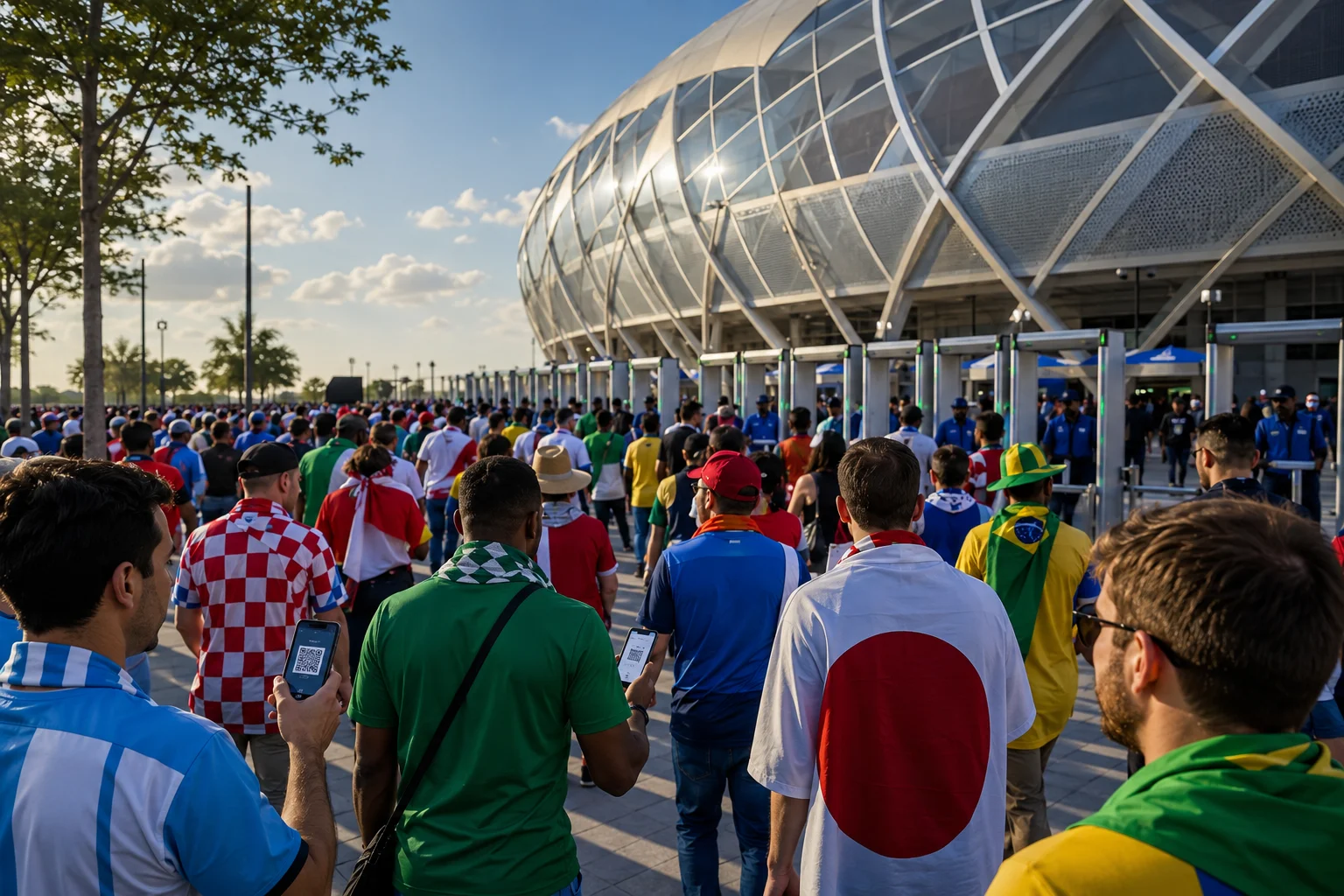
Once group results land and the bracket fills in, specific matchups reach the resale market, and you can buy a known fixture rather than a slot. Every World Cup ticket is a mobile ticket that only works once it has been transferred to you and loaded in the tournament's own app. Screenshots and printouts are turned away at the gate, and transfers run up to roughly an hour before kick-off, so resale is only safe on a marketplace that handles that app transfer properly.
1BoxOffice lists World Cup knockout tickets on resale and backs every order with a 150% money-back guarantee, which counts for more when the fixture is still being settled on the pitch. Demand for the semi-finals spikes the moment the last four take shape, so the window to buy a known fixture at a fair price is short. Our guide to things to know before buying World Cup tickets covers the wider rules on eligibility, delivery and entry.
What changes once the group stage ends
The group stage runs to the end of June 2026. The moment it finishes, the Round of 32 bracket locks in and the teams' unknown problem falls away round by round, each result turning a conditional slot into a real fixture. The semi-finals land at AT&T Stadium in Dallas on 14 July and Mercedes-Benz Stadium in Atlanta on 15 July. By the final at MetLife Stadium in the New York and New Jersey area on 19 July, nothing conditional is left: two teams, one match and the most expensive ticket of the tournament.
FAQs
1. Can I get a refund if I buy a knockout slot and the match turns out to be a poor tie?
-
No, a venue-based knockout ticket is valid whoever plays, so a disappointing draw is not a reason to claim money back.
2. Can I choose my exact seat when buying a knockout ticket blind?
-
Usually not on the primary market, where you pay for a price category, and the precise seat is assigned later, though resale listings often show the exact seat.
3. Is there a limit on how many knockout tickets I can hold?
-
Yes, the standard cap is four tickets per person per match and forty in total, and a conditional ticket for a round normally blocks a second ticket for that same round.
4. Are conditional supporter tickets open to any buyer?
-
No, they are aimed at a single nation's supporters, and the application window closed in January 2026, so they are not a general way to follow the bracket, whoever reaches it.
5. Do I need anything besides the ticket to get into a knockout match?
-
Yes, your ticket is a mobile ticket held in the tournament app, and you should also check the entry and travel-document rules for the host country you are visiting.
Buying before the draw is always a trade between certainty and price; on resale, that trade comes with 1BoxOffice's 150% money-back guarantee behind it.
Sources: World Cup 2026 ticketing terms of sale and ticket-product information; the tournament sales-launch announcement; tournament schedule and host-city confirmations; reporting from Goal, Squawka and major ticketing marketplaces.