In this guide
How we judged the view from the seatAT&T Stadium, Dallas: the video board hangs over the gameSoFi Stadium, Los Angeles: a giant screen over the centre circleMetLife Stadium, New York: a great final venue with a brutal upper tierArrowhead Stadium, Kansas City: the old bowl that was never modernisedLevi's Stadium, San Francisco Bay Area: the sun a renovation could not fixThe five at a glanceThe seats to avoid, and the venues that get it rightFAQsThe World Cup 2026 final will be played at MetLife Stadium on 19 July, in front of more than 82,000 people. Hundreds of them, parked high in the corners of the upper tier, will watch the biggest match in the sport from a long way back and at a punishing angle. That is the uncomfortable truth about World Cup 2026 stadium sightlines: eleven of the sixteen venues were built for American football, and turning a gridiron into a pitch leaves behind seats that no renovation can rescue.
The problem is geometry, not money. A gridiron runs 120 yards long but only 53.3 yards wide. ESPN's venue-by-venue conversion analysis confirms that the governing body requires a World Cup pitch measuring 105m by 68m, which works out to 74.4 yards across. That extra 21 yards of width has to come from somewhere, so eleven NFL stadiums ripped out lower-bowl corner seats and pushed their front rows back to fit a regulation pitch. You can weigh up every host venue, including the final, on the MetLife Stadium World Cup tickets page, but five venues stand out for the wrong reasons.
How we judged the view from the seat
This is a line-of-sight assessment, not an atmosphere review. A loud stadium with a bad view is still a bad view. We ranked each venue on four factors that determine whether you can actually follow a football match: the distance and rake of the worst seats, anything suspended over the pitch that blocks high balls, how far the front rows sit from the touchline after the conversion, and exposure that affects visibility, such as direct sun.
We did not penalise heat or queueing on their own, because plenty of comfortable seats still offer a clear sightline. Where the weakest sections are already well documented, we took that into account. The five below are not a strict one-to-five severity order. Each lands on the list for a different and specific reason.
AT&T Stadium, Dallas: the video board hangs over the game
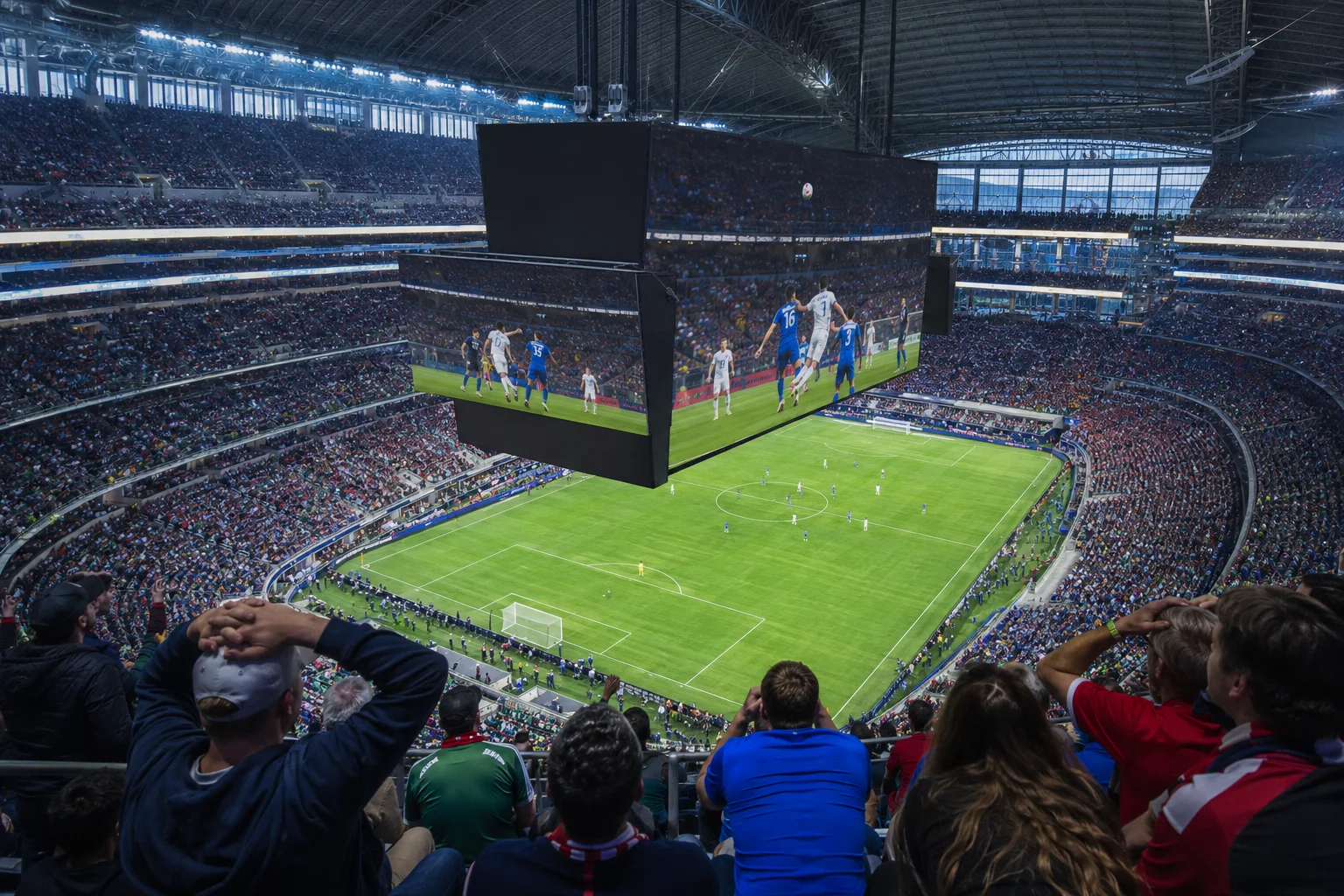
The home of the Dallas Cowboys, known as Dallas Stadium during the tournament, hosts nine matches, including a semi-final and the Group L tie between England and Croatia. Its defining feature is also its biggest sightline flaw: a centre-hung video board, 160 feet wide, suspended above the middle of the pitch. In American football, punts have struck it. For a World Cup match, high balls and crosses can vanish against it from steeper seats, and the board itself sits in the eyeline of anyone in the upper deck looking across the bowl.
Scale is the second issue. AT&T carries a listed capacity near 80,000 that has been pushed past 100,000 for showpiece events, with standing-room areas at the very back that come with no allocated seat and a distant view. Add a pitch that is now wider than the gridiron the bowl was designed around, and the gap from the top row to the action is among the largest in the tournament. Check the AT&T Stadium World Cup tickets options against the layout on the AT&T Stadium seating plan before you commit to an upper-level seat.
SoFi Stadium, Los Angeles: a giant screen over the centre circle
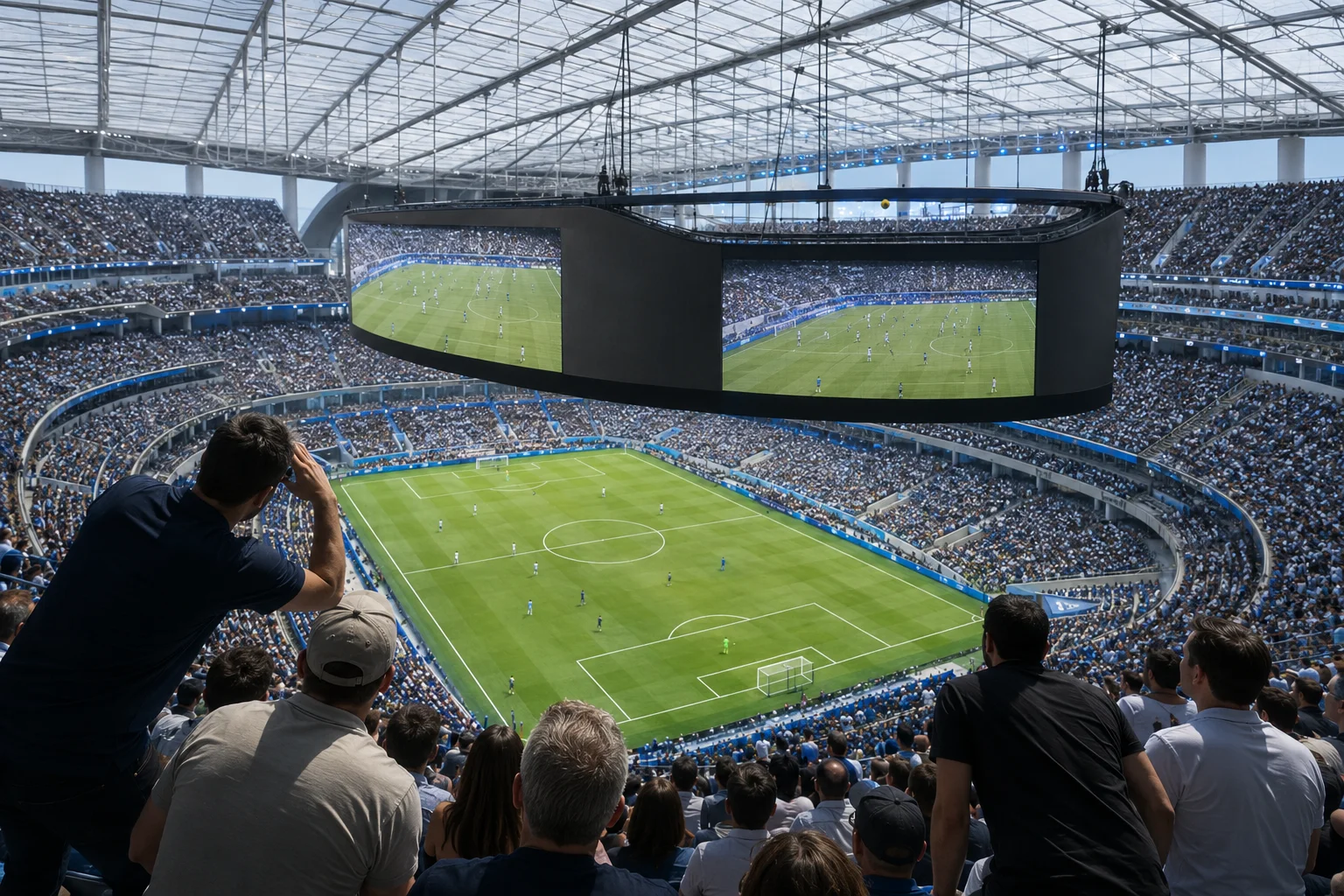
SoFi is the most expensive venue in the tournament and one of the most compromised for football. The roof carries a 70,000-square-foot, two-sided oval video board that hangs directly over the field. From the upper tiers, it blocks the view of the opposite stand and swallows high balls, which is a problem in a sport where the ball spends real time in the air.
SoFi also has the narrowest of the converted fields. Its pitch was too tight for football, and the modifications that widened it removed seats, which is part of why it lost the final to MetLife. The seat-allocation reality is already biting: NBC Los Angeles reported that fans who paid for Category 2 tickets to the United States against Paraguay were assigned to Section 512, near the roof, rather than the mid-level seats they expected. Compare prices with the actual tiers on the SoFi Stadium World Cup tickets page and study the SoFi Stadium seating plan so you know what Category 2 means before you pay.
WhatsApp channel
Sports news straight to your phone
Match updates, on-sale dates and ticket news from 1BoxOffice.
MetLife Stadium, New York: a great final venue with a brutal upper tier
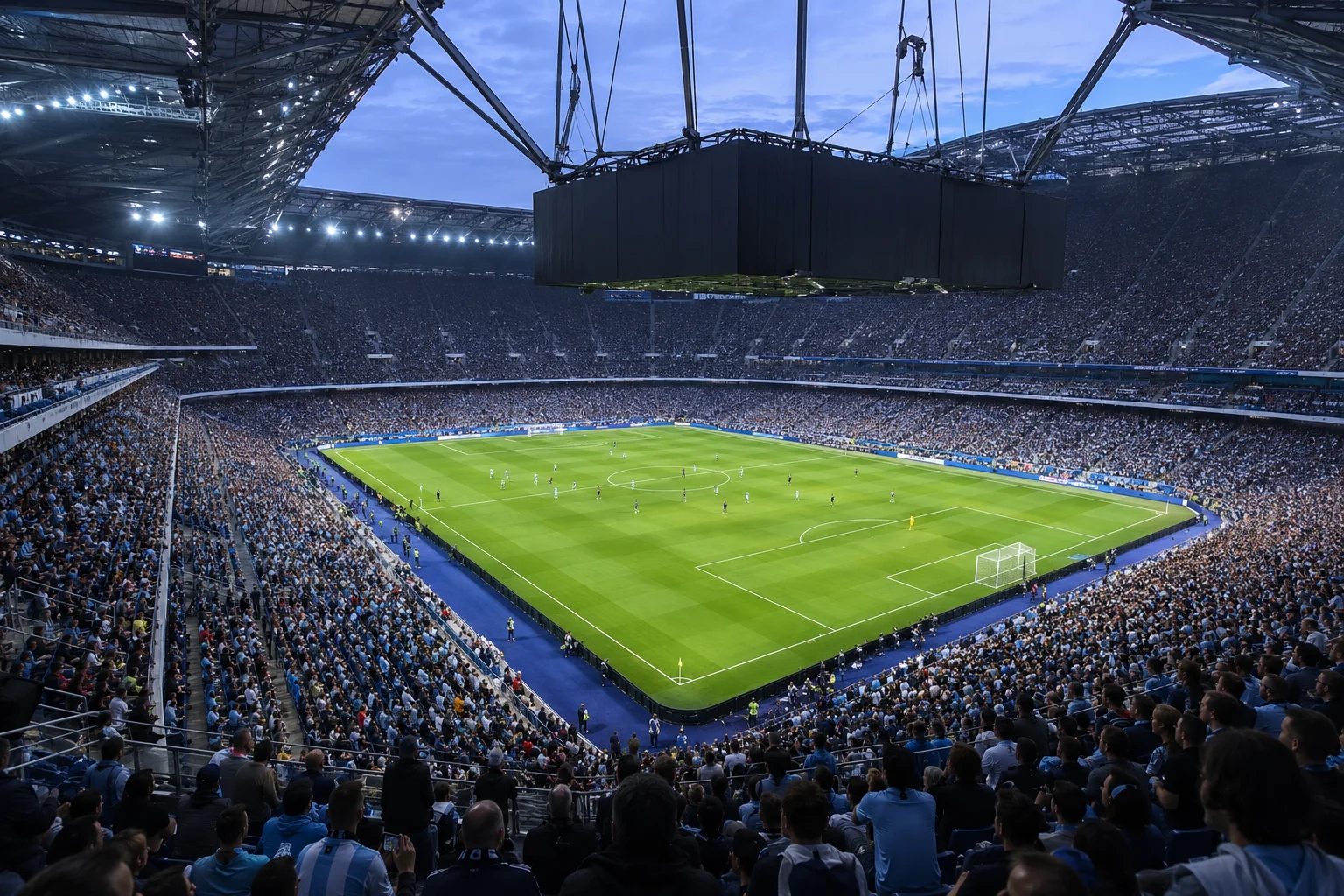
This is the surprise on the list, and it deserves a fair hearing. MetLife hosts the final on 19 July as well as group ties such as France against Senegal, and its lower bowl is genuinely good. After a two-phase renovation that replaced permanent lower seating with a modular system to widen the pitch, the field-level sightlines are some of the cleanest of any converted venue, a point illustrarch made in its venue review.
The problem is everything above that. MetLife seats around 82,500 in a conventional open bowl, and the 300-level corners are among the most distant and steeply raked seats anywhere in the competition. The same conversion that fixed the lower bowl also pushed the touchlines outward, so even decent mid-tier seats sit further from the pitch than they would for an American football game. If you are buying for the final, the difference between a lower-sideline seat and an upper corner is the difference between two completely different occasions, as the MetLife Stadium seating plan makes clear.
Arrowhead Stadium, Kansas City: the old bowl that was never modernised
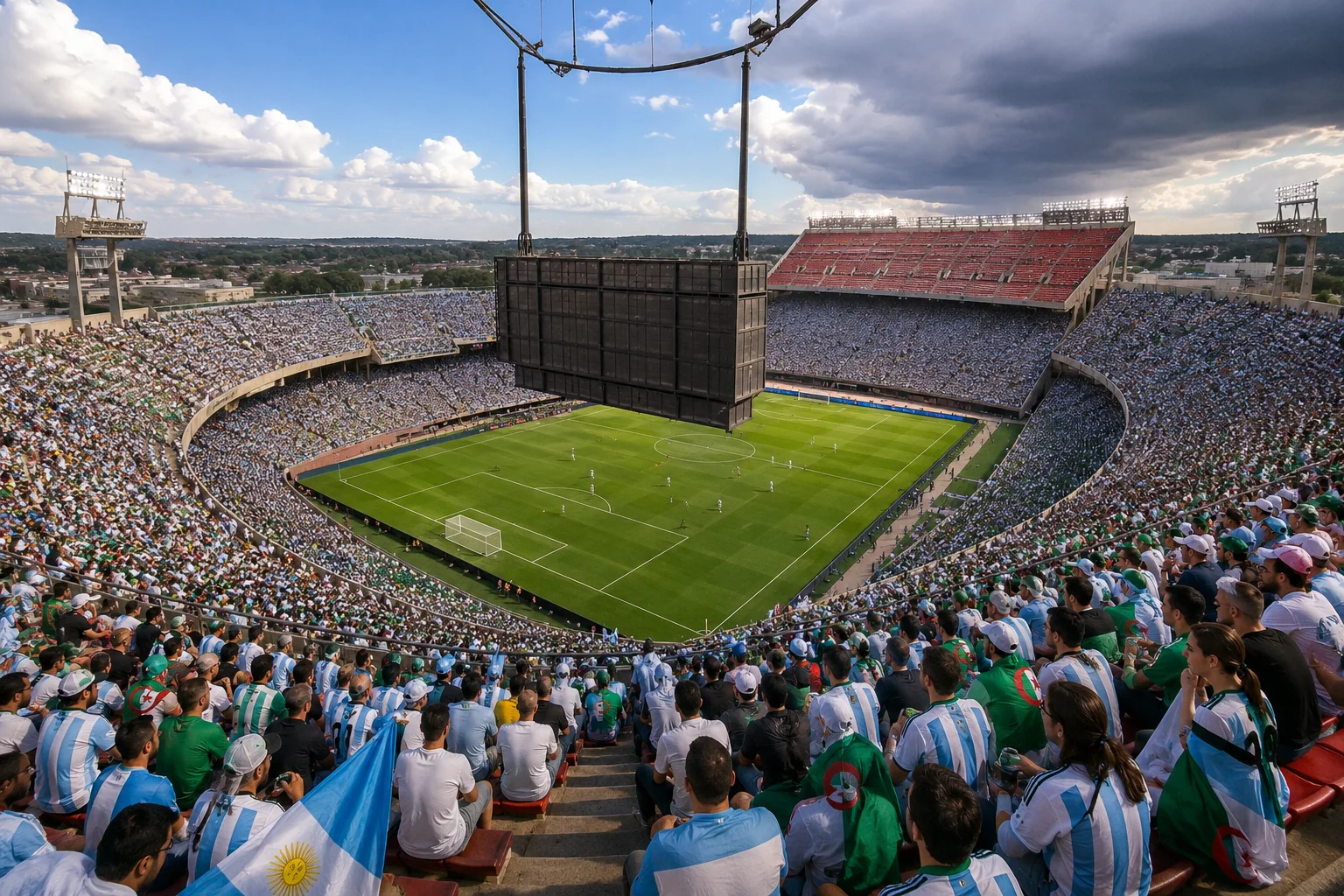
Arrowhead is the holdout, and it still draws a marquee tie with Argentina facing Algeria there. Opened in 1972 and famous as one of the loudest grounds in American sport, it was never enclosed or reshaped for sightlines the way Atlanta or Los Angeles were. Its 300-level corners are the worst seats in the venue for distance and angle, with the steepest rake and the longest sightlines to the far touchline.
Two things make it worse for a summer World Cup. There is no roof, so those high corner seats get full sun and full rain with no cover, and Kansas City weather in June and July is volatile. The bowl was built to channel noise toward a gridiron, not to give a clear line across a wider pitch. The seats sound incredible and see poorly. Price the lower tiers on the Arrowhead Stadium World Cup tickets page and avoid the upper corners on the Arrowhead Stadium seating plan.
Levi's Stadium, San Francisco Bay Area: the sun a renovation could not fix
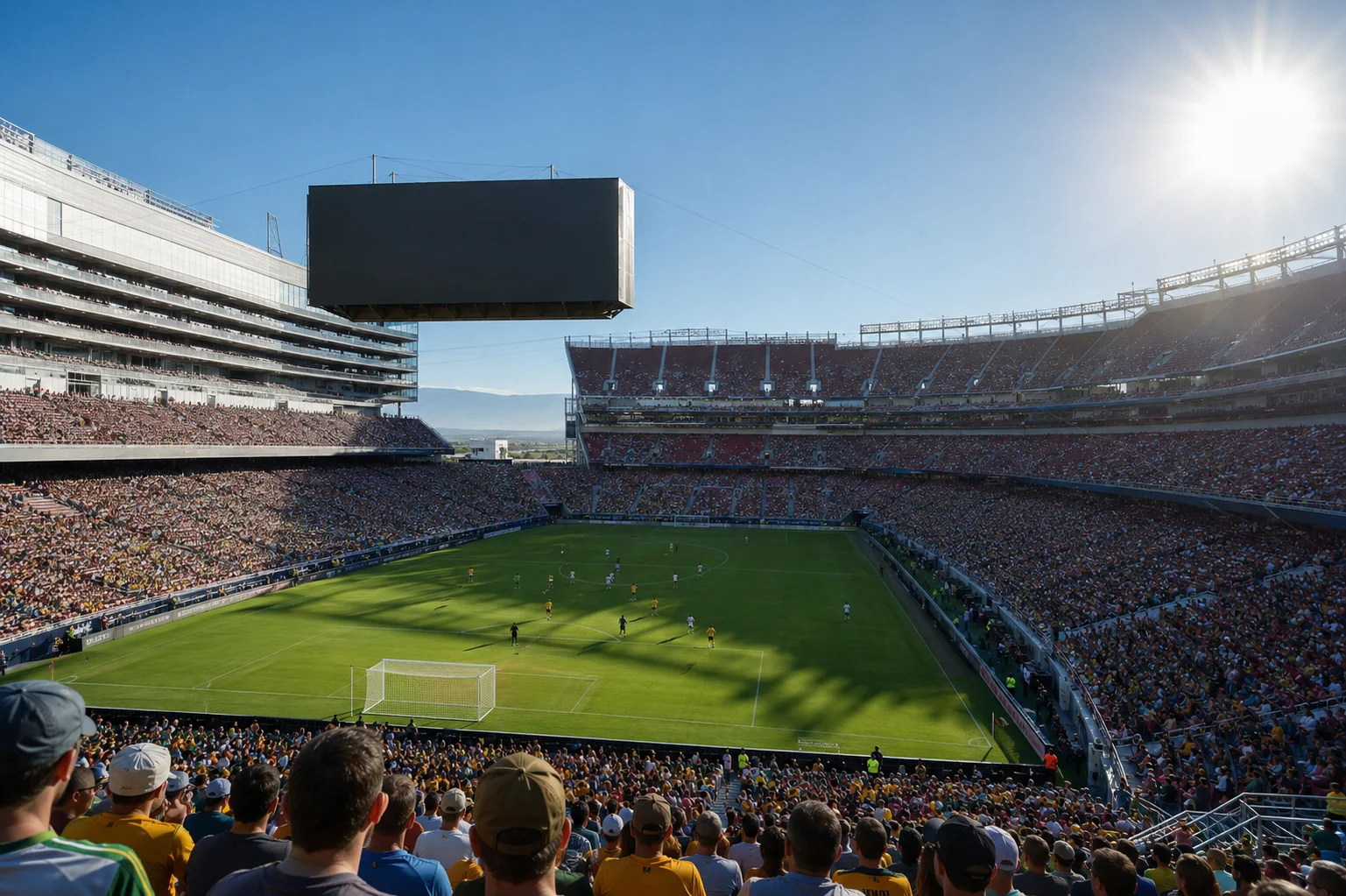
Levi's, renamed San Francisco Bay Area Stadium for the tournament, hosts group ties including Australia against Paraguay. It had a $200m renovation in the past two years, with money going into drainage, irrigation and the Bermuda grass, according to The Athletic. Modular seats also replaced permanent corner spots to make room for a full-width pitch. None of it solved the stadium's original design fault.
The bowl faces the wrong way. The east-side lower seats bake in direct afternoon sun, a complaint San Francisco 49ers supporters have made for years, and a midday or afternoon World Cup kick-off turns a clear sightline into a squint. Industrial misting fans are on standby for heat above 26.7 °C, which tells you how the venue plays in summer. A great seat you cannot look at is not a great seat. Weigh the side and the shade carefully on the Levi's Stadium World Cup tickets page.
The five at a glance
| Venue | Core sightline problem | Seats to avoid |
|---|---|---|
| AT&T Stadium, Dallas | 160ft video board over the pitch, vast upper deck | Standing-room and rear upper level |
| SoFi Stadium, Los Angeles | Oval screen over the field, narrowest converted pitch | Upper tier, Section 512 area |
| MetLife Stadium, New York | Distant, steep upper corners despite a strong lower bowl | 300-level corners |
| Arrowhead Stadium, Kansas City | Unmodernised open bowl, no cover from sun or rain | Sections 301 to 310 and 335 to 345 |
| Levi's Stadium, Bay Area | Direct afternoon sun on the east-side seats | East-facing lower bowl at afternoon kick-offs |
The seats to avoid, and the venues that get it right
Across all five, the same rules apply. The category on a ticket is a price band, not a promise about the view, so always check the exact section and tier. The seats to steer clear of are the upper-tier corners, the standing-room areas at the back and anything behind the goals in a converted bowl, where the action runs away from you down the length of the pitch. At Levi's it also means checking which side you sit on, because the east-facing lower bowl catches the afternoon sun, as the Levi's Stadium seating plan lays out by section.
Not every host venue carries this baggage. A few were either built for football or designed well enough to avoid the conversion trap:
- Mercedes-Benz Stadium in Atlanta, where the retractable roof and a continuous bowl give clean views from almost every angle. See the Mercedes-Benz Stadium World Cup tickets page and check seats on the Mercedes-Benz Stadium seating plan.
- Lumen Field in Seattle, a steep, compact ground that is home to MLS side Seattle Sounders and keeps fans close to the pitch. Prices sit on the Lumen Field World Cup tickets page, with the layout on the Lumen Field seating plan.
- Estadio Akron in Guadalajara, a purpose-built football venue with five tiers, less crowding and strong sightlines throughout, listed on the Estadio Akron World Cup tickets page, with tiers set out on the Estadio Akron seating plan.
FAQs
1. Are the temporary modular seats safe and structurally sound?
-
Yes, the modular systems are engineered installations signed off for the tournament, and the sightline issue is about distance and angle rather than seat safety.
2. Will the stadium roofs be open or closed during matches?
-
Roof status is decided per match for heat and pitch reasons, and some retractable roofs, such as BC Place in Vancouver, stay shut to avoid casting shadows on the grass.
3. Do Mexico's stadiums have better football sightlines than the converted NFL venues?
-
Generally, yes, because Mexico's venues, such as Estadio Azteca, were built for football from the start and never had to be widened from a gridiron the way the converted NFL stadiums did.
4. Can you get a refund if your seat turns out to have a restricted view?
-
A standard unrestricted seat is rarely refundable simply because the view was distant, which is why checking the section before purchase matters so much.
5. Does the temporary grass pitch change where the front rows sit?
-
Yes, widening the pitch to full size pushes the touchlines outward, so front-row seats sit further from the play than they do for an American football game.
Before you book any seat for the tournament, check the tier and the side, not just the price band. 1BoxOffice is a verified marketplace that has operated since 2006 and backs every order with a 150% money-back guarantee, so you can buy the right seat with a cover behind it.
Sources: ESPN, Associated Press, Sports Illustrated, The Athletic and NBC Los Angeles.