In this guide
Round of 16 schedule and venuesThe final bracket and how each tie was settledWhy this is the second knockout round, not the firstHow the bracket is decidedBuying a seat before you know who is playingWhat a Round of 16 ticket costsThe three ways to buy, and what each really involvesConditional tickets and what happens if your team goes outGetting into the stadium with a mobile ticketHow to avoid getting scammedBuying from the United KingdomBuying from the Middle East and North AfricaFrom the last 16 to the finalFAQsThe World Cup Round of 16 runs from Saturday 4 July to Tuesday 7 July 2026, with eight single-elimination ties that cut the field from 32 teams to the last eight. For the first time, this stage arrives as the second knockout round rather than the first, because the 48-team format adds a Round of 32 ahead of it. This guide sets out when each match is played, where and how to buy World Cup Round of 16 tickets without losing money to a fraudster or a cancelled resale order.
Almost every public sale closed months ago, so fans now buy through the organiser's last-minute releases or a resale platform. The current Round of 16 ticket listings are the quickest way to see what is live for each tie and what it costs now that all eight fixtures are named.
Round of 16 schedule and venues
The last 16 occupies four days, from 4 July to 7 July 2026, with two matches each day. The eight winners go through to the quarter-finals, which start on 9 July. From there the bracket runs to the semi-finals on 14 and 15 July, the third-place match in Miami on 18 July and the final at MetLife Stadium on 19 July. Eight different host cities stage a tie, split across the United States, Mexico and Canada. The table below carries the date, the slot, the venue and the local kick-off for all eight matches.
| Date | Match | Tie | Venue | Seating plan | Kick-off (local) |
|---|---|---|---|---|---|
| Sat 4 Jul | 90 | Canada v Morocco | NRG Stadium, Houston | NRG Stadium seating plan | 12:00 PM CDT |
| Sat 4 Jul | 89 | Paraguay v France | Lincoln Financial Field, Philadelphia | Lincoln Financial Field seating plan | 5:00 PM EDT |
| Sun 5 Jul | 91 | Brazil v Norway | MetLife Stadium, New York New Jersey | MetLife Stadium seating plan | 4:00 PM EDT |
| Sun 5 Jul | 92 | Mexico v England | Estadio Azteca, Mexico City | Estadio Azteca seating plan | 6:00 PM CST |
| Mon 6 Jul | 93 | Portugal v Spain | AT&T Stadium, Dallas | AT&T Stadium seating plan | 2:00 PM CDT |
| Mon 6 Jul | 94 | USA v Belgium | Lumen Field, Seattle | Lumen Field seating plan | 5:00 PM PDT |
| Tue 7 Jul | 95 | Argentina v Egypt | Mercedes-Benz Stadium, Atlanta | Mercedes-Benz Stadium seating plan | 12:00 PM EDT |
| Tue 7 Jul | 96 | Switzerland v Colombia | BC Place, Vancouver | BC Place seating plan | 1:00 PM PDT |
All eight ties are now set. Canada meet Morocco in Houston and Paraguay face France in Philadelphia on 4 July, Brazil take on Norway in New York New Jersey and Mexico host England at Estadio Azteca on 5 July, Portugal play Spain in Dallas and the United States meet Belgium in Seattle on 6 July, then Argentina face Egypt in Atlanta and Switzerland meet Colombia in Vancouver on 7 July. The standouts pick themselves: the hosts against the 1966 winners at the Azteca, an Iberian derby that rematches the 2010 last 16, and Messi against Salah after Egypt won their first World Cup knockout tie on penalties. The two matches on 4 July carry an extra layer: both the Houston and Philadelphia grounds sit on Independence Day weekend and are tied to the 250th anniversary celebrations in the United States, so expect heightened demand around them. Estadio Azteca in Mexico City, Match 92, is the largest venue in this round, with MetLife Stadium, Match 91 and the venue for the final on 19 July, close behind.
The final bracket and how each tie was settled
The Round of 32 finished on 3 July and the last-16 field is complete. Each slot was fed by two specific Round of 32 matches, with the winners dropping into a fixed position, and that feeder logic is worth understanding because it runs all the way to the final: win your tie and you already know your next city and date. The table maps every last-16 match to the two ties that decided it.
| Match and venue | Fed by | Tie |
|---|---|---|
| Match 90, Houston | Match 73 and Match 75 | Canada v Morocco |
| Match 89, Philadelphia | Match 74 and Match 77 | Paraguay v France |
| Match 91, New York New Jersey | Match 76 and Match 78 | Brazil v Norway |
| Match 92, Mexico City | Match 79 and Match 80 | Mexico v England |
| Match 93, Dallas | Match 83 and Match 84 | Portugal v Spain |
| Match 94, Seattle | Match 81 and Match 82 | United States v Belgium |
| Match 95, Atlanta | Match 86 and Match 88 | Argentina v Egypt |
| Match 96, Vancouver | Match 85 and Match 87 | Switzerland v Colombia |
If you are following one nation, this is how the routes resolved. The host route delivered first: Mexico won Match 79 and landed in Match 92 at Estadio Azteca, and England completed the tie a day later. Portugal and Spain both won on 2 July and collide in Dallas. The last night of the Round of 32 settled the rest, with Argentina surviving extra time against Cape Verde, Egypt beating Australia on penalties to reach Atlanta and Colombia edging Ghana to join Switzerland in Vancouver. The bigger names are spread across the bracket rather than bunched, which is why marquee ties have surfaced in five different cities.
Why this is the second knockout round, not the first
The name is where most fans trip up. At every World Cup from 1998 to 2022, the Round of 16 was the opening knockout round, the first cut after the groups. In 2026, it is not. The 48-team field sends 32 teams out of the group stage into a Round of 32, and only the 16 winners of that round reach the last 16. So the Round of 16 now sits one rung higher than it used to, between the Round of 32 and the quarter-finals.
That single change reshapes how you plan a trip. A knockout run for your nation is now four matches deep before the final rather than three, and the first elimination game is the Round of 32, not this one. If you have not yet sorted the earlier round, our guide to the Round of 32 dates and tickets covers the stage that decides who even reaches the last 16, and the same buying rules carry across both rounds. The wider World Cup 2026 listings show every round in one place if you are weighing up more than one match.
WhatsApp channel
Sports news straight to your phone
Match updates, on-sale dates and ticket news from 1BoxOffice.
How the bracket is decided
The last-16 bracket is fixed in advance, not drawn live on television. Each Round of 16 slot was assigned its two feeder ties long before the group stage finished, which is how the schedule could list venues and kick-off times against placeholder names. Win your Round of 32 match, and you already know the city, the date and the slot you move into.
What you could not know in advance was the opponent, because it depended on a separate result on the other side of the slot. Match 95 at Mercedes-Benz Stadium showed how it works: four nations were in the running for two places in one tie until Argentina and Egypt came through on the final night. The same logic now points forward, since each last-16 winner already knows its quarter-final city. If you want a sense of the collisions the bracket could throw up on the way to the final, our look at the knockout ties that could shape the draw runs through the most likely heavyweight meetings.
Buying a seat before you know who is playing
This is the single biggest difference from a normal match purchase, and it is where most of the confusion sits. Knockout tickets are sold by match slot, not by team. You are buying Match 92 in Mexico City or Match 95 in Atlanta, and whichever sides qualify are the sides you watch. The organiser attaches the team names once the feeder results are in, but the seat is yours from the moment you pay.
For a neutral, this is easy: pick a city, pick a date and take the fixture you are handed. For a supporter of one nation, it was harder while the bracket was open, because where your team finished changed both the opponent and, in some cases, the venue. Mexico fans saw the clean version of this, since the home win in Match 79 pointed straight to Match 92 at Estadio Azteca and England filled in the opponent a day later. With every tie now named, the guesswork phase of this round is over, and the remaining decisions are price, category and how quickly you move before the confirmed names finish repricing the market.
What a Round of 16 ticket costs
The Round of 16 sits a step above the Round of 32 on price and a long way below the final. Face values run from roughly $170 to $980 before the buyer fee, the equivalent of about £130 to £740 at the late-June 2026 rate of one pound to $1.32. Canadian buyers see a face-value band of around $233 to $808 CAD. Seats fall into four public categories set by how high in the bowl they sit: Category 1 in the lower tier near the halfway line is the dearest, Category 2 and Category 3 sit above and around it, and Category 4 in the upper corners carries the lowest face value. A separate $60 supporter tier exists but is handed out through national federations rather than sold openly, so it is not a price the public can reach.
Two things have pushed real prices well past those face values. The organiser used dynamic pricing for the first time at a World Cup, so prices move with demand like airline fares, and reporting by The Athletic and NPR found that prices for more than 90 of the 104 matches were raised between October 2025 and April 2026, with the three main categories up by an average of 34 per cent. On top of that, primary stock is nearly gone, so most knockout seats now change hands on resale. Late-June resale prices started around $443 and climbed quickly, with Round of 32 seats running roughly $760 to $1,900 and the biggest ties topping $3,000. The table below shows how the last 16 fit into the climb from the first knockout round to the showpiece, using published face-value bands.
| Round | Face-value band (USD) |
|---|---|
| Round of 32 | $105 to $750 |
| Round of 16 | $170 to $980 |
| Quarter-final | $275 to $1,775 |
| Semi-final | $420 to $3,295 |
| Third-place match | $165 to $1,070 |
| Final | $2,030 to $8,680 |
Where a tie lands moves the price as much as the round does. A neutral fixture in a large American bowl tends to hold softer resale than a host-nation match, and a cavernous ground releases more inventory than a tighter one, which can keep mid-tier seats within reach closer to kick-off. One timing point worth knowing: resale prices have tended to dip in the seven to 14 days before a match as sellers offload seats they can no longer use, so patience has often paid off on the lower-profile slots. Check the relevant seating plan before you commit, because the four categories map onto each stadium differently.
The three ways to buy, and what each really involves
There are three legitimate routes to a Round of 16 ticket, and they differ on price, certainty and fees. Demand does not behave the same for every slot either: a tie with Brazil or Argentina in it clears its face-value stock fast, while a low-profile pairing can sit unsold into the final days.
Buying direct at face value
The organiser's last-minute sales phase has been running since 1 April and stays open to the end of the tournament. It is first come, first served, with immediate confirmation and dynamic pricing. This is the only way to pay face value, but live availability for the bigger slots comes and goes as returns and held seats are released, so it rewards patience and quick hands.
The resale exchange run by the organiser
Fans who can no longer attend can relist through the organiser's resale marketplace, which stays open until one hour before kick-off. It charges a fee on both sides, reported at 15 per cent from the buyer and 15 per cent from the seller, so the headline price is not the price you pay. Vancouver and Toronto matches sit under Canadian rules, and the exchange used by Mexican residents is limited to the original price, so the Vancouver slot in this round behaves differently from the United States grounds.
Verified secondary marketplaces
Platforms outside the organiser's own system can be useful once face-value stock is gone, and a large venue such as AT& T Stadium in Dallas tends to carry more resale inventory than a tighter ground. Any seat still has to move through the organiser's app to reach your phone, and these platforms carry the risks covered further down, so read the things to check before buying World Cup tickets first and confirm the exact section, row and seat before you commit.
Conditional tickets and what happens if your team goes out
If you wanted to lock in a last-16 seat for your nation before knowing whether it would get there, the organiser sold conditional supporter tickets for exactly that. The seat is valid only if your team reaches this specific round. If they went out in the group stage or fall in the Round of 32, the ticket is voided and refunded minus a small fee, reported at around $10 in the United States, $15 in Canada and 200 pesos in Mexico.
Two details catch people out. Group-stage matches are never conditional because your team is guaranteed to play them, so the rule only bites from the knockouts onward. And if you hold a conditional ticket for a round, you cannot also buy a regular ticket for that same round, so you cannot double-cover yourself. For a side carrying heavy support, such as Argentina, that mattered right up to the final night of the Round of 32: fans who pre-committed to the Atlanta slot saw their tickets activate only when the extra-time winner went in against Cape Verde.
Getting into the stadium with a mobile ticket
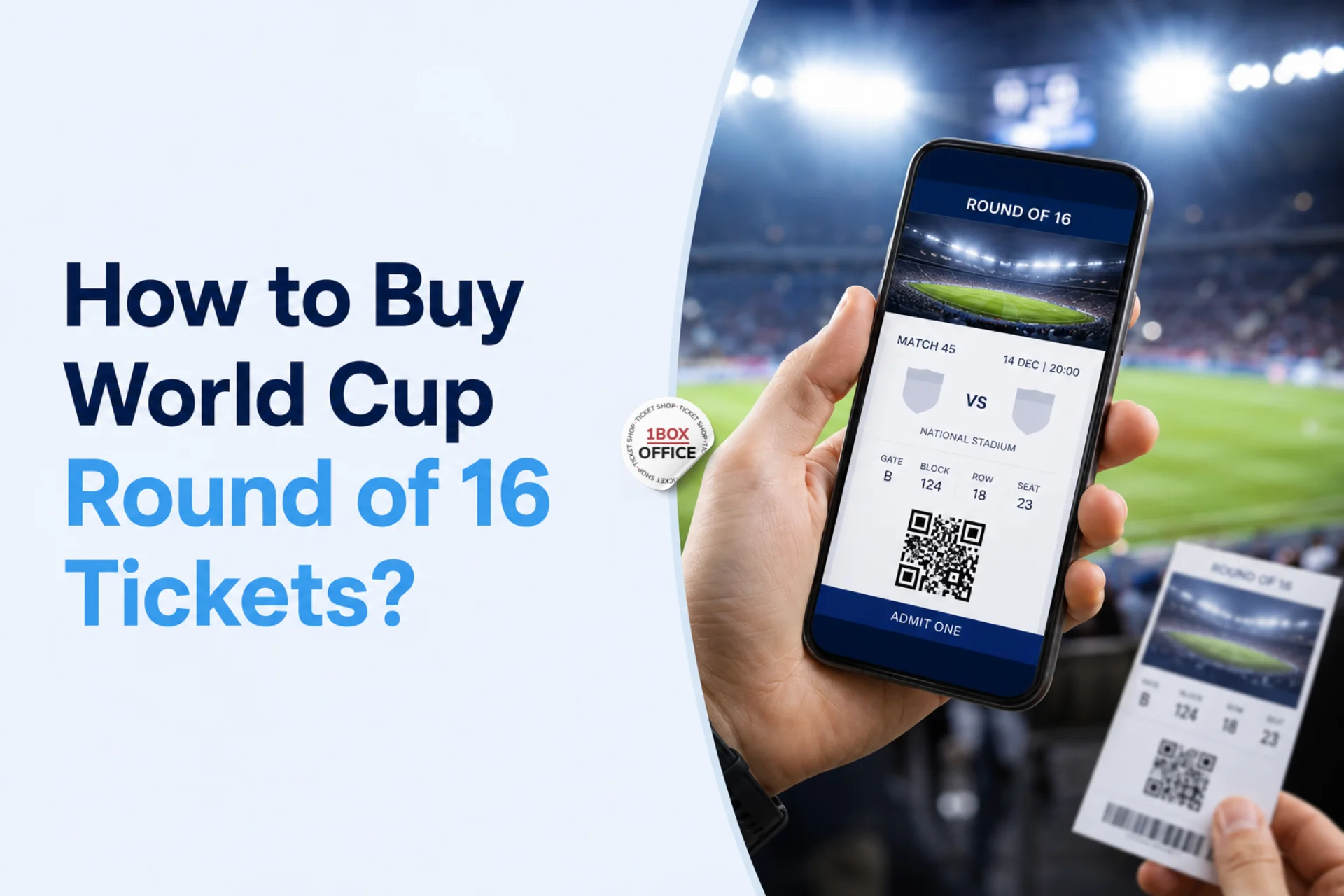
Every Round of 16 ticket is digital. There are no paper tickets, no printed PDFs and no emailed barcodes, and a screenshot will not get you through the gate. The ticket lives in the organiser's app, and the barcode refreshes roughly every 30 seconds, so it cannot be copied. There is no box office at the ground, which makes a forgotten phone or a flat battery a real problem rather than an inconvenience.
The entry process is the same whether you are following a host nation or a first-time qualifier. Each attendee needs a registered identity account with the organiser, and the name on it has to match the government photo identification you carry on the day. That single rule defeats most casual resale, because a ticket bought from a stranger has to be transferred to your account in advance to work at all. If you are unsure how the registration works, our explainer on whether a Fan ID is required to attend walks through the steps and the documents you need.
How to avoid getting scammed
Knockout demand brings the fraudsters out, and the secondary market has seen genuine problems this summer. The biggest slots draw the most fake listings, so a tie with England or Brazil in it is exactly where to slow down and check. Buyers have reported orders cancelled days before a match as prices surged, seats quietly downgraded to a worse part of the ground and listings for tickets the seller never actually held. Where a marketplace promises to make it right, the fix is often at the platform's discretion rather than a guarantee of the seats you paid for. The pricing dispute has drawn the attention of the New York and New Jersey attorneys general, who subpoenaed the organiser in late May over its ticketing.
The defence is simple. Buy at face value through the organiser wherever you can, and if you use a resale platform, confirm the exact seat, insist the transfer goes through the organiser's app and keep a record of everything. Our guide on how to spot a ticket scam covers the warning signs in detail. This is where the 1BoxOffice 150 per cent money-back guarantee earns its place, because a verified order removes the cancellation risk that catches out fans chasing a last-minute knockout seat.
Buying from the United Kingdom
For fans travelling from Britain, the buying process is identical, but two things change the planning. Everything is priced in dollars, so the figure you pay moves with the exchange rate, which sat at $1.32 per pound in early July 2026 and turns the $170 to $980 face-value band into roughly £130 to £740 before fees. The time difference is the other factor. Most of these ties land in the British evening, with the Houston match at 6 pm, and the Atlanta match at 5 pm UK time, but the Mexico City and Seattle slots both kick off at 1 am at home, so a late night is the price of those two.
If you are following England through the knockouts, the route is now set: Mexico at Estadio Azteca on Sunday 5 July, a 1 am UK kick-off that runs into the early hours of Monday morning, in front of the largest and loudest home crowd of the round. It is the hardest away environment England could have drawn at this stage, and demand for the neutral and England allocations reflects that. Pair the buying plan with our host city guides, which cover transport and what to expect in each location, and budget for flights and several nights' accommodation before the ticket, because across a knockout run, the travel will outweigh the seat.
Buying from the Middle East and North Africa
MENA-based supporters have a strong reason to plan, with a record number of nations from the region in the field and more than one capable of a knockout run. The ticketing rules do not change, but visa lead times and long-haul flights make the difference, so the seat is the easy part. There is one quiet advantage for Gulf buyers: the Saudi riyal and the Emirati dirham are pegged to the dollar, so the exchange-rate risk that British fans carry barely applies, and the dollar price is close to a fixed price at home.
The region has two nations in the last 16, and both ties are heavyweight occasions. Morocco, semi-finalists last time, knocked out the Netherlands on penalties and face Canada in Houston on 4 July. Egypt then made history of their own, beating Australia in a shootout for their first World Cup knockout win, and the reward is Argentina in Atlanta on 7 July: Salah against Messi, comfortably the biggest match in Egyptian football for a generation and a fixture that will pull demand from across the region. As with travel from Britain, settle the route and the paperwork first, because a seat with no visa and no flight is of no use to anyone.
From the last 16 to the final
The Round of 16 is the round where the field of 16 becomes the last eight, and the eight winners move straight into the quarter-finals on 9 to 11 July across Boston, Los Angeles, Miami and Kansas City. Win your slot and the bracket carries you towards the semi-finals on 14 and 15 July and, eventually, MetLife Stadium on 19 July. If you are buying ahead, the quarter-final listings are the natural next step once a last-16 result lands, and our guide to buying tickets for the final sets out the pricing and the pitfalls for the biggest match of all.
FAQs
1. Do extra time and penalties come with my ticket if the tie is level?
-
Yes, a single ticket covers the full match, including 30 minutes of extra time and a penalty shootout if the score is still level.
2. Does a Round of 16 ticket also get me into the quarter-final?
-
No, every match needs its own ticket, and the only way to cover several knockout games with one purchase is a hospitality series.
3. How many Round of 16 tickets can one person buy?
-
The standard limit is four tickets per match for each buyer, and the only route past it is a hospitality package.
4. Do I need a visa as well as a ticket to attend?
-
Yes, a ticket is not a visa, so you must arrange the relevant United States, Canadian or Mexican entry permit separately and in good time.
5. Can I resell my seat once the teams are confirmed?
-
You can relist the seat on the organiser's resale marketplace until one hour before kick-off, but you cannot swap it for a different match.
1BoxOffice has handled secondary football tickets since 2006, and its 150 per cent money-back guarantee is built for the kind of last-minute knockout buying the Round of 16 forces on fans when a slot only gets its teams days before kick-off.
Sources: tournament organiser ticketing communications, ESPN, The Athletic, NPR, BBC Sport, Sky Sports, NBC Sports, Associated Press and the Office of the New York State Attorney General.