In this guide
When and where the bronze final is playedFrance vs England: how the pairing was decidedWhat a third-place ticket costsThe price story nobody expectedThe three ways to buy, and what each costs youBuying now the teams are confirmedGetting into Hard Rock Stadium on the dayHow to avoid getting scammedGetting to Miami, and buying from abroadFrom the bronze final to the final in New JerseyFAQsThe World Cup third-place play-off is the strangest ticket of the tournament to price. In the last week of June, resale get-in prices for almost every remaining knockout match fell by around 39 per cent as host nations and marquee names went out, according to resale figures from ticket-tracking firm TicketData reported by Front Office Sports. The one fixture that moved the other way was the bronze final in Miami on Saturday 18 July, where the entry price edged up roughly 5 per cent. That single detail is the heart of how to buy World Cup third-place play-off tickets: this is a match people write off right up to the moment they try to get in.
The public sales that ran through 2025 and early 2026 are closed, so a seat now comes from the organiser's last-minute releases or from resale. The live third-place play-off ticket listings show what is actually available for Match 103 now the field has narrowed to France and England, the two beaten semi-finalists.
When and where the bronze final is played
The play-off for third place is Match 103, kicking off at 5:00pm Eastern on Saturday 18 July 2026 at Hard Rock Stadium in Miami Gardens, which carries the tournament name Miami Stadium for the summer. It is the penultimate match of the World Cup, staged the day before the final at MetLife Stadium in New Jersey on Sunday 19 July. The ground holds roughly 65,000 for the tournament, and its address is 347 Don Shula Drive, Miami Gardens, Florida.
The 5:00pm Saturday slot is the most forgiving of the whole knockout run for anyone travelling, and it is the last World Cup match Miami will host after a group-stage schedule that brought Brazil, Portugal, Colombia and Uruguay to the city. Broadcasters can still adjust knockout kick-offs, so treat the time on your ticket as the one that counts.
France vs England: how the pairing was decided
The pairing is now set. Spain beat France 2-0 at AT&T Stadium in Dallas on Tuesday 14 July, Mikel Oyarzabal converting a first-half penalty won by Lamine Yamal before Pedro Porro doubled the lead just before the hour. A day later in Atlanta, England led Argentina deep into the second half until Enzo Fernández levelled in the 85th minute and Lautaro Martínez struck a late winner to complete a 2-1 comeback. The two beaten semi-finalists meet in Miami on Saturday 18 July.
It is a heavyweight consolation match by any measure. France and England entered the tournament ranked first and fourth in the world, the fixture is a rematch of the 2022 quarter-final France won 2-1 in Qatar, and it is Didier Deschamps' final match after 14 years in charge of Les Bleus. Kylian Mbappé, Jude Bellingham and Harry Kane all get one more World Cup appearance this summer. If you want the mechanics of the round that produced this pairing, our guide to quarter-final tickets runs through it.
What a third-place ticket costs
The bronze final sits low on the World Cup price ladder, well beneath the semi-finals and a long way under the final. Published face values run from about $165 to $1,070 before the buyer fee, the equivalent of roughly £123 to £799 at the early-July 2026 rate of one pound to $1.34. Seats fall into four public categories set by height in the bowl: Category 1 in the lower tier near the halfway line is dearest, Category 2 and Category 3 sit above and around it, and Category 4 in the upper corners carries the lowest face value. A separate $60 supporter tier exists but is handed out through national associations rather than sold openly, so the public cannot reach that figure.
Two forces have pushed real prices past those face values. The organiser used dynamic pricing for the first time at a World Cup, so prices move with demand in the manner of airline fares, and reporting by The Athletic and NPR found that prices for more than 90 of the 104 matches were raised between October 2025 and April 2026, with the three main categories up by an average of 34 per cent. On top of that, primary stock is nearly gone, so most knockout seats now change hands on resale, where the figure paid runs higher again. The table below shows where the play-off sits on the climb from the first knockout round to the showpiece, using published face-value bands.
| Round | Face-value band (USD) |
|---|---|
| Round of 32 | $105 to $750 |
| Round of 16 | $170 to $980 |
| Quarter-final | $275 to $1,775 |
| Semi-final | $420 to $3,295 |
| Third-place play-off | $165 to $1,070 |
| Final | $2,030 to $8,680 |
Notice that the play-off band starts lower than the round of 16 at its floor, which is why it reads as the value pick of the knockouts. The four categories map onto each stand differently, so check the Hard Rock Stadium seating plan before you commit, and if you are weighing the play-off against an earlier-round seat, the round-of-16 listings give a sense of how the ladder builds.
WhatsApp channel
Sports news straight to your phone
Match updates, on-sale dates and ticket news from 1BoxOffice.
The price story nobody expected
Here is why the bronze final behaves oddly. Through late June the resale market softened right across the bracket as the tournament lost its hosts and its heavyweights, and average round-of-32 entry prices fell from about $2,040 to $1,245 inside a week on TicketData's numbers. Of the fixtures still to be played, the third-place match was the outlier: the only one whose entry price rose rather than fell. It is a guaranteed late-stage knockout in a destination city, and unlike the ties that lost their big names, it cannot lose its appeal because its teams are simply the two best sides that fall in the semis.
The practical read is that you should not assume this seat eases in price the way most knockout tickets have. In early July, entry prices on the larger third-party marketplaces sat well above the top face value, with the lowest listings clustering somewhere between roughly $940 and $1,950 depending on the platform and the seat, and averages running into the low thousands. That step up duly arrived. Once France dropped into the fixture, ticket-tracking firm SeatPick measured the average resale price climbing 31 per cent in three days to about $2,313, with the lowest listing rising from $841 to $1,106 by 14 July. England's arrival a day later pushed get-in prices on the major marketplaces to between roughly $1,180 and $1,230 by 16 July. Those are asking prices on a live market and they move by the hour, a pattern our look at the most likely knockout ties anticipated.
The three ways to buy, and what each costs you
There are three legitimate routes to a bronze-final seat, and they differ on price, certainty and fees.
Buying direct at face value
The organiser's last-minute sales phase has run since 1 April and stays open to the end of the tournament. It is first come, first served, with immediate confirmation and dynamic pricing, and it is the only way to pay face value. Availability comes and goes as returns and held seats are released, often in the small hours United States time, so it rewards patience and a quick hand once a batch opens. Batches have tended to land at the start of a new round, and with the semi-finals now complete the window for play-off releases is open, so check the portal frequently between now and Saturday.
The resale exchange run by the organiser
Fans who can no longer attend can relist through the organiser's resale marketplace, which stays open until one hour before kick-off. It charges a fee on both sides, reported at 15 per cent from the buyer and 15 per cent from the seller, so the headline price is not the figure you pay. There is no price cap on these listings, and because the match is in the United States, sellers can and do list above face value. The upside is certainty: the ticket is reissued into your own account, so it cannot be a seat the seller never held.
Verified secondary marketplaces
Platforms outside the organiser's own system are useful once face-value stock has gone, and a large ground such as Hard Rock Stadium tends to carry more resale inventory than a tighter one. Any seat still has to move through the organiser's app to reach your phone, and these platforms carry the risks set out further down, so read our notes on the things to check before buying World Cup tickets first and confirm the exact section, row and seat before you pay.
Buying now the teams are confirmed
The uncertainty that shaped this market all tournament is gone. The bronze final is France vs England, and every ticket is simply a seat at the fixture, valid whoever you support. There was never a conditional supporter route for this round because nobody buys a seat hoping their team loses a semi-final, so what remains is a straight race between buyers and a shrinking pool of inventory.
The window between confirmation and kick-off is three days, and so far this market has punished waiting rather than rewarded it, with resale asking prices stepping up twice since 14 July. The organiser's last-minute portal is the only place face value survives, so run both routes at once: watch the portal for releases and track resale as a fallback. If you would rather aim at the trophy match instead, the semi-final buying guide covers the round that sent Spain and Argentina to New Jersey.
Getting into Hard Rock Stadium on the day
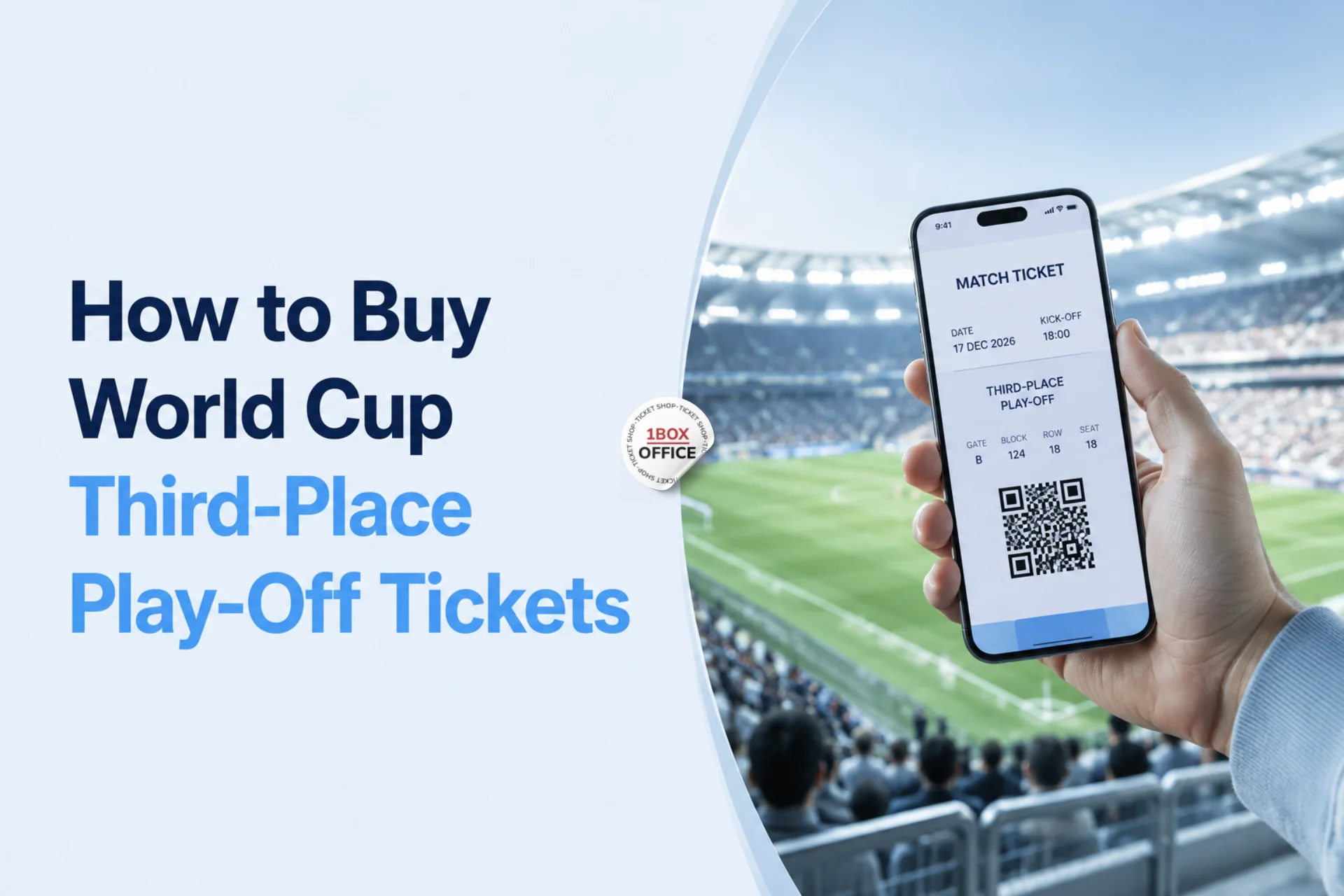
Every ticket is digital and lives in the organiser's app. There are no paper tickets, no printouts and no screenshots: a photograph of a barcode will not scan you in. The entry code is dynamic and refreshes every minute or so, and it only appears a few hours before the gates open, which is a deliberate defence against forged and duplicated tickets. Keep your phone charged, turn the screen brightness up and avoid a dark theme at the reader.
Gates open three hours before kick-off, and the ground runs a clear-bag policy with a size limit around 12 by 6 by 12 inches. No tickets are sold at the stadium on the day, so arriving without one means not getting in. A few things worth sorting before you travel:
- Pre-buy parking if you are driving, as passes are tied to your ticket account and sell out, and use the free Miami Game Day Express shuttles from the Metrorail hubs if you are not.
- Carry the passport or photo identification linked to your account, because entry can be refused if the ticket and the person do not match.
- Make sure every person in your group, including older children, has their own ticket and their own account, as there is no shared entry.
Whether a separate identity credential is needed to attend has been a running question this tournament, and our explainer on whether a Fan ID is required sets out where that stands.
How to avoid getting scammed
Knockout demand brings the fraudsters out, and the secondary market has seen real problems this summer. In late May, the FBI's Internet Crime Complaint Center warned that criminals had built dozens of fake websites impersonating the organiser's own ticketing site, using small misspellings and odd domain endings to harvest names, addresses and banking details from fans searching for seats. Buyers have also reported orders cancelled days before a match as prices surged, seats quietly downgraded to a worse part of the ground and listings for tickets the seller never actually held. The pricing dispute has drawn in the New York and New Jersey attorneys general, who subpoenaed the organiser in late May over its ticketing.
The defence is straightforward. Type the address into your browser yourself rather than following an advert or a link, buy at face value through the organiser wherever you can, and on any resale platform confirm the exact seat, insist the transfer runs through the organiser's app and keep a record of everything. Never pay a stranger by bank transfer, gift card or cryptocurrency, because those routes leave nothing to recover. Our guide on how to spot a ticket scam covers the warning signs in full.
Getting to Miami, and buying from abroad
For British fans, the seat is the easy part. The sterling price of a bronze-final ticket swings with the pound, and at the early-July 2026 rate close to $1.34 a $500 seat lands near £373, so a firmer pound quietly cuts the cost and a weaker one adds to it. Overseas visitors travelling to the United States should sort entry authorisation early, as approval and long-haul flights take longer to arrange than the ticket does, and a seat with no flight and no paperwork is no use to anyone. Miami itself is a straightforward base, and our host city guide covers where to stay and how to move around.
Supporters across the Middle East and North Africa still have their own quiet advantage. The Saudi riyal and the Emirati dirham are pegged to the dollar, so the exchange-rate risk British buyers carry barely applies and the dollar price is close to a fixed price at home. No regional side made the last four, with Morocco falling to France in the quarter-finals, but Les Bleus carry a strong following across the region and the fixture remains the most affordable late-stage seat of the tournament for anyone pricing in dirhams or riyals.
From the bronze final to the final in New Jersey
The play-off is the last act before Spain and Argentina decide the trophy 24 hours later and 1,200 miles north. If you are building a finals-weekend trip, the two matches are separate purchases at separate grounds, so a Miami seat does not carry to New Jersey. The MetLife Stadium listings cover the final venue, and our guide to buying tickets for the final runs through a market that behaves very differently to this one, with far higher face values and far tighter supply.
Recent bronze finals are a reminder that this is not a dead rubber. Croatia edged Morocco 2-1 in 2022 and Belgium beat England 2-0 in 2018, both competitive matches between sides with a point to prove and, for some players, a last World Cup appearance to mark.
FAQs
1. Do children need their own ticket for the third-place match?
-
Yes, every attendee occupying a seat needs their own ticket and linked account, including infants, as there is no lap-child exemption for World Cup matches.
2. What happens to my ticket if the match goes to extra time or penalties?
-
Your ticket covers the full match at no extra cost, and a level bronze final goes to extra time and then a penalty shoot-out to decide third place.
3. Is hospitality available for the bronze final?
-
Yes, single-match hospitality packages that pair a premium seat with lounge dining are sold for the play-off, at prices well above a standard ticket.
4. Can I buy a bronze-final ticket and a final ticket on one order?
-
No, the two matches are on different days at different stadiums, so each is a separate ticket bought for its own fixture.
5. How many bronze-final tickets can one person buy?
-
Up to four tickets per match through the organiser, within an overall household cap across the tournament, with larger groups pointed towards hospitality.
1BoxOffice has handled secondary football tickets since 2006, and its 150 per cent money-back guarantee is built for exactly the kind of last-minute knockout buying the bronze final forces on fans, when a fixture learned its two teams only three days before kick-off.
Sources: tournament organiser ticketing communications, ESPN, The Athletic, NPR, NBC Sports, FOX Sports, Front Office Sports, TicketData, Associated Press, the FBI Internet Crime Complaint Center and the Office of the New York State Attorney General.