In this guide
All 15 Facts at a Glance1. A Railway Works Team Called Newton Heath2. A £2,670 Debt Created the Name Manchester United3. Why Manchester United Are Called the Red Devils4. Old Trafford Opened in 1910 and Became the Theatre of Dreams5. The Busby Babes and the Munich Air Disaster6. First English Club to Win the European Cup7. Sir Alex Ferguson Won 38 Trophies in 26 Years8. The 1999 Treble Was Sealed in Stoppage Time9. 20 League Titles, Now Level With Liverpool10. How Many Trophies Manchester United Have Won11. Rooney Scored the Most Goals, Giggs Played the Most Games12. A Homegrown Player in Every Squad Since 193713. Who Owns Manchester United14. Manchester United's Proposed 100,000-Seat Stadium15. Old Trafford's Record Crowd Was Not for a United GameFrequently Asked QuestionsA football club formed by railway workers in 1878 now plays at a stadium with more than 74,000 seats and is planning one that holds 100,000. These 15 Manchester United facts trace how that happened, from a debt of £2,670 that forced a change of name to a trophy count that rival fans still argue about in 2026.
Article Summary: Manchester United began as Newton Heath LYR in 1878, took its current name in 1902 and has won 20 English league titles, 13 FA Cups and three European Cups. The club plays at Old Trafford, is controlled by the Glazer family with INEOS holding about 29% and plans a 100,000-seat stadium about 350 metres away.
- Manchester United have won 13 Premier League titles, all under Sir Alex Ferguson, out of 20 English league titles in total.
- Wayne Rooney is Manchester United's record goalscorer with 253 goals, and Ryan Giggs holds the appearance record with 963 games.
- The "Red Devils" nickname was borrowed from Salford rugby league club, which earned it on a tour of France in 1934.
- Manchester United reported record revenue of £677.6m for 2025-26 but still made a pre-tax loss of almost £47m.
- Old Trafford's record crowd of 76,962 came in 1939 at an FA Cup semi-final that did not involve Manchester United.
Each fact below has been checked against the club's own records, the Premier League and quality press, with the figures correct as of November 2026. If the history makes you want to see the place for yourself, our Manchester United tickets cover every home fixture of the 2026-27 season.
All 15 Facts at a Glance
| # | Fact | Key figure |
|---|---|---|
| 1 | Founded by railway workers as Newton Heath LYR | 1878 |
| 2 | Rescued from debt and renamed Manchester United | £2,670 owed in 1902 |
| 3 | The Red Devils nickname came from rugby league | Salford, 1934 |
| 4 | Old Trafford opened and became the Theatre of Dreams | 19 February 1910 |
| 5 | The Busby Babes and the Munich air disaster | 23 killed, eight of them players |
| 6 | First English winners of the European Cup | 4-1 v Benfica, 1968 |
| 7 | Sir Alex Ferguson's 26 years in charge | 38 trophies |
| 8 | The 1999 Treble | Two goals in stoppage time |
| 9 | 20 league titles, now level with Liverpool | 13 in the Premier League era |
| 10 | The full trophy cabinet | 68 honours, including 21 Community Shields |
| 11 | Rooney's goals and Giggs' appearances | 253 goals, 963 games |
| 12 | An academy graduate in every squad since 1937 | More than 4,000 games |
| 13 | Who owns Manchester United | INEOS about 29% |
| 14 | The proposed 100,000-seat stadium | 2035 ambition, no fixed date |
| 15 | Old Trafford's crowd record and the fight for tickets | 76,962 in 1939 |
1. A Railway Works Team Called Newton Heath
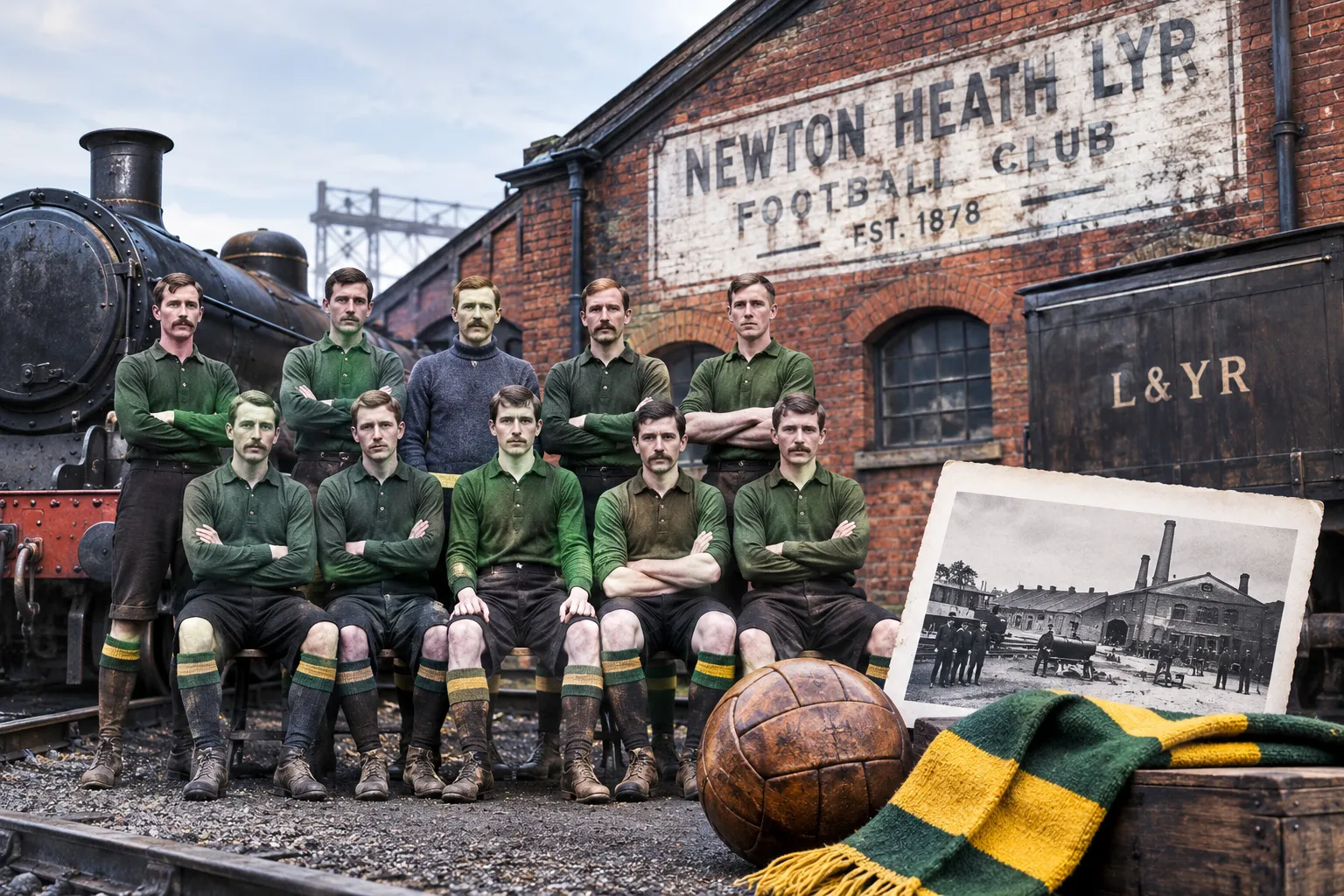
Manchester United started life in 1878 as Newton Heath LYR, a works side formed by the carriage and wagon department of the Lancashire and Yorkshire Railway depot in north-east Manchester. Their earliest recorded match, on 20 November 1880, ended in a 6-0 defeat to Bolton Wanderers' reserves.
Newton Heath's earliest colours remain disputed. Neither the club's own kit research nor historian Gary James has found contemporary evidence that the side wore green and gold against Bolton in 1880, although those colours were worn at times during the club's early years. The railway initials were dropped in 1892, the year Newton Heath joined the Football League, and green and gold scarves returned to the stands in 2010 as supporters' protest against the Glazer family's ownership.
2. A £2,670 Debt Created the Name Manchester United
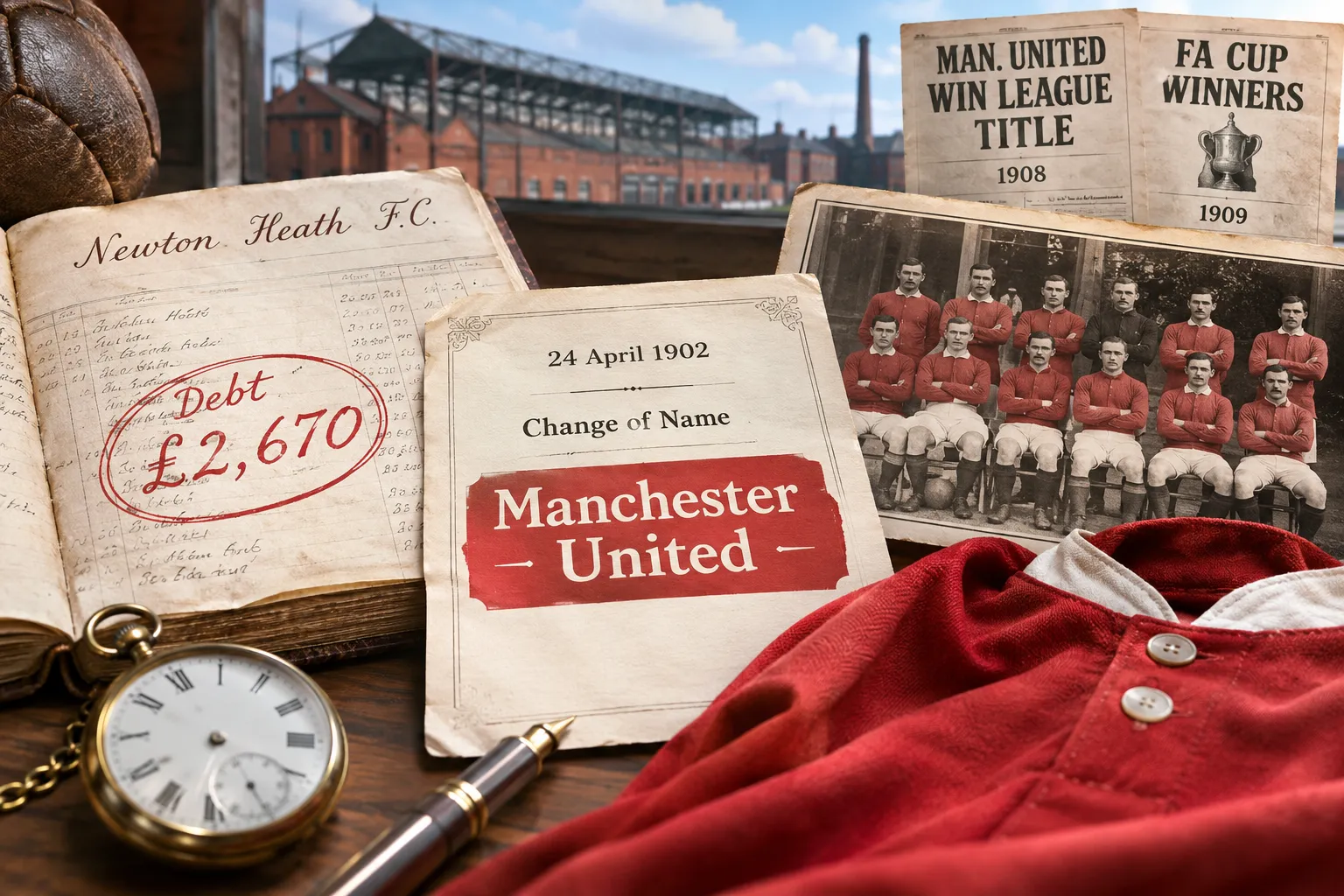
By January 1902 Newton Heath owed £2,670 and faced a winding-up order. Club captain Harry Stafford found four local businessmen, among them brewery owner John Henry Davies, who each invested £500 to keep the club alive.
The rescue brought a new identity. Manchester Celtic and Manchester Central were both considered before the club settled on Manchester United on 24 April 1902, switching to red shirts at the same time. Davies' money paid off quickly: United won their first league title in 1908 and the FA Cup in 1909, then moved into a new ground he funded.
WhatsApp channel
Sports news straight to your phone
Match updates, on-sale dates and ticket news from 1BoxOffice.
3. Why Manchester United Are Called the Red Devils
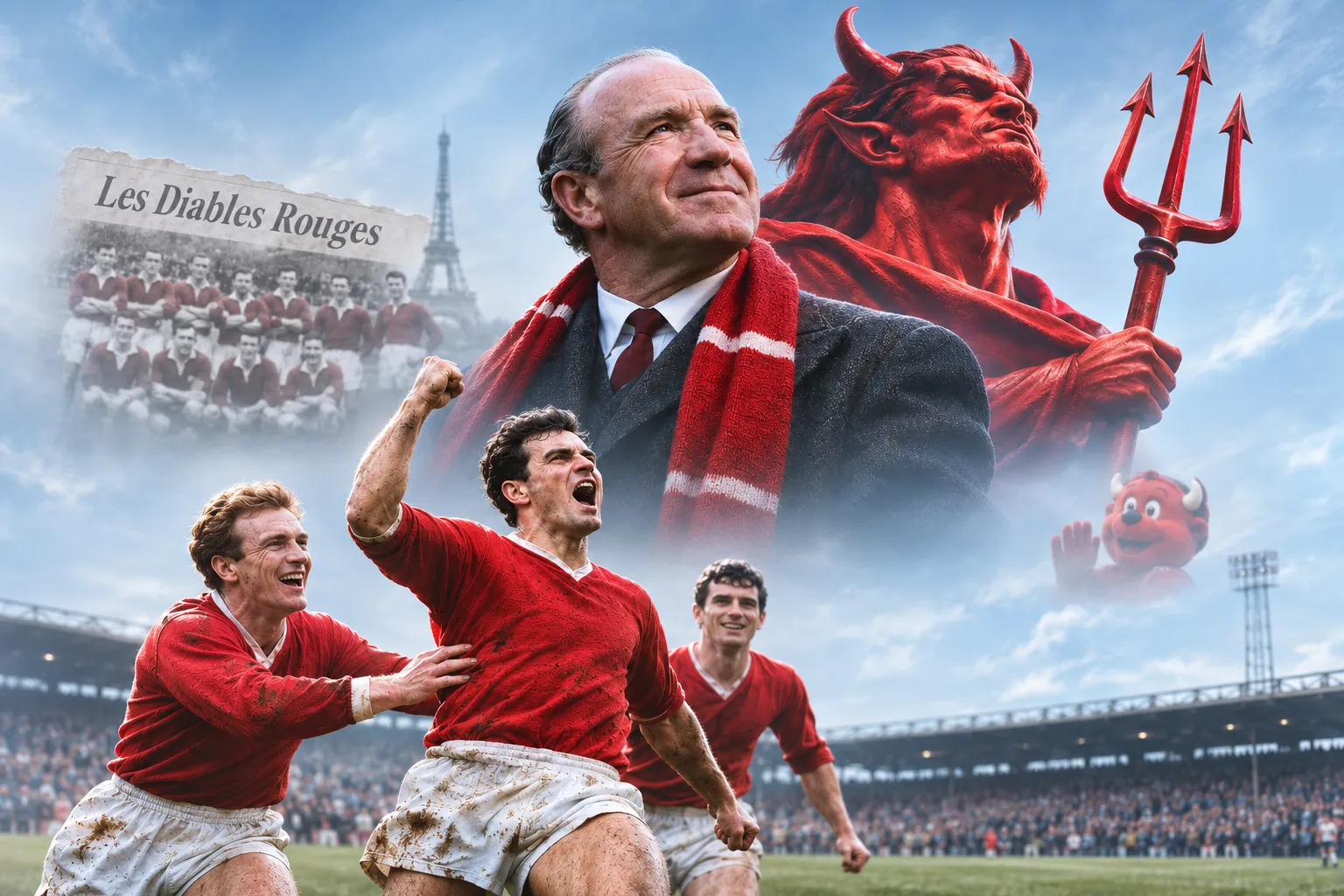
Manchester United borrowed the nickname from the other side of the River Irwell. Salford's rugby league team toured France in 1934 and French newspapers called them "Les Diables Rouges" because of their red shirts.
Sir Matt Busby liked the idea of a name that sounded more intimidating than "Busby Babes", a label that had become painful after 1958. He adopted "Red Devils" in the 1960s, the devil started appearing on match programmes and scarves, and it was added to the club crest in the early 1970s. The club mascot, Fred the Red, is a direct descendant of that decision.
4. Old Trafford Opened in 1910 and Became the Theatre of Dreams
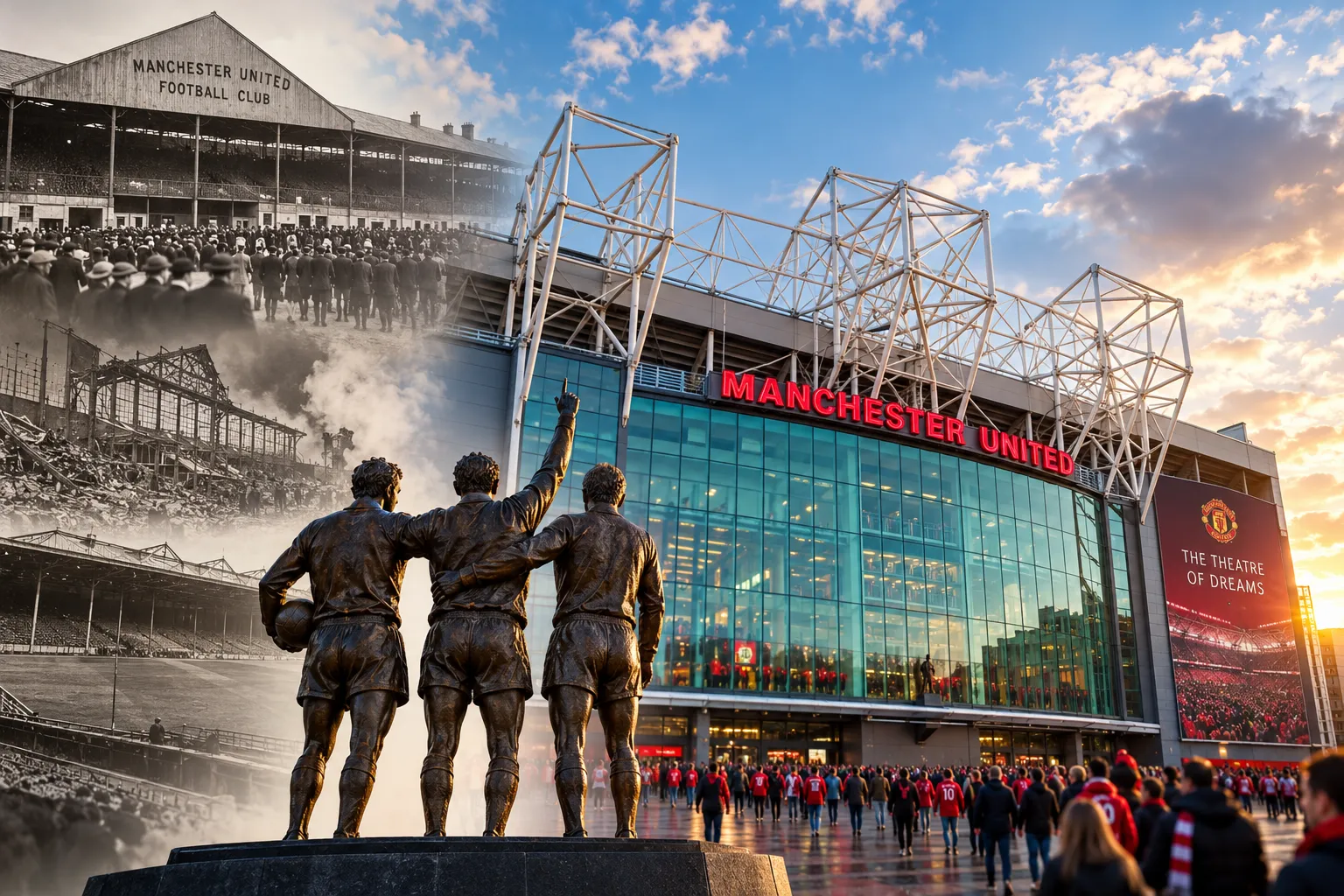
Old Trafford was designed by Scottish architect Archibald Leitch and opened on 19 February 1910, when Liverpool spoiled the occasion with a 4-3 win. German bombing during the Second World War badly damaged the ground in March 1941, and United played home games at Manchester City's Maine Road until 1949.
Sir Bobby Charlton gave the stadium its "Theatre of Dreams" nickname. The Premier League lists its capacity at 74,158 for 2026-27, making it the largest club ground in the United Kingdom. Where you sit inside it changes the experience a great deal, which is why our guide to the best and worst seats at Old Trafford goes stand by stand, alongside the full Old Trafford seating plan.
5. The Busby Babes and the Munich Air Disaster
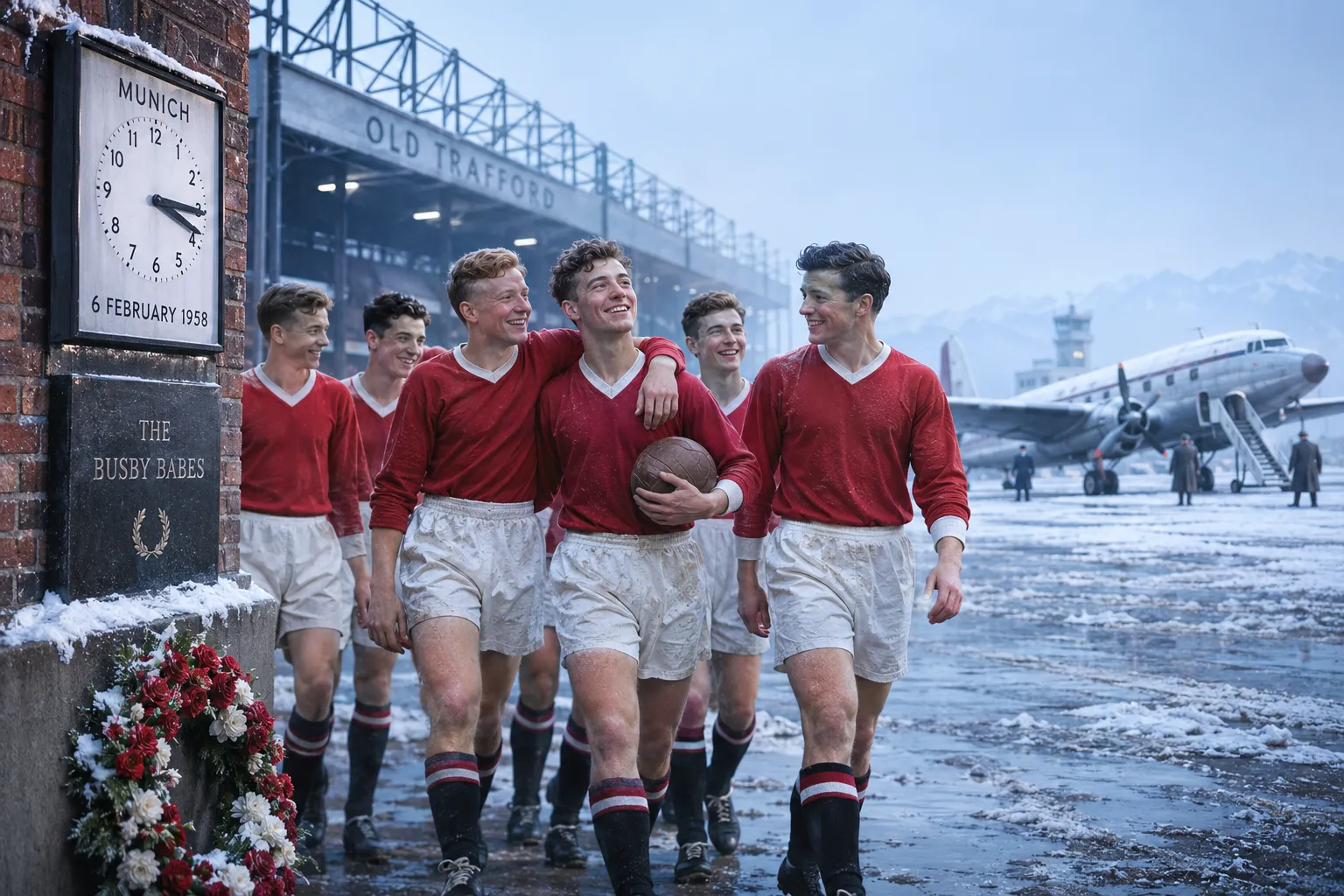
Matt Busby became manager in 1945 and built a side so young that the press called them the Busby Babes. They won the league in 1956 and 1957 with an average age of about 22, and in 1956-57 United became the first English club to enter the European Cup.
On 6 February 1958 the team was flying home from a European Cup quarter-final against Red Star Belgrade when their plane crashed on its third attempt to take off from a slush-covered runway in Munich. Twenty-three of the 44 people on board died, including eight players:
- Geoff Bent, Roger Byrne, Eddie Colman and Mark Jones
- Duncan Edwards, who died in hospital 15 days after the crash
- David Pegg, Tommy Taylor and Liam "Billy" Whelan
Busby survived serious injuries. The Munich clock on the south-east corner of Old Trafford is marked with the date of the crash, and the club holds a memorial every 6 February.
6. First English Club to Win the European Cup
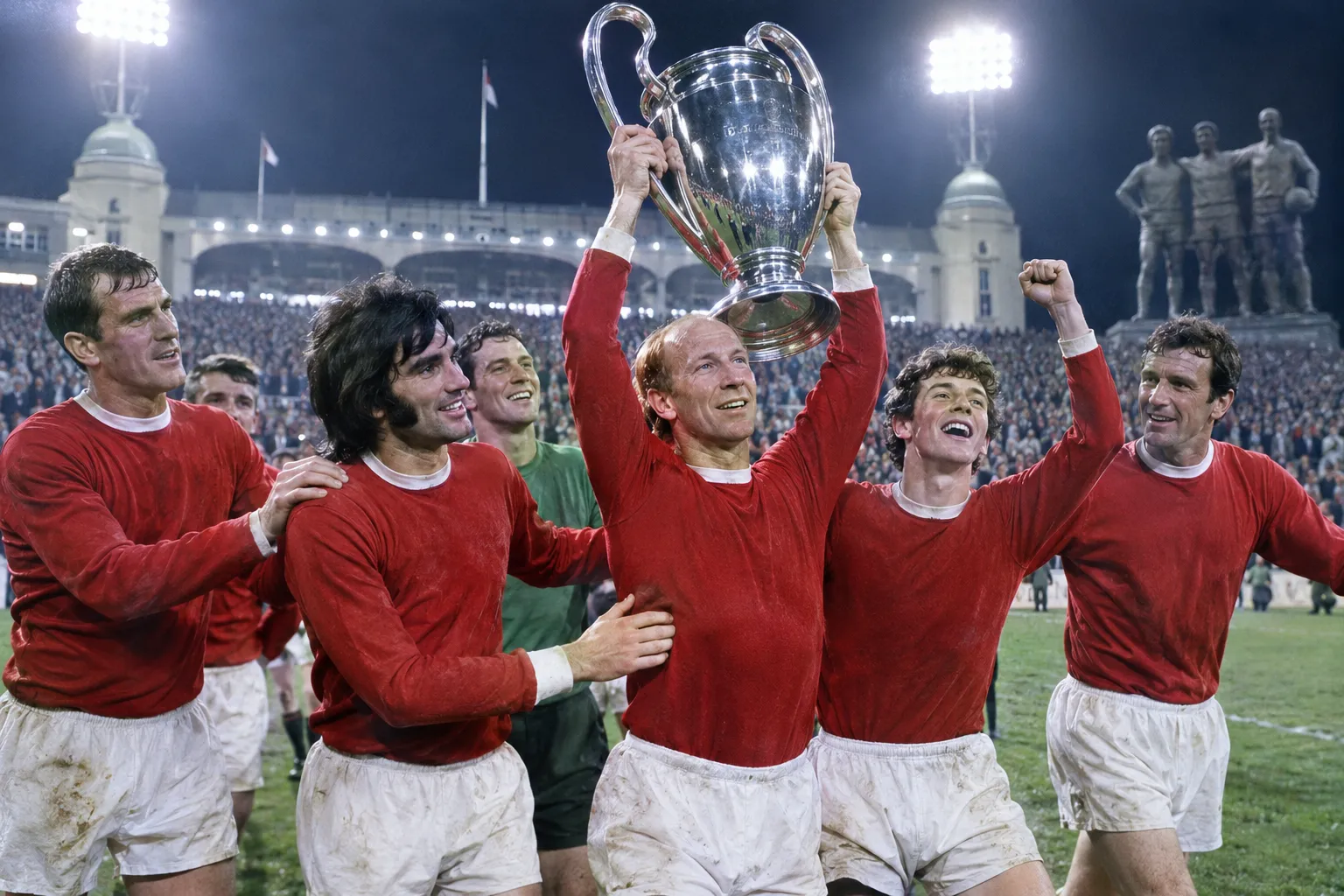
Ten years after Munich, United beat Benfica 4-1 after extra time at Wembley on 29 May 1968 to become the first English winners of the European Cup. Bobby Charlton scored twice, George Best added one and Brian Kidd scored on his 19th birthday.
Charlton and Bill Foulkes both survived Munich and both played that night. United's famous Trinity comprised three European Footballers of the Year: Denis Law, Bobby Charlton and George Best. Law missed the 1968 final through injury, but all three are commemorated by the United Trinity statue outside the East Stand. United have since added the trophy in 1999 and 2008, and in 2026-27 the club is back in the Champions League for the first time since 2023-24.
7. Sir Alex Ferguson Won 38 Trophies in 26 Years
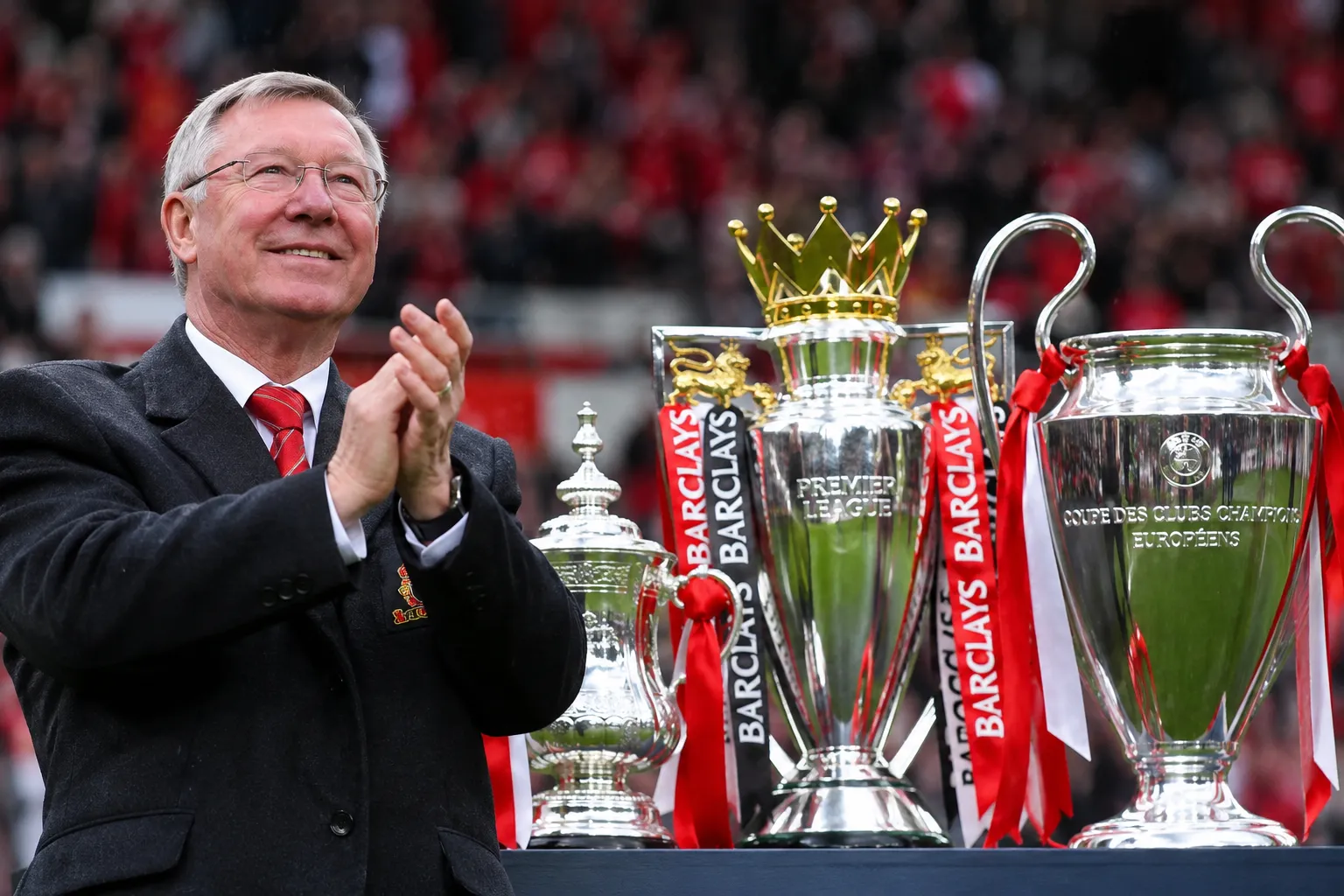
Alex Ferguson arrived from Aberdeen on 6 November 1986 and did not win the league until 1993, his seventh season. When he retired in May 2013 he had won 38 trophies, a record no manager of an English club has matched.
| Competition | Trophies under Ferguson |
|---|---|
| League titles | 13 |
| FA Cup | 5 |
| League Cup | 4 |
| European Cup / Champions League | 2 (1999, 2008) |
| Cup Winners' Cup, Super Cup, Intercontinental Cup, Club World Cup | 1 each |
| Community Shield | 10 |
| Total | 38 |
Every one of United's 13 Premier League titles came under Ferguson. His four League Cup wins came in 1992, 2006, 2009 and 2010, and United have lifted the EFL Cup twice more since, in 2017 and 2023. The club has changed manager repeatedly since 2013 without winning the league again.
8. The 1999 Treble Was Sealed in Stoppage Time
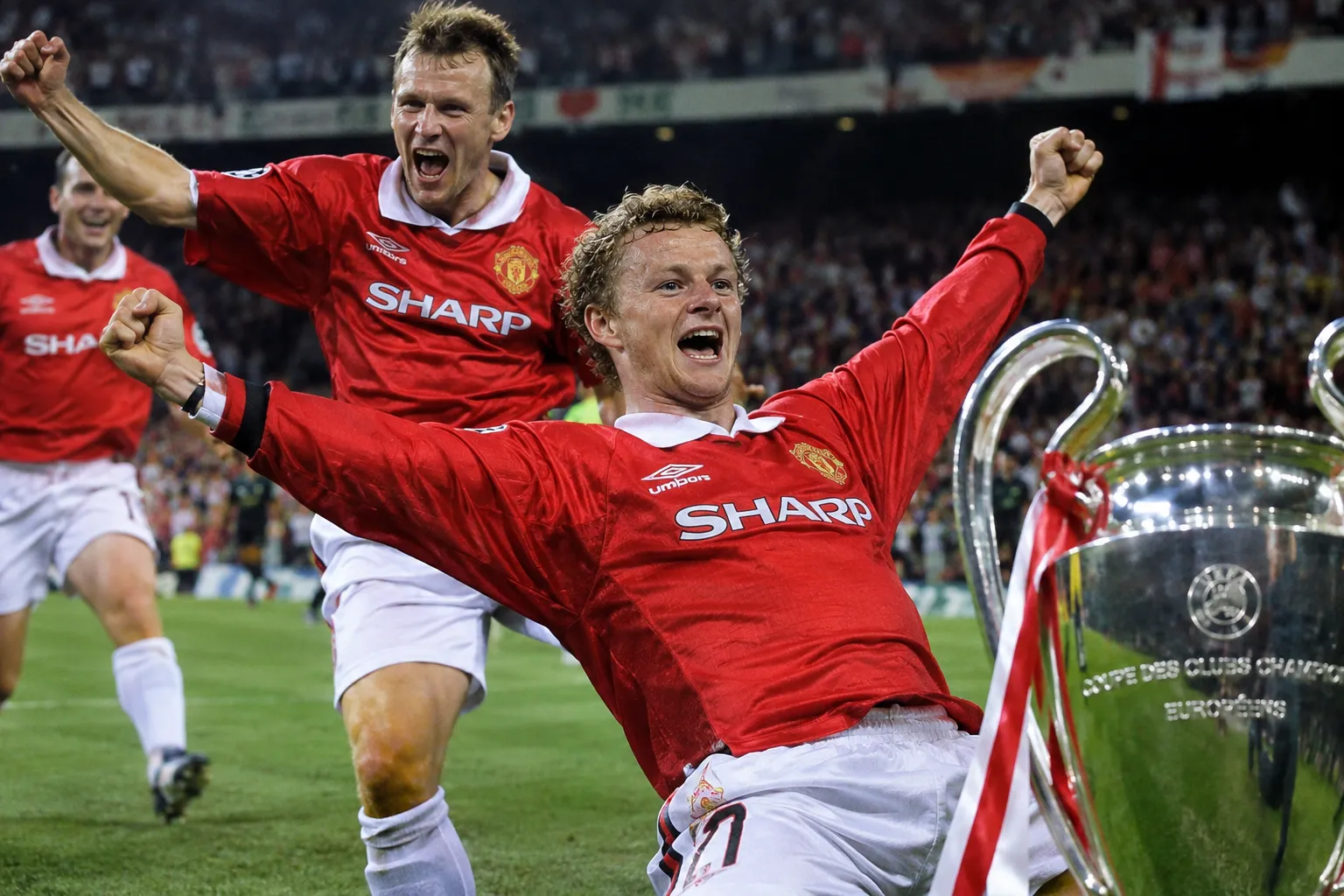
In 1998-99 United became the first English club to win the league, FA Cup and European Cup in the same season. The league was secured with a 2-1 win over Tottenham on the final day, the FA Cup with a 2-0 win over Newcastle six days later.
The Champions League final at Camp Nou on 26 May 1999 is the part everyone remembers. United trailed Bayern Munich 1-0 going into stoppage time, then Teddy Sheringham equalised and Ole Gunnar Solskjær scored the winner. The date carried extra weight: it would have been Sir Matt Busby's 90th birthday. Ferguson was knighted weeks later, and United won the Intercontinental Cup in Tokyo that November.
9. 20 League Titles, Now Level With Liverpool
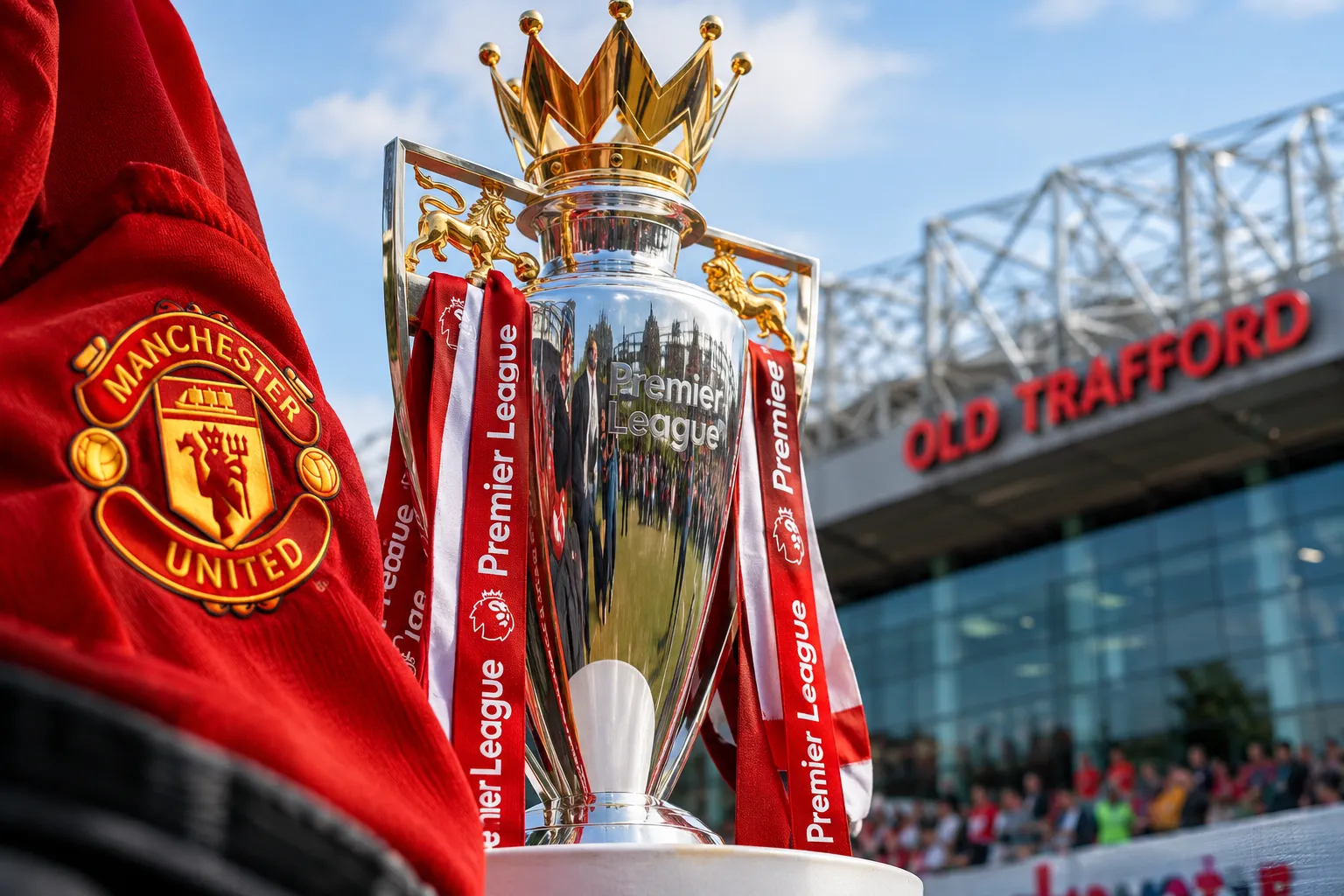
United have been champions of England 20 times: seven before 1992 and 13 in the Premier League era. The 19th title in 2011 took them past Liverpool's 18, and the 20th followed in 2012-13, Ferguson's final season.
That lead lasted 14 years. Liverpool won their 20th title on 27 April 2025, which is part of why the North West Derby now carries a record-book argument as well as a geographical one. United still lead the Premier League era by 13 titles to two, and every season they chase number 21 keeps Premier League tickets at Old Trafford in heavy demand.
10. How Many Trophies Manchester United Have Won
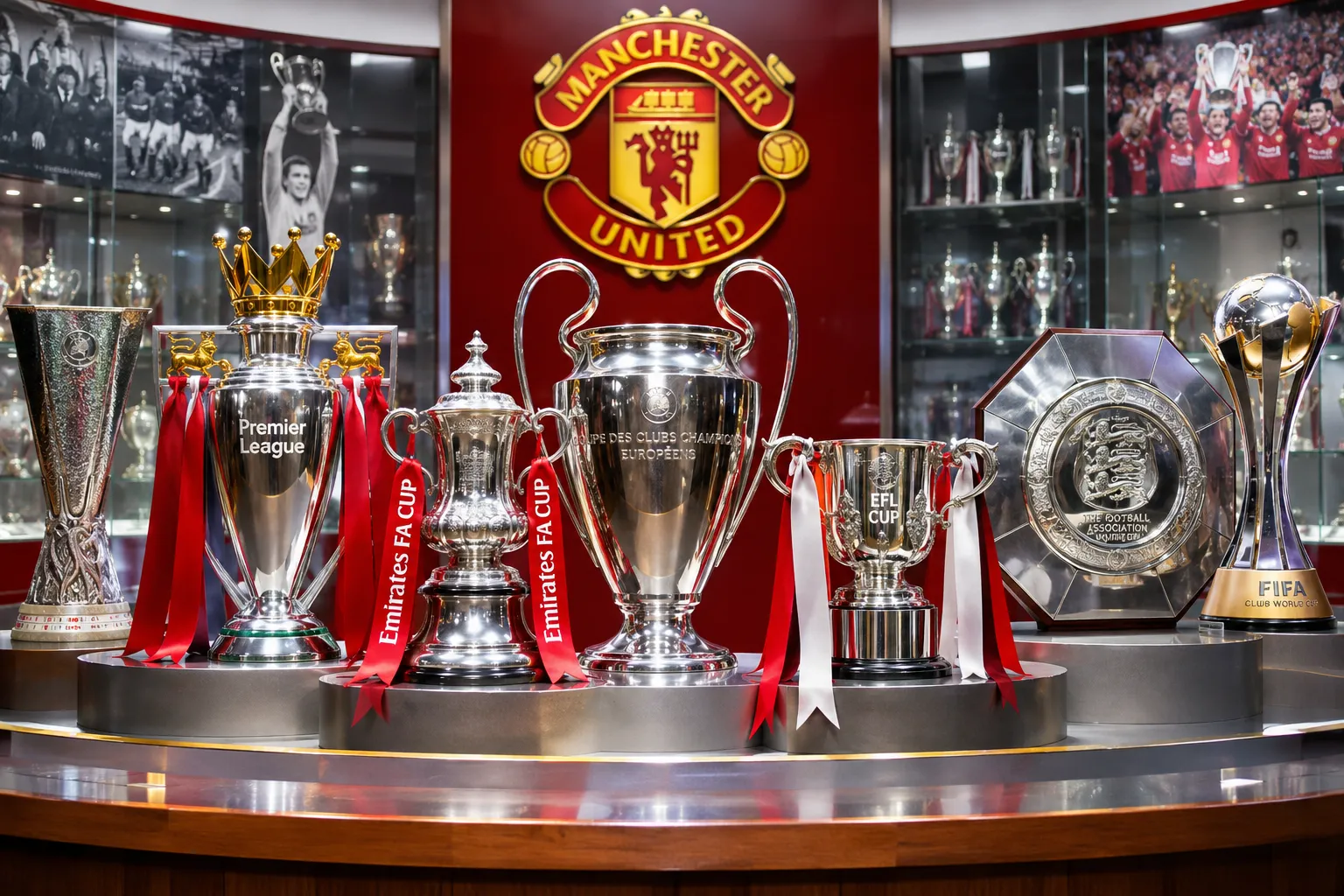
United's honours total stands at 68 as of November 2026 under a counting method that includes the Community Shield, where United hold the English record with 21. The Community Shield is not universally treated as a major honour, so the figure falls to 47 without it. The breakdown below matches the club's trophy room record.
| Competition | Wins | Most recent |
|---|---|---|
| English league title | 20 | 2012-13 |
| FA Cup | 13 | 2024 |
| League Cup | 6 | 2023 |
| Community Shield | 21 | 2016 |
| European Cup / Champions League | 3 | 2008 |
| Europa League | 1 | 2017 |
| Cup Winners' Cup and UEFA Super Cup | 1 each | 1991 |
| Intercontinental Cup and Club World Cup | 1 each | 2008 |
Two common claims are wrong. United have won the FA Cup 13 times, not 12. The record belongs to Arsenal with 14. The six League Cup wins trail Liverpool's 10. Using the same method Liverpool lead with 70. Their extra European trophies and League Cups do most of the work, and their total also includes two one-off honours: the 1906 Sheriff of London Charity Shield and the 1986 Football League Super Cup. We break the full comparison down in our analysis of who is the most successful club in England.
11. Rooney Scored the Most Goals, Giggs Played the Most Games
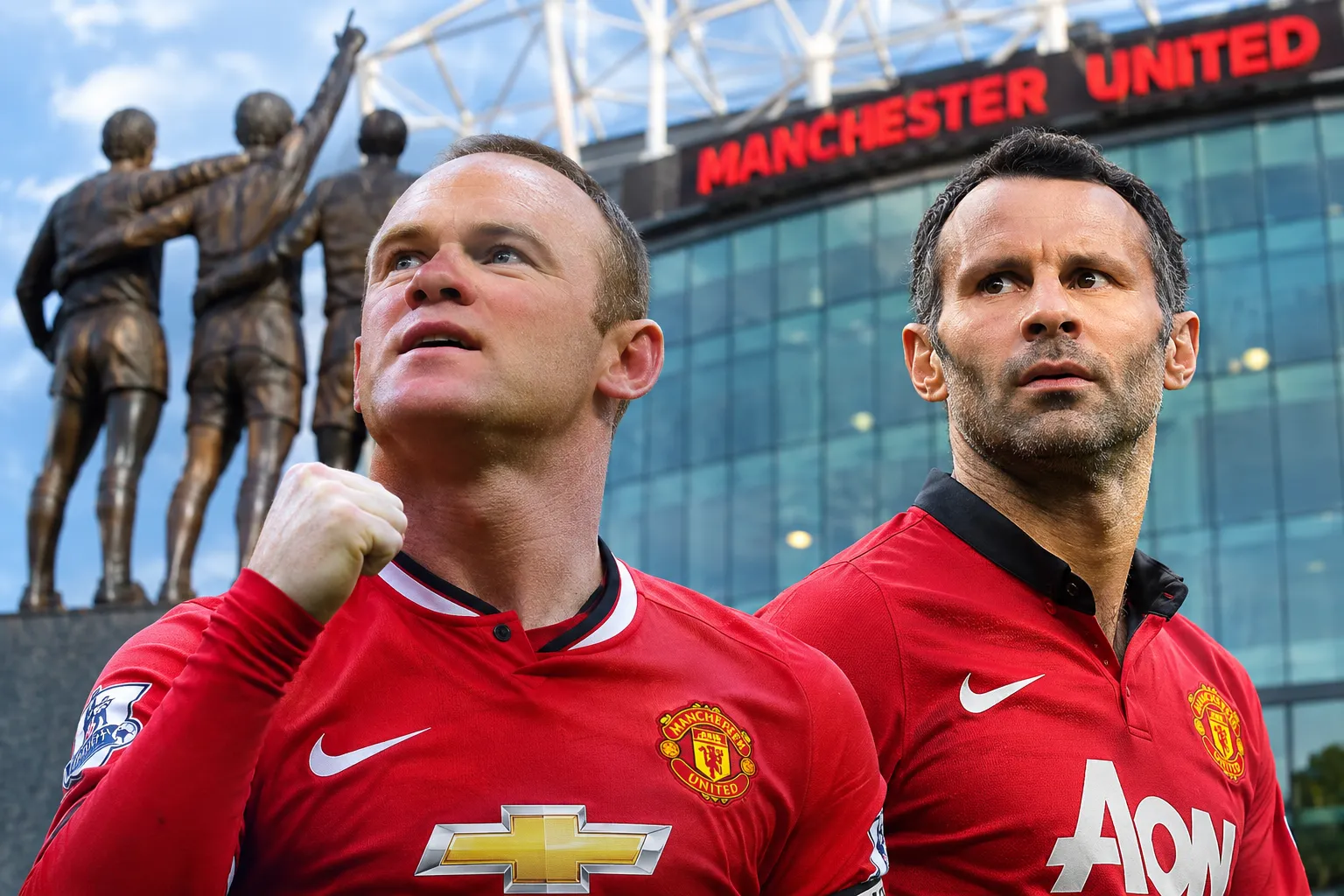
Wayne Rooney is United's all-time top scorer with 253 goals in 559 appearances. He passed Sir Bobby Charlton's tally of 249 with a free kick at Stoke on 21 January 2017, a record Charlton had held for more than four decades.
Ryan Giggs holds the appearance record with 963 games between 1991 and 2014. He passed Charlton's 758 in the 2008 Champions League final in Moscow, a night United won on penalties against Chelsea. Giggs also left with 34 trophies, more than any other player in the club's history.
12. A Homegrown Player in Every Squad Since 1937
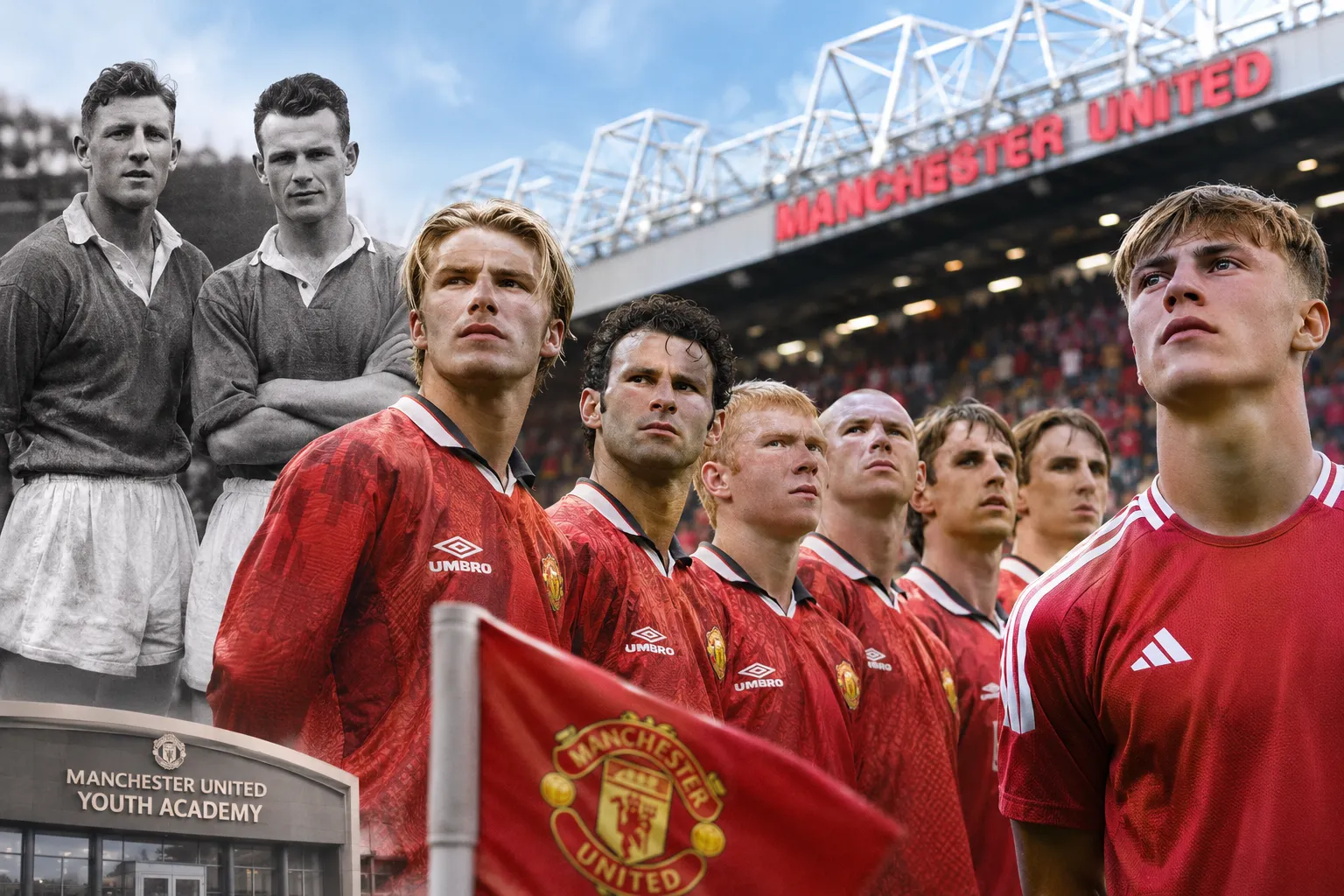
Since 30 October 1937, when Tom Manley and Jack Wassall played away at Fulham, United have named at least one academy graduate in every first-team matchday squad. The run reached its 4,000th consecutive game against Everton on 15 December 2019, and the club marked its 89th anniversary on 30 October 2026.
The streak has survived the Second World War, the Munich air disaster and 89 years of managerial changes. It also produced the Busby Babes in the 1950s and the Class of 92 in the 1990s: David Beckham, Ryan Giggs, Paul Scholes, Nicky Butt and Gary and Phil Neville, who formed the core of the Treble side.
13. Who Owns Manchester United
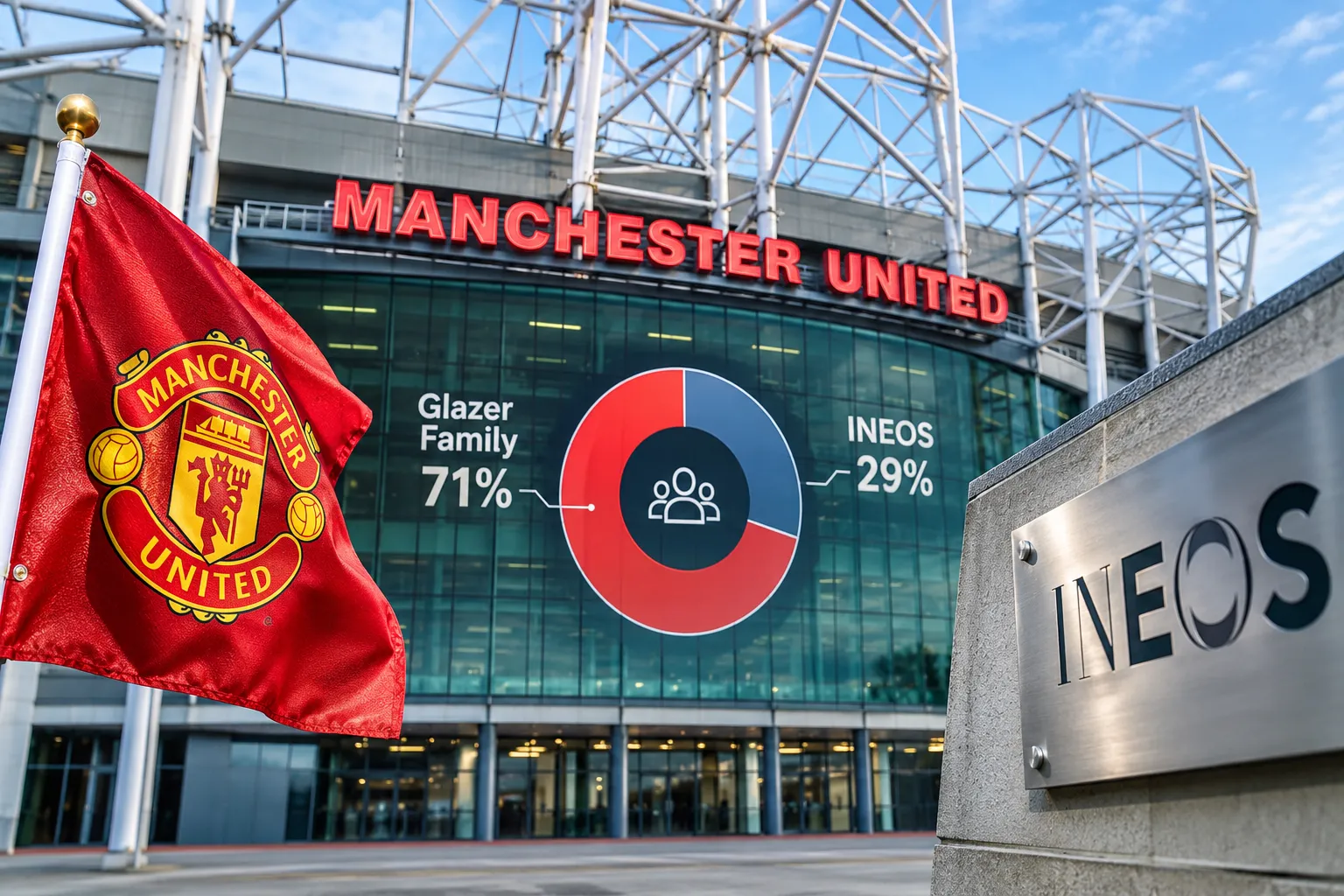
The Glazer family control Manchester United. Malcolm Glazer bought the club in 2005 in a £790m takeover funded largely by borrowing, which placed around £525m of debt on the club itself. Shares were listed on the New York Stock Exchange in 2012.
Sir Jim Ratcliffe's INEOS agreed to buy a minority stake on 24 December 2023, completed the deal in February 2024 and now holds about 29%. INEOS runs football operations, while the Glazers keep majority voting control and Joel and Avram Glazer remain co-chairmen.
The money behind the club is large but not straightforward. Manchester United's 2025-26 annual results showed record revenue of £677.6m alongside a pre-tax loss of almost £47m. Treat the much-quoted fanbase figures with care: the "1.1 billion fans and followers" claim from 2019 came from a survey the club commissioned, and its own stock-market filing split that into 467 million fans and 635 million followers.
14. Manchester United's Proposed 100,000-Seat Stadium
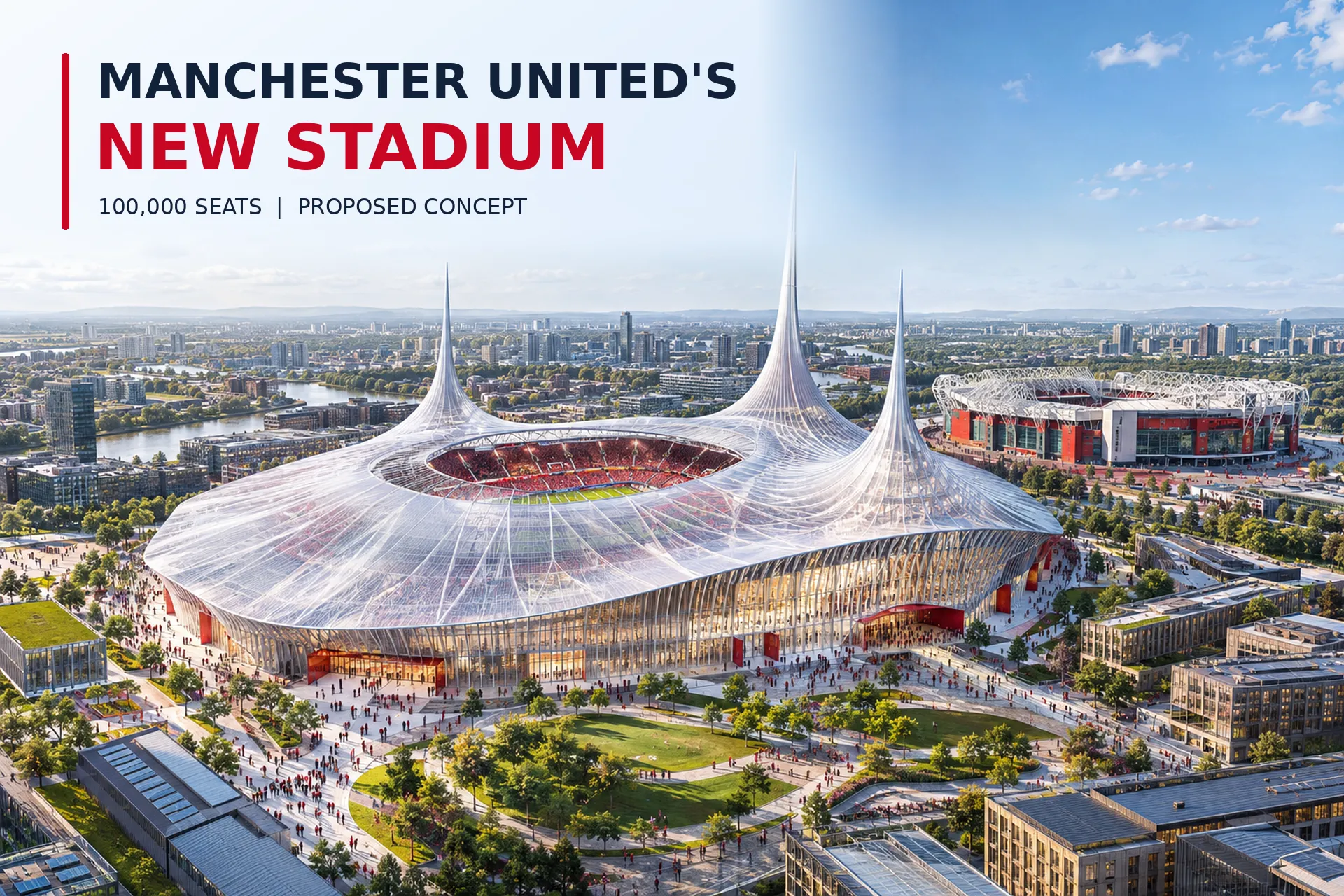
United announced plans for a new 100,000-seat stadium on 11 March 2025, designed by Foster + Partners and previously costed at around £2bn. The club secured the land in June 2026 and confirmed the exact site, about 350 metres north-west of the current ground, in July.
Collette Roche, chief executive of United's New Stadium Development project, has said the club hopes to play there by 2035 but is not setting a formal date until planning is complete, according to Press Association reporting. The earlier hope of 2030 has been dropped. Old Trafford will stay in use while the new stadium is built.
15. Old Trafford's Record Crowd Was Not for a United Game
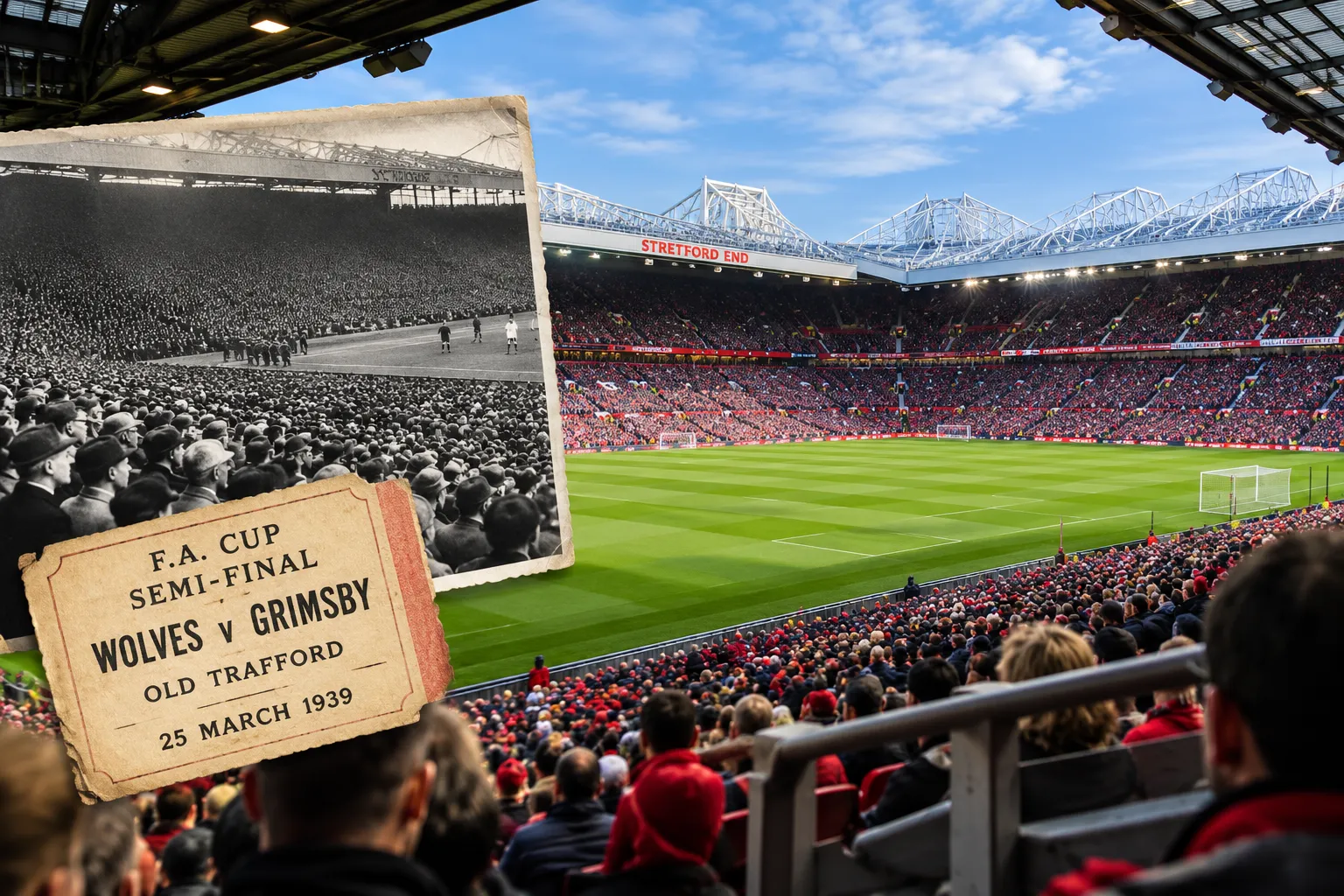
The largest crowd ever recorded at Old Trafford is 76,962, set on 25 March 1939 when Wolverhampton Wanderers beat Grimsby Town 5-0 in an FA Cup semi-final, according to historian Gary James' football archive. The highest attendance since the ground became all-seater is 76,098, against Blackburn Rovers in 2007, before later reconfigurations reduced capacity.
Getting a seat today is harder than the numbers suggest:
- The season ticket waiting list stood at around 120,000 people as of September 2026, according to Football Ground Guide.
- Membership for 2026-27 costs £37.50 for adults or £70 for Premium, which includes first priority for new season-ticket sales.
- Members can buy available home-match tickets online, while selected matches go to a ballot, so membership does not guarantee a seat.
That is why so many supporters, particularly those travelling from the Gulf and beyond, look into buying Manchester United tickets without a membership, or book Manchester United hospitality packages, which pair a reserved seat with matchday dining.
Frequently Asked Questions
1. What is Manchester United's biggest ever win?
-
Manchester United's biggest win is 10-0 against Anderlecht in the European Cup on 26 September 1956, played at Maine Road.
2. Have Manchester United ever been relegated?
-
Manchester United were last relegated at the end of the 1973-74 season and won promotion back to the top flight as Second Division champions in 1974-75.
3. Who are Manchester United's biggest rivals?
-
Liverpool, Manchester City and Leeds United are Manchester United's fiercest rivals, with Arsenal a strong fourth after their Premier League title battles of the late 1990s and 2000s.
4. Which Manchester United player has won the most trophies?
-
Ryan Giggs won 34 trophies with Manchester United, including 13 league titles and two Champions Leagues.
5. Can you visit Old Trafford when there is no match?
-
Old Trafford runs stadium and museum tours on most non-matchdays, with access to the dressing room, tunnel and pitchside dugouts.
Whether you want to stand under the Munich clock or watch the Red Devils chase a 21st league title, 1BoxOffice has been helping supporters reach Old Trafford since 2006, and every order is backed by our 150% money-back guarantee, subject to terms and conditions.
Sources: Manchester United, Manchester United plc annual results, Premier League, UEFA, Press Association, Reuters, BBC Sport, Sky Sports, ESPN, Britannica, Gary James' Football Archive, Football Ground Guide.