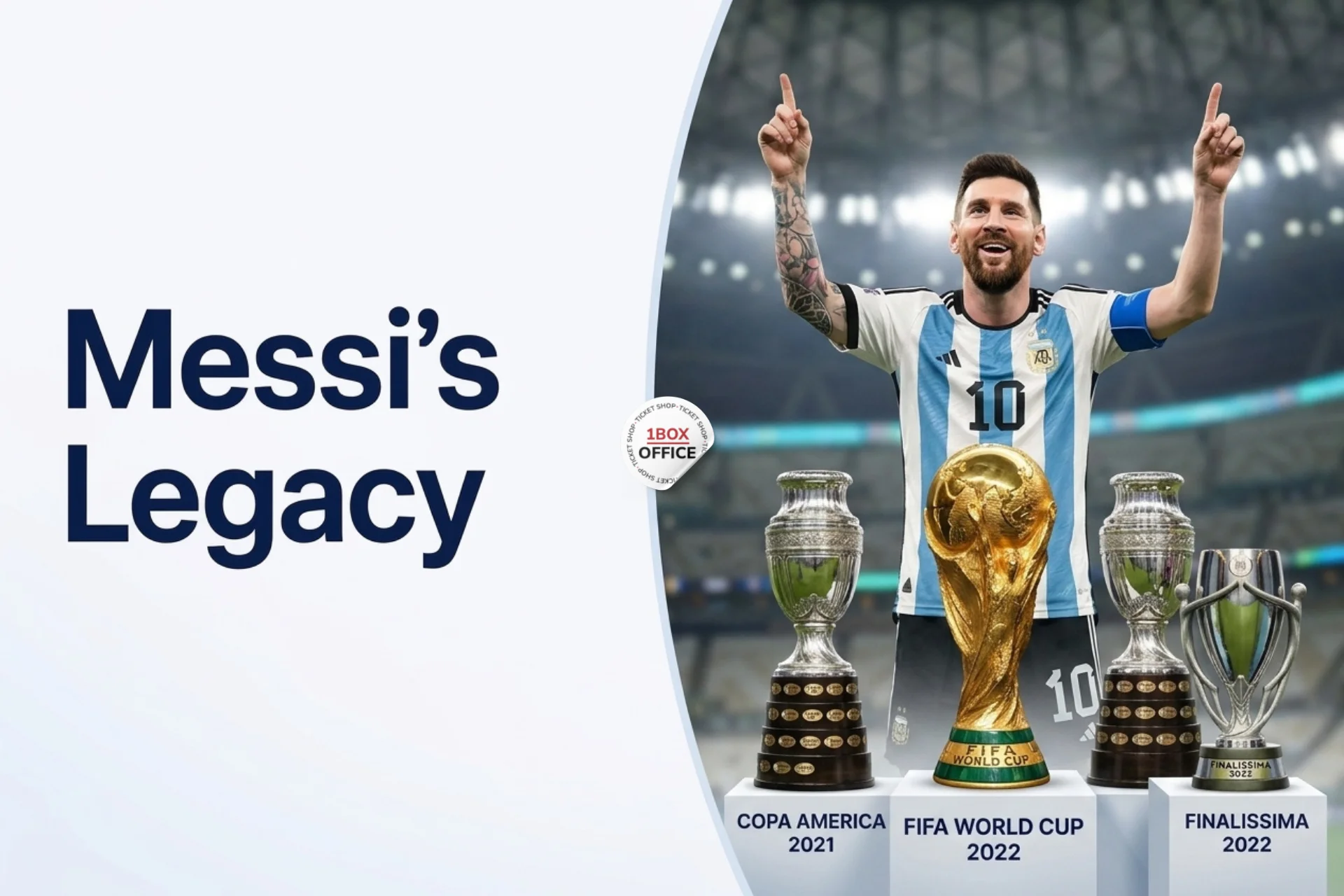
In this guide
Forty Seconds in BudapestThe Decade of Near MissesScaloni and the TurnQatar and the Night in LusailCopa America 2024 and the Extra TimeThe Last SummerThe Career in NumbersWhat the Legacy Actually IsWhat Fans Can Still SeeFrequently Asked QuestionsLionel Messi's international career began with a red card less than a minute after he came on as a substitute against Hungary in Budapest on 17 August 2005. It ended 21 years later with a runners-up medal at MetLife Stadium and a written statement, published on 31 August 2026, that said the decision "hurt and still hurts deep inside". In between came 207 caps, 125 goals, four senior trophies and a relationship with his own country that took the better part of two decades to settle.
Article Summary: Messi's Argentina career ran from August 2005 to July 2026, ending with the World Cup final defeat to Spain and a retirement announcement on 31 August 2026. It divides into three chapters: the youth prodigy who won everything, the senior star who kept losing finals and the captain who won the Copa America, the World Cup and the Finalissima in the space of three years.
- Messi retired from Argentina on 31 August 2026 with 207 caps and 125 goals, both national records.
- Argentina lost four finals with Messi between 2007 and 2016 before winning four trophies between 2021 and 2024.
- Messi scored twice in the 2022 World Cup final against France and won his second Golden Ball, the only player to hold two.
- At World Cup 2026 he scored eight goals with four assists in seven matches at the age of 39 and finished with the Silver Ball.
- His 34 World Cup appearances, 12 assists and 33 goal involvements are all-time tournament records.
Supporters looking at Argentina tickets for the coming qualifiers will be watching a side built in his image but without him in it. This is the story of how that side came to exist.
Forty Seconds in Budapest
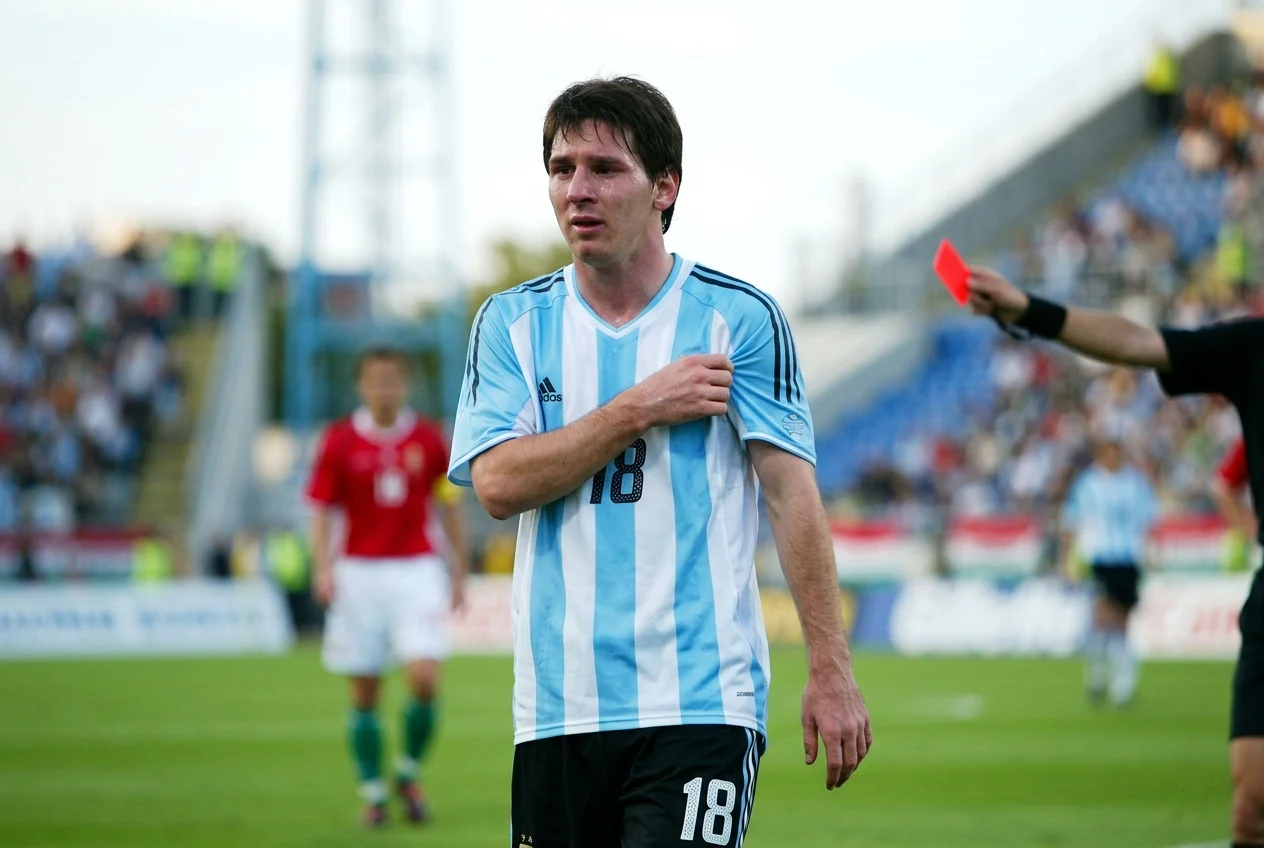
The debut is the detail every Argentine remembers. Messi, 18 and already a Barcelona first-team player, replaced Lisandro Lopez in the 63rd minute of a friendly against Hungary. He was shown a straight red card within a minute for an elbow that most replays suggest was an attempt to shake off a shirt-pull. He walked off in tears. Nobody watching could have guessed the number of appearances that would follow.
What made the timing painful was that he had spent the summer proving himself the outstanding talent of his age group. Two months earlier he had led Argentina to the Under-20 World Cup in the Netherlands, scoring both goals in the final against Nigeria and collecting both the Golden Ball and the Golden Boot. Three years later he added an Olympic gold medal in Beijing as Argentina beat Nigeria again in the final. At youth level he had won everything by the age of 21.
The Decade of Near Misses
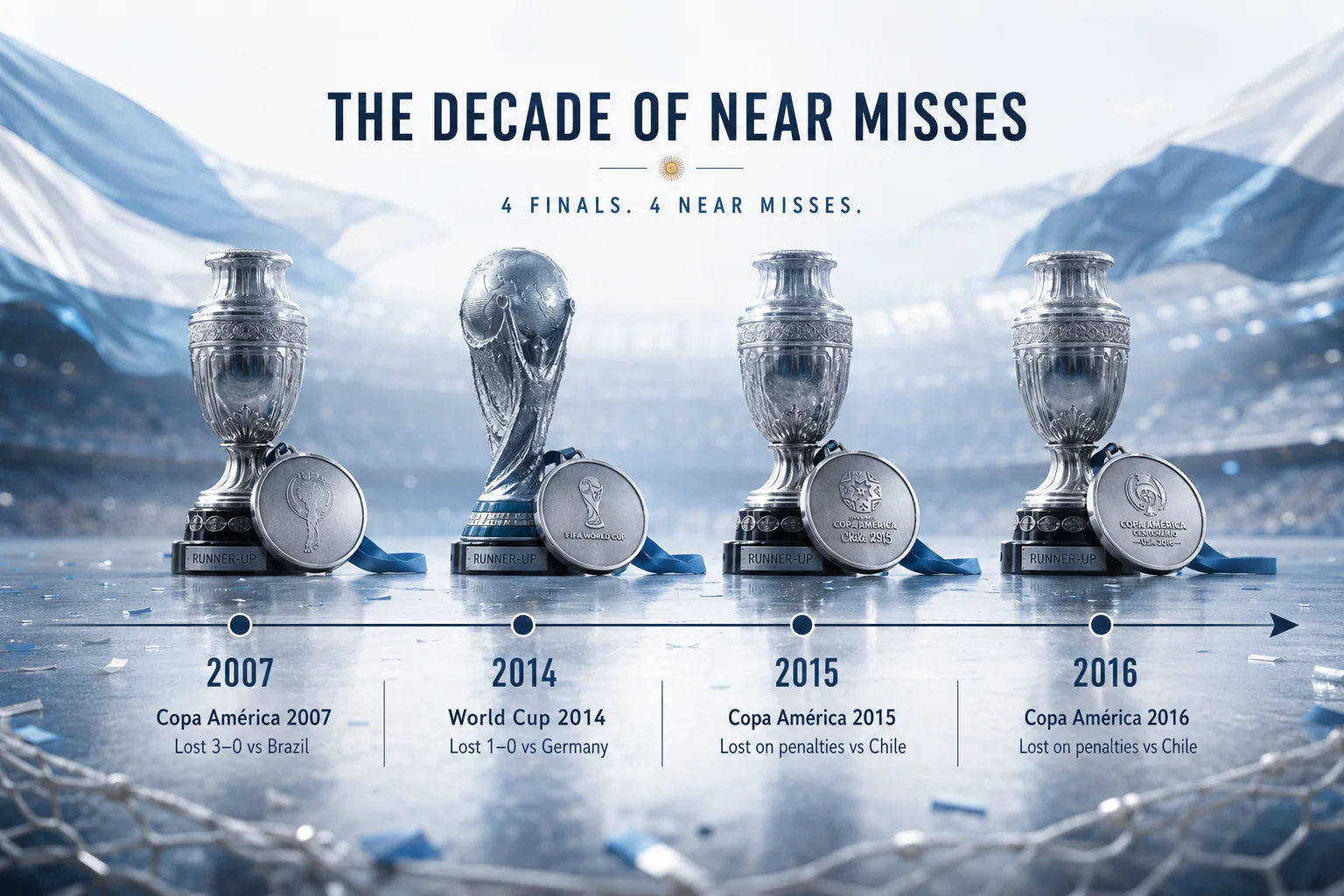
The senior team was a different matter. Between 2007 and 2016 Argentina reached four finals with Messi in the side and lost every one of them. The pattern was cruel because it was so consistent: a strong tournament, a final, a defeat by the finest margin or no margin at all.
| Final | Opponent and venue | Result | Messi's tournament |
|---|---|---|---|
| Copa America 2007 | Brazil, Maracaibo | Lost 3-0 | Two goals, named in team of the tournament at 20 |
| World Cup 2014 | Germany, Maracana | Lost 1-0 after extra time | Four goals, Golden Ball as best player |
| Copa America 2015 | Chile, Santiago | Lost on penalties after 0-0 | One goal; declined the player of the tournament award |
| Copa America Centenario 2016 | Chile, New Jersey | Lost on penalties after 0-0 | Five goals; missed in the shoot-out |
The 2014 final at the Maracana is the one that still stings for older supporters. Mario Gotze's goal came in the 113th minute, Messi had a clear chance to score in normal time and the Golden Ball he collected afterwards looked, in the photographs, like a consolation he did not want. Two Copa America finals against Chile followed, both decided on penalties, and after the second, at MetLife Stadium in June 2016, Messi announced that his time with the national team was over. He was 29.
That first retirement lasted a matter of weeks. A public campaign under the slogan "no te vayas, Leo" ("don't go, Leo"), backed by everyone from schoolchildren to the president, brought him back for the September qualifiers. The relationship between Messi and Argentina, strained for years by the accusation that he cared more for Barcelona than for his country, had been tested and had held.
Scaloni and the Turn
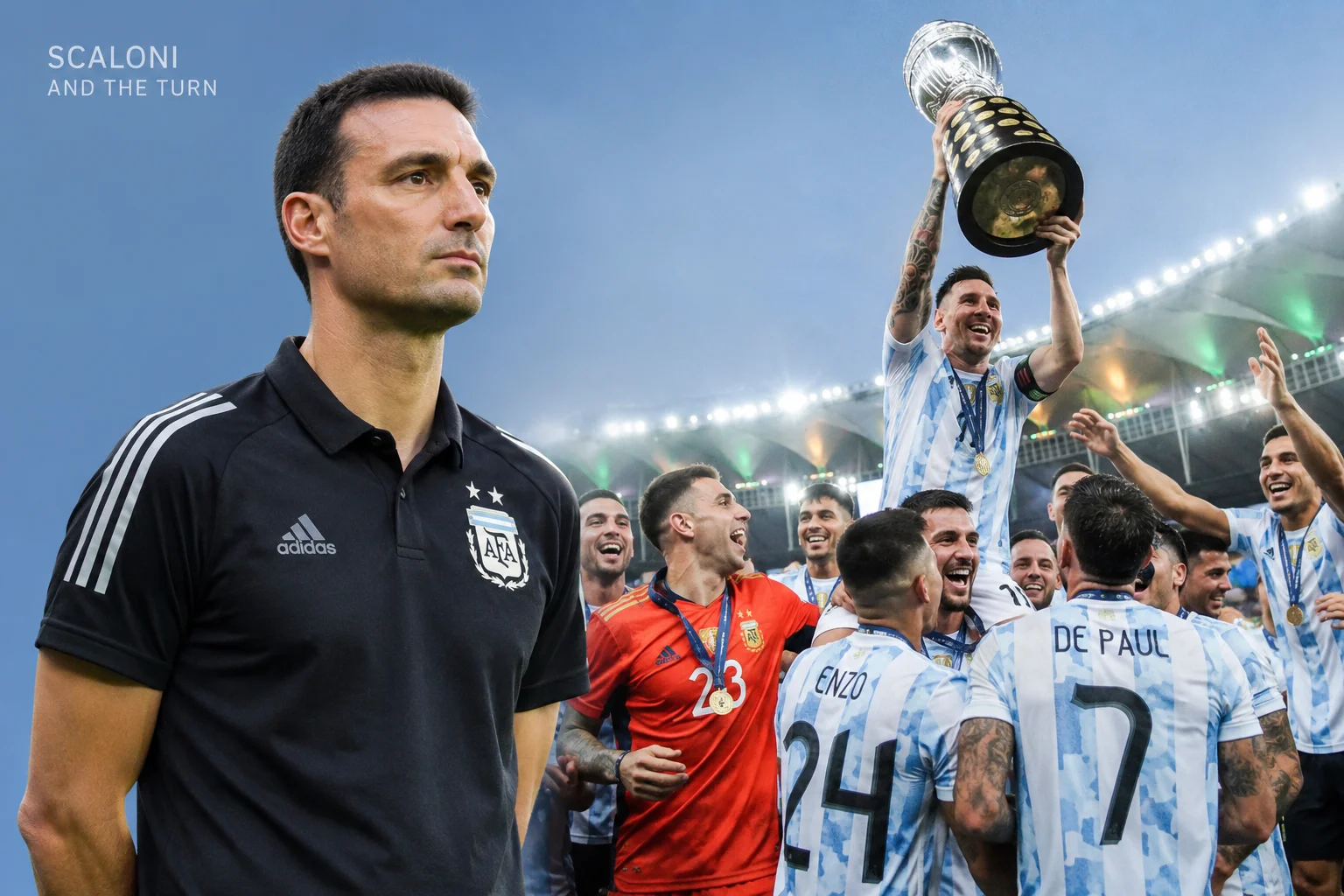
The change came from an unlikely source. Lionel Scaloni, a former full-back with no senior managerial experience, was appointed on an interim basis after the 2018 World Cup exit in Russia and never gave the job back. He built a younger side around Messi rather than in his shadow, brought through Emiliano Martinez in goal and Rodrigo De Paul and Enzo Fernandez in midfield and gave the captain the one thing he had never had with Argentina: a team that did not fall apart when he had a quiet game.
The reward arrived on 10 July 2021. Argentina beat Brazil 1-0 in the Copa America final at the Maracana, the same stadium where the 2014 final had been lost, with Angel Di Maria scoring the only goal. It was Argentina's first major title since the 1993 Copa America and Messi's first with the senior side at the age of 34. He finished the tournament as joint top scorer and shared the player of the tournament award with Neymar. The footage of his teammates carrying him on their shoulders is the moment the near misses stopped defining him.
WhatsApp channel
Sports news straight to your phone
Match updates, on-sale dates and ticket news from 1BoxOffice.
Qatar and the Night in Lusail
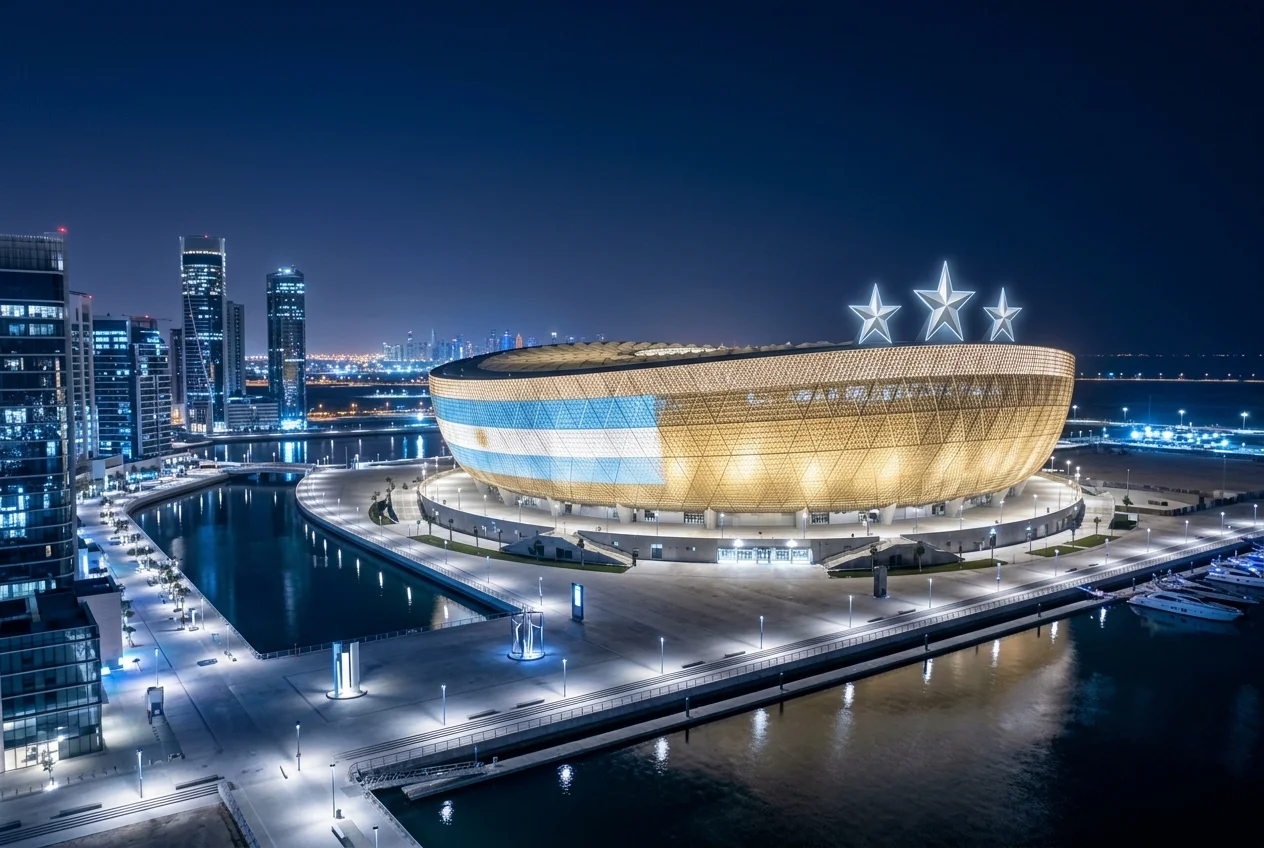
The World Cup in Qatar began with the low point of the Scaloni era. Argentina lost 2-1 to Saudi Arabia in their opening match on 22 November 2022, a defeat that became one of the most replayed results in tournament history across the Arab world and left the favourites needing to win their remaining group games. They did, then beat Australia, the Netherlands on penalties and Croatia 3-0 to reach a third World Cup final for Messi.
The final at Lusail Stadium on 18 December 2022 is widely regarded as the finest in the tournament's history. Messi scored a penalty in the first half and a scrambled second goal in extra time. Kylian Mbappe answered with a hat-trick for France and the match finished 3-3 before Argentina won the shoot-out 4-2. Messi scored the first penalty. At 35 he became the oldest player to score in a World Cup final and collected a second Golden Ball, the only player ever to win two. Argentina's 36-year wait for a third star on the shirt was over.
Six months earlier, at Wembley Stadium, Argentina had beaten Italy 3-0 in the first Finalissima, the revived match between the champions of Europe and South America. Messi provided two assists that night, one each for Lautaro Martinez and Angel Di Maria, before Paulo Dybala added a third in stoppage time. It was the second trophy of the Scaloni era and the first time Messi had lifted an international trophy in London.
Copa America 2024 and the Extra Time
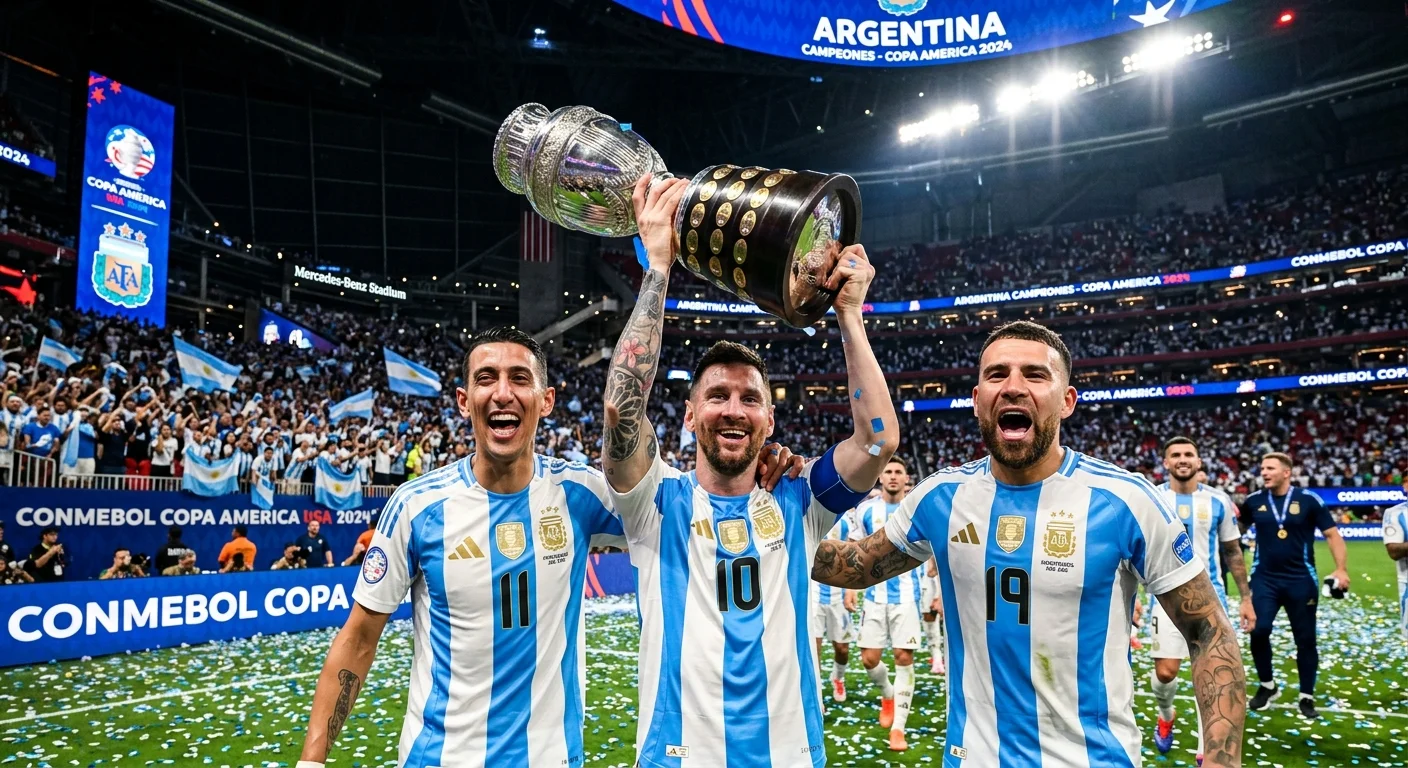
The fourth trophy came at Hard Rock Stadium in Miami on 14 July 2024, and it came without him on the pitch at the end. Messi went off in the second half of the Copa America final against Colombia with an ankle injury and sat on the bench in tears with his boot off as Lautaro Martinez scored the only goal in the 112th minute. Argentina won 1-0 and Messi became the first Argentina captain to lift consecutive Copa America titles.
A second Finalissima, against Spain at Lusail on 27 March 2026, would have been a fifth senior trophy for the taking. It was cancelled on 15 March 2026 because of the security situation in the region, and no alternative venue could be agreed. The two sides met instead, four months later, with rather more at stake.
The Last Summer
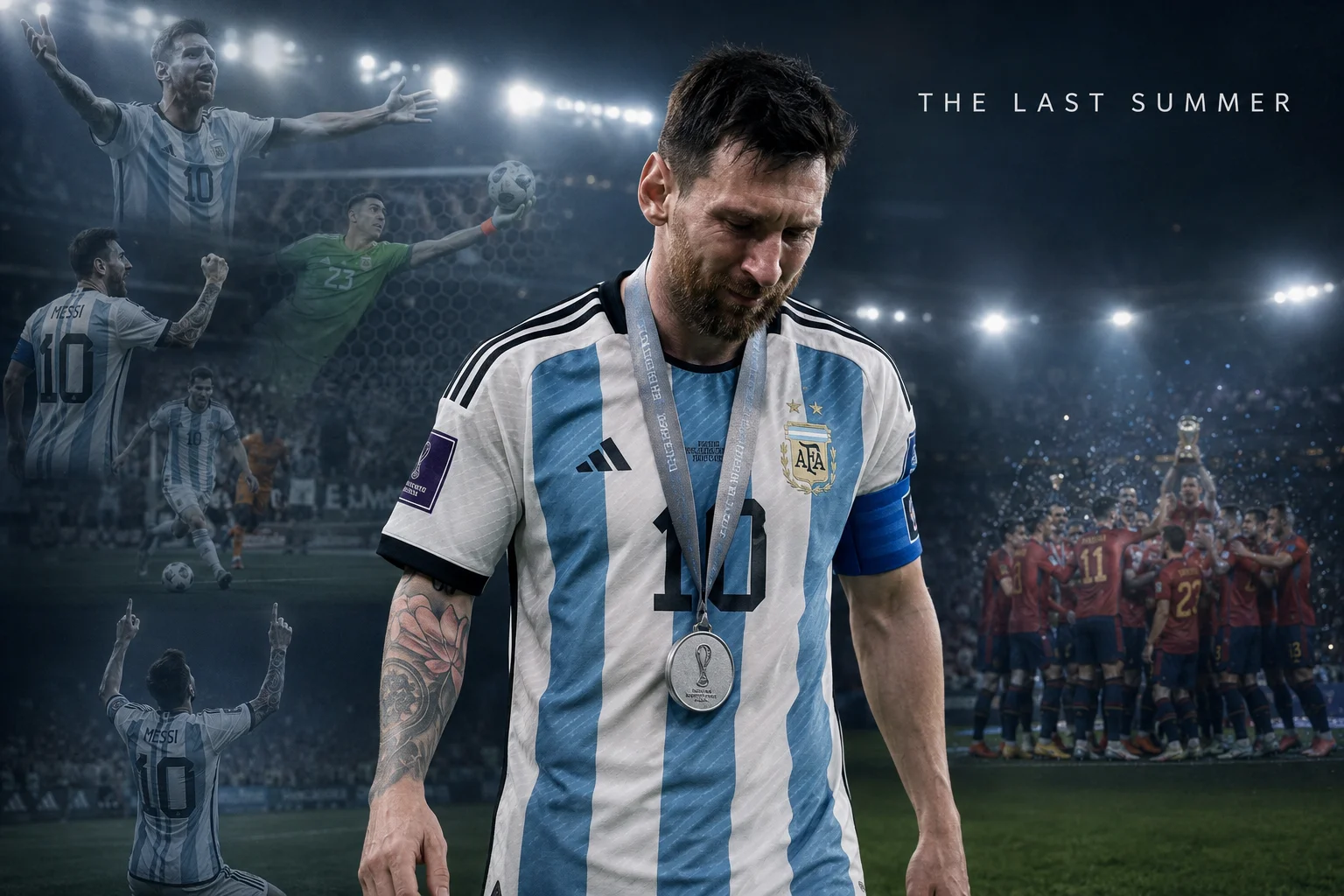
Messi arrived at World Cup 2026 aged 39 and playing his sixth tournament, a total only Cristiano Ronaldo matched among outfield players. Nobody expected him to carry Argentina. He scored eight goals and provided four assists in seven matches. Along the way he passed Miroslav Klose's 16 World Cup goals to hold the all-time record briefly, before Mbappe went past him on 22, and he extended his own records for appearances (34), assists (12) and goal involvements (33). Our list of the all-time World Cup top goalscorers has been rewritten twice since June.
The final on 19 July 2026 belonged to Spain. Luis de la Fuente's side had 20 shots to Argentina's two, Enzo Fernandez was sent off for a second yellow card in second-half stoppage time and Emiliano Martinez made a World Cup final record 10 saves before Ferran Torres scored in the 106th minute. Argentina lost 1-0. Messi collected his runners-up medal and left the pitch in tears, the third World Cup final he had walked away from, two of them as the losing side.
He finished the tournament with the Silver Ball and the Silver Boot. On 21 July he wrote the statement that announced his retirement, and after the death of his father Jorge in early August he published it on 31 August. He was one of several stars playing their final World Cup in 2026, but the only one who left with the appearance, assist and goal-involvement records all in his name.
The Career in Numbers
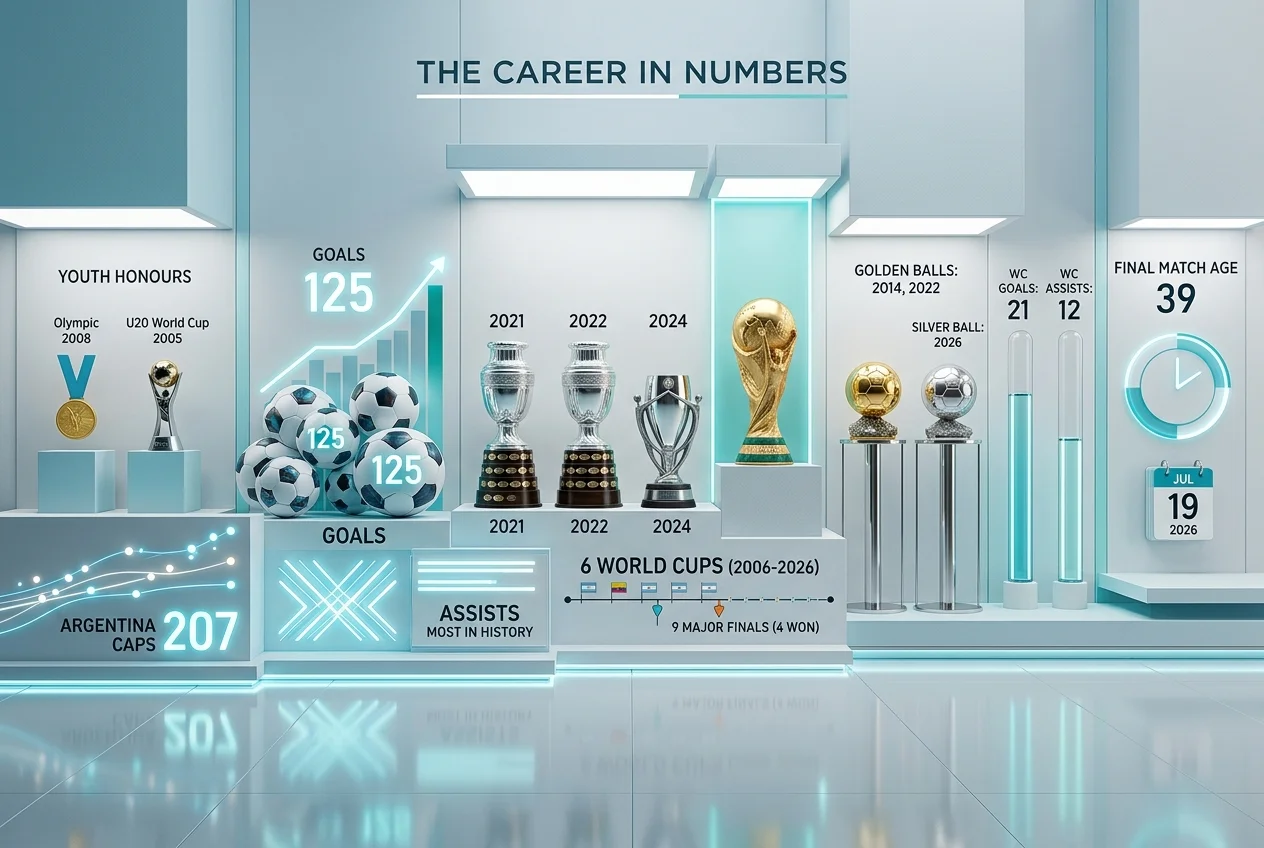
| Measure | Figure | Context |
|---|---|---|
| Caps | 207 | Argentina record; passed Javier Mascherano's 147 in 2021 |
| Goals | 125 | Argentina record |
| Assists | Most in Argentina history | Exact total varies by data provider |
| Senior trophies | 4 | Copa America 2021, Finalissima 2022, World Cup 2022, Copa America 2024 |
| Youth honours | 2 | Under-20 World Cup 2005, Olympic gold 2008 |
| Major finals played | 9 | Won 4, lost 5 |
| World Cups | 6 | 2006 to 2026; joint outfield record with Ronaldo |
| World Cup goals and assists | 21 and 12 | Second and first all-time respectively |
| Golden Balls | 2 | 2014 and 2022; Silver Ball 2026 |
| Age at final match | 39 | World Cup final, 19 July 2026 |
What the Legacy Actually Is
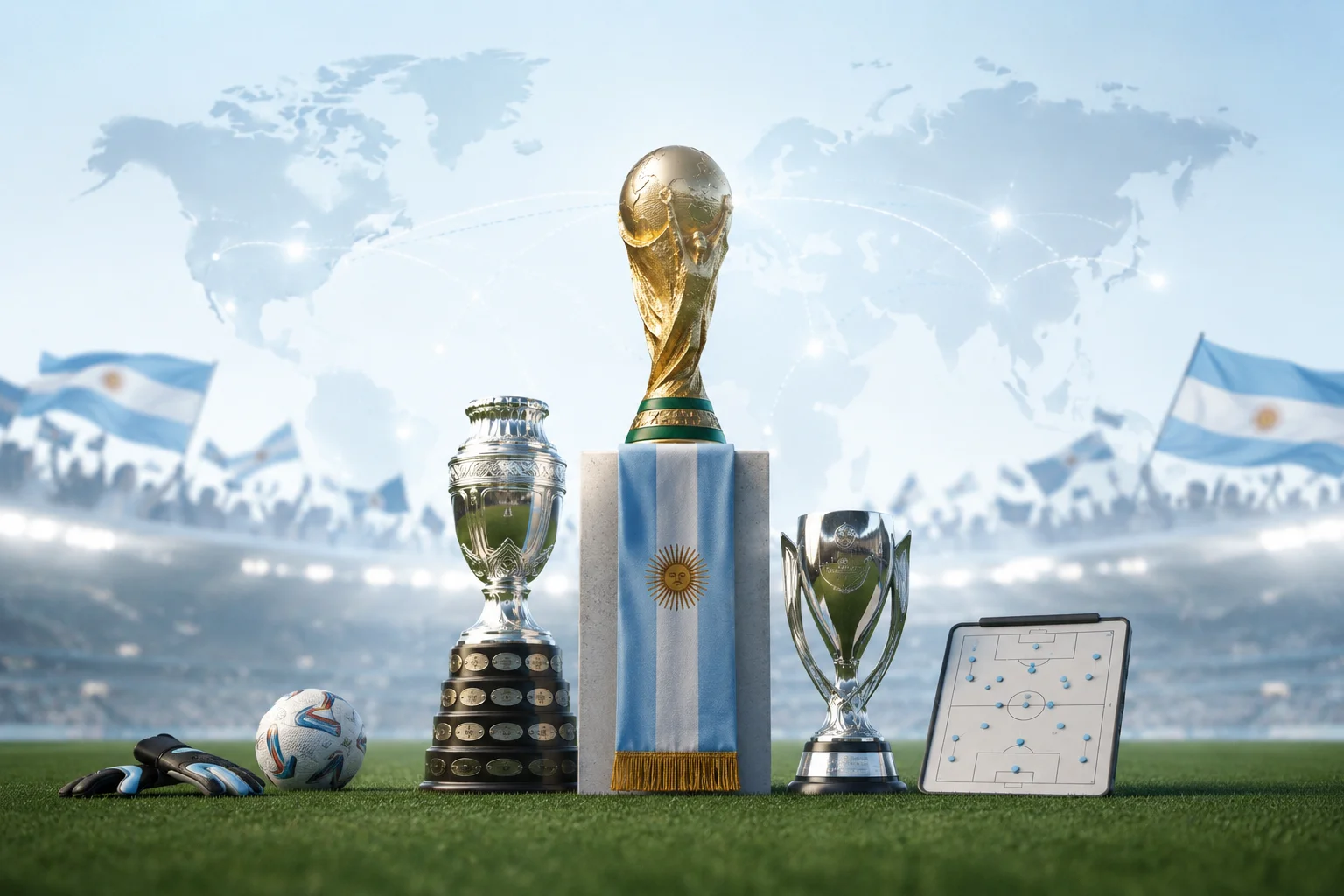
The comparison with Diego Maradona shaped the first half of Messi's Argentina career and dissolved in the second. Maradona won one World Cup in 91 appearances and 34 goals; Messi won one in 207 and 125, and added two continental titles Maradona never won. The debate about which man was greater will run for as long as Argentines argue about football, which is to say forever, but the specific charge that Messi could not do for his country what he did for his club has not survived Lusail.
The deeper legacy is structural. He leaves Argentina with a manager who has won four trophies, a goalkeeper who holds the World Cup final saves record and a midfield that grew up in his team rather than in awe of it. The side that lost to Spain in July did so without him having a shot in normal time, and still took the match to the 106th minute. That is not a team that will collapse without him.
He also leaves a supporter base that spans continents. Argentina's matches were the most requested tickets at Qatar 2022 according to the tournament's chief executive, and the crowds that followed him through the United States for the Copa America in 2024 and the World Cup in 2026 were as likely to come from Dhaka, Cairo or Riyadh as from Rosario. The rivalry with Ronaldo, which we covered in our piece on Messi and Ronaldo at World Cup 2026, gave a generation of fans in Asia and the Middle East a reason to pick a national team on another continent.
What Fans Can Still See
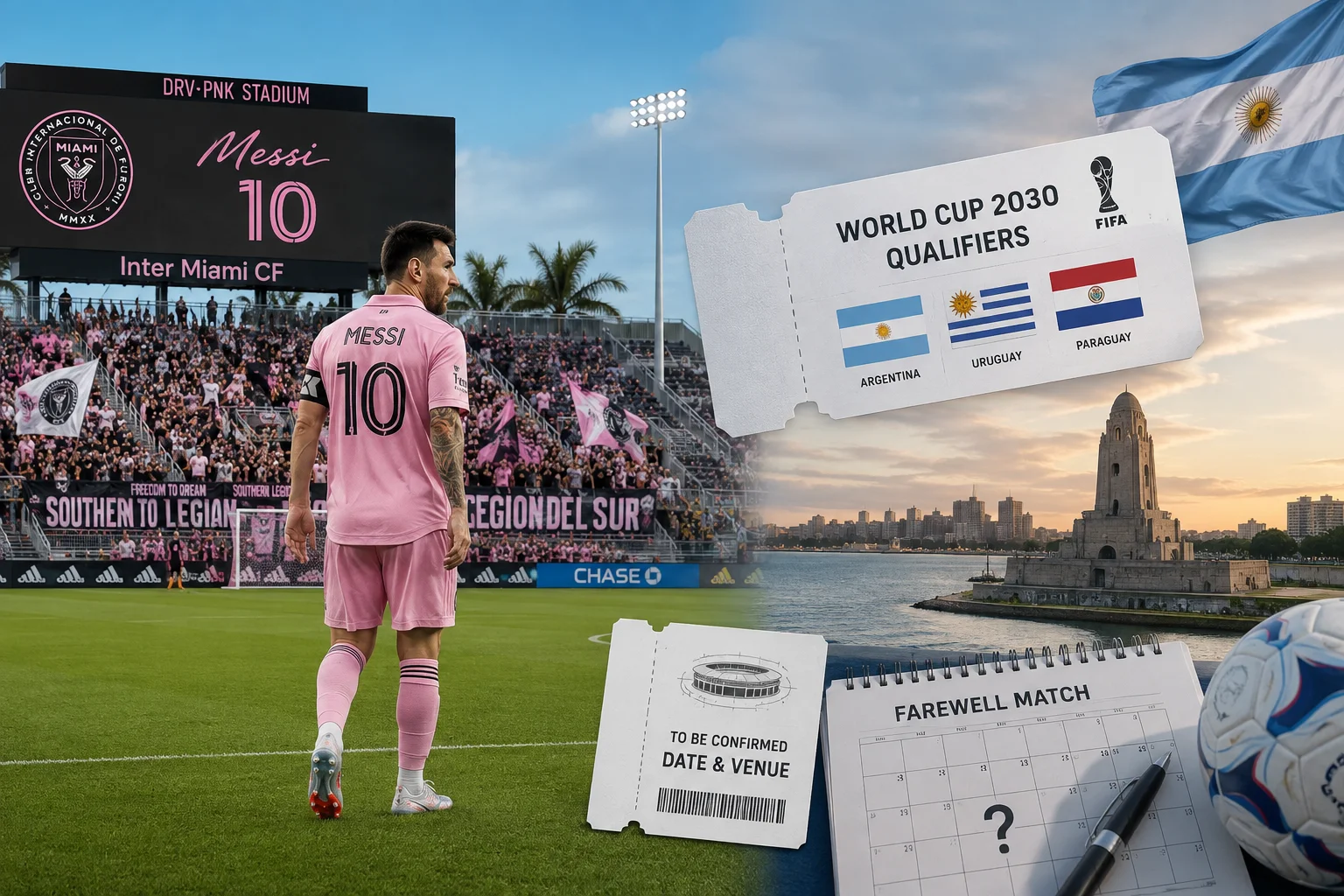
The retirement covers Argentina only. Messi remains under contract at Inter Miami through the 2028 MLS season, which means club supporters across the United States have two more seasons of home and away fixtures to plan around.
For Argentina, the next chapter begins with World Cup 2030 qualifying and a centenary tournament in which Argentina, Uruguay and Paraguay stage opening matches to mark 100 years since the first World Cup in Montevideo. A farewell match has not been announced by the Argentine Football Association as of 1 September 2026. If one is confirmed, it will be the highest-demand Argentina fixture in years, and the sensible advice is to wait for a date and a venue before believing any listing.
Frequently Asked Questions
1. How many Copa America finals did Messi play in?
-
Five Copa America finals: 2007, 2015, 2016, 2021 and 2024, of which Argentina won the last two.
2. Who was Argentina's most capped player before Messi?
-
Javier Mascherano held the record with 147 caps until Messi overtook him during the 2021 Copa America.
3. Which club was Messi playing for when Argentina won the World Cup?
-
Messi was a Paris Saint-Germain player in December 2022, having left Barcelona in the summer of 2021; he joined Inter Miami in July 2023.
4. How old was Messi when he retired from Argentina?
-
Messi was 39 when he announced his international retirement on 31 August 2026, having been born on 24 June 1987 in Rosario.
5. Who scored the goal in the 2021 Copa America final?
-
Angel Di Maria scored the only goal of the 2021 Copa America final against Brazil, lifting a first-half pass from Rodrigo De Paul over Ederson at the Maracana.
Twenty-one years after Budapest, Argentina supporters have a team, a manager and a set of records that will outlast the man who built them. 1BoxOffice has listed Argentina fixtures through every one of those years, and every ticket sold through the marketplace is covered by the 150% money-back guarantee.
Sources: Argentine Football Association; CONMEBOL; UEFA; ESPN; Fox Sports; Olympics.com; CNN; NPR; Goal; Al Jazeera; Britannica; BBC Sport; The Guardian.