In this guide
A word that means "to twist"From the slave quarters to the touchlineThe trick a Japanese-Brazilian taught the worldWhat Ginga actually does to a defenderThe players who carried itIs ginga disappearing?Watching GINGA at the 2026 World CupFAQsBrazil arrived at the 2026 World Cup managed by an Italian, Carlo Ancelotti, and spent their opening match grinding out a 1-1 draw with Morocco, which drew more criticism than applause. For a country whose football is supposed to be built on ginga, that pragmatism told its own story. The word itself means something far older and stranger than flair, and to understand why Brazilians play the way they do, you have to follow it back four centuries and across an ocean.
Most explanations stop at "samba football" and a montage of Ronaldinho. The real history runs through a Bantu verb, an African queen, an Afro-Brazilian martial art and a Japanese-Brazilian teenager who invented the most famous trick in the game. If you are planning to see the five-time champions in person, our Brazil fan guide for 2026 covers the logistics. This piece is about what you are actually watching when a Brazilian player makes a defender fall over.
A word that means "to twist"
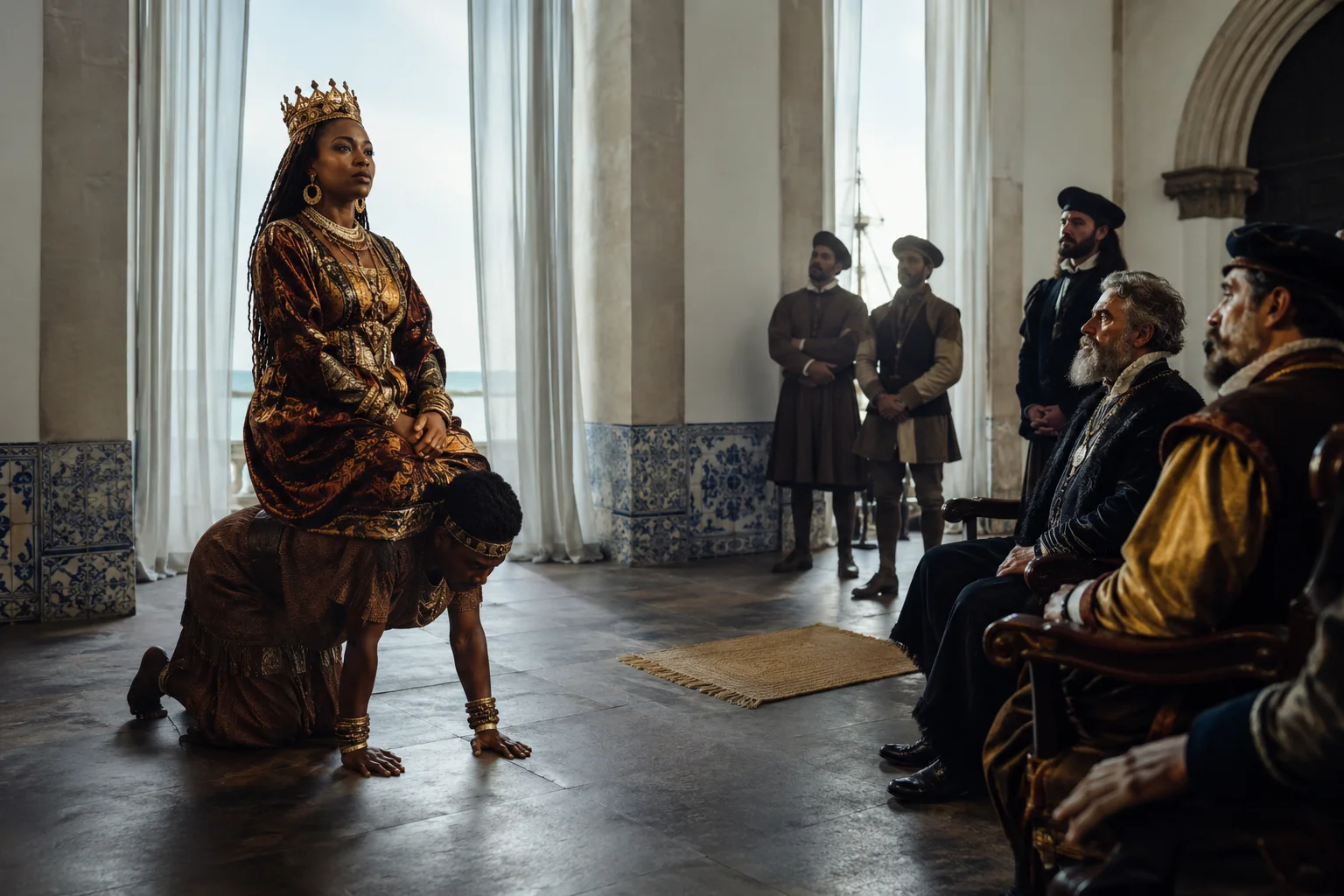
In Kimbundu, a Bantu language of Angola, the verb kujinga means to twist, to coil or to turn. Encyclopaedia Britannica traces a famous name to that exact root: Njinga Mbande, the 17th-century queen of the Ndongo and Matamba kingdoms in what is now northern Angola, said to have been born with the umbilical cord wrapped around her neck. In Portuguese colonial records, her name was written many ways, and one of the spellings the Portuguese themselves used was Ginga.
That is not a coincidence dressed up as one. Queen Ginga spent thirty years outmanoeuvring the Portuguese empire through war, diplomacy, and sheer refusal to be pinned down. When Portuguese officials gave her only a mat to sit on during negotiations, hoping to humble her, she had a servant kneel and sat on his back to meet them as an equal. The same Bantu idea of twisting, swerving and evading travelled to Brazil in the holds of slave ships, and it surfaced in two places at once: in a fighting art, and later, on a football pitch.
So the honest version is this. Ginga is not "named after" a queen in any storybook sense. But the word for Brazil's football soul and the name of an African ruler who built a reputation on cunning and escape come from the same root, and they carry the same meaning: do not let yourself be cornered. That shared origin is the part almost every guide to Ginga leaves out.
From the slave quarters to the touchline
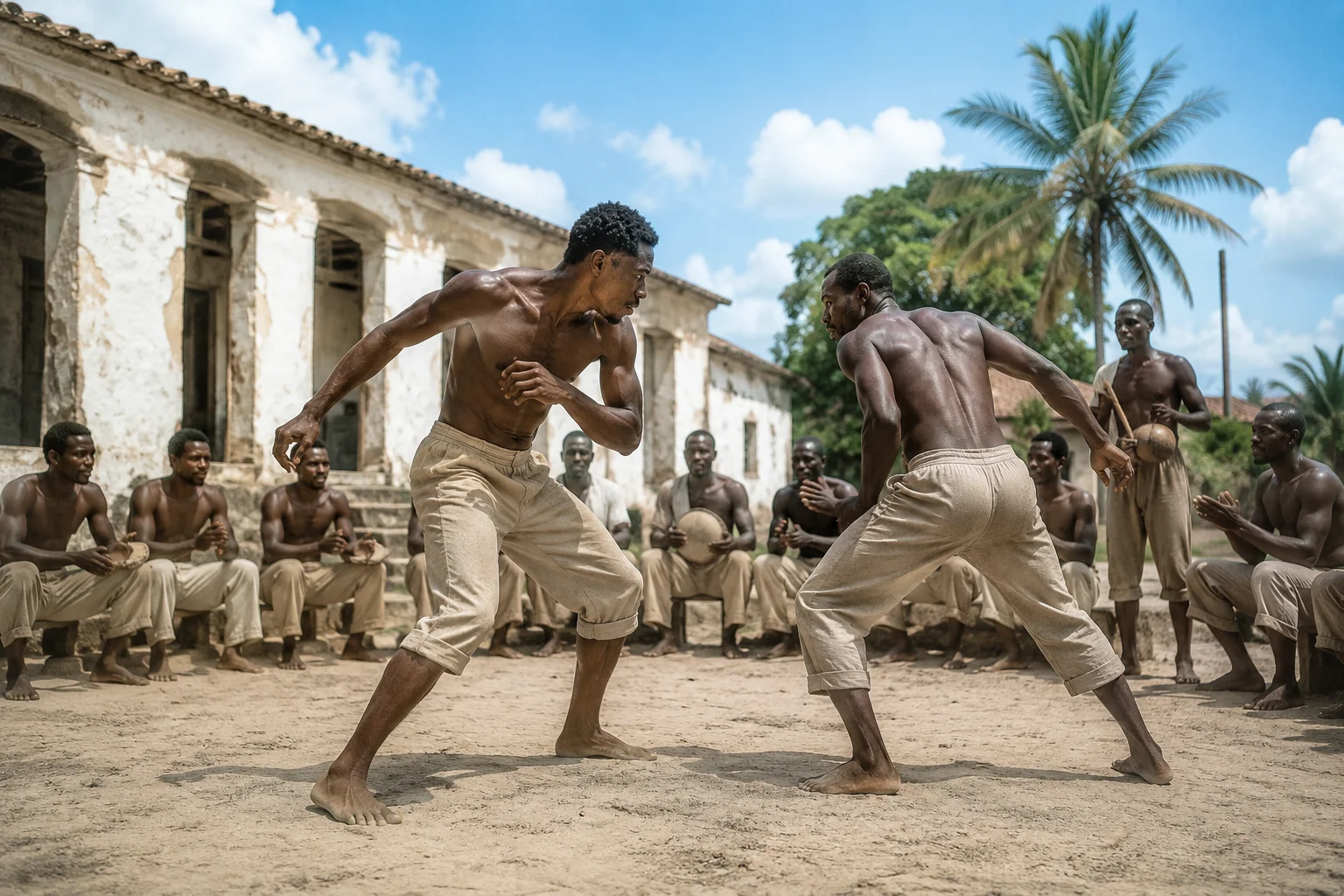
Capoeira is the bridge. Developed by enslaved Africans in Brazil, it disguised combat as dance so that masters who banned fighting saw only music and play. Its foundational movement, the constant low side-to-side sway that sets the rhythm of every exchange, is itself called the ginga. A capoeirista never stops moving, which makes them a difficult target to read or to strike. Deception is not a trick added on top. It is the base position.
That swaying, sometimes called gingado, seeped out of the roda and into the dirt and concrete pitches where Brazilian children learned the game without coaches, cones or instructions. In that environment, you learn to move before you learn to pass, and balance and disguise become survival skills rather than coaching points. Add the street cunning Brazilians call malandragem, the art of getting the better of someone through wit rather than force, and you have the cultural DNA that produced the dribblers the rest of the world spent decades trying to copy.
The trick a Japanese-Brazilian taught the world
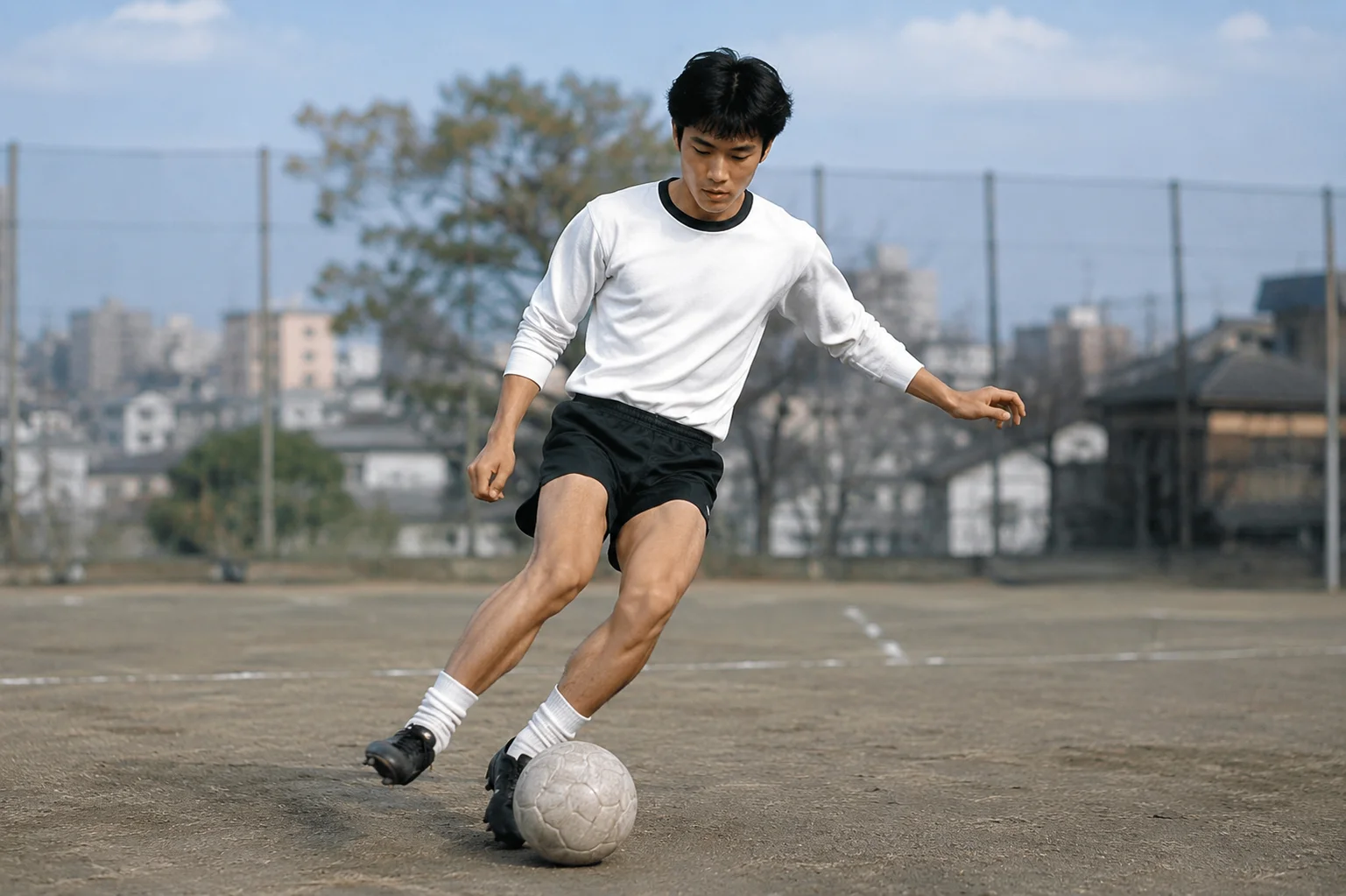
Here is where the tidy "pure African instinct" story breaks. The elastico, the flip-flap that snaps the ball one way with the outside of the foot, then whips it back with the inside, is the signature move of Brazilian flair. It was not handed down through capoeira. It was invented around 1964 by Sergio Echigo, the son of Japanese immigrants, on the streets of São Paulo and in the Corinthians youth team.
Echigo taught it to a teammate, Roberto Rivellino, who took it to a global audience at the 1970 World Cup and made it his trademark. Rivellino has never hidden where it came from. Asked about it years later, he said of Echigo, "He invented it, but I perfected it." Pele, by most accounts, never managed to learn the move at all. The most Brazilian skill of them all was codified by a Brazilian of Japanese descent and popularised by a moustachioed playmaker, which tells you ginga was always less about blood and more about an attitude to the ball.
The vocabulary of that attitude is long, and most of it was minted in Brazil:
- The elastico, or flip-flap, was later borrowed by Ronaldinho, Ronaldo and Neymar.
- The rainbow flick, rolling the ball up the back of one leg and over a defender's head.
- The seal dribble, balancing the ball on the forehead while running, made notorious by Kerlon in the mid-2000s.
- The simple body feint, the drop of the shoulder that sends a defender the wrong way before a touch is even taken.
WhatsApp channel
Sports news straight to your phone
Match updates, on-sale dates and ticket news from 1BoxOffice.
What Ginga actually does to a defender
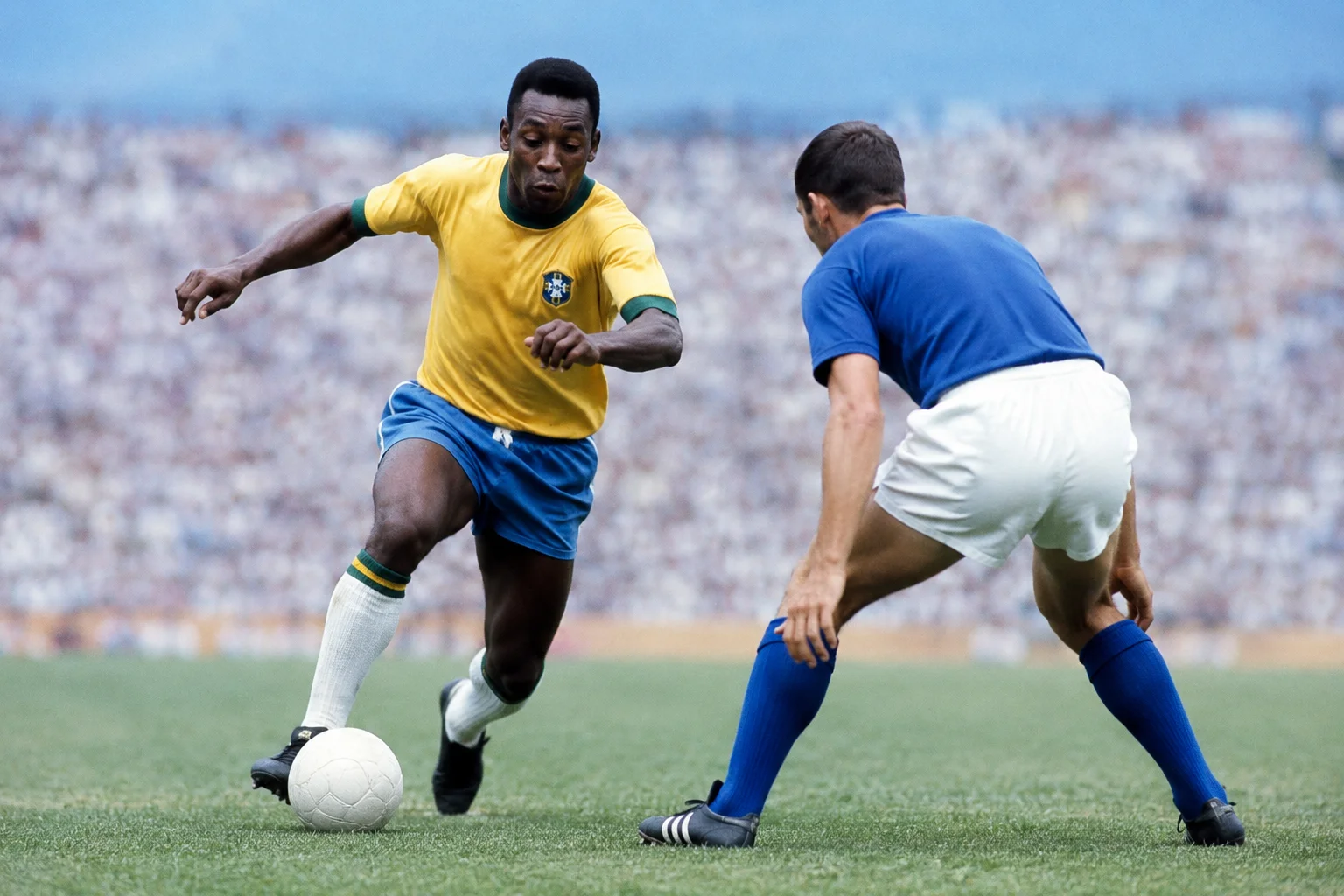
Strip away the romance, and ginga is a set of repeatable mechanical advantages, which is why it can be coached even if it is rarely taught directly. Constant motion keeps the body's weight unsettled, so the player can shift direction faster than a defender who has committed to one. A low base with a high centre of agility, the capoeira inheritance, lets a player change angle without first having to stop. Feints work because defenders react to hips and shoulders, not to the ball, so a convincing sway buys half a yard before the ball has moved.
This is also why futsal matters so much to the Brazilian game. Played five-a-side on a hard court with a heavy, low-bounce ball, futsal forces hundreds of touches in tight space and punishes slow decisions. It rewards close control, quick feet and the nerve to take someone on, the exact toolkit ginga describes. Many of Brazil's great improvisers learned the grammar of the game on a futsal court long before they saw a full-sized pitch, and the world's most decorated futsal player, Falcao, was voted the best on the planet in 2004, 2006 and 2011.
The players who carried it
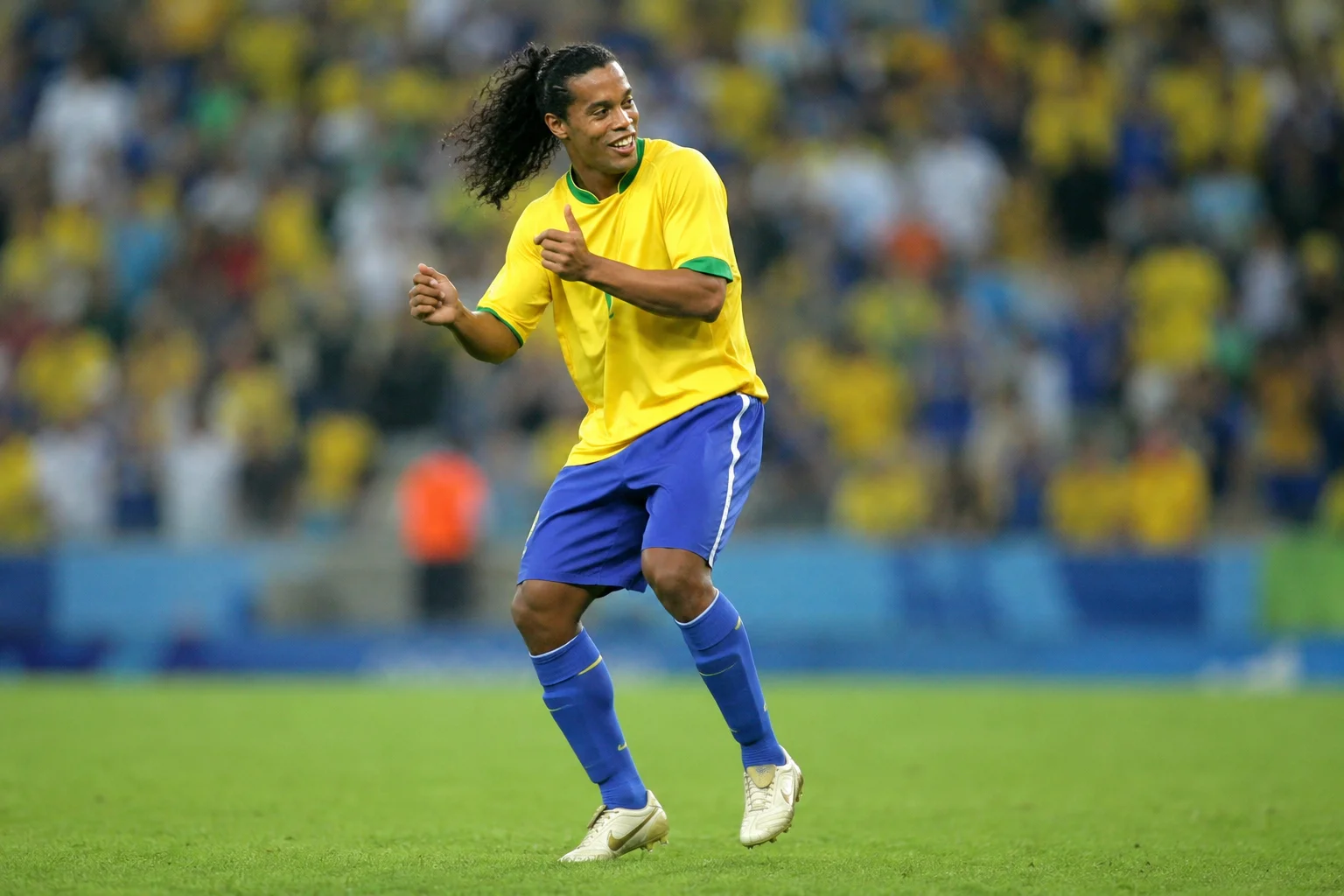
Ginga is easiest to see as a relay across generations. Garrincha, bow-legged from childhood, dribbled past defenders who knew exactly which way he was going and still could not stop him, and lit up the 1958 and 1962 World Cups doing it. Pele married it to ruthlessness, Rivellino to the elastico, Zico to tempo. Romario turned it into goals, and Ronaldinho turned it into theatre, playing with a grin that made malandragem look like the point of the whole exercise.
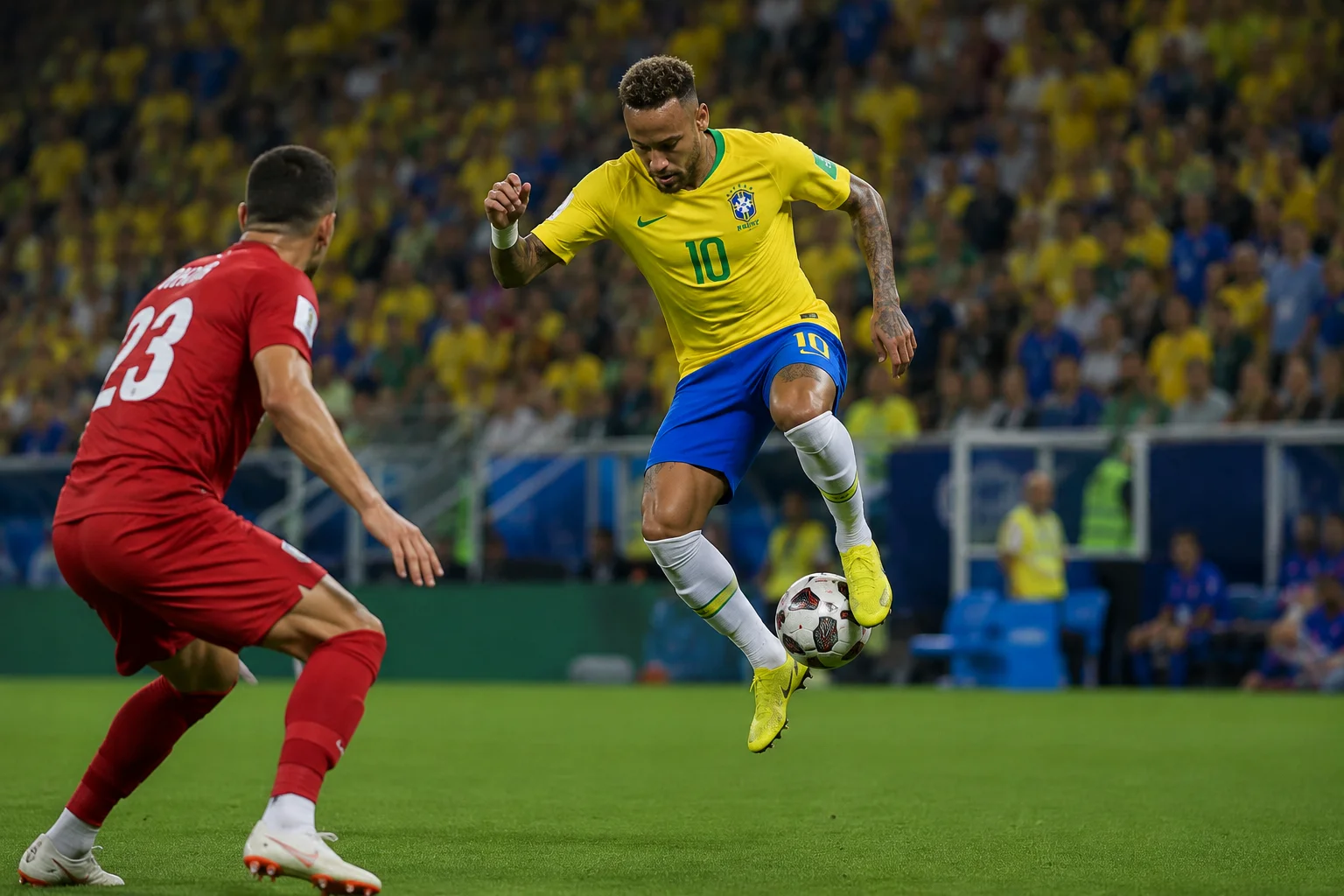
The modern carriers are fewer and more solitary. Neymar, now 34 and making what is likely his final World Cup, still trades in body misdirection. Vinicius Junior carries the flag at this tournament, with Raphinha alongside him. The roll-call of dribblers is not shorter because Brazil ran out of talented children. It is shorter because of what changed around them, and that change is worth taking seriously. For the wider context of who scored the goals that built the legend, our guide to the all-time World Cup top scorers sets the names in order.
Is ginga disappearing?
Inside Brazil, this is not a nostalgic question. It is an open argument. After the third world title in 1970, Brazil went 24 years without another, and from the mid-1990s the national side leaned harder on results and physical organisation than on improvisation. Tostao, a 1970 winner turned respected columnist, has argued bluntly that Brazilian football has become outdated, and pointed out that the country produced no great central midfielder for two decades. The mass export of players to Europe has fed a long-running fear that Brazilian football is being "Europeanised", coached toward the same pragmatic shape as everyone else.
The pipeline that once produced ginga has changed too. Where players used to develop on unsupervised street and beach pitches, talented children now enter professional academies young, perform in front of scouts and parents before they turn 13, and are sold to European clubs at 15 or 16, before the Brasileirao has even seen them. The unstructured chaos that bred invention is being replaced by an industrial development line optimised for early sale. A documentary, Ginga: The Soul of Brazilian Football, made the point years ago through ordinary players rather than stars: the style survives only as long as people choose to keep playing it. It is not guaranteed by geography.
None of this means Ginga is gone. It means it now lives in individuals rather than in the whole team, and that Brazil's identity is genuinely contested rather than automatic. When Ancelotti, an Italian, manages the most decorated nation in the sport, the debate about what Brazilian football is supposed to be stops being abstract.
Watching GINGA at the 2026 World Cup
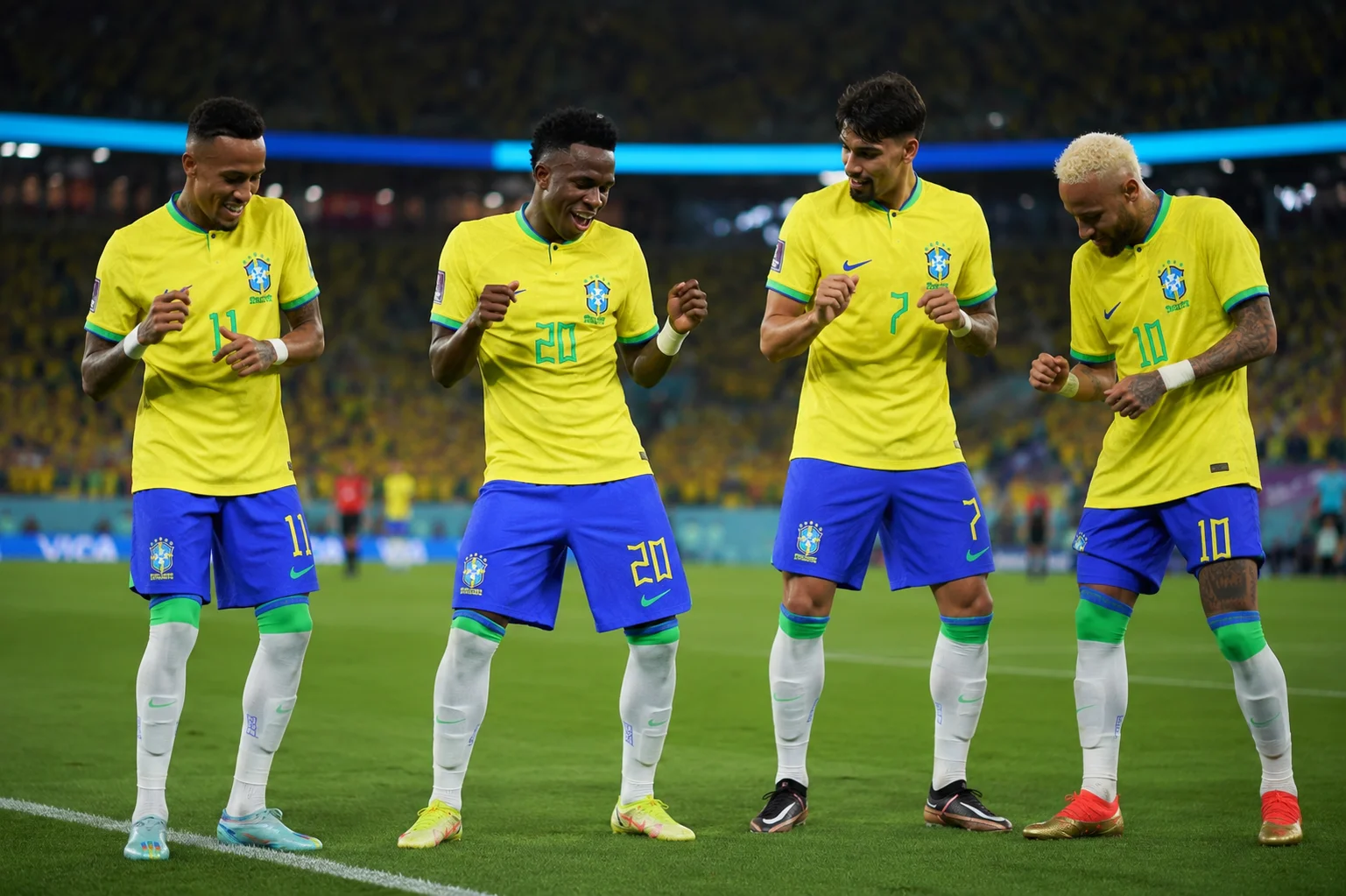
This tournament is the argument in real time. Brazil topped Group C with seven points, but did it the modern way: a flat 1-1 draw with Morocco, then routine 3-0 wins over Haiti and Scotland, the latter sealed by a Vinicius Junior brace. The flair came in flashes from a handful of players rather than from the side as a whole, with Neymar reintroduced from the bench after a calf problem. That is exactly the tension this piece is about, playing out match by match as Brazil moves into the knockout rounds.
If you want to watch it for yourself, the moments to look for are small: the drop of a shoulder from Vinicius, a disguised pass, a piece of close control in a crowd that no coaching manual asked for. Those are the survivals of a four-century-old idea about movement and escape. Brazil's last title came in 2002, and a generation has grown up waiting to see whether Ginga can still win a World Cup or whether it is now just the way the team is admired between trophies.
FAQs
1. Does Ginga have a direct English translation?
-
No single English word fits, though "sway" or "swing" gets closest to the literal movement it describes.
2. Is Ginga the same as Joga Bonito?
-
Joga bonito means "the beautiful game" and describes playing attractively, while ginga is the specific swaying movement that helps create it.
3. Did the Elastico spread beyond Brazil?
-
Yes, Algeria's Salah Assad performed his own version at running speed in the early 1980s, away from its Brazilian home.
4. Is Ginga unique to Brazil?
-
Other footballing cultures prize flair, but ginga is a specifically Afro-Brazilian tradition grown from capoeira and street play.
5. Is Ginga taught or picked up informally?
-
It is picked up young through street football and futsal rather than formally drilled in a classroom setting.
Ginga is one of the reasons a Brazil match is worth being in the stadium for rather than watching from home, and 1BoxOffice lists tickets to the 2026 World Cup backed by its 150% money-back guarantee if a confirmed order is not honoured.
Sources: Encyclopaedia Britannica; the televised Football's Greatest interview with Roberto Rivellino; the documentary Ginga: The Soul of Brazilian Football; published commentary by Tostao on the modern Brazil side; ESPN 2026 World Cup coverage.