In this guide
Four Tournaments, Same PhotographWhy Corporate Seats Stay EmptyThe 2026 Twist: Priced Out at the Bottom, No-Shows at the TopResale Is the Fix, Not the VillainFAQsOne day into World Cup 2026, and the cameras have already found the gaps. Korea Republic against Czechia at Estadio Akron in Guadalajara on 11 June showed visible empty sections throughout the match, concentrated in premium areas facing the main camera. The World Cup empty seats problem had arrived on opening night, just as it did in South Africa, Brazil and Qatar.
The frustrating part is that these matches are not undersold in any meaningful sense. Most are registered as sold out or nearly sold out on the organiser's direct channel, while fans who wanted to attend were told nothing was available. Marketplaces such as 1BoxOffice's football ticket listings exist precisely because the gap between "sold" and "occupied" creates real supply that never reaches the people who would use it.
Four Tournaments, Same Photograph
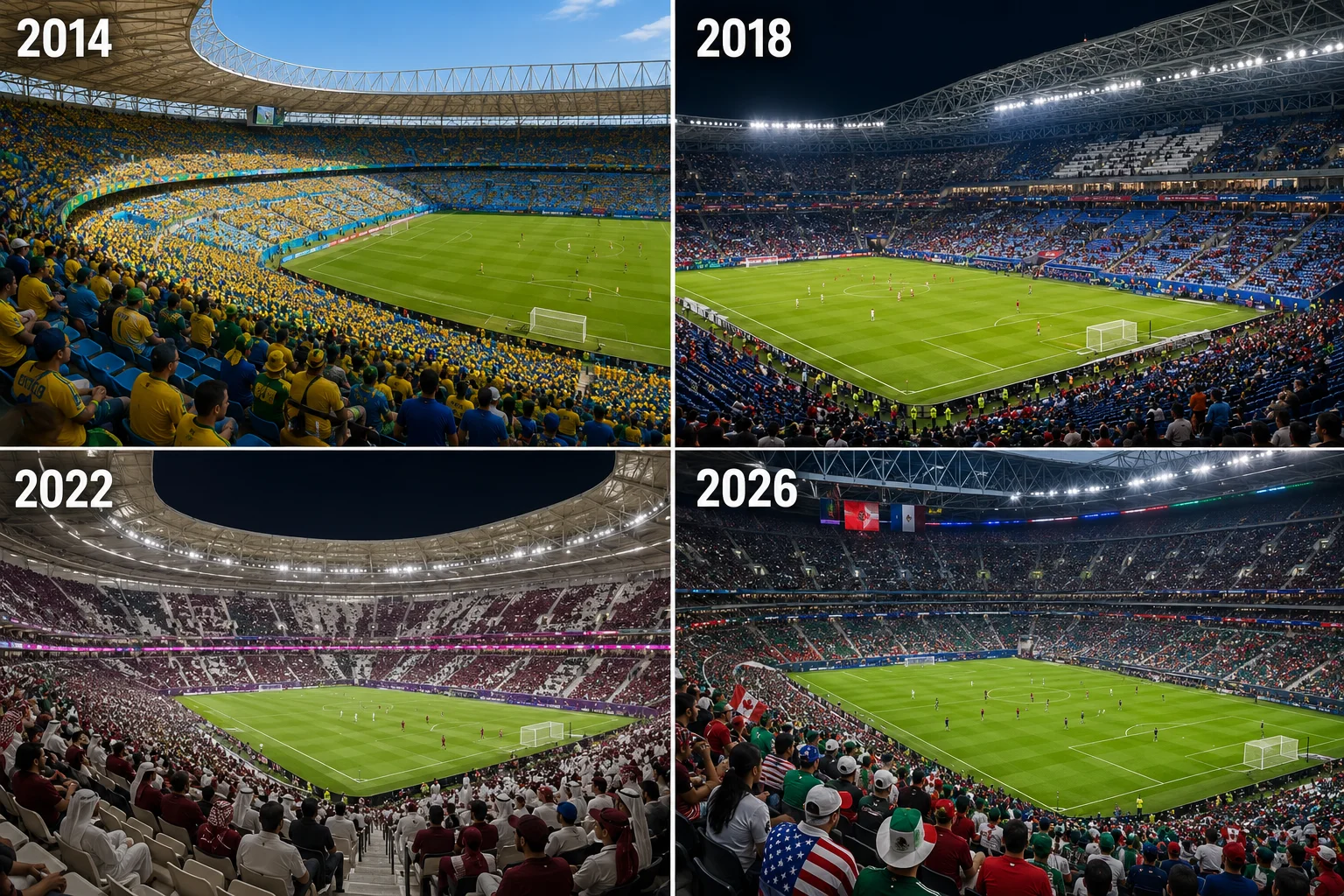
This is a structural issue, not a 2026 one. At South Africa 2010, the opening weekend produced an attendance of 31,513 at the 46,000-capacity Nelson Mandela Bay Stadium for Korea Republic against Greece, despite organisers stating only 3,000 tickets remained unsold. Their explanation at the time, reported by Reuters, blamed corporate and government ticket holders who simply did not turn up.
Brazil 2014 repeated the pattern, and a spokeswoman for football's governing body told ESPN that most gaps were uncollected tickets from holders who had not listed them for resale. Qatar 2022 went further: matches sold out on the primary platform, including the final between Argentina and France, still showed swathes of unoccupied seats, as The Athletic documented. Three continents, three ticketing systems, one identical photograph.
Why Corporate Seats Stay Empty
The mechanics are well understood from London 2012, when whole blocks of prime seats sat empty at supposedly sold-out Olympic sessions. Organisers traced the problem to sponsor and partner allocations, and Sebastian Coe threatened to name the companies responsible. Sponsors receive large ticket inventories as part of commercial packages, distribute them to clients and staff as goodwill, and a predictable percentage of those recipients never show up.
A World Cup amplifies this. Hospitality inventory in 2026 spans private suites to shared lounges across all 16 venues, and corporate buyers block-book matches months before they know which clients will want them. Three factors make no-shows worse:
- A free ticket carries no sunk cost, so skipping a midweek group match costs the recipient nothing.
- Corporate allocations cluster in camera-facing premium sections, making every absence maximally visible on television.
- Many allocation holders cannot legally or contractually resell, so an unused seat has no route back to market.
Night one at Akron Stadium fitted the template. The empty blocks during the Czech Republic side's opener sat largely in VIP areas, precisely the sections the Akron Stadium seating plan marks out as premium and hospitality territory.
The 2026 Twist: Priced Out at the Bottom, No-Shows at the Top
This tournament has added a pricing problem to the old hospitality one. Variable pricing pushed comparable entry-level seats from around $60 in Qatar to several hundred dollars in 2026, and Football Supporters Europe called the approach a betrayal of travelling fans. For the United States against Paraguay on 12 June, more than 4,400 seats remained unsold on the direct channel the night before, with the cheapest at $1,120.
The result is an oversupplied resale market sitting underneath an underfilled stadium. The Financial Times reported roughly 176,000 tickets listed on the organiser's resale exchange for the group phase as the tournament opened, with median resale prices down 20% in a month. Ticket Club data show that group-stage median listings fell 28% between February and May, from $1,291 to $928. Plenty of seats, plenty of sellers, not enough matching.
WhatsApp channel
Sports news straight to your phone
Match updates, on-sale dates and ticket news from 1BoxOffice.
Resale Is the Fix, Not the Villain
Every post-mortem reaches the same conclusion: tickets need a faster route from people who will not use them to people who will. After Brazil 2014, the governing body itself identified unlisted resale as the core failure. Economists studying the 2026 market argue that prices falling on resale platforms is the system working, since a seat sold at $400 beats a seat unsold at $1,120 for everyone except the spreadsheet.
The sanctioned exchange takes a 15% fee from the seller and another 15% from the buyer, which discourages exactly the low-margin, last-minute listings that fill stadiums. Independent marketplaces compete on that friction. A corporate holder with four unused seats at AT&T Stadium and a fan landing in Dallas on matchday morning both need a liquid market with verified delivery. When resale works, the television picture and the term "sold out" finally describe the same stadium.
Buying late also works better with the venue detail in front of you. The AT&T Stadium seating plan and the MetLife Stadium seating plan show exactly where each category sits before you commit to a listing, and MetLife Stadium stages the final on 19 July.
FAQs
1. Do empty seats mean a match was not actually sold out?
-
No, a match counts as sold out once tickets are allocated, so unused corporate and sponsor seats still register as sold.
2. Are attendance figures based on tickets issued or people through the turnstiles?
-
Announced attendances are typically based on tickets distributed rather than turnstile scans, which is why the figure can exceed what the cameras show.
3. Can late tickets still appear for World Cup 2026 matches that look unavailable?
-
Yes, listings frequently appear in the final 48 hours as holders accept they cannot attend and price to sell.
4. Is buying a resale ticket for the World Cup 2026 legal?
-
Rules vary by host country, and Mexico operates a face-value exchange under PROFECO, so check the terms attached to your specific match and seller before buying.
5. Why are resale prices for some group matches below face value?
-
Sellers who paid inflated variable prices are competing against heavy supply, so neutral fixtures in large venues are clearing below their original cost.
Empty seats are a distribution failure, not a demand failure, and a working resale market is the only mechanism that corrects it in real time. 1BoxOffice, a verified ticket marketplace established in 2006, backs every World Cup 2026 order with a 150% money-back guarantee.
Sources: The Athletic, Financial Times, Fortune, Newsweek, Reuters, ESPN, BBC Sport, Ticket Club, FIFA.