In this guide
Fraud 1: the seller who vanishes from your feedFraud 2: the cloned ticketing siteFraud 3: the screenshot that gets you nothingFraud 4: the hospitality package that isn'tFraud 5: the message that says you've wonHow to buy a World Cup ticket safelyFAQsBefore a single match of this summer's World Cup had kicked off, criminals were already cloning the tournament's ticketing website to take fans' money. The FBI's Internet Crime Complaint Centre issued a public warning on 27 May 2026 about spoofed sites and expects more to appear. That is the shape of World Cup ticket scams in 2026: not crude fakes, but convincing copies aimed at supporters chasing seats across the United States, Canada and Mexico. Football ticket fraud was already climbing fast, up 36% in the six months to March 2026 on Lloyds Bank figures, and banks and the government expect this tournament to be the biggest target yet.
What makes the World Cup such fertile ground is how its tickets work. Every genuine ticket is mobile only and lives inside one app, with no paper, no PDF and no attachment that opens a gate. Whether you are chasing England World Cup tickets or a seat at a neutral match, the safe route is a verified marketplace or the tournament's own channels, and once you understand how a real ticket moves, the cons below stop working.
Three facts decide everything this summer. Entry is mobile only, on your own phone. A ticket can only pass from one person to another inside the app, even when the money changes hands somewhere else. And the QR code that opens the gate appears only a few hours before kick-off. Every scam in this playbook breaks at least one of those rules.
Fraud 1: the seller who vanishes from your feed
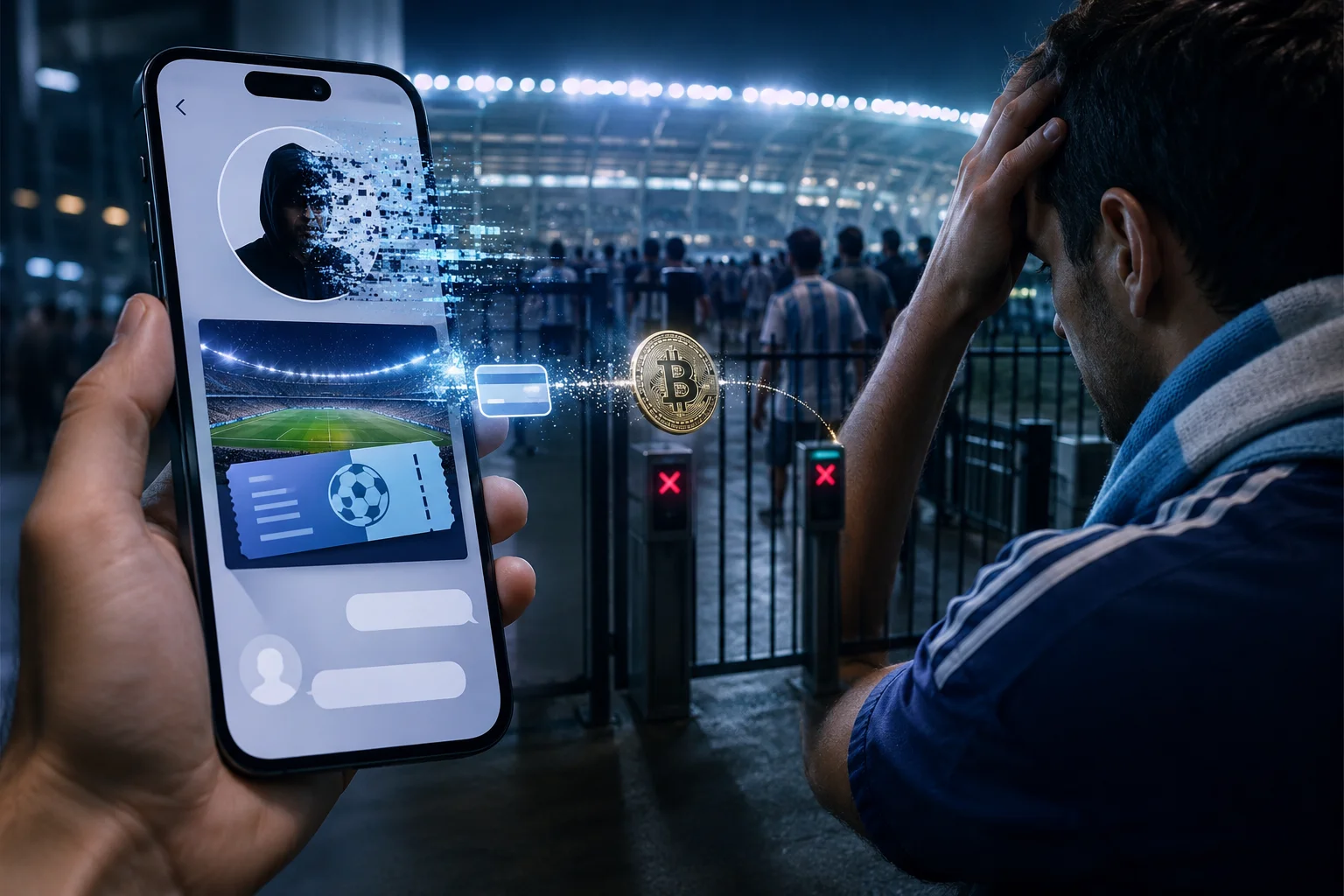
This is the volume crime, and demand for sold-out World Cup matches is rocket fuel for it. Lloyds Bank reports that 76% of football ticket fraud cases begin on social media, and the method rarely changes: a listing for a sought-after fixture, often well below face value, paid upfront and then silence.
The World Cup tell is built in. Because a ticket can only be handed over inside the app, anyone offering to email it, post it or send a photo is selling something that cannot get you through the gate. Watch for sellers steering you towards cryptocurrency or a transfer to an overseas account, which are chosen precisely because that money is the hardest to recover.
Fraud 2: the cloned ticketing site
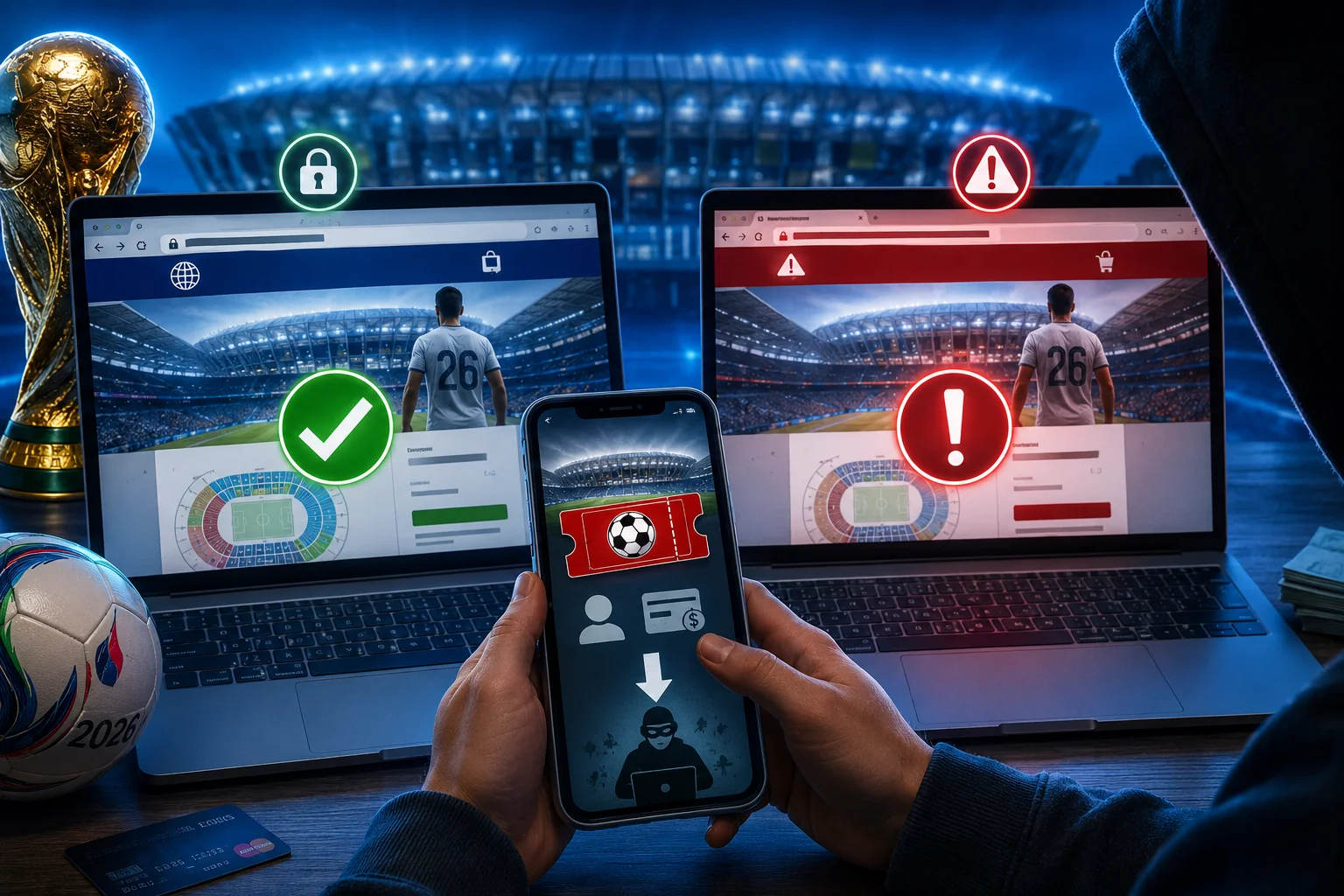
This is the scam the FBI singled out. Fake sites copy the genuine web address with a single letter changed or an unusual ending, such as .live or .sale, while others are convincing shopfronts built to take a payment and disappear. Paid adverts and sponsored search results are a common way fans land on them, often while hunting for last-minute World Cup seats.
The fix costs nothing. Type the web address yourself rather than trusting an advert, a search result or a link in a message, and never send money to a personal account for a tournament ticket.
Fraud 3: the screenshot that gets you nothing
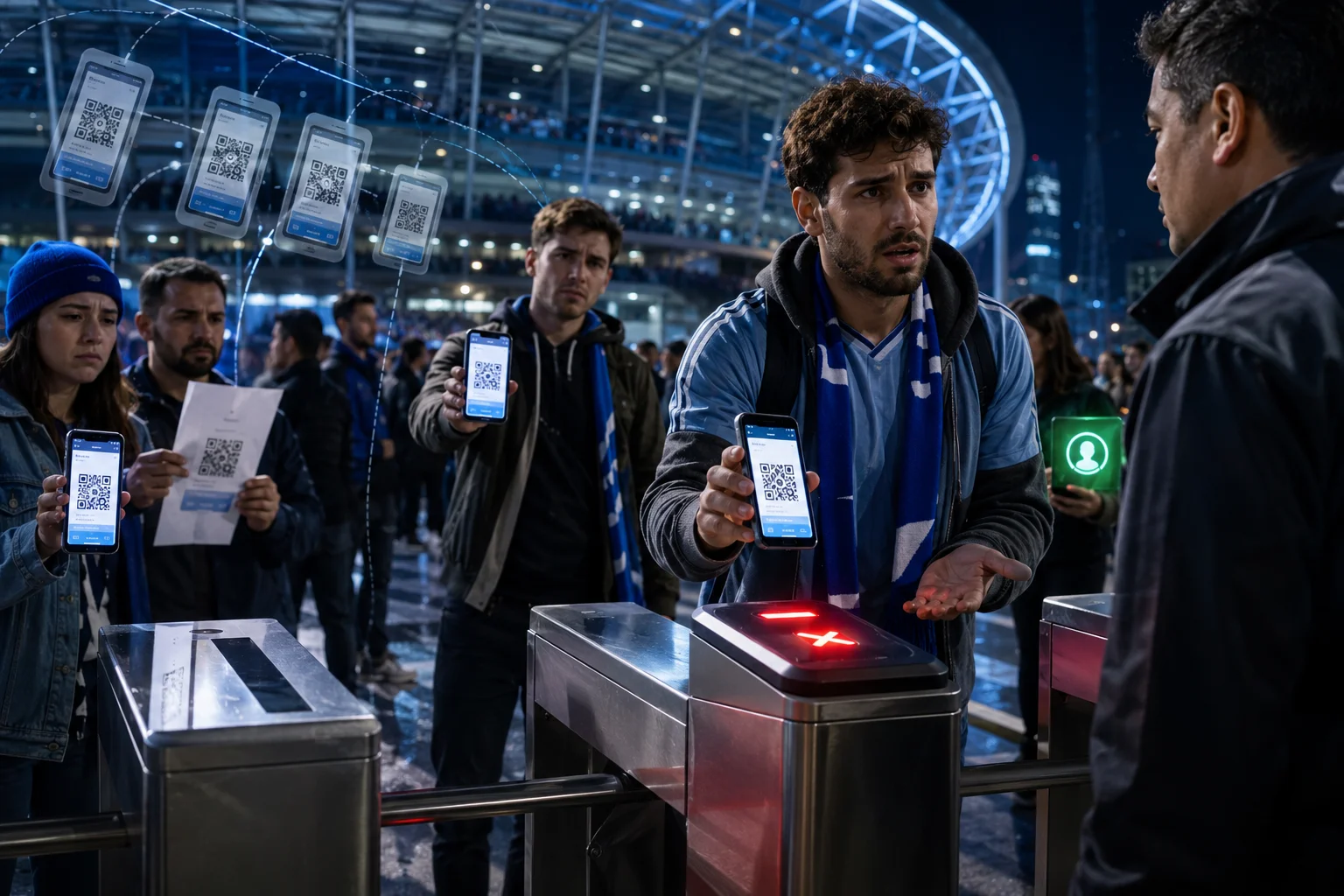
This one exists only because of how 2026 works. Since the gate QR activates shortly before kick-off, a screenshot, a photo or a printout is useless at the stadium, yet scammers still sell them as tickets, sometimes selling the same image to several buyers. The same trick covers sellers listing seats they have not bought, or quietly selling one ticket twice.
Our guide on how to spot a fake ticket covers the wider warning signs. For the World Cup, the rule is simple: a transfer has to be accepted inside the app, so if the ticket is not sitting in your own account, you do not have one.
WhatsApp channel
Sports news straight to your phone
Match updates, on-sale dates and ticket news from 1BoxOffice.
Fraud 4: the hospitality package that isn't
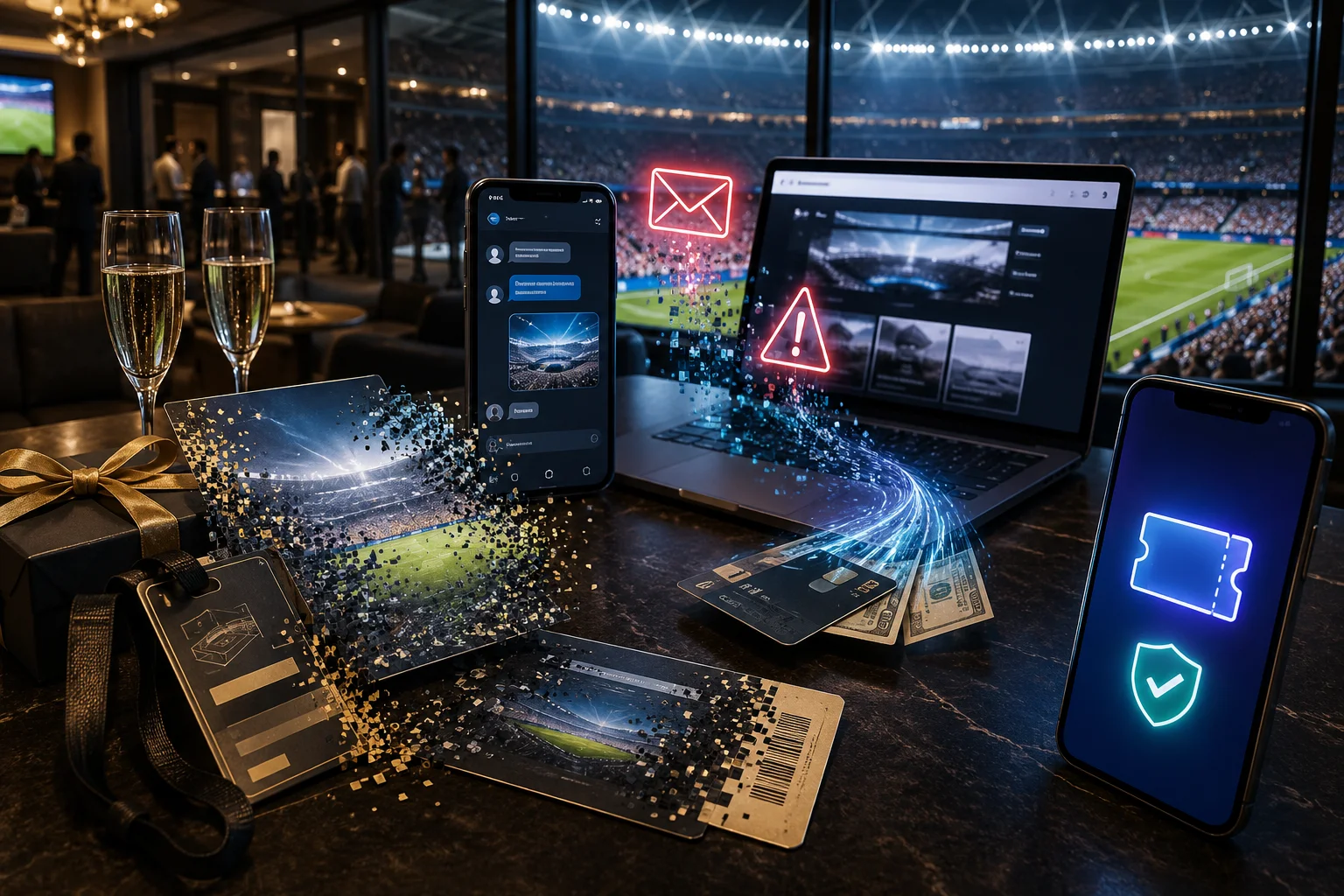
The premium tier is the most lucrative con because a high price still looks plausible, so the losses run into thousands. A single appointed provider sells genuine World Cup hospitality; those packages cannot be listed on the tournament's resale marketplace, and each one is delivered through the app.
That makes the rule easy. Any VIP or hospitality deal offered through a social account, a cold email or an unfamiliar website is a red flag, whatever the brochure promises.
Fraud 5: the message that says you've won
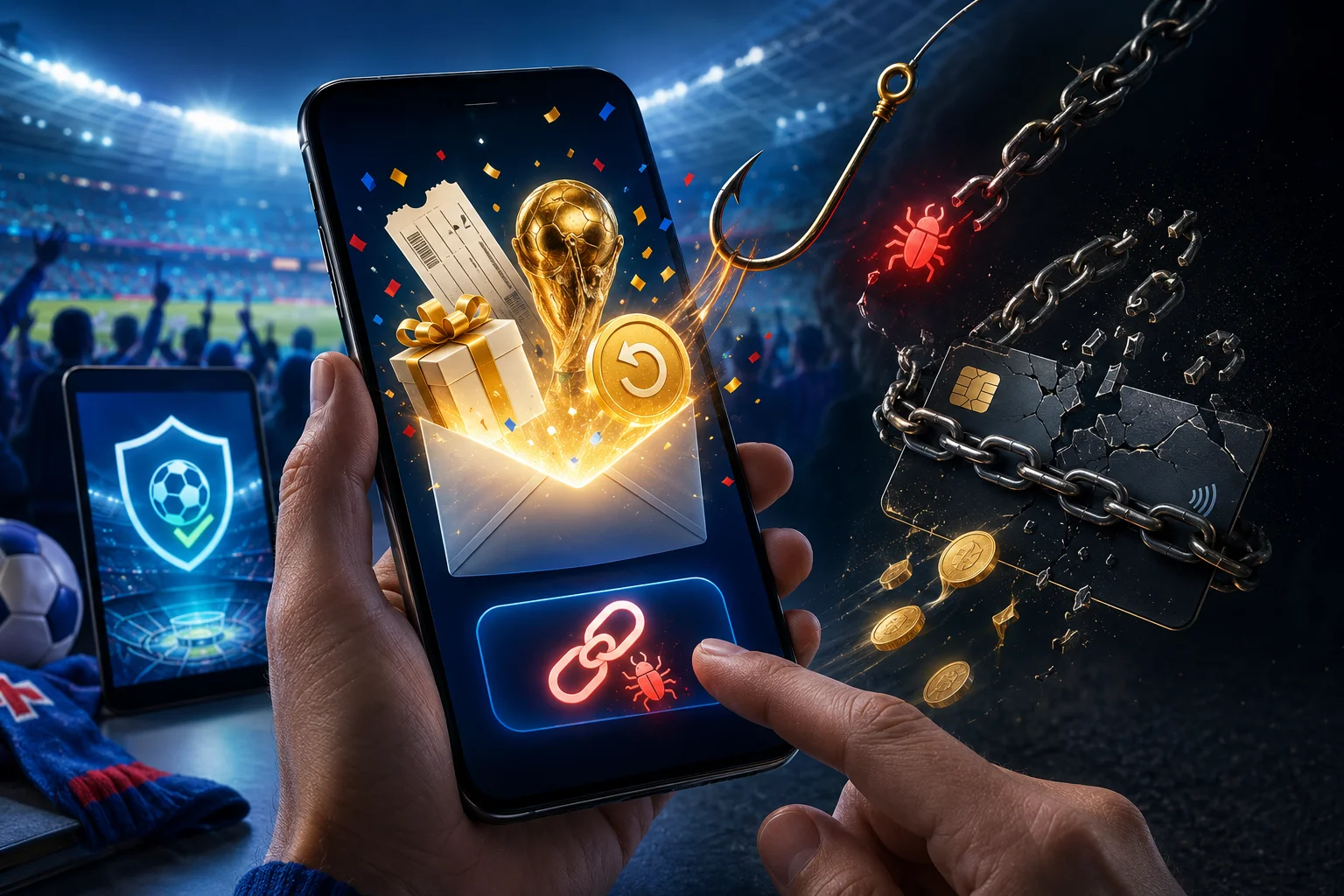
The last fraud sells nothing and steals from you directly. Emails, texts and direct messages claim you have won World Cup tickets, a hospitality prize or a refund, then ask you to confirm card details or pay a small release fee, and some links carry malware. Real ballot and resale emails are reaching fans right now, which is exactly why the fakes look believable.
Two habits end it. A prize for a draw you never entered is bait, and you never pay a fee to release a free ticket. When a message points you somewhere, open the app or the site yourself instead of tapping the link.
How to buy a World Cup ticket safely
Buying safely is not complicated. Use a verified marketplace such as 1BoxOffice, trading since 2006 with a 150% money-back guarantee, or the tournament's own channels, and create an account so any ticket lands somewhere you control. Pay by card where you can, since credit card purchases over £100 carry protection under Section 75 of the Consumer Credit Act 1974 if the tickets never arrive.
If you have already ordered, you can track your order rather than relying on a seller's word, and it is worth checking whether you need a Fan ID and what the three host countries ask of visiting supporters before you travel.
FAQs
1. I missed the ballot. Is there still a safe way to get a World Cup ticket?
-
Yes, you can buy through the tournament's appointed resale marketplace or a verified marketplace, but treat any private seller in a chat or direct message as high risk.
2. Can I resell my own World Cup ticket if my plans change?
-
Yes, but only through the tournament's appointed resale marketplace, because a sale arranged anywhere else cannot move a valid ticket into the buyer's app.
3. What happens if my World Cup ticket is voided at the gate?
-
If a ticket was double-sold or never properly transferred, it can be cancelled, and you are refused entry, which is why a guaranteed source matters more than a low price.
4. Are last-minute World Cup ticket deals more likely to be scams?
-
Often yes, because fraudsters use the pressure of a looming kick-off to rush fans into paying before they have verified anything.
5. Is a World Cup ticket priced below face value a warning sign?
-
Usually, because genuine resale for a high-demand tournament rarely drops under face value, a bargain on a sought-after match is the classic bait.
World Cup scams run on urgency and the fear of missing out, and a tournament this size supplies plenty of both. Buying from 1BoxOffice, a verified marketplace established in 2006 with a 150% money-back guarantee, puts that risk on people who can stand behind the ticket, not on you.
This article is general guidance, not legal advice.
Sources: the FBI Internet Crime Complaint Center; the US Federal Trade Commission; Lloyds Bank; Action Fraud; the UK government Stop! Think Fraud campaign; the Consumer Credit Act 1974.