In this guide
The Ticket Gets Harder to Find the Further the Cup GoesWhy Away Fans Get More Seats in the Cup Than in the LeagueWhat Rule 20 Means for the Price on Your TicketNo Season Ticket, No Membership: Where the Door Actually IsWembley in April and May: Ballots, Allocations and the 30,000 Nobody SeesDigital Tickets, ID Checks and the Name on the ScreenThe Law on Resale, as It Stands in September 2026Buying an FA Cup Ticket on 1BoxOfficeFAQsHow to buy FA Cup tickets depends on which round you are looking at, because the competition's own rules change the answer as it goes. A qualifying tie in September is usually a walk-up at the turnstile with a £10 minimum written into the regulations. The final at Wembley on Saturday 22 May 2027 has no public sale at all: the two finalists took 28,700 tickets each in 2026 and every one of them went through club loyalty schemes.
Article Summary: Buying a ticket for the FA Cup in 2026/27 works differently at each stage. Early rounds are sold by the home club, often on the day. From the third round, Premier League and Championship clubs sell to season ticket holders and members first. Wembley semi-finals and the final are distributed by ballot and loyalty points, so neutrals and overseas supporters rely on the resale market.
- The 2026/27 FA Cup third round is on Saturday 9 January 2027 and the final is on Saturday 22 May 2027 at Wembley, according to the Football Association's published round dates.
- FA Cup rules allow the visiting club to claim up to 15% of the home ground for every tie before the semi-finals, subject to the local Safety Advisory Group.
- Manchester City and Chelsea each received 28,700 tickets for the 2026 final, later topped up above 30,000, with adult prices from £50 to £285.
- Under Rule 20, the home club sets cup prices immediately after the draw with a £10 minimum for adults, and there is no £30 away cap in the FA Cup.
Because the route narrows at every round, the listings on 1BoxOffice change character through the season: club-sold seats being passed on in January, then Wembley allocations appearing on the FA Cup semi-final tickets page once the quarter-finals are settled in April. This guide covers the rules behind each stage, who actually sells the ticket, what it should cost and what the law says about resale as of September 2026.
The Ticket Gets Harder to Find the Further the Cup Goes
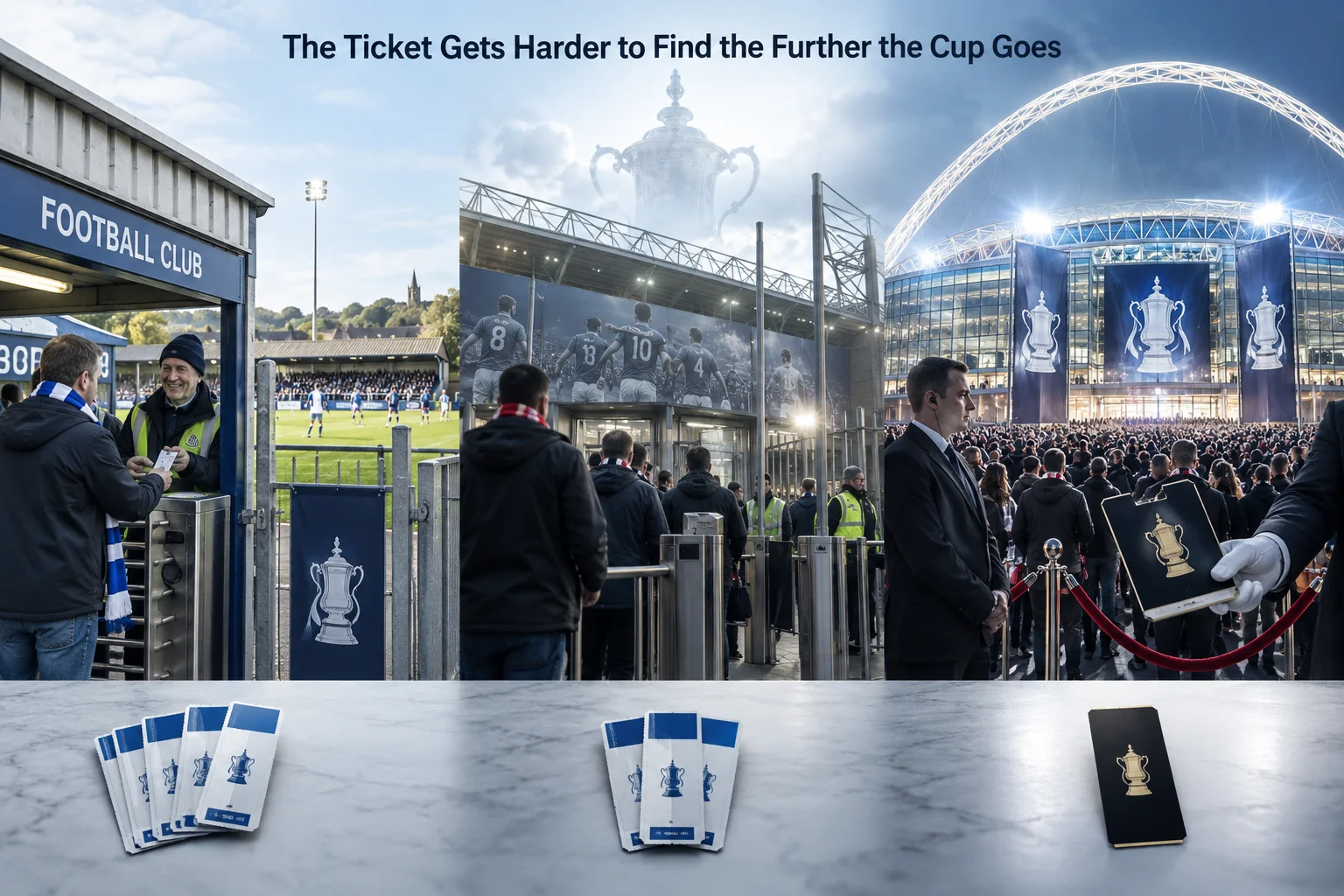
Most competitions get easier to attend as the field shrinks. The FA Cup does the opposite. The Extra Preliminary Round in August is played at grounds where anyone can pay at the gate. By the semi-finals, 33,350 tickets per club are sold inside membership schemes and the gate is effectively closed to the public.
| Stage (2026/27 dates) | Who sells the ticket | Realistic route for a non-member |
|---|---|---|
| Qualifying rounds, 8 August to 17 October 2026 | Home club, often at the turnstile | Pay on the day, but check first: many non-league grounds are now card-only or online-only |
| First and second round proper, 7 November and 5 December 2026 | Home club online and in person | General sale is common at League One and League Two grounds |
| Third to fifth round, 9 January to 6 March 2027 | Home club to season ticket holders, then members, then any general sale | Resale market for Premier League ties; general sale at smaller hosts |
| Quarter-finals, 3 April 2027 | Home club, loyalty points usually required | Resale market |
| Semi-finals, 24 April 2027 (Wembley) | Each club sells roughly 33,000 seats by ballot and loyalty | Resale market; no public sale |
| Final, 22 May 2027 (Wembley) | Each finalist sells roughly 30,000 seats by loyalty tiers | Resale market; no public sale |
Two things the table cannot show. Kick-off times move constantly: 22 of the 32 third-round ties in January 2026 were shifted for television, leaving only ten at 3pm on the Saturday, according to the Football Supporters' Association. And replays are gone. From 2024/25 every tie from the first round proper is decided on the day, so a lower-league club drawn away no longer gets a second ticketed fixture at home.
Why Away Fans Get More Seats in the Cup Than in the League
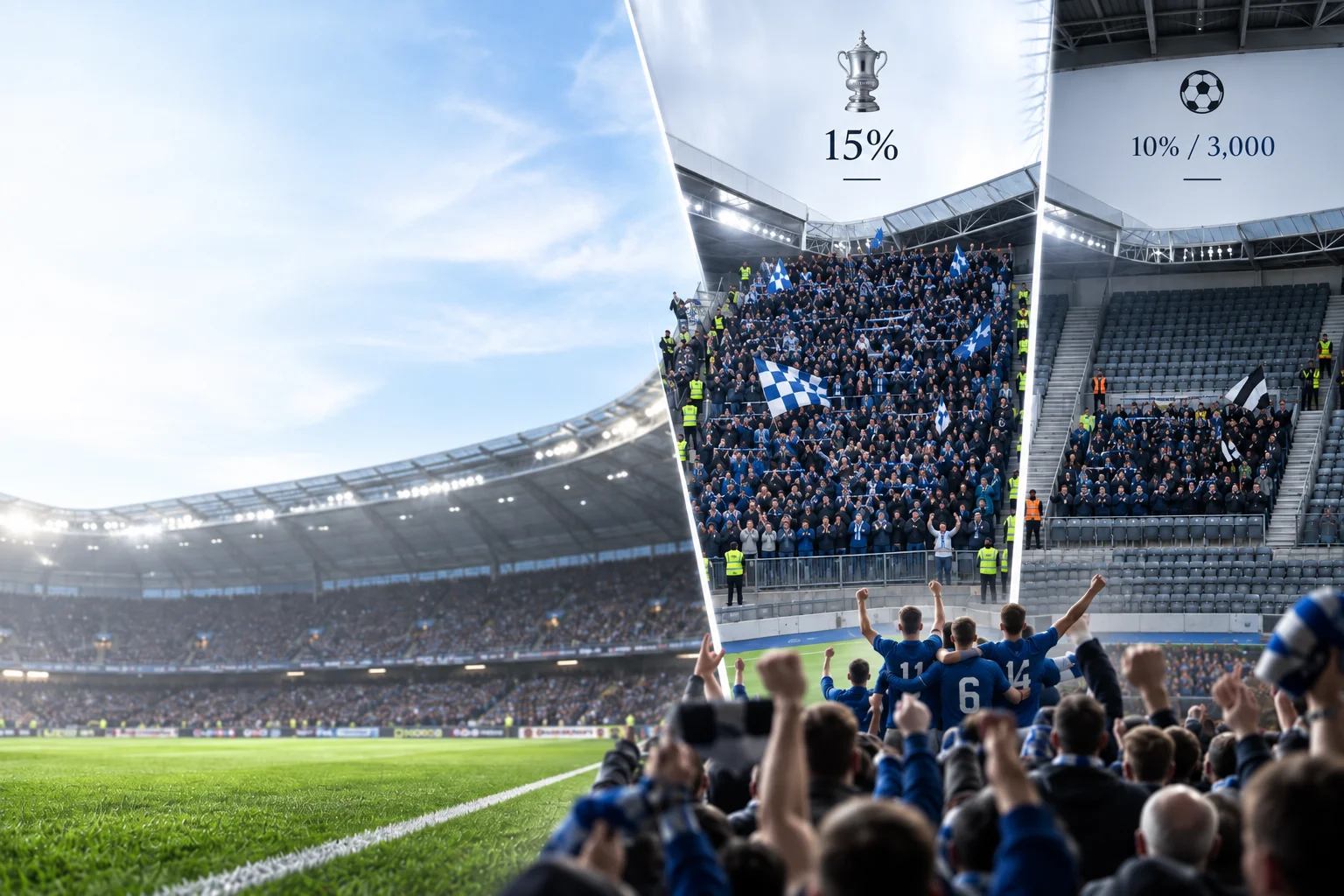
The away end is bigger in the FA Cup by rule. Regulation 21 gives the visiting club the right to claim up to 15% of all ticketed accommodation in every tie before the semi-finals, provided the seats sit in a fully segregated area. The Premier League's own rule is a minimum of 3,000 tickets, or 10% of capacity at grounds under 30,000. At a 60,000-seat ground, 15% is 9,000 seats against a league minimum of 3,000.
The 15% is a ceiling, not a promise. The number has to be approved by the local Safety Advisory Group, the panel of council, police and fire service representatives that issues the ground's safety certificate, and it can cut the figure. Arsenal's SAG restricted Everton, Liverpool and Tottenham to a little over 5,100 seats each at the Emirates in 2014 when the rules pointed to around 9,000, and the Football Association confirmed at the time that the SAG decision stands. In practice, allocations at the largest grounds are capped at around 9,000 even where 15% would be higher.
The money explains why lower-league clubs celebrate an away draw. Net gate receipts in the competition proper are split 45% to each club with 10% going to the prize pool, regardless of whose ground the tie is played at. A League Two side drawn at Old Trafford earns the equivalent of several home sell-outs from one afternoon.
What Rule 20 Means for the Price on Your Ticket
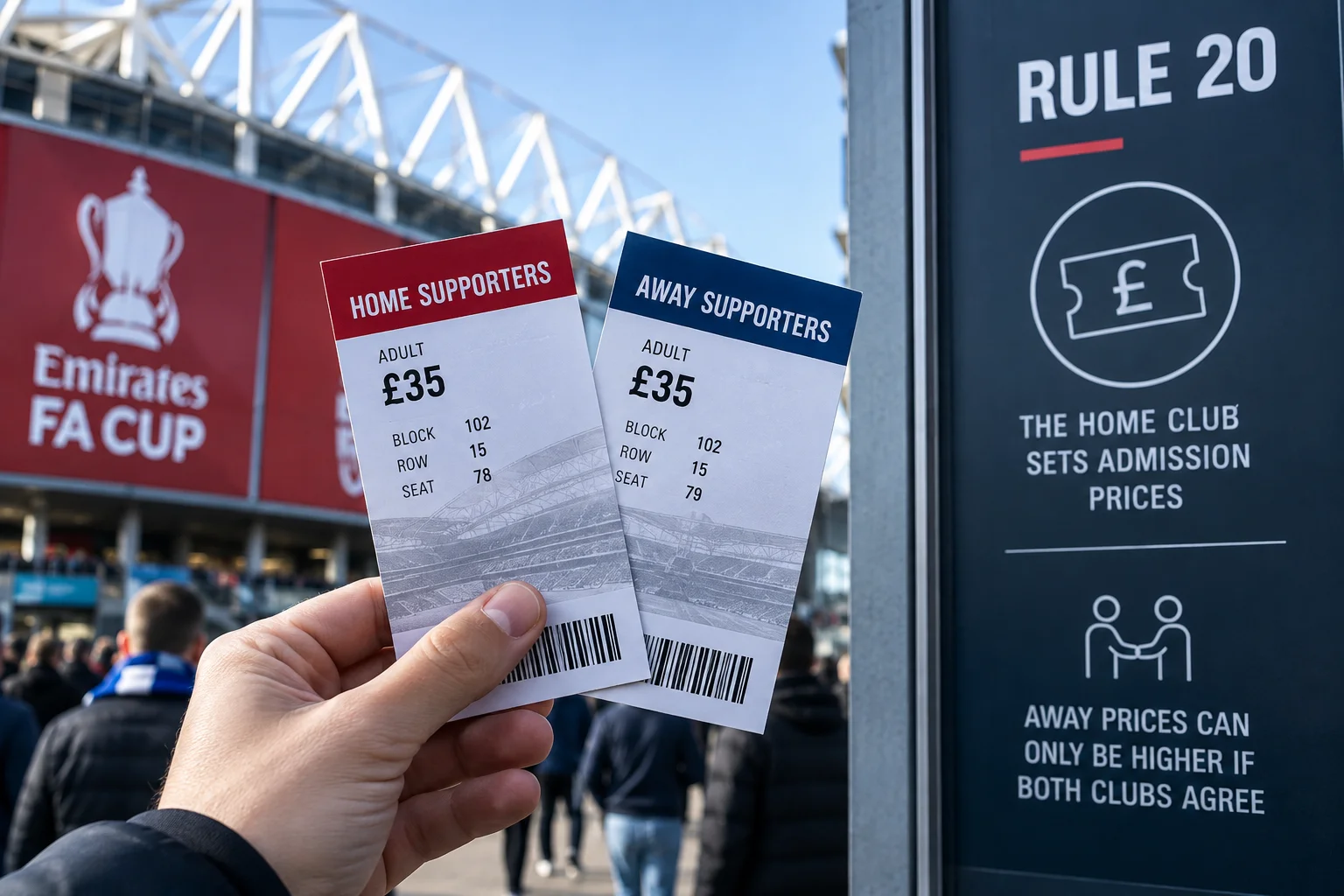
The home club decides the price. Rule 20 of the competition states that immediately after the draw the home side sets admission prices, with a £10 minimum for every adult and concessions permitted below that. Away supporters can only be charged more than home supporters in equivalent seats if both clubs agree, which is why away prices usually mirror the home category rather than sitting above it.
What the rule does not do is cap anything. The £30 limit on Premier League away tickets, which the 20 clubs have extended through the 2027/28 season, does not apply to cup ties. Manchester United charged Brighton supporters £55 for the third-round tie at Old Trafford in January 2026, a fixture that cost £30 in the league, and the FSA has recorded Fulham fans paying £52 to £61 at the same ground in 2025. Wembley is different: the FA retained a £30 lowest band for 9,800 fans of each club at the 2025 semi-finals after FSA lobbying, and the 2026 semi-finals ran from £30 to £150 for adults and £20 to £130 for concessions at Leeds United and Chelsea.
WhatsApp channel
Sports news straight to your phone
Match updates, on-sale dates and ticket news from 1BoxOffice.
No Season Ticket, No Membership: Where the Door Actually Is
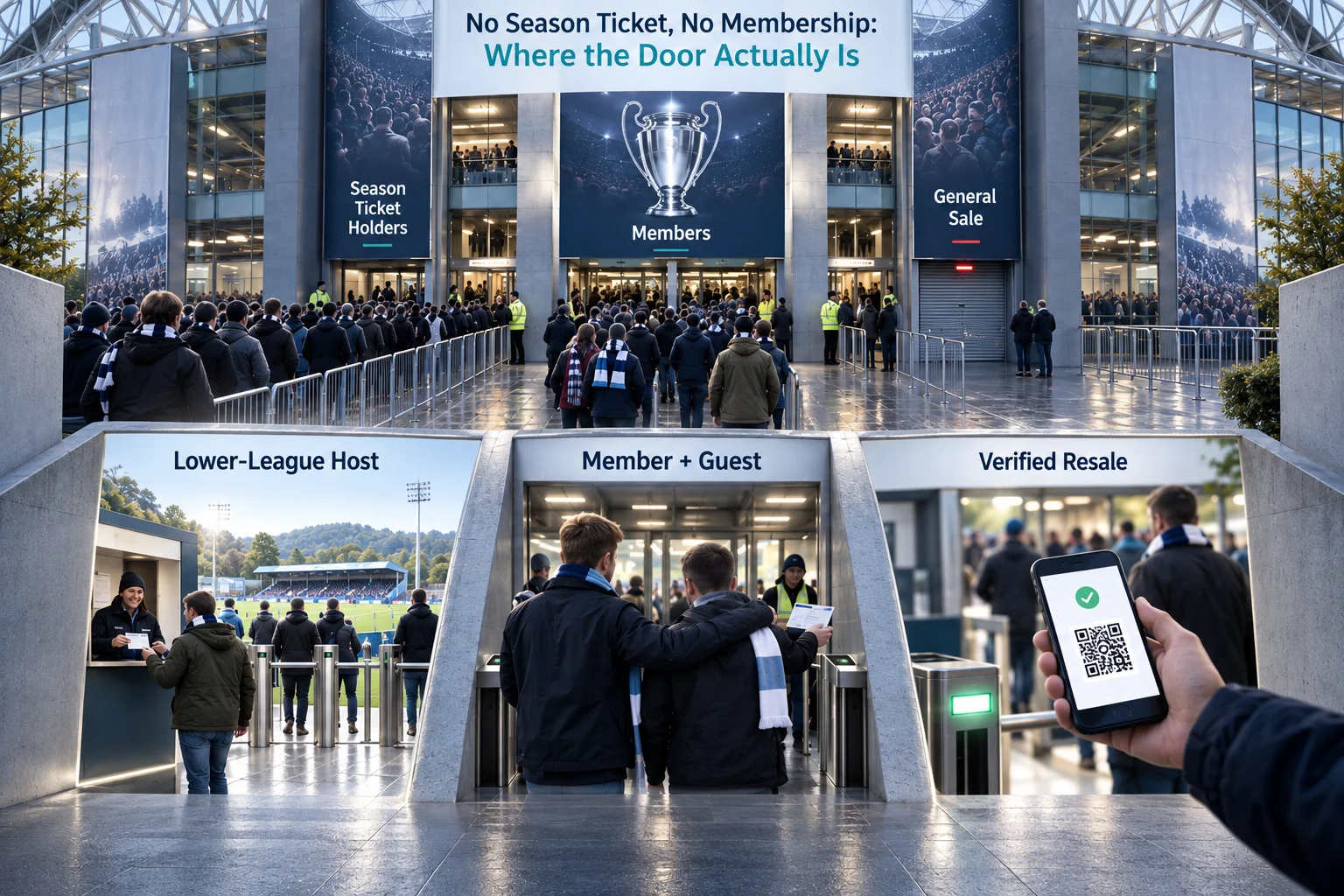
Club sales for a cup tie run in a fixed order. Season ticket holders buy first, members follow ranked by loyalty points and general sale opens only if seats remain, which at a Premier League host against a big-name opponent they rarely do. The mechanics mirror what we set out for Premier League tickets without a membership, with one extra obstacle: membership schemes at many clubs stop taking new members months before the third-round draw in early December, and loyalty points build over seasons rather than weeks, so a January decision is already too late for that season.
Loyalty thresholds at Wembley show how tight the funnel is. Leeds United's 2026 semi-final tracker ballot was open only to members who had bought eight or more home matches that season, and the club put the success rate at around 50%. Chelsea sold its 2024 semi-final to members with 35 loyalty points before opening a lower tier at 30, then 25. A supporter who joined a membership scheme that autumn had no realistic chance under either system.
That leaves three routes for a non-member. Target ties at League One and League Two hosts in the first three rounds, where general sale still happens. Use a friend's membership for a member-plus-guest purchase where the club permits it. Or buy a ticket that a member cannot use, which is where a verified marketplace sits, with the 150% money-back guarantee at 1BoxOffice covering the order if the seat fails to admit you on the day.
Wembley in April and May: Ballots, Allocations and the 30,000 Nobody Sees
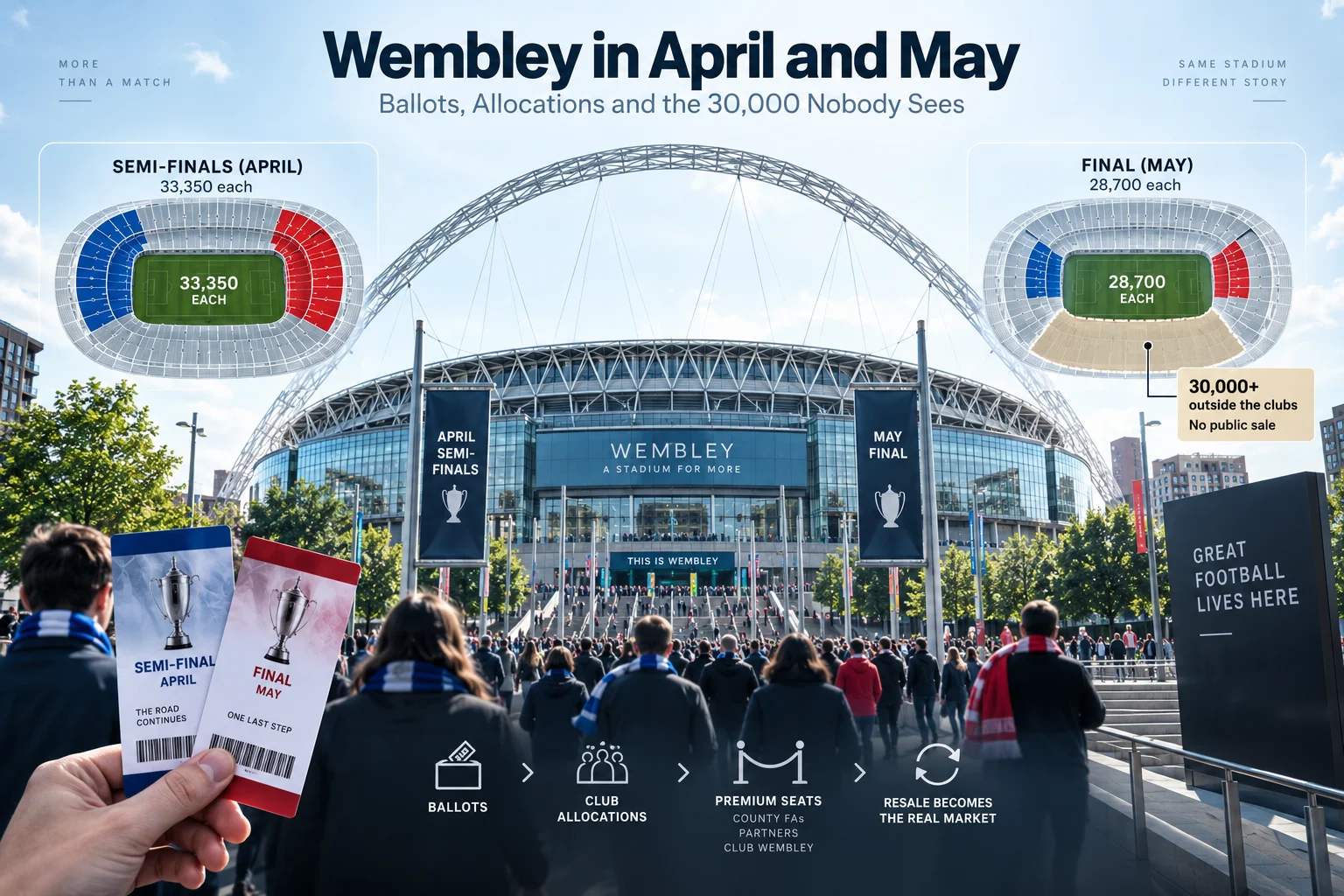
The semi-final allocations are generous and the final's are not. In April 2026, Leeds United, Chelsea, Southampton and Manchester City each received 33,350 seats for their semi-finals, roughly 74% of Wembley Stadium between the two clubs. Manchester City handed thousands back unsold. For the final on 16 May 2026, the same two finalists were given 28,700 each, down from 30,786 the year before, with a later top-up that BBC Sport reported would take both above 30,000.
That still leaves around 30,000 seats outside the two clubs. They go to county football associations, grassroots clubs and volunteers, competition partners and Club Wembley members, whose packages were priced between £2,730 and £13,458 as of May 2026 according to Goal. None of it reaches a public sale. For a neutral, a Gulf-based supporter flying in for the weekend or a fan whose ballot application failed, the resale market is the only market.
Prices for the 2026 final give the best guide until the 2027 tiers are published, and the Wembley seating plan shows which blocks each category covers. Adults paid £50 in Category 4, £80 in Category 3, £125 in Category 2, £175 in Category 1, £255 on Level 2 and £285 in Premium Level 2, according to the Chelsea and Manchester City ticket notices, with concessions from £40 to £265. Kick-off was 3pm. The 2027 final's kick-off time and prices had not been announced as of 9 September 2026.
Digital Tickets, ID Checks and the Name on the Screen
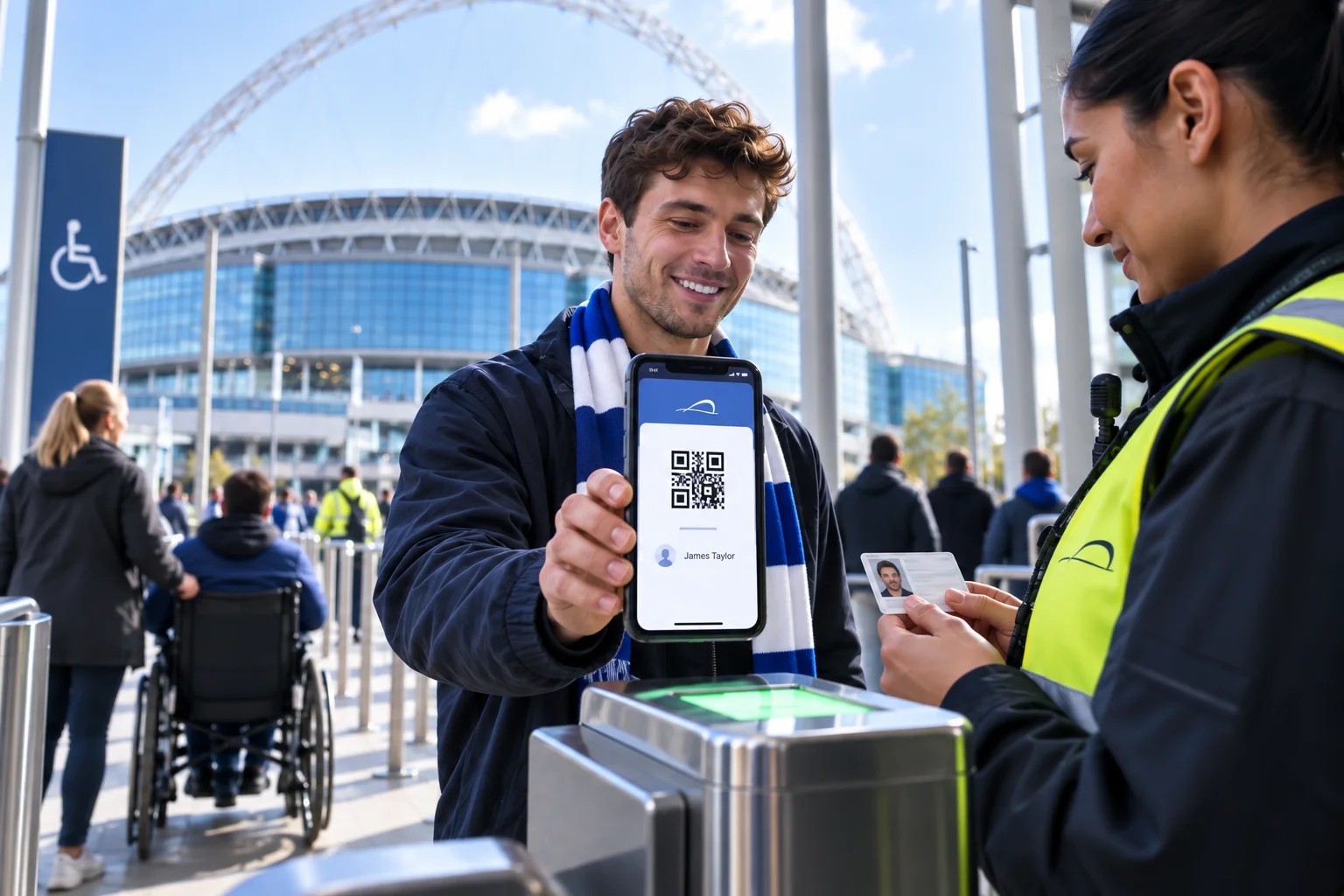
Every Wembley cup ticket is now digital. Both 2026 finalists confirmed the entire allocation was issued to Apple or Google Wallet and emailed in the week of the match, with each ticket sent to the supporter it was assigned to rather than to the lead booker. Screenshots do not scan. Wembley runs ID checks at a sample of turnstiles and a ticket in someone else's name can be refused entry, so a buyer on the resale market should expect a transfer through the wallet or the club app rather than a forwarded image.
Accessible seating is handled by each club's access team, not the general portal. Chelsea and Manchester City each received 100 wheelchair bays with a free personal assistant seat for the 2026 final, priced at the lowest category, and Leeds United's semi-final allocation carried the same 100-bay provision. Earlier rounds follow the host club's normal away-match process for disabled supporters.
The Law on Resale, as It Stands in September 2026
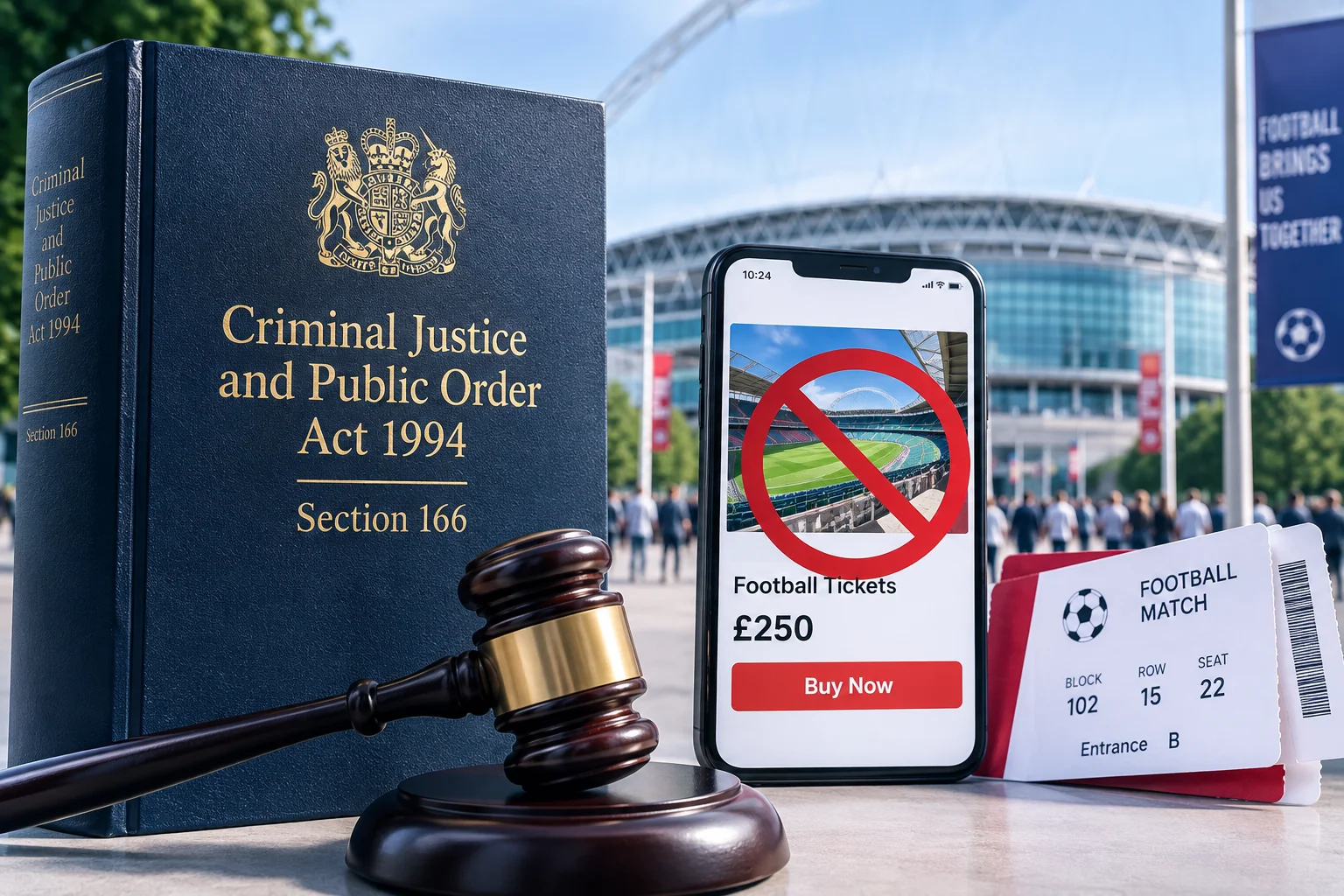
This is general guidance, not legal advice. Football is the one sport in England and Wales where unauthorised resale is a criminal offence. Section 166 of the Criminal Justice and Public Order Act 1994 makes it an offence for anyone not authorised in writing by the home club or the match organiser to sell or dispose of a ticket for a designated match, punishable by a fine. The offence sits with the seller, and clubs cancel tickets they trace to unauthorised listings, which is why buyer protection matters more in football than at a concert.
The wider law is moving but has not moved yet. The government confirmed in November 2025 that it would legislate for a face-value resale cap, then used the King's Speech on 13 May 2026 to announce a draft Ticket Tout Ban Bill for pre-legislative scrutiny alongside a Sporting Events Bill for major tournaments. As of September 2026 the draft bill has not been introduced to Parliament and the cap is not law. What already applies is the Consumer Rights Act 2015, which requires every resale listing to show the face value, the seat location and any restrictions. A listing that hides those three things is the first warning sign; our guide on how to spot a copied football ticket covers the rest.
Buying an FA Cup Ticket on 1BoxOffice
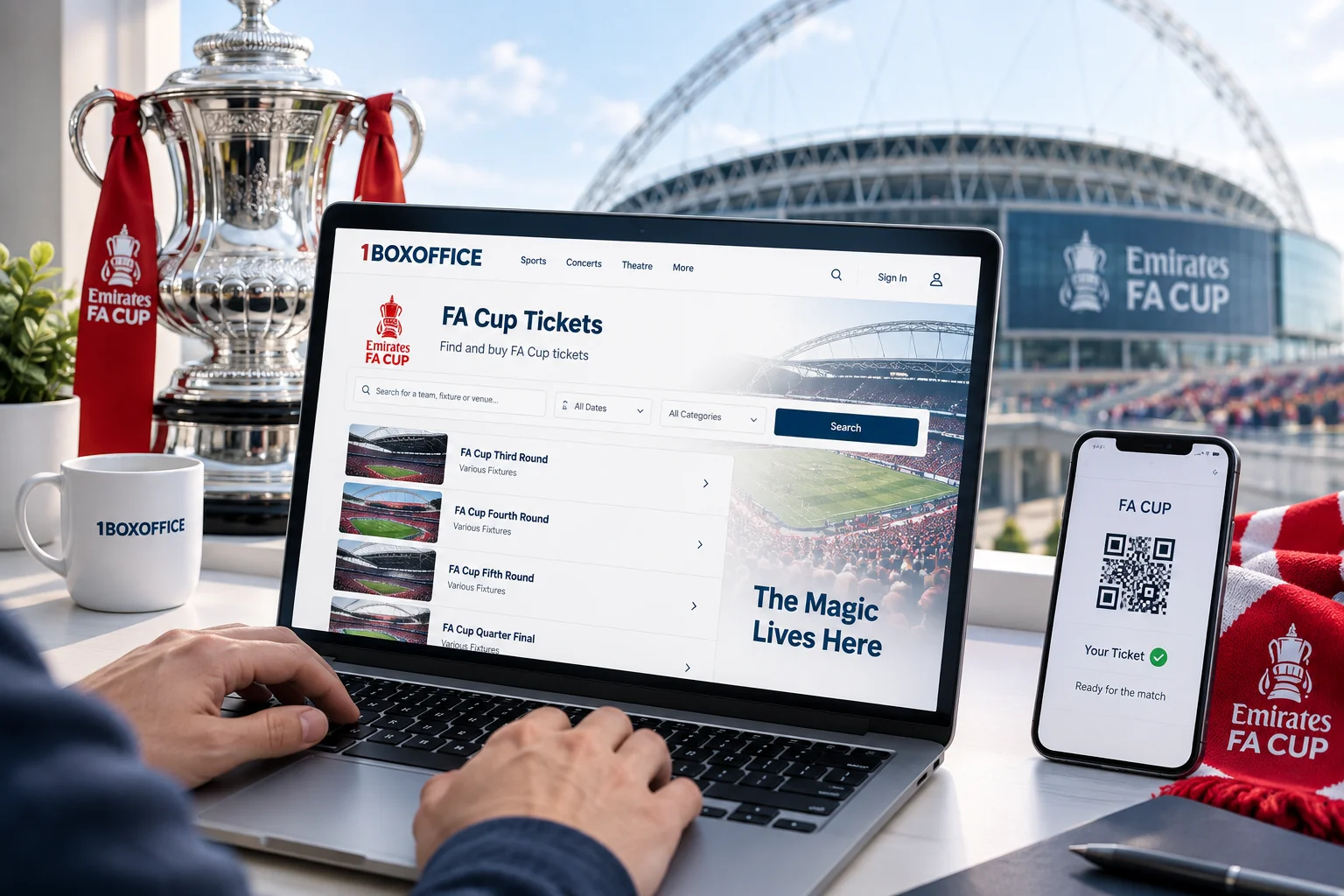
Step1
Find your fixture
Cup ties are listed once the draw is confirmed. The third-round draw is made in early December, so check back after each draw rather than months ahead.
Step2
Create or log in to your account
Set up an account at 1BoxOffice register before the draw. Cup listings move quickly in the 72 hours after a big tie is drawn.
Step3
Select your seat
Filter by price, quantity and area. For Wembley ties decide on Level 1, 2 or 5 before you filter, because the tiers price and sell very differently.
Step4
Review before checkout
Read the seller notes. Confirm the delivery method is a wallet or app transfer for Wembley, check whether seats are together and recheck the kick-off time against your travel.
Step5
Complete payment
Pay through the secured checkout. Every order is covered by the 150% money-back guarantee if the ticket fails to grant entry on the day.
Step6
Track your order
Follow delivery status through track order. Wembley tickets are typically released in the week of the match, so a late delivery date is normal.
FAQs
1. Are FA Cup replays still played in 2026/27?
-
Replays were abolished from the first round proper onwards in 2024/25 under a six-year agreement, so every drawn tie now goes to extra time and penalties on the day.
2. What time does the 2027 FA Cup final kick off?
-
The Football Association has confirmed the date as Saturday 22 May 2027 but had not announced the kick-off time as of September 2026; the 2026 final kicked off at 3pm.
3. Can children attend FA Cup matches at Wembley?
-
Children need their own ticket from the age of two, junior concessions typically run to age 15 and the licensed safe standing areas at Wembley admit nobody under 12.
4. Do clubs charge a booking fee on FA Cup tickets at Wembley?
-
Yes, and it varies by club: Leeds United added £3 per ticket and Southampton £2.50 per ticket for the April 2026 semi-finals.
5. How many FA Cup semi-final tickets can one member buy?
-
Clubs set their own limit, usually one ticket per member in the loyalty windows, rising to a maximum of three per person once unsold seats are released, as Chelsea did in April 2026.
The FA Cup rewards supporters who understand its rules before the draw, not after. 1BoxOffice has listed cup tickets since 2006 and covers every order with a 150% money-back guarantee, which matters most at the stage where the club window has already closed.
Sources: The Football Association, Football Supporters' Association, Chelsea FC, Manchester City FC, Leeds United FC, Southampton FC, BBC Sport, legislation.gov.uk, House of Commons Library, Slaughter and May.