In this guide
Sold out does not mean goneWhy the biggest matches disappear firstThe routes that still workWhat a sold-out seat really costsSpotting a scam before it costs youBuying safely when the sign says sold outFAQsBy late June 2026, more than 5 million World Cup tickets had gone from an expected pool above 6 million, and across the first 60 matches stadiums ran at 99.7% of capacity. That is what a sell-out looks like at scale, and why tickets for sold-out matches feel impossible to find the moment you want them. The seats have not vanished. They have moved off the front page.
The same pattern repeats every season, from a Premier League derby to a Clasico in Madrid. When a marquee fixture clears its counters, the question is not whether seats still exist but where they move next and how to reach them safely. The World Cup 2026 knockout rounds, running right now, are the sharpest example going.
Sold out does not mean gone
A sold-out sign means one thing: the primary allocation, the seats a club or tournament sells first, has run dry. It says nothing about the seats that keep moving after. Fans drop out, plans change, season-ticket holders relist games they cannot attend.
Those seats surface through a handful of controlled channels, from the World Cup's own resale marketplace to verified secondary marketplaces across the club calendar. Availability is thin and unpredictable, but real.
Why the biggest matches disappear first
Club football locks up its best seats long before a general sale. Season tickets, member ballots and priority windows swallow the inventory, leaving neutrals almost nothing. That membership barrier is exactly why fans look for ways to buy tickets without a membership, and why a club like Real Madrid can read as sold out for weeks when it never opened a public sale in the first place.
The World Cup added a twist in 2026: dynamic pricing, used at the tournament for the first time. Prices now move like airline fares, rising when a tie draws heavy interest and easing when it does not. Add brokers buying early to resell, and the seats reaching ordinary buyers thin out fast.
The routes that still work
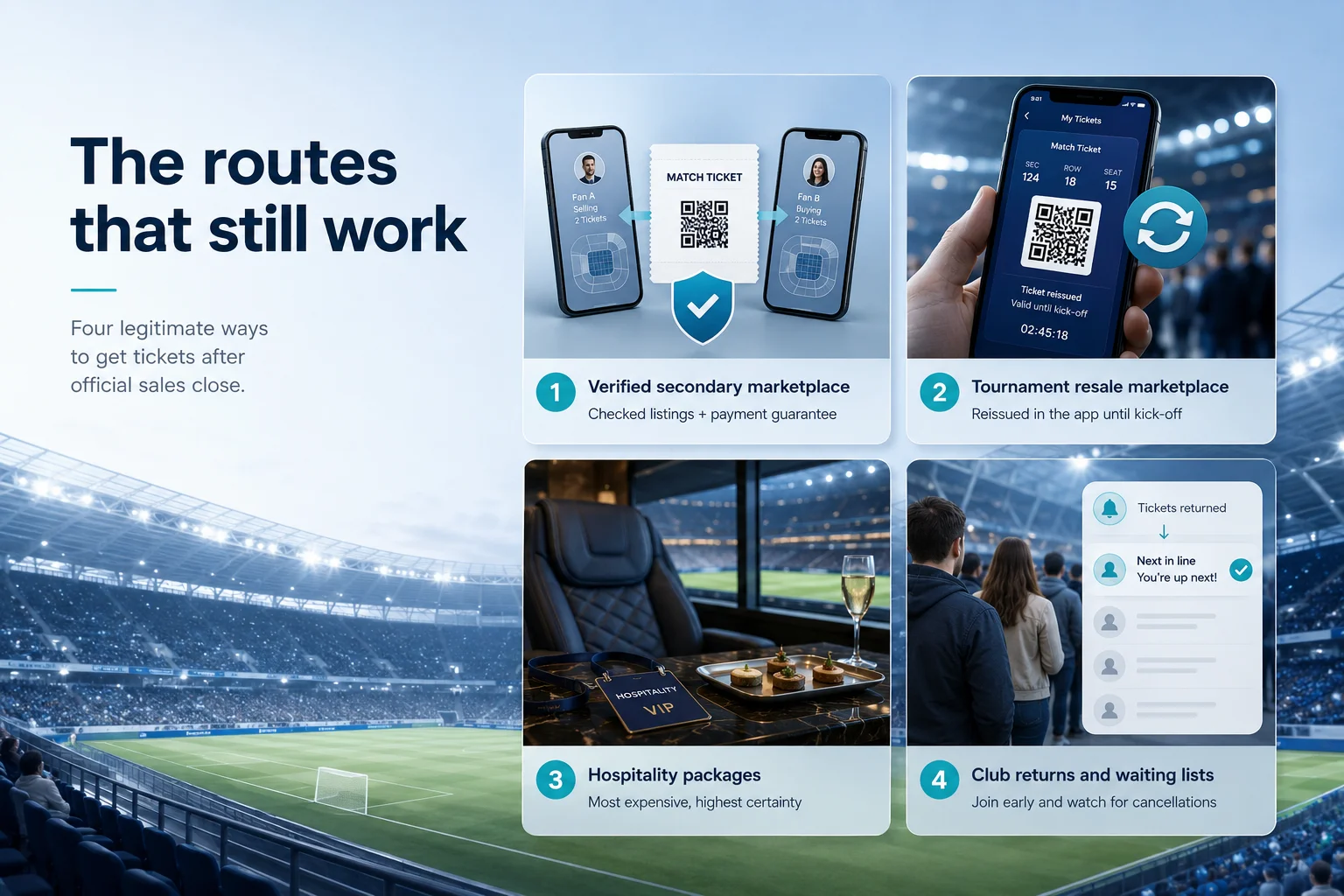
When the counters close, four legitimate paths remain, each with a different price and level of certainty:
- A verified secondary marketplace, where fan-to-fan listings are checked and a guarantee protects the payment if a ticket fails.
- The World Cup's own resale marketplace, open until kick-off, with tickets reissued to the buyer through the tournament app.
- Hospitality packages, the priciest route but the surest, bundling a seat with premium extras.
- Club returns and waiting lists, worth joining early even when the odds look long, since cancellations feed straight back in.
WhatsApp channel
Sports news straight to your phone
Match updates, on-sale dates and ticket news from 1BoxOffice.
What a sold-out seat really costs
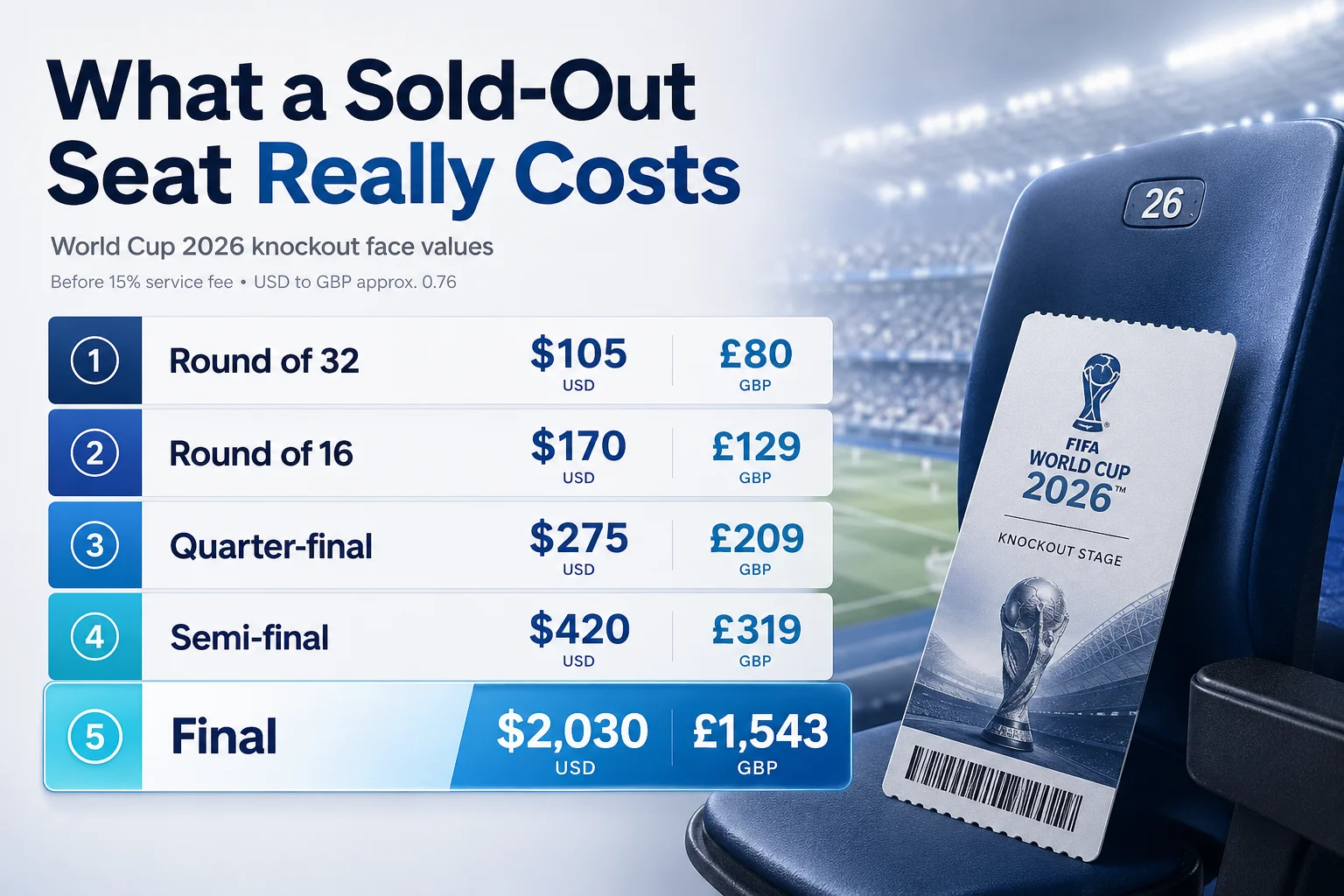
Face value is the honest anchor, because resale is built on top of it. The bands below are World Cup 2026 knockout face values, before the 15% service fee at checkout. Sterling is converted at $1 to roughly £0.76, accurate late June 2026.
| Round | Face value from (USD) | Approx. from (GBP) |
|---|---|---|
| Round of 32 | $105 | £80 |
| Round of 16 | $170 | £129 |
| Quarter-final | $275 | £209 |
| Semi-final | $420 | £319 |
| Final | $2,030 | £1,543 |
Resale sits well above those floors for anything in demand. As the group stage closed in late June 2026, the tournament-wide resale average sat near $1,100 (about £836), with the lowest final listings running into five figures. Prices often ease in the final week or two as sellers cut losses, so patience can pay on a neutral tie even as a blockbuster holds firm. Our guide to buying World Cup final tickets has the full breakdown.
Spotting a scam before it costs you
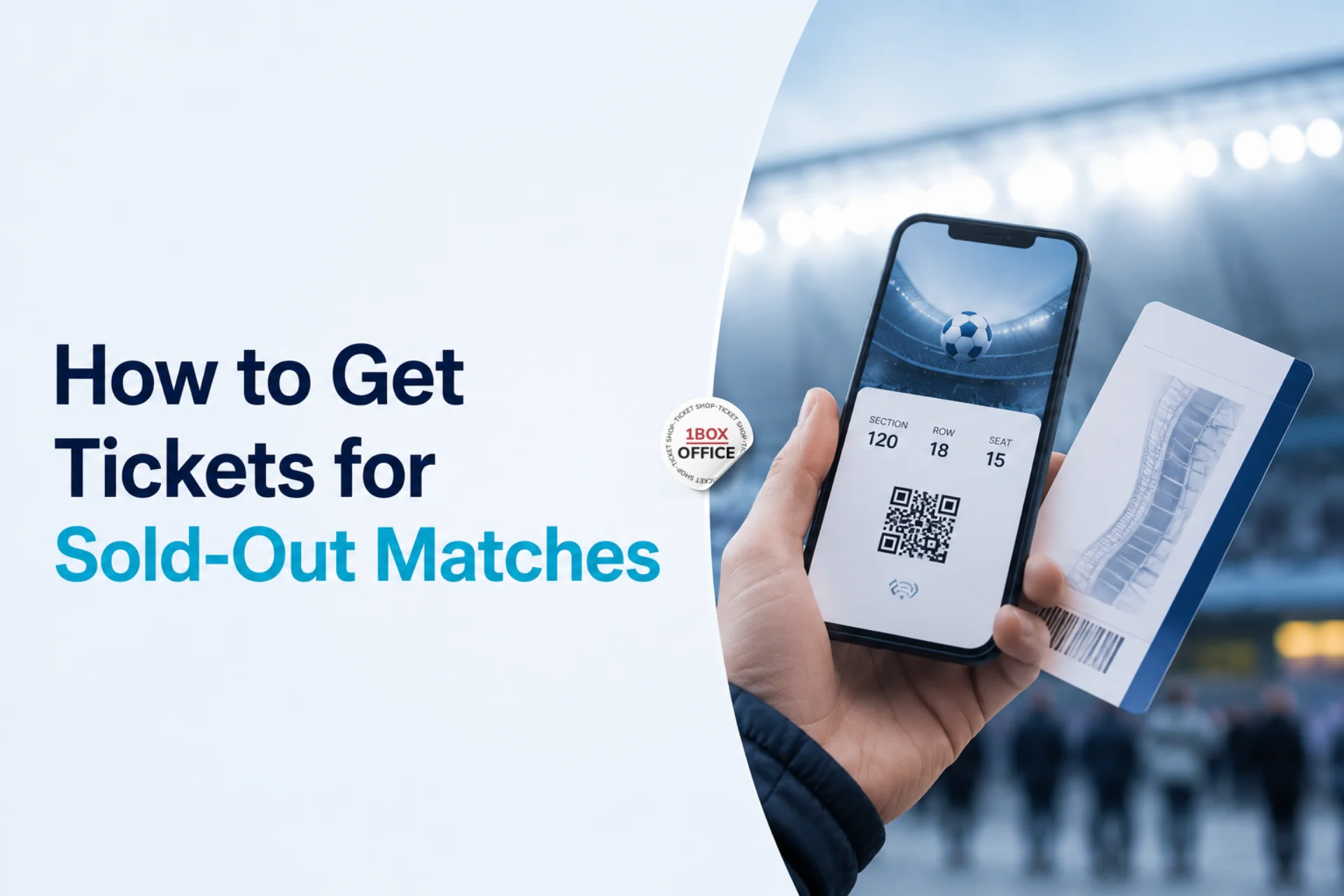
Scarcity is the scammer's best friend, and a sold-out match is the exact pressure they exploit. The red flags rarely change. Be wary of a seller who wants payment by bank transfer, gift card or crypto, who offers a screenshot as proof, who prices a hot ticket suspiciously low or who rushes you before you can check. World Cup 2026 tickets are mobile-only barcodes with no sales at any stadium, so a paper ticket or screenshot for the tournament is a giveaway. Our breakdown of how social media ticket scams work sets out the full playbook.
Buying safely when the sign says sold out
A few habits stack the odds in your favour. Set up and verify your account before a big sale, so you are not fumbling with details when a seat appears. Keep a card ready and a realistic budget in mind, and buy only where the payment is protected, so a failed ticket refunds rather than vanishes. If you plan to chase the knockouts, register early and act the moment inventory shows.
FAQs
1. Can I still get into a World Cup match on the day it kicks off?
-
Resale listings can appear up to an hour before kick-off on the tournament platform, so a late seat is possible but not guaranteed.
2. Are resale tickets valid to get through the turnstile?
-
A ticket bought through a verified marketplace transfers a fresh barcode into your name, and that is what the gate scans.
3. Do sold-out prices always drop before kick-off?
-
They often ease in the final week or two as sellers cut losses, though a marquee tie can hold firm or climb.
4. What happens to my ticket if my team is knocked out?
-
World Cup tickets are non-refundable if a side exits, but you can relist a seat you cannot use.
5. Is a secondary marketplace safe for a sold-out match?
-
A verified marketplace with a money-back guarantee protects your payment if a ticket fails; a private social-media seller cannot.
Sold out is a starting point, not a dead end. 1BoxOffice has traded verified football tickets since 2006 and backs every order with a 150% money-back guarantee, so a closed box office need not end your matchday.
Sources: FIFA, ESPN, Associated Press, Newsweek, Football Supporters Europe. 1BoxOffice is not the official ticket agent of any club, league or federation. Prices may differ from face value and were accurate at the time of writing.