In this guide
All 15 Facts at a Glance1. Everton Began as a Chapel Football Team2. Anfield Was Everton's Ground First3. Why Are Everton Called the Toffees?4. The Tower on the Crest Is a Village Lock-Up5. No Club Has Played More Top-Division Seasons6. Nine League Titles, None in the Premier League Era7. Dixie Dean Scored 60 League Goals in One Season8. Five FA Cups and the First Numbered Shirts in a Final9. The 1985 Cup Winners' Cup Is the Only European Trophy10. Two League Cup Finals, Both Lost After Replays11. Goodison Park Staged a World Cup Semi-Final12. Hill Dickinson Stadium Holds 52,76913. The Merseyside Derby Has Run Unbroken Since 196214. Everton Lost Points Twice in One Season15. Who Owns Everton?Frequently Asked QuestionsEverton left Goodison Park in May 2025 after almost 133 years and moved into a 52,769-seat stadium on the Liverpool waterfront. The club behind that move helped found the Football League, has played more top-division seasons than any other in England and has waited since 1995 for a major trophy. These 15 Everton facts run from a chapel cricket team in 1878 to a possible change of owner, with figures as of November 2026.
Article Summary: Everton FC were founded in 1878 as St Domingo's, are nicknamed the Toffees and have played at Hill Dickinson Stadium on the Liverpool waterfront since August 2025. The club has won nine league titles, five FA Cups and the 1985 European Cup Winners' Cup and is playing its 73rd consecutive top-flight season in 2026/27 under David Moyes.
- Hill Dickinson Stadium, home of Everton since August 2025, holds 52,769 and is a host venue for UEFA Euro 2028.
- Everton have won nine English league titles, the first in 1890/91 and the most recent in 1986/87, all before the Premier League began in 1992.
- Dixie Dean scored 60 league goals for Everton in 1927/28, a record for one season in the English top flight that still stands.
- The 2026/27 season is Everton's 124th in the top division of English football, more than any other club.
- The Friedkin Group has owned Everton since 19 December 2024 and said on 9 October 2026 that it was considering the sale of a controlling interest.
Everton are 14 years older than Liverpool FC and were playing league football at Anfield before their neighbours existed. To watch the Toffees in person, our Everton tickets cover home and away matches throughout the 2026/27 season.
All 15 Facts at a Glance
| # | Fact | Key figure |
|---|---|---|
| 1 | Everton began as a chapel football team | Founded 1878 as St Domingo's |
| 2 | Anfield was Everton's ground first | 1884 to 1892 |
| 3 | The Toffees nickname has two rival origins | Two sweet shops in Everton village |
| 4 | The tower on the crest is a village lock-up | Built in 1787, on the crest since 1938 |
| 5 | No club has played more top-division seasons | 124 of 128, with 73 in a row |
| 6 | Nine league titles, none in the Premier League era | 1890/91 to 1986/87 |
| 7 | Dixie Dean scored 60 league goals in one season | 1927/28, in 39 matches |
| 8 | Five FA Cups and the first numbered shirts in a final | 13 finals, last win in 1995 |
| 9 | The 1985 Cup Winners' Cup is the only European trophy | 3-1 v Rapid Vienna, 15 May 1985 |
| 10 | Two League Cup finals, both lost after replays | 1977 and 1984 |
| 11 | Goodison Park staged a World Cup semi-final | Five matches at the 1966 tournament |
| 12 | Hill Dickinson Stadium holds 52,769 | First competitive match 24 August 2025 |
| 13 | The Merseyside derby has run unbroken since 1962 | 248 meetings to the end of 2025/26 |
| 14 | Everton lost points twice in one season | Eight points in 2023/24 |
| 15 | An American group owns the club and may sell | The Friedkin Group, since December 2024 |
1. Everton Began as a Chapel Football Team
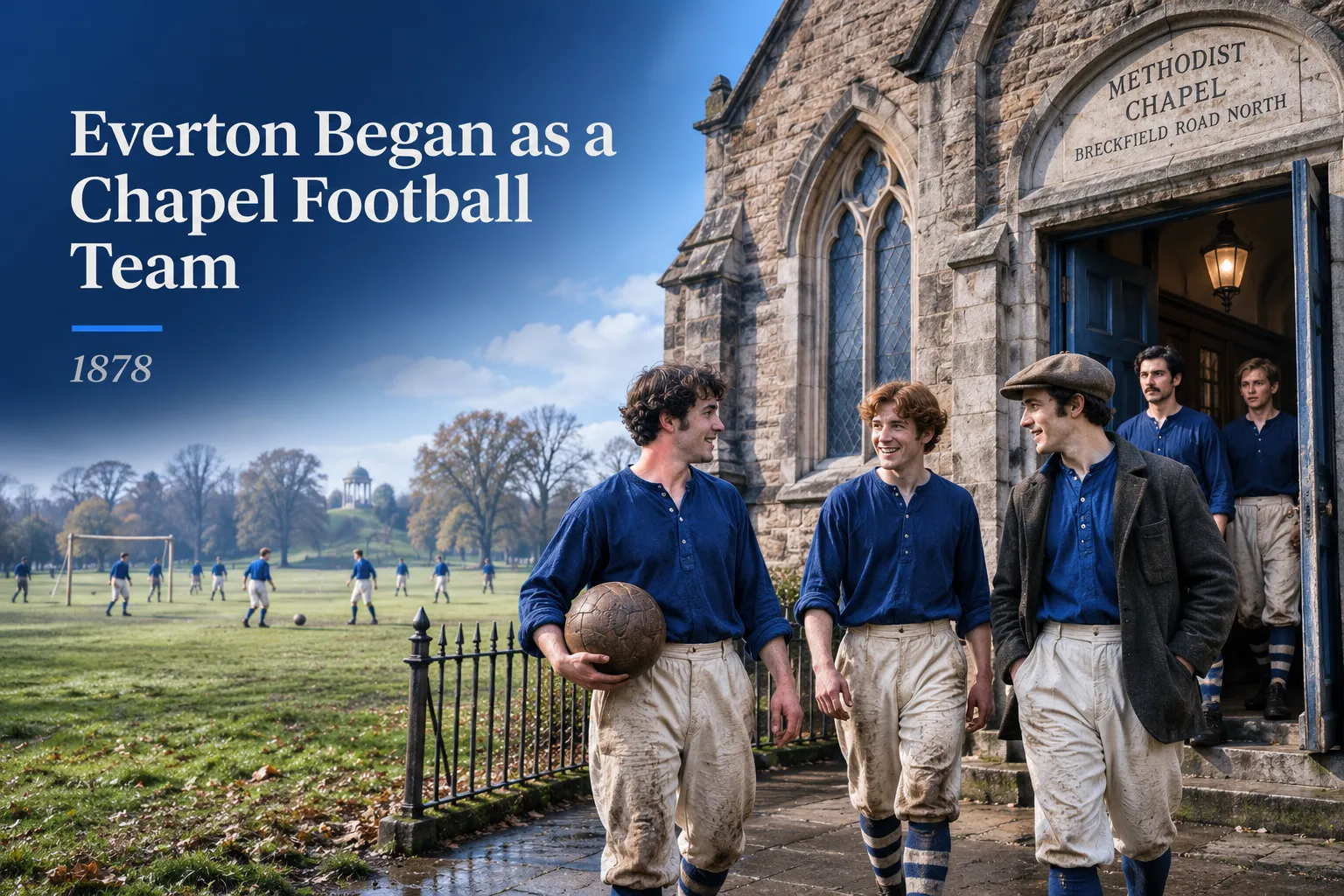
Everton were founded in 1878 as St Domingo's FC by members of the St Domingo Methodist New Connexion Chapel in Breckfield Road North. The chapel already ran a cricket team and football gave the same players a sport for the winter. The first recorded match was a 1-0 win over Everton Church Club.
Players from outside the congregation soon wanted to join, so in November 1879 the club took the name of the surrounding district at a meeting in the Queen's Head Hotel. The early team played on an open pitch in the southeast corner of Stanley Park. It moved to an enclosed ground at Priory Road in 1883 and left after one season when the landowner objected to the noise and the crowds.
In 1888 Everton became one of the 12 founder members of the Football League, the oldest league competition in world football. The club has taken part in every season of English league football since.
2. Anfield Was Everton's Ground First
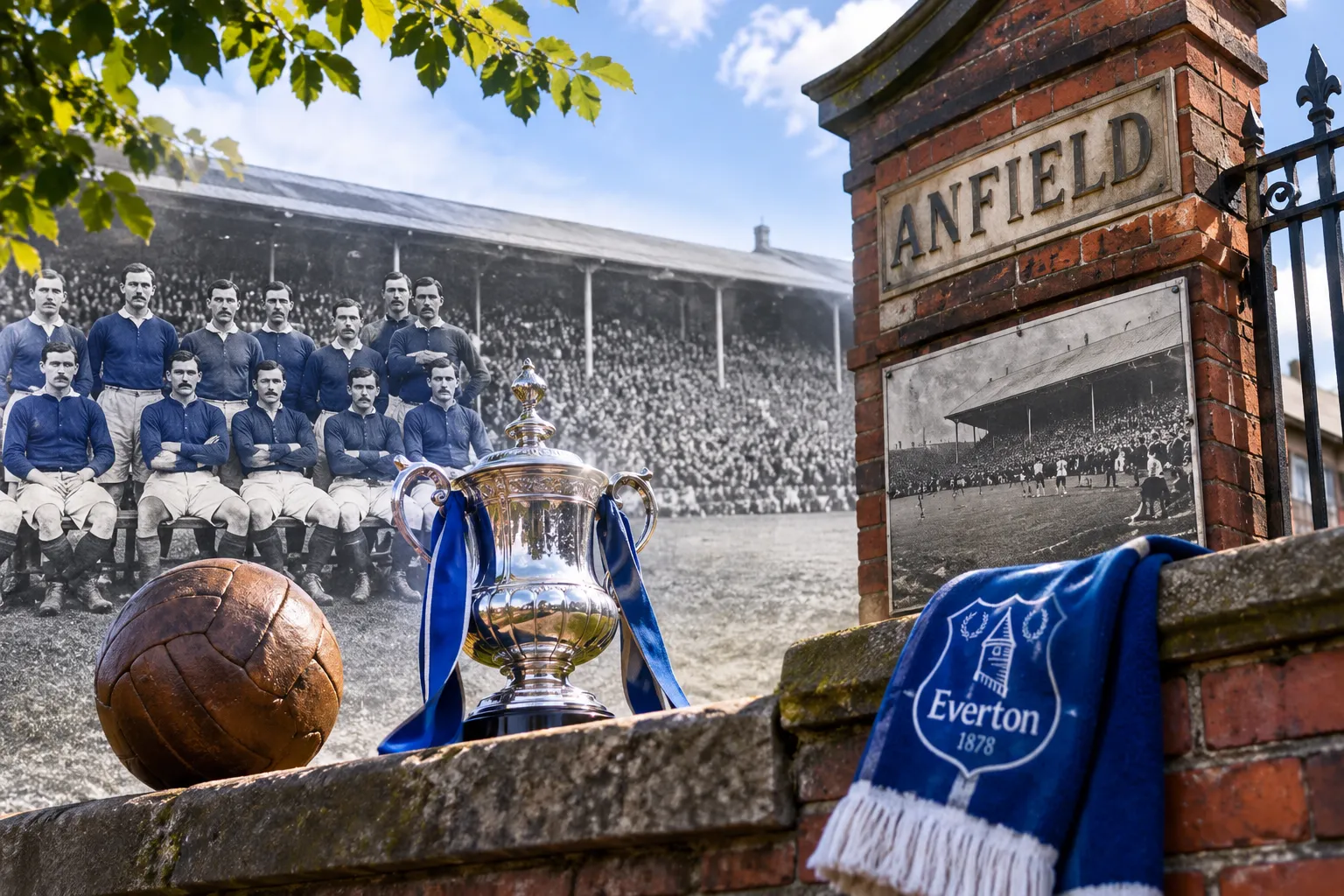
Everton moved to Anfield in 1884 and played there for eight years. The first of the club's nine league titles was won there in 1890/91, which means the first championship celebrated at Anfield belonged to the team now in blue.
The ground was controlled by John Houlding, a brewer and the club's president, who bought the land in 1885. Rent rose from £100 a year to £250 by 1890, according to club histories, and Houlding then tried to register a company that would have given him control of the club itself. The dispute ended with Everton leaving.
Everton crossed Stanley Park to a new ground at Goodison Park in 1892. Houlding tried to keep the Everton name, the Football Association refused and he formed a new club, Liverpool FC, to play in his empty stadium. That story is told from the other side in our Liverpool FC facts, and our Anfield tickets cover the ground Everton left behind.
WhatsApp channel
Sports news straight to your phone
Match updates, on-sale dates and ticket news from 1BoxOffice.
3. Why Are Everton Called the Toffees?
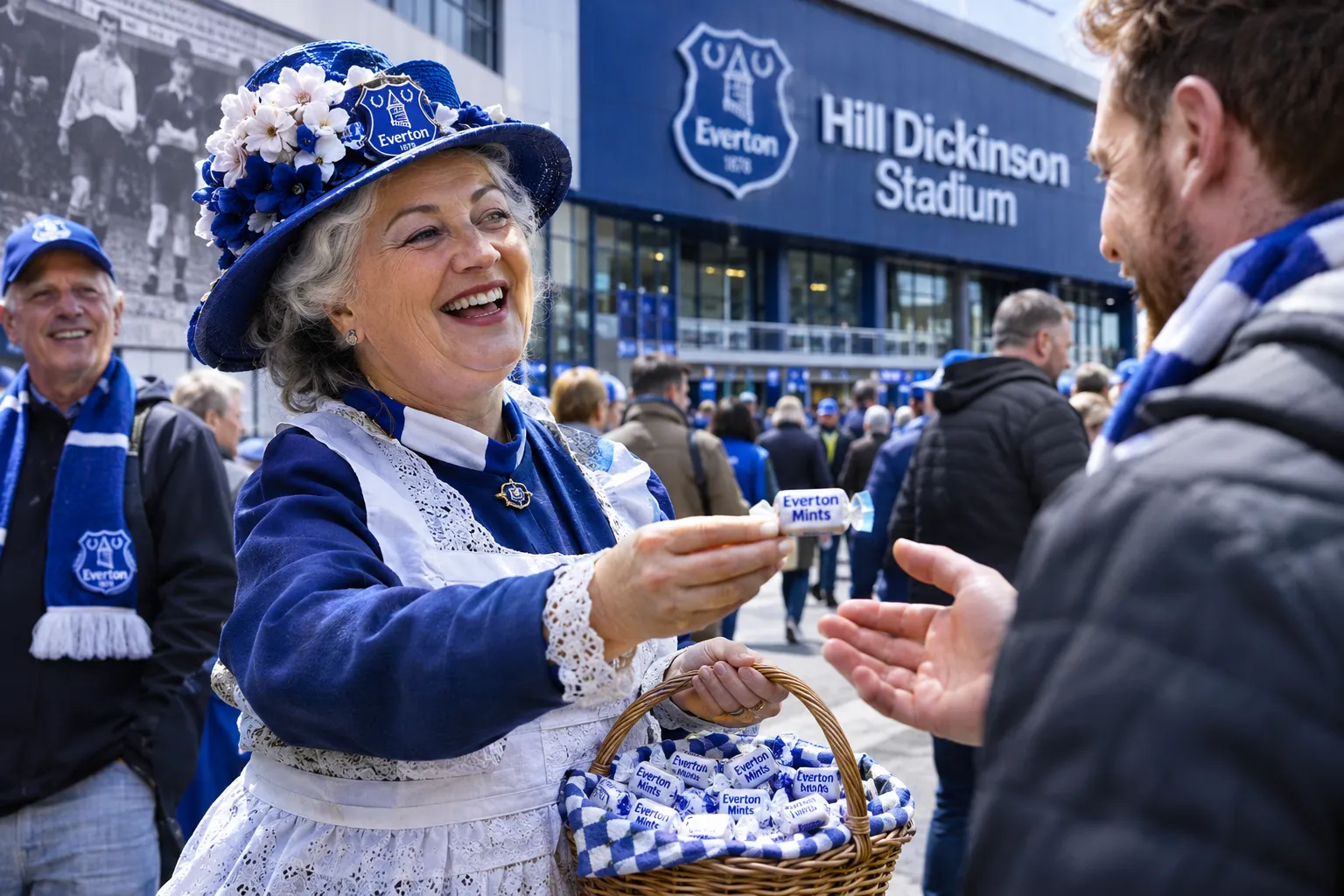
Everton are called the Toffees because of the sweet shops that traded in Everton village when the club was young, although which shop deserves the credit is disputed. One account points to Mother Noblett's Toffee Shop, which stood opposite the village lock-up and sold Everton Mints. The other points to Ye Anciente Everton Toffee House, run by Ma Bushell near the Queen's Head Hotel where the club held its early meetings.
No surviving record settles the argument and the club honours both. At Goodison Park a Toffee Lady threw Everton Mints into the crowd before kick-off, and since November 2025 she has greeted supporters at Hill Dickinson Stadium and handed the mints out.
Other names have come and gone. An early team in black shirts was known as the Black Watch, and royal blue shirts arrived in 1901/02 and brought the Blues. The phrase School of Science is usually traced to the England forward Steve Bloomer, who described Everton's play as scientific in 1928. The People's Club is the newest, coined by David Moyes when he was appointed manager in March 2002.
4. The Tower on the Crest Is a Village Lock-Up
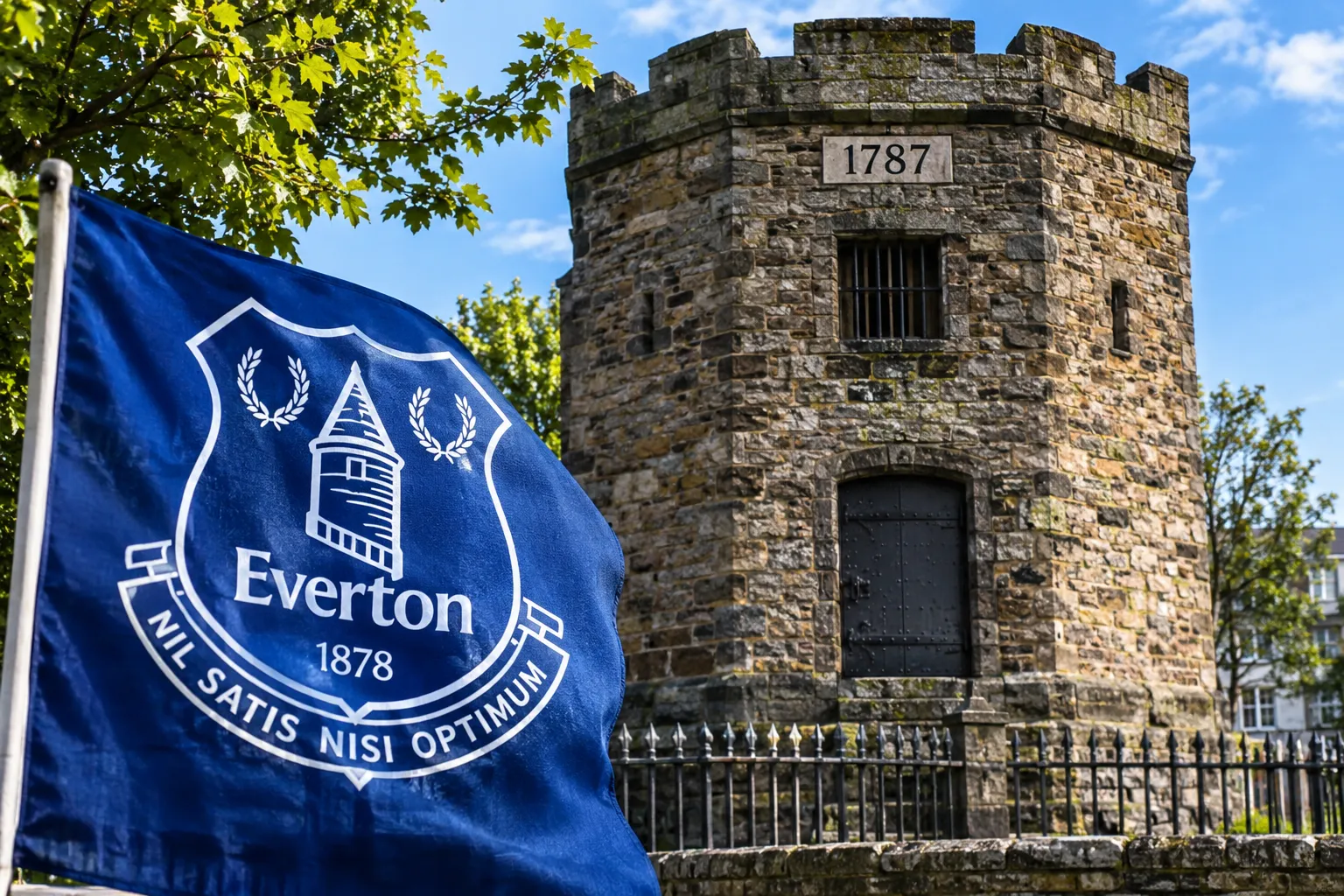
The tower at the centre of the Everton crest is the Everton Lock-Up, a small jail built in 1787 to hold offenders overnight. It still stands on Everton Brow. Locals call it Prince Rupert's Tower, although Prince Rupert camped on the hill during the siege of Liverpool in 1644, 143 years before the tower was built.
Theo Kelly, the club secretary who later became Everton's first manager, designed the crest in 1938. He spent four months on it and settled on the lock-up flanked by two laurel wreaths above the Latin motto Nil Satis Nisi Optimum, usually translated as "nothing but the best is good enough". The design was made for club ties, first worn on the opening day of the 1938/39 season, and did not appear on the shirt until 1978.
A simplified crest launched in May 2013 dropped the motto and the wreaths. More than 22,000 supporters signed a petition against it, the club apologised and the replacement was put to a vote. The current crest, chosen by almost 80% of those who voted, has been used since July 2014.
5. No Club Has Played More Top-Division Seasons
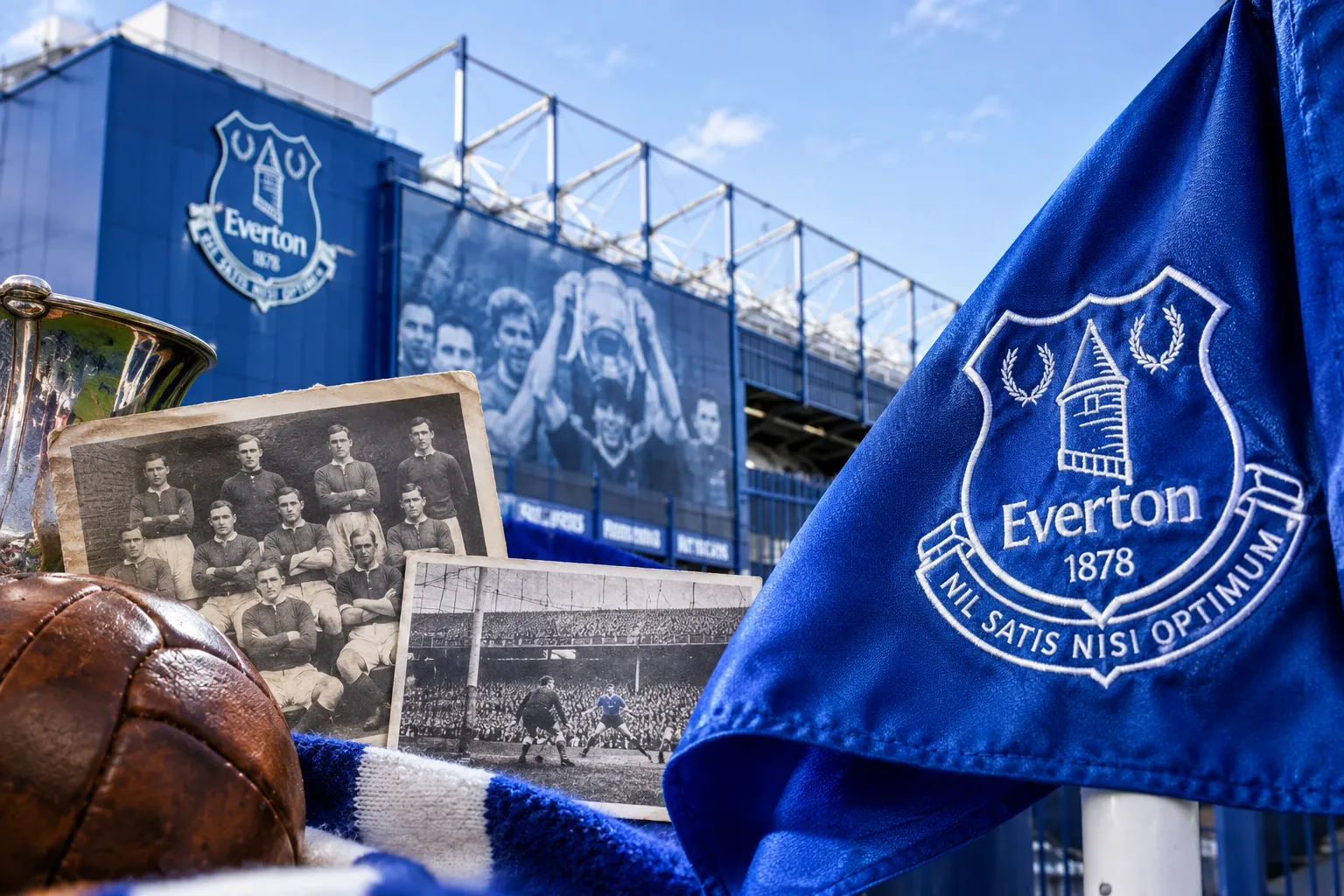
The 2026/27 season is Everton's 124th in the top division of English football, more than any other club. The current campaign is the 128th top-flight season since the Football League began in 1888, so Everton have missed four.
Those four followed the club's only two relegations. Everton went down in 1930 and came straight back as Second Division champions, scoring 121 goals in 42 league matches. They went down again in 1951, spent three seasons in the second tier and returned in 1954.
The run since then stands at 73 consecutive seasons. Only Arsenal, whose unbroken stay began in 1919 and is covered in our Arsenal facts, have been in the division longer without a break. Everton are also one of six clubs to have played in every Premier League season since 1992, alongside Arsenal, Chelsea, Liverpool, Manchester United and Tottenham Hotspur.
It has been close more than once. Everton came from 2-0 down to beat Wimbledon 3-2 on the final day in 1994, stayed up on goal difference in 1998 and needed a 1-0 win over Bournemouth on the last afternoon of 2022/23. Our Premier League tickets cover every club in the division for 2026/27.
6. Nine League Titles, None in the Premier League Era
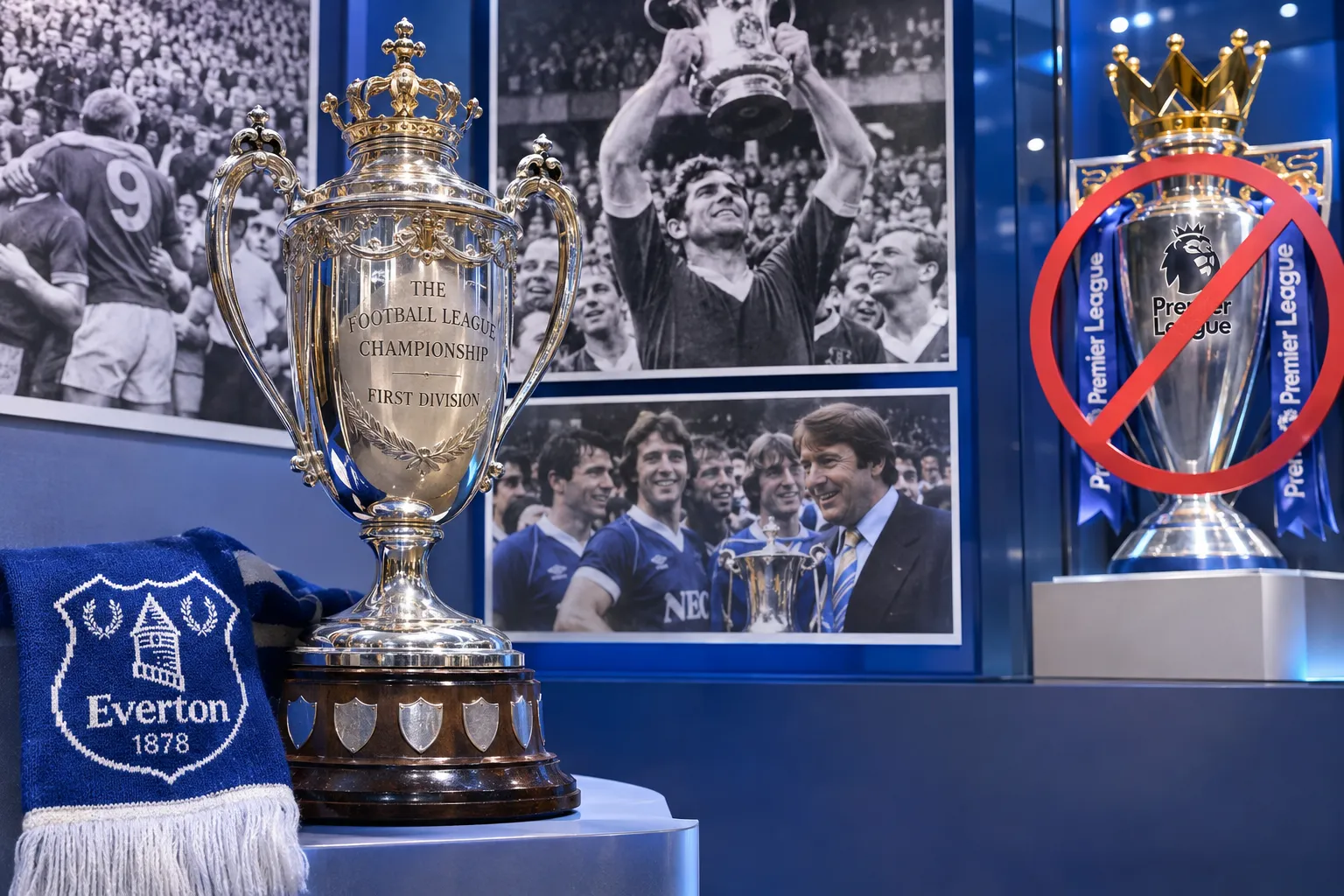
Everton have been champions of England nine times and only four clubs have won more titles. Every one of the nine came in the old First Division, the last of them five years before the Premier League began in 1992, a change set out in our guide to Premier League history and format.
| Honour | Wins | Seasons |
|---|---|---|
| League title (First Division) | 9 | 1890/91, 1914/15, 1927/28, 1931/32, 1938/39, 1962/63, 1969/70, 1984/85, 1986/87 |
| FA Cup | 5 | 1906, 1933, 1966, 1984, 1995 |
| European Cup Winners' Cup | 1 | 1984/85 |
| Second Division title | 1 | 1930/31 |
| Charity Shield | 9 | 1928, 1932, 1963, 1970, 1984, 1985, 1986 (shared), 1987, 1995 |
Two of the titles came with unusual timing. Everton won the league in 1914/15 and again in 1938/39, the last full seasons before each world war suspended the competition, and so stayed reigning champions throughout both conflicts.
The 1984/85 side managed by Howard Kendall is usually rated the club's finest. It finished 13 points clear of Liverpool with a total of 90 and added a European trophy in the same month. Kendall's team won the league again in 1986/87 and that remains the most recent title.
7. Dixie Dean Scored 60 League Goals in One Season
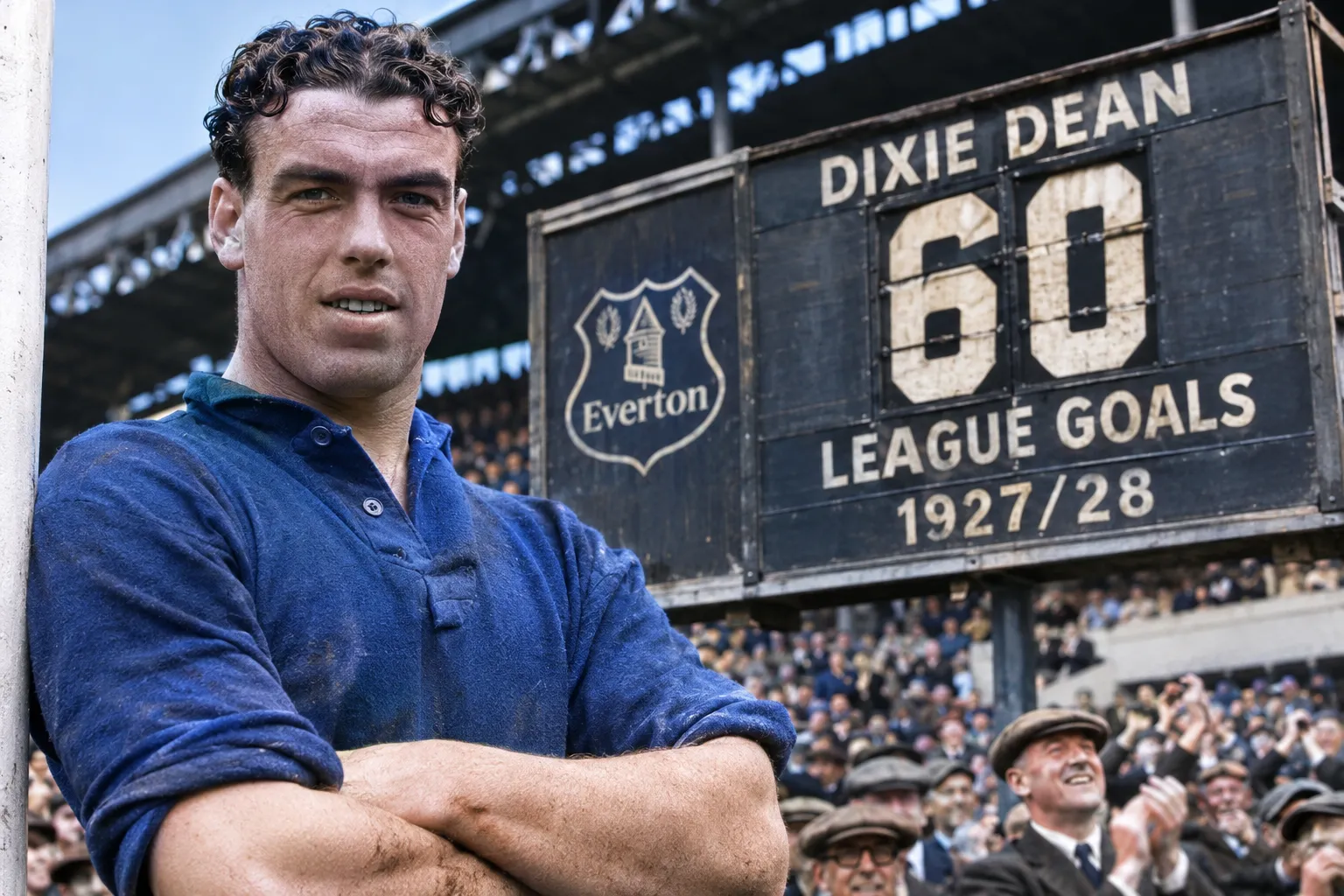
William Ralph "Dixie" Dean scored 60 league goals in 39 matches in 1927/28, a record for a single season in the English top flight that has stood for almost a century. He needed three on the final day against Arsenal at Goodison Park on 5 May 1928 to pass the 59 that George Camsell had scored for Middlesbrough in the Second Division the season before, and got a hat-trick in a 3-3 draw. Dean was 21.
Signed from Tranmere Rovers in 1925, Dean finished with 383 goals in 433 appearances for Everton, still the club record. He died at Goodison Park on 1 March 1980, shortly after watching a Merseyside derby.
| Record | Holder | Figure |
|---|---|---|
| Most appearances | Neville Southall, 1981 to 1997 | 751 |
| Most goals | Dixie Dean, 1925 to 1937 | 383 |
| Most league goals in a season | Dixie Dean, 1927/28 | 60 |
| Youngest scorer | James Vaughan v Crystal Palace, 10 April 2005 | Aged 16 |
| Record win | v Derby County, FA Cup first round, 18 January 1890 | 11-2 |
| Record league win | v Manchester City (3 September 1906) and v Plymouth Argyle (27 December 1930) | 9-1 |
| Record home attendance | v Liverpool at Goodison Park, 18 September 1948 | 78,299 |
| Record signing | Gylfi Sigurdsson from Swansea City, August 2017 | £45m (reported) |
| Record sale | Romelu Lukaku to Manchester United, July 2017 | £75m, rising to a reported £90m with add-ons |
Neville Southall, the goalkeeper in the title teams of the 1980s, heads the appearance list by a distance. The Sigurdsson fee is still the club's record purchase as of November 2026. The sale of Iliman Ndiaye to Manchester City in September 2026, reported at between £58.8m and £65m, is the largest since Lukaku left.
8. Five FA Cups and the First Numbered Shirts in a Final
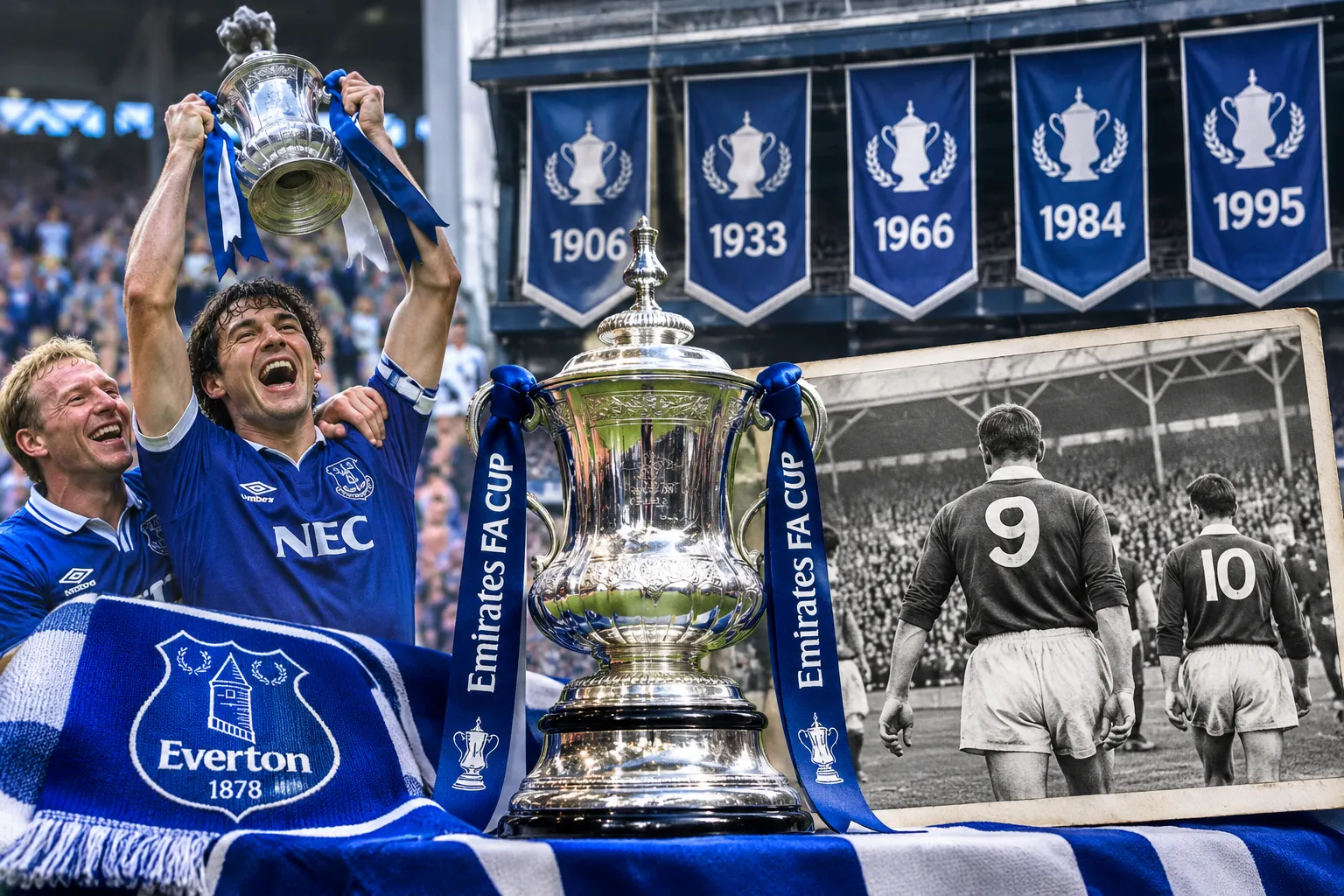
Everton have won the FA Cup five times, in 1906, 1933, 1966, 1984 and 1995. They have reached 13 finals in all. The 1995 win, a 1-0 defeat of Manchester United through a Paul Rideout header, is the club's most recent major trophy. The losing side's history is in our Manchester United facts.
The 1933 final changed how the game looked. On 29 April 1933 Everton wore numbers 1 to 11 and Manchester City wore 12 to 22, the first time shirts had been numbered in an FA Cup final. Dean wore the number nine and scored in a 3-0 win, a result that also features in our Manchester City facts.
The 1966 final produced one of Wembley's great comebacks. Everton trailed Sheffield Wednesday 2-0 and won 3-2, with two goals from Mike Trebilcock and a winner from Derek Temple. The most recent final, in 2009, was lost 2-1 to Chelsea after Louis Saha had scored for Everton inside 25 seconds, the fastest goal in an FA Cup final at that time.
Everton enter the 2026/27 competition in the third round in January 2027. Our FA Cup tickets cover the competition from the third round to the final at Wembley.
9. The 1985 Cup Winners' Cup Is the Only European Trophy
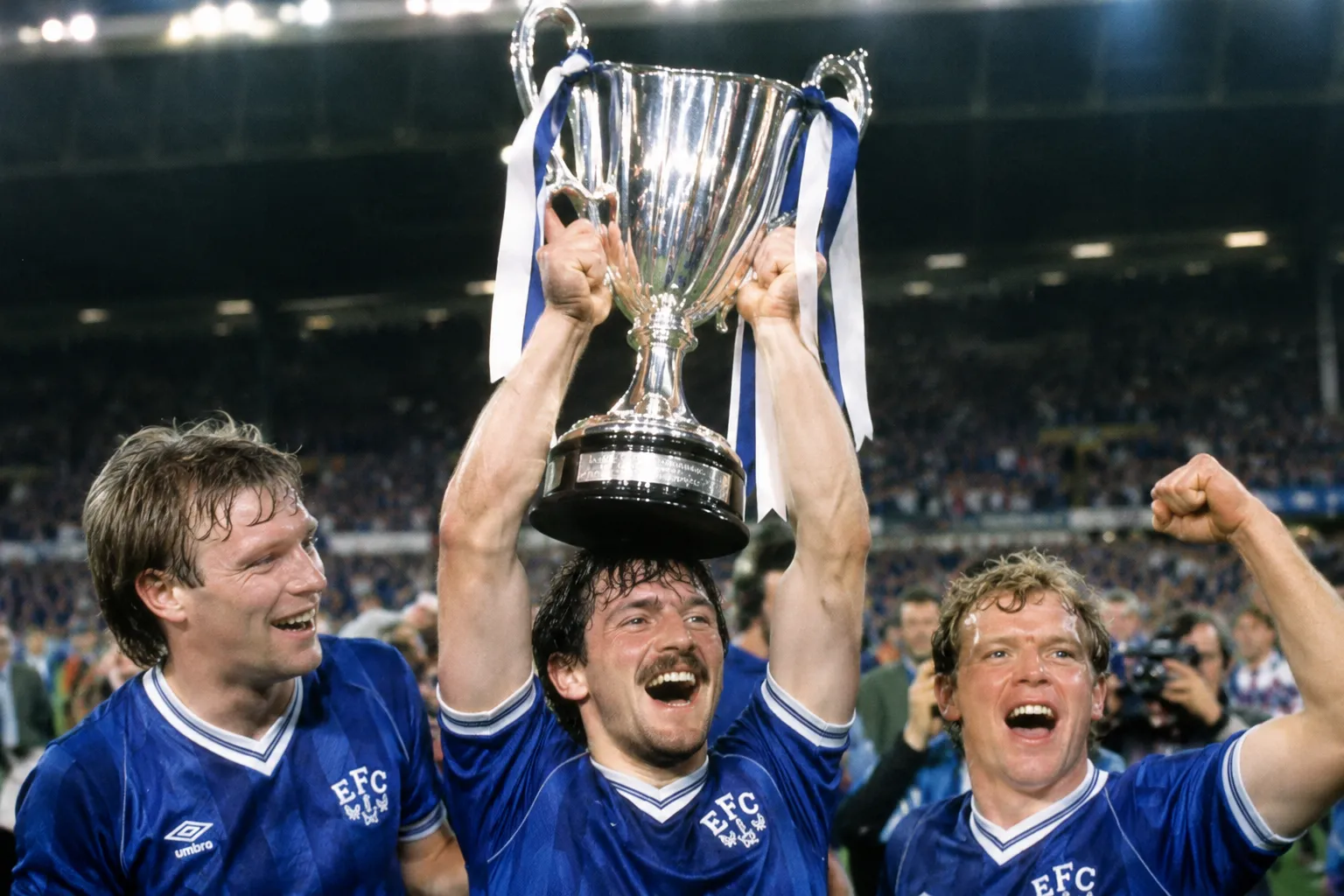
Everton's one European trophy is the 1984/85 European Cup Winners' Cup, won by beating Rapid Vienna 3-1 in Rotterdam on 15 May 1985. Andy Gray, Trevor Steven and Kevin Sheedy scored. The team went through its nine matches unbeaten, with seven wins and two draws.
The semi-final is the match supporters still talk about. Bayern Munich led at half-time in the second leg at Goodison Park on 24 April 1985 after a goalless draw in Germany, and Everton scored three times in the second half to win 3-1.
As champions of England that spring, Everton had qualified for the European Cup. Two weeks after the Rotterdam final the Heysel Stadium disaster led to English clubs being banned from European competition for five years, so neither the 1985 nor the 1987 title-winning team took its place.
The club's record in Europe's senior competition is short as a result: a preliminary-round defeat to Internazionale in 1963/64, a quarter-final lost on away goals to Panathinaikos in 1970/71 and a qualifying-round defeat to Villarreal in 2005/06. Everton have never played in the group or league phase. Our Champions League tickets cover every round of the current competition.
10. Two League Cup Finals, Both Lost After Replays
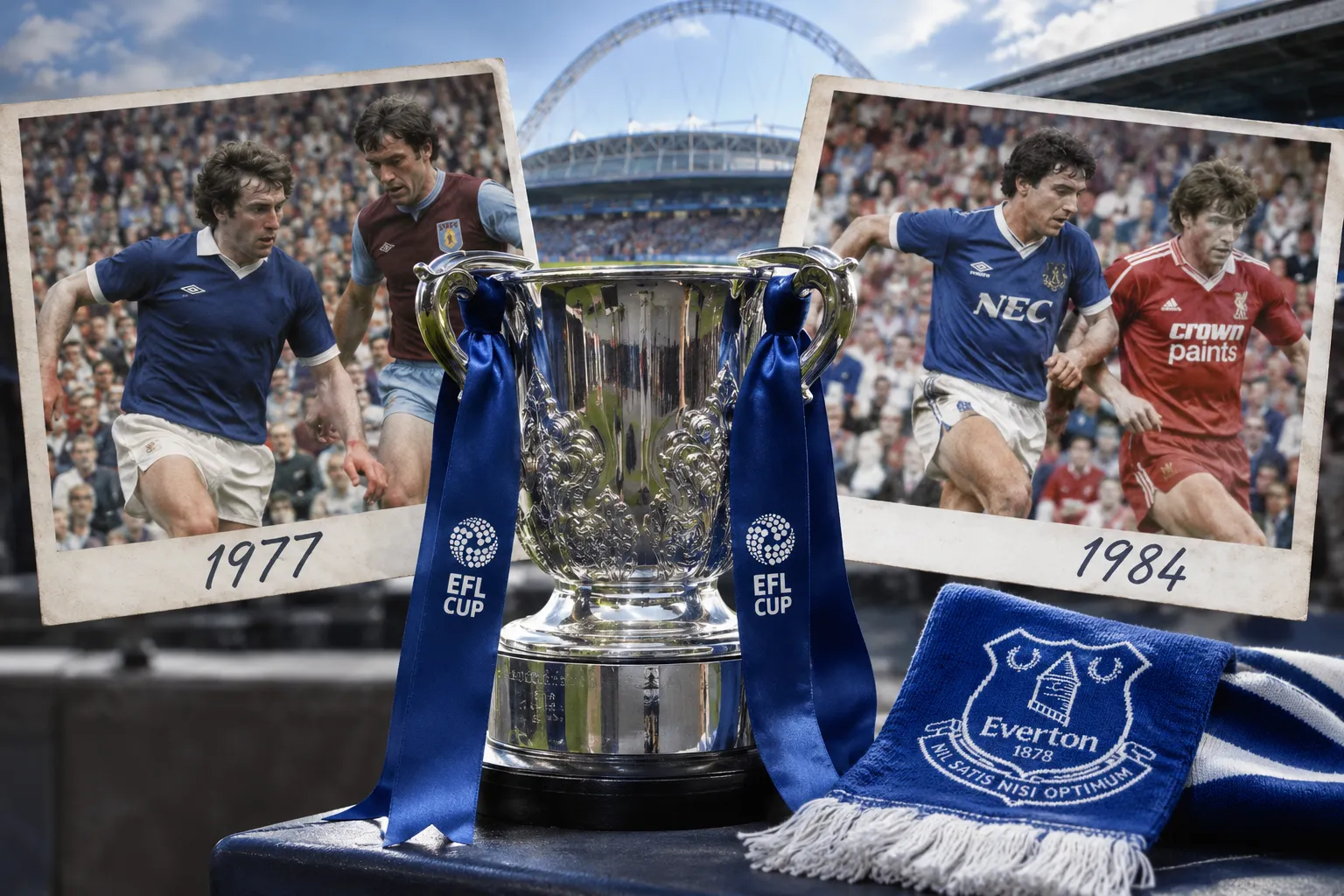
The League Cup is the one major domestic trophy Everton have never won. They have reached two finals and lost both after replays.
The 1977 final against Aston Villa took three matches: 0-0 at Wembley, 1-1 at Hillsborough and a 3-2 defeat after extra time at Old Trafford, a win recorded in our Aston Villa facts. In 1984 Everton and Liverpool drew 0-0 in the first Merseyside derby played at Wembley, and Liverpool won the replay 1-0 at Maine Road.
Wins over Preston North End, Wolverhampton Wanderers and Newcastle United in 2026/27 set up a quarter-final away to Fleetwood Town on 17 December 2026. Our EFL Cup tickets cover the later rounds and the final at Wembley.
11. Goodison Park Staged a World Cup Semi-Final
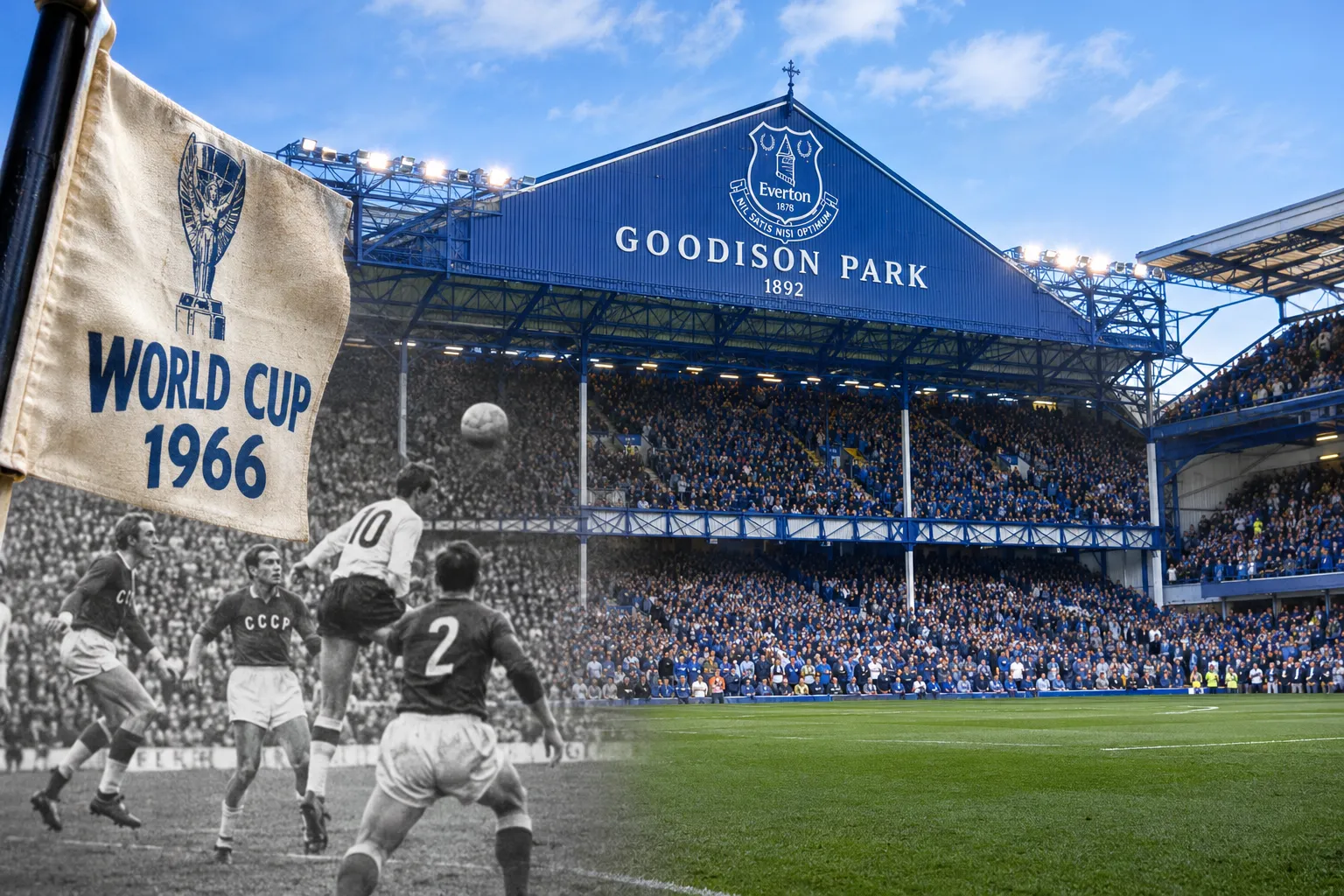
Goodison Park opened on 24 August 1892 as England's first purpose-built football ground and was Everton's home until May 2025. The wider claim that it was the first in the world is disputed, because Celtic Park in Glasgow staged an athletics meeting on 13 August 1892 and its first football match on 20 August, four days before Goodison opened. Goodison staged the 1894 FA Cup final, was visited by King George V in 1913 and became the first ground in England with undersoil heating in 1958.
Five matches at the 1966 World Cup were played there, more than at any English ground except Wembley. One was Portugal's 5-3 quarter-final win over North Korea, in which Eusébio scored four goals after his side had trailed 3-0. Another was the semi-final, in which West Germany beat the Soviet Union 2-1.
The record crowd of 78,299 watched a league match against Liverpool on 18 September 1948. The men's team played there for the last time on 18 May 2025, a 2-0 win over Southampton with both goals from Iliman Ndiaye.
The stadium was not demolished. On 13 May 2025 the club dropped its plan to redevelop the site for housing and offices and made Goodison the permanent home of Everton Women, who played their first league match there against Tottenham Hotspur on 14 September 2025. Our Goodison Park tickets cover matchdays at the old ground.
12. Hill Dickinson Stadium Holds 52,769
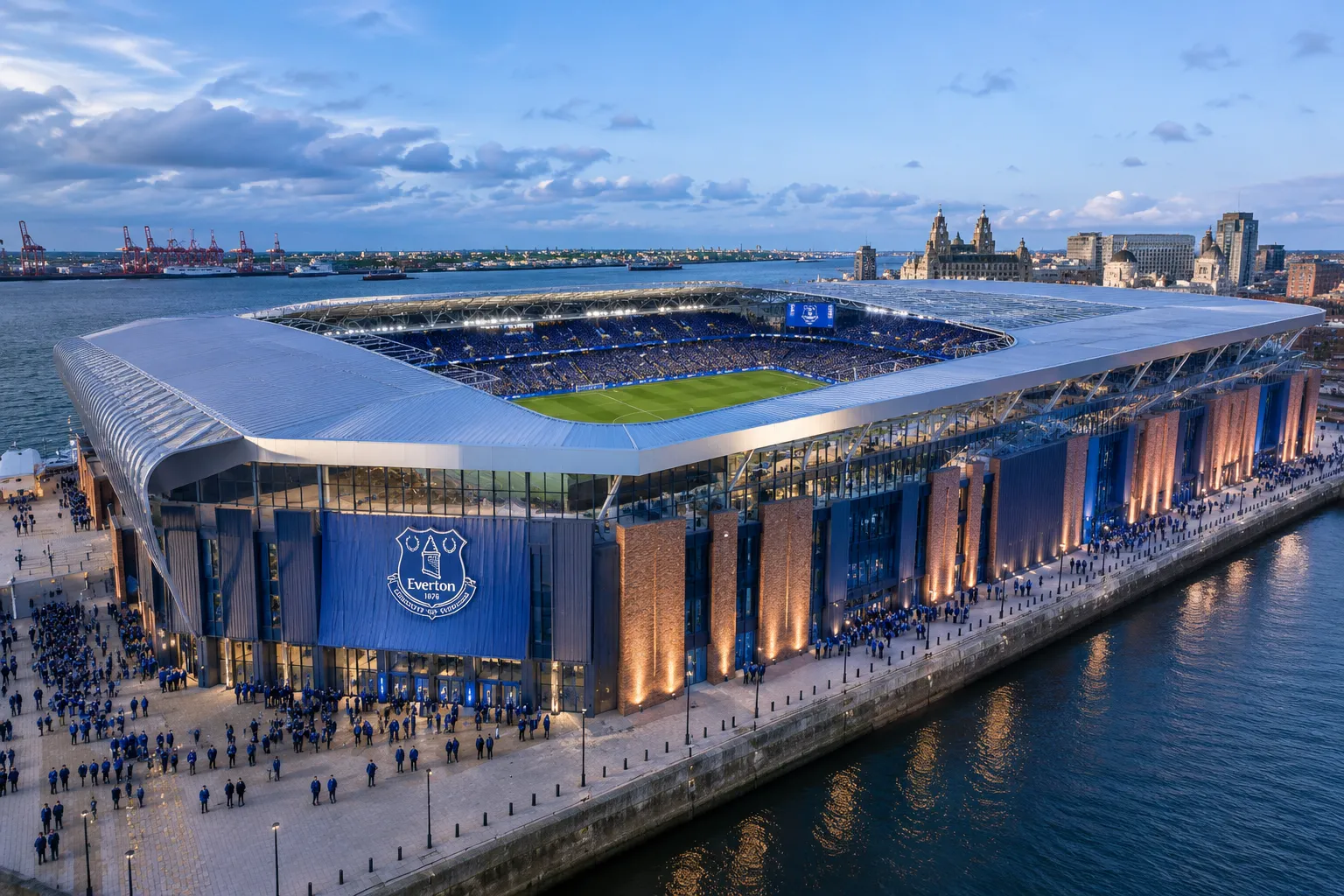
Everton's home since August 2025 is Hill Dickinson Stadium at Bramley-Moore Dock, a 52,769-capacity ground built inside a former working dock on the River Mersey. The American architect Dan Meis designed it, Laing O'Rourke built it and the main construction ran from January 2022 to December 2024. The capacity was confirmed after a post-construction audit removed 119 seats from the 52,888 in the original design.
Test events began on 17 February 2025, and the first competitive match was a 2-0 Premier League win over Brighton & Hove Albion on 24 August 2025. Ndiaye, scorer of the last men's goals at Goodison, scored the first competitive goal at the new ground. The record attendance is 52,590, set against Sunderland on 17 May 2026.
The name comes from a naming rights agreement announced on 16 May 2025 with Hill Dickinson, a law firm founded in Liverpool in 1810. The home end is the South Stand, a single steep tier of around 13,000 seats, and the layout is set out block by block in our Hill Dickinson Stadium seating plan.
The stadium hosted a Rugby League Ashes Test in November 2025 and is due to stage five matches at UEFA Euro 2028 under the name Everton Stadium, as our guide to Euro 2028 host cities and stadiums explains. Existing season-ticket holders were offered 2026/27 renewals first, with any seats left offered through the club's waiting list. Our Hill Dickinson Stadium tickets cover Everton home matches, and a separate guide explains how to buy Everton tickets without membership.
13. The Merseyside Derby Has Run Unbroken Since 1962
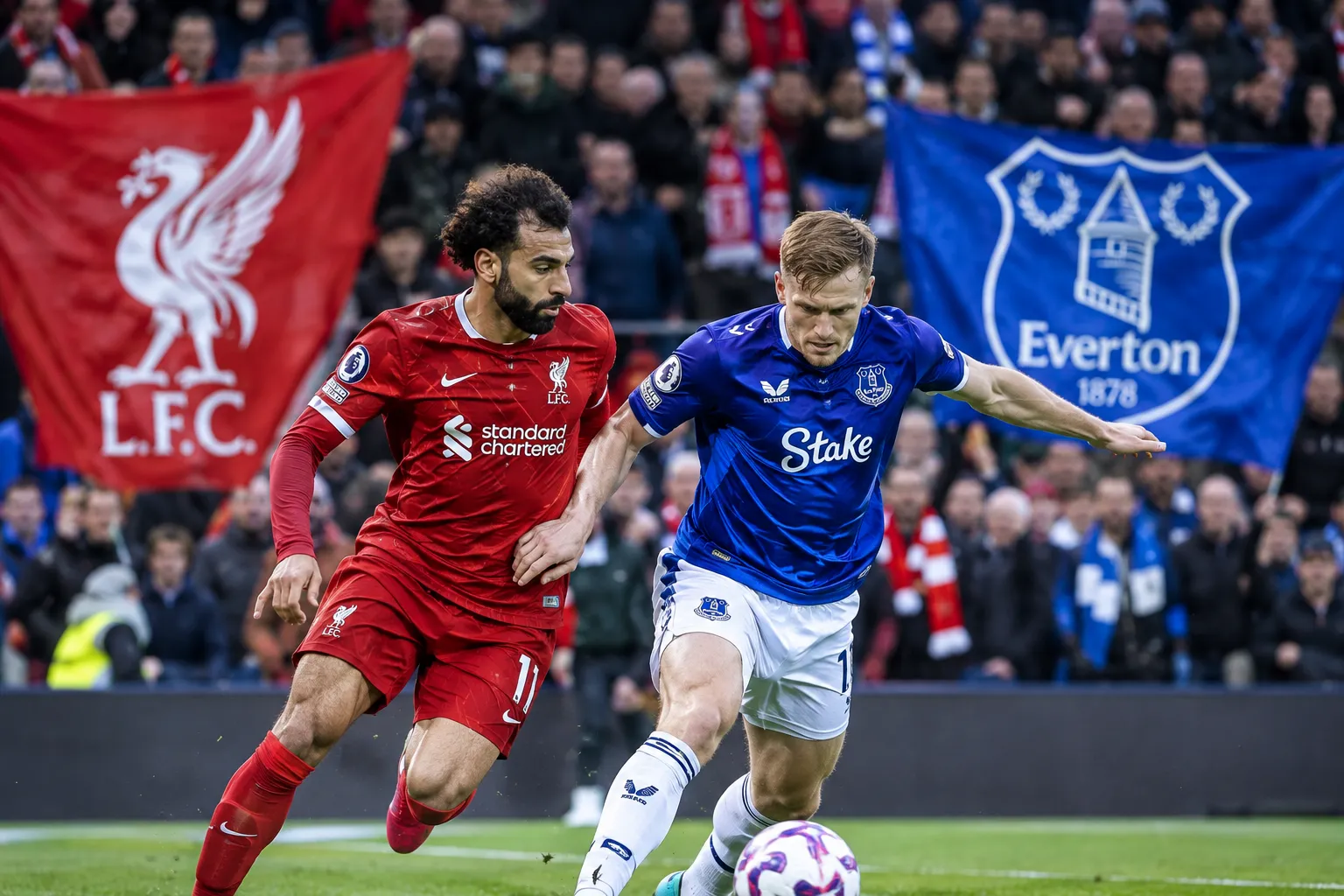
Everton and Liverpool have met in the top division in every season since 1962/63, the longest unbroken run of any derby in English top-flight football. The first league meeting was a 3-0 Everton win at Goodison Park on 13 October 1894.
By the end of the 2025/26 season the clubs had played 248 competitive matches, with 102 Liverpool wins, 68 for Everton and 78 draws on the most widely cited count. Ian Rush is the leading scorer with 25 goals for Liverpool. The match had also produced 25 red cards in the Premier League by 2025, more than any other pairing, according to Opta figures published by Liverpool FC.
It is still called the friendly derby, because families across the city are split between the two clubs and supporters were not always segregated. The last derby at Goodison Park, on 12 February 2025, ended 2-2 when James Tarkowski equalised in the 98th minute.
The 2026/27 meetings are at Hill Dickinson Stadium on 29 November 2026 and at Anfield on 30 January 2027. Our Liverpool vs Everton tickets cover the return match and the away matchday guide to Merseyside covers travel to both grounds. Supporters following the team on the road can read how to buy Everton away tickets.
14. Everton Lost Points Twice in One Season
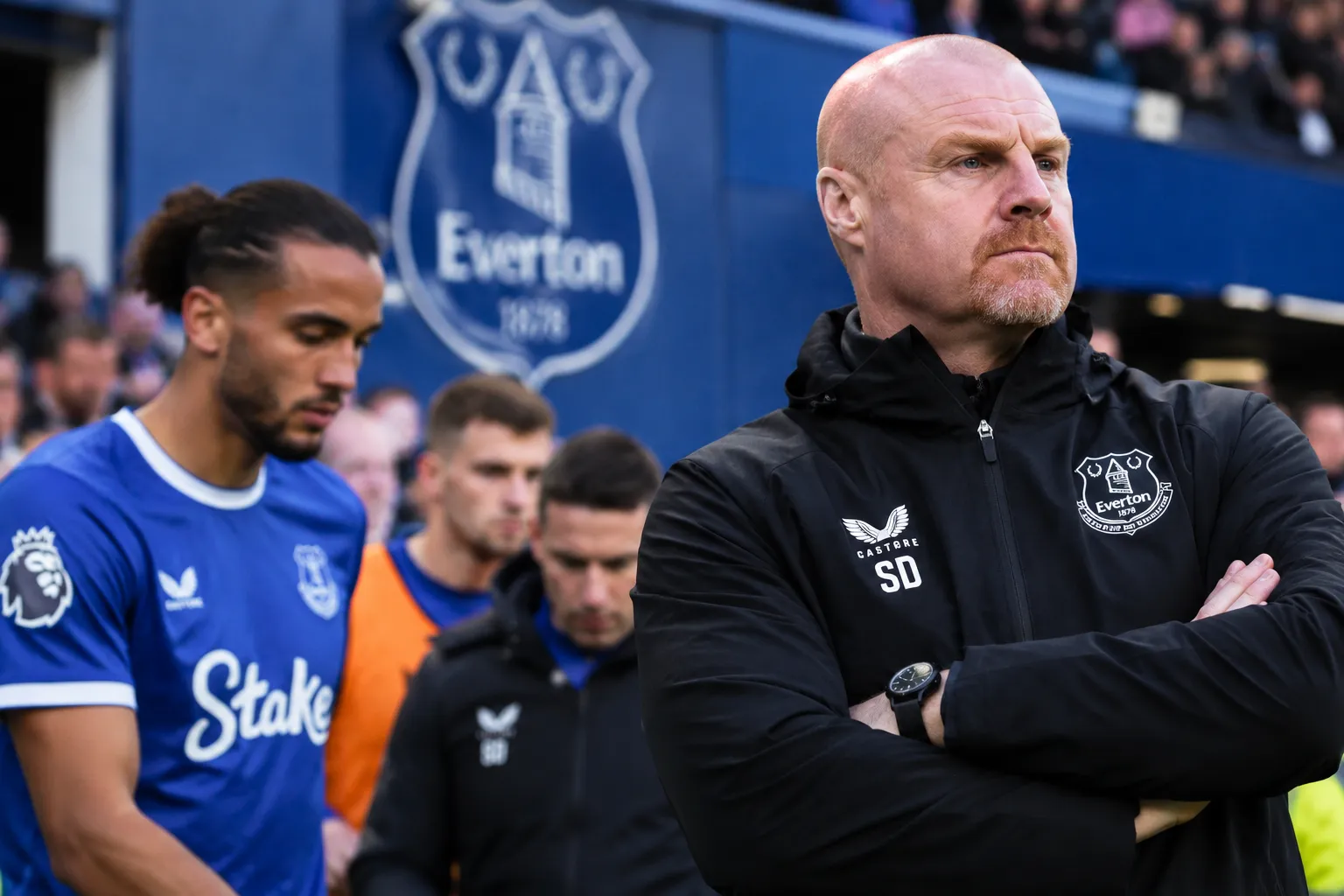
In 2023/24 Everton became the first club in English top-flight history to receive two separate points deductions in one season. Both were for breaches of the Premier League's profitability and sustainability rules, which limit a club's losses over three years to £105m.
The first penalty, on 17 November 2023, was 10 points for losses of £124.5m in the period to 2021/22. It was the largest sporting sanction the Premier League had imposed at that time and dropped the team from 14th to 19th. An appeal board reduced it to six points on 26 February 2024.
A second charge covering the period to 2022/23 brought a further two-point deduction on 8 April 2024. Everton won 48 points on the pitch that season, were credited with 40 and still finished clear of relegation under Sean Dyche.
15. Who Owns Everton?
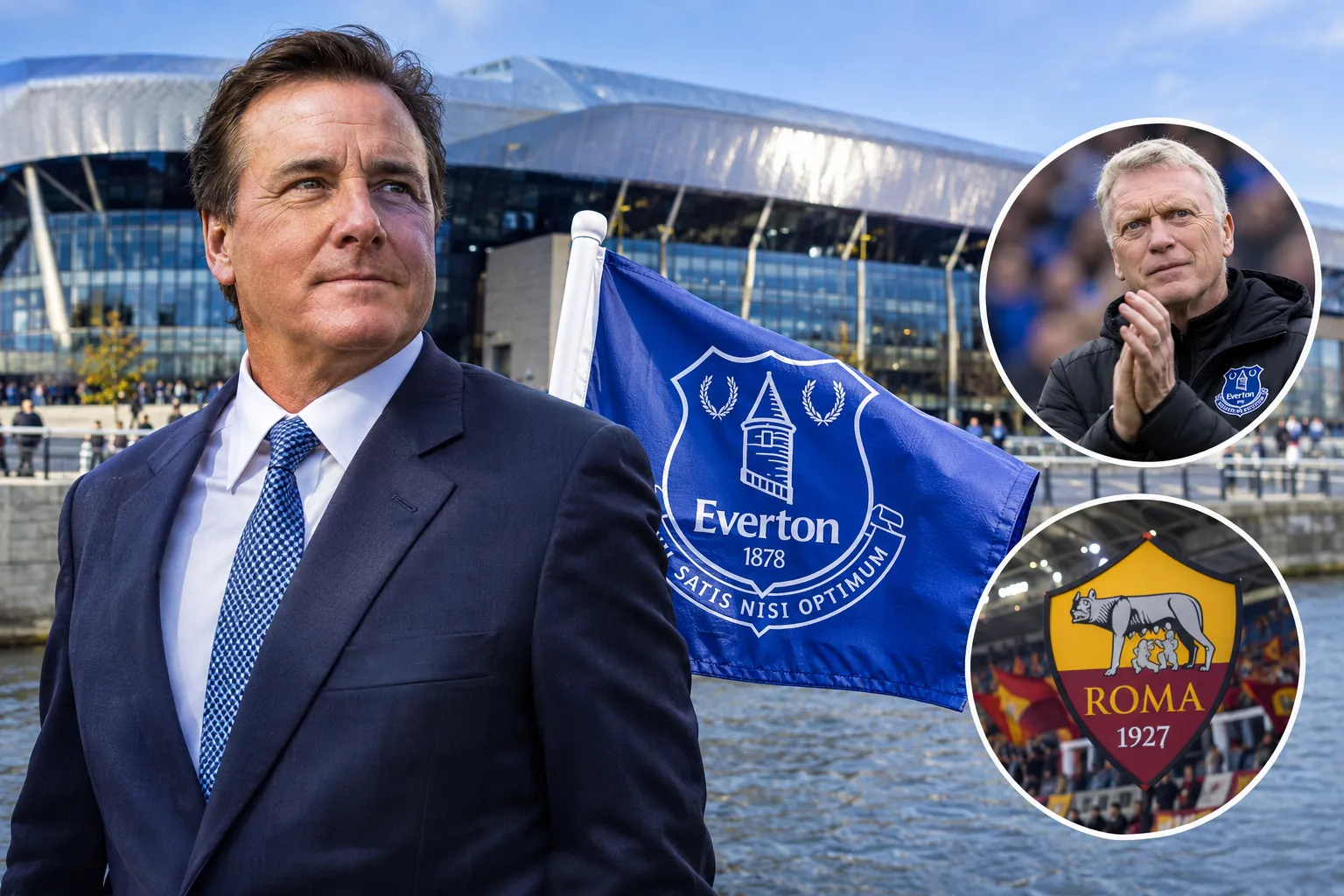
Everton are owned by The Friedkin Group, a Houston-based company led by Dan Friedkin, who is the club's chairman. The group completed its takeover on 19 December 2024 by buying the 94.1% stake held by Farhad Moshiri, who had first invested in the club in February 2016.
The Friedkin Group has also owned the Italian club AS Roma since 2020, and our AS Roma tickets cover matches at the Stadio Olimpico. Under its ownership Everton brought David Moyes back as manager in January 2025 and completed the move to the new stadium.
On 9 October 2026 the group said it was considering new investment options for Everton, including the possible sale of a controlling interest. It added that it would deal only with parties it judged to be suitable custodians. No buyer or timetable has been named as of November 2026. How the owners compare with the rest of the division is set out in our ranking of the richest Premier League club owners.
Frequently Asked Questions
1. Who is the Everton manager?
-
David Moyes, Everton manager from 2002 to 2013 and again since 11 January 2025, equalled Harry Catterick's club record of 592 matches in charge on 6 November 2026.
2. Who is the Everton captain?
-
Centre-back James Tarkowski was named Everton captain in August 2026, taking over from Séamus Coleman.
3. What song do Everton walk out to?
-
Everton players have walked out to the theme from the television police drama Z-Cars since the 1962/63 season, apart from a two-match break in 1994, and the tune is an arrangement of the traditional Liverpool song Johnny Todd.
4. Which station is nearest to Hill Dickinson Stadium?
-
Sandhills on the Merseyrail network is the nearest station to Hill Dickinson Stadium, about a 15-minute walk from the ground.
5. Is there another football club called Everton?
-
Everton de Viña del Mar, a Chilean top-flight club founded in Valparaíso on 24 June 1909, is generally thought to have been named after the Merseyside club, which was touring South America at the time.
From a chapel cricket team in 1878 to a 52,769-seat ground on the Mersey, Everton have rarely been out of the top division of English football. 1BoxOffice has sold football tickets since 2006, and every order is backed by the 150% money-back guarantee: a full refund if your tickets are not received and no alternative is offered, plus a goodwill credit voucher of up to 50% of the order value (excluding fees and taxes, capped at £125) that 1BoxOffice may issue at its discretion.
Sources: Everton FC, Premier League, UEFA, The Football Association, Everton Heritage Society, Press Association, Sky Sports, BBC Sport, Flashscore, Wikipedia club, season, stadium, records and rivalry entries.