In this guide
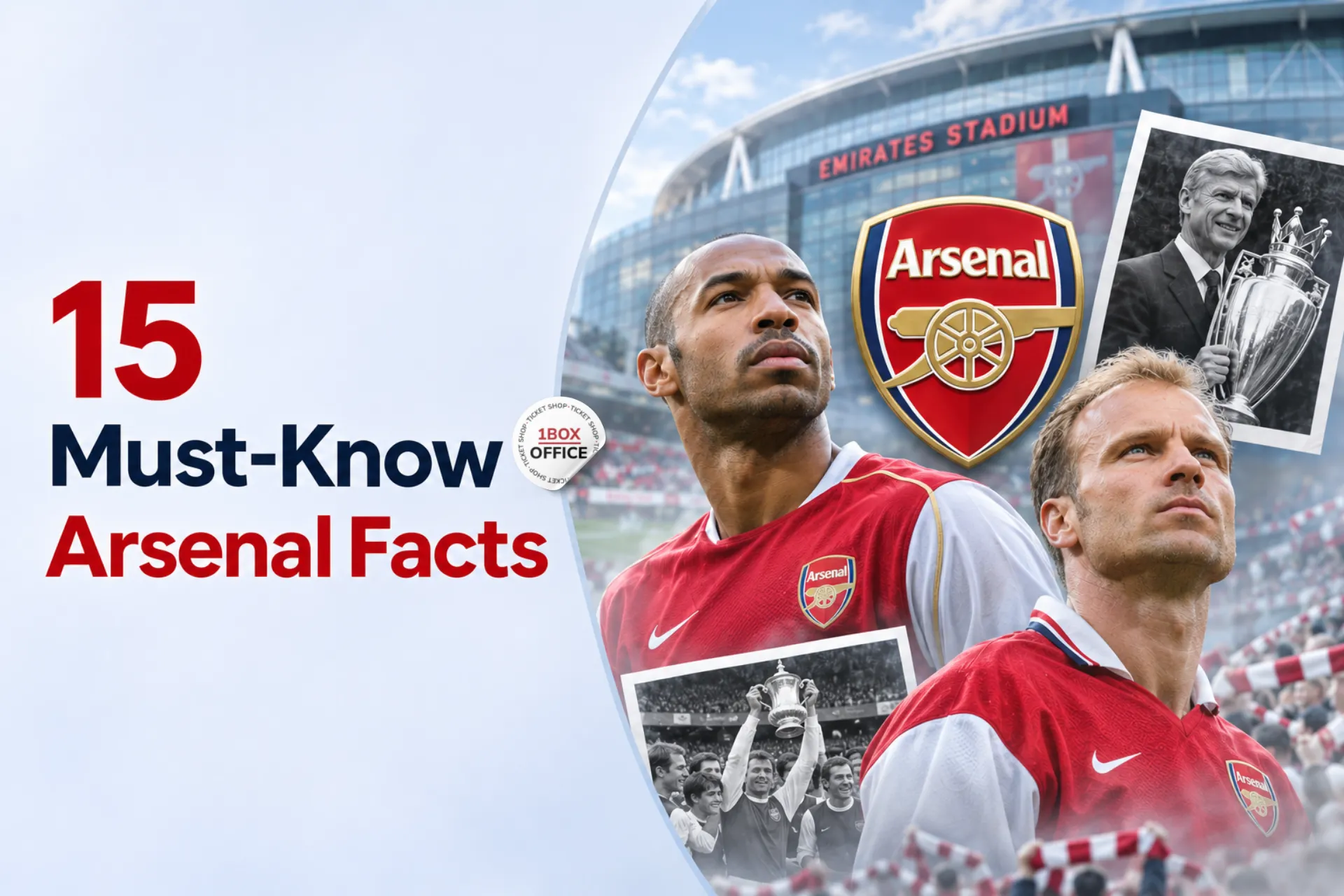
All 15 Facts at a Glance1. Reigning Champions With 14 League Titles2. Nobody Has Won the FA Cup More Often3. Founded by Munitions Workers, Which Is Why They Are the Gunners4. The Invincibles Went 49 League Matches Without Losing5. One Relegation, Then the 1919 Vote That Enraged Tottenham6. The Only Underground Station Named After a Football Club7. Highbury's Record Crowd and Its Second Life as Flats8. Emirates Stadium Stays at 60,704 After Expansion Plans Were Shelved9. The Longest Shirt Sponsorship in the Premier League10. Two Champions League Finals, Both Lost by the Narrowest Margin11. Henry's Goals, O'Leary's Games and Wenger's 22 Years12. A £105m Record Signing and a £60m Record Sale13. The First Match on Radio and the First on Television14. Nottingham Forest Did Not Donate the Red Shirts15. The Only English Winners of the Women's Champions LeagueFrequently Asked QuestionsArsenal have been relegated exactly once, in 1913, and have not left the top division since 1919, the longest unbroken run in English football. These 15 Arsenal facts take that story from a munitions yard in Woolwich to the 2025-26 Premier League title, the club's 14th, with every figure checked as of November 2026.
Article Summary: Arsenal Football Club was founded in 1886 as Dial Square by workers at the Royal Arsenal armaments factory in Woolwich, moved to Highbury in 1913 and to Emirates Stadium in 2006. The Gunners have won 14 English league titles, a record 14 FA Cups and two European trophies for the men's side, and they finished 2025-26 as Premier League champions under Mikel Arteta.
- Arsenal won the 2025-26 Premier League with 85 points, seven clear of Manchester City, their first league title since the Invincibles season of 2003-04.
- Arsenal's 14 FA Cup wins are a record for the competition, one more than Manchester United.
- Thierry Henry is Arsenal's record scorer with 228 goals and David O'Leary holds the appearance record with 722 games.
- Emirates Stadium holds 60,704 and Arsenal shelved plans to expand it to around 80,000 seats in October 2026.
- Emirates airline's front-of-shirt deal with Arsenal now runs to 2033, the longest shirt partnership in Premier League history.
Each fact below has been checked against the club's own records, the Premier League, UEFA and quality press. If reading about Highbury and the Invincibles makes you want to see the current champions in person, our Arsenal tickets cover every home match of the 2026-27 season.
All 15 Facts at a Glance
| # | Fact | Key figure |
|---|---|---|
| 1 | Reigning champions with 14 league titles | 85 points in 2025-26 |
| 2 | Nobody has won the FA Cup more often | 14 wins |
| 3 | Founded by munitions workers, hence the Gunners | December 1886 |
| 4 | The Invincibles and the 49-match unbeaten run | May 2003 to October 2004 |
| 5 | One relegation, then the 1919 vote that enraged Tottenham | 18 votes to 8 |
| 6 | The only Underground station named after a club | 31 October 1932 |
| 7 | Highbury's record crowd and its second life as flats | 73,295 in 1935 |
| 8 | Emirates Stadium stays at 60,704 after expansion plans were shelved | 80,000 plan dropped in 2026 |
| 9 | The longest shirt sponsorship in the Premier League | Emirates until 2033 |
| 10 | Two Champions League finals, both lost narrowly | 2006 and 2026 |
| 11 | Henry's goals, O'Leary's games, Wenger's years | 228, 722 and 22 |
| 12 | Record signing and record sale | £105m in, £60m out |
| 13 | First match on radio and first on television | 1927 and 1937 |
| 14 | Nottingham Forest did not donate the red shirts | A myth since 1886 |
| 15 | The only English winners of the Women's Champions League | 2007 and 2025 |
1. Reigning Champions With 14 League Titles
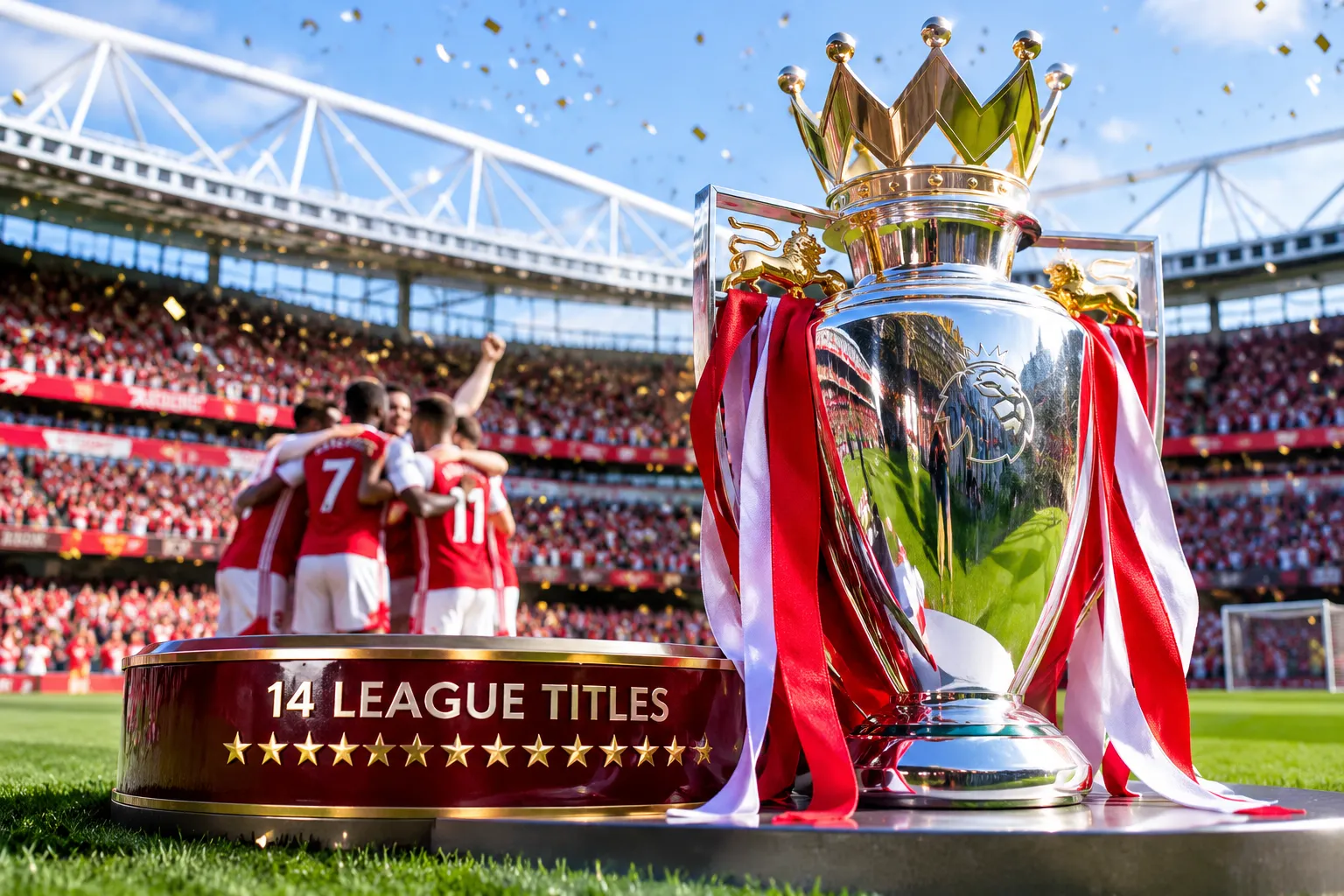
Arsenal are the champions of England. The 2025-26 title was confirmed on 19 May 2026, with a game to spare, when Manchester City could only draw 1-1 away at Bournemouth. Arsenal finished on 85 points from 26 wins, seven draws and five defeats, seven points clear of City, with 71 goals scored and 27 conceded.
It was the club's 14th English league title and their fourth of the Premier League era, after 1997-98, 2001-02 and 2003-04. Mikel Arteta, appointed on 20 December 2019, became the first Arsenal manager since Arsène Wenger to win the league, with Martin Ødegaard captaining the side. The new season then began with a statement: Arsenal beat City 3-0 in the Community Shield at Cardiff on 16 August 2026, Riccardo Calafiori scoring after 24 seconds, and the champions' home games are among the hardest tickets in the country to find.
One piece of silverware still got away. The title season also brought a 0-2 defeat to City in the EFL Cup final at Wembley on 22 March 2026, so the Gunners went into 2026-27 still chasing a league title and League Cup double, a pairing the club has never managed in the same season.
2. Nobody Has Won the FA Cup More Often
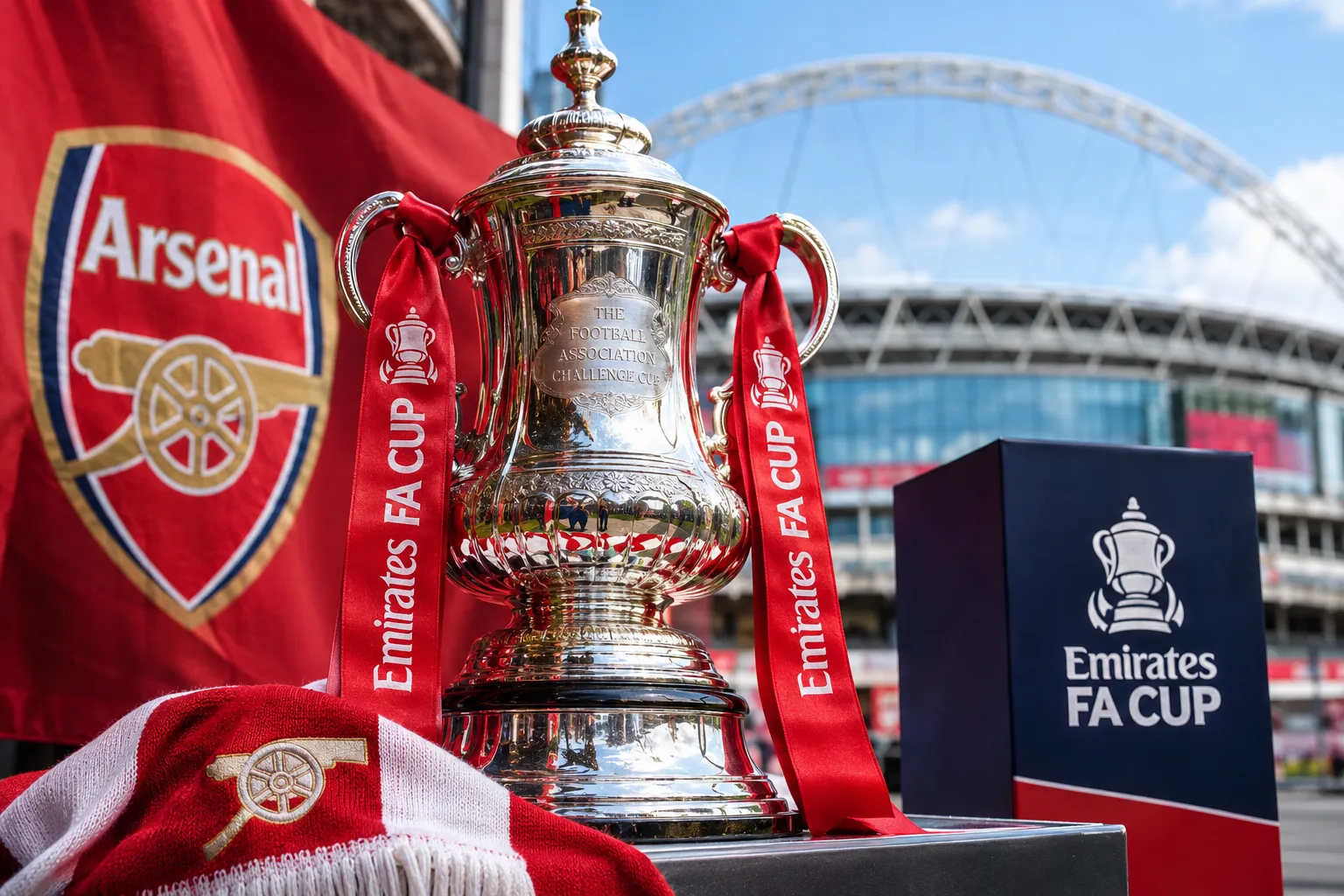
Arsenal have won the FA Cup 14 times, more than any other club. The first came in 1930, when Herbert Chapman's side beat Huddersfield Town 2-0 at Wembley, and the most recent in 2020, a 2-1 win over Chelsea secured by two Pierre-Emerick Aubameyang goals. Manchester United are next on 13, as we set out in our Manchester United facts.
Seven of the 14 came under Arsène Wenger, a record for any manager in the competition. The full trophy cabinet as of November 2026 looks like this:
| Competition | Wins | Most recent |
|---|---|---|
| English league title | 14 | 2025-26 |
| FA Cup | 14 | 2020 |
| League Cup | 2 | 1993 |
| Community Shield | 18 | 2026 |
| Inter-Cities Fairs Cup | 1 | 1970 |
| European Cup Winners' Cup | 1 | 1994 |
The League Cup is the obvious gap. Arsenal have reached the final nine times and won it only in 1987 and 1993, and the 2026 defeat to Manchester City extended a wait that now stretches past three decades. Wembley trips in the FA Cup have been a far happier habit.
WhatsApp channel
Sports news straight to your phone
Match updates, on-sale dates and ticket news from 1BoxOffice.
3. Founded by Munitions Workers, Which Is Why They Are the Gunners
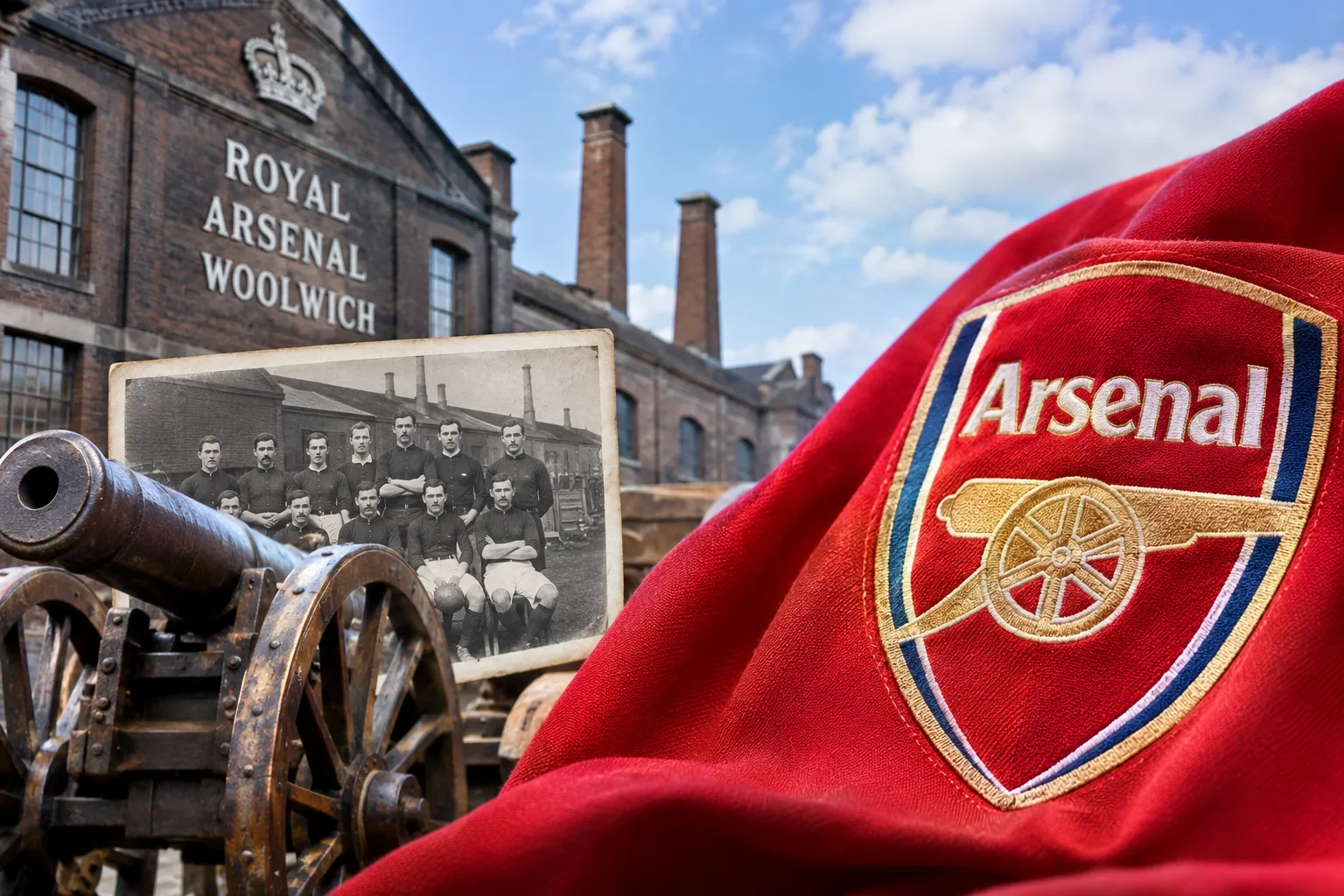
The club began in south-east London, not north. In the autumn of 1886 a group of workers at the Royal Arsenal, the government's armaments factory in Woolwich, formed a football team led by Scottish engineer David Danskin. They took the name Dial Square from the workshop where most of them were employed, and their first match on 11 December 1886 was a 6-0 win over Eastern Wanderers on the Isle of Dogs.
The name changed quickly. Dial Square became Royal Arsenal within weeks, then Woolwich Arsenal in 1893 when the club turned itself into a limited company and became the first southern side admitted to the Football League. It had already become the first London club to turn professional, in 1891. The "Woolwich" was dropped after the move to Highbury, leaving the name the world knows today.
The nickname and the crest both come from that factory floor. "The Gunners" refers to the men who made the guns, and a cannon has sat on the badge, in one form or another, for most of the club's history. Supporters calling themselves Gooners are simply playing on the word.
4. The Invincibles Went 49 League Matches Without Losing
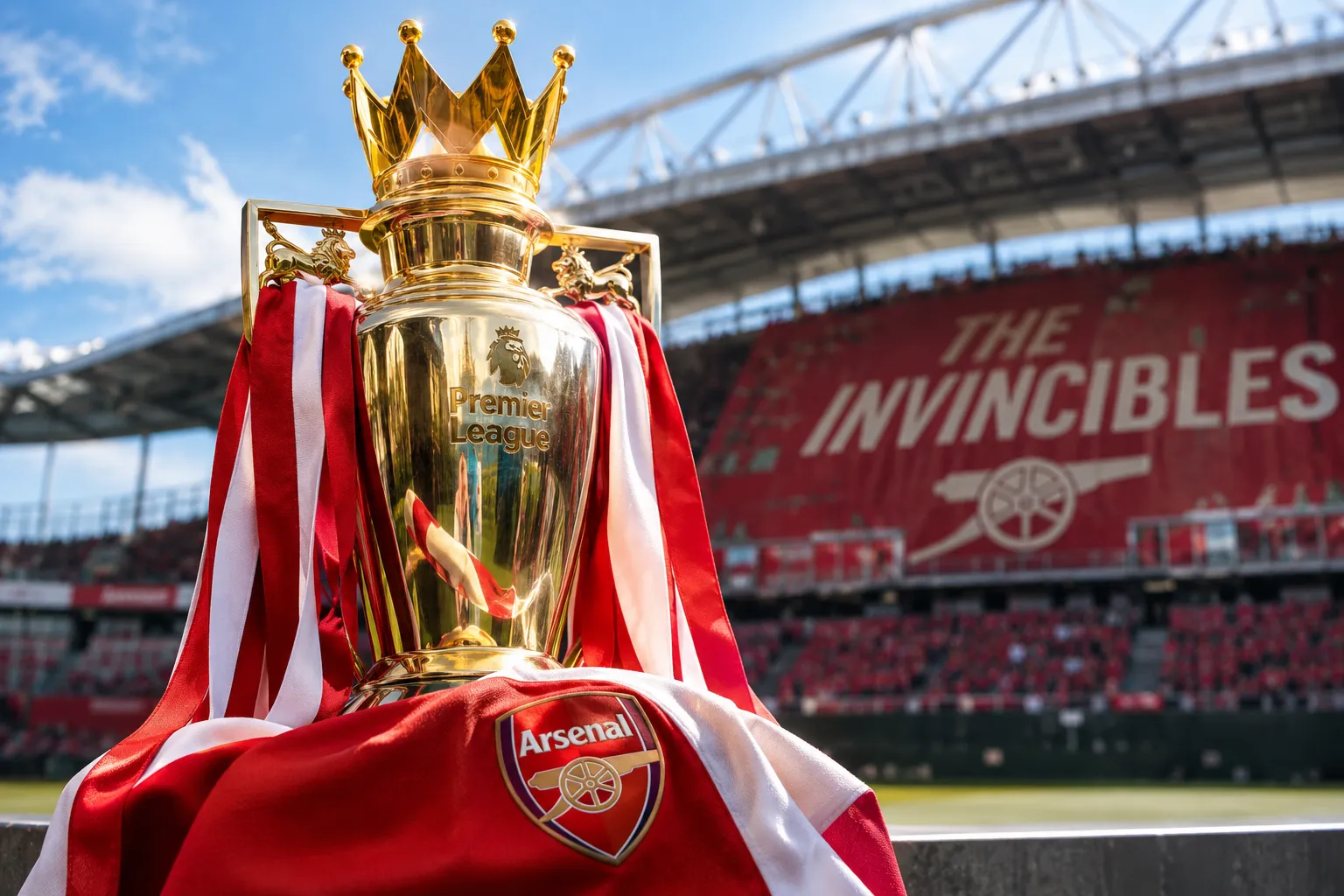
In 2003-04 Arsenal became the first club since Preston North End in 1888-89 to go through an English top-flight season unbeaten, and the only one to do it over 38 games. Wenger's side won 26 and drew 12, finished on 90 points and received a gold version of the Premier League trophy to mark the achievement. Thierry Henry scored 30 league goals and won the Golden Boot.
The unbeaten run did not stop at the season's end. It began with a 6-1 win over Southampton on 7 May 2003, and the 49th and final unbeaten match was a 3-1 win over Aston Villa at Highbury on 16 October 2004. Eight days later, on 24 October 2004, Manchester United won 2-0 at Old Trafford in a match remembered for a disputed penalty and a slice of pizza thrown in the tunnel. Forty-nine league games without defeat remains the English record, and the "Invincibles" label has stuck ever since.
5. One Relegation, Then the 1919 Vote That Enraged Tottenham
A popular claim says Arsenal have never been relegated. That is wrong. Woolwich Arsenal finished bottom of the First Division in 1912-13 with just 18 points and went down. Crowds in Plumstead had collapsed and the club was close to bankruptcy, which is why chairman Henry Norris moved it across the river to Highbury that summer, to the fury of nearby Tottenham Hotspur.
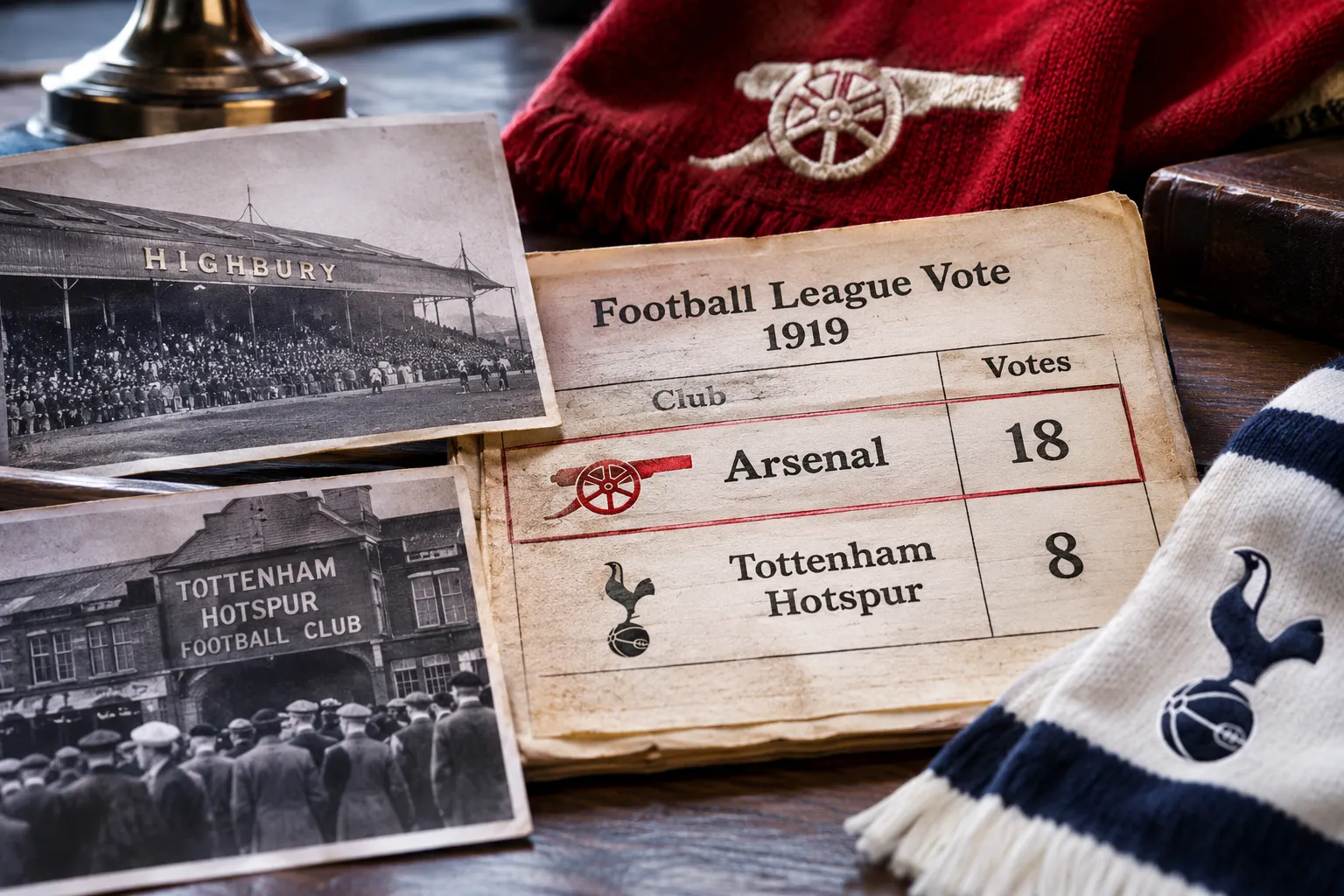
What happened next explains the North London derby better than any single match. When the First Division expanded from 20 to 22 clubs in 1919, the Football League held a vote on which clubs should fill the places. Arsenal had finished only sixth in the Second Division in 1914-15, the last season before the war, while Tottenham had finished bottom of the First. The league's member clubs voted Arsenal up with 18 votes to Tottenham's eight. Norris, a Conservative MP and former mayor of Fulham, was accused of lobbying hard, but no bribery was ever proven.
Arsenal have been in the top flight ever since, and 2025-26 was their 100th consecutive top-division season, a landmark the club marked during its title-winning campaign. Tottenham Hotspur have never forgotten the vote, which is one reason Arsenal vs Tottenham tickets are among the most sought-after of any home match at the Emirates.
6. The Only Underground Station Named After a Football Club
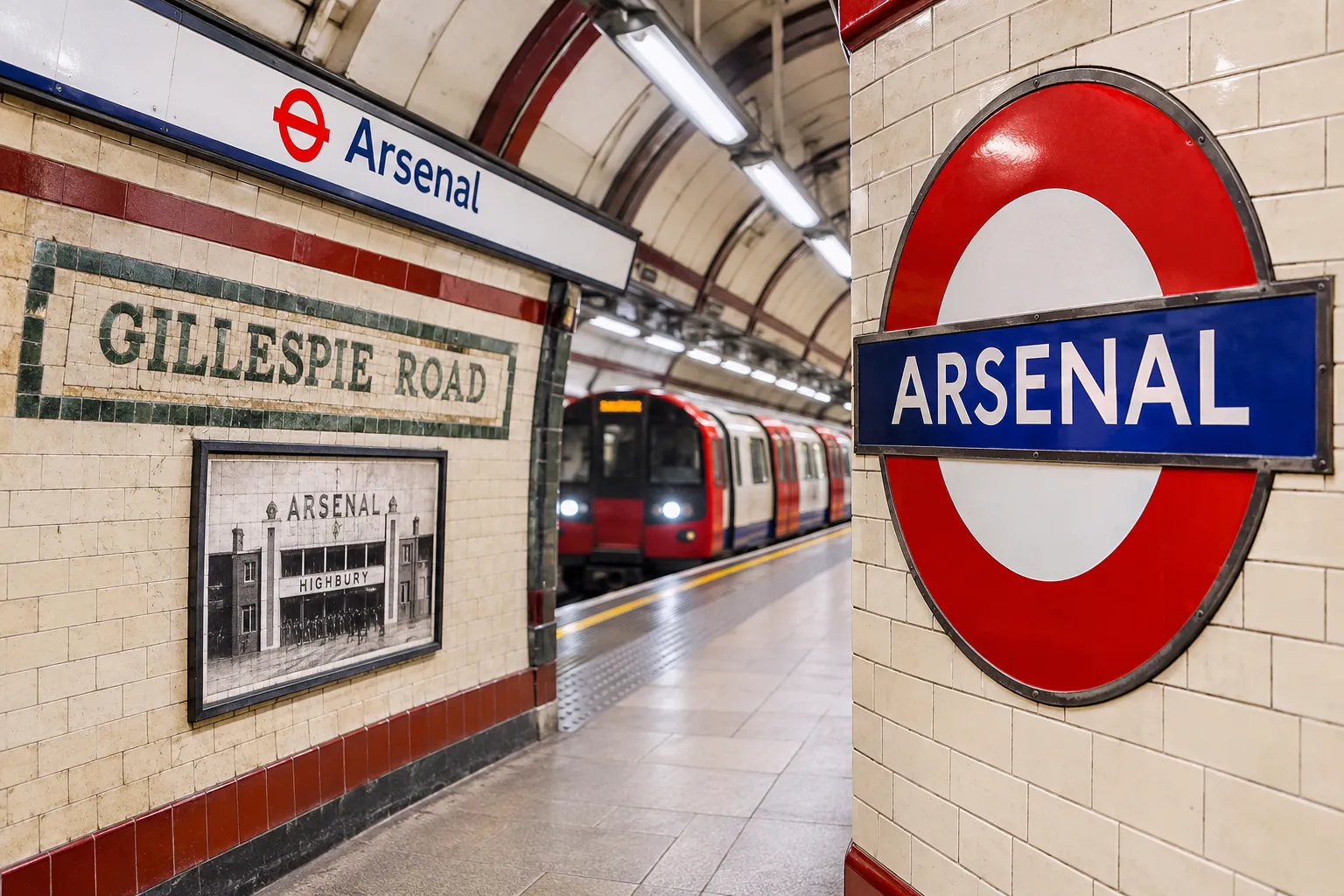
Get off the Piccadilly line one stop south of Finsbury Park and the platform signs read "Arsenal". The station was called Gillespie Road until 31 October 1932, when it was renamed Arsenal (Highbury Hill) after a campaign by manager Herbert Chapman, who argued that the club's name on the Tube map was free advertising. It remains the only London Underground station named after a football club, and the old Gillespie Road tiling is still visible on the platform walls.
Chapman changed far more than a station name during his nine years in charge. He was behind the numbered shirts Arsenal wore away at Sheffield Wednesday on 25 August 1928, the same afternoon Chelsea tried them against Swansea Town. He staged a floodlit demonstration match at Highbury in November 1932 and added white sleeves to the red shirt the following year. Chapman also won the first two of the five league titles Arsenal collected in the 1930s before his sudden death from pneumonia in January 1934.
7. Highbury's Record Crowd and Its Second Life as Flats
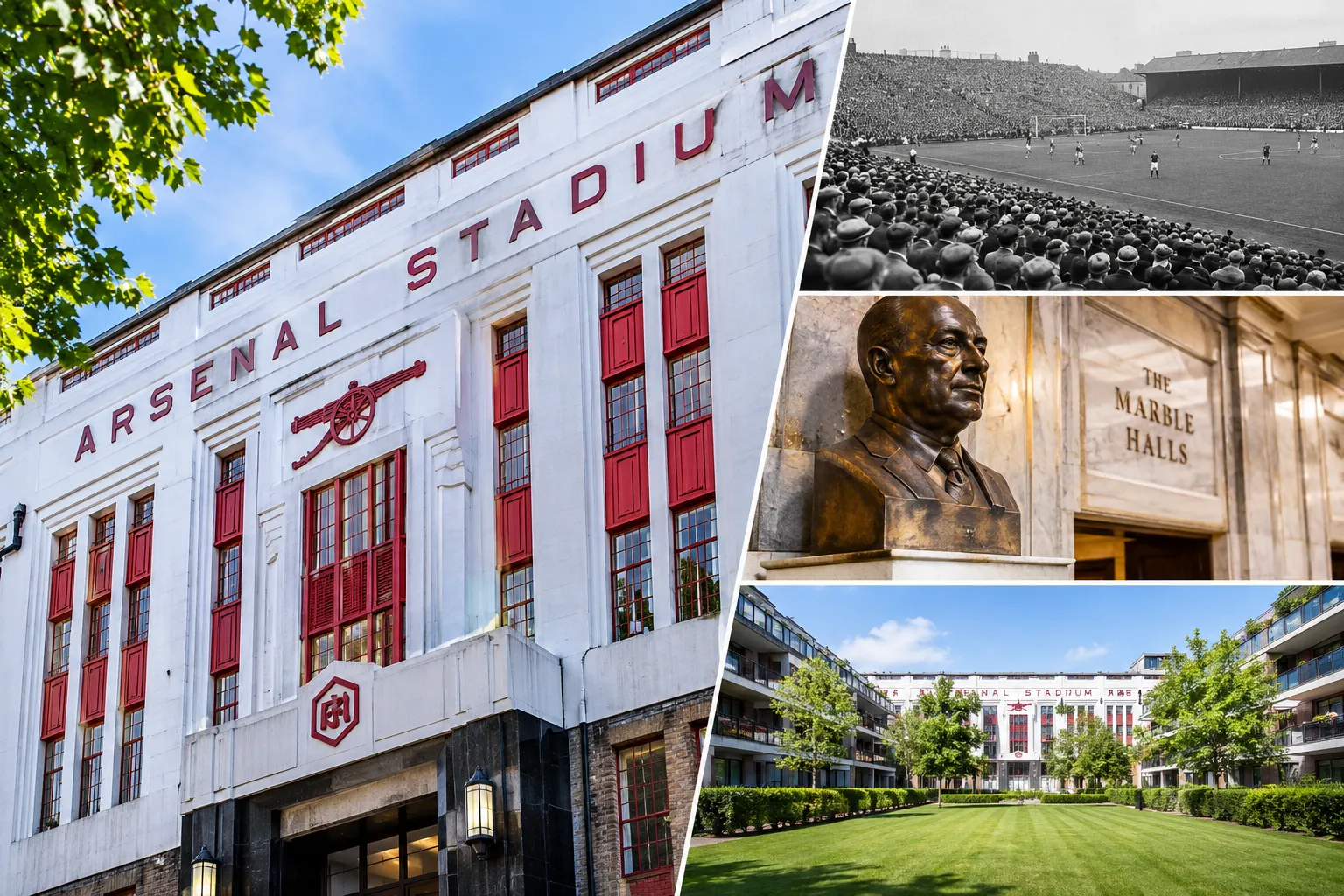
Arsenal Stadium, known to everyone as Highbury, was home from 1913 to 2006. Its record attendance of 73,295 came against Sunderland in the First Division on 9 March 1935, when most of the ground was standing terrace. The Art Deco East Stand, opened in 1936, gave the club its famous Marble Halls, complete with a bronze bust of Chapman inside the entrance.
The final match was a 4-2 win over Wigan Athletic on 7 May 2006, Thierry Henry scoring a hat-trick. The ground was then converted into Highbury Square, a development of flats that kept the listed East and West Stand facades and turned the pitch into a communal garden. Supporters can still walk past the old entrance on Avenell Road, a few minutes from the new stadium.
8. Emirates Stadium Stays at 60,704 After Expansion Plans Were Shelved
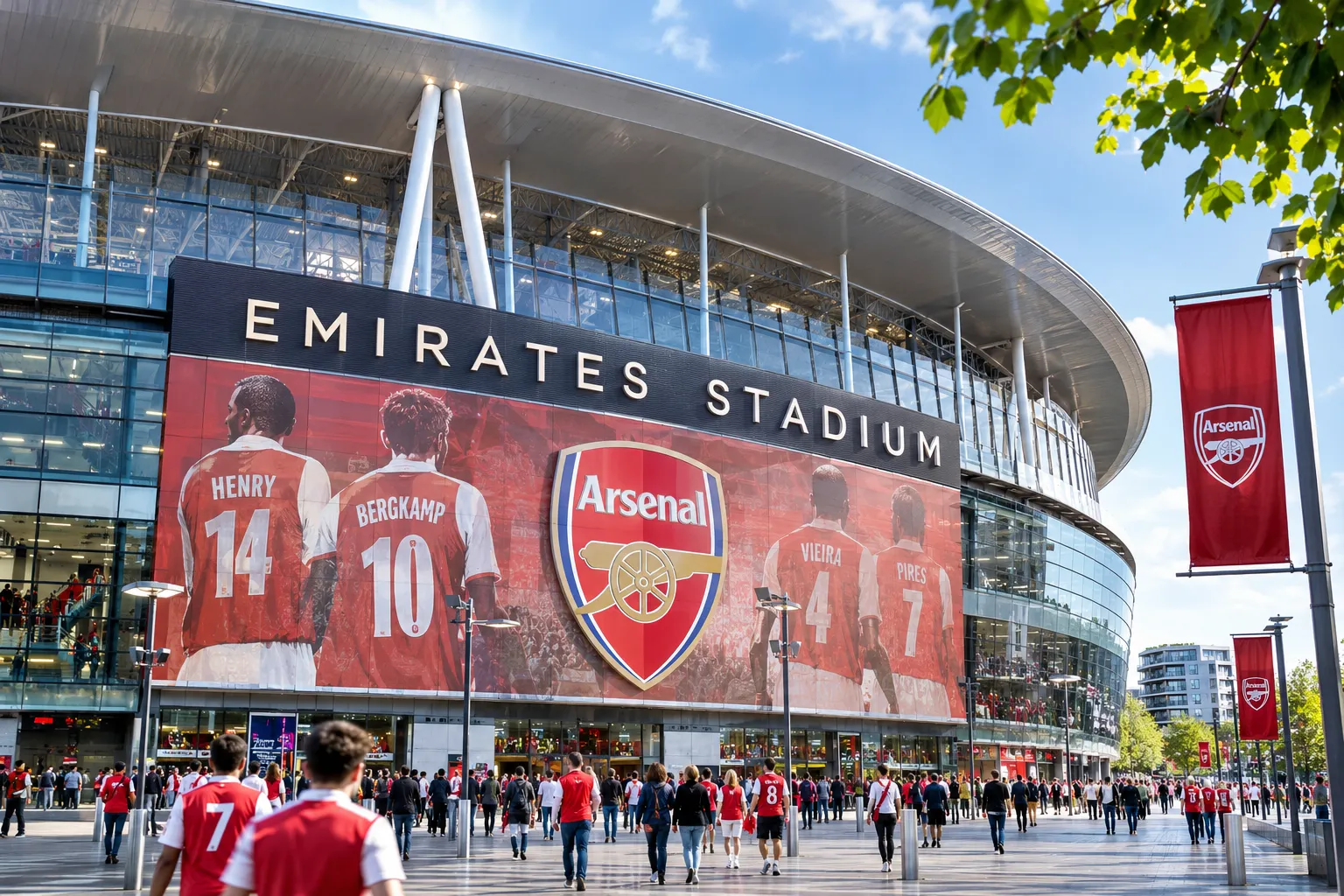
Emirates Stadium opened in July 2006 with a Dennis Bergkamp testimonial and has a capacity of 60,704, one of the largest club grounds in England. The record attendance is 60,383, set against Wolverhampton Wanderers on 2 November 2019 and equalled against Liverpool on 27 October 2024. Safe standing is in operation at the Clock End in 2026-27, with the North Bank scheduled to follow in 2027-28.
For two years the club studied something much bigger. A working group led by chief executive Richard Garlick looked at raising the capacity to around 80,000, but in October 2026 Arsenal dropped the idea in favour of smaller, phased upgrades to hospitality, catering and technology. Nothing rules out a larger project in future, but for now the seat count stays where it is, which matters because the season ticket waiting list has been reported at well over 100,000 names.
Where you sit changes the day considerably. Our stand-by-stand guide to the best and worst seats at Emirates Stadium works alongside the full Emirates Stadium seating plan, and if you are not a member we explain how supporters buy Arsenal tickets without a membership.
9. The Longest Shirt Sponsorship in the Premier League
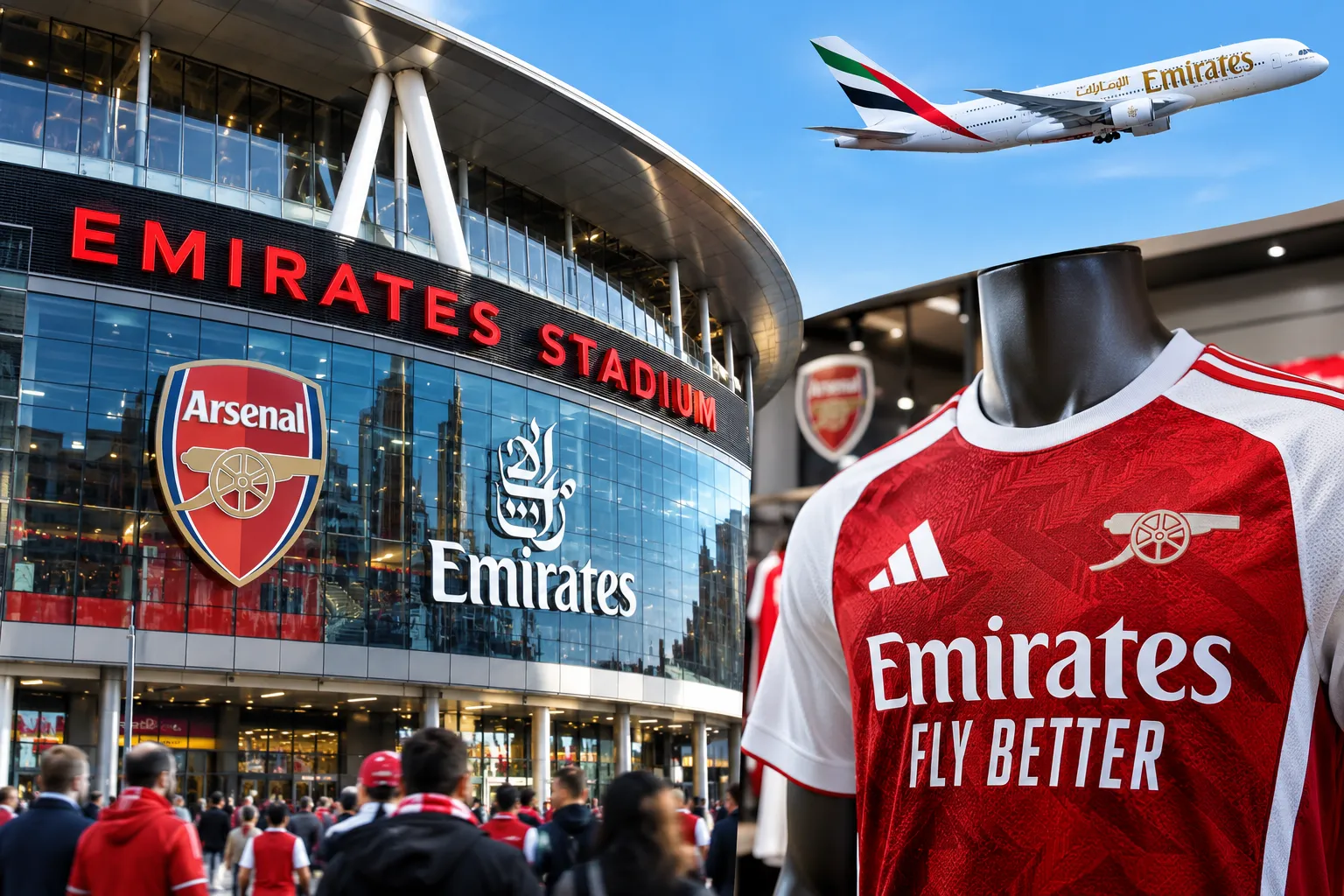
The Dubai airline's name has been on the stadium since it opened in 2006 and on the front of the shirt since the 2006-07 season. On 6 August 2026 Arsenal and Emirates announced an extension that keeps the airline as front-of-shirt, training kit and stadium naming partner until 2033, which Emirates described as extending the Premier League's longest-running front-of-shirt partnership. Trade reports put the renewed deal at up to £70m a season, up from around £50m, although neither side has confirmed the figure.
The connection runs deeper than a logo. Arsenal have one of the largest followings of any English club across the Gulf, and the club's match-by-match hospitality in Club Level is a common route in for supporters flying from Dubai, Abu Dhabi and Riyadh. We break down the options in our guide to Arsenal hospitality packages. The kit itself has been made by adidas since 2019, on a contract that runs to 2030.
10. Two Champions League Finals, Both Lost by the Narrowest Margin
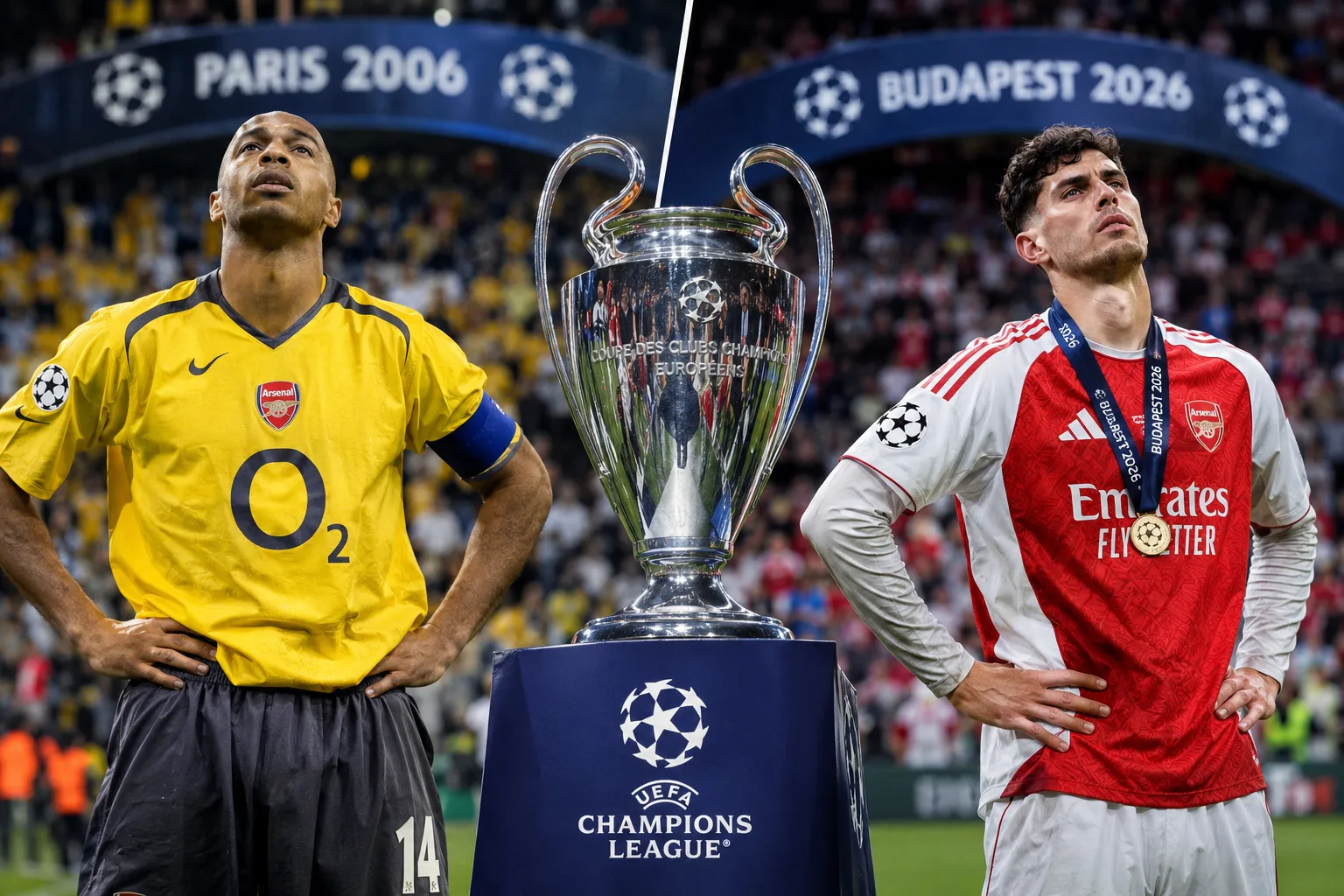
Arsenal have never won the European Cup, but they have come within a kick of it twice. In Paris on 17 May 2006 they led Barcelona through a Sol Campbell header despite playing 72 minutes with ten men after Jens Lehmann's red card, before two late goals won it 2-1 for the Catalans.
Twenty years later the story repeated itself in Budapest. Arsenal beat Atlético Madrid in the semi-final and faced Paris Saint-Germain at the Puskás Aréna on 30 May 2026. Kai Havertz scored after six minutes, Ousmane Dembélé equalised from the penalty spot on 65 minutes and the match finished 1-1 after extra time. The shootout went 4-3 to the French side when Gabriel Magalhães sent the decisive kick over the bar.
The men's team's two European trophies, separate from the two won by Arsenal Women in fact 15, came in the 1970 Inter-Cities Fairs Cup, won 4-3 on aggregate against Anderlecht, and the 1994 Cup Winners' Cup, a 1-0 win over Parma in Copenhagen through Alan Smith. Arsenal also qualified for the Champions League in 19 consecutive seasons from 1998-99 to 2016-17, an English record, and as champions they are back among the favourites in 2026-27, keeping Champions League tickets for the Emirates in heavy demand.
11. Henry's Goals, O'Leary's Games and Wenger's 22 Years
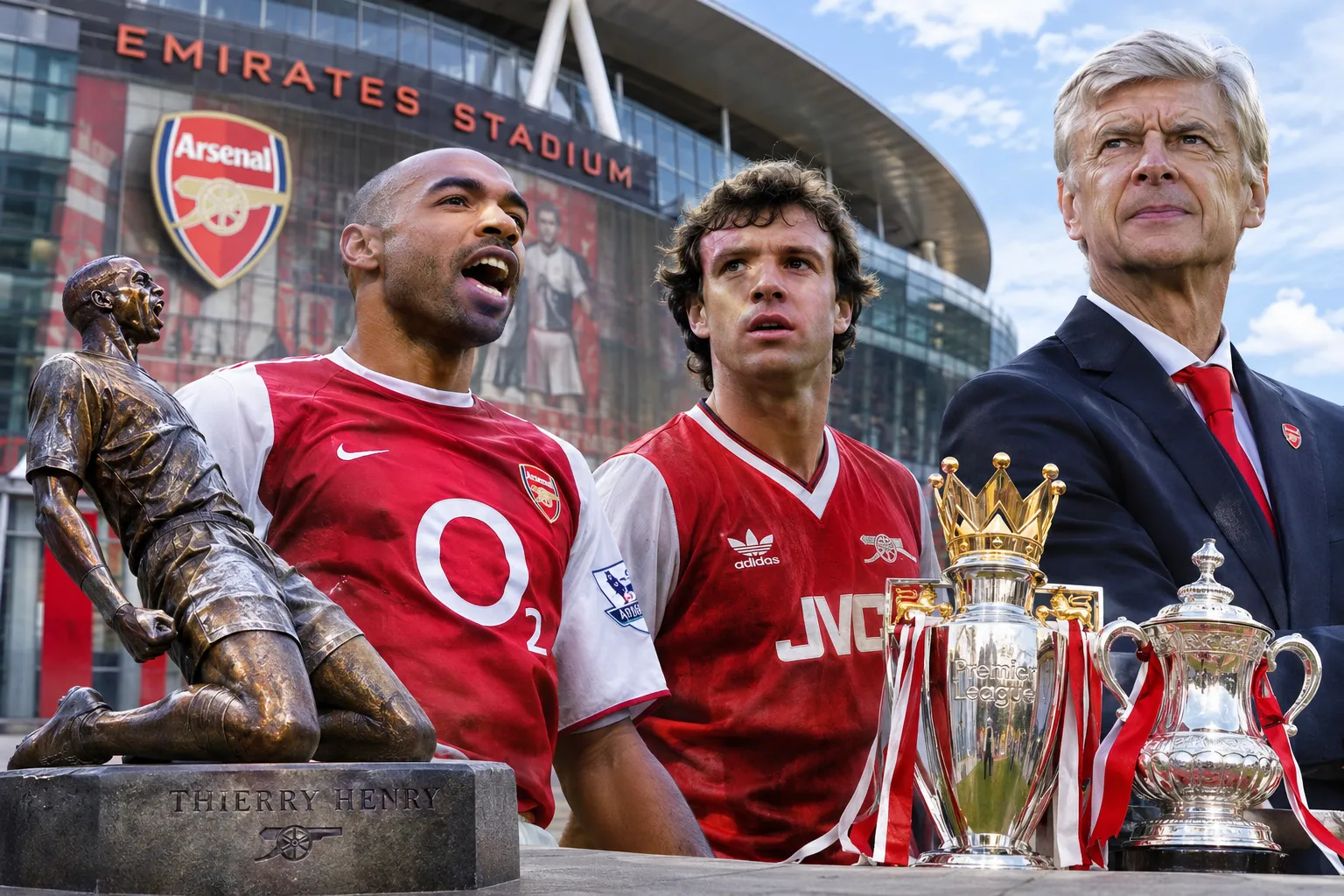
Thierry Henry is Arsenal's record goalscorer with 228 goals, a tally built across his first spell from 1999 to 2007 and a short loan return in 2012. He passed Ian Wright's previous record of 185 in October 2005, and his statue, knees sliding across the concourse, stands outside the stadium.
The appearance record belongs to David O'Leary, who played 722 games for the club between 1975 and 1993, a figure no outfield player in Arsenal's history has come close to since. On the touchline, Arsène Wenger managed Arsenal from 1 October 1996 to 13 May 2018, a little under 22 years, winning three league titles and seven FA Cups. In 1997-98 he became the first manager from outside the British Isles to win the English title.
12. A £105m Record Signing and a £60m Record Sale
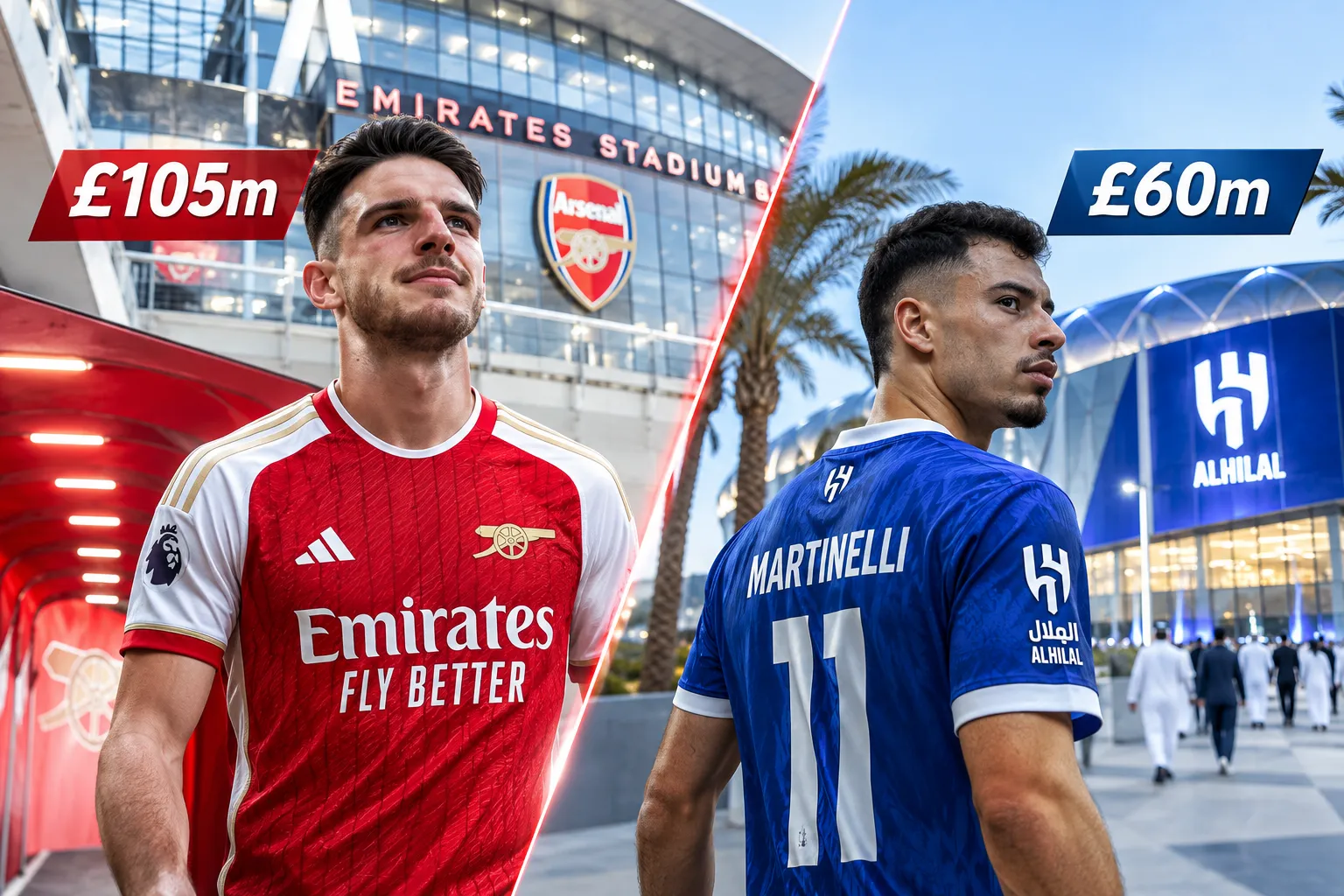
Declan Rice remains Arsenal's record signing. He arrived from West Ham United on 15 July 2023 for £100m plus £5m in add-ons, the first time the club had spent nine figures on one player. Bruno Guimarães, signed from Newcastle United in August 2026 for a reported £75m, is now the second most expensive.
The record sale was set in the other direction in September 2026. Gabriel Martinelli joined Saudi Pro League club Al Hilal after the English transfer deadline, with the fee reported at a fixed £60m plus a sell-on clause, comfortably above the £35m, rising to £40m with add-ons, that Liverpool paid for Alex Oxlade-Chamberlain in 2017. Arsenal did not disclose the figure. Martinelli left after nearly 300 appearances and 62 goals, and his move is one of several recent transfers that have deepened the links between the club and the Gulf.
Supporters who follow the team on the road should read our guide to Arsenal away tickets, which explains how the Away Points scheme ranks members.
13. The First Match on Radio and the First on Television
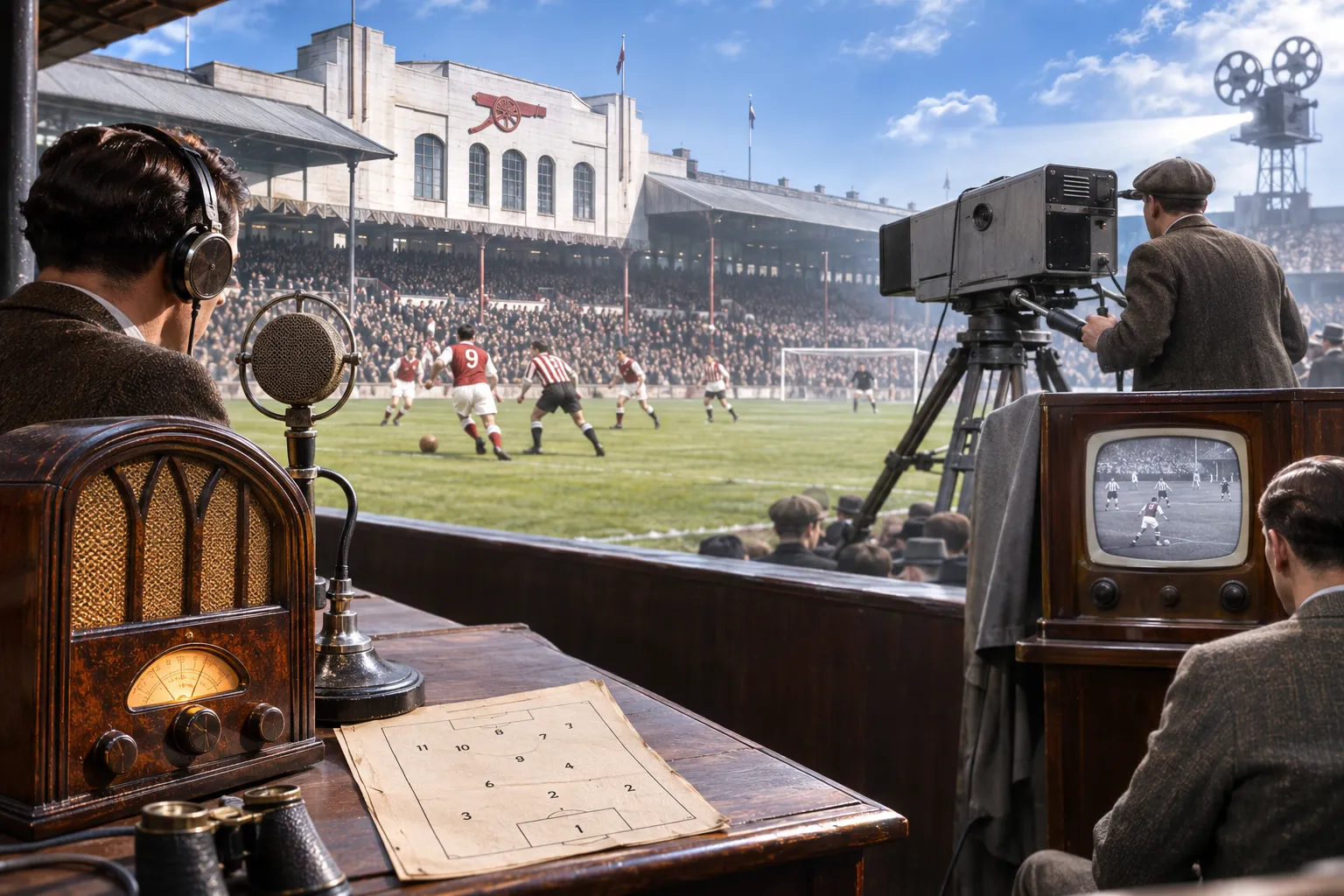
On 22 January 1927 Arsenal's home match against Sheffield United became the first Football League game broadcast live on radio, with the BBC commentary accompanied by a numbered grid in the Radio Times so listeners could follow where the ball was. A decade later, on 16 September 1937, the BBC televised 15 minutes of a practice match between Arsenal and Arsenal Reserves from Highbury, the first scheduled live television broadcast of a football match. Broadcast historians note a test transmission the day before, which is why the club describes 16 September as the first scheduled showing.
The club's on-screen profile grew from there. In 1939 the ground and several players appeared in The Arsenal Stadium Mystery, a feature film about a murder during a match at Highbury, with Herbert Chapman's successor George Allison playing himself.
14. Nottingham Forest Did Not Donate the Red Shirts
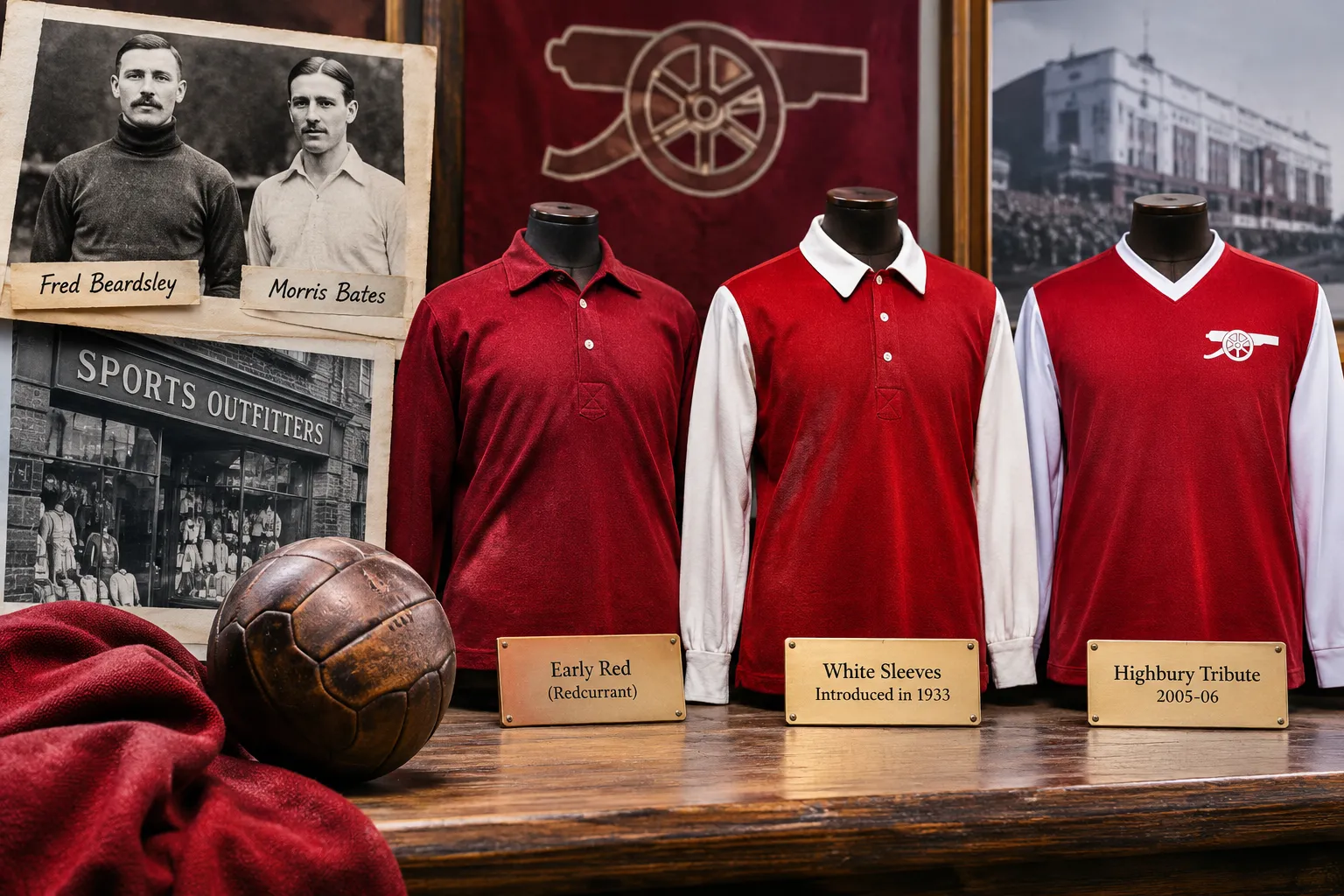
The story every fact page repeats is that Nottingham Forest sent a set of red shirts and a ball to the new club in Woolwich. Arsenal's own historians say that is not what happened. Two of the founders, goalkeeper Fred Beardsley and Morris Bates, had played for Forest, and the club chose red because of that connection, but the first shirts were bought locally rather than donated.
The red was a darker, redcurrant shade for decades. Herbert Chapman introduced the white sleeves in 1933 so his players could pick each other out more easily, and Arsenal wore a redcurrant kit again for the final season at Highbury in 2005-06 as a tribute. Red body, white sleeves has been the home look ever since.
15. The Only English Winners of the Women's Champions League
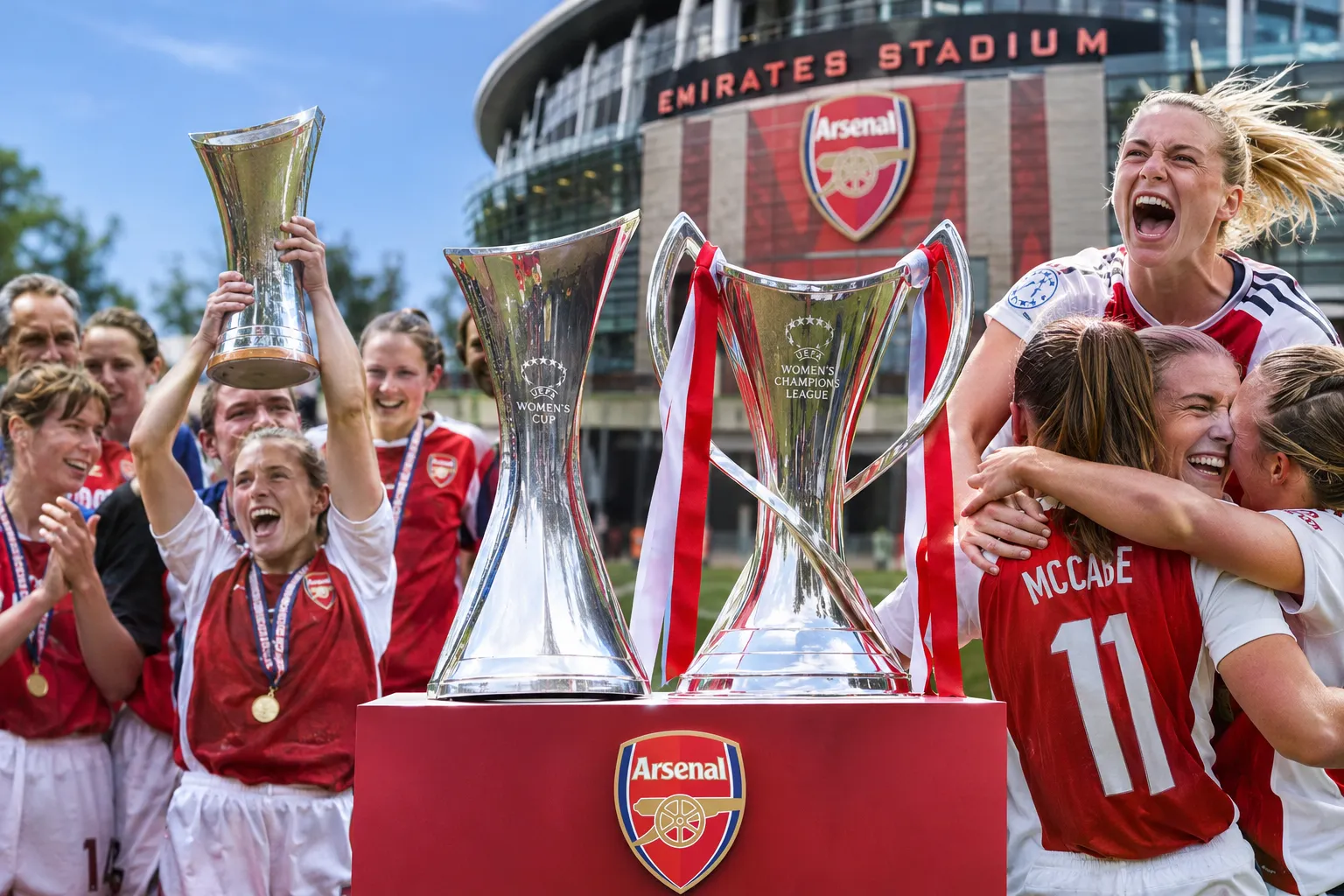
Arsenal Women have won Europe's top club competition twice, and no other English team has won it at all. The first came in 2006-07, when Vic Akers' side beat Umeå 1-0 on aggregate in the UEFA Women's Cup as part of a quadruple. The second came on 24 May 2025 in Lisbon, when a Stina Blackstenius goal beat holders Barcelona 1-0 in the Women's Champions League final.
The club holds a record 15 English women's league titles, although Manchester City took the 2025-26 Women's Super League with Arsenal second. Since 2024-25 the women's team has played the majority of its home league matches at the Emirates, so the stadium now hosts two title-chasing Arsenal sides.
Frequently Asked Questions
1. What is Arsenal's biggest ever win?
-
Arsenal's biggest win is 12-0, achieved twice: against Ashford United in the FA Cup on 14 October 1893 and against Loughborough Town in the Second Division on 12 March 1900.
2. Who owns Arsenal?
-
Kroenke Sports and Entertainment, the American group led by Stan Kroenke and his son Josh, has owned Arsenal outright since completing its takeover in 2018.
3. Where do away fans sit at Emirates Stadium?
-
Away supporters at Emirates Stadium sit in the south-east corner of the lower tier, beside the Clock End, with around 3,000 seats for Premier League matches.
4. Can you tour Emirates Stadium on a non-matchday?
-
Emirates Stadium runs self-guided audio tours on most non-matchdays, taking in the dressing room, tunnel, dugouts and the Arsenal museum.
5. Who are Arsenal's biggest rivals?
-
Tottenham Hotspur are Arsenal's fiercest rivals, followed by Chelsea as the other major London rivalry and Manchester United after the title battles of the late 1990s and 2000s.
Whether you want to walk past the Marble Halls on Avenell Road or watch the champions defend their title at the Emirates, 1BoxOffice has been helping supporters reach north London since 2006, and every order is backed by our 150% money-back guarantee. Under its published terms, if your tickets are not received and no alternative is offered, you get a full refund and may also receive a goodwill credit voucher worth 50% of the order value, excluding fees and taxes and capped at £125.
Sources: Arsenal Football Club, The Arsenal Collection, Premier League, UEFA, The Football Association, Emirates, Sky Sports, BBC Sport, ESPN, Al Jazeera, Reuters, Gulf News, StadiumDB, Britannica.