In this guide
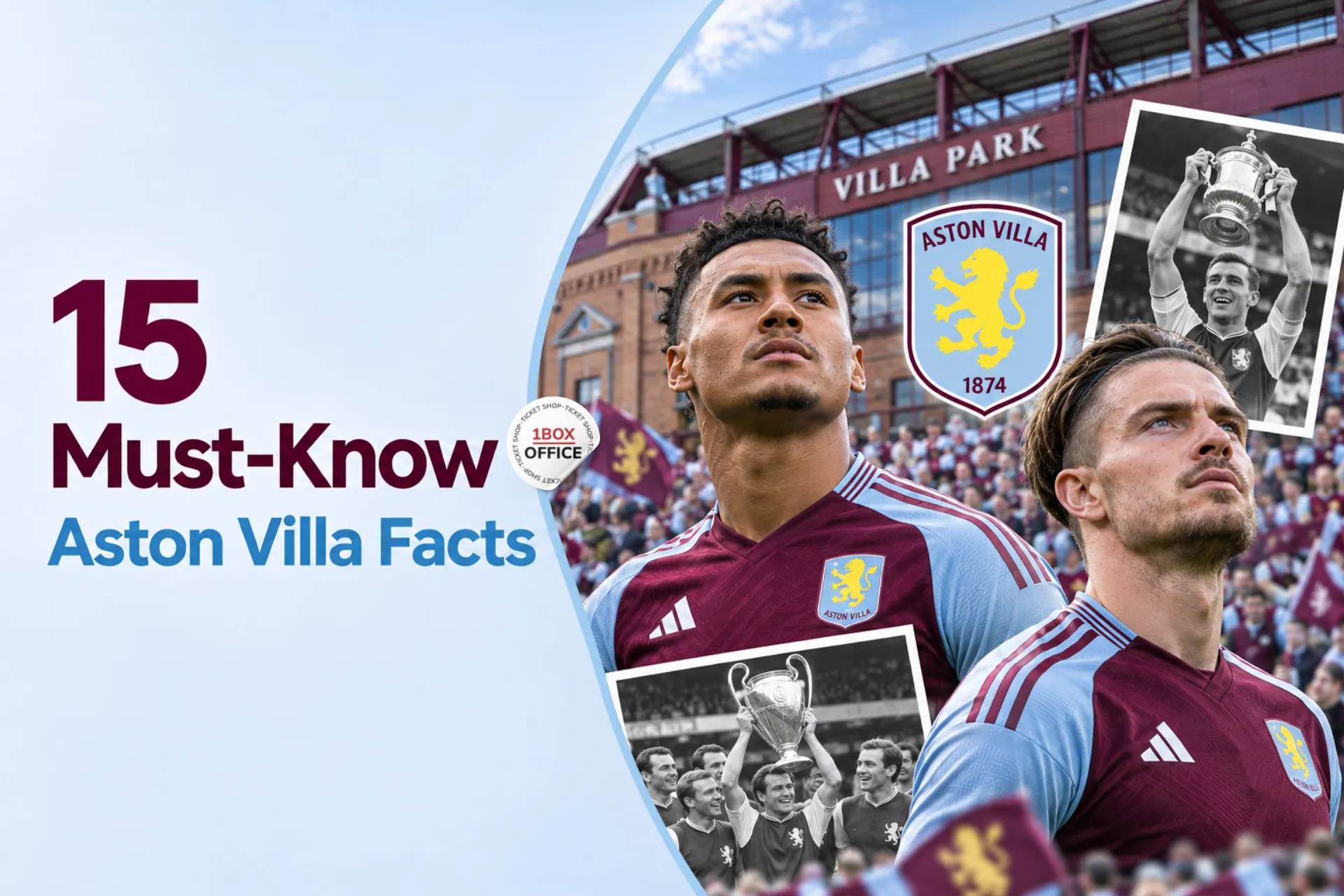
All 15 Facts at a Glance1. Formed Under a Gas Lamp in 18742. The Name Came From a House, and the Fans Are Villans, Not Villains3. A Villa Director Founded the Football League4. The Man Often Called Football's First Manager Worked at Villa5. 22 Major Trophies, Including the 1897 Double6. 128 League Goals in a Season and the First League Cup7. Kings of Europe in 1982 With a Rookie Goalkeeper8. A European Trophy in Istanbul After a 30-Year Wait for Major Silverware9. Villa Park Has Hosted More FA Cup Semi-Finals Than Any Other Ground10. Villa Park Holds 36,887 This Season and Will Pass 50,00011. An Egyptian Billionaire Co-Owns Aston Villa12. Aitken's Games and Walker's Goals13. A £117m Sale and Two Club-Record Deals in One Summer14. From a Prince to the Prince of Darkness15. The Lion on the Badge and the Second City DerbyFrequently Asked QuestionsAston Villa were formed by four chapel cricketers under a gas lamp in 1874, and one of the club's directors went on to found the Football League. These 15 Aston Villa facts run from that Victorian street corner in Handsworth to a Europa League final in Istanbul, with every figure checked as of November 2026.
Article Summary: Aston Villa Football Club was formed on 21 November 1874 by members of the Aston Villa Wesleyan Chapel cricket team and has played at Villa Park since 1897. Villa have won 22 major trophies, including seven league titles, seven FA Cups, the 1982 European Cup and the 2026 Europa League. Unai Emery was appointed head coach in October 2022.
- Aston Villa beat SC Freiburg 3-0 in the Europa League final in Istanbul on 20 May 2026, the club's first major trophy in 30 years.
- Villa Park held 43,205 before redevelopment, and capacity is 36,887 in 2026-27 while the North Stand is rebuilt to take the ground past 50,000.
- Charlie Aitken holds the Aston Villa appearance record with 660 games and Billy Walker is the record scorer with 244 goals.
- Aston Villa sold Morgan Rogers to Chelsea in July 2026 for a reported £117m, a British transfer record.
- Aston Villa is owned by V Sports, the company of Egyptian businessman Nassef Sawiris and American investor Wes Edens, with US firm Atairos holding a minority stake.
Each fact below has been checked against the club's historical records, match reports and current news coverage. If the history makes you want a seat in B6, our Aston Villa tickets cover home matches throughout the 2026-27 season.
All 15 Facts at a Glance
| # | Fact | Key figure |
|---|---|---|
| 1 | Formed under a gas lamp in 1874 | 21 November 1874 |
| 2 | The name came from a house, and the fans are Villans, not villains | Villa Cross, Handsworth |
| 3 | A Villa director founded the Football League | 12 clubs in 1888 |
| 4 | The man often called football's first manager worked at Villa | Appointed 26 June 1886 |
| 5 | 22 major trophies, including the 1897 Double | 7 league titles, 7 FA Cups |
| 6 | 128 league goals in a season and the first League Cup | 1930-31 and 1961 |
| 7 | Kings of Europe in 1982 with a rookie goalkeeper | 1-0 v Bayern Munich |
| 8 | A European trophy in Istanbul after a 30-year wait for major silverware | 3-0 v SC Freiburg, 2026 |
| 9 | More FA Cup semi-finals than any other ground | 55 semi-finals |
| 10 | 36,887 this season, more than 50,000 after the rebuild | 43,205 before redevelopment |
| 11 | An Egyptian billionaire co-owns the club | Sawiris and Edens since 2018 |
| 12 | Aitken's games and Walker's goals | 660 and 244 |
| 13 | A £117m sale and two club-record deals in one summer | Summer 2026 |
| 14 | From a prince to the Prince of Darkness | Villa Park, 5 July 2025 |
| 15 | The lion on the badge and the Second City derby | Rivals since 1879 |
1. Formed Under a Gas Lamp in 1874

Aston Villa began with a walk home. Four members of the Aston Villa Wesleyan Chapel cricket team, remembered by the surnames Hughes, Matthews, Price and Scattergood, had been watching a rugby match at Heathfield Park. Heading back along Heathfield Road, they stopped under a dim gas lamp near Villa Cross and agreed to take up association football to keep fit through the winter. The meeting is traditionally dated to 21 November 1874, which is treated as the club's birthday.
Finding opponents was harder than forming a team. One of Villa's earliest matches was against the cricketers of Aston St Mary's, who knew only rugby, so the first half was played under rugby rules and the second under association rules. Hughes scored the only goal after the break. The 152nd birthday falls on 21 November 2026, the same day Sunderland visit Villa Park, and Aston Villa vs Sunderland tickets cover that match.
2. The Name Came From a House, and the Fans Are Villans, Not Villains
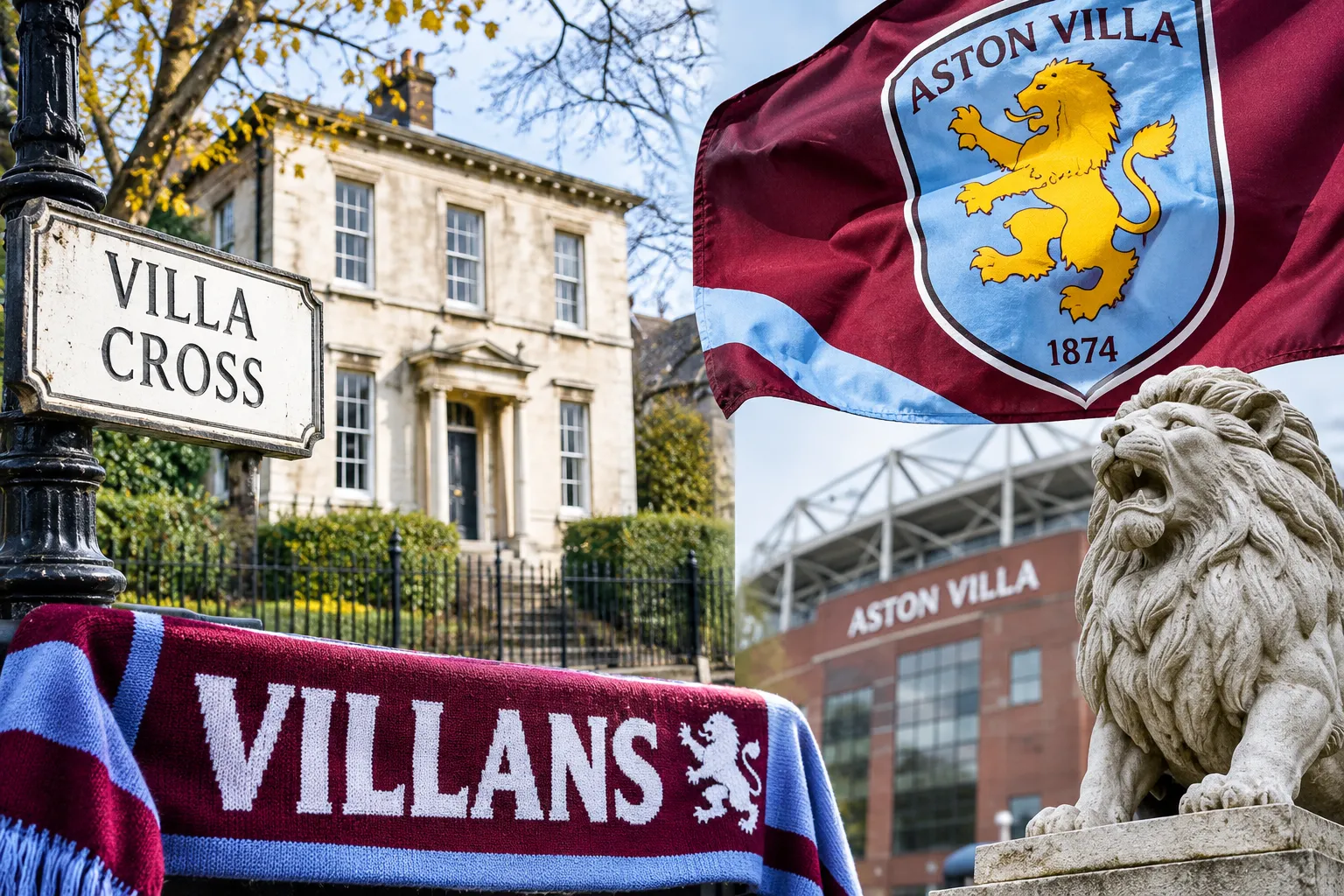
Villa were never named after a villa they owned. The chapel stood at Villa Cross, a road junction in Handsworth that took its name from a Georgian house called Aston Villa. The chapel borrowed the name, the cricket team borrowed it from the chapel and the football club inherited it in 1874.
That is also why the nickname has one fewer letter than most people expect. Supporters are the Villans, a play on the club name, not "villains". The team is also called the Lions after the crest, and the support is known as the Claret and Blue Army.
WhatsApp channel
Sports news straight to your phone
Match updates, on-sale dates and ticket news from 1BoxOffice.
3. A Villa Director Founded the Football League
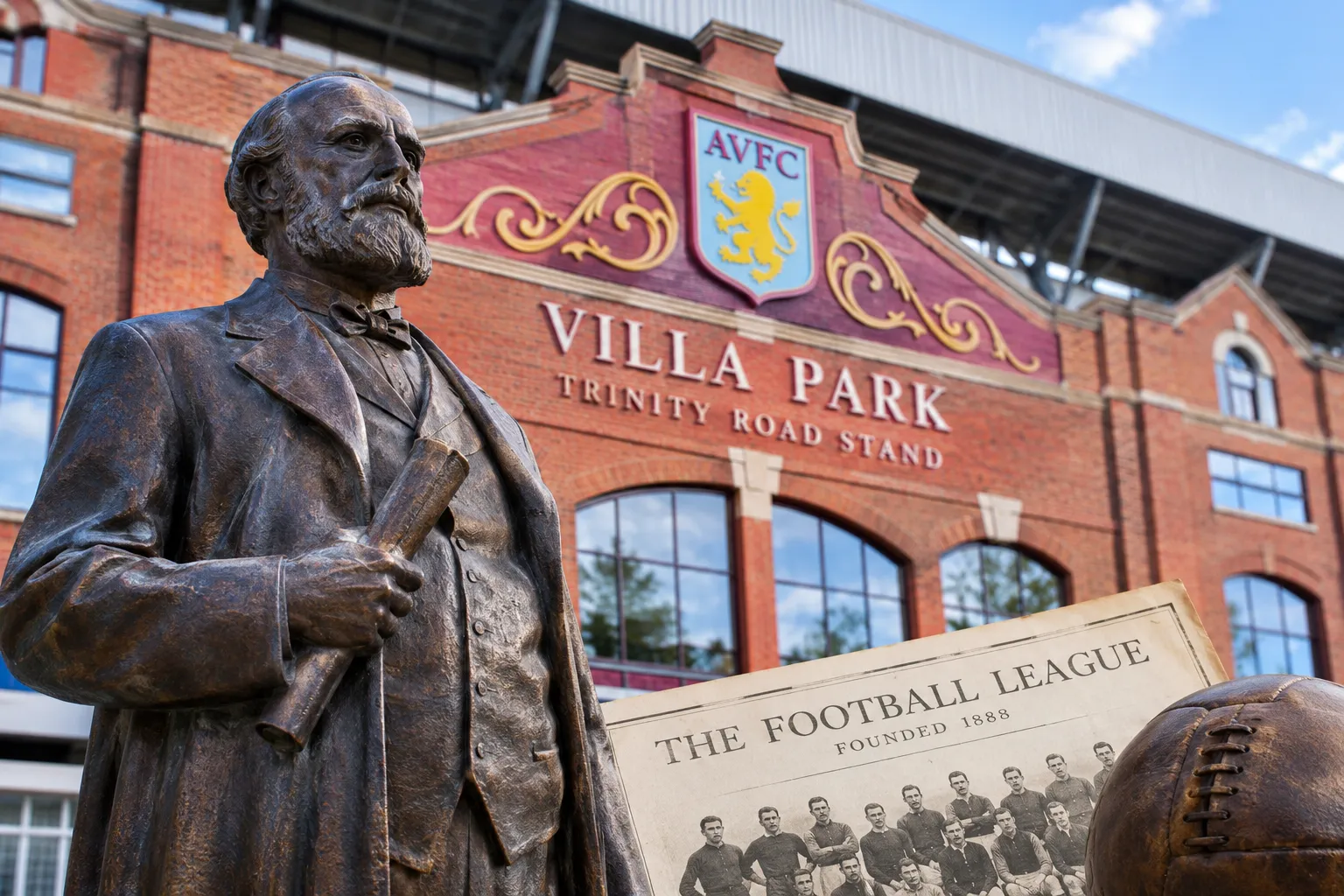
Before 1888, English clubs played cup ties and friendlies, and matches were often cancelled at short notice. William McGregor, a Scottish draper on the Aston Villa board, wrote to the country's leading clubs proposing a regular programme of home and away matches. Twelve clubs signed up and the first Football League season kicked off in September 1888. A statue of McGregor stands at the main entrance to the Trinity Road Stand.
Villa were among those 12 founders, and in 1992 they were also founder members of the breakaway top division. Only three clubs can claim both distinctions: Aston Villa, Blackburn Rovers and Everton. That makes Villa part of English football's first league and of the competition fans now follow with Premier League tickets every weekend.
4. The Man Often Called Football's First Manager Worked at Villa
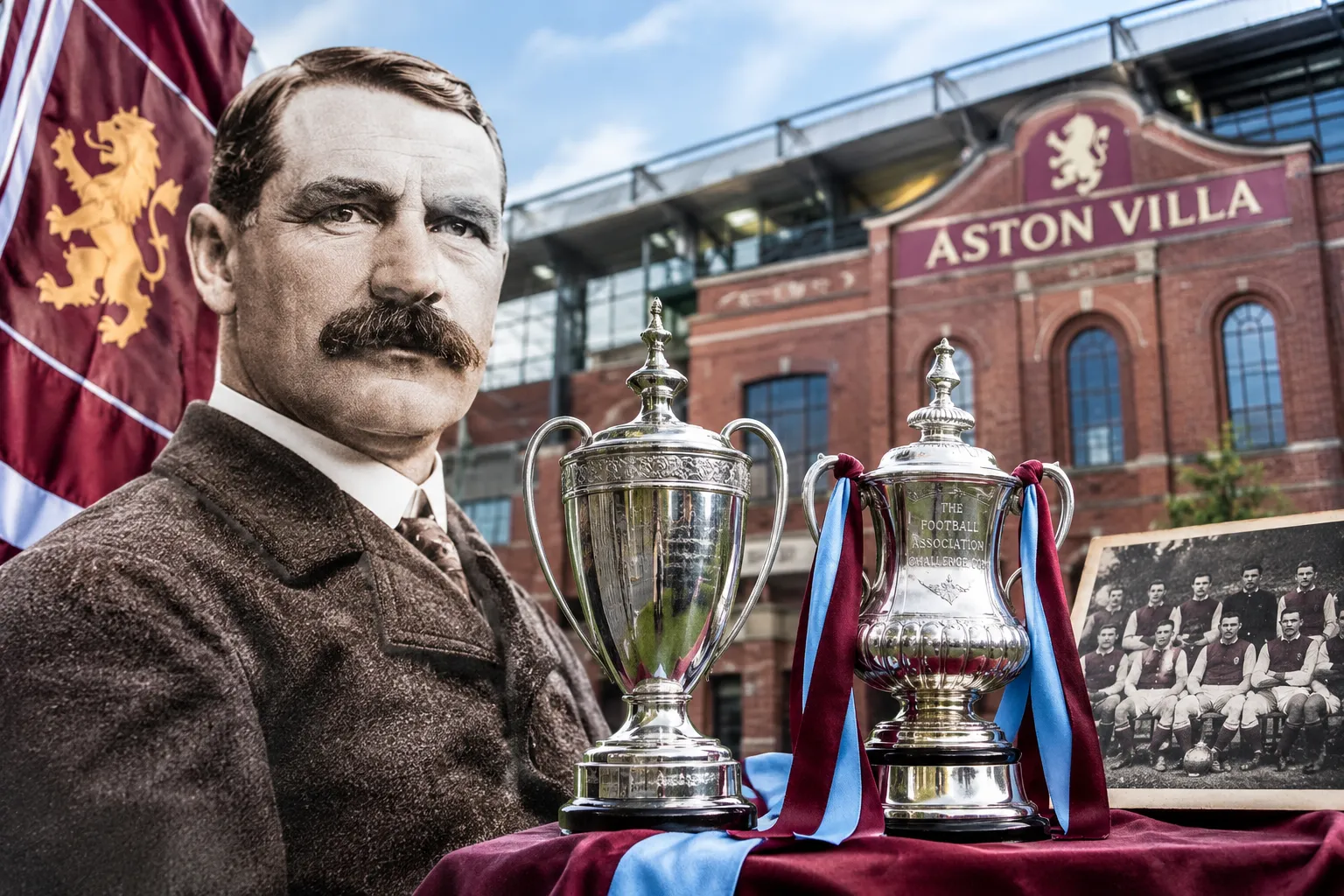
On 26 June 1886, Aston Villa appointed George Ramsay as secretary on an advertised salary of £100 a year. Ramsay, another Scot, had captained the side in its early years. He is widely described as the first paid football manager in the world, although historians still argue over who deserves the title, since the role of manager barely existed at the time.
Whatever the label, his record is clear. Ramsay stayed in the job until 1926, and every one of Villa's first six league titles and first six FA Cups arrived on his watch.
5. 22 Major Trophies, Including the 1897 Double
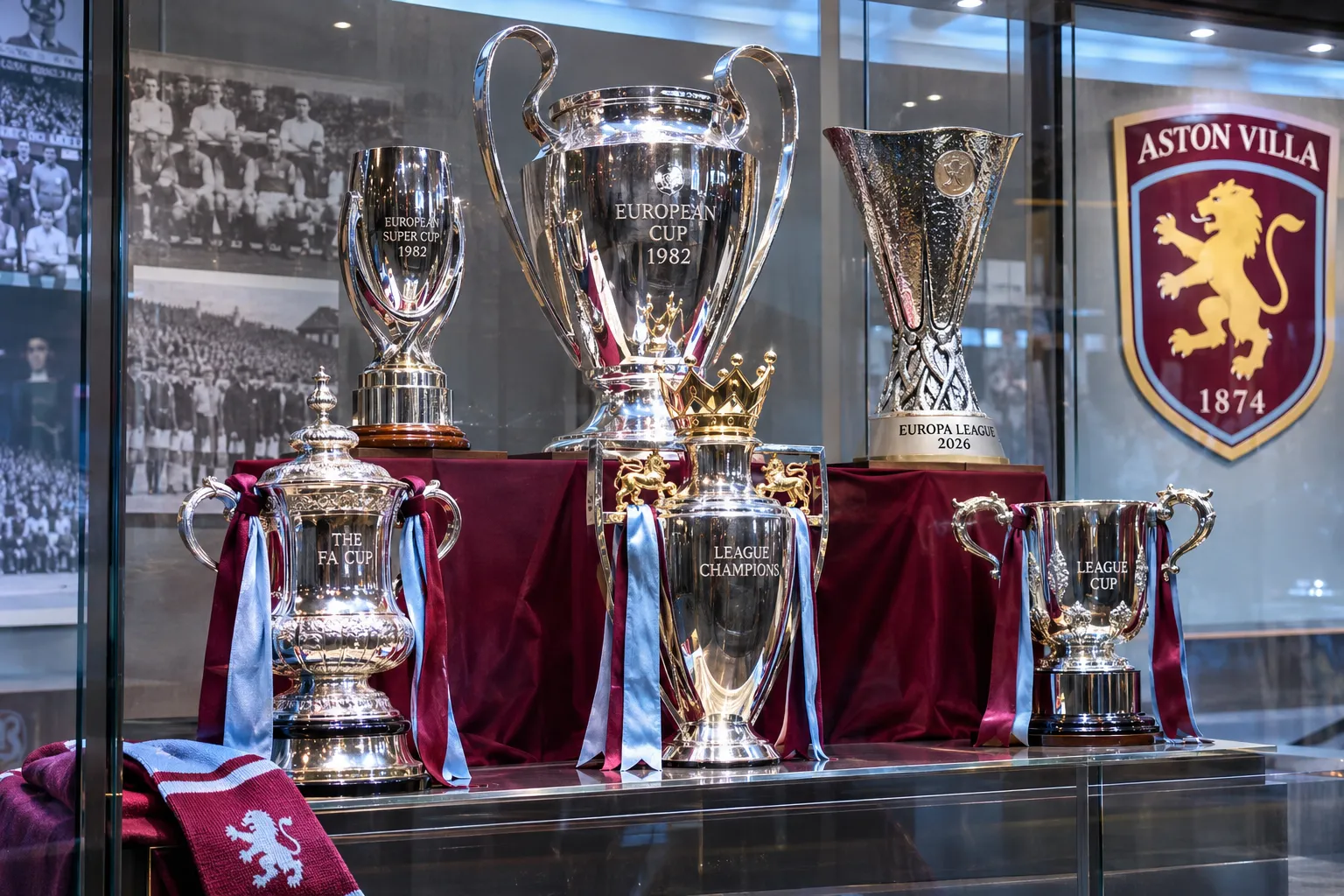
Aston Villa have won 22 major trophies. The total covers seven league titles, seven FA Cups, five League Cups, the European Cup, the European Super Cup and the Europa League.
| Competition | Wins | Years |
|---|---|---|
| League champions | 7 | 1894, 1896, 1897, 1899, 1900, 1910, 1981 |
| FA Cup | 7 | 1887, 1895, 1897, 1905, 1913, 1920, 1957 |
| League Cup | 5 | 1961, 1975, 1977, 1994, 1996 |
| European Cup | 1 | 1982 |
| European Super Cup | 1 | 1982 (played January 1983) |
| Europa League | 1 | 2026 |
The 1896-97 side won the league and the FA Cup in the same season, a Double that only Preston North End had managed before them. The 1957 FA Cup final victory, 2-1 against Manchester United, stopped the Busby Babes from completing a Double of their own. The modern way to follow that competition is with FA Cup tickets for Villa's run each January.
The 1980-81 title is just as unusual. Ron Saunders used only 14 players across the whole league campaign, and seven of them played in every match.
6. 128 League Goals in a Season and the First League Cup
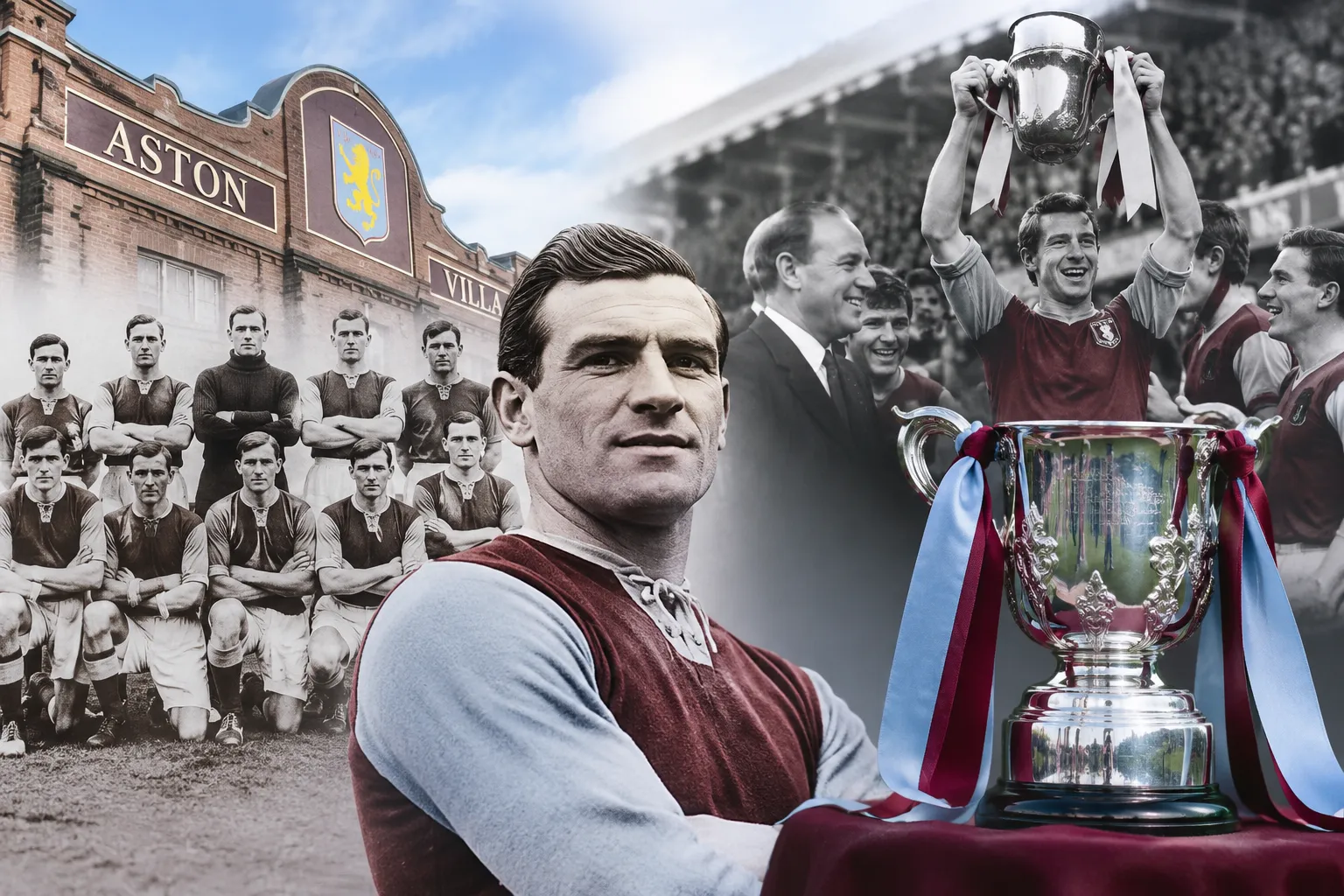
In 1930-31 Aston Villa scored 128 goals in 42 First Division matches, a top-flight record that still stands. Tom "Pongo" Waring scored 49 of them. Villa still finished second, behind the Arsenal side that won the first of its many titles that season, a story told from the other side in our Arsenal facts.
Thirty years later Villa won the first League Cup, overturning a 2-0 first-leg deficit to beat Rotherham United in the two-legged 1961 final. Three more League Cups followed before the fifth, a 3-0 win over Leeds United at Wembley in 1996, which was the club's last major trophy for 30 years. The competition is now the Carabao Cup, and EFL Cup tickets cover Villa's ties in it.
7. Kings of Europe in 1982 With a Rookie Goalkeeper
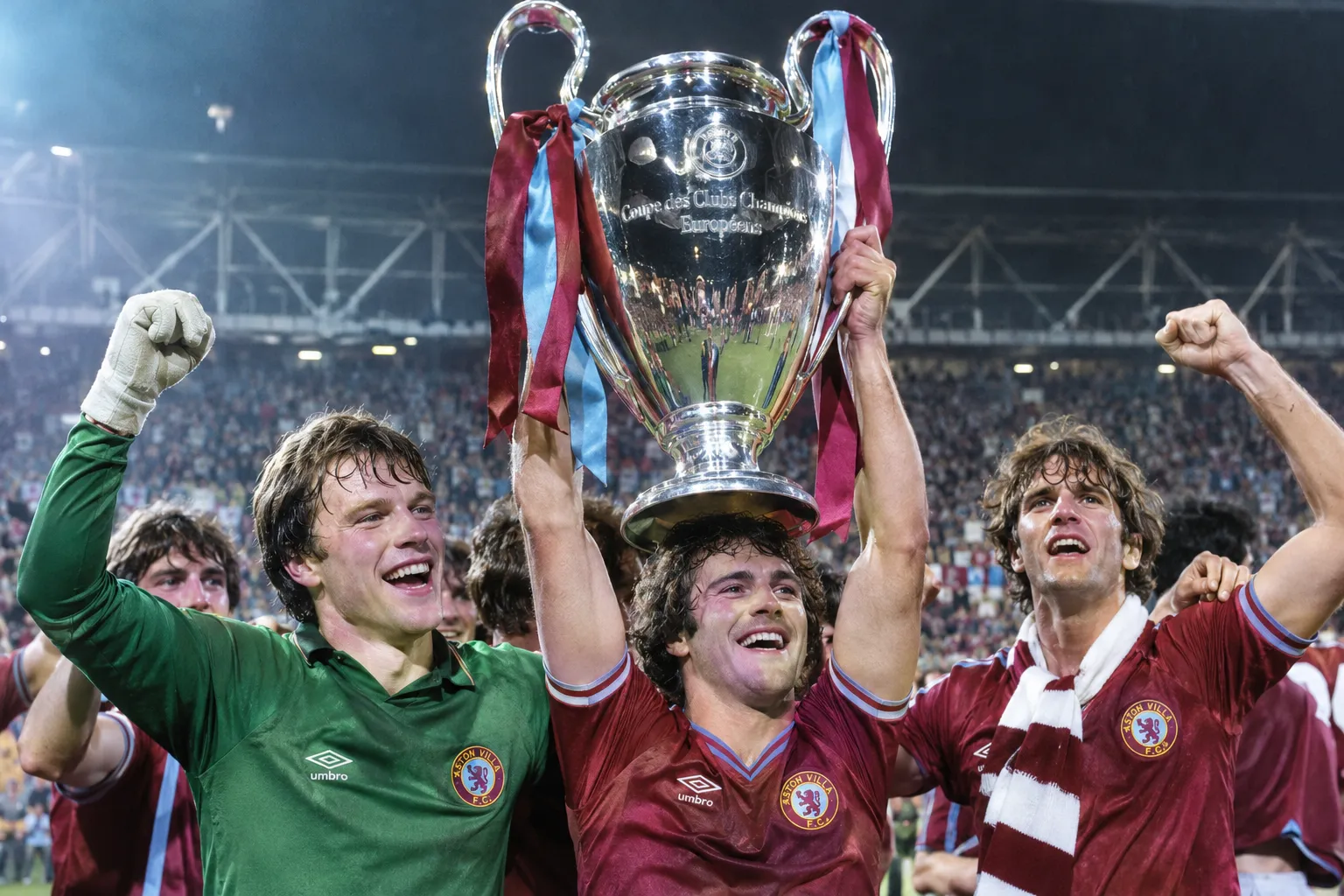
Aston Villa won the European Cup in a season in which they changed manager halfway through. Ron Saunders resigned in February 1982 and his assistant, Tony Barton, took the team to the final in Rotterdam on 26 May 1982. Peter Withe scored the only goal in the 67th minute to beat Bayern Munich, the same opponents supporters can still follow with Bayern Munich tickets at the Allianz Arena.
The hero was a goalkeeper almost nobody had heard of. First-choice keeper Jimmy Rimmer went off injured after nine minutes, and Nigel Spink, who had played one first-team match in his career, kept Bayern out for the rest of the night. Villa then beat Barcelona 3-1 on aggregate to win the 1982 European Super Cup, with both legs played in January 1983.
8. A European Trophy in Istanbul After a 30-Year Wait for Major Silverware
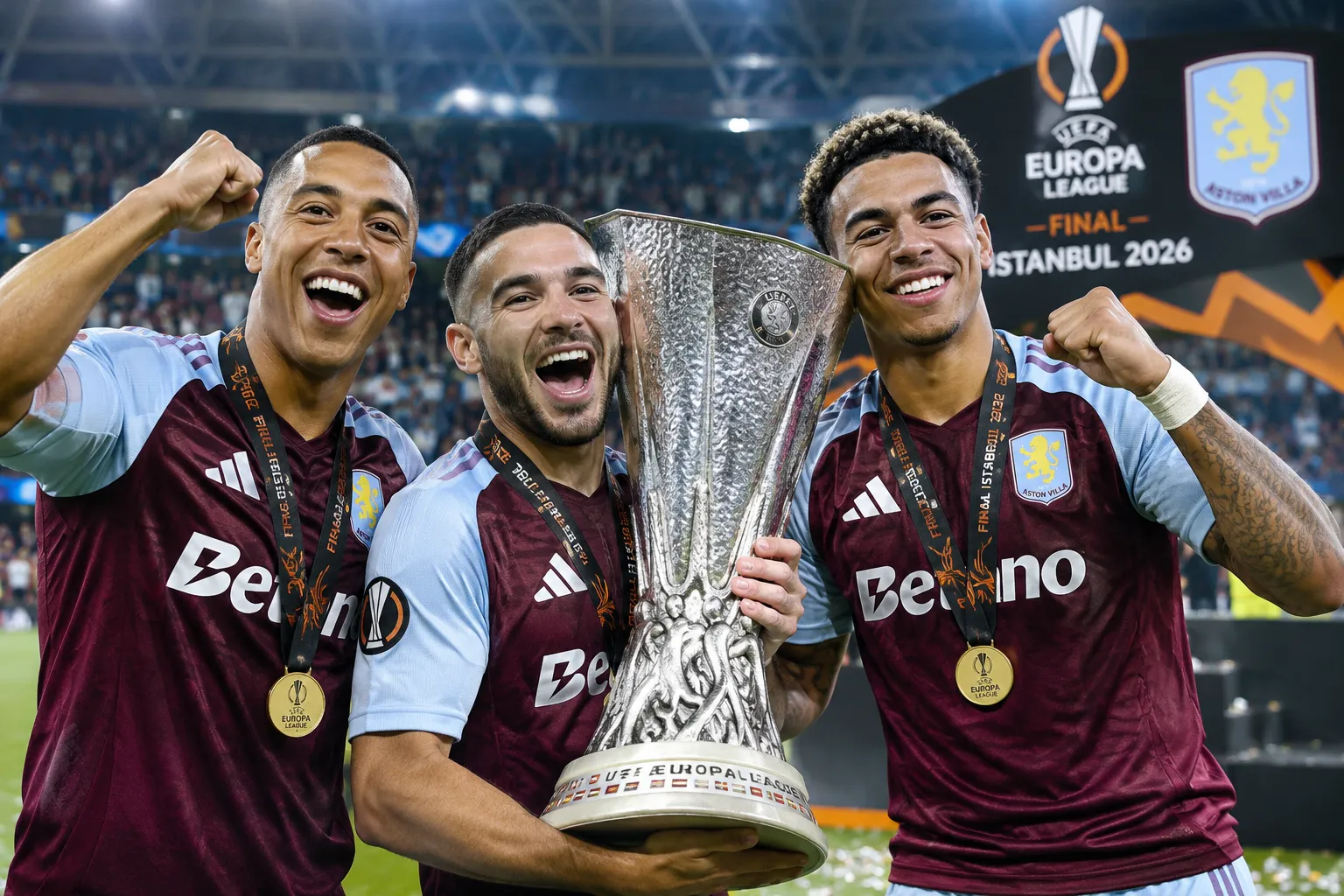
Aston Villa won the Europa League on 20 May 2026, beating SC Freiburg 3-0 in Istanbul with goals from Youri Tielemans, Emi Buendía and Morgan Rogers. For the beaten finalists, SC Freiburg tickets cover their Bundesliga home matches. It was Villa's first major trophy since the 1996 League Cup and their third major European honour, after the 1982 European Cup and Super Cup.
The final also made history. Unai Emery won the competition for a fifth time, three with Sevilla and one each with Villarreal and Villa, more than any other coach. Villa also became one of only four English clubs to have won both the European Cup and the UEFA Cup or Europa League, alongside Liverpool, Manchester United and Chelsea. The trophy followed Tottenham's win in 2025, recounted in our Tottenham facts, so English clubs have now won the competition in back-to-back seasons.
The trophy came in the third of what are now four successive European campaigns: a Conference League semi-final in 2023-24, a Champions League quarter-final in 2024-25, the Europa League win in 2025-26 and a return to the Champions League in 2026-27. Fans who followed that run can still pick up Europa League tickets for other clubs, while Aston Villa vs Borussia Dortmund tickets cover one of this season's home matches in the league phase, alongside the wider range of Champions League tickets.
9. Villa Park Has Hosted More FA Cup Semi-Finals Than Any Other Ground
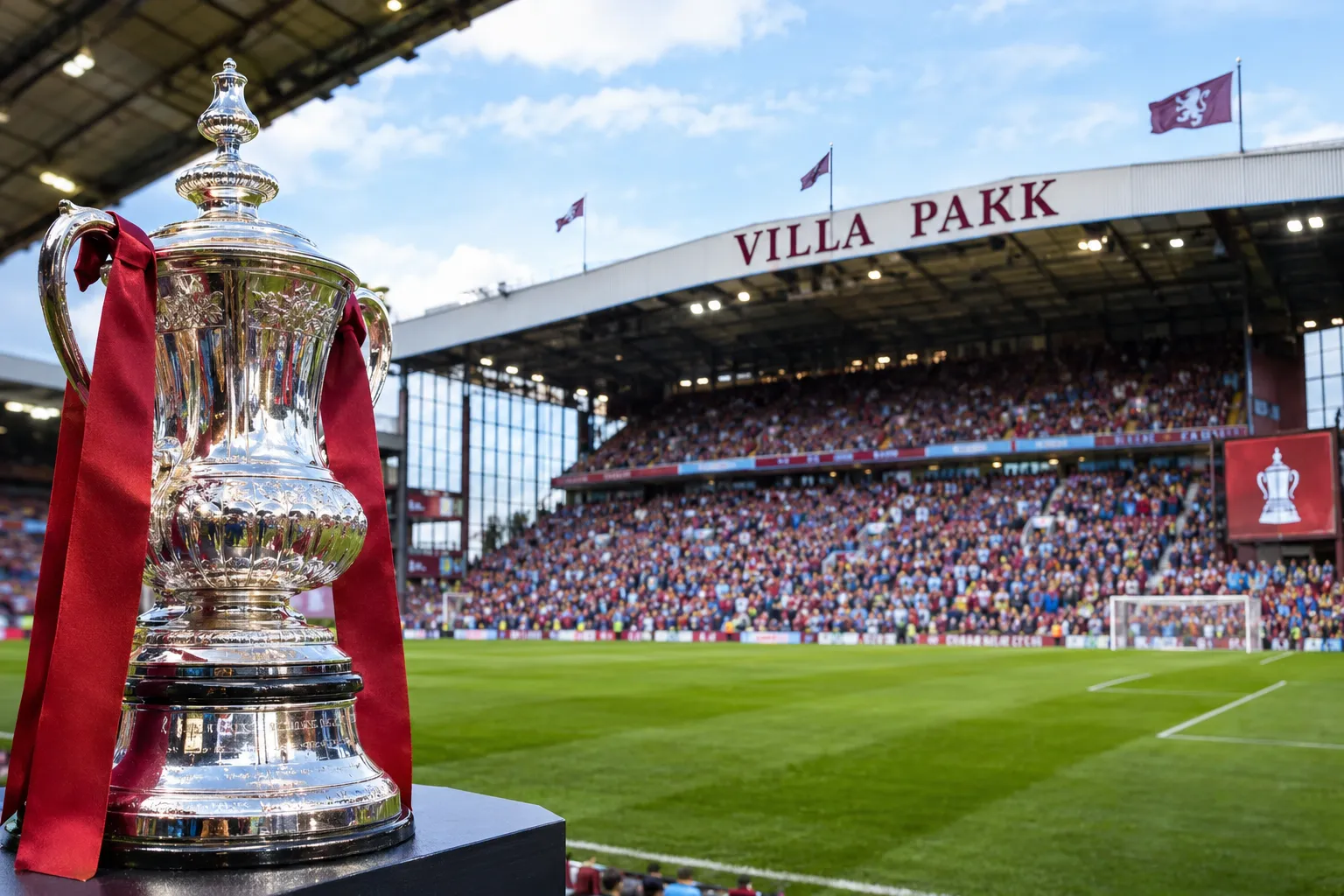
Villa moved to the Aston Lower Grounds, a former Victorian pleasure park, in 1897 and opened their new home on 17 April with a 3-0 First Division win over Blackburn Rovers. Supporters soon started calling it Villa Park. The ground's record crowd of 76,588 came for an FA Cup sixth-round tie against Derby County on 2 March 1946.
Villa Park has staged 55 FA Cup semi-finals, more than any other stadium. It also hosted four matches at Euro 96 and the last ever European Cup Winners' Cup final in 1999, when Lazio beat Mallorca 2-1. The Villa Park seating plan shows how the Holte End, Trinity Road, Doug Ellis and North Stands fit around the pitch.
10. Villa Park Holds 36,887 This Season and Will Pass 50,000
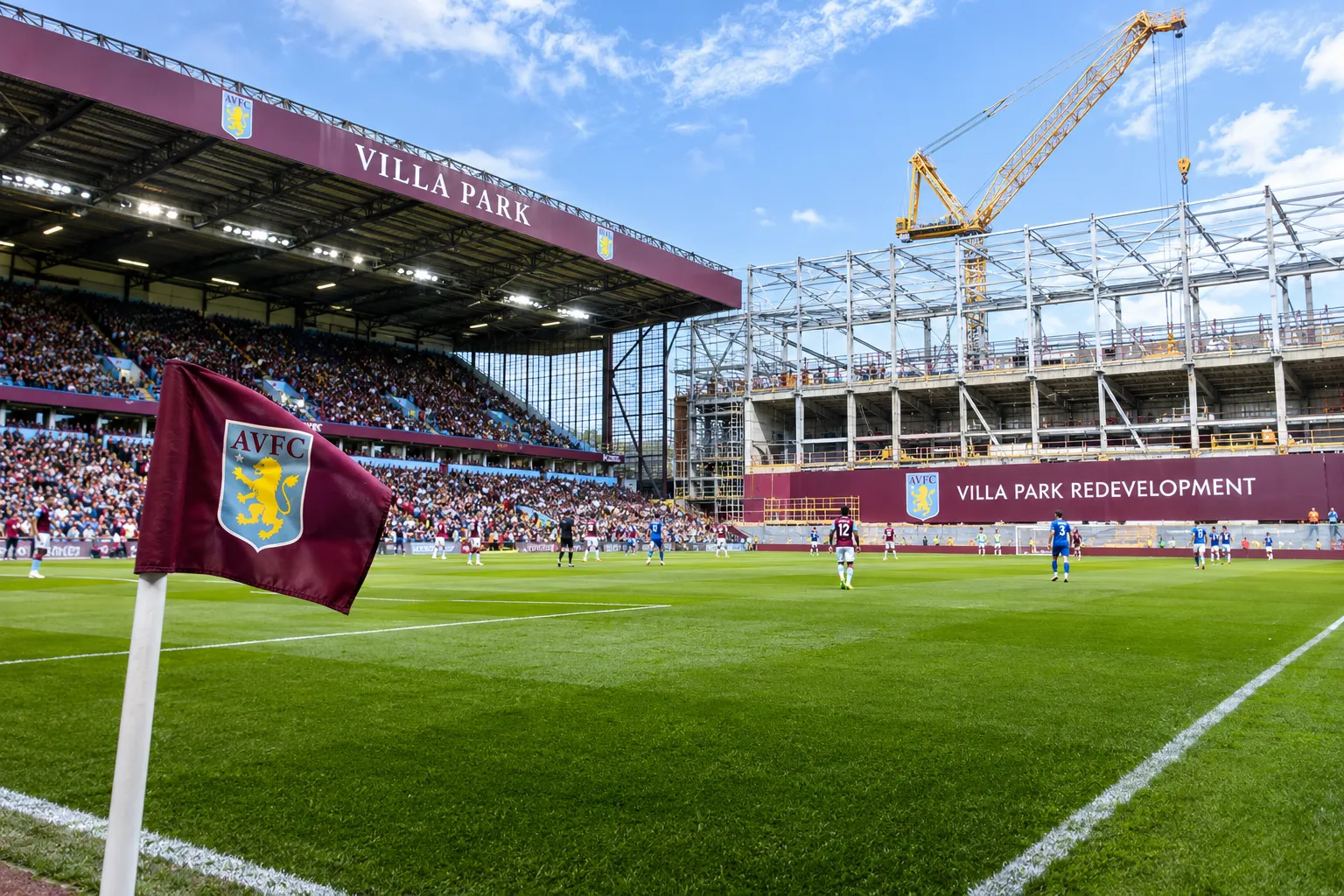
Villa Park's pre-redevelopment capacity was 43,205, but the North Stand is closed for the whole of the 2026-27 season while it is rebuilt. Capacity for 2026-27 is 36,887, down from 43,205. The roof came off at the end of summer 2026 and the new one is due to be finished in summer 2027.
The rebuilt North Stand will hold more than 12,000, adding over 5,500 seats, and together with wider seating work around the ground it will take Villa Park beyond 50,000, with the stand's seating and concourses due to open for the 2027-28 season and its hospitality areas in October 2027. Birmingham City Council approved the plans in August 2025. With more than 6,000 fewer seats available this season, Villa Park tickets are harder to come by, and our guide to Aston Villa tickets without membership explains the routes that remain.
11. An Egyptian Billionaire Co-Owns Aston Villa
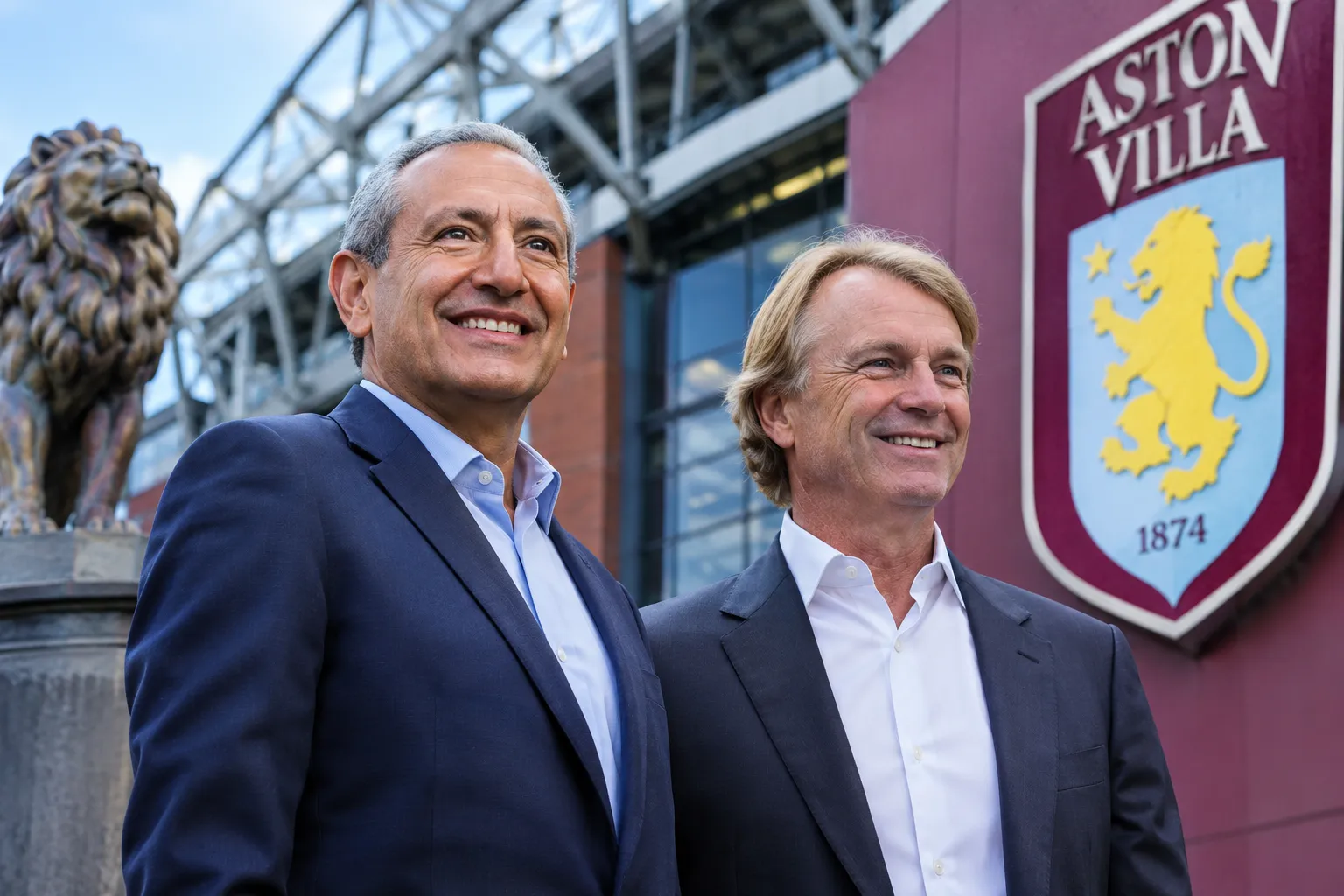
Nassef Sawiris, one of Egypt's richest businessmen, and the American investor Wes Edens bought a 55% controlling stake in Aston Villa in July 2018, when the club was in the Championship and in financial trouble. They completed a full takeover after promotion in 2019. Their holding company, first called NSWE, was renamed V Sports in 2021.
US investment firm Atairos agreed to become a minority shareholder in V Sports in December 2023, completing the investment in April 2024. It has since increased its stake. V Sports also holds stakes in Vitória SC in Portugal and FC Annecy in France, and runs partnerships with clubs including ZED FC in Egypt. Edens is a co-founder of Fortress Investment Group and a co-owner of the Milwaukee Bucks basketball team.
12. Aitken's Games and Walker's Goals
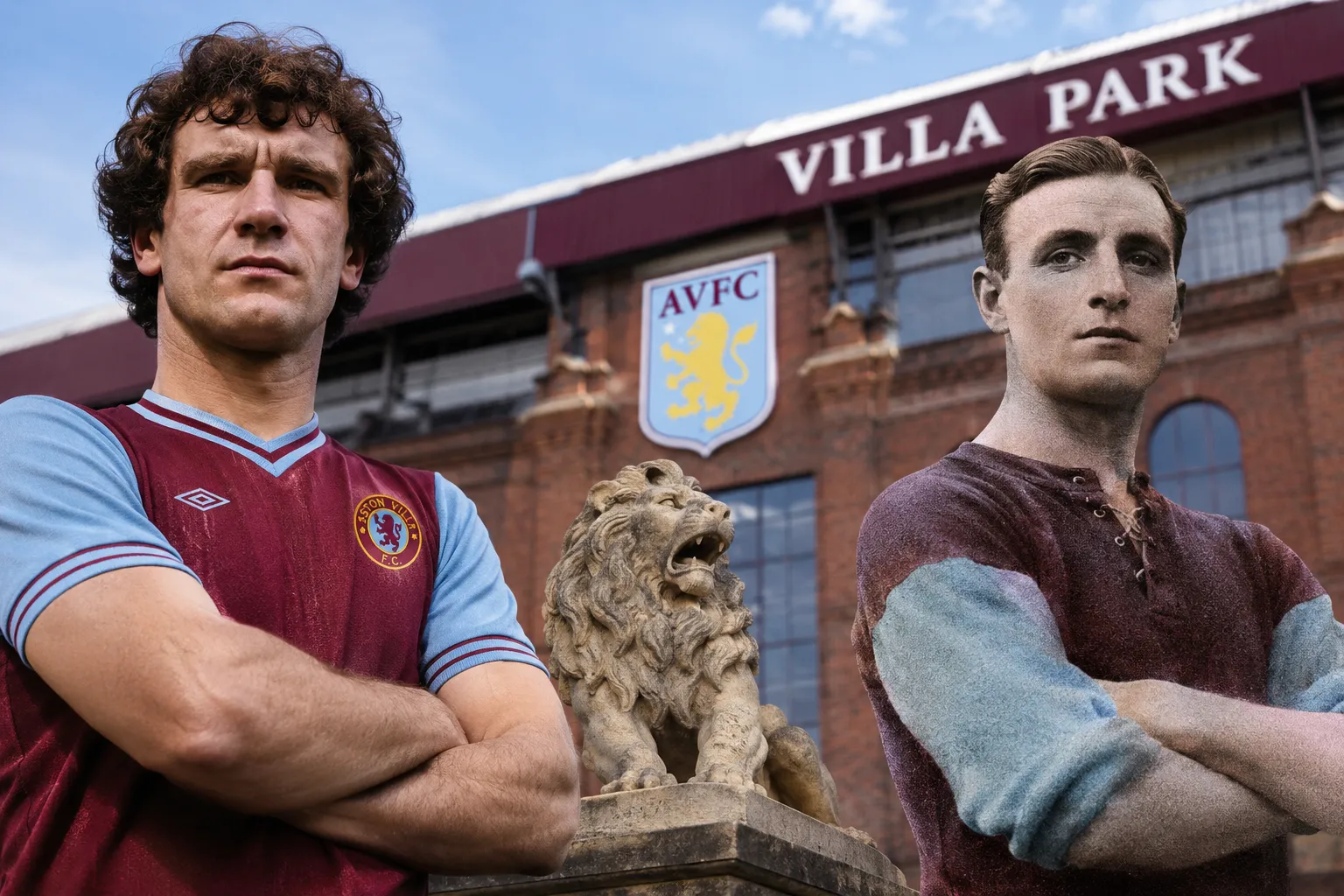
Charlie Aitken holds the club appearance record with 660 games, 657 starts and three as a substitute, across 17 years at Villa that ended in 1976. The total is often quoted as 657 or 659, so the club's own figure is the safe one to use.
Billy Walker is the record scorer with 244 goals in 531 appearances between 1919 and 1934. He captained both Villa and England, and later managed Sheffield Wednesday and Nottingham Forest to FA Cup wins.
13. A £117m Sale and Two Club-Record Deals in One Summer
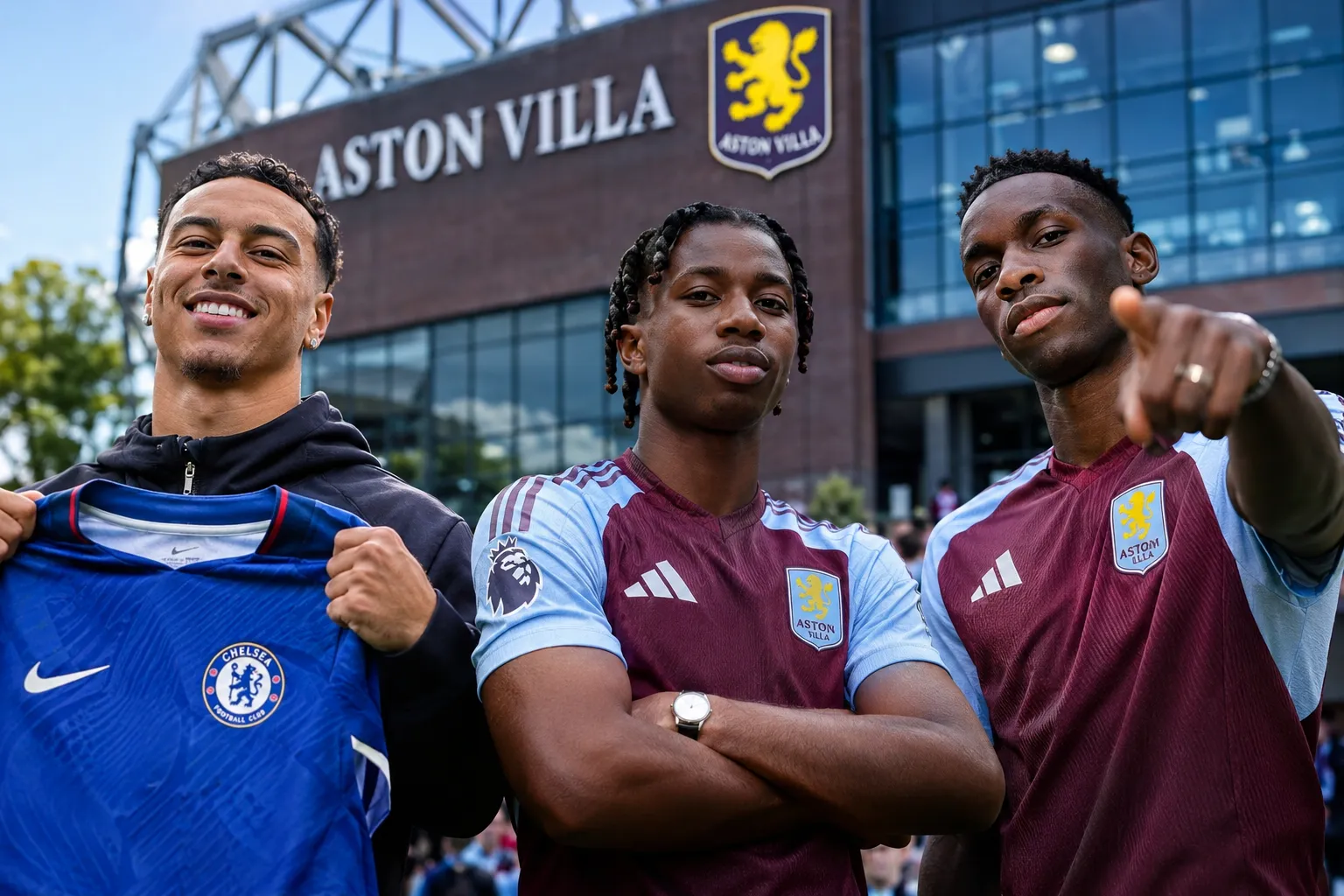
Aston Villa sold Morgan Rogers to Chelsea on 21 July 2026 for a reported £117m, the most ever paid for a British player. The fee edged past the £116m Manchester City had paid for Elliot Anderson earlier that summer and comfortably beat the £100m City paid Villa for Jack Grealish in 2021. Rogers had joined from Middlesbrough in February 2024 for a reported initial £8m, and he scored in the Europa League final two months before he left. When Chelsea visit Villa Park, Aston Villa vs Chelsea tickets cover the match.
Villa reinvested heavily, agreeing two deals in the same summer that were each reported as a club record. Johan Manzambi arrived in July from Freiburg, the side Villa had beaten in the Europa League final, for a reported initial £52m that could rise to £59.5m. On 28 August 2026 Nicolas Jackson joined from Chelsea for £47.5m upfront and up to £65m with add-ons. Jackson's maximum package is the larger of the two and was widely reported as the new club record, although his guaranteed fee is lower than Manzambi's and the final figure depends on performance-related conditions.
14. From a Prince to the Prince of Darkness
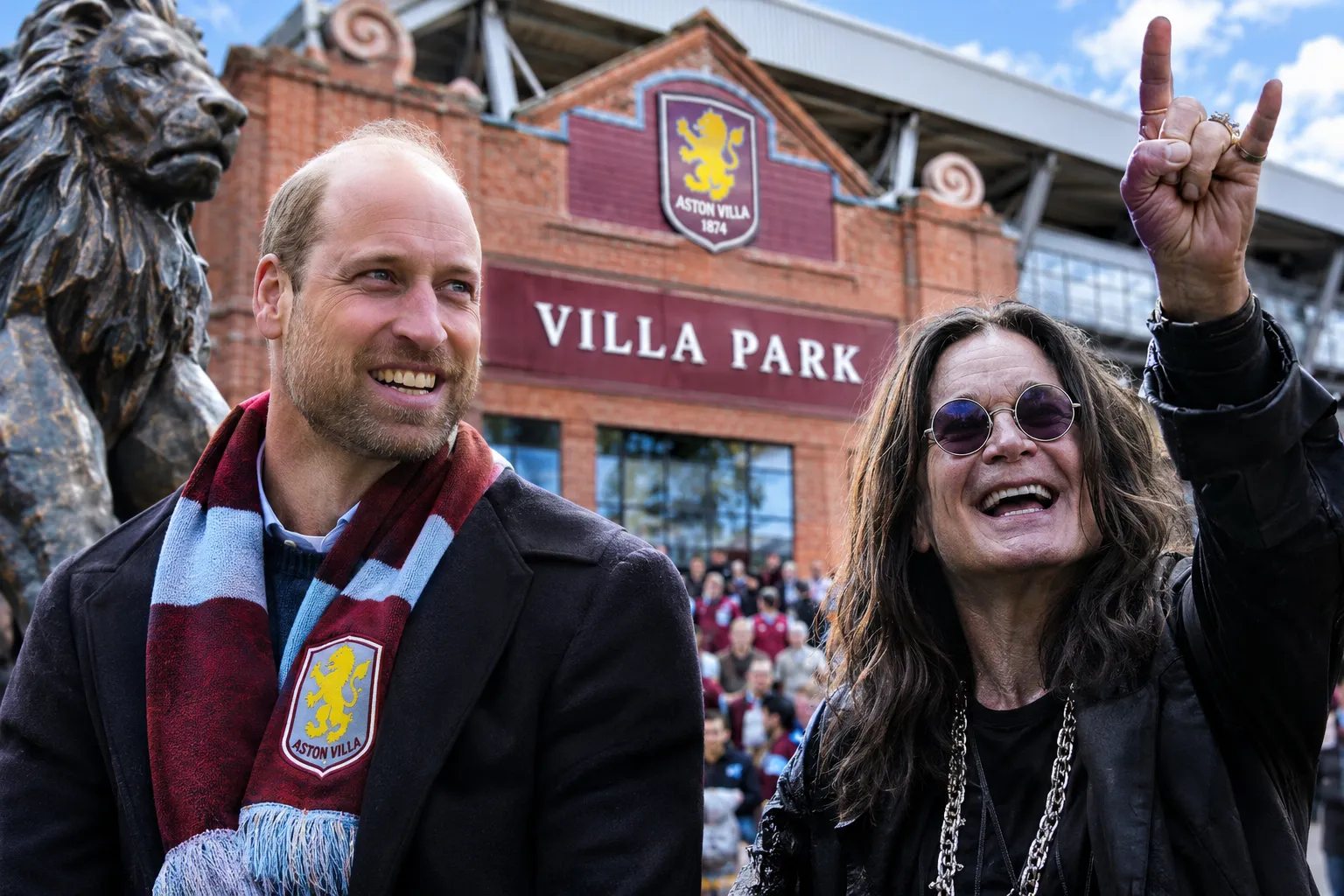
Few clubs have a list of supporters like Villa's. The Prince of Wales is a regular at Villa Park, Tom Hanks has watched Premier League matches in B6 in recent seasons and former Prime Minister David Cameron followed the club as a boy with his uncle, former chairman Sir William Dugdale. Cricketers Ian Bell and Chris Woakes, actors Brendan and Domhnall Gleeson and violinist Nigel Kennedy are on the club's list too.
The most famous rock fans were Ozzy Osbourne and Geezer Butler of Black Sabbath. The band played its farewell show, Back to the Beginning, at Villa Park on 5 July 2025, and Osbourne died 17 days later. Anyone wanting to watch from the same side of the ground as the directors' box can compare Aston Villa hospitality packages in our guide.
15. The Lion on the Badge and the Second City Derby
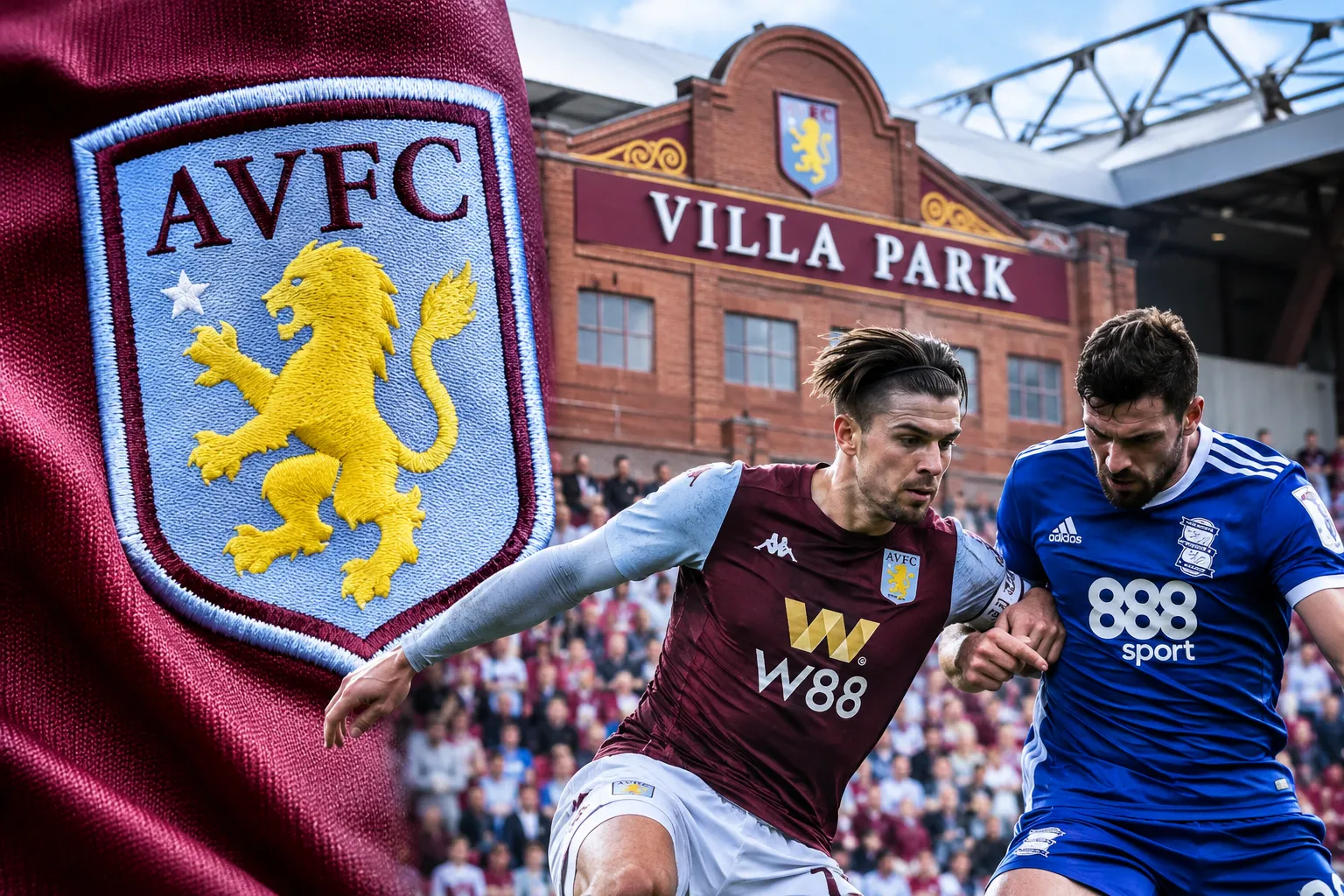
The rampant lion on Villa's crest comes from Scotland, a nod to the Scots such as McGregor and Ramsay who shaped the early club. The badge has changed shape several times. A 2007 redesign added a star for the 1982 European Cup, the old motto "Prepared" was dropped in a 2016 redesign and the shield shape returned in May 2024 after a short-lived circular crest was criticised by supporters.
Villa's oldest rivalry is the Second City derby with Birmingham City, first played in 1879, when Small Heath beat Villa 1-0. Villa lead the competitive men's meetings with 57 wins to Birmingham's 38, with 31 draws, and the grounds are only about 2.4 miles apart. The last men's meeting was on 10 March 2019, when Jack Grealish scored the winner at St Andrew's after being attacked by a home fan. Birmingham play in the Championship, so the derby is not on the 2026-27 calendar, but Birmingham City tickets are there for anyone keeping an eye on the other half of the city. Villa supporters who travel can read our guide to Aston Villa away tickets.
Frequently Asked Questions
1. Is Aston Villa in Birmingham?
-
Aston Villa are based in Aston, an inner-city district of Birmingham to the north of the city centre, and Villa Park sits in the B6 postcode.
2. What is Aston Villa's record win?
-
Aston Villa's record win is 13-0 against Wednesbury Old Athletic in the first round of the FA Cup on 30 October 1886.
3. How many times have Aston Villa been relegated?
-
Aston Villa have been relegated six times, in 1936, 1959, 1967, 1970, 1987 and 2016, and the 1970 drop took the club into the third tier for the only time in its history.
4. When did Aston Villa return to the Premier League?
-
Aston Villa returned to the Premier League by beating Derby County 2-1 in the Championship play-off final at Wembley on 27 May 2019.
5. Will Villa Park host matches at Euro 2028?
-
Villa Park is scheduled to host four Euro 2028 matches, three in the group stage and one in the round of 16 on 27 June 2028.
Whether you want a seat in the Holte End or a first look at the rebuilt North Stand, 1BoxOffice has been helping supporters reach matches since 2006, and every order is backed by the 150% money-back guarantee: a full refund if your tickets are not received and no alternative is offered, plus a goodwill credit voucher of up to 50% of the order value (excluding fees and taxes, capped at £125) that 1BoxOffice may issue at its discretion.
Sources: Aston Villa Football Club, UEFA, Chelsea Football Club, Sky Sports, Reuters, beIN Sports, Express & Star, Football Ground Guide, StadiumDB, Design Week, Sam Holland Sculpture, Wikipedia club, season, stadium and derby records, Aston Villa history archive.