
In this guide
Key takeawaysYour passport decides everything, not your addressThe £20 ETA, minus the mythsOne authorisation, a whole season of tripsOn an Indian, Pakistani or Filipino passport in the Gulf? Read this twiceWhy strong applications still get refusedWorking backwards from kick-offKids, babies and the airport transfer questionFive mix-ups that keep ruining tripsAfter you land, and what 2028 addsThe fixtures Gulf supporters actually fly forFAQsA Saudi or Emirati passport gets its holder into a Premier League ground for £20 and a phone application that usually clears in minutes. The Indian or Pakistani passport in the same Gulf household needs £135, a biometrics appointment and roughly three weeks of waiting. That gap is the whole story of the UK visa for football fans travelling from the Gulf, and misreading it is how supporters end up watching kick-off from a departure lounge.
The entry rules changed more between 2023 and 2026 than in the previous two decades, so treat any guide written before 2024 as suspect. This one sets out what each passport needs for the 2026/27 season, what it costs as of August 2026 and where applications genuinely fail, so the paperwork is settled long before you buy football tickets for the trip itself.
Guidance checked against GOV.UK and Home Office publications on 20 August 2026. This is general guidance, not legal advice.
Key takeaways
- GCC passport holders need a £20 ETA, not a visa.
- One ETA lasts two years and covers unlimited trips.
- Most ETA decisions arrive within minutes.
- Gulf residents on other passports need a £135 visitor visa.
- Visa decisions take around three weeks after biometrics.
- Jordanian passports lost ETA access in September 2024.
- Airlines have refused boarding without valid approval since 25 February 2026.
- Watching a match counts as tourism, so no special visa exists.
Your passport decides everything, not your address
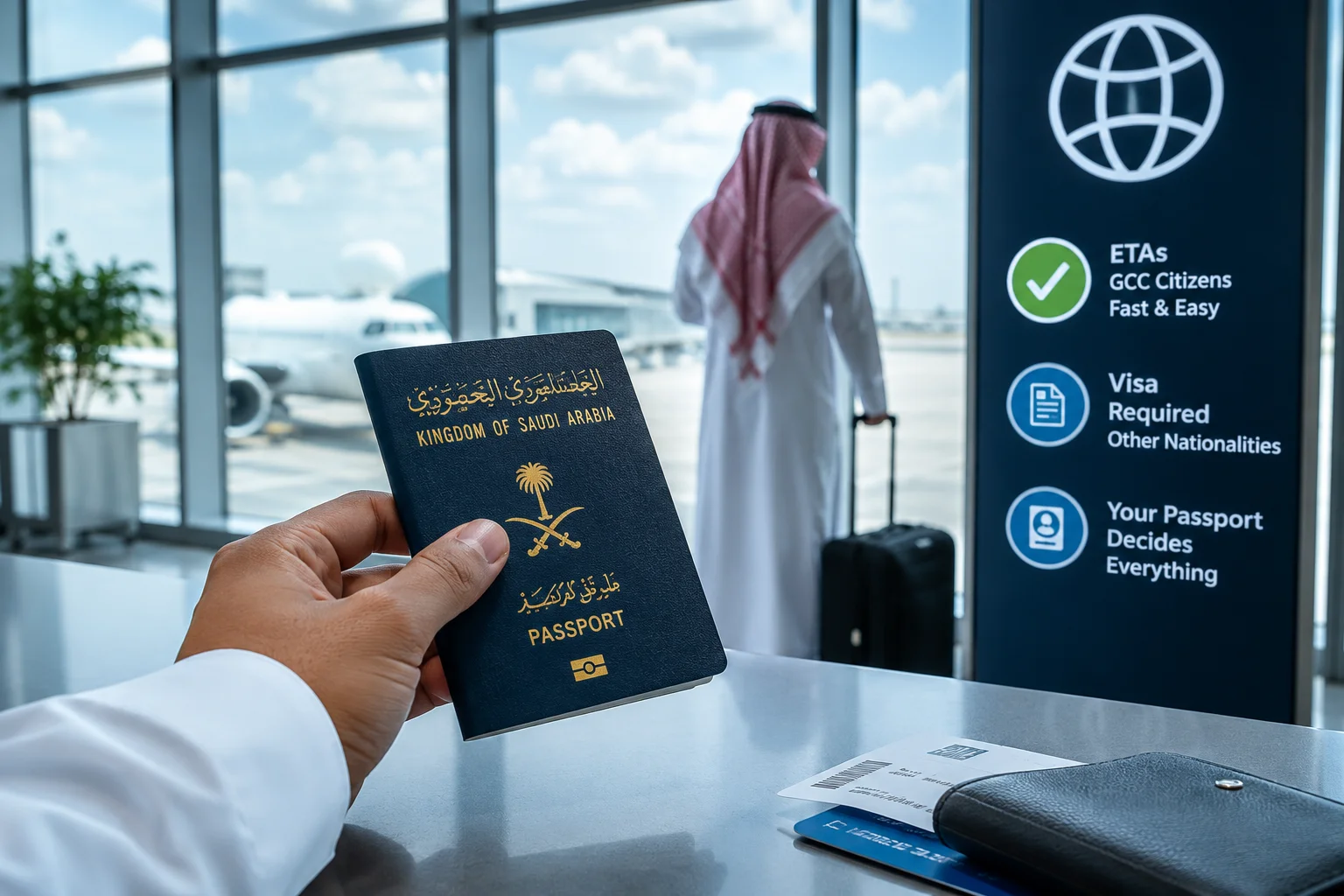
Citizens of Saudi Arabia, the UAE, Qatar, Kuwait, Bahrain and Oman do not need a visa for a UK match trip. They need an Electronic Travel Authorisation (ETA), the digital travel permission the Home Office rolled out to Qatar in November 2023 and to the other five Gulf Cooperation Council (GCC) states in February 2024. It costs £20, lives inside your passport records rather than on a sticker and takes minutes to arrange for most applicants.
Everyone living in the Gulf on another passport is judged on that passport alone. An Indian engineer in Jeddah or a Filipino nurse in Dubai applies for a Standard Visitor visa on the same terms as an applicant in Mumbai or Manila, submitting from their country of residence but assessed by nationality. A residence permit changes where you apply, never what you apply for.
| Your passport | What you need | Government fee (August 2026) | Typical decision time |
|---|---|---|---|
| Saudi Arabia, UAE, Qatar, Kuwait, Bahrain, Oman | Electronic Travel Authorisation | £20 | Minutes to three working days |
| India, Pakistan, Egypt, the Philippines, Bangladesh and other visa nationalities resident in the Gulf | Standard Visitor visa | £135 (six months) | Around 15 working days after biometrics |
| Jordan | Standard Visitor visa (ETA eligibility withdrawn in September 2024) | £135 (six months) | Around 15 working days after biometrics |
The £20 ETA, minus the myths
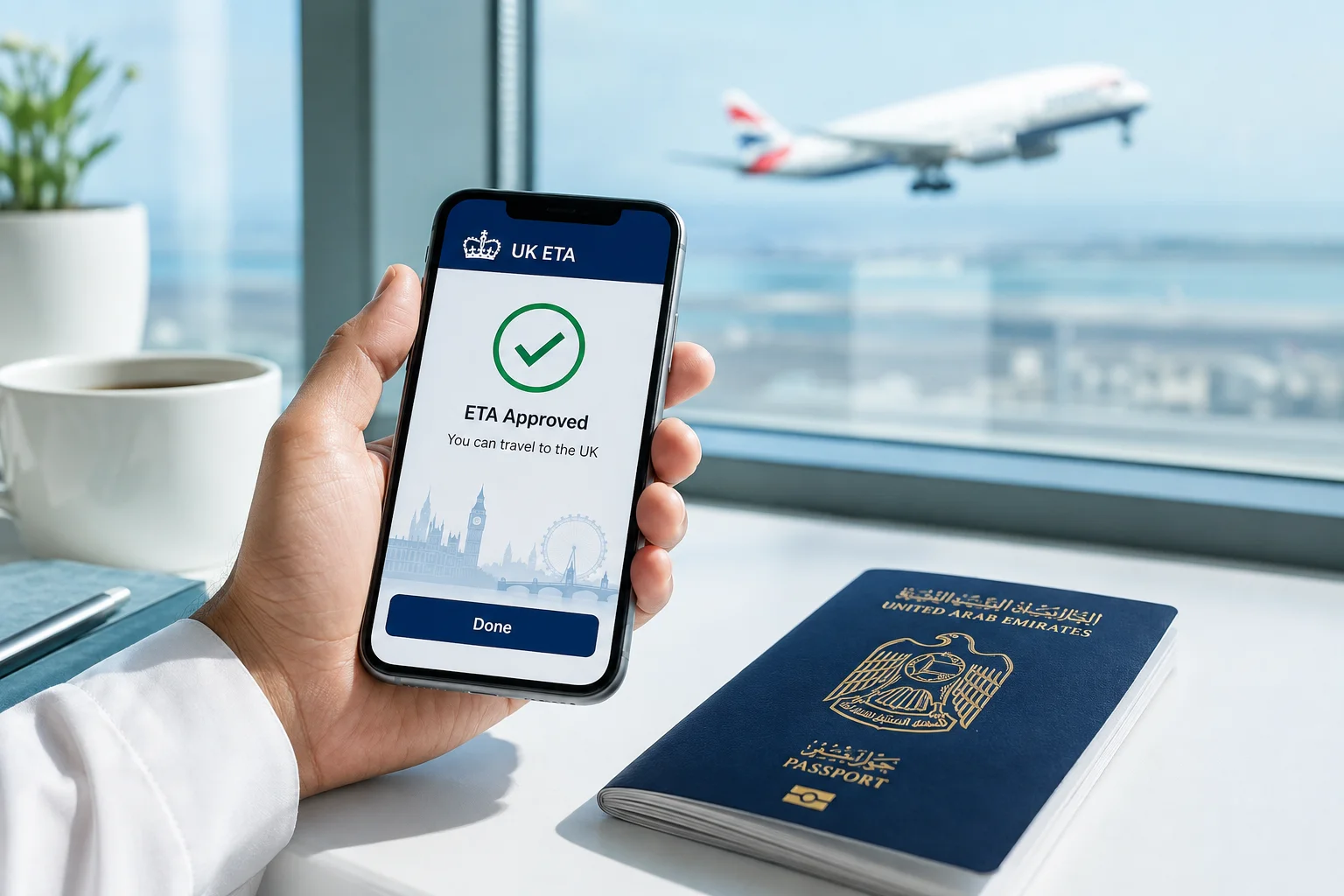
Apply through the UK ETA app or the GOV.UK site: scan your passport chip, upload a photo, answer a short set of suitability questions and pay. Home Office data shows most decisions arrive within minutes, with 99.6% of applications approved and more than 30 million authorisations issued between October 2023 and March 2026. The government still advises allowing three working days, because a minority of cases go to manual review with no way to hurry them along.
Two 2026 changes catch people out. The fee rose to £20 on 8 April 2026, so older guides quoting £10 or £16 are wrong. Since 25 February 2026 airlines must verify a valid ETA before boarding, which means the days of sorting it out on arrival are over: no authorisation, no seat on the plane. An approved ETA is permission to travel rather than a promise of entry, as Border Force keeps the final say at the desk, though refusals there are rare for genuine visitors.
Gulf travellers on Arabic forums report two recurring app snags worth knowing in advance. If the chip scan refuses to read your passport, the app lets you skip that step, then enter the details manually. If the photo keeps failing, shoot against a plain light wall in daylight rather than fighting the automated checker at midnight before a flight.
WhatsApp channel
Sports news straight to your phone
Match updates, on-sale dates and ticket news from 1BoxOffice.
One authorisation, a whole season of trips
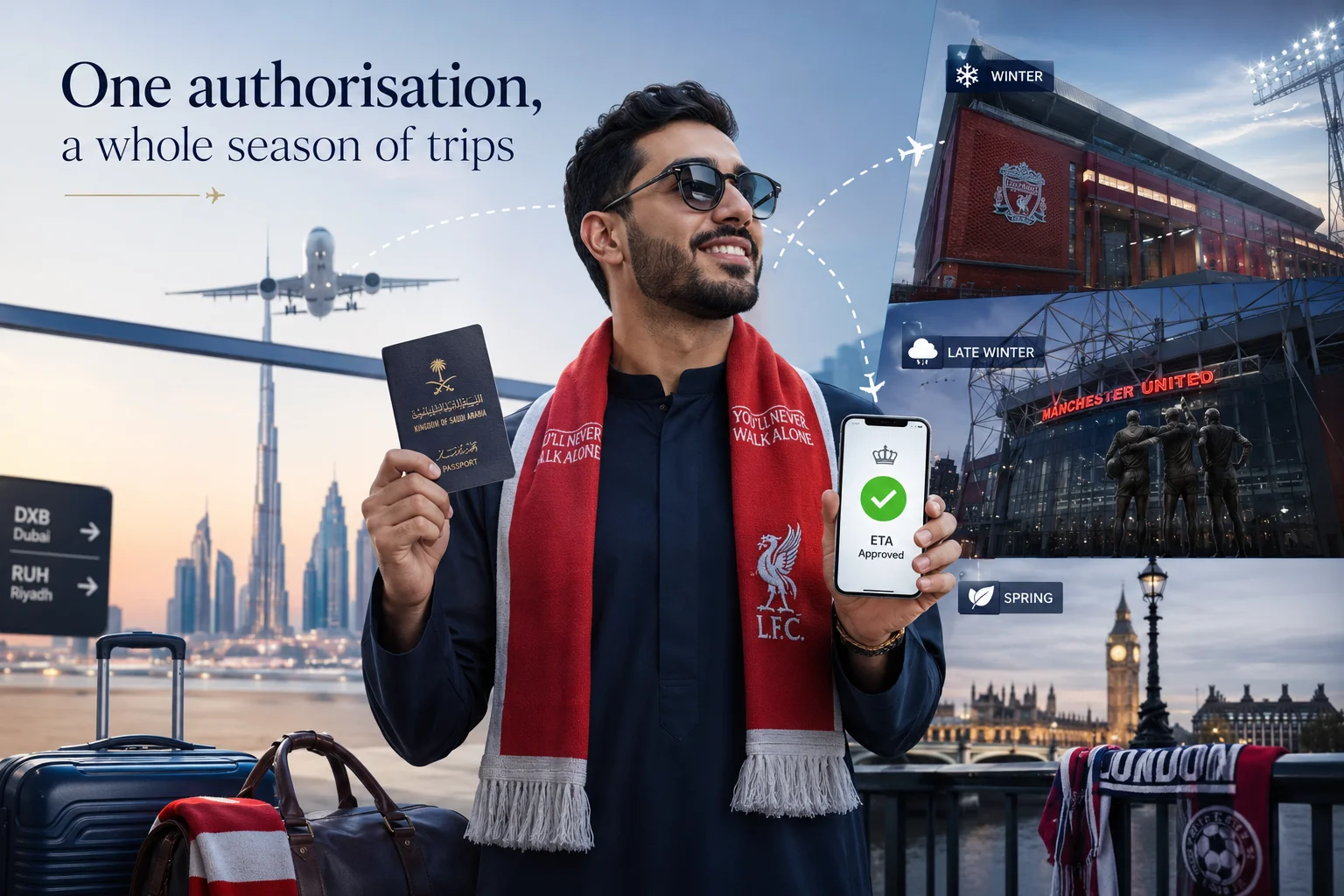
An ETA lasts two years or until your passport expires, whichever comes first, with no limit on entries and up to six months per stay. For a supporter flying out of Riyadh or Dubai several times a season, that is the quietly brilliant part: Liverpool at Anfield in December, Manchester United at Old Trafford in February and a spring London weekend all ride on the same £20 approval.
Spread across four or five trips, the fee works out at less per visit than a matchday programme. It also removes the panic factor from short-notice plans, since an Arsenal fixture announced for a Friday night or a rearranged Chelsea kick-off needs nothing more than flights once the authorisation already sits against your passport.
On an Indian, Pakistani or Filipino passport in the Gulf? Read this twice
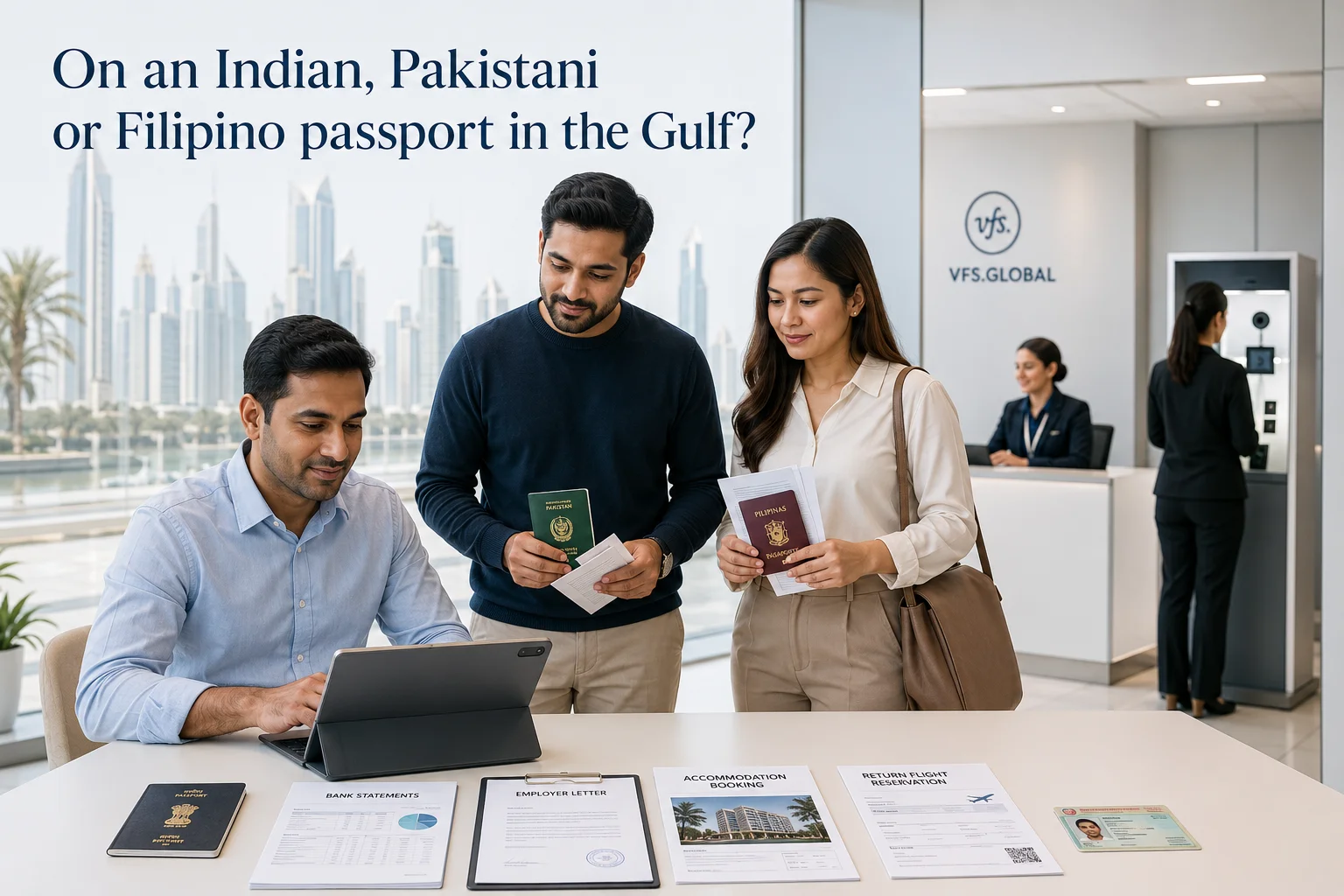
The Standard Visitor visa costs £135 for six months as of 8 April 2026, up from £127 the year before. You apply online through GOV.UK, then attend a biometrics appointment at a VFS Global centre: Riyadh, Jeddah or Dammam in Saudi Arabia, Dubai or Abu Dhabi in the UAE, plus Doha, Kuwait City, Manama and Muscat. UK Visas and Immigration targets a decision within 15 working days of biometrics, though Gulf summer and the December rush routinely stretch that, and appointment slots themselves can be the hidden bottleneck.
Paid acceleration exists at this level even though it does not for the ETA. Priority processing costs an extra £500 for a decision in around five working days, while super priority costs £1,000 for the end of the next working day, subject to availability at your centre. Regular travellers should price up the long-term visit visas, which run £506 for two years, £903 for five and £1,128 for ten at current rates.
Every application stands on its paperwork. Build the file around these before you book anything:
- A passport with at least six months of validity and a blank page
- Personal bank statements covering the last 28 days, without unexplained deposits
- An employer letter confirming role, salary and approved leave dates
- Confirmed accommodation for the full stay
- Return flight reservations, ideally refundable until the decision lands
- Your iqama, Emirates ID or equivalent residence permit proving lawful Gulf residence
Why strong applications still get refused

Home Office figures for the year ending March 2026 put the global visitor grant rate at 79%. Indian nationals were granted 82% of 648,802 applications, down from 91 percent a year earlier, Pakistani nationals recorded 72,115 refusals over the period and Bangladeshi applicants were approved in roughly 46% of cases. Salary, a valid residence permit and money in the bank do not, on their own, get anyone over the line.
The pattern behind most refusals is consistency, not wealth. A large deposit that appears days before the statements were printed reads as borrowed show money, a trip budget out of proportion to declared income invites doubt and a vague stated purpose gives the caseworker nothing to anchor a decision to. A football trip is actually an advantage here: a named fixture, a confirmed booking and matching dates form exactly the specific itinerary decision-makers respond to, and our guide to buying Premier League tickets without membership explains how overseas fans secure that booking in the first place.
One rule sits above all of it: never buy non-refundable flights before the decision. The fee is lost on refusal, the flights need not be.
Working backwards from kick-off

Timing failures ruin more Gulf match trips than refusals do. The safe planning windows below assume a fixed fixture date and no appetite for paid rescue options.
| Route | Standard decision | Fastest paid option | Apply no later than |
|---|---|---|---|
| ETA (GCC passports) | Minutes to three working days | None exists | One week before departure for comfort |
| Standard Visitor visa | Around 15 working days after biometrics | Super priority, next working day, £1,000 | Six to eight weeks before the fixture, longer for December |
Remember that the visa clock starts at biometrics, not at online submission, so an appointment backlog in Dubai or Riyadh eats your margin before processing even begins. Fixtures moved for television at three weeks' notice are survivable on an ETA and brutal on a fresh visa application, which is another argument for the multi-year visit visas if you travel every season.
Kids, babies and the airport transfer question

Every traveller needs their own authorisation, including infants, so a family of four from Jeddah budgets £80 in ETA fees with a parent applying for each child inside the same app. Children on visa-national passports need their own Standard Visitor visa applications with consent documents from both parents.
Transit has its own wrinkle. Passengers connecting airside at Heathrow or Manchester without crossing the UK border are currently exempt from the ETA requirement, but anyone changing terminals landside, collecting bags or leaving the airport needs one. If your Gulf carrier routing involves a UK stop on the way to a third country, check which side of passport control the connection happens before assuming you are exempt.
Five mix-ups that keep ruining trips
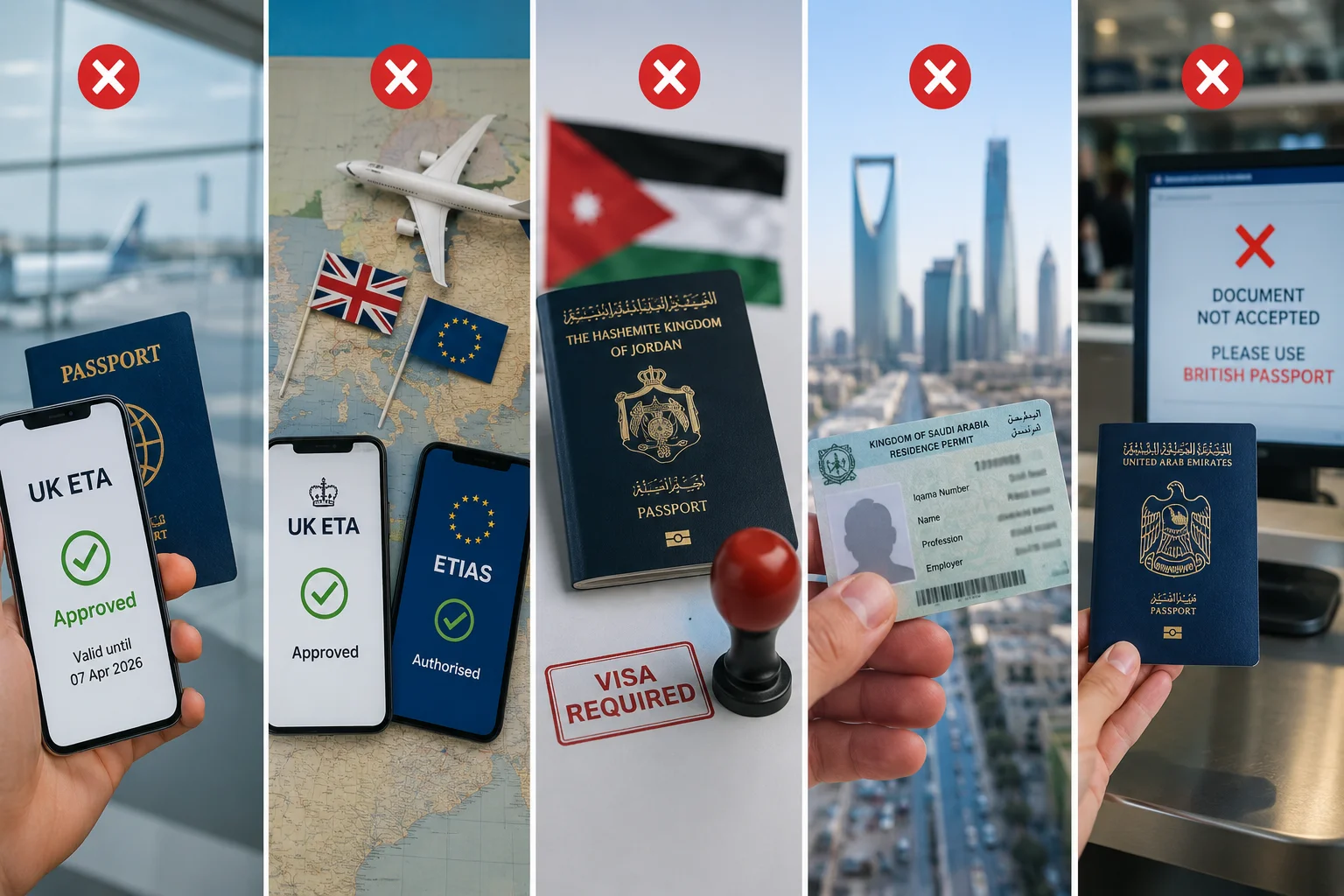
- Treating the ETA as a visa. It is a pre-travel permission tied to one specific passport, so a renewed passport means a fresh £20 application even mid-validity.
- Assuming it covers Europe. The EU is introducing its own ETIAS authorisation under separate Schengen rules, so a trip pairing a Manchester match with a Madrid one needs both sides checked individually. Check entry rules leg by leg whenever an itinerary spans football tournaments on both sides of the Channel.
- Relying on Jordan's old status. Jordanian passport holders lost ETA eligibility in September 2024 and are back on the visa list, whatever a 2024 blog post claims.
- Believing an iqama upgrades your paperwork. Gulf residence proves where you live and nothing more, a point UK Visas and Immigration guidance is blunt about.
- British dual nationals flying on the Gulf passport. Carriers now run automated document checks and Gulf News reported UAE check-in refusals in early 2026, so travel on the British passport or carry a Certificate of Entitlement. The same confusion around North American paperwork caught fans out this summer, which our World Cup 2026 visa guide covered in detail.
After you land, and what 2028 adds
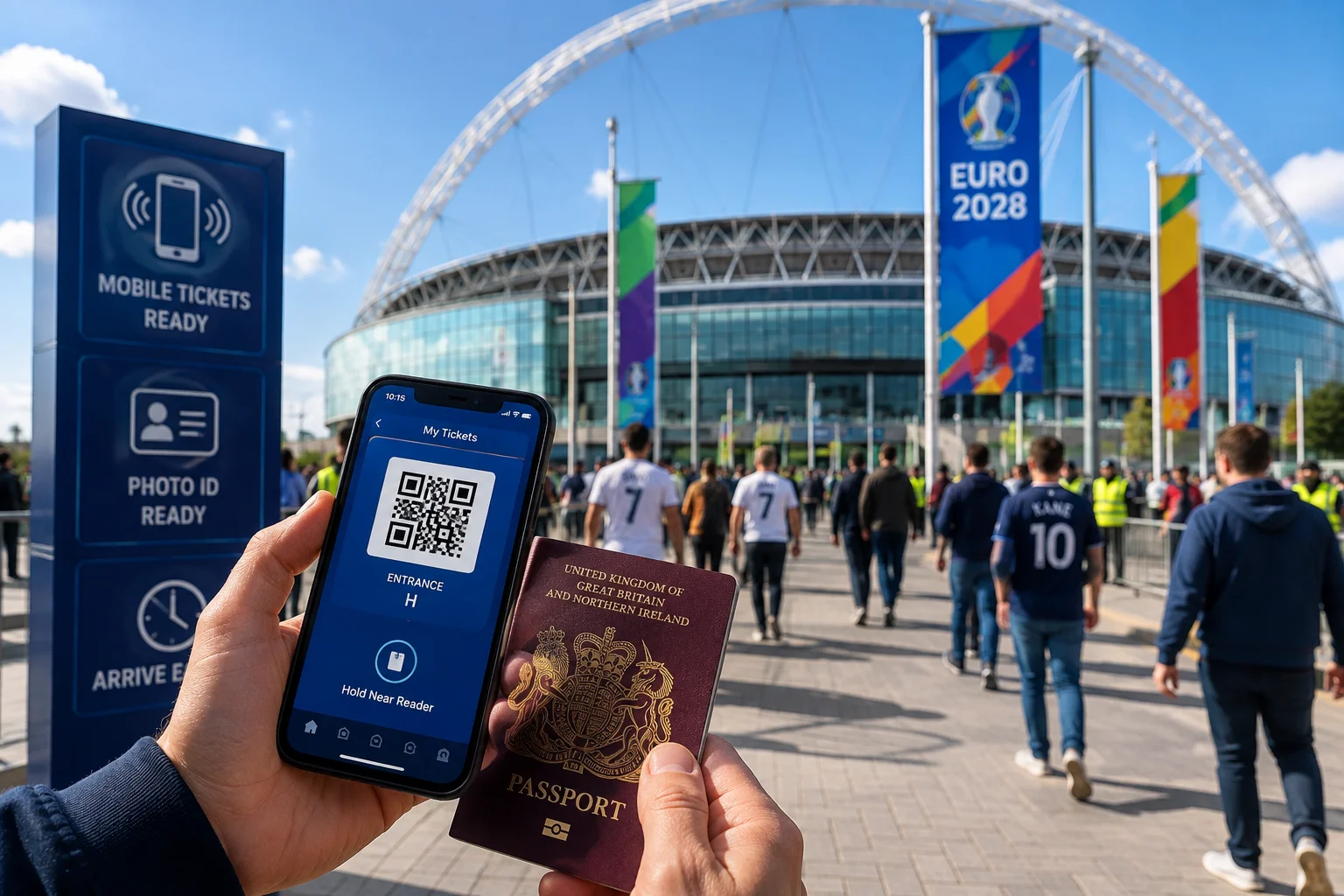
Entry is the easy part once the paperwork holds. The friction overseas fans actually meet is at the turnstile, where most clubs now run app-based tickets with NFC transfer and names on bookings are increasingly checked against ID, so keep the passport that carries your ETA or visa with you on matchday and arrive early enough to fix a transfer that has not landed.
Plan further ahead and the calendar gets interesting. Euro 2028 runs from 9 June to 9 July 2028 across England, Scotland, Wales and the Republic of Ireland, with around three million tickets on sale after the December 2027 draw. The British legs sit under exactly the ETA and visa rules described above, the Irish leg follows Ireland's separate entry rules and no tournament-specific travel scheme had been announced by UEFA or the Home Office as of August 2026, so the smart move is holding a valid authorisation or long-term visa before sales open.
The fixtures Gulf supporters actually fly for

Ask any Dubai or Riyadh travel desk which matches fill their packages and the same names come back every season. The big six carry most Gulf-departure demand, while FA Cup and EFL Cup ties hand multi-entry ETA holders a midweek trip at a fraction of a league weekend's outlay. Pick the club, check the calendar and the earlier sections handle the border.
FAQs
1. Does one UK ETA cover matches in Scotland and Wales as well as England?
-
Yes, a single authorisation covers England, Scotland, Wales and Northern Ireland for its full two-year life.
2. Do I need to print my ETA or visa before flying?
-
No, both are linked digitally to your passport with nothing to print, though keeping the confirmation email on your phone smooths any check-in query.
3. Is there a paid fast track for ETA decisions?
-
No, priority services exist only for visa applications, so any website selling ETA acceleration is charging you for nothing.
4. Do Gulf travellers still use the Electronic Visa Waiver?
-
No, the £30 single-use waiver was withdrawn when the ETA reached GCC nationals in February 2024, so any site still selling it is out of date.
5. Is travel insurance compulsory for a UK match trip?
-
No law requires it, but the NHS charges overseas visitors 150% of standard rates for non-emergency care, so cover is a sensible line in the trip budget.
Get the passport question right early and everything downstream, flights, hotels and the seat itself, becomes routine. Every order on 1BoxOffice, a secondary marketplace trading since 2006, carries a 150% money-back guarantee, which counts for something when your ticket sits at the far end of a 3,000-mile trip.
Sources: GOV.UK, Home Office, UK Visas and Immigration, UEFA, Gulf News. This is general guidance, not legal advice.