
In this guide
The Historical Roots: Colonialism and Post-War MigrationPioneers Who Broke Barriers: From Arthur Wharton to Viv AndersonThe Bosman Ruling: How 1995 Changed EverythingFrance: Europe's Most Diverse Football NationEngland and the Premier League: Diversity in NumbersWhy African Nations Produce Elite Football TalentThe Role of Scouting Networks and Football AcademiesDiversity Across Europe's Big Five LeaguesAnti-Racism Campaigns and the Fight That ContinuesThe Off-Pitch Gap: Coaching, Management and LeadershipWhat Diversity Means for the Matchday ExperienceFAQsBlack players account for close to half of all footballers in the Premier League. In France's 2018 World Cup-winning squad, 15 of 23 players had African heritage. Across Europe's top leagues, the proportion of non-European players has roughly doubled since the mid-1990s. These are not coincidences. They are the result of colonial history, post-war migration, legal reform, globalised scouting and the sheer quality of talent that African and Caribbean communities produce.
This article traces how European football became one of the most diverse professional environments on the planet. From the pioneers who endured banana throwing and monkey chants to the superstars who now command nine-figure transfer fees, the story of black players in European football is the story of the modern game itself.
The Historical Roots: Colonialism and Post-War Migration
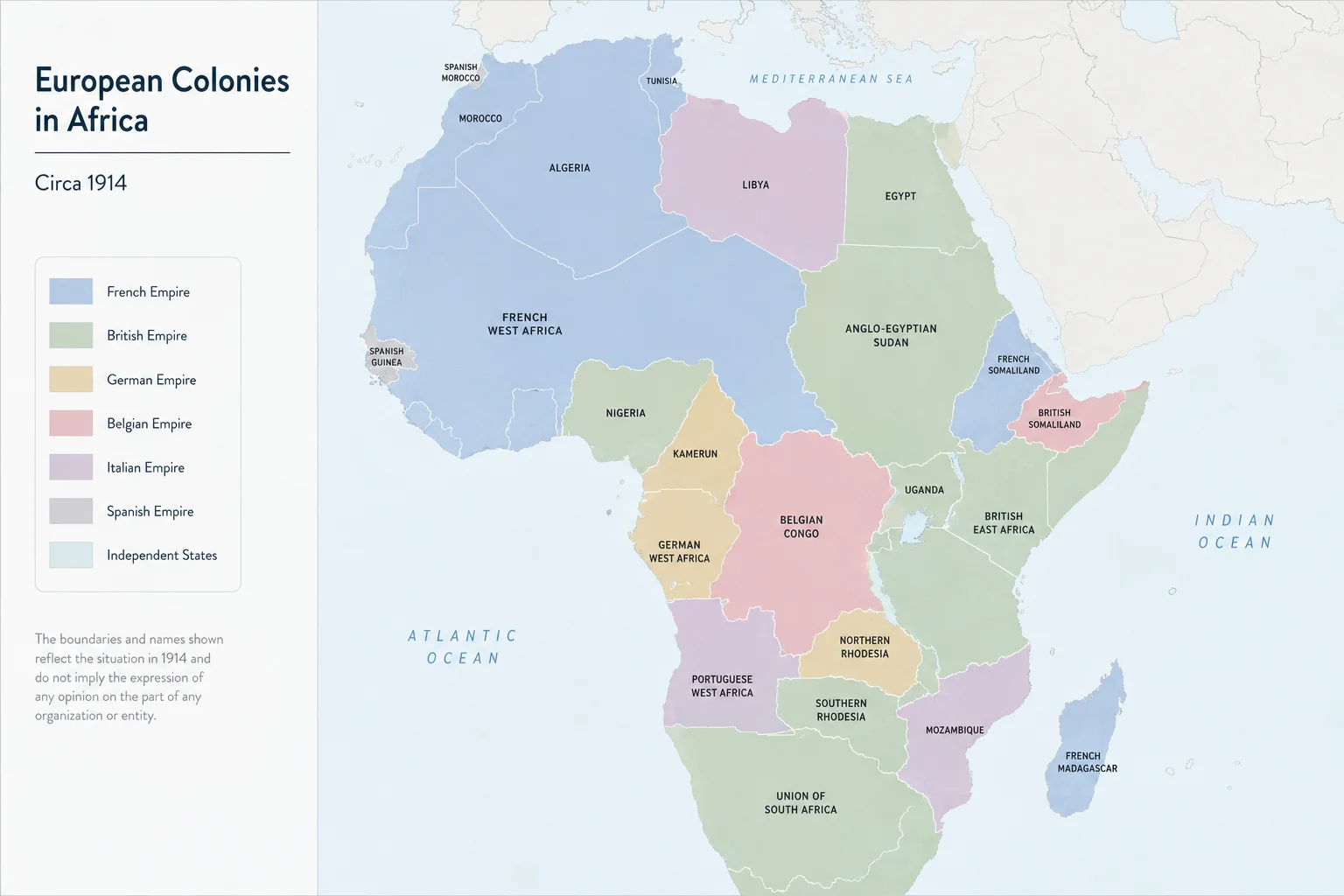
The presence of black players in European football did not begin with the Premier League era. It began with an empire. European colonial powers spent centuries ruling territories across Africa, the Caribbean and South America, and those relationships created migration routes that persist to this day.
France provides the clearest example. French clubs began recruiting players from North Africa as early as the 1930s, drawing on talent from Morocco and Algeria. By the 1950s, scouts were actively working across West Africa, establishing transfer networks that brought Senegalese, Malian and Cameroonian players to French league football. Portuguese clubs followed a similar pattern, signing players from Mozambique and Angola from the late 1940s. Belgian clubs recruited from the territory that is now the Democratic Republic of Congo from the 1960s onwards.
Britain took a different path. The English Football Association introduced a two-year residency requirement for non-British professionals in 1931, effectively barring foreign players. That rule was not removed until 1978, meaning British football had minimal contact with overseas talent for nearly five decades. Instead, the black players who emerged in English football during the 1970s and 1980s were overwhelmingly born in England, the children and grandchildren of Caribbean and African immigrants who arrived during the post-war labour shortage.
The Windrush generation, who came from the Caribbean between 1948 and 1971, and subsequent waves of West African migration, created the communities from which English football's black pioneers would emerge. The pattern repeats across Europe: in the Netherlands, many players of colour trace their roots to the former colony of Suriname; in Germany, immigration from Turkey and later Africa has diversified the national team; in Belgium, Congolese heritage runs through the squad.
Pioneers Who Broke Barriers: From Arthur Wharton to Viv Anderson
The first black professional footballer in the world was Arthur Wharton, a Ghanaian-born goalkeeper who played for Rotherham Town, Sheffield United and other clubs in the 1880s and 1890s. The first black man to play international football was Andrew Watson, who captained Scotland to a 6-1 victory over England in March 1881. These facts are often overlooked, but they establish that black players were part of European football from its earliest years.
For much of the 20th century, however, their presence was rare and met with hostility. In England, Clyde Best became one of the first prominent black players when he joined West Ham United in the late 1960s. The "Three Degrees" of West Bromwich Albion, Cyrille Regis, Laurie Cunningham and Brendon Batson, became household names in the late 1970s while enduring relentless racist abuse from terraces across the country.
The breakthrough moment came on 29 November 1978, when Viv Anderson, a right-back for Nottingham Forest, became the first black player to earn a senior England cap. Anderson, born in Clifton, Nottingham, to Jamaican parents who had arrived as part of the Windrush generation, made his debut in a friendly against Czechoslovakia at Wembley. He had already been subjected to banana throwing by Carlisle United supporters and racist abuse at grounds around the country. Brian Clough, his manager at Forest, reportedly told him he could not allow racists to dictate his life.
Anderson went on to win 30 England caps, two European Cups with Forest, and played for Arsenal and Manchester United. By the time he retired in the mid-1990s, black players like John Barnes, Ian Wright, Paul Ince and Les Ferdinand had established themselves as Premier League superstars. Anderson had helped make that possible.
The Bosman Ruling: How 1995 Changed Everything
On 15 December 1995, the European Court of Justice delivered a ruling that fundamentally reshaped professional football. The case, brought by Belgian footballer Jean-Marc Bosman, struck down two pillars of the existing transfer system: clubs could no longer demand fees for out-of-contract players moving within the EU, and quota restrictions on foreign EU players within national leagues were declared illegal.
The impact was immediate and transformative. Before Bosman, UEFA club competitions operated under a "three-plus-two" rule, limiting teams to three foreign players plus two who had come through the club's academy. After the ruling, any number of EU nationals could play for any club. The percentage of foreign players in Europe's top five leagues jumped from 20.2% in 1995/96 to 38.6% by 2005/06, according to research published in the International Review for the Sociology of Sport.
For African players, Bosman had a powerful indirect effect. As EU nationals moved freely between clubs, the old foreign player quotas became less restrictive, and clubs began casting their scouting nets wider. Non-EU players from Africa could also benefit if they held citizenship in a former colonial power. A Senegalese player with French citizenship, for example, counted as an EU national. This created a surge in demand for African talent across the Champions League and domestic competitions.
By 2019, expatriate players accounted for more than half the squads in the top divisions of England, Italy, Germany, Belgium and Portugal. Roughly one third of non-European players in top European leagues were of African origin, with Nigeria, Ghana, Senegal, Ivory Coast and Cameroon producing the largest numbers.
WhatsApp channel
Sports news straight to your phone
Match updates, on-sale dates and ticket news from 1BoxOffice.
France: Europe's Most Diverse Football Nation
No country illustrates the link between colonial history and football diversity more vividly than France. When Les Bleus won the 2018 World Cup, 15 of the 23 squad members had African heritage, with family roots spanning Cameroon, Algeria, Guinea, Senegal, the Democratic Republic of Congo, Mali, Angola, Togo and Morocco. Only two players in the squad, Benjamin Pavard and Florian Thauvin, had ancestral ties to France going back multiple generations.
This is a direct consequence of France's colonial history and post-war immigration policy. After the Second World War, France brought in workers from its colonies to address a severe labour shortage. Millions settled permanently, building communities in the banlieues surrounding Paris, Lyon, Marseille and other major cities. Their descendants, born and raised in France, grew up playing football on the concrete pitches of these suburbs.
Kylian Mbappe, born in Bondy to a Cameroonian father and Algerian mother, is perhaps the most celebrated example. N'Golo Kante's parents came from Mali. Paul Pogba's family originated in Guinea. The pattern extends back decades: Zinedine Zidane's parents emigrated from Algeria; Patrick Vieira has Senegalese and Cape Verdean roots; Marcel Desailly was born in Ghana.
French football culture embraces this diversity, even as French society grapples with questions of identity and integration. Ligue 1 employs more African footballers than any other top European league, with 107 players holding African nationality according to a KPMG audit. Paris Saint-Germain, the country's dominant club, reflects this diversity in its squad composition. The story of France's multicultural football success, and the tensions that sometimes surround it, is covered in depth in our guide to French football culture from Marseille to Paris.
France's 1998 World Cup victory, led by Zidane, was hailed as a triumph for multiracial France. Twenty years later, the 2018 squad reinforced that narrative. But as former Inter Milan striker Romelu Lukaku has observed, the celebration of diversity can be conditional: when things go well, players are embraced as French; when results dip, their heritage is invoked as an explanation.
England and the Premier League: Diversity in Numbers
The Premier League is the wealthiest football league in the world, and its spending power has made it one of the most diverse. Data from the Black Footballers Partnership, published in 2022, found that approximately 43% of Premier League players were black, despite black people comprising roughly 4% of the general population of England and Wales.
This figure encompasses both British-born black players and international signings from Africa, the Caribbean and elsewhere. The proportion of British-born black players in the Premier League has risen from around 15% at the league's inception in 1992 to over 30% in recent years. When international players are included, the figure approaches or exceeds half the total player pool at some clubs.
Several factors explain this. Football is the most accessible and popular sport in urban communities where black British populations are concentrated. Cultural emphasis on football as a pathway to professional success plays a role. And the Premier League's global scouting infrastructure means that clubs like Liverpool, Chelsea and Manchester City recruit from every continent.
The diversity is visible at every level. At Anfield, Mohamed Salah became the Premier League's most prolific scorer in the 2024/25 season with 28 goals. At Stamford Bridge, Chelsea's squad features players from across Africa, South America and Europe. Even at clubs like Crystal Palace, known for developing homegrown talent, the academy pipeline produces players from London's diverse communities.
At the Emirates, Arsenal's squad under Mikel Arteta regularly features players with roots in Ghana, Nigeria, Ivory Coast, Brazil and beyond, reflecting both the club's scouting reach and the demographics of North London.
Why African Nations Produce Elite Football Talent
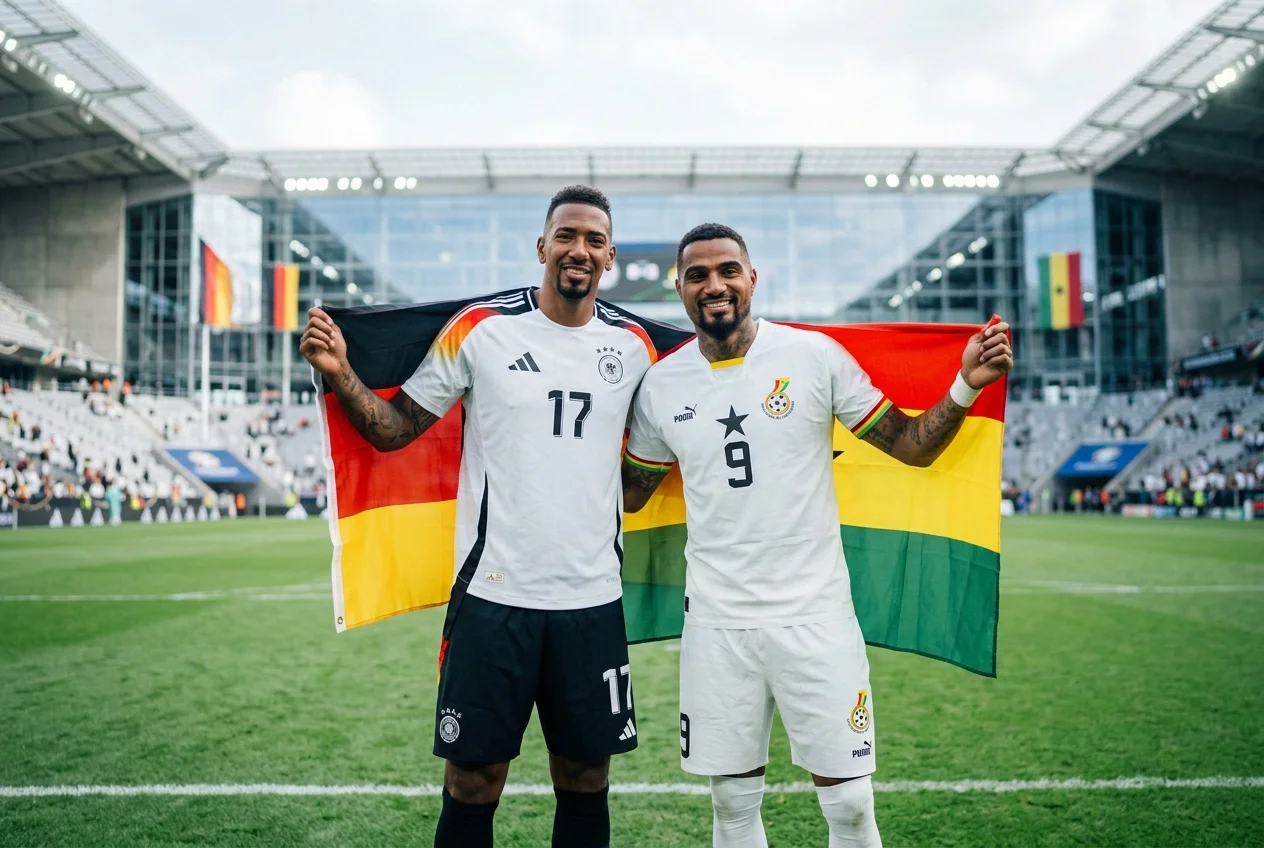
Africa is the world's youngest continent by median age, and football is overwhelmingly its most popular sport. Countries like Nigeria (population over 220 million), the Democratic Republic of Congo (over 100 million), and Ethiopia (over 120 million) have enormous pools of young people for whom football is the primary competitive sport.
West Africa, in particular, has a deep football tradition. Senegal, Ivory Coast, Ghana, Nigeria, and Cameroon have all produced World Cup squads that competed at the highest level, and their domestic leagues, while less wealthy than European competitions, develop technically gifted players from an early age. The emphasis on skill, improvisation and physical resilience in African youth football, sometimes compared to Brazil's street football tradition described in our piece on the Ginga style, creates players who adapt well to European football's tactical demands.
The economic dimension cannot be ignored. For a young player in Dakar, Lagos or Douala, a contract with a European club represents a life-changing opportunity, not just for the individual but for an extended family. This drives an extraordinary level of dedication and competitiveness. African football academies, some run by European clubs, have become talent pipelines that identify and develop players from childhood.
The Role of Scouting Networks and Football Academies
European clubs have built global scouting infrastructures that cover virtually every country where football is played seriously. This is not charity. It is a business model. Signing a teenager from a West African academy for a modest fee and developing them into a player worth tens of millions is one of the most profitable strategies in professional football.
French clubs pioneered this approach, leveraging colonial-era connections to recruit across Francophone Africa. Portuguese clubs did the same in Lusophone Africa. But the model has since globalised. Real Madrid and Barcelona operate academies and scouting partnerships across multiple continents. Premier League clubs have scouts stationed permanently in Africa, South America and Asia.
The ASPIRE Academy in Qatar, the Diambars Institute in Senegal, and the Right to Dream Academy in Ghana (affiliated with FC Nordsjaelland in Denmark) are examples of institutions that bridge African talent development and European professional football. These academies provide education alongside football training, and their graduates regularly move to top European leagues.
Critics argue this system constitutes a form of modern-day exploitation, draining Africa's best talent while investing little in local football infrastructure. Ydnekatchew Tessema, the former president of the Confederation of African Football, once warned that European recruitment of African talent was a form of ongoing post-colonial exploitation. The debate continues, but what is clear is that the scouting pipeline has made European squads far more diverse than they were a generation ago.
Diversity Across Europe's Big Five Leagues
The demographic composition of squads varies significantly across Europe's five major leagues, shaped by each country's colonial history, immigration patterns and football culture.
| League | Country | African Players (National Team Nationality) | Primary Source Countries |
|---|---|---|---|
| Ligue 1 | France | 107 | Senegal, Ivory Coast, Cameroon, Mali, Algeria, Morocco |
| Premier League | England | 44 | Nigeria, Ghana, Senegal, Cameroon, Egypt |
| Serie A | Italy | 42 | Nigeria, Cameroon, Ghana, Ivory Coast |
| Bundesliga | Germany | 29 | Guinea, Cameroon, Ghana, Morocco |
| La Liga | Spain | 25 | Morocco, Nigeria, Ghana, Cameroon |
Source: KPMG Football Benchmark analysis of African players in European leagues. Figures represent players holding African national team nationality and do not include European-born players of African descent who represent European nations.
These numbers tell only part of the story. Ligue 1's count of 107 African-nationality players does not include the far larger group of French-born players with African heritage who represent France. Similarly, the Premier League's 44 does not account for British-born black players, who push the total proportion of black players close to 50%. When both categories are combined, the true diversity of these leagues is far greater than the table suggests.
Beyond the Big Five, the Belgian Pro League (82 African players) and Turkish Super Lig (82) also employ significant numbers of African footballers. The Europa League and lower-tier European competitions provide further pathways for African talent to establish themselves on the continent.
Anti-Racism Campaigns and the Fight That Continues
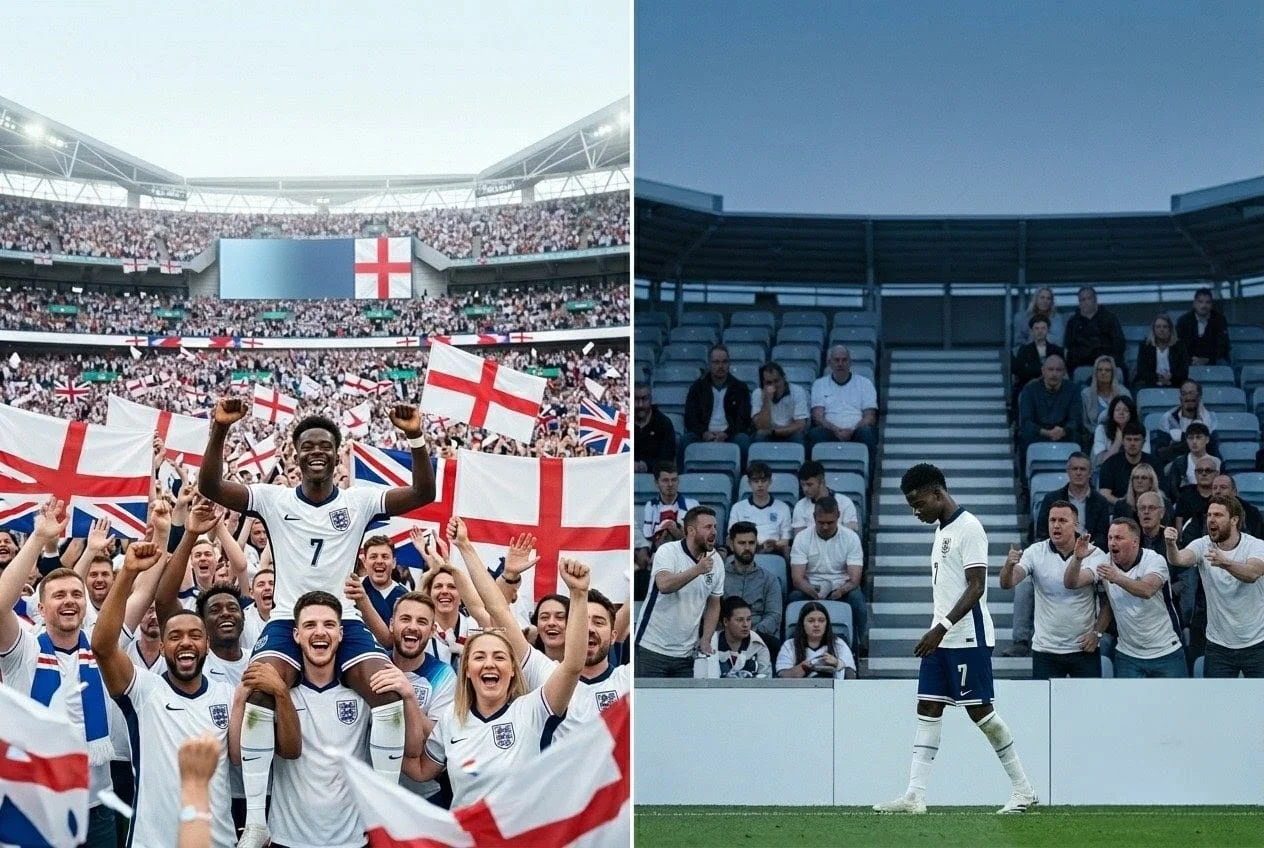
The growth in diversity has not eliminated racism from European football. It has, in some ways, made it more visible. Monkey chants directed at black players remain a persistent issue in parts of Southern and Eastern Europe. Online racial abuse spiked dramatically after England's Euro 2020 final defeat, when Marcus Rashford, Jadon Sancho and Bukayo Saka were targeted on social media after missing penalties.
Organisations like Kick It Out (founded in 1993), Football Against Racism in Europe (FARE) and the Black Footballers Partnership work to combat discrimination at every level. The Premier League's No Room For Racism campaign, launched in 2019, has become one of the most visible anti-racism initiatives in professional sport. Players in several European leagues have taken the knee before matches to signal collective opposition to racism, a gesture that has been both praised and controversially debated.
Football's role as a vehicle for social change extends well beyond anti-racism campaigns. The sport has become a platform for addressing mental health, community development and environmental issues, as explored in our article on football's social impact and community initiatives.
Despite the progress, incidents continue. In 2004, England's black players were subjected to monkey chants by Spanish fans in Madrid, forcing the Spanish FA to apologise. In 2005, Marc Zoro of the Ivory Coast, playing for Messina in Italy, picked up the ball and threatened to leave the pitch after racist abuse from Inter Milan fans. More recently, Vinicius Jr at Real Madrid has been repeatedly targeted by opposition supporters in La Liga. UEFA and domestic associations have responded with fines, stadium closures and enhanced monitoring, but enforcement remains inconsistent.
The Off-Pitch Gap: Coaching, Management and Leadership
While black players dominate on the pitch in the Premier League, their representation drops off sharply in coaching, management and executive roles. The Szymanski Report, commissioned by the Black Footballers Partnership in 2022, found that just 4.4% of managerial positions in English professional football were held by black people, compared to 43% of players. Only 14% of UEFA Pro Licence holders who graduated under the FA were black. Fewer than 2% of executive and ownership roles were held by black individuals.
Les Ferdinand, QPR's director of football and a founding member of the BFP, has described a "glass ceiling" for black coaches, arguing that while black players are celebrated as entertainers, they are systematically overlooked for leadership positions. The Football Association launched the Football Leadership Diversity Code in 2020, with all 20 Premier League clubs as signatories, but progress has been gradual.
This disparity is not unique to England. Across European football, the transition from playing to coaching and management remains significantly harder for black former professionals. The conversation is shifting, but structural change requires more than awareness campaigns. It requires accountability, transparent hiring practices and a genuine willingness to dismantle long-standing networks of influence that have historically excluded non-white candidates.
What Diversity Means for the Matchday Experience
For fans, the diversity of European football squads translates into a richer, more exciting product on the pitch. The blend of West African technical flair, Caribbean physicality, North African creativity and European tactical discipline has produced some of the most watchable football in the sport's history. Premier League matches, Champions League nights and international tournaments are more competitive and more entertaining because talent is drawn from the widest possible pool.
If you want to experience this diversity firsthand, 1BoxOffice has been connecting fans to live football since 2006. As a verified ticket marketplace with a 150% money-back guarantee and trusted sellers, 1BoxOffice offers tickets across every major European competition. Whether it is a Premier League derby, a Champions League knockout tie or a domestic cup clash, the players on the pitch tell the story of modern football: global, diverse and relentlessly talented.
FAQs
1. What percentage of Premier League players are Black?
-
Black players made up about 43 per cent of the Premier League in the 2020/21 season, against a Black share of the England and Wales population of roughly 4 per cent.
2. How did the Bosman ruling change European football?
-
The 1995 Bosman ruling scrapped club limits on EU nationals and ended transfer fees for out-of-contract EU players, and the foreign-player share of the big five leagues climbed from about 20 per cent in 1995/96 to roughly 43 per cent by 2008/09.
3. Who was the first Black footballer to play for England?
-
Viv Anderson became the first Black player to win a senior England cap, in a friendly against Czechoslovakia at Wembley on 29 November 1978.
4. Which European league fields the most African players?
-
France's Ligue 1 has long fielded the most, with a KPMG audit counting 107 players holding an African nationality, ahead of the Belgian and Turkish top flights on 82 each.
5. Is racism still a problem in European football?
-
Yes, and while stadium campaigns have curbed some overt abuse, the targeting of Black players has shifted heavily onto social media.
Sources: Black Footballers Partnership; Stefan Szymanski, University of Michigan; KPMG Football Benchmark; Raffaele Poli, CIES Football Observatory; the National Football Museum; England Football; the 2011 Census of England and Wales. 1BoxOffice is not the official ticket agent of any club, league or federation. Prices may differ from face value.