
In this guide
20. Coliseum, Getafe19. Estadi Ciutat de Valencia, Levante18. Mendizorrotza, Alaves17. El Sardinero, Racing Santander16. ABANCA-Balaidos, Celta Vigo15. Martinez Valero, Elche14. Estadio de Vallecas, Rayo Vallecano13. ABANCA-Riazor, Deportivo La Coruna12. La Rosaleda, Malaga11. RCDE Stadium, Espanyol10. Estadio de la Ceramica, Villarreal9. Estadio La Cartuja, Real Betis8. El Sadar, Osasuna7. Ramon Sanchez-Pizjuan, Sevilla6. Mestalla, Valencia5. Anoeta, Real Sociedad4. Riyadh Air Metropolitano, Atletico Madrid3. Spotify Camp Nou, Barcelona2. San Mames, Athletic Bilbao1. Santiago Bernabeu, Real MadridFAQsLa Liga has never been better attended. The 2025/26 season set an all-time record, with average crowds of 31,018 and 84.9 per cent of seats filled across the league, per La Liga's own end-of-season figures. The 2026/27 campaign kicks off on 16 August with a rebuilt Camp Nou, a Bernabeu operating at full tilt and three promoted clubs bringing proper old grounds back to the top flight. This is our ranking of the best football stadiums in Spain, covering every one of the 20 La Liga venues.
We have ranked all 20 as they stand for the 2026/27 season, on a blend of capacity, facilities, architecture, history, atmosphere and what a matchday actually costs, not capacity alone. That timing matters: a ground mid-rebuild is judged on what you get through the turnstile this season, not on its finished plans, and a 14,000-seat ground with a ferocious crowd can outrank a concrete bowl twice its size. Wherever you land on the list, you can compare seats and prices for every fixture through our La Liga tickets selection.
20. Coliseum, Getafe
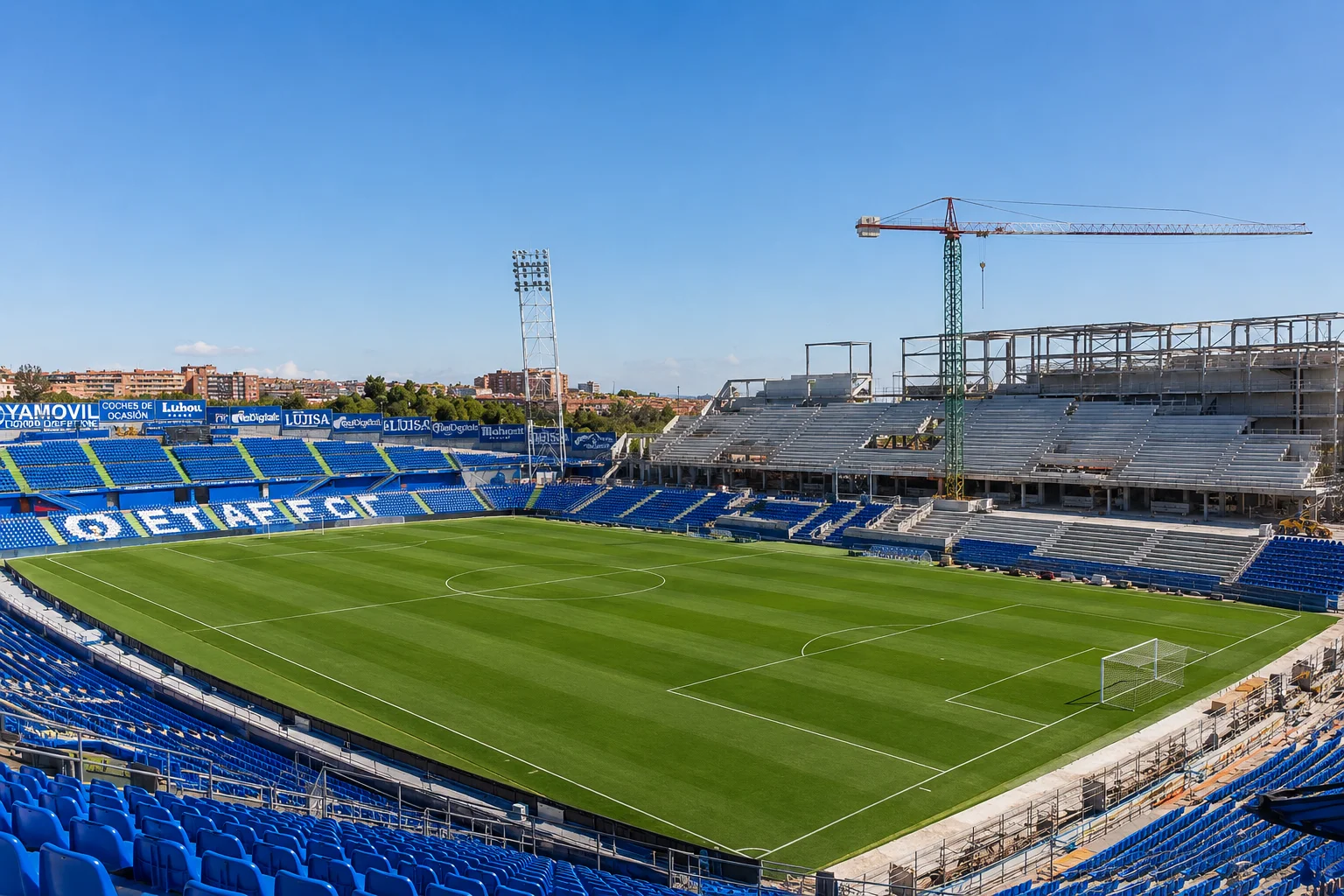
The Coliseum sits bottom because it is currently half stadium, half building site. Getafe began a 28-month rebuild in June 2025, designed by IDOM, that will deliver a fully roofed 18,500-seat arena by late 2027. Until then, sections of terracing come and go between matchdays and capacity fluctuates, though the club has kept it above 10,000 throughout, per StadiumDB.
| Fact | Detail |
|---|---|
| Club | Getafe CF |
| Capacity 2026/27 | 16,500 listed, reduced in phases during rebuild |
| Opened | 1998 |
| Other names | Coliseum Alfonso Perez (1998 to 2023) |
| Architect | IDOM (2025 rebuild) |
| Last major renovation | 2025 to 2027, in progress |
| City | Getafe, Madrid |
There is a decent story here all the same. The ground hosted the Women's Champions League final in 2010, and Getafe finished seventh in 2025/26 to reach the Conference League play-offs, so European nights amid the scaffolding are a real possibility. Check the Coliseum stadium guide and the Coliseum seating plan before you pick a block, because the open sections change as the work advances.
19. Estadi Ciutat de Valencia, Levante
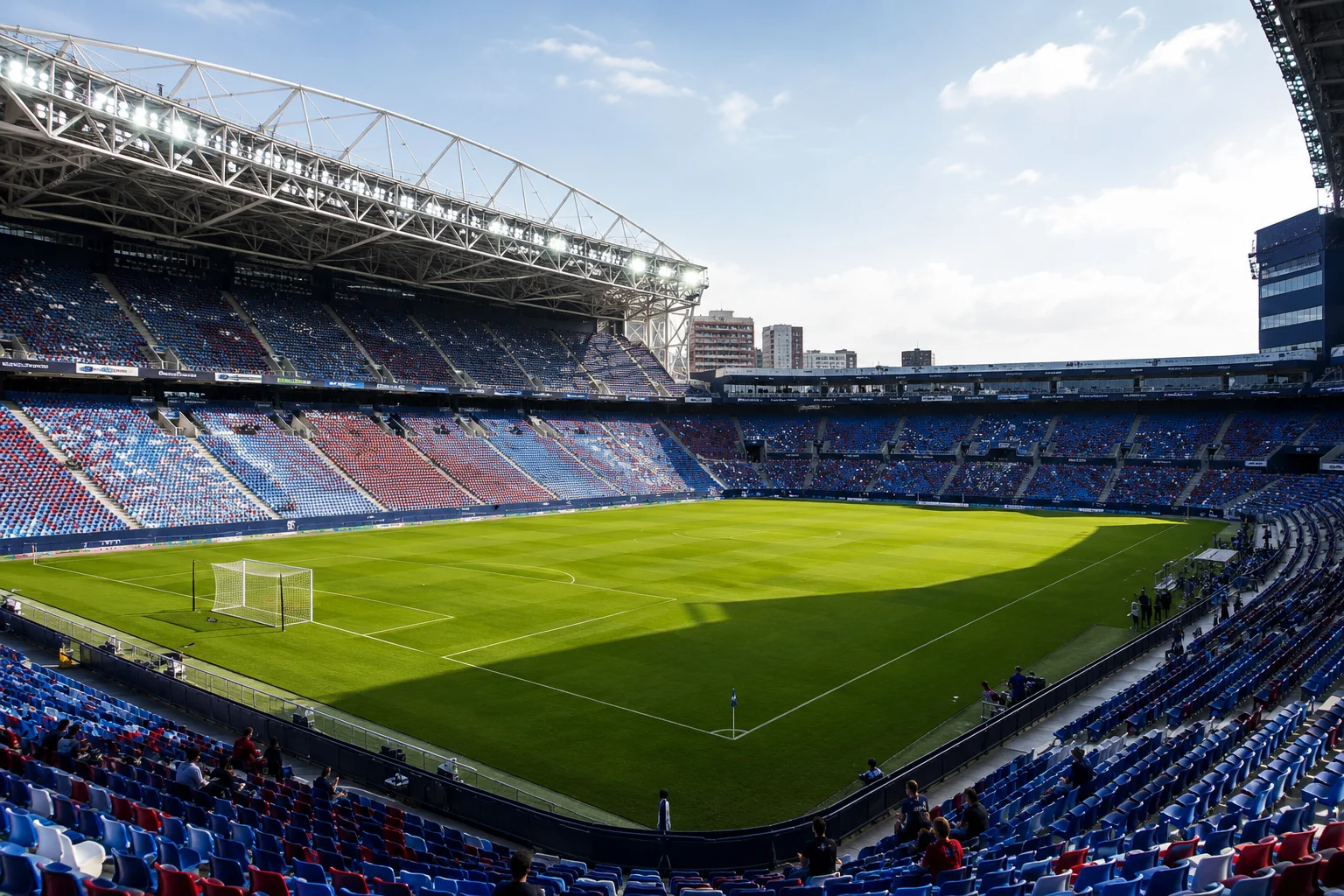
Functional rather than beautiful, the Ciutat de Valencia is the quieter of the city's two top-flight grounds. It holds 26,354, opened in 1969 and had its last significant refresh in 2020. Levante have made it awkward for bigger sides, and its compact stands keep fans close to the pitch even if the architecture will win no awards.
| Fact | Detail |
|---|---|
| Club | Levante UD |
| Capacity 2026/27 | 26,354 |
| Opened | 1969 |
| Other names | Nou Estadi (historical) |
| Last major renovation | 2020 |
| City | Valencia |
Its trump card is value. Tickets here are among the cheapest in the top flight, with away allocations listed at €30 in recent seasons, and the Orriols neighbourhood gives you a less touristy Valencia matchday than Mestalla. The Estadi Ciutat de Valencia guide covers access and transport, and the Ciutat de Valencia seating plan shows which lateral blocks catch shade at afternoon kick-offs.
18. Mendizorrotza, Alaves
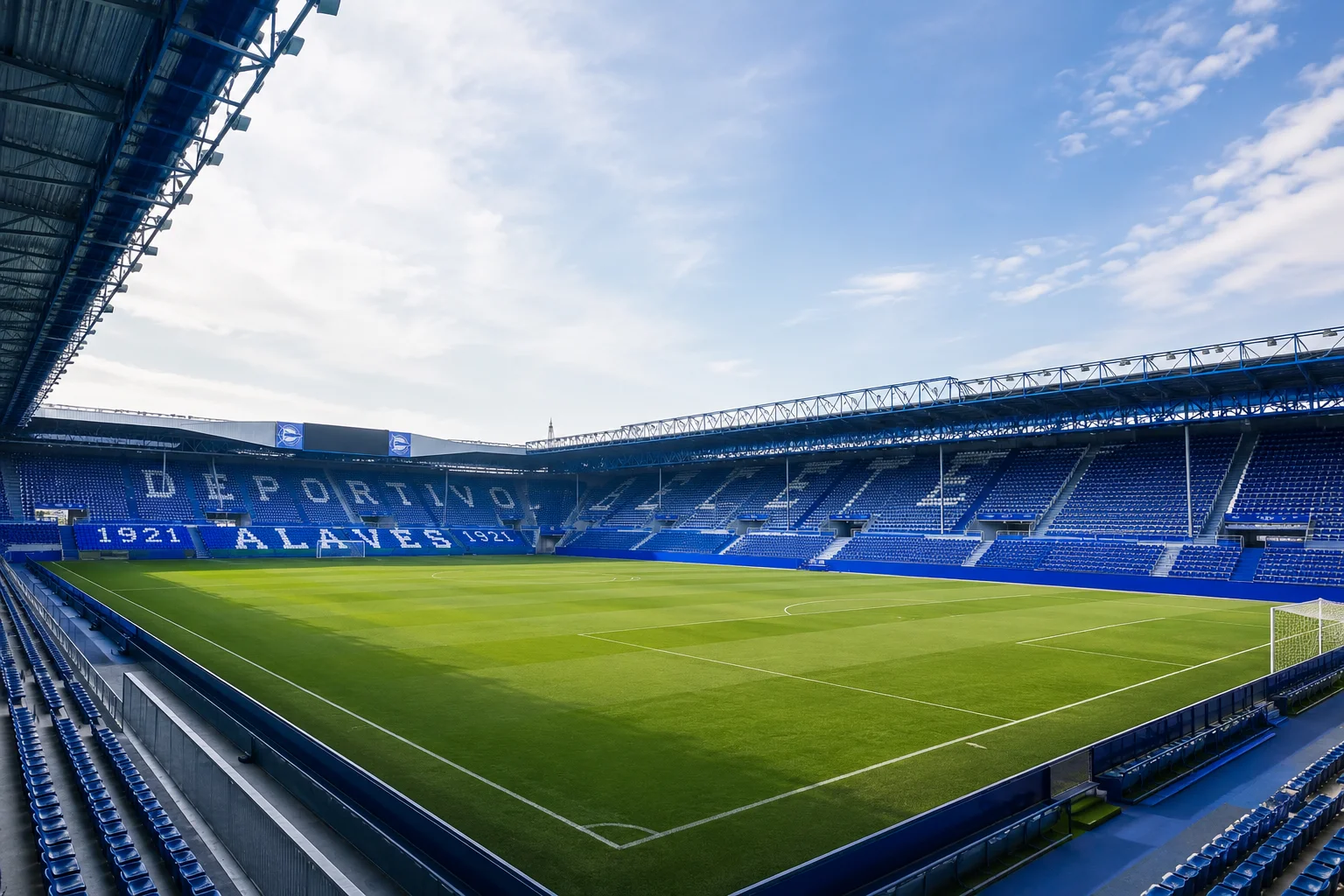
Mendizorrotza is the second-oldest ground in this ranking, open since 27 April 1924, and it feels like it in the best sense. Four separate stands sit tight to the pitch in the old British style, holding 19,840. Alaves have turned that intimacy into a genuine advantage, and winter evenings here are among the most atmospheric small-ground experiences in Spain.
| Fact | Detail |
|---|---|
| Club | Deportivo Alaves |
| Capacity 2026/27 | 19,840 |
| Opened | 27 April 1924 |
| Other names | None in common use |
| Last major renovation | 1998 expansion |
| City | Vitoria-Gasteiz, Basque Country |
What holds it back is age. The 1998 expansion is now closer to 30 years old than 20, concourses are tight and hospitality is modest by top-flight standards. Read the Mendizorrotza stadium guide for matchday logistics and use the Mendizorrotza seating plan to stay under cover, because Vitoria in January tests the unprepared.
WhatsApp channel
Sports news straight to your phone
Match updates, on-sale dates and ticket news from 1BoxOffice.
17. El Sardinero, Racing Santander
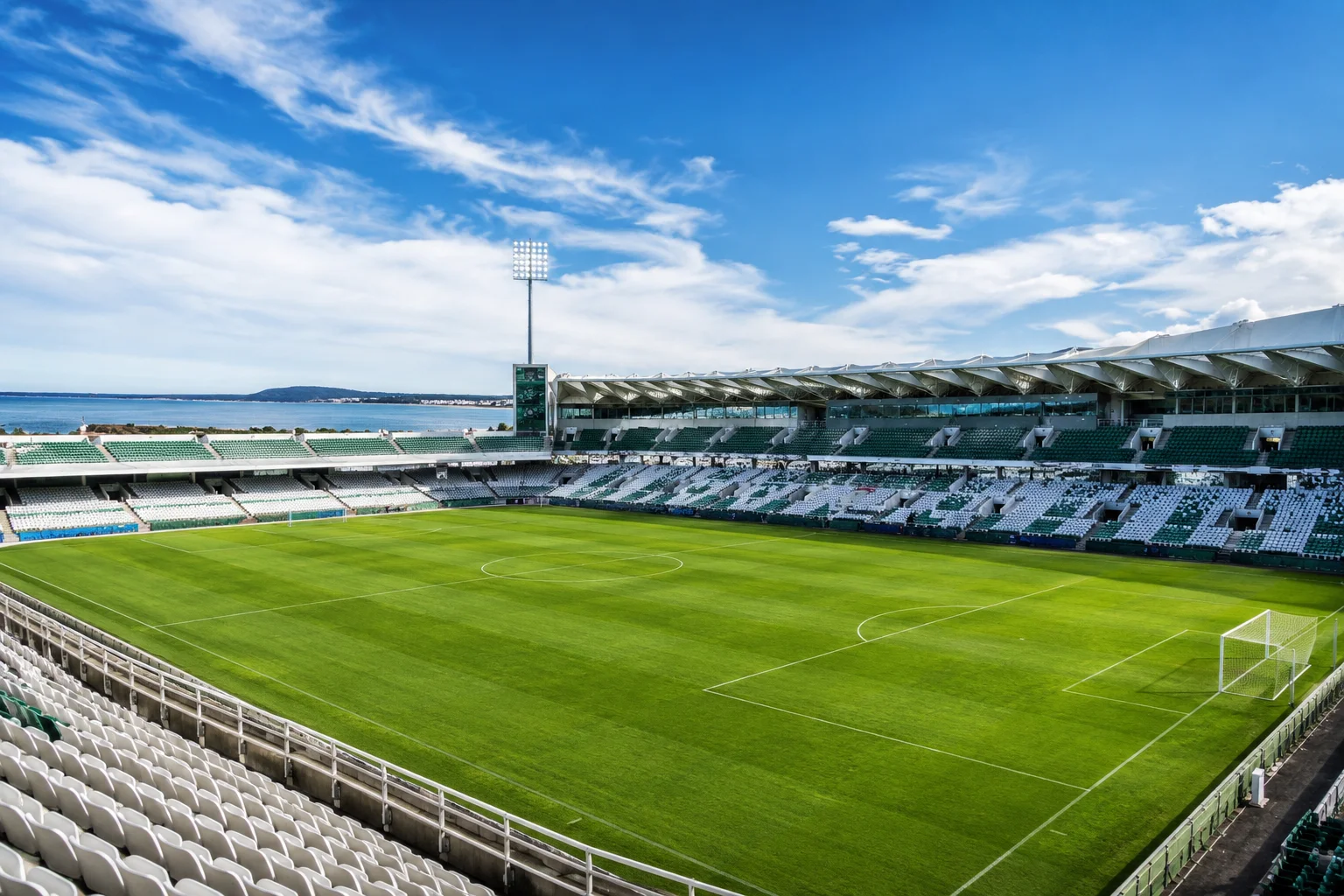
Top-flight football returns to Cantabria after 14 years. Racing Santander stormed the 2025/26 Segunda Division title and bring with them the Campos de Sport de El Sardinero, a 22,222-seat ground opened in 1988 a few hundred metres from the Sardinero beach. Few stadiums in Europe put you this close to the sea, and the salt-air matchday around the ground is a large part of its charm.
| Fact | Detail |
|---|---|
| Club | Real Racing Club de Santander |
| Capacity 2026/27 | 22,222 |
| Opened | 1988 |
| Full name | Campos de Sport de El Sardinero |
| Last major renovation | Phased upgrades through the 2020s |
| City | Santander, Cantabria |
The facilities are honest rather than modern, which is why it sits 17th, but the noise from a promoted crowd that filled the ground repeatedly last season will make this one of 2026/27's most demanding away trips. Racing sold out El Sardinero for the run-in, and demand for their return fixtures against the big three will comfortably outstrip supply.
16. ABANCA-Balaidos, Celta Vigo
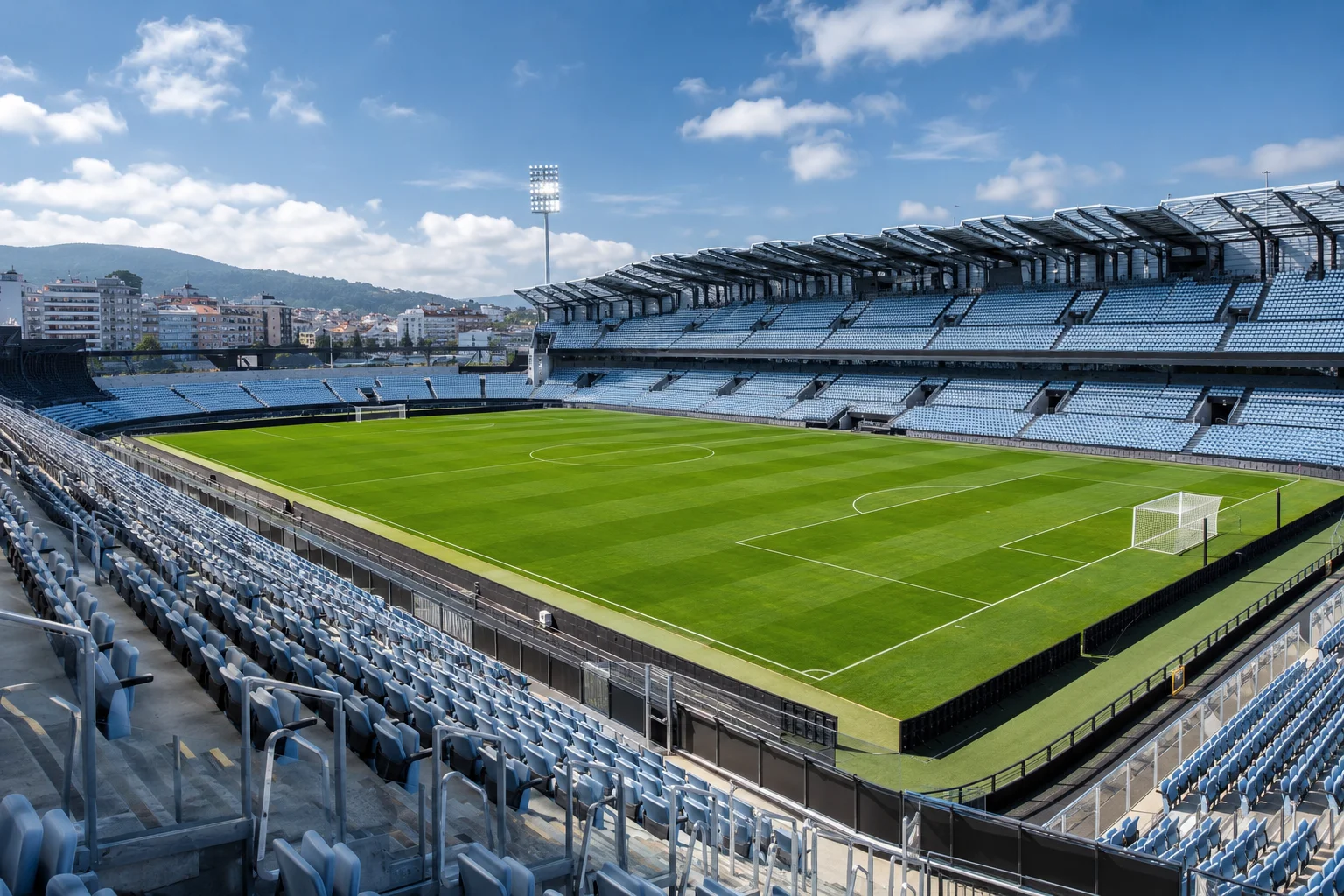
Balaidos has been staging football since 30 December 1928 and hosted three matches at the 1982 World Cup, but it currently ranks below its history because it is mid-transformation. A phased redevelopment has capacity at 24,870, per the stadium's current listing, with stands being modernised one at a time. Celta Vigo have played on through the works, and the finished article should climb this list quickly.
| Fact | Detail |
|---|---|
| Club | RC Celta de Vigo |
| Capacity 2026/27 | 24,870 during phased redevelopment |
| Opened | 30 December 1928 |
| Other names | ABANCA-Balaidos (sponsorship) |
| Architect | Jenaro de la Fuente |
| Last major renovation | Ongoing stand-by-stand rebuild |
| City | Vigo, Galicia |
Galician support is loyal and loud, and standard home matches remain reasonably priced at roughly €50 to €100, rising sharply when Real Madrid or Barcelona visit. The Balaidos stadium guide explains which stands are complete, and the Balaidos seating plan is worth a look before buying, since sightlines vary noticeably between rebuilt and original sections.
15. Martinez Valero, Elche
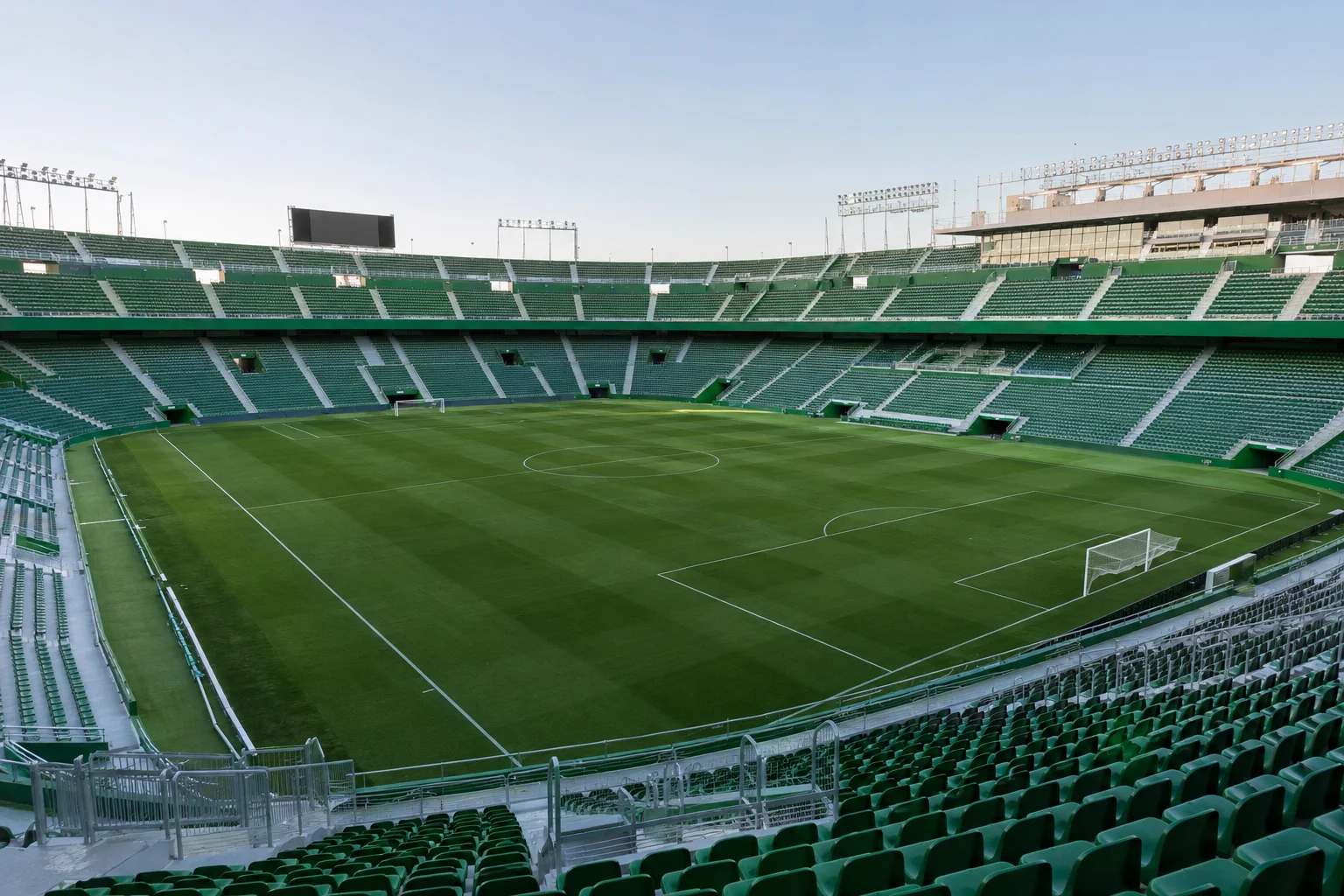
The Martinez Valero holds a World Cup record that will probably never fall: Hungary 10-1 El Salvador, the biggest rout in tournament history, played here in 1982. Designed by Juan Boix Matarredona and opened on 8 September 1976, the 31,388-seat bowl also has one of the largest playing surfaces in European football and staged the 2003 Copa del Rey final. Elche returned to the top flight in 2025 and stayed there.
| Fact | Detail |
|---|---|
| Club | Elche CF |
| Capacity 2026/27 | 31,388 |
| Opened | 8 September 1976 |
| Other names | Nuevo Estadio del Elche CF (1976 to 1988) |
| Architect | Juan Boix Matarredona |
| Last major renovation | Exterior modernisation works from 2025 |
| City | Elche, Valencian Community |
It is also one of the cheapest days out in La Liga, with entry-level seats historically starting around €10 to €35 depending on the stand. The Martinez Valero stadium guide covers the ground in detail, and the Martinez Valero seating plan shows why the covered Tribuna side is worth the premium in high summer.
14. Estadio de Vallecas, Rayo Vallecano
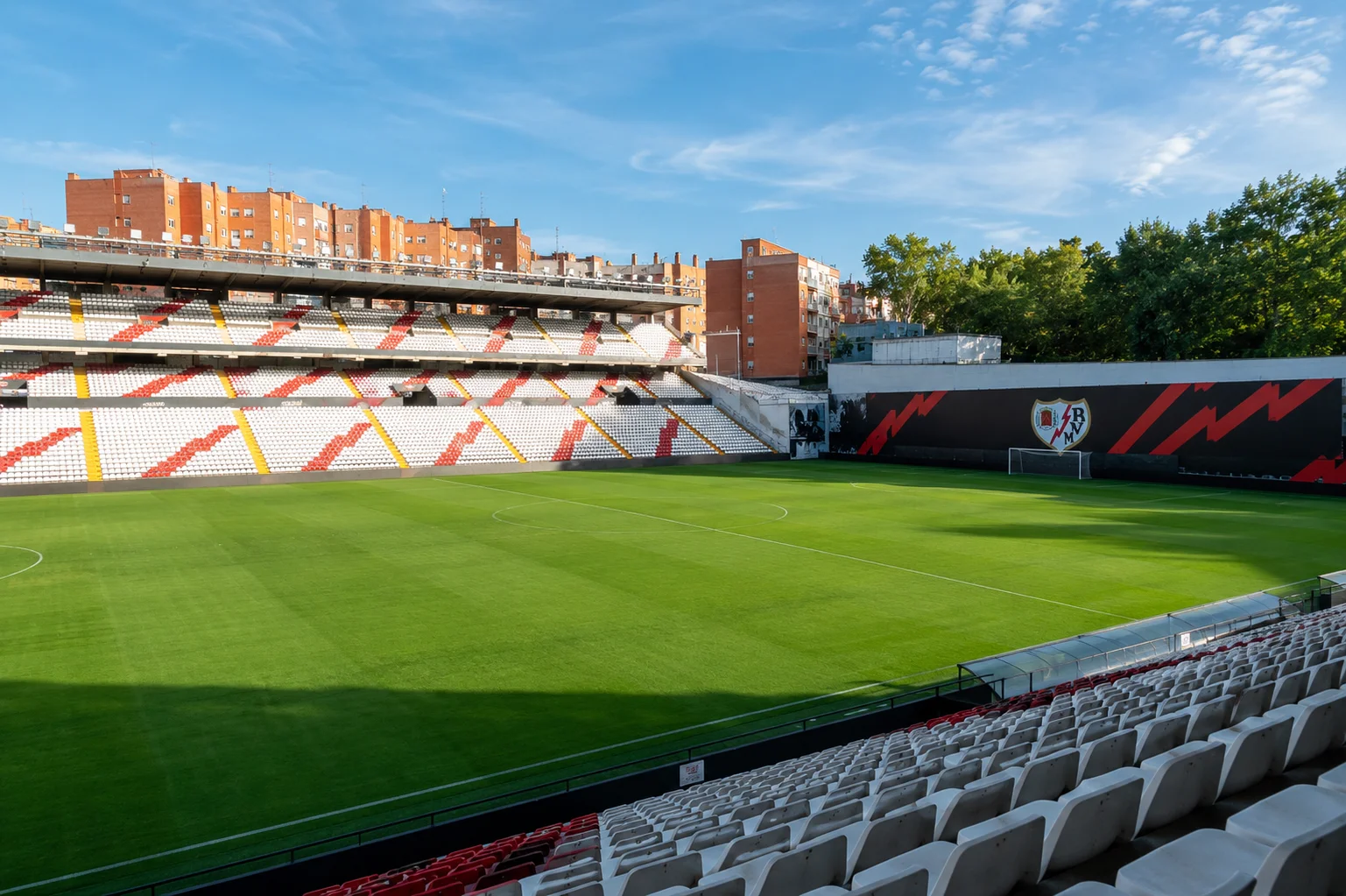
The smallest ground in La Liga outranks several bigger ones, and anyone who has stood in it will understand why. Vallecas holds just 14,708, has only three stands, and generates an atmosphere with a political and neighbourhood identity unlike anywhere else in Spanish football. Rayo Vallecano's support turns a 1976 concrete relic into one of the country's most distinctive matchdays.
| Fact | Detail |
|---|---|
| Club | Rayo Vallecano |
| Capacity 2026/27 | 14,708 |
| Opened | 1976 |
| Other names | Estadio Teresa Rivero (1994 to 2011) |
| Layout quirk | Three stands, one goal end built directly against flats |
| City | Puente de Vallecas, Madrid |
Facilities are basic and the ground needs investment, which is what keeps it out of the top ten. Even so, tickets for visits from the big two are among the hardest to source in Madrid given the tiny allocation. The Estadio de Vallecas guide and the Vallecas seating plan will help you avoid restricted-view seats in the older corners.
13. ABANCA-Riazor, Deportivo La Coruna
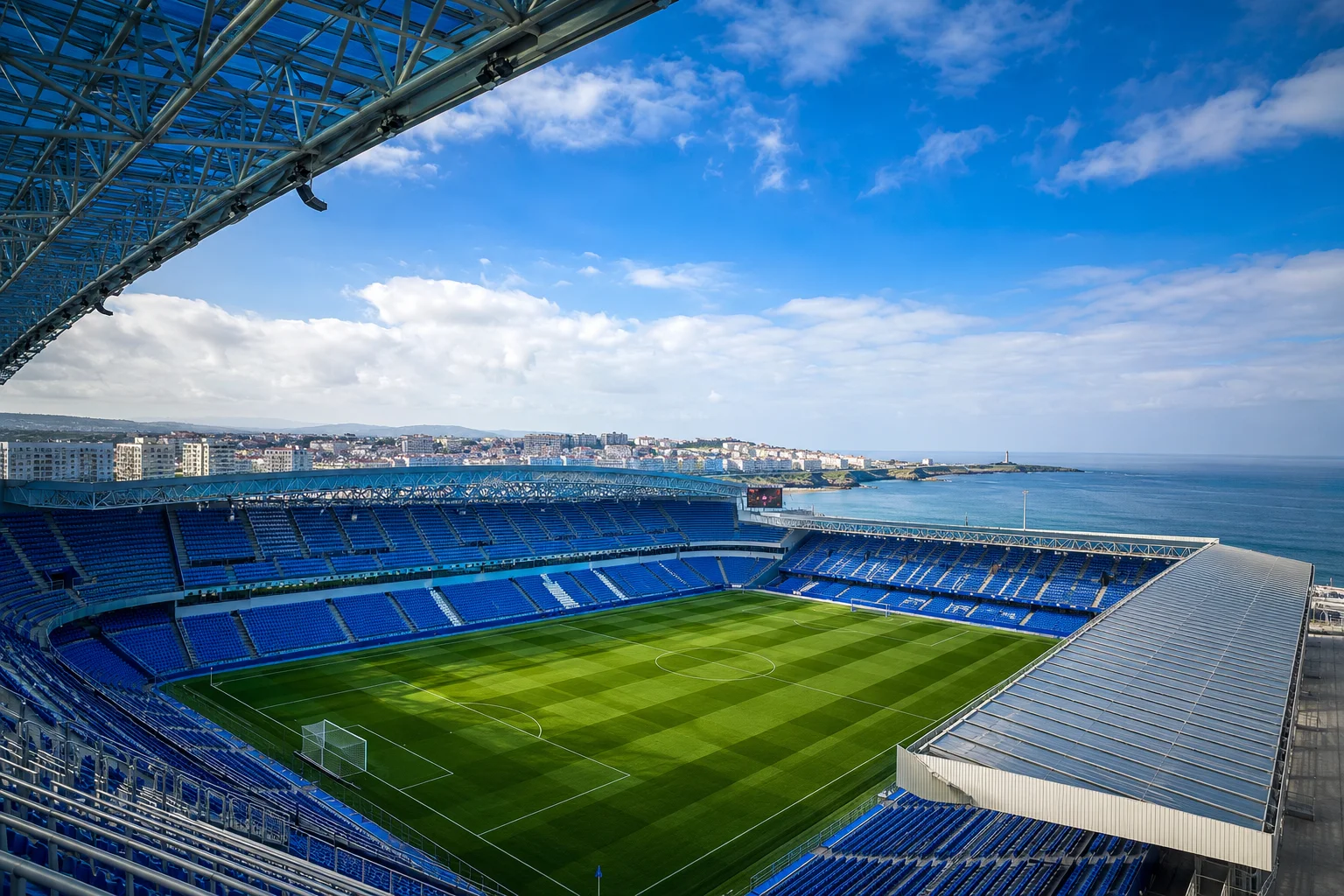
Riazor is back in the top flight for the first time in eight years, and La Liga is better for it. Opened on 28 October 1944 to a design by Santiago Rey Pedreira, the 32,490-seat ground sits directly on the A Coruna seafront, hosted the 1982 World Cup and was the backdrop to Deportivo's title-winning side of 2000. Waves crash within sight of the away end; there is no comparable setting in Spanish football except El Sardinero, and Riazor is the grander of the two.
| Fact | Detail |
|---|---|
| Club | Deportivo de La Coruna |
| Capacity 2026/27 | 32,490 |
| Opened | 28 October 1944 |
| Other names | ABANCA-Riazor (sponsorship) |
| Architect | Santiago Rey Pedreira |
| Last major renovation | Upgrades through the 1990s and 2020s |
| City | A Coruna, Galicia |
A planned 2030 World Cup role fell through when the city withdrew its bid in March 2026 amid funding disputes, which cost the ground the modernisation that would have lifted it several places here. Expect Riazor to be close to its 32,490 limit for most of the season; Depor averaged some of the biggest crowds outside the top flight during their exile.
12. La Rosaleda, Malaga
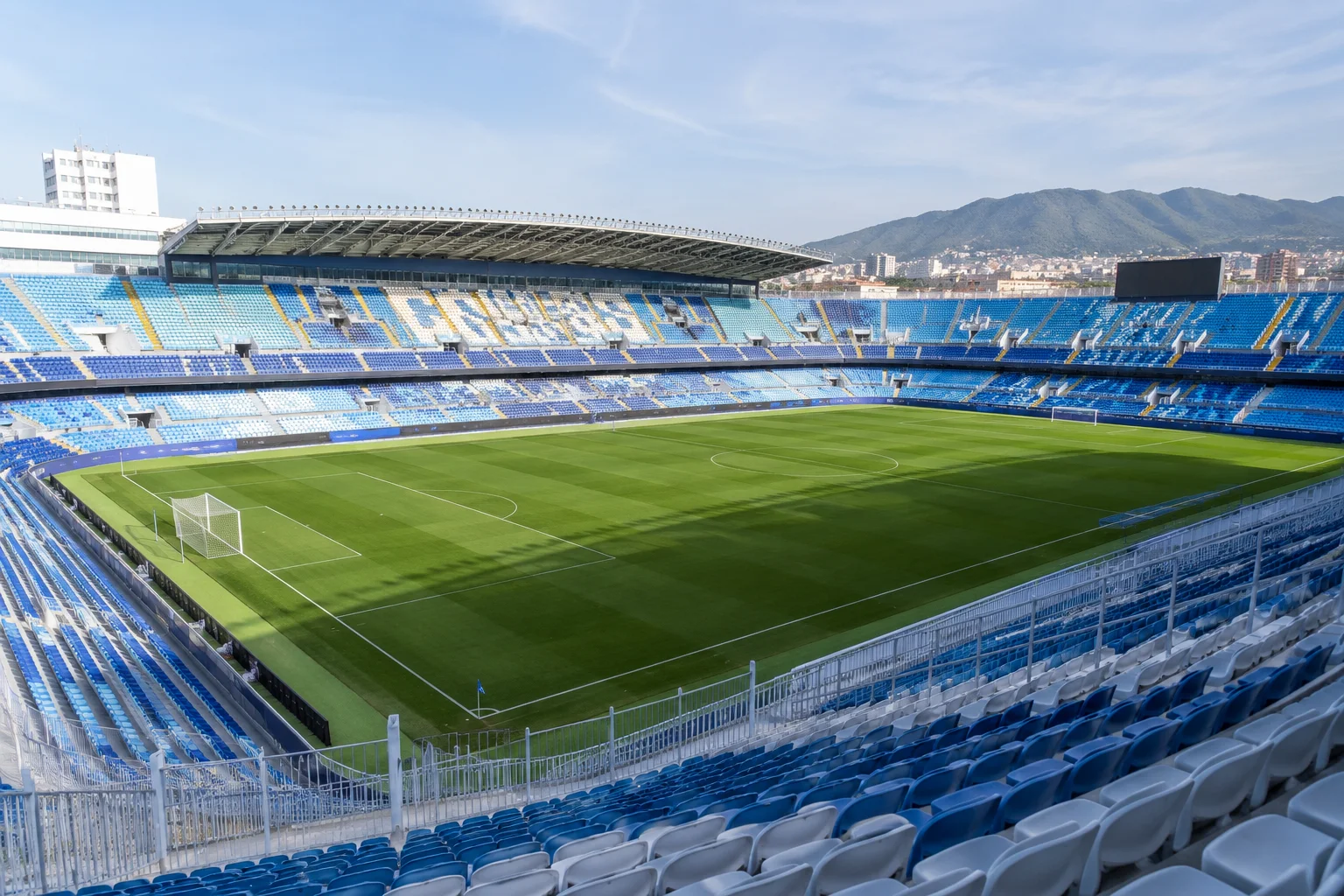
Malaga won promotion through the play-offs, beating Almeria 2-1 on aggregate, and return to the top flight with a ground on the 2030 World Cup's proposed venue list. La Rosaleda opened on 15 September 1941, designed by Enrique Atencia and Fernando Guerrero-Strachan Rosado, holds 30,044 and staged three group matches at the 1982 World Cup. A tournament-driven redevelopment is expected before 2030, which would transform its standing.
| Fact | Detail |
|---|---|
| Club | Malaga CF |
| Capacity 2026/27 | 30,044 |
| Opened | 15 September 1941 |
| Architects | Enrique Atencia and F. Guerrero-Strachan Rosado; 2006 remodel by Jose Segui Perez and Ramon Engel |
| Last major renovation | 2006 |
| 2030 World Cup | On Spain's proposed venue list, final list pending |
| City | Malaga, Andalusia |
The Costa del Sol location makes this the most accessible La Liga away day for UK-based fans, with year-round flights into an airport 15 minutes from the ground. Malaga's support stayed above 25,000 through years in the second and third tiers, so expect the ground close to full for most home fixtures.
11. RCDE Stadium, Espanyol
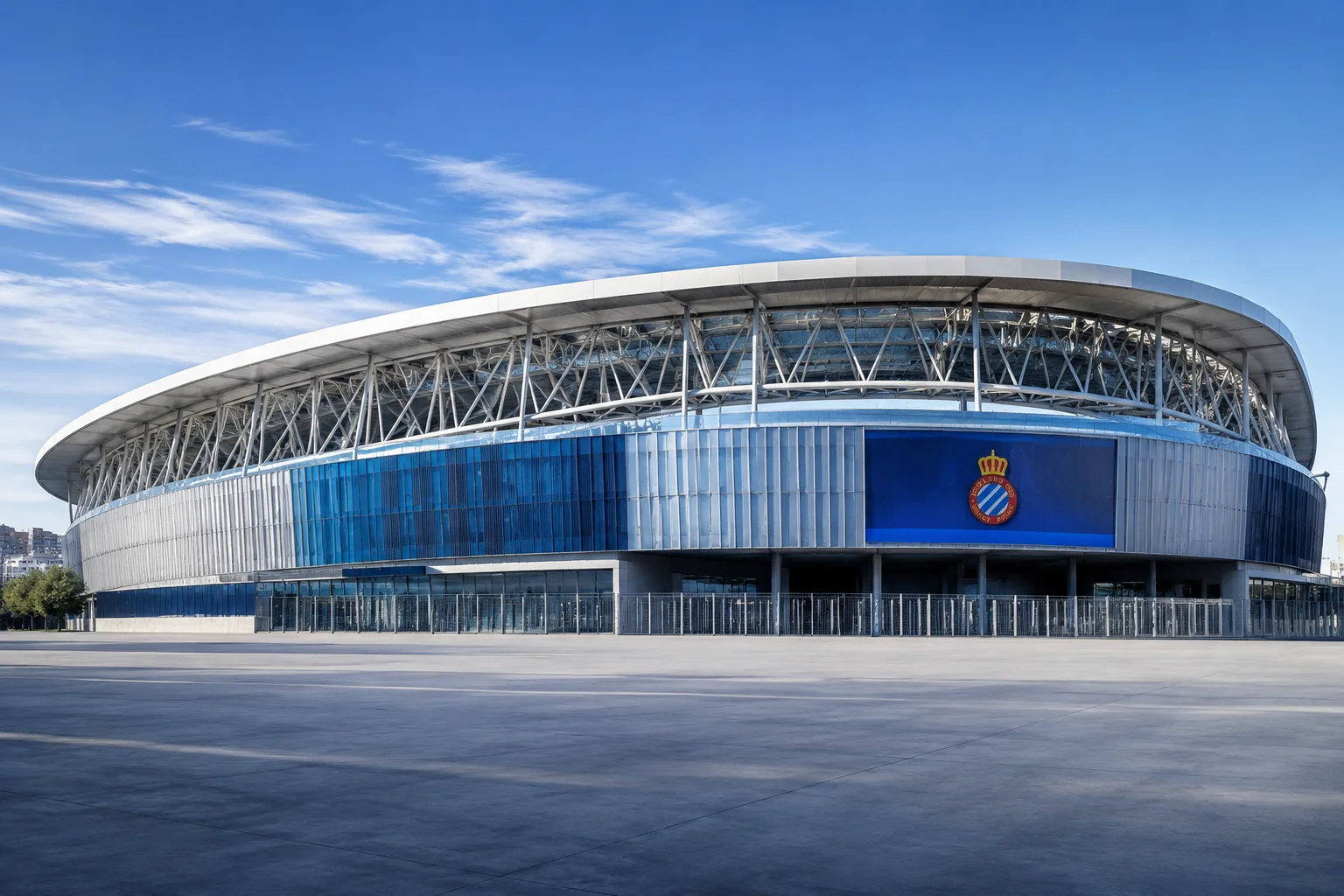
The RCDE Stadium is the most underrated modern ground in Spain. Opened on 2 August 2009 in Cornella de Llobregat, it holds 40,500, was designed by Mark Fenwick and Javier Iribarren of Reid Fenwick Asociados with Esteban Gasulla, and made Spain's proposed 2030 World Cup venue list ahead of several bigger names. Espanyol rarely fill it, which is the honest reason it sits outside the top ten.
| Fact | Detail |
|---|---|
| Club | RCD Espanyol |
| Capacity 2026/27 | 40,500 |
| Opened | 2 August 2009 |
| Other names | Estadi Cornella-El Prat; Stage Front Stadium (sponsorship) |
| Architect | Mark Fenwick and Javier Iribarren (Reid Fenwick Asociados) with Esteban Gasulla |
| 2030 World Cup | On Spain's proposed venue list, final list pending |
| City | Cornella de Llobregat, Catalonia |
For visitors it is a smart buy: modern sightlines, easy access from central Barcelona and prices well below anything at Camp Nou. The derby against Barcelona is the exception, when demand multiplies. The RCDE Stadium guide covers transport from the city centre, and the RCDE Stadium seating plan maps the covered lateral sections.
10. Estadio de la Ceramica, Villarreal
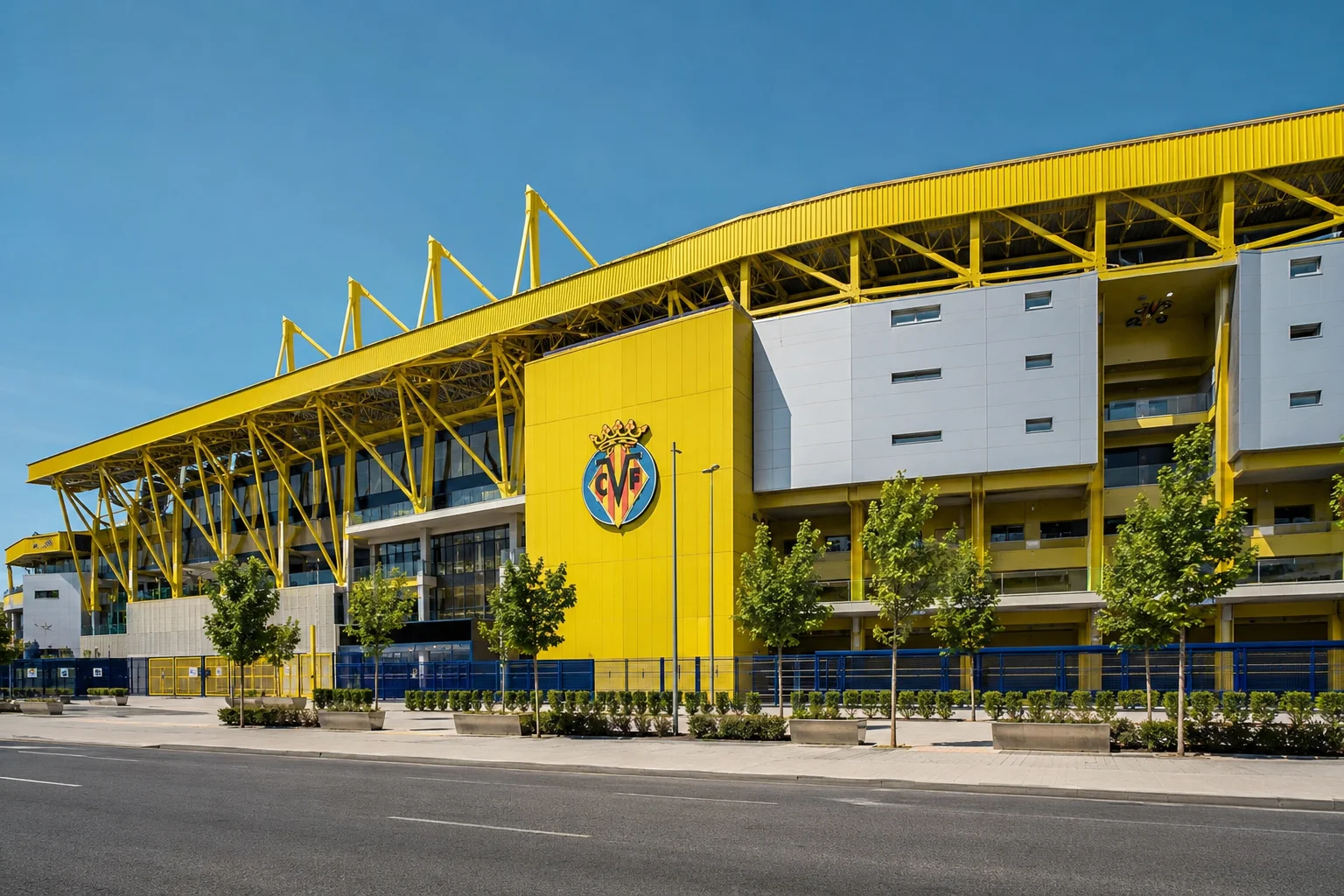
No stadium in Spain punches further above its town's weight. Villarreal has around 50,000 residents and the Estadio de la Ceramica seats 23,500 of them, wrapped since IDOM's 2022 centenary remodel in a fully roofed shell with a facade of local ceramic tiles. The ground opened in 1923 as El Madrigal, and Villarreal have used it to host Champions League football on a regular basis.
| Fact | Detail |
|---|---|
| Club | Villarreal CF |
| Capacity 2026/27 | 23,500 |
| Opened | 1923 |
| Other names | El Madrigal (until 2017) |
| Architect | IDOM (2022 remodel) |
| Last major renovation | 2022 centenary remodel |
| City | Villarreal, Valencian Community |
The remodel added proper hospitality, improved acoustics and one of the sharpest exteriors in the league. Away allocations have been listed at €30, and general pricing remains fair for a Champions League regular. See the Estadio de la Ceramica guide for travel from Valencia and Castellon, plus the La Ceramica seating plan for block-by-block views.
9. Estadio La Cartuja, Real Betis
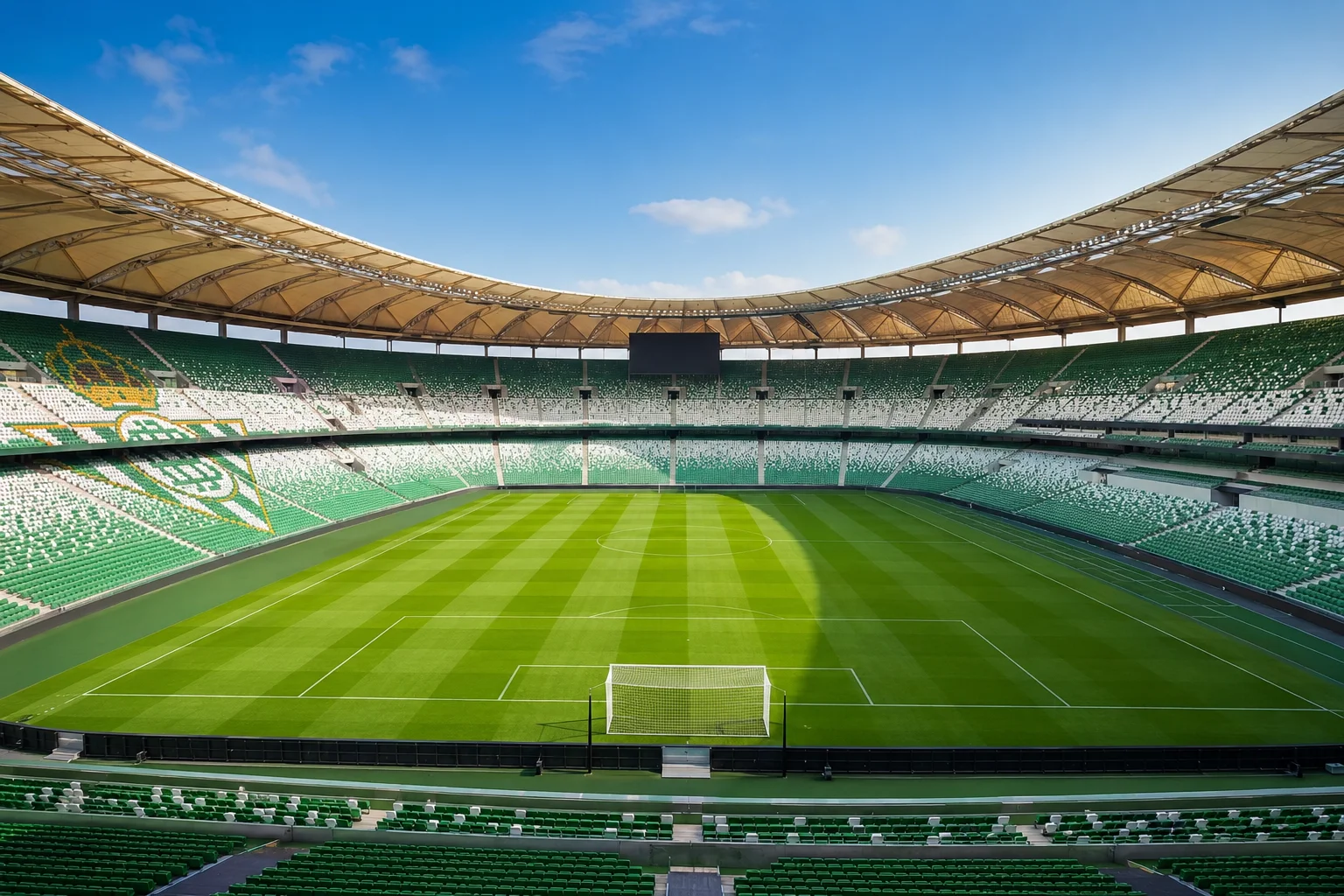
Spain's fourth-largest stadium is, for now, a club ground. Real Betis are playing every home match of 2025/26 and 2026/27 at the 70,000-seat La Cartuja while the Benito Villamarin is rebuilt, with a return pencilled in around August 2027. The 2025 works that removed the athletics track and lowered the pitch by roughly five metres fixed the venue's old distance problem, and Betis's support has scaled to fill it.
| Fact | Detail |
|---|---|
| Club | Real Betis (temporary home) |
| Capacity 2026/27 | 70,000 |
| Opened | 1999 |
| Other names | Estadio Olimpico de Sevilla |
| Architect | Cruz y Ortiz |
| Last major renovation | 2025 expansion, track removed and pitch lowered |
| 2030 World Cup | On Spain's proposed venue list, final list pending |
| City | Seville, Andalusia |
It hosted recent Copa del Rey finals, carries UEFA's top venue rating and is on the proposed 2030 World Cup list, while Betis have added premium products including lounges by the players' tunnel. Season tickets for 2025/26 ranged from about €385 in the upper ends to €1,210 in the central main stand, per the club's published bands. The La Cartuja stadium guide and La Cartuja seating plan cover the reconfigured bowl in detail.
8. El Sadar, Osasuna
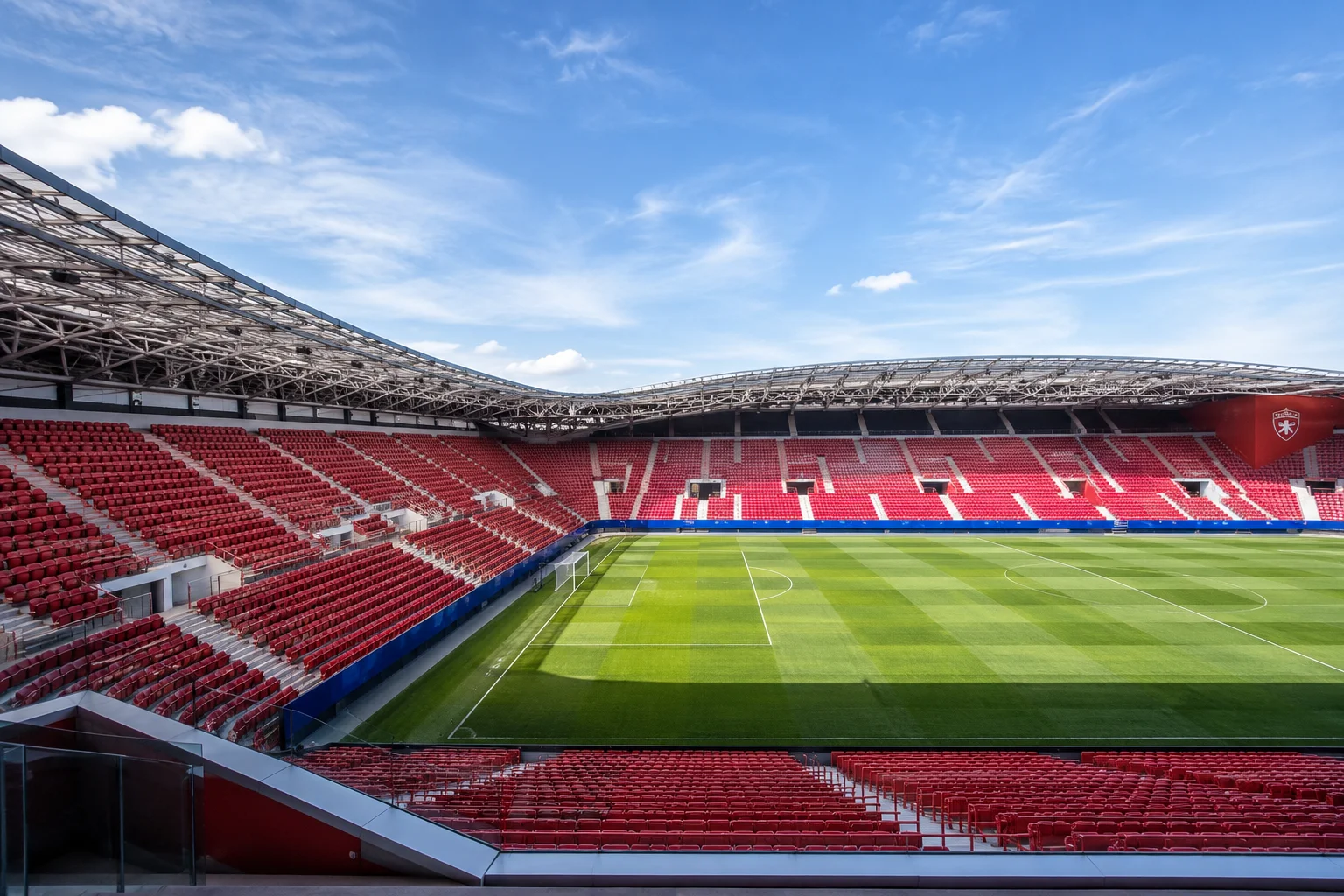
El Sadar is, pound for pound, the loudest ground in Spain. It holds only 23,516 yet won StadiumDB's worldwide Stadium of the Year award in 2021 after a rebuild by OFS Architects with VDR turned Tomas Arraras's 1967 original into a steep, enclosed noise chamber. The "El Sadar effect" is real: Osasuna regularly take points off wealthier clubs in Pamplona, and opposition managers talk about the crowd unprompted.
| Fact | Detail |
|---|---|
| Club | CA Osasuna |
| Capacity 2026/27 | 23,516 |
| Opened | 2 September 1967 |
| Other names | Reyno de Navarra (2005 to 2011) |
| Architect | Tomas Arraras; OFS Architects with VDR (2020/21 rebuild) |
| Last major renovation | 2020 to 2021 |
| City | Pamplona, Navarre |
Pricing is fan-friendly, with single-match tickets historically running about €35 to €80 through the club. Demand outstrips the small capacity for the biggest visits, so plan ahead. The El Sadar stadium guide explains the compact footprint, and the El Sadar seating plan shows how close even the cheapest seats sit to the touchline.
7. Ramon Sanchez-Pizjuan, Sevilla
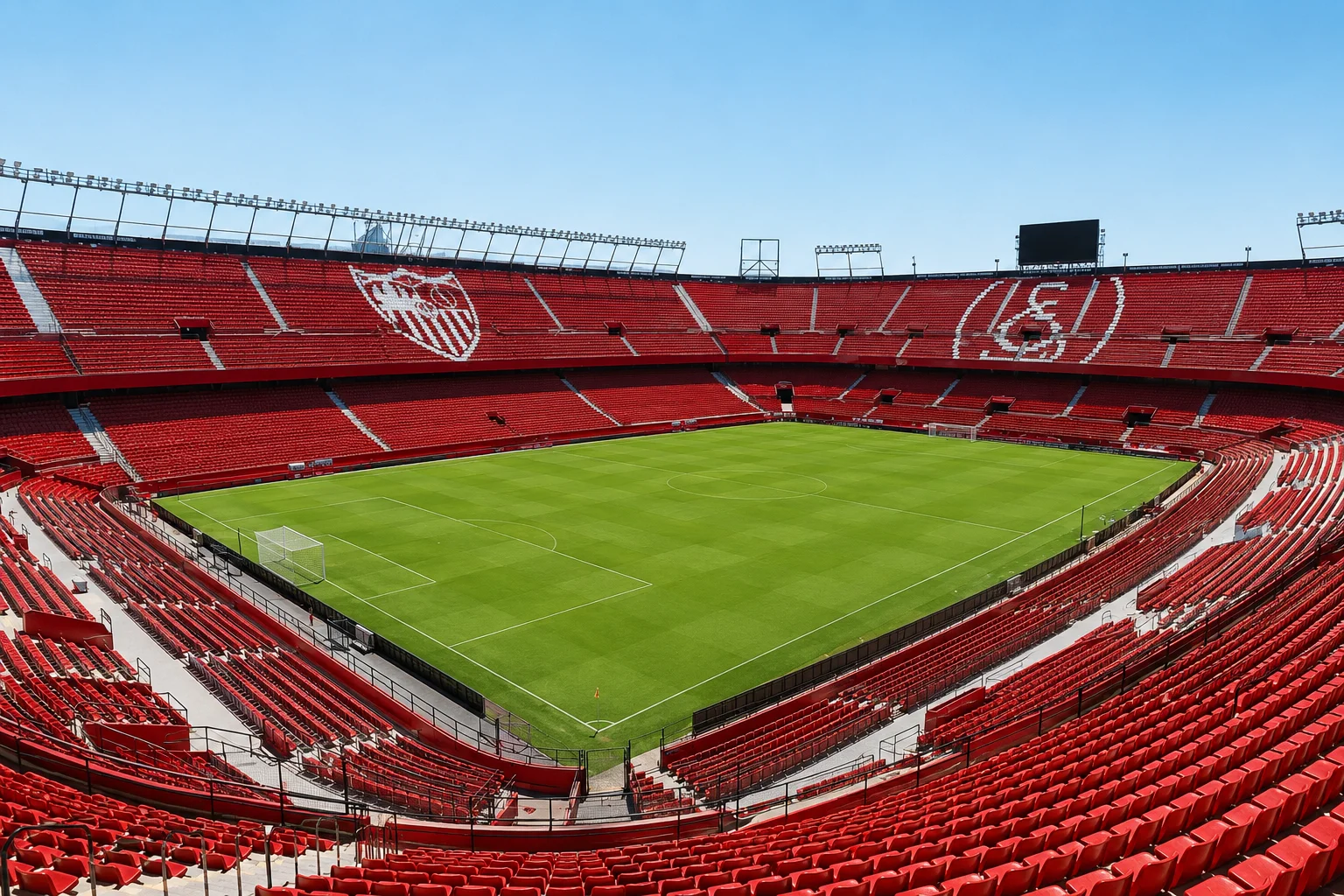
European away sides have feared this ground for decades, and with cause. The Sanchez-Pizjuan, opened on 7 September 1958 to a Manuel Munoz Monasterio design, is where Sevilla built the culture behind a record seven Europa League and UEFA Cup titles. It staged the 1982 World Cup semi-final between France and West Germany and the 1986 European Cup final, and its steep, mosaic-fronted bowl holds 43,883.
| Fact | Detail |
|---|---|
| Club | Sevilla FC |
| Capacity 2026/27 | 43,883 |
| Opened | 7 September 1958 |
| Other names | None; named after the club's long-serving president |
| Architect | Manuel Munoz Monasterio |
| Last major renovation | Phased upgrades; a major rebuild to around 55,000 is planned |
| City | Seville, Andalusia |
A rebuild towards roughly 55,000 seats has been approved in outline, with reports suggesting Sevilla could temporarily join Betis at La Cartuja while it happens, though timing remained unconfirmed as of July 2026. Until then the Pizjuan on a European night is one of football's great sensory experiences. The Sanchez-Pizjuan stadium guide and Sanchez-Pizjuan seating plan break down the four stands.
6. Mestalla, Valencia
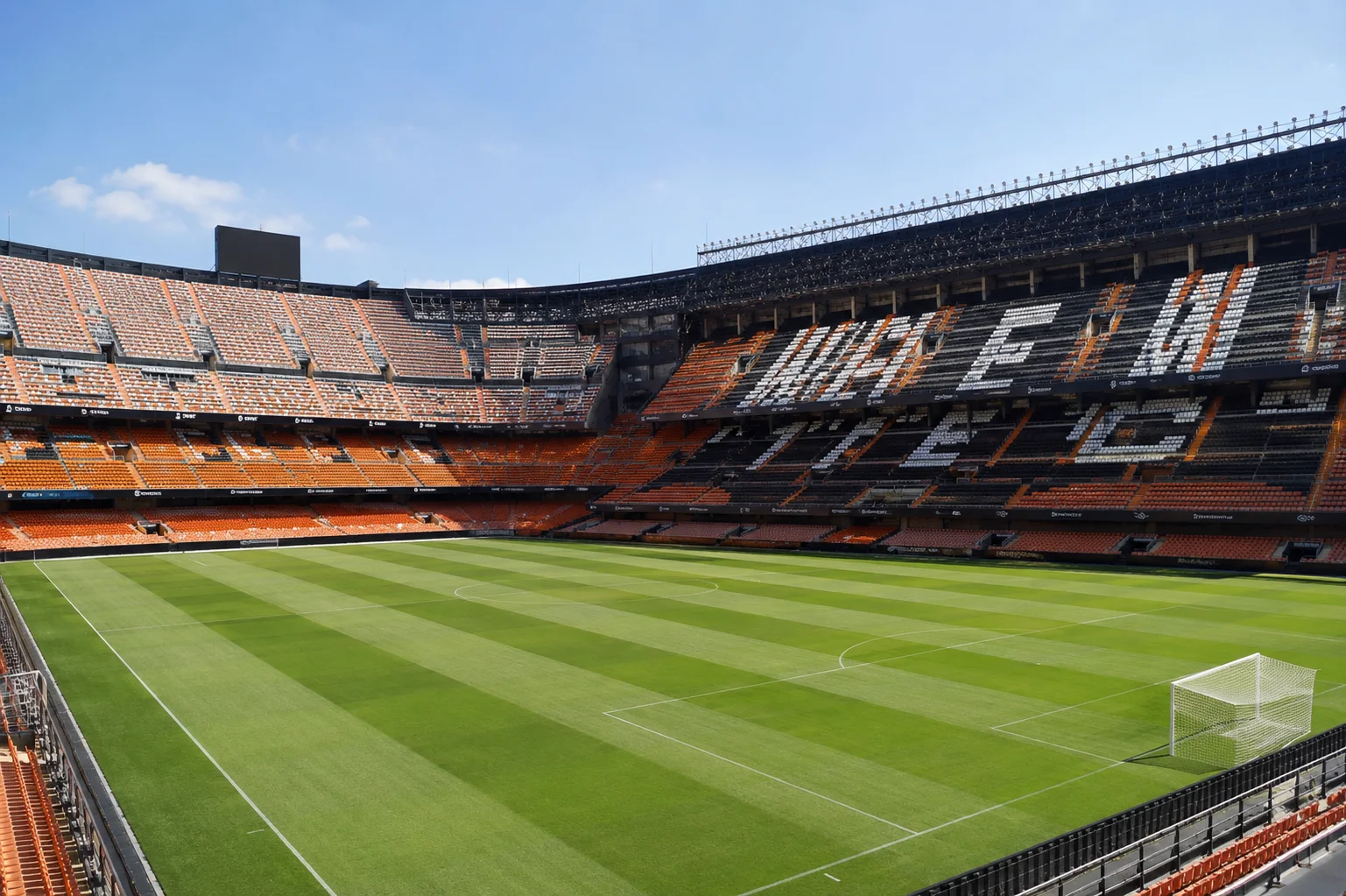
Mestalla is both the oldest ground in La Liga and the steepest. It opened on 20 May 1923, designed by Francisco Almenar Quinza, and its near-vertical stands hang 49,430 fans over the pitch at an angle no modern safety-conscious architect would attempt. Valencia played 1982 World Cup group matches here, including Spain's own, and a century of history soaks the place.
| Fact | Detail |
|---|---|
| Club | Valencia CF |
| Capacity 2026/27 | 49,430 |
| Opened | 20 May 1923 |
| Other names | Estadio Luis Casanova (1969 to 1994) |
| Architect | Francisco Almenar Quinza |
| Last major renovation | Incremental; the unfinished Nou Mestalla is due to replace it |
| City | Valencia |
These are likely its final seasons, with the long-stalled Nou Mestalla finally progressing towards completion, so a visit now carries a last-chance quality. Facilities show their age, which is the only reason a ground this atmospheric is not top five. The Mestalla stadium guide covers the famous curved goal ends, and the Mestalla seating plan helps vertigo sufferers avoid the top of the third tier.
5. Anoeta, Real Sociedad
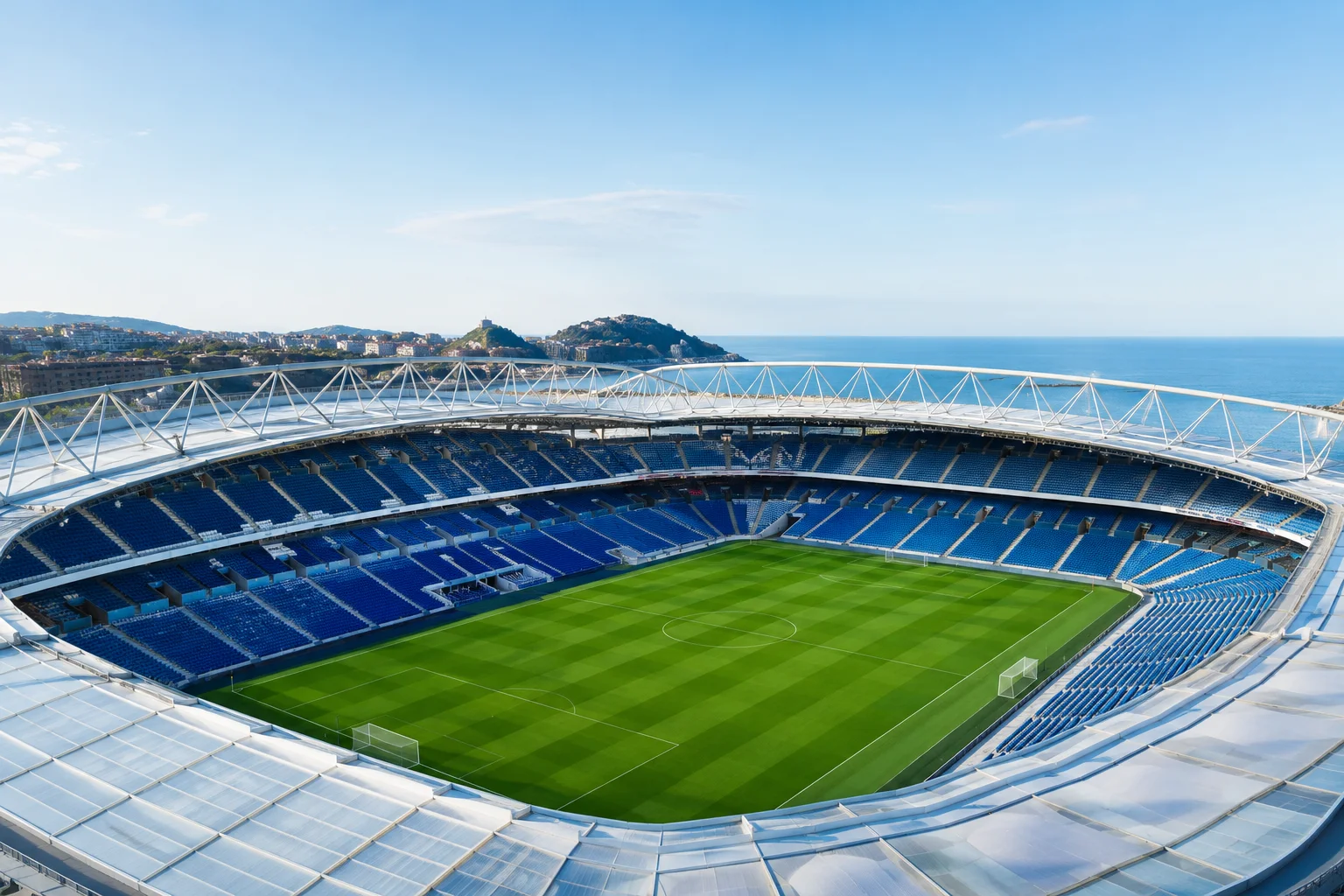
Anoeta is the most successful stadium rebuild in recent Spanish history. It opened in 1993 as an athletics venue that kept fans 40 metres from the action; Basque architect Izaskun Larzabal's 2017 to 2019 reconstruction removed the track, lowered the pitch and wrapped the bowl in a translucent blue ETFE skin. The result won the Prix Versailles for sports architecture in 2020, beating Tottenham Hotspur Stadium, and gave Real Sociedad a 40,000-seat home worthy of San Sebastian.
| Fact | Detail |
|---|---|
| Club | Real Sociedad |
| Capacity 2026/27 | 40,000 |
| Opened | 1993 |
| Other names | Reale Arena (2019 to 2025 sponsorship, now expired) |
| Architect | Izaskun Larzabal (2017 to 2019 rebuild) |
| Last major renovation | 2017 to 2019 |
| City | San Sebastian, Basque Country |
Season-ticket numbers jumped from around 24,000 to more than 38,000 after the rebuild, with a waiting list behind them, which tells you everything about how the ground changed. It is also on Spain's proposed 2030 World Cup list. The Anoeta stadium guide covers access from La Concha, and the Anoeta seating plan maps the steep new goal ends.
4. Riyadh Air Metropolitano, Atletico Madrid
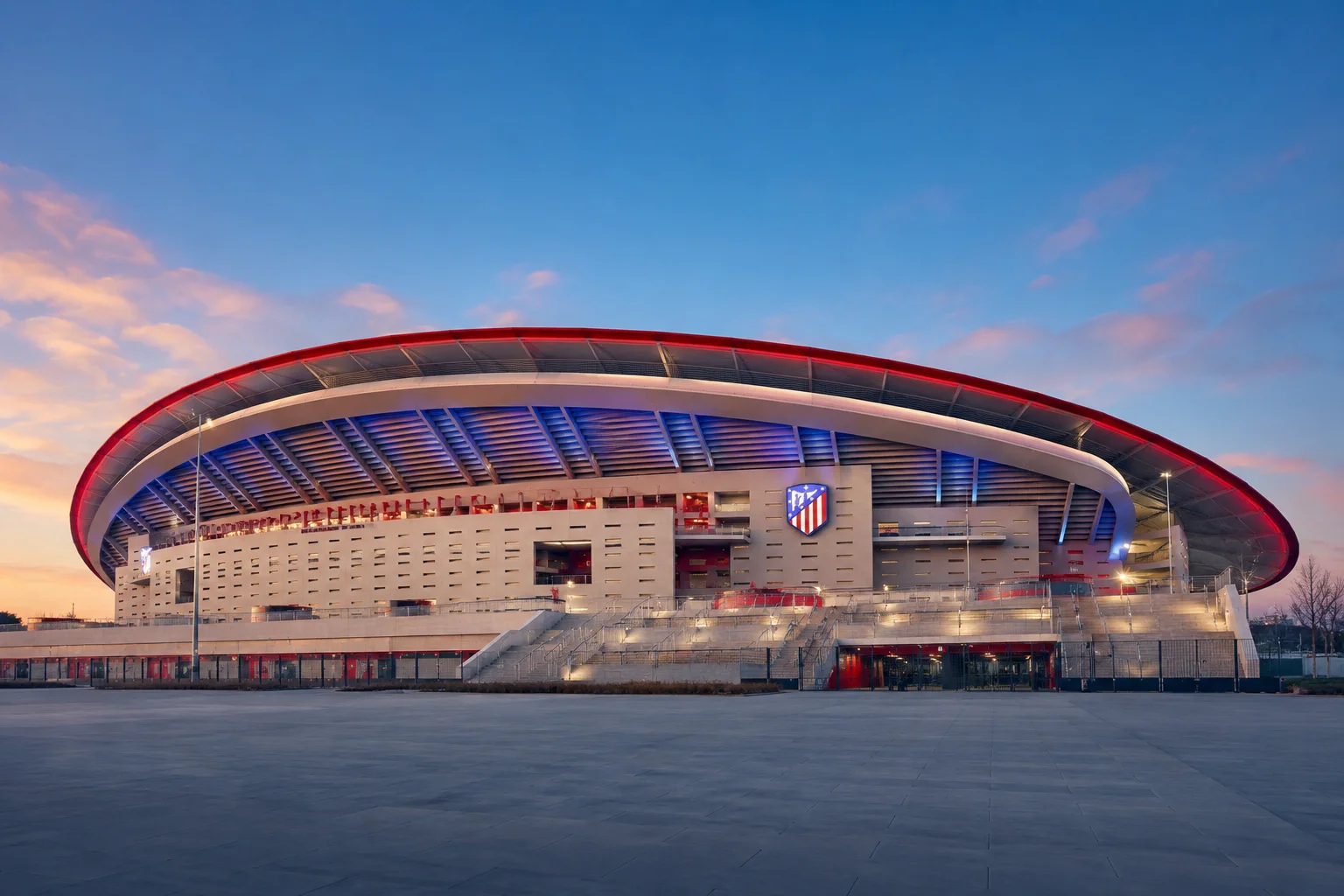
The Metropolitano will host its second Champions League final in June 2027, eight years after its first, which is as clear a statement of quality as European football offers. Atletico Madrid's 70,692-seat home, shaped by Cruz y Ortiz from a 1994 shell and opened in its current form in 2017, covers 96 per cent of its seats under a sweeping ring roof and generates a wall of red-and-white noise at full tilt.
| Fact | Detail |
|---|---|
| Club | Atletico de Madrid |
| Capacity 2026/27 | 70,692 |
| Opened | 1994; reopened as Atletico's home in 2017 |
| Other names | Wanda Metropolitano (2017 to 2022); Civitas Metropolitano (2022 to 2024) |
| Architect | Cruz y Ortiz |
| Last major renovation | 2017 conversion; renamed Riyadh Air Metropolitano in October 2024 |
| 2030 World Cup | On Spain's proposed venue list, final list pending |
| City | Madrid |
The nine-year Riyadh Air naming deal runs to 2033, and the venue doubles as one of Europe's busiest concert stadiums. Hospitality and sightlines are first-rate throughout, with no bad seat in the upper tier. The Metropolitano stadium guide covers the eastern Madrid location, and the Metropolitano seating plan shows where the Frente Atletico generate the din.
3. Spotify Camp Nou, Barcelona
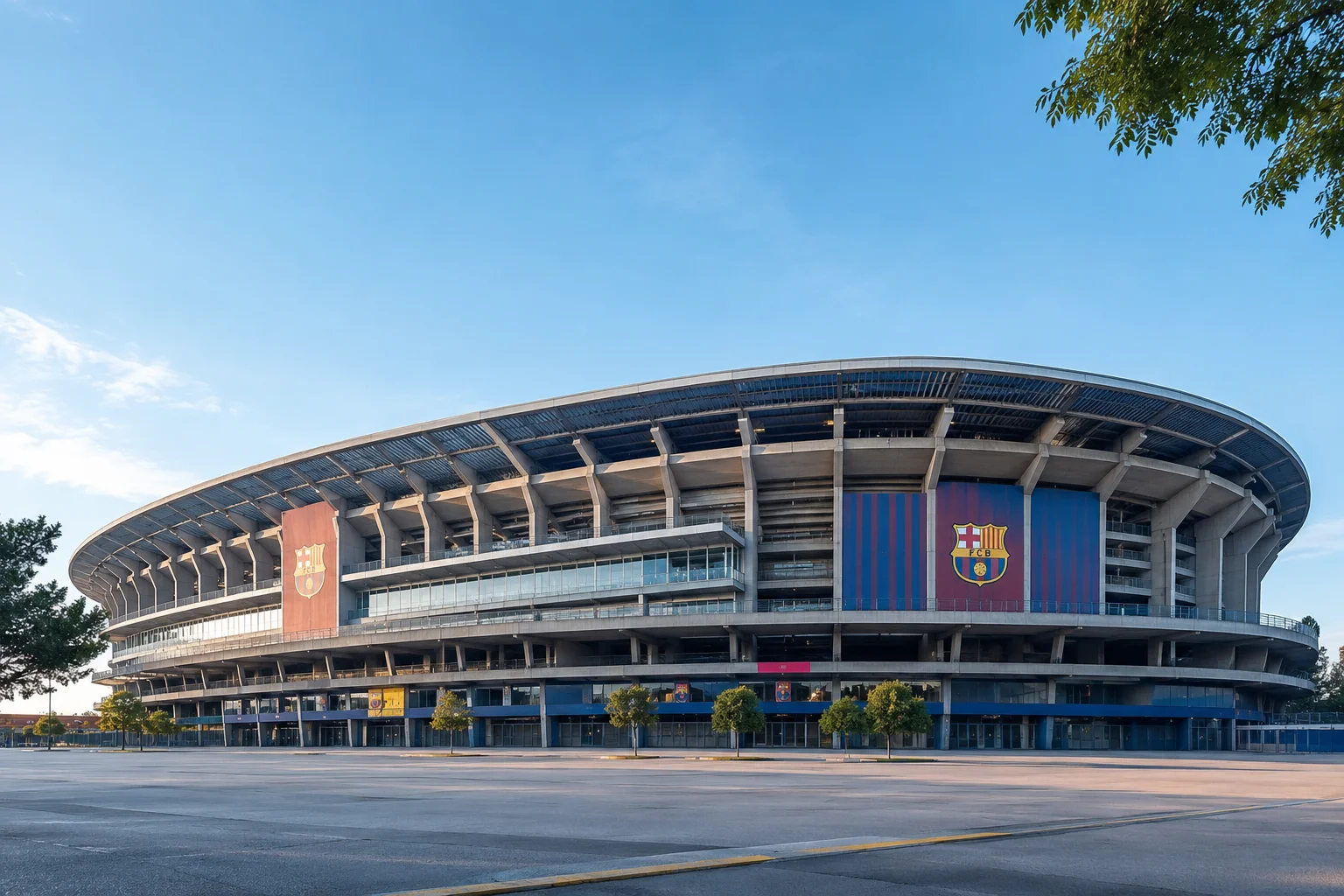
Third place will look strange next to the most famous club ground on earth, so here is the reasoning: Camp Nou is magnificent and unfinished. Barcelona returned home on 22 November 2025 with a 4-0 win over Athletic Club after two seasons at Montjuic, but the Espai Barca rebuild is still in phases, current capacity stands at 62,652 after the North Goal opened, and the roof is not due until summer 2027, per AFP reporting. Judged as a 2026/27 matchday, it trails the two grounds above it.
| Fact | Detail |
|---|---|
| Club | FC Barcelona |
| Capacity 2026/27 | 62,652 current, rising in phases towards roughly 105,000 |
| Opened | 24 September 1957 |
| Other names | Camp Nou; Spotify Camp Nou since 2022 |
| Architect | Francesc Mitjans; remodel led by Nikken Sekkei |
| Last major renovation | Espai Barca rebuild, ongoing, roof due summer 2027 |
| 2030 World Cup | On Spain's proposed venue list, final list pending |
| City | Barcelona, Catalonia |
Once complete it will be Europe's largest stadium and an automatic contender for the 2030 World Cup final, and Barcelona enter 2026/27 as three-time defending champions, so the football matches the setting. Every seat is being replaced and new hospitality tiers added. The Spotify Camp Nou stadium guide tracks which sections are open, and the Camp Nou seating plan is essential reading while the bowl changes shape between months.
2. San Mames, Athletic Bilbao

No stadium in Spain is used better. San Mames recorded the highest occupancy in La Liga at over 90 per cent of seats filled, per StadiumDB's league-wide analysis, edging even the Bernabeu, and Athletic Club's Basque-only squad gives every home game an identity money cannot buy. Cesar Azcarate's €211 million design for IDOM opened in 2013, won World Architecture Festival's sports building award in 2015 and earned the nickname La Catedral's modern succession honestly.
| Fact | Detail |
|---|---|
| Club | Athletic Club |
| Capacity 2026/27 | 53,331 |
| Opened | 16 September 2013 |
| Other names | La Catedral, inherited from the 1913 original |
| Architect | Cesar Azcarate (IDOM) |
| Signature feature | Illuminated mesh facade that shifts colour at night |
| 2030 World Cup | On Spain's proposed venue list, final list pending |
| City | Bilbao, Basque Country |
The glowing facade has become Bilbao's night-time landmark, the ground hosted the 2024 Women's Champions League final and the 2026 European rugby finals, and it remains on the proposed 2030 World Cup list. Atmosphere, architecture and occupancy together put it above Camp Nou this season. The San Mames stadium guide covers the riverside setting, and the San Mames seating plan shows the singing sections behind the south goal.
1. Santiago Bernabeu, Real Madrid
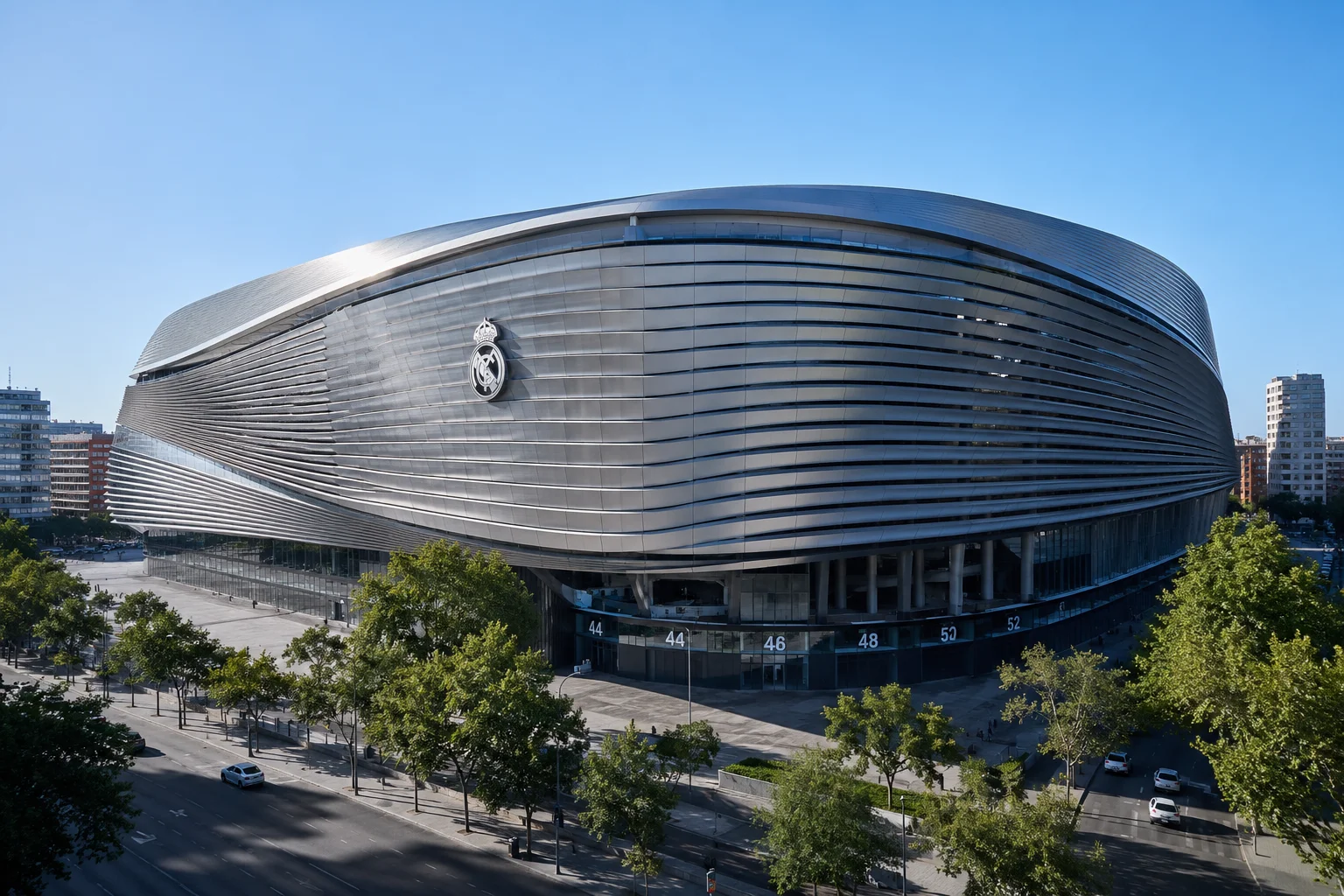
Real Madrid's 2019 to 2024 rebuild wrapped the 1947 original in a stainless-steel skin and fitted it with a retractable roof, a 360-degree interior screen and a pitch that retracts into underground trays, and no other football venue on earth currently matches the package. The club does not publish an exact capacity; estimates run from 78,000 to 85,000, with 83,186 the most commonly cited figure, per MeetStadium.
| Fact | Detail |
|---|---|
| Club | Real Madrid CF |
| Capacity 2026/27 | Around 83,000; estimates range 78,000 to 85,000 |
| Opened | 14 December 1947 |
| Other names | Nuevo Chamartin (early years) |
| Architect | Manuel Munoz Monasterio and Luis Alemany Soler; remodel by L35, GMP Architekten and Ribas & Ribas |
| Last major renovation | 2019 to 2024 |
| 2030 World Cup | On Spain's proposed venue list and a leading contender for the final |
| City | Madrid |
History settles any remaining argument: four European Cup finals, the 1982 World Cup final and the Euro 1964 final were decided here, Real Madrid averaged 71,549 in 2025/26, the highest in the league per FootyStats, and the venue staged the first NFL regular-season game in Spain in November 2025. Expect it front and centre when the 2030 World Cup venues are ratified. The Santiago Bernabeu stadium guide covers the Chamartin district and tour, and the Bernabeu seating plan breaks down all four redeveloped stands.
FAQs
1. What is the biggest football stadium in Spain right now?
-
With Camp Nou capped at 62,652 during construction, the Santiago Bernabeu's roughly 83,000 seats make it the largest operational football ground in Spain, until Camp Nou reclaims top spot at around 105,000 on completion.
2. Do any La Liga clubs share a stadium in 2026/27?
-
No, though Sevilla could join Real Betis at La Cartuja if the planned Sanchez-Pizjuan rebuild begins during the season.
3. Which promoted clubs bring new grounds to La Liga this season?
-
Racing Santander's El Sardinero, Deportivo's Riazor and Malaga's La Rosaleda all return, replacing the grounds of relegated Real Oviedo, Girona and Mallorca.
4. Can you visit these stadiums without a match ticket?
-
Most run daily tours, with the Bernabeu Tour and the Spotify Camp Nou Experience the two most visited stadium museums in Spain.
5. How much does a La Liga match ticket usually cost?
-
As of July 2026 marketplace averages sit around €100 to €140 for standard fixtures, with smaller clubs cheaper through club channels and marquee matches such as El Clasico commanding several times more.
Whichever ground you choose, 1BoxOffice has stocked La Liga fixtures since 2006, and every purchase is covered by a 150% money-back guarantee.
Sources: La Liga, Real Madrid CF, FC Barcelona, Athletic Club, Real Betis Balompie, CA Osasuna, Elche CF, Getafe CF, StadiumDB, MeetStadium, Inside World Football, FootyStats, AFP and Wikipedia.