In this guide
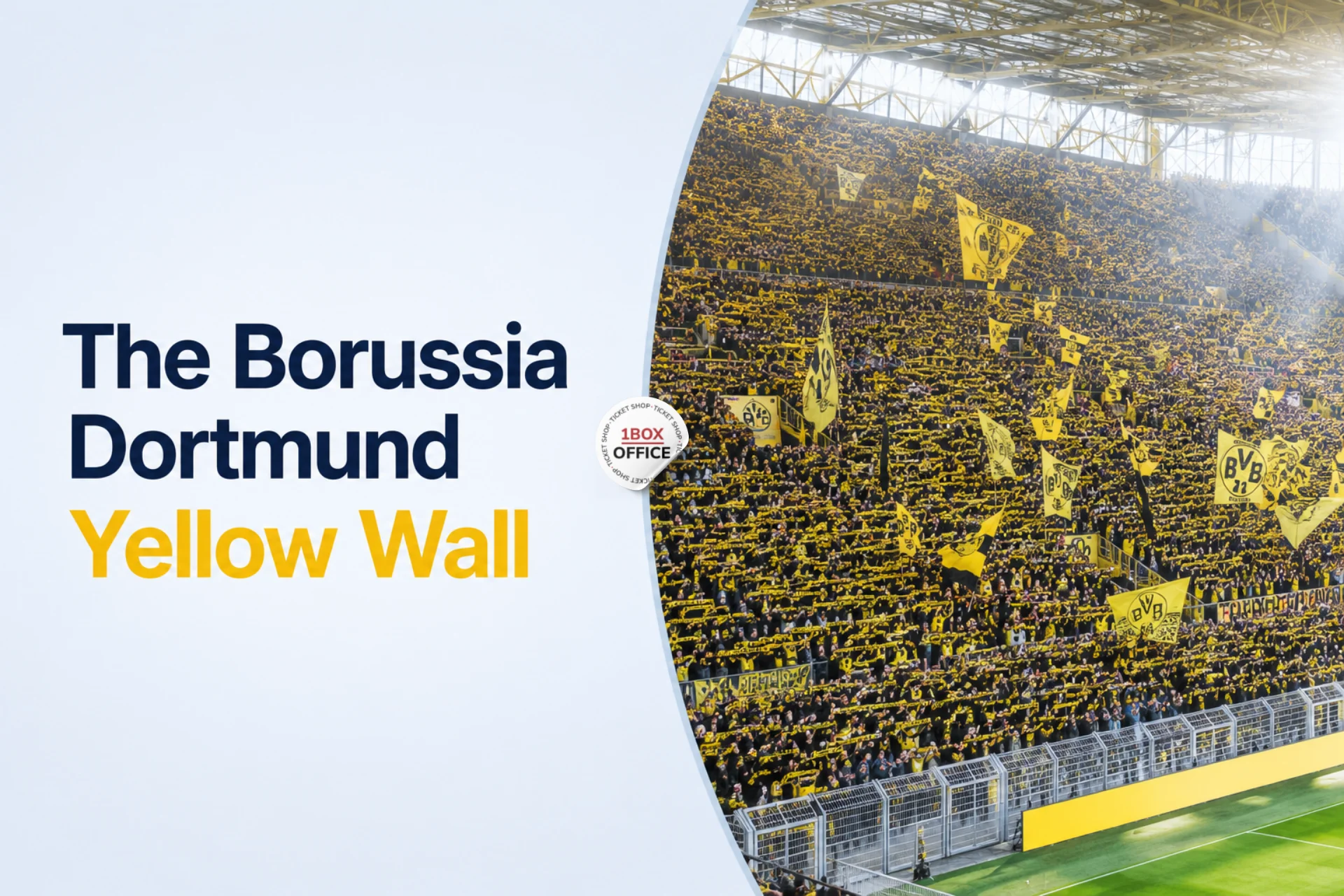
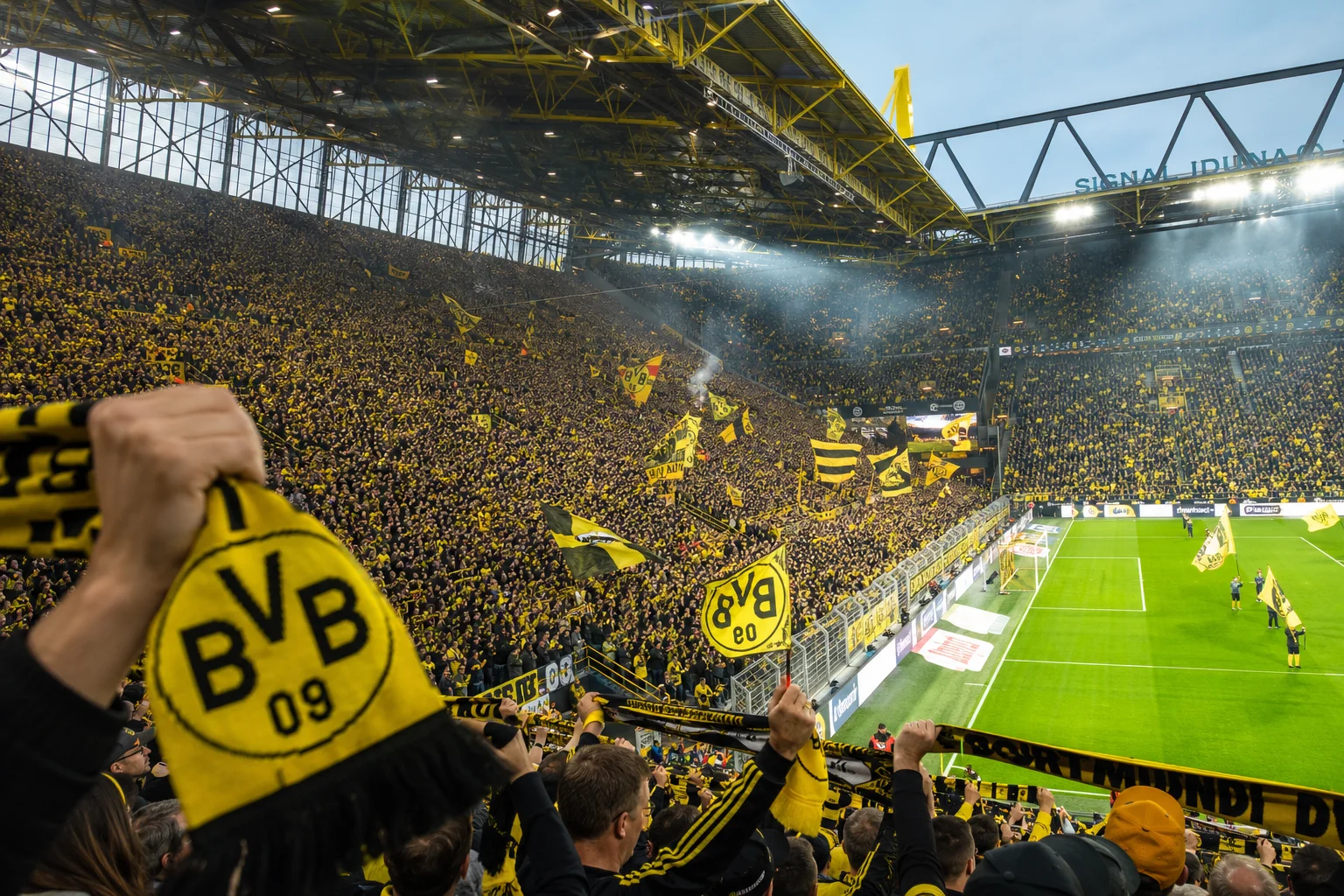
One stand the size of a small townA terrace built in concrete and crisisThe Malaga night and the tifo traditionWhy it disappears on European nightsGetting in: the honest versionFAQsStand at pitch level in Signal Iduna Park and look south, and you are facing 24,454 people on a single slab of terracing that rises 40 metres above you. The Borussia Dortmund Yellow Wall is the largest standing terrace in European football, and no photograph does the scale of it justice. It is longer than the pitch itself and taller than a ten-storey building.
The terrace is a big part of why Borussia Dortmund tickets are among the hardest to source in Germany. The club draws the highest average attendance in European football, filling 81,365 places for Bundesliga matches, and demand for the standing end outstrips supply many times over.
One stand the size of a small town
The Südtribüne, to give the south stand its proper name, measures roughly 100 metres across and 40 metres high. It is a single uninterrupted tier, which is what makes it feel like a wall rather than a stand. There are no balconies or executive boxes to break the mass of yellow and black, just one unbroken bank of people from the pitchside hoardings to the roof.
Capacity on the terrace is 24,454, a figure the club itself publishes. For context, that one stand holds more people than the entire stadiums of several Bundesliga clubs. When it moves together, opposing goalkeepers have described the effect as physically intimidating, and Dortmund players past and present talk about it as an extra man.
A terrace built in concrete and crisis
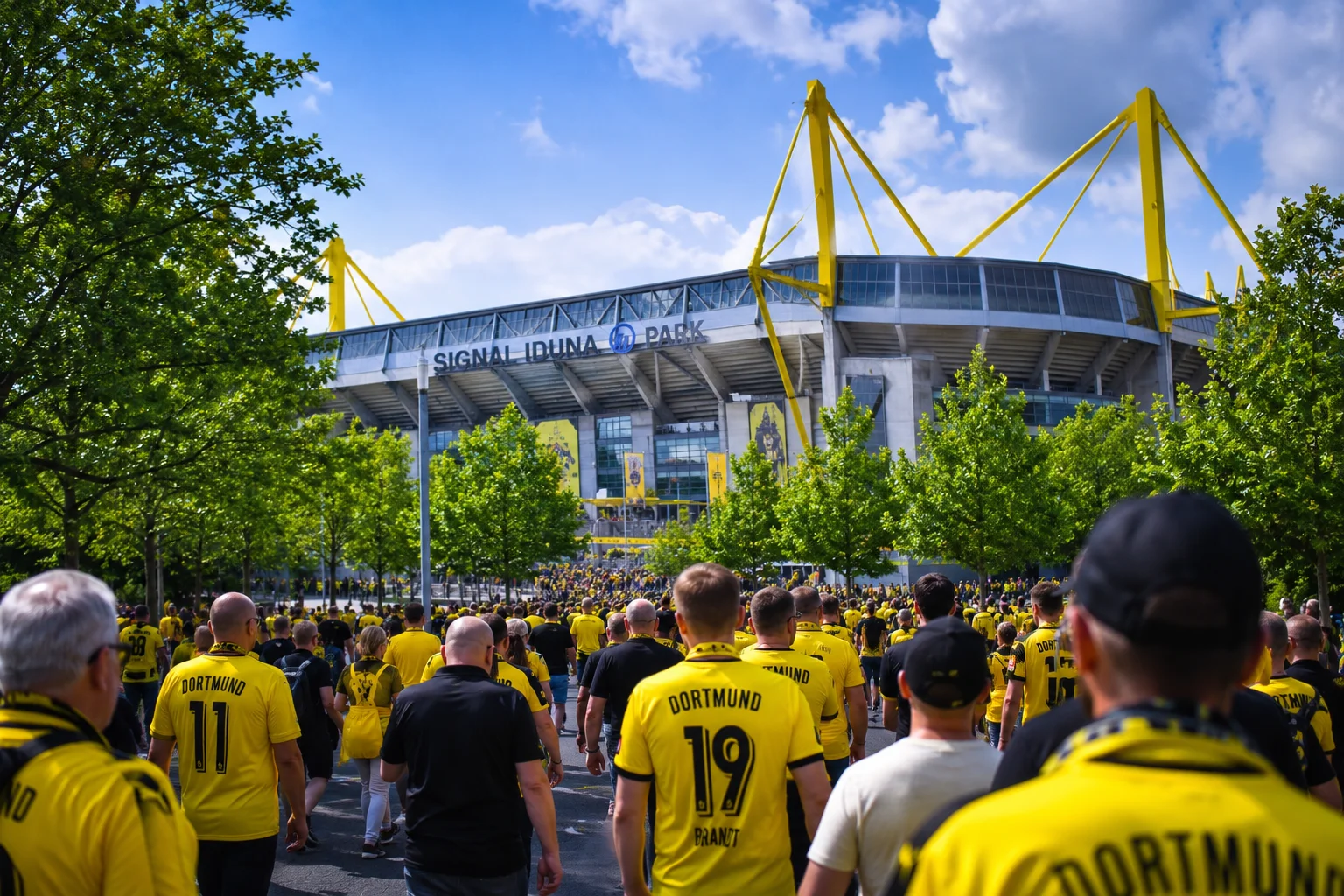
The stadium went up for the 1974 World Cup as the Westfalenstadion, a name most locals still use even though naming rights have belonged to insurer Signal Iduna since 2005. The south stand originally held around 12,000 and was doubled in size after Dortmund won the Champions League in 1997, part of the expansion programme that eventually pushed the ground past 80,000.
That expansion nearly broke the club. By early 2005 Dortmund were close to insolvency, and it was during that crisis, at a home match against Hansa Rostock in May 2005, that supporters on the Südtribüne raised a giant banner reading "Gelbe Wand Dortmund". The name stuck. What began as an act of defiance from fans refusing to let their club die became the most famous nickname in German football, and a fixture of Bundesliga matchdays ever since.
The Malaga night and the tifo tradition
The Yellow Wall's reputation rests on nights like 9 April 2013. Trailing Malaga 2-1 in stoppage time of a Champions League quarter-final, Dortmund scored twice in injury time through Marco Reus and Felipe Santana to reach the semi-finals. Players later said the noise from the south end in those final minutes dragged the comeback out of them. Mats Hummels called it impossible to grasp unless you were there.
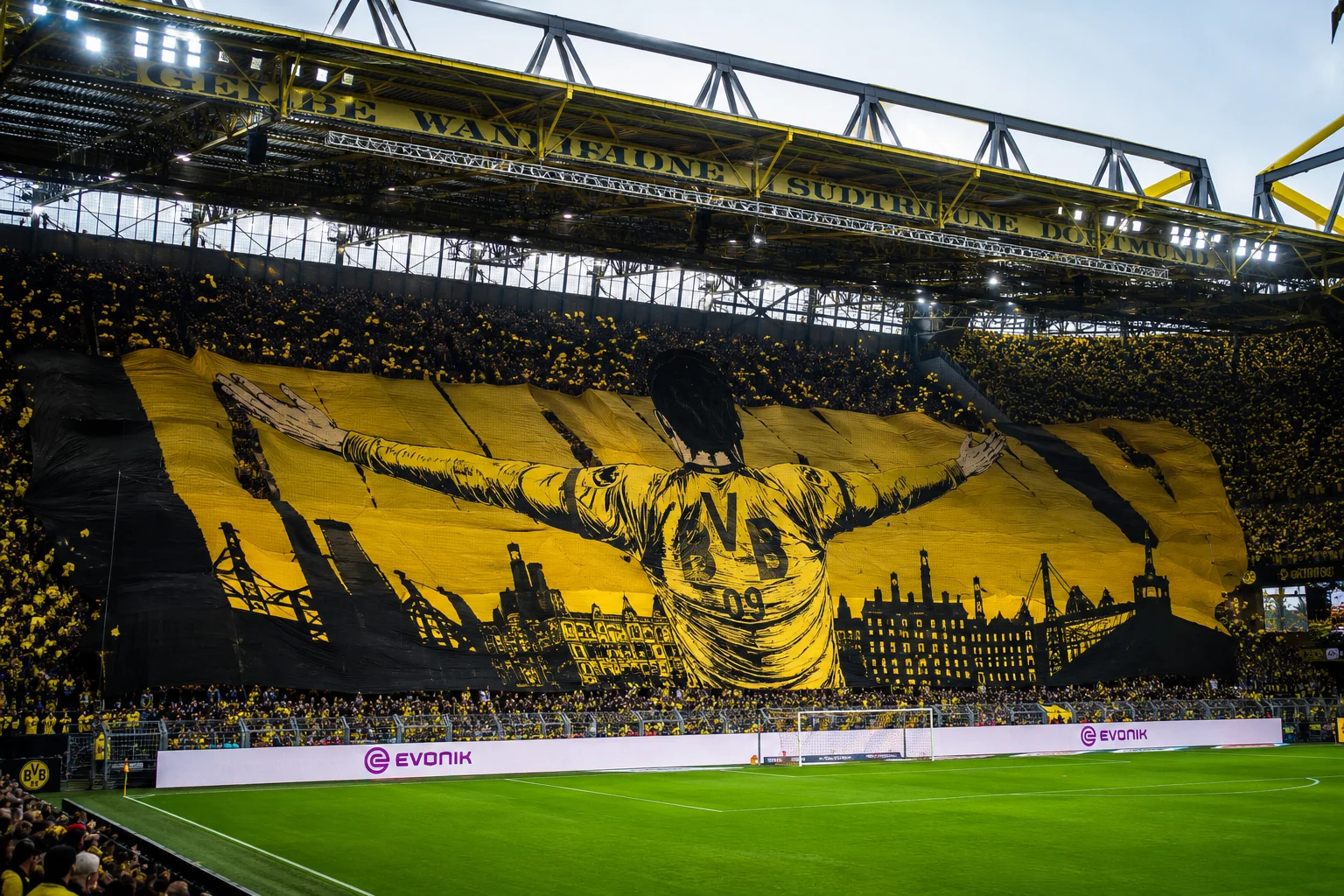
The terrace is also Europe's biggest canvas. Its tifo displays, from the binoculars-and-trophy artwork before that Malaga tie to the farewell choreography for Jürgen Klopp, are planned for months and revealed in seconds. Before every home game the whole stadium sings You'll Never Walk Alone, a tradition Dortmund share with Liverpool, and the sound peaks on the south terrace.
WhatsApp channel
Sports news straight to your phone
Match updates, on-sale dates and ticket news from 1BoxOffice.
Why it disappears on European nights
UEFA competition rules require all-seated stadiums, so for Champions League matches the terrace is converted with rail seating and total capacity drops to 66,099. The atmosphere survives the conversion, but purists will tell you the Yellow Wall in its true form only exists on domestic matchdays. If you want to see the terrace as a terrace, a Bundesliga fixture is the one to target.
The fiercest of those is the Revierderby against Schalke 04, though with Schalke outside the top flight in recent seasons, the meeting with Bayern Munich, Der Klassiker, has carried the biggest billing. Dortmund finished second to Bayern in the 2025/26 Bundesliga under Niko Kovač, which sets up the 2026/27 meetings as genuine title fixtures.
Getting in: the honest version
Standing places on the Südtribüne are dominated by season ticket holders who renew year after year, so walk-up availability is close to nil. Most international visitors watch from the seated stands, where the view of the Yellow Wall opposite is arguably better than being inside it. Tickets for high-demand fixtures sell out through the club quickly, which is where the resale market comes in.
FAQs
1. What does Die Gelbe Wand mean in English?
-
It is German for the Yellow Wall, the nickname supporters gave the Südtribüne at Signal Iduna Park.
2. Where do away fans sit at Signal Iduna Park?
-
Visiting supporters are housed in a central section of the north stand, with allocations usually between 2,000 and 3,000 tickets.
3. Is Signal Iduna Park the same stadium as the Westfalenstadion?
-
Yes, Westfalenstadion is the ground's traditional name and Signal Iduna Park is the sponsored name it has carried since 2005.
4. Are stadium tours available on non-match days?
-
Yes, the club runs guided tours that let visitors stand on the empty south terrace and visit the Borusseum club museum.
5. Which stand has the best view of the terrace itself?
-
Seats in the north stand face the terrace directly, so they offer the clearest view of the choreography and flags.
If a Dortmund matchday is on your list, 1BoxOffice has traded football tickets since 2006 and backs every order with a 150% money-back guarantee, so a sold-out fixture at Signal Iduna Park is not the end of the road.
Sources: BVB, Bundesliga.com, Football Ground Guide, nss sports. 1BoxOffice is not the official ticket agent of any club, league or federation.