In this guide
What the gridiron conversion does to the lowest seatsWhy height beats being closeThe category trap: closest is not the same as bestWhere to sit, venue by venueSummer heat changes the calculationAn American football field is 53.3 yards wide. A World Cup pitch is 68 metres, close to 20 yards wider. That gap is the main reason the front row can be the wrong buy, and why the best seats at World Cup 2026 are rarely nearest the grass.
Plenty of buyers assume closest equals best and pay a premium for pitch-side. For World Cup 2026 tickets, that instinct can cost you money and a clear view. The seats that let you read a match sit higher and level with halfway, not the front rows.
What the gridiron conversion does to the lowest seats
Each ground must fit a 105m by 68m pitch, plus two metres of run-off a side, into a footprint built for the NFL, so the corners and front rows give way. MetLife Stadium in New Jersey, host of the Final on 19 July, pulled 1,740 lower-corner seats for demountable sections. SoFi Stadium in Los Angeles lost about 100 per corner, Arrowhead in Kansas City around 3,500. At AT&T in Arlington, crews raised the pitch about two feet and cut corner suites for corner kicks.
Clearing the wider pitch leaves the lowest rows further from the touchline than in a purpose-built ground, behind run-off, hoardings and cameras. You pay for proximity and get a flat, partly blocked angle.
Why height beats being close
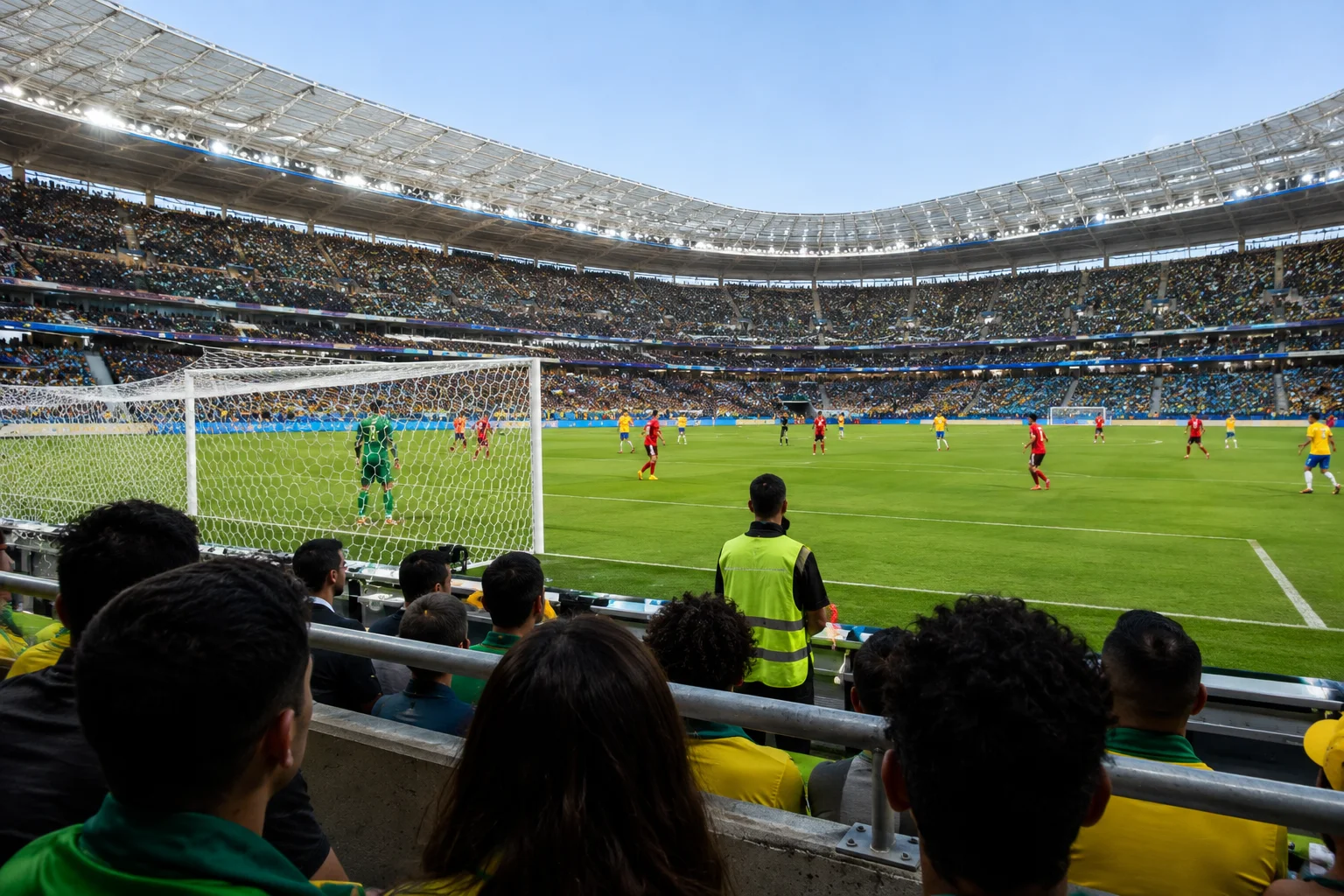
Football is spread across the pitch, so you want the angle that shows shape: passing lanes, runs off the ball and the gap between the lines. From a low seat, the far touchline foreshortens, depth drops, and the nearest players and substitutes block the bottom third in front of you.
Sit too low and you tend to lose:
- The far side, which flattens into a shallow strip.
- The defensive shape, invisible between the lines at pitch level.
- Anything behind a throw-in or substitution on your touchline.
- The flight of a long ball, which a higher angle tracks easily.
The rule experienced fans land on: side-on, near halfway, roughly 10 to 25 rows up, or the front of the second tier. The MetLife seating plan shows the tiers; behind the goal is for atmosphere, not reading the game.
The category trap: closest is not the same as best
For 2026, the four ticket categories are priced by how high the seat sits, not where it falls along the pitch. Lower tiers cost more even when their angle is worse, reversing past tournaments.
Organisers went further. Dearer Front Category zones were carved from the closest rows, and earlier buyers moved further back or behind the goal. In late May 2026, the attorneys general of New York, New Jersey and California opened inquiries, with the three main categories reporting an average of 34% across most of the 104 matches. A low Category 1 seat can now be the dearest and worst-angled at once.
WhatsApp channel
Sports news straight to your phone
Match updates, on-sale dates and ticket news from 1BoxOffice.
Where to sit, venue by venue
The right call shifts by ground, set by the roof, the climate and the conversion. A starting point for the main hosts:
| Stadium | Roof and climate | Best football view | Watch-out |
|---|---|---|---|
| MetLife Stadium | Open air | Lower sideline rows 15+, or club mezzanine | Afternoon heat; mezzanine shaded |
| AT&T Stadium | Retractable roof, air-con | Lower sideline above suites, near halfway | Very low rows flatten the far side |
| SoFi Stadium | Fixed canopy, open sides | Sideline 200s near midfield | Open sides catch sun; corners cut |
| Mercedes-Benz Stadium | Retractable roof, air-con | Steep lower sideline reads well | Behind-goal loses the far end |
| Levi's Stadium | Open air | West-side shaded sections, side-on | East lower bowl bakes in sun |
| Hard Rock Stadium | Open canopy | Lower sideline near halfway | Day-match heat and humidity |
| Lincoln Financial Field | Open air | Lower sideline, halfway, a dozen rows up | Removable corners sit back |
Summer heat changes the calculation
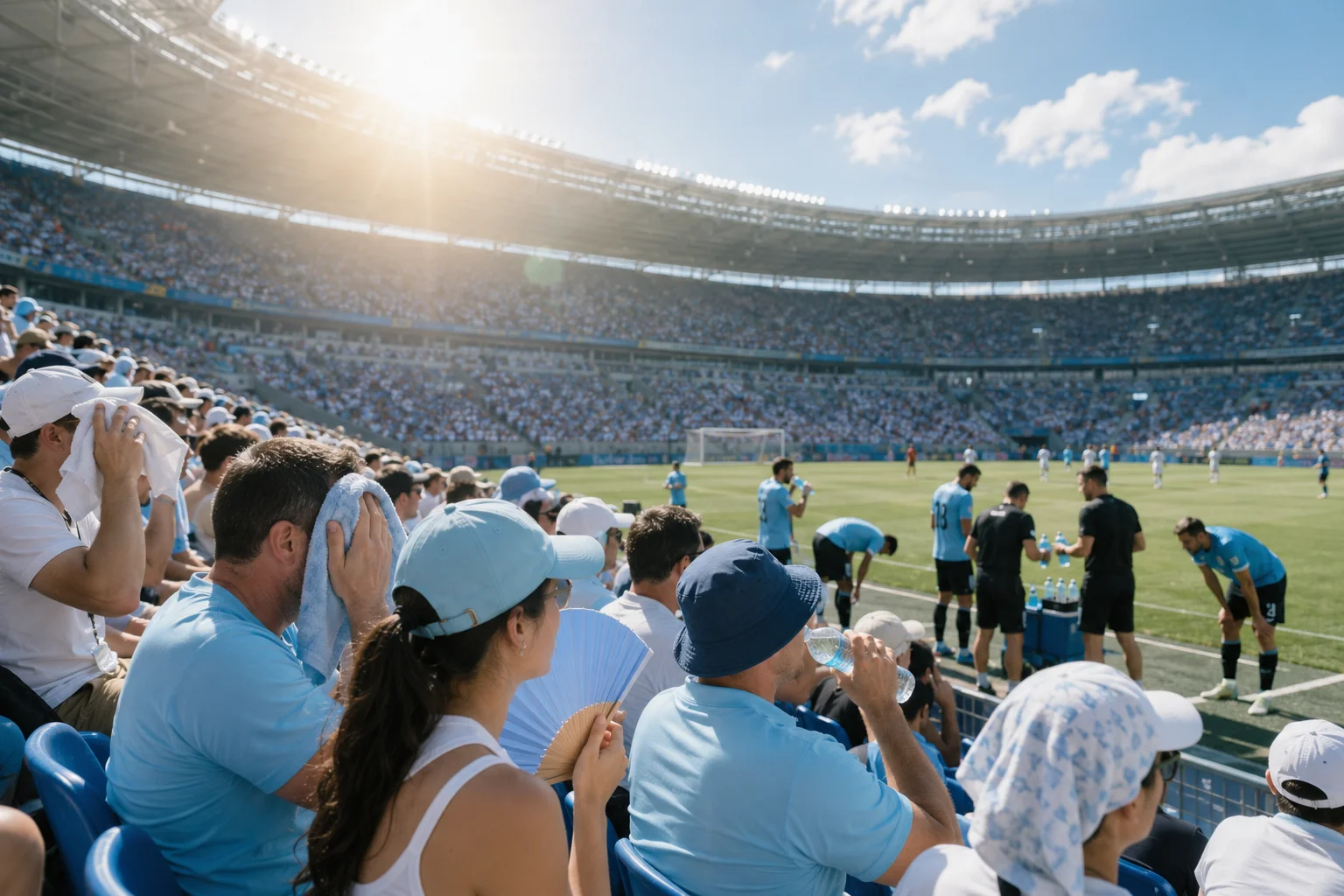
This is a June and July tournament, and heat is a real factor. More than a third of matches are flagged high risk for dangerous heat and humidity, Miami worst. Only the roofed, air-conditioned venues hold a stable temperature: AT&T, NRG in Houston and Mercedes-Benz in Atlanta.
Open grounds reward shade over closeness for a day kick-off. Levi's Stadium is the warning: its east-side lower bowl bakes while the west side and upper deck sit in shadow. A higher seat in shade beats a low one in full sun, where the geometry points anyway.
Pitch-side is not a bad seat: it is the best for noise, warm-ups, and speed up close. To read a match, pay for height and a side-on angle. Every listing on 1BoxOffice carries a 150% money-back guarantee, so you choose a section on the view, not the risk.
1. Do the giant videoboards make a weaker seat acceptable?
-
The big screens at SoFi and AT&T show replays and detail that soften a flat angle, but never replace seeing the live shape.
2. Which host stadiums stay cool for a day match?
-
AT&T, NRG and Mercedes-Benz are roofed and air-conditioned, as is BC Place in Vancouver; every other host venue is open or part-covered.
3. Is Category 4 available to overseas fans?
-
Category 4 is the lowest-priced tier but is largely limited to host-country residents and is a small share of the allocation.
4. Does closing the roof change the view?
-
A shut roof removes sun and glare and steadies temperature, but does not change sightlines, so height still beats proximity.
5. Are aisle seats worth choosing at these stadiums?
-
Aisle seats buy easier access to exits, at the cost of disruption from people leaving and returning.
Sources: ESPN, Fort Worth Report, StadiumDB, New York Office of the Attorney General, NPR, The World Cup Guide.