In this guide
Key takeawaysOne table, eight opponents and no groups to memoriseHome matchdays: members eat firstAway days are capped at 50 euros, if you can get oneKnockout rounds: short windows, moving pricesThe Madrid final: ballot, allocations and everything in betweenYour phone is the ticket, and only one phone countsThe home end gamble for travelling fansWhere the real money gets lostWhat each stage costs and who sells itThe Champions League scrapped its group stage in 2024, yet most supporters still use the old name for the 36-team league phase that replaced it. Either way, there is no single place to buy Champions League tickets in 2026/27: 18 different home clubs sell the league phase, knockout hosts sell the spring rounds and UEFA itself sells one match all season, the final at Madrid's Estadio Metropolitano on Saturday 5 June 2027.
The sale you need depends entirely on which stage you are chasing, so this guide works through each in order. If the final is the target from day one, the Champions League final tickets listings are already live long before UEFA opens its own channels.
Key takeaways
- League phase and knockout tickets are sold by each home club, never by UEFA, so memberships and club sale windows decide who gets in.
- Away tickets are capped at €50 and limited to 5% of capacity, sold only through your own club and usually by loyalty ballot.
- UEFA sells one match directly: the final in Madrid on 5 June 2027, through a random public ballot with roughly 4,600 neutral tickets in 2026.
- Final tickets are name-checked and locked to a single phone, so screenshots, print-outs and forwarded PDFs will not get you through the gate.
- Buying home-end seats as a visiting fan risks ejection without refund, and bank transfers to strangers are how most ticket fraud losses happen.
One table, eight opponents and no groups to memorise
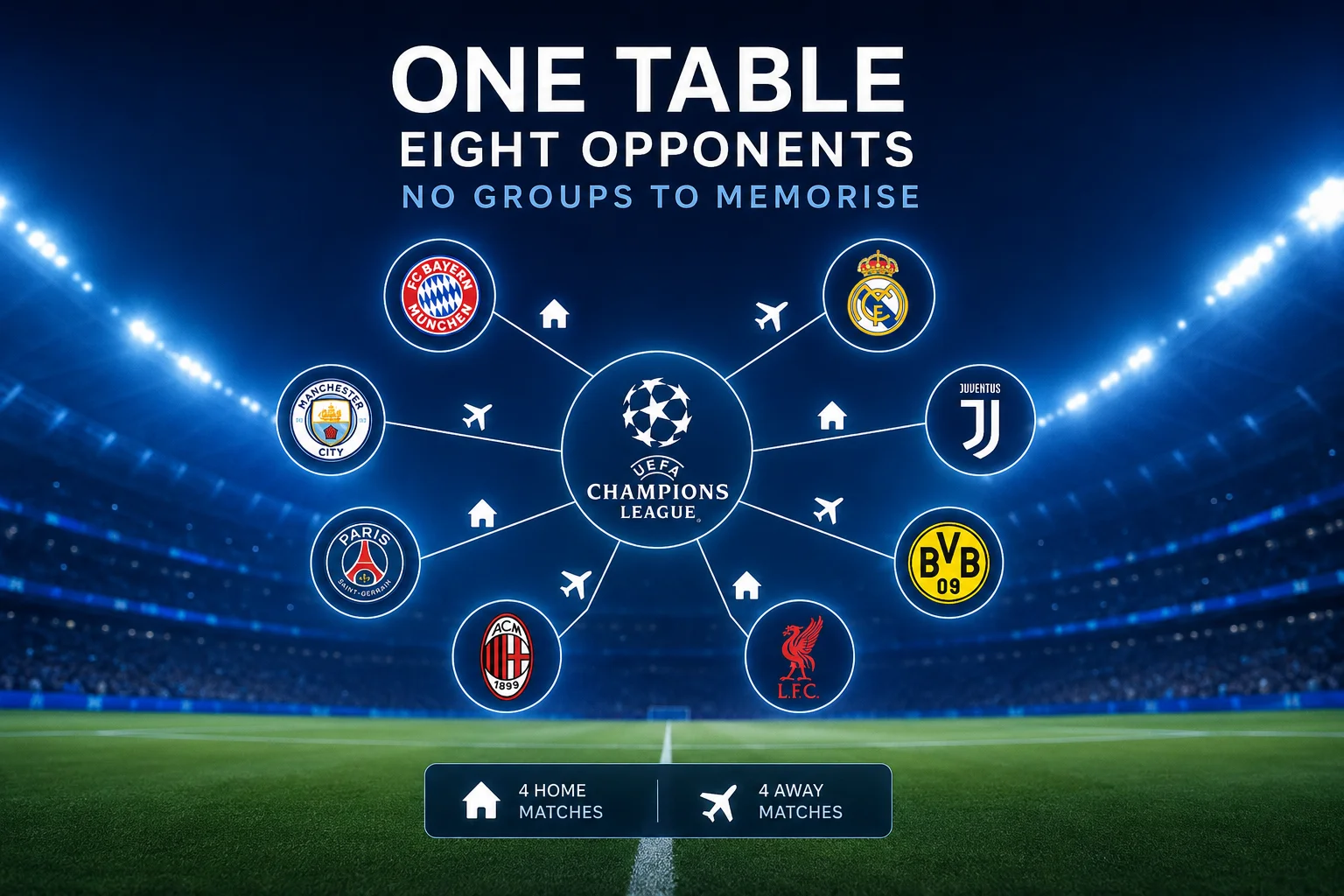
Since 2024/25 every club plays eight league phase fixtures against eight different opponents, four at home and four away, in a single 36-team table. The top eight go straight to the round of 16 while ninth to 24th contest a two-legged play-off in February. The 2026/27 league phase runs from Matchday 1 on 8 to 10 September 2026 to Matchday 8 on 27 January 2027.
For buyers, the practical change is volume: four home league phase nights per club instead of three group games, so one extra sale window each autumn. Our guide to how the Champions League works covers the format in full if the play-off maths still feels unfamiliar.
Home matchdays: members eat first
Every league phase and knockout ticket is sold by the home club through its normal system, and that system starts with season ticket holders and paid members. Arsenal's £29-a-year membership carries no guarantee of a seat for a European night, while Liverpool tickets for Anfield's Champions League fixtures routinely sell out inside the members' window before general sale is even confirmed. Barcelona priced league phase seats for members between €15 and €99 in 2025/26; face values vary enormously between clubs.
If a fixture reaches general sale at all, it is usually the less glamorous pairings. Marquee nights such as Real Madrid tickets against English or German visitors rarely get that far, which pushes one-off travellers towards resale. Either way, set up accounts before the sale opens: a two-minute 1BoxOffice register now beats a checkout timeout later.
WhatsApp channel
Sports news straight to your phone
Match updates, on-sale dates and ticket news from 1BoxOffice.
Away days are capped at 50 euros, if you can get one
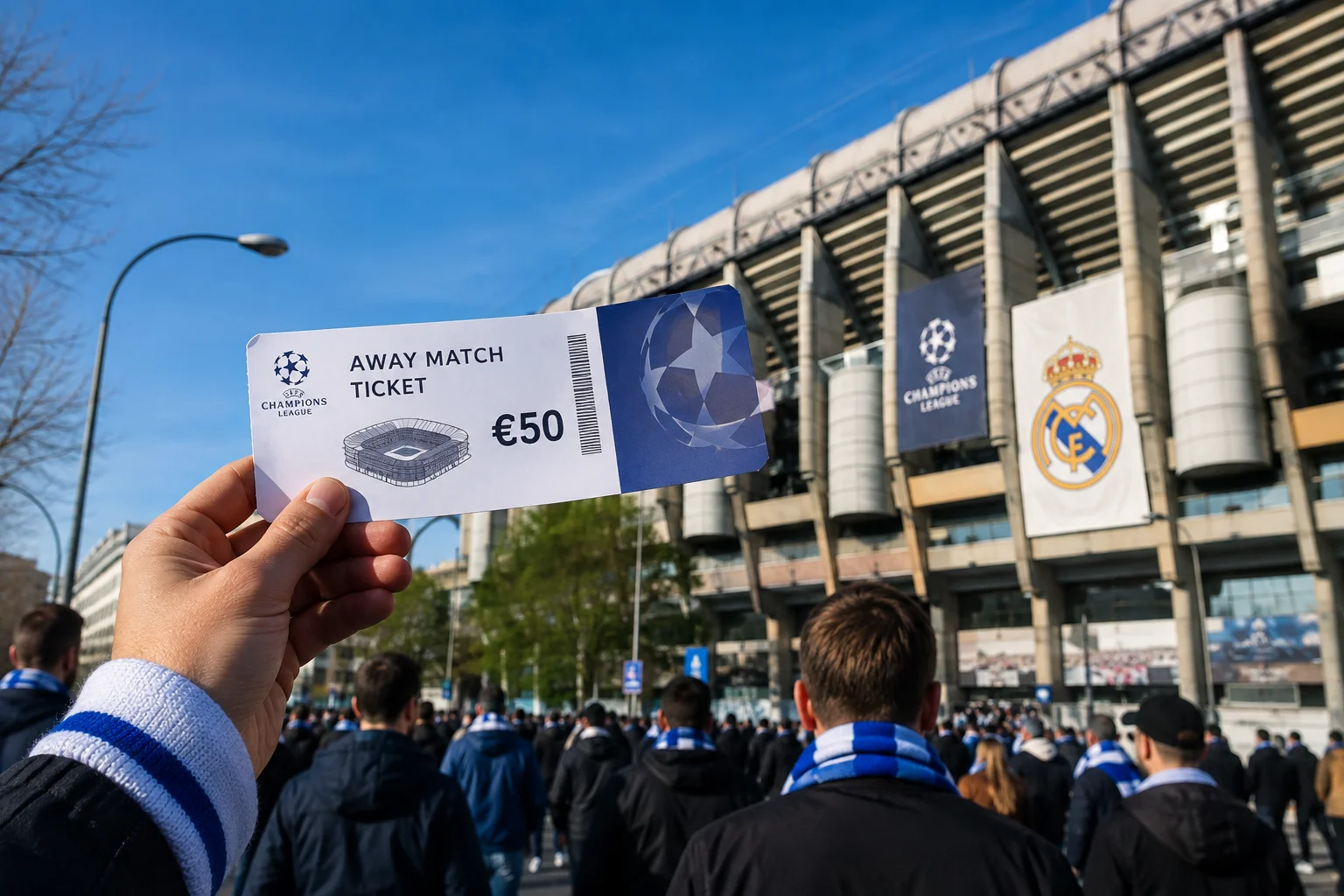
UEFA's competition regulations require every home club to release at least 5% of capacity to visiting supporters, priced at no more than €50 (about £43) since the 2025/26 season. Those tickets are sold only through the away club, usually to members by loyalty ballot, so the cap helps the price without helping your odds. It also stops at the semi-finals: the final is exempt.
Allocation rows flare up most seasons: Liverpool publicly challenged Real Madrid in 2023 after an initial offer of 1,800 away seats for a last-16 tie, roughly half what the 5% rule implied. When an allocation is that tight, hospitality or resale are the only realistic alternatives.
Knockout rounds: short windows, moving prices
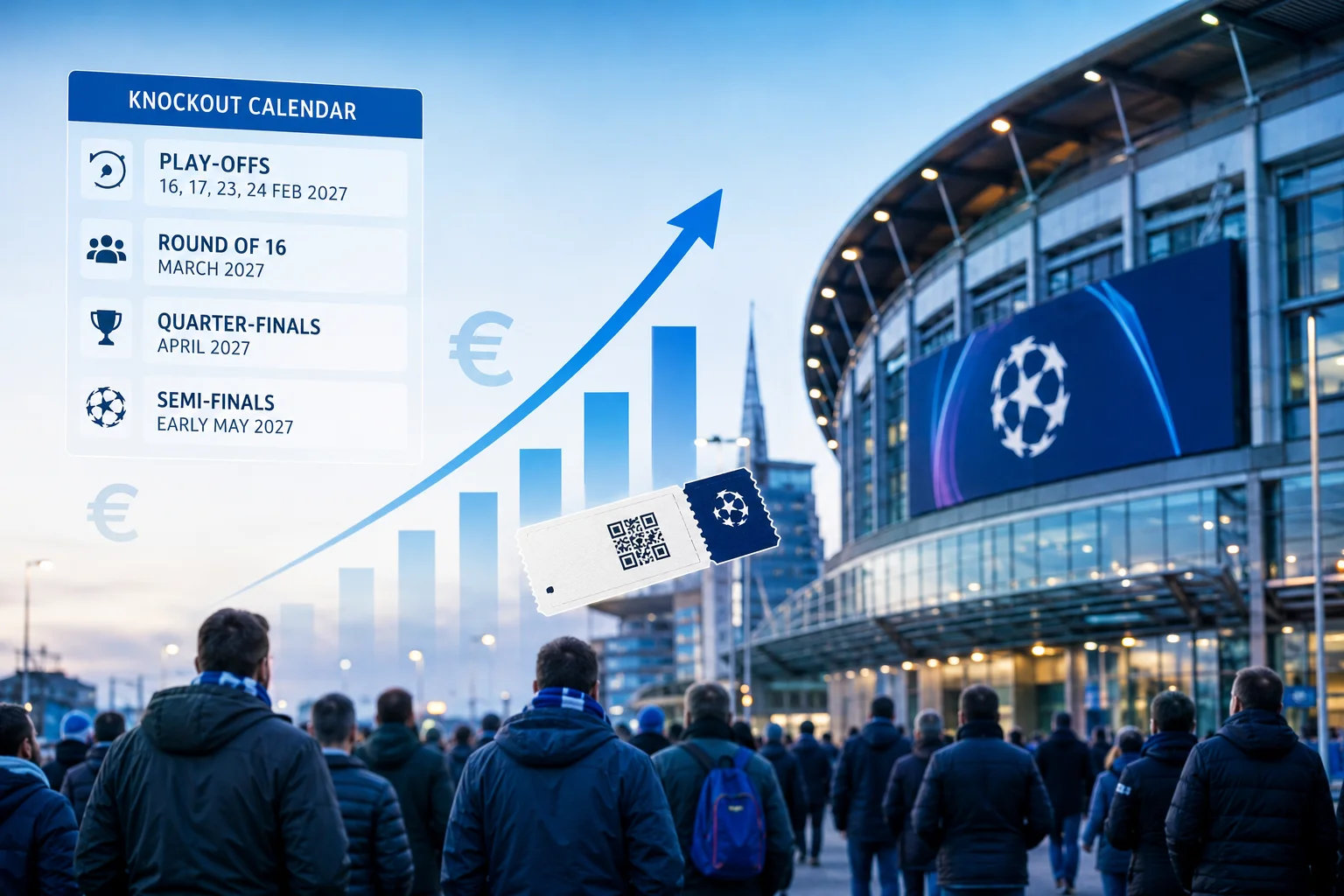
Knockout ticketing is compressed: play-offs on 16, 17, 23 and 24 February 2027, the round of 16 in March, quarter-finals in April and semi-finals in early May, with sales typically opening within days of each draw. Prices climb at every stage, since the away cap covers visiting sections only. And read each listing carefully while a tie is unresolved: a ticket for the home leg of a quarter-final is a ticket for whoever hosts it, not for the club you hope gets there.
The Madrid final: ballot, allocations and everything in between
The final is the one match UEFA sells directly, through a public ballot at uefa.com/tickets that is a random draw rather than first come, first served. The numbers are sobering: for the 2026 final in Budapest, only around 4,600 of 61,400 tickets went to neutral fans worldwide, with roughly 17,200 each reserved for the finalists' own supporters. Face values ran from €70 for the Fans First category to €950 for the best Category 1 seats.
Even reaching a finalist's own allocation is a lottery in practice. When Liverpool contested the 2018 final, the club estimated only around one in three supporters who entered its ballot got a ticket, and loyalty criteria have tightened since. Treat the public ballot as a free bet, not a plan: apply, then build your real route through club credits or the resale market in parallel.
The Estadio Metropolitano holds around 70,000 and stages its second final after 2019. Anyone planning early can track availability on the Riyadh Air Metropolitano Stadium tickets page well before the finalists are known.
Your phone is the ticket, and only one phone counts
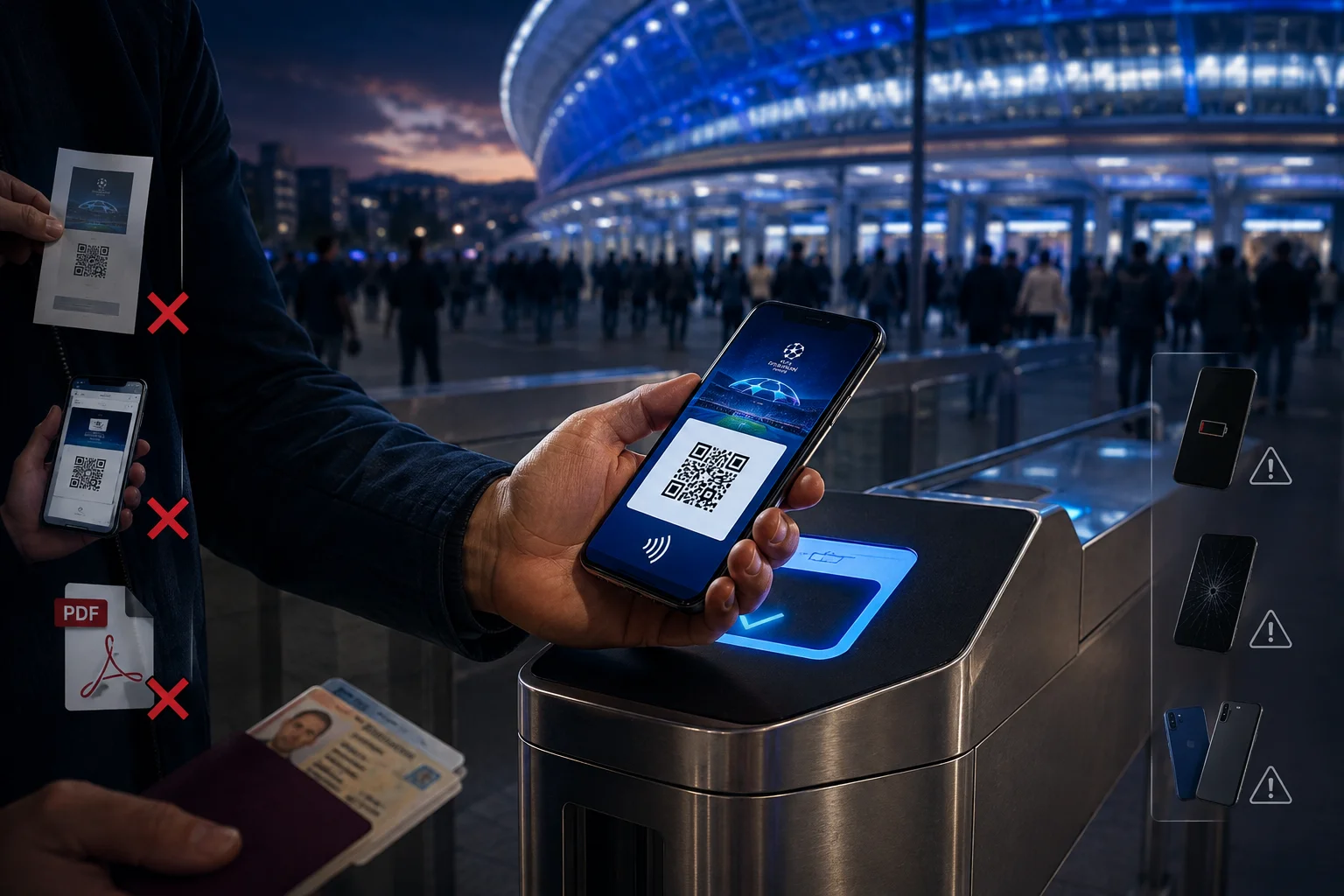
Every final ticket is digital through the UEFA Mobile Tickets app, and the system is stricter than most club apps. One account works on one phone only, and that is the phone you must present at the turnstile: screenshots, print-outs and PDFs are all invalid. The purchaser's own ticket cannot be transferred at all and a second ticket can be moved once, while public ballot winners must attend in person with ID matching the booking name.
The failure mode fans report most is mundane: a lost, broken or upgraded phone in final week. UEFA's fix requires a visit to the stadium ticketing centre with your original passport or ID card, and copies are not accepted. If you are travelling to Madrid, carry the document you booked with, keep the phone charged and do not log in from a friend's device to show anyone the seat, because that can lock the ticket to the wrong handset.
The home end gamble for travelling fans
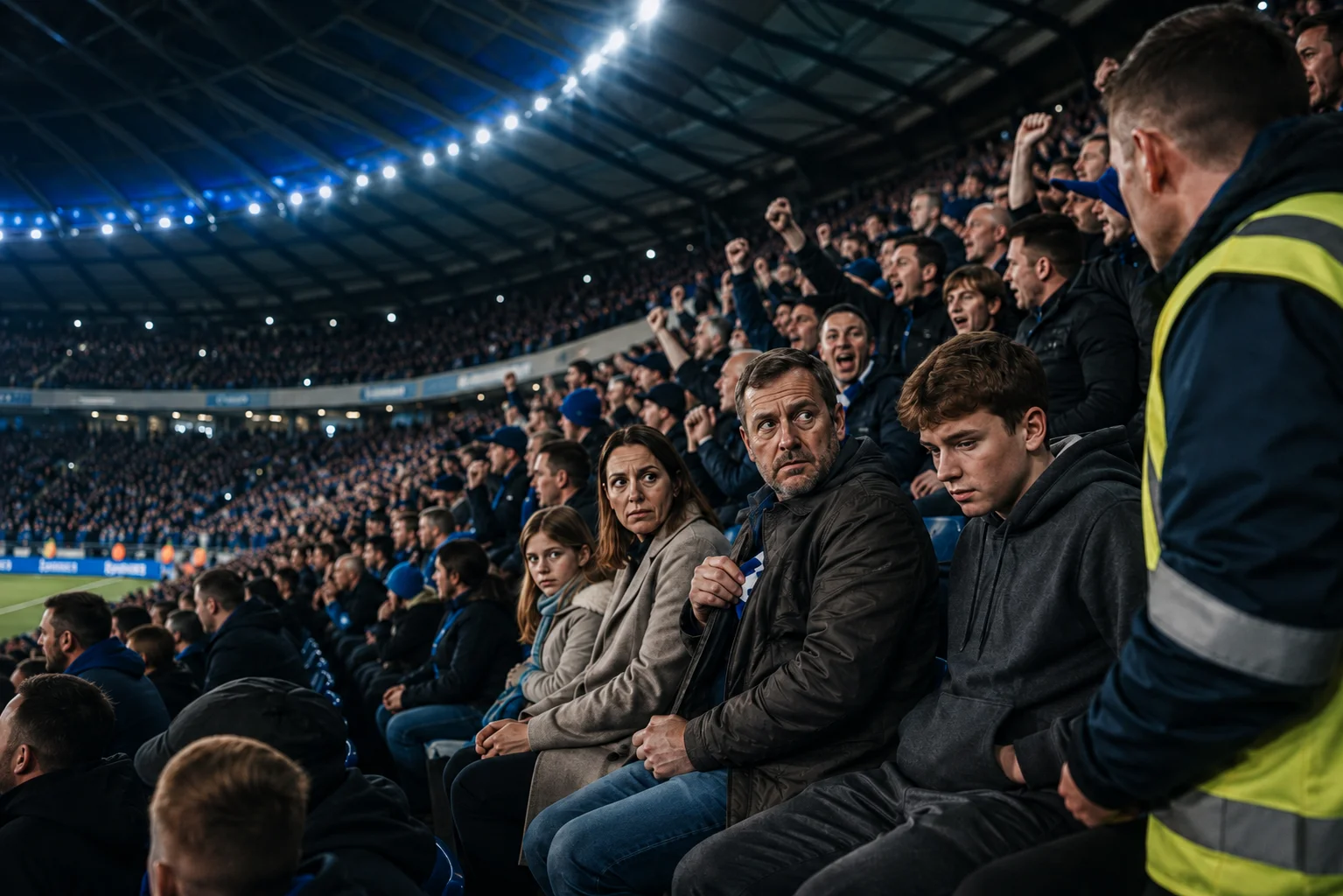
Because away allocations are capped at 5% of capacity, a whole subculture of travelling supporters buys seats in home sections instead. Clubs know this and act on it. Sales for European ties are routinely restricted by nationality, address and card country, and stewards remove fans identified as visiting supporters on the night. Around 1,500 Galatasaray fans ended up scattered through home areas at Old Trafford in 2023, and in April 2025 a 13-year-old PSG supporter and his family were removed from home seats at Villa Park under exactly these rules.
That does not mean neutral attendance is impossible, but it changes how you should buy. Sit in genuinely neutral or hospitality areas rather than ends behind the goals, keep colours at home and understand that a home-section seat bought in a visiting fan's name carries a real ejection risk with no refund attached.
Where the real money gets lost
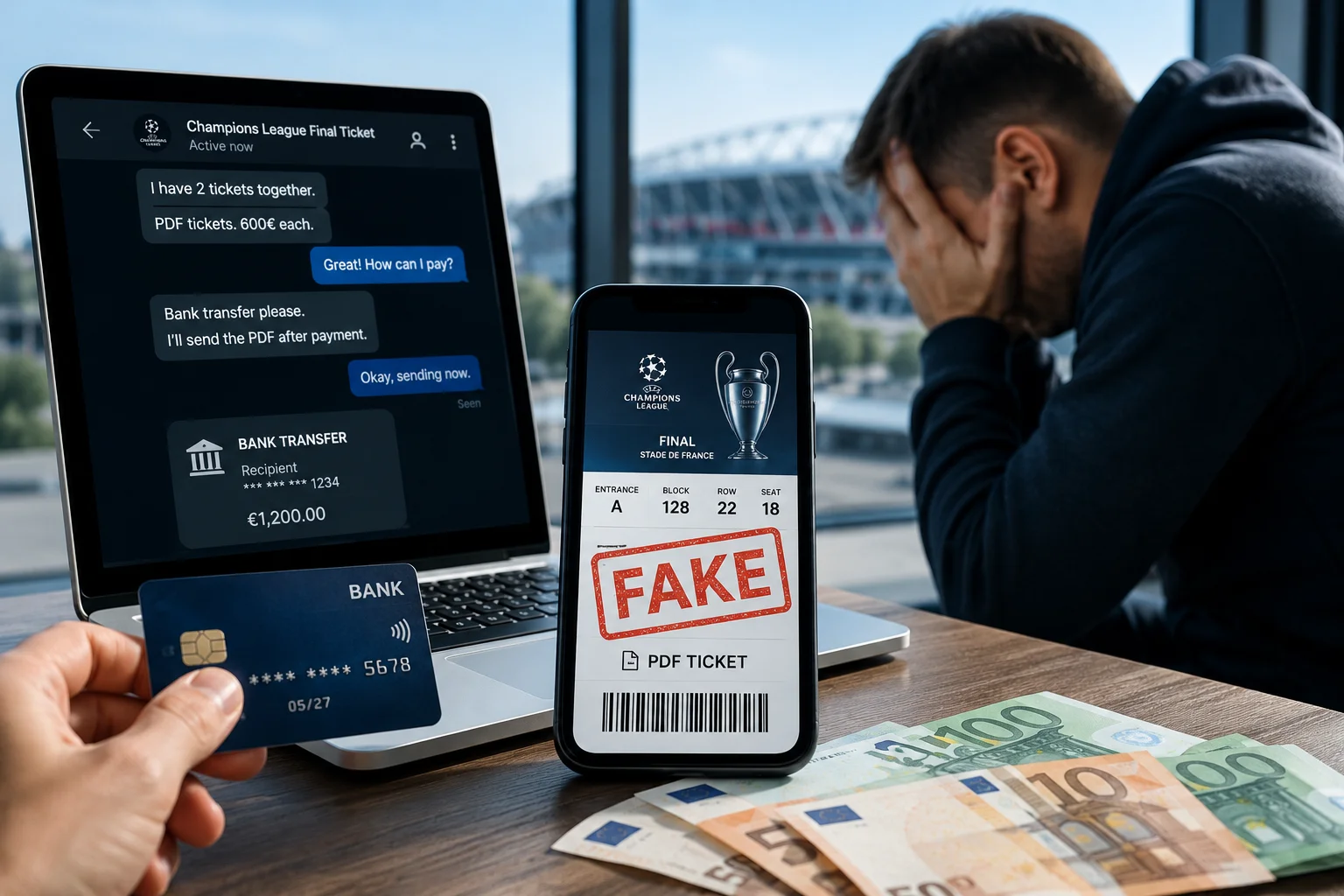
Ticket fraud around this competition is not hypothetical. A Merseyside man was jailed for 21 months in January 2025 after conning fans out of £40,000 with fake PDF tickets to the 2022 Paris final, and Spanish police broke up organised tout rings carrying forged tickets outside the 2019 final in Madrid. The pattern in almost every case is the same: payment by bank transfer to a stranger met through social media, a messaging app or a marketplace listing, for a PDF that either never arrives or fails at the gate.
The defence is structural rather than clever. Digital tickets make the seller's identity and the platform's guarantee the only things protecting you, so buy where a guarantee actually exists, pay by a method with chargeback rights and treat any final ticket offered as a forwarded PDF as worthless, because genuine final tickets cannot exist in that format.
What each stage costs and who sells it
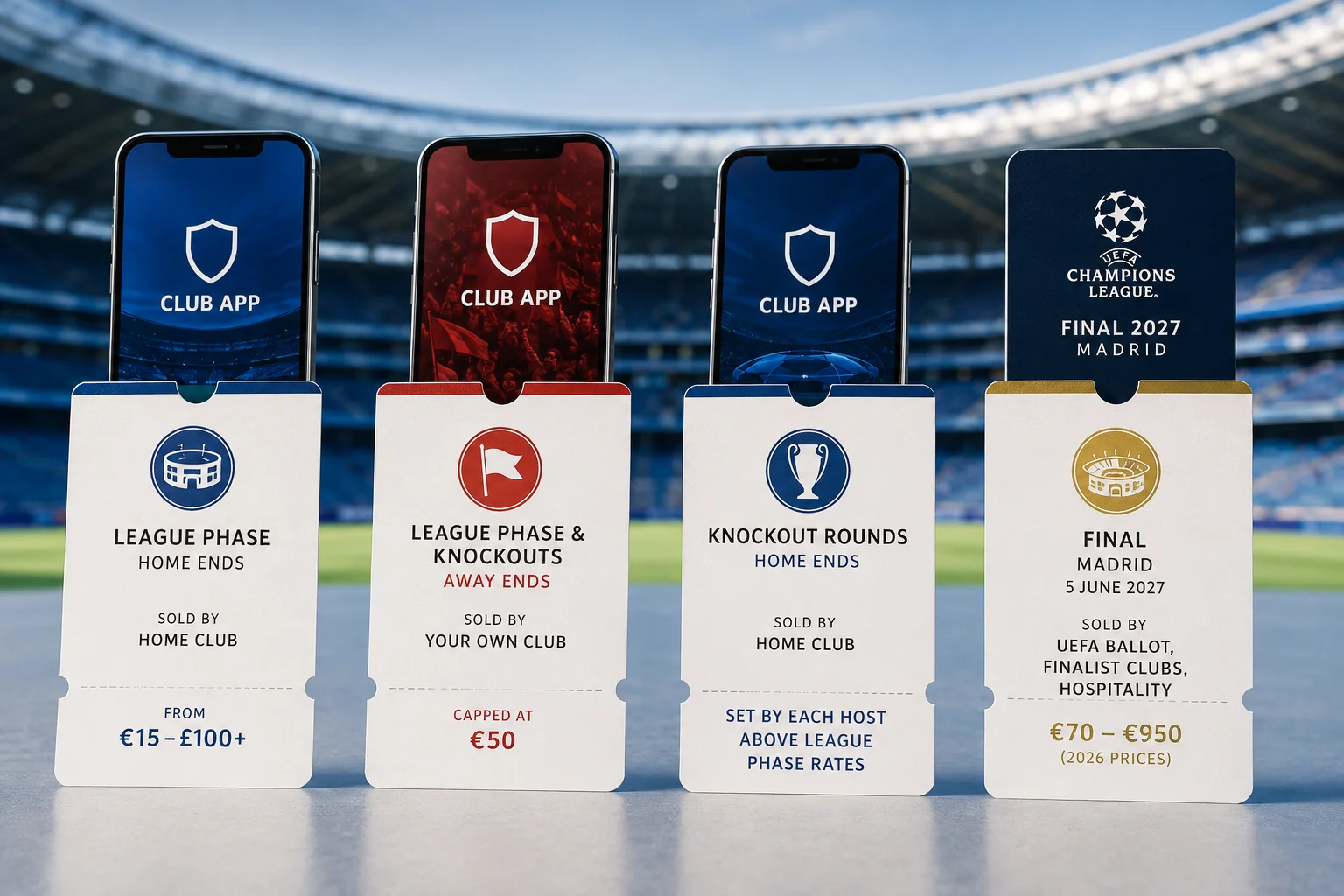
| Stage | Who sells it | Face value guide (August 2026) |
|---|---|---|
| League phase, home ends | Home club | From €15 at Barcelona to £100+ at English clubs |
| League phase and knockouts, away ends | Your own club | Capped at €50 by UEFA |
| Knockout rounds, home ends | Home club after each draw | Set by each host, above league phase rates |
| Final, Madrid, 5 June 2027 | UEFA ballot, finalist clubs, hospitality | €70 to €950 in 2026; 2027 prices not yet published |
1. When do Champions League final 2027 tickets go on sale?
-
UEFA has not announced dates, but recent ballots opened in March, so expect the 2027 window at uefa.com/tickets in spring.
2. How much is hospitality at the final?
-
Packages for the 2026 final were priced from roughly €3,500 to €12,900 per person depending on lounge and seat, and 2027 pricing is not yet on sale.
3. Can I buy final tickets before the finalists are known?
-
Yes, resale and hospitality listings go live months ahead, while UEFA's own sales only open once the spring ballot window is announced.
4. How much are Champions League semi-final tickets?
-
The two hosts set semi-final prices at their top matchday band, while away seats stay within the €50 UEFA cap.
5. What is a Fans First ticket?
-
UEFA's lowest-priced final category, sold at €70 in 2026 and distributed mainly through the finalist clubs rather than the public ballot.
However far your club goes, the pattern is the same: club sales for the road, UEFA for the destination and resale for everything the ballots cannot reach. 1BoxOffice has listed European fixtures since 2006 and backs every order with a 150% money-back guarantee.
Sources: UEFA, Football Supporters Europe, FC Barcelona, Atlético de Madrid, BBC, Le Parisien.